Traditional publishing or professional publishing: which one is right for your book?
Traditional publishers hold the rights and most of the royalties in exchange for an advance and distribution, and most business authors will not get the offer. Self-publishing keeps everything for you and leaves every decision to you. Professional publishing sits in between, and this page shows exactly where.
Traditional publishing gives you an advance and a house's distribution in exchange for rights and most royalties, and most business authors will not get the offer. Self-publishing keeps everything and puts every vendor decision on you, and many good books are made that way. Professional publishing is hiring the publisher.
Here is the honest comparison on the five things that matter to a business author.
Money. A traditional publisher pays you an advance, then keeps most of every sale and owns your rights for years. Self-publishing costs you only what you spend, but you spend it in a dozen places. Professional publishing is a flat fee you pay, after which every dollar of royalties is yours.
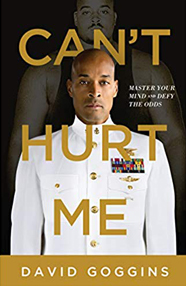
Ownership. With a traditional deal, the publisher decides on the title, the cover, the timing and often the content. When David Goggins published Can't Hurt Me with Scribe instead of taking a traditional deal, he kept ownership of his story and has sold more than 3 million copies on his own terms.
Odds. Traditional publishers say no to nearly everyone. Tommy Short heard no from 104 agents and publishers before he published with Scribe. Adam Skolnick, himself a top ghostwriter, chose Scribe for his own novel rather than wait for a New York yes.
Quality. This is where self-publishing usually breaks down. Editing, cover design, interior layout and audiobook production are separate crafts, and a book that looks self-published gets treated that way. Professional publishing gives you the same team a traditional house would, without giving up your rights.
Time. Traditional publishing typically takes two to three years from deal to shelf, if you get a deal at all. Scribe's process runs nine to twelve months from first call to launch. If speed is your priority, there are cheaper and quicker paths than either one. Scribe is the option that takes the time to do it right while you keep control.
Three things a traditional deal costs a business author
Most contracts license your book to the publisher for the life of the copyright. Reprints, translations, audio and film rights move on their timeline, not yours.
The title that sells books in a bookstore is not always the title that wins clients. A publisher optimizes for their business, not your practice.
David Burkus went from Guided Author kickoff to on sale everywhere in eleven months and built a speaking business on the book. Traditional timelines start after you land the deal.
Sarma Melngailis on why control over her own story mattered more than a traditional deal.
What a book did for people who asked the same question
Every number below comes from a published success story on scribemedia.com, and each one links to the page it came from.
These are the best documented results among authors who told us. Every one of them had a business or a stage the book could feed. Most authors do not track a number, and a book without a business behind it should not be bought for a financial return.
David Goggins chose to publish Can't Hurt Me with Scribe rather than sign a traditional deal. He kept ownership of his story, his rights and his royalties, and the book became a global bestseller.
Traditional gatekeepers passed 104 times. The book got made anyway.
Read the story →Built a speaking business on a book that would have waited on a publisher's calendar.
Read the story →You would be in good company
From first-time authors to number-one bestsellers, these are books our teams helped create.

The questions people ask us next
We are a professional publisher: you pay a flat fee, we bring the full team, and you keep 100% of the rights and royalties. Many hybrid publishers take a royalty share or hold rights. Read any contract for those two lines before you sign it.
It will be available everywhere books are sold online, including Amazon, Barnes and Noble, Apple, Audible and the retailer catalogs bookstores order from. Physical shelf placement is negotiated store by store for every publisher, traditional or not, and it is rarely where a business author's book earns its keep.
Readers judge the book in their hands, not the imprint on the spine. Scribe books have hit the New York Times, Wall Street Journal and USA Today bestseller lists, and 23 of them are NYT or WSJ bestsellers. Quality is what carries credibility.
Yes. You own the rights, so a traditional publisher can license them from you later if that ever makes sense. Several Scribe authors have done exactly that from a position of strength.
Scribe Publishing for a finished manuscript is $4,833 a month for six months, $29,000 total. If you want the book written from interviews with you, Scribe Professional is $4,667 a month for twelve months, $56,000 total. Every price is on this page and on the call.
When Scribe is the wrong choice
We would rather say this here than on a call.
- You want to sell copies as the business. Royalties rarely repay a professional book; the return is clients, speaking and authority. If copies are the goal, write it yourself with the free Scribe Method and publish on your own.
- You have no business, practice or platform to feed the book into, and this is personal money. Start with the free Scribe Method or the North Star tool, or bring a finished draft to Publishing at $4,833 a month for six months.
- You need the book in under nine months. Scribe runs nine to twelve months from first call to launch and does not cut that short.
The real numbers, before you talk to anyone
Every package is one price, paid monthly, with a $1,000 deposit at signing that comes off the first payment. You own every right and every dollar of royalties. The monthly figure and the total are both here, before any call.
You have written the manuscript. Editing, cover, interior, audiobook and global distribution are handled for you.
You talk, a Scribe writer turns about twenty hours of interviews into your book (about 50 hours of your time in total), and it is published under your name.
A premier ghostwriter and a dedicated team, built to the standard of a major-house book: twenty in-depth interviews, research, ten revision calls, and a $25,000 launch budget.
Five coaching calls over four to six weeks produce your North Star, table of contents and chapter roadmap. You keep all of it. If you continue into Professional or Elite, the entire $5,000 comes off your book.
Talk it through with an author strategist
Fifteen minutes, and it is a sales conversation: we tell you the price and whether you fit, and we will say so if you do not. Your strategist calls during business hours, usually the same day.
Read this before you decide
The traditional publishing dream is real for a small number of authors, mostly people who already have a large audience. For a business owner, advisor, physician or founder, the deal usually does not come, and when it does, it trades the two things you need most, ownership and control, for a small advance and a logo on the spine.
Self-publishing is the opposite bargain. You keep everything and the industry gives you nothing: no editor, no designer, no producer, no distribution team, no one who has done it three thousand times. The books that look self-published are the ones where that showed.
Professional publishing is simply hiring the publisher. Scribe's team has published more than three thousand books, twenty-three of them New York Times or Wall Street Journal bestsellers, and every author kept every right and every royalty. If a traditional deal is truly the right path for your book, we will tell you that on the call. Most of the time, it is not the path that gets the book into your clients' hands.