Nick Egan: Shift
Read the full transcript
Nick Egan
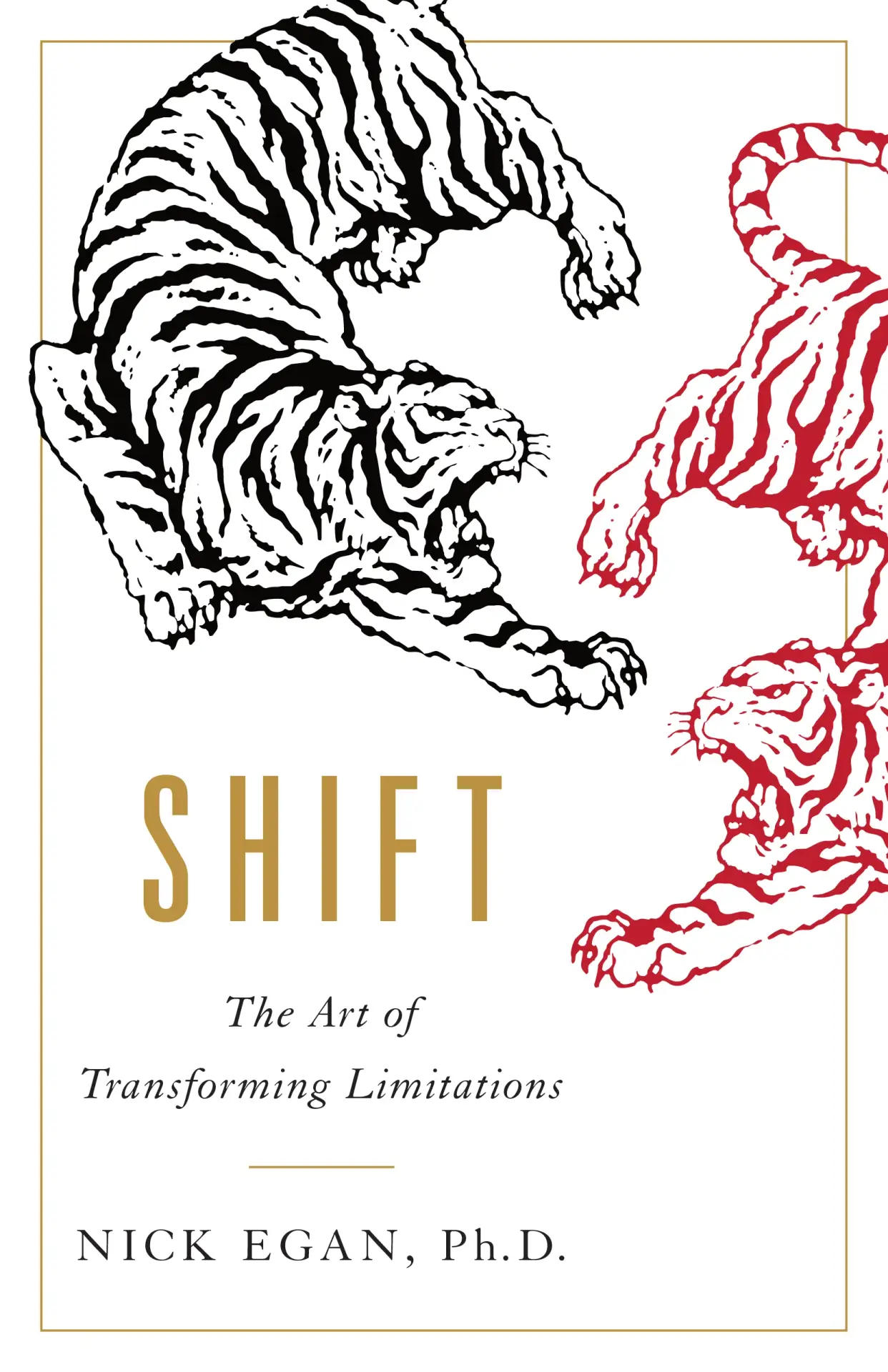
Nick Egan, PhD, is an award-winning leader and executive coach who draws on positive psychology and Buddhist philosophy to encourage personal and organizational growth. He has taught meditation for more than a decade and regularly leads expeditions to destinations including Bhutan, Mongolia, Nepal, Thailand, and Tibet. He holds a BA in psychology, an MA in comparative religion, and a PhD in Buddhist philosophy. In his book Shift: The Art of Transforming Limitations, he shares methods for strengthening leadership and personal development by dismantling self-imposed mental limitations.
📚 Books by Nick Egan
Transcript
[0:00:34] Charlie Hoehn: You’re listening to Author Hour, enlightening conversations about books with the authors who wrote them. I’m Charlie Hoehn. Today’s episode is with Nick Egan, author of Shift. Have you ever talked about something challenging in your life and said, “Well, that’s just the way things are.” If you have, you might be clinging to a story that no longer serves you, and Nick believes that the solution to your problem lies in changing your story. Nick is an award-winning leader and educator who currently serves as head of an international baccalaureate world school in Northern California. He's also a sought after speaker who uses his understanding of positive psychology in Buddhist philosophy to encourage organizational and personal growth. He's taught meditation techniques for more than a decade and he's led educational and cultural tour to places like Bhutan, Mongolia, Nepal and Tibet. In this episode, Nick will teach you how to deconstruct your stories, so you can open paths to progress. He’ll also teach you how to reduce addiction to urgency, so you can increase your productivity and achieve a flow state that will transform your life. By the end of this conversation, you'll know how to create a world of limitless possibility. And now, here is our conversation with Nick Egan.
[0:02:30] Nick Egan: Like a lot of teenagers, I think that I was very interested in getting to the bottom of what I thought at the time were these big questions, big questions about the nature of life, meaning and who we really are at our core. In the, I was really drawn to, especially, Asian spiritual traditions. So meditative traditions. I had, I don't want to stay played around, but I had done brief stents trying different kinds of meditation until I finally landed when I was 16 actually on Zen Buddhism, and I was very impressed with our local Zen center and there is a Hiroshi, there, the abbot, kind of the leader of the congregation and he as just this unbelievably amazing man that really exuded a sense of calm and insight and warmth that was just palpable. You will run into people that seem to have one or another of those elements, but it was a way about him that really was impressive to me and still is. I was struggling at the time with this idea of — within Buddhism, there's an idea of sort of like attaining enlightenment and leaving for a better place, not quite like heaven. So it's like nirvana as a place. They're different constructions of nirvana, but that's what I was thinking about at the time. Then counter to that, there's this other idea of being of bodhisattva, which translates as like an enlightened hero, and somebody that could come back again and again, if you believe in reincarnation, to be of benefit to the world. And they commit to doing this sort of endlessly throughout infinite lifetimes according to the philosophical traditions. I was having a hard time understanding what would be the goal. What’s the spiritual goal of Zen and Buddhist philosophy? Is it this kind of checking out escape to the blissful place, or is it staying here and being of service and helping? It was something that I've struggled with for, pretty intensely, for a while. So I’ve been studying in the Zen Center for a couple years and I think I was 18 when this kind of came through head and I ended up, I was having kind of having like a private lunch with the Hiroshi and asked him that in similar terms. I said, “What is the goal? Is it nirvana or is it coming back again and again?” He looked at me and it was like out of a book and he said, “This is nirvana,” in a very low voice resonant and it pierced me to the core. I mean I was literally speechless. I don't think I said another word the entirety of the lunch. Really, it opened me up to the possibility that actually my perception of the world was quite different than somebody else's. Of course I knew that we all perceive the world differently, but I mean radically different and radically limited, relative to what he was actually perceiving and experiencing. This isn't to say — there was no enlightenment moment really, but it shattered my preconceived notion of what was possible and what wasn’t. That led me to — at the time I was committed to doing psychology in my undergrad, and I completed my psychology undergrad studies, but I went into philosophy, specifically Asian philosophy for my graduate work.
[0:05:46] Charlie Hoehn: That's an incredible story. Thank you for sharing that, Nick. It makes me think of the saying in the Bible, which is “The kingdom of God is in man.”
[0:05:56] Nick Egan: Right. The kingdom of heaven is within. Yeah, exactly. Yeah. So in my World Religions Studies, that definitely came up as — That's an interesting — I think that's even — I mean, not to quote scripture or anything, but I think that’s even in Luke, and it's a really — that's a powerful thing if you take that seriously. Regardless of reduce your spirituality or your religion, I mean it's a very moving thing to think about.
[0:06:21] Charlie Hoehn: The mind is so powerful and it's so challenging to really take advantage of how powerful it is, because we get caught up in sort of the humdrum day-to-day routine. But from personal experience of doing, let's say, a consistent gratitude practice for every single day for several months or a few months, I'm sorry, like I felt the energy of my entire body completely change just from that simple exercise. You wrote Shift. What kind of shift — well, first off, give kind of the overarching elevator pitch, the big idea from the book.
[0:07:09] Nick Egan: Well, I think you’re touching on it when you say it's easy to get caught up in the day-to-day, and most people think about as getting caught up in kind of the day-to-day tasks and we get bogged down by sort of the details and lose bigger picture insights, but I would go even one step further, and this goes to what the book is actually about, and that is that we are often — The mind is a powerful thing as you mentioned, and it is the very thing that will set us free and it is also the thing that captures us and limits us and traps us. And it's often in the form of stories that we’re telling ourselves and it's subconscious. We don't even really realize that we’re telling ourselves these stories. We take them as truths, and that's what gets dangerous, because it limits our perspective to see a new way forward or to see a situation as in a different way that might be beneficial for ourselves and for others or for an organization that we’re working with, and that really is the crux of what Shift is about. It’s different ways of shifting the frame, the story that you’re telling yourself, in order to truly transform limitations from the inside out.
[0:08:19] Charlie Hoehn: Sorry to interrupt, Nick, but I'm curious, what have been some stories that have both set you free and imprisoned you?
[0:08:28] Nick Egan: Well, I think one story that people and myself included struggle with often is sort of like, yeah, I can't do X. Like I don't have the resources to do X, and whether that's — So I’ll give an example of just even writing the book. I had tried multiple times to sit down and write a book and became frustrated like right around the third chapter or something, and then you start to hear the story that says, “I don’t have time or there isn’t enough material,” or whatever that story is, and then that becomes the reality that then is blocking you. Usually those stories are not true, or I should say this, we make them true. They’re not true from an externally existent fact perspective. But if you can tell yourself a different story that you do have the resources that you will learn into something or that you can get certain kinds of support to amplify whatever it is you're trying to do, that will literally set you free. These aren't spiritual teachings necessarily. I mean, you can apply it to spirituality. They’re really just kind of boots on the grounds day-to-day strategies about examining the limitations that we impose on ourselves.
[0:09:39] Charlie Hoehn: So why does this work? Why does changing our story work so well? I can attest to it personally. I know it does, but why does it work?
[0:09:50] Nick Egan: It works because very often the actual limits that we perceive to be outside are inside, and what happens is if we go about trying to shift those external circumstances, we end up in kind of the same situation over and over again. But if we turn the focus inward and we really start with the internal work and awareness, then it becomes possible to see things completely differently and to move forward almost, well gracefully.
[0:10:18] Charlie Hoehn: There're so many places we can start. I mean, I'm just thinking about people who continually have the same relationship problems. People who continually have — I’ll tell you a personal story about that. I realized a few years ago, four years ago, that I had a repeating thing that was happening in all my relationships where as soon as the woman expressed that she cared about me deeply or wanted to be with me, I’d be like, “Nope! See you.” It wasn't a fear of commitment, because I found myself only pursuing relationships where I was hanging by a thread or the woman was like not really — like it was always just hanging in the balance. I couldn't tell if it was going to work basically, or I was basically always on the verge of rejection. I started examining why that story came to be and I went through bunch of therapy and basically had to grieve and then rewrite that story. Almost immediately, like within the year, was able to find like the woman of my dreams, who’s now my wife and the mother of our daughter. It was incredible. So I’m already a believer in your message, and I want to go through the book kind of point by point with — let's start with ‘Transform Fixation’. What is that chapter about?
[0:11:56] Nick Egan: So transforming fixation is about deconstructing the limits of how we define ourselves and how we define our relationships and how we define our organizations. Your point is a good one, where you have a story without even knowing it that kind of drives you to have these same outcomes again and again and again. There's another example. A lot of my friends and acquaintances, they can get unsatisfied in a work environment and they think that by changing the work environment they're going to change their satisfaction level. It seems to work for a little bit, but within a few months they’re right back exactly with the same complaints, whether it's a bad boss or bad employees or whatever the complaint is, and they don't realize that it's actually their own perspective, their own story that's driving that same situation. It doesn't matter the actual environment. That’s not to say that environmental change isn't sometimes a good thing. Sometimes it is. But more often than not, I think it's what you're talking about, where the stories driving the actions, or the experiences I should say. So to go back to fixation, we tend to, especially as adults, identify things by the defined characteristics of them, and I use the example in the book of a pencil and we kind of go through and I deconstructs the idea of a pencil. If you do this right, what you can do is you think about the utility of a pencil and all of the different things that you can use it for. You could use it as a tent stake. You could use it — whatever. You can think of a million uses. Then you start looking at the parts of the pencil, and let’s just take the wood, for example, and you think about, “Well, where would this wood come from?” You think that this wood was assembled or carved in a factory and somebody had to create that factory, and that person had to have parents and infinite parents before that and on and on and on we go. Then you think about the tree that the wood came from, and the tree required sunlight. It required water. It required minerals in the soil and then it also required a whole lineage of trees before it. All of the many, many millions, if not — who knows how many trees that came before it? So you think about that and all of that is contained within this thing that we’re defining as pencil, that by the way won't be a pencil forever. The story will continue to change and evolve, and it doesn't change the nature of the thing, but what it does is allow us to see really the thing that we thought was so limited as infinite, and so much more too, are we unlimited just in same way that that pencil is.
[0:14:37] Charlie Hoehn: I went to step a little too far. Let's backtrack a step on reclaiming your limitless potential. What does this actually mean? Are we going for nirvana here? I know we are in nirvana, but I mean are we — how do we know we’re pursuing the right story?
[0:15:01] Nick Egan: Right. Well, there is no right story, right? So the idea is that limitless potential, we’re talking about really tapping into a sense that everything that we tell ourselves is a story and that by definition there’s going to be some limitation to its as long as you're in story mode. If you want talk about a kind of deeper spiritual aspects and you’re talking about Nirvana and those kinds of things, then you’re sort of seeing the world without story, and that is possible. But for now the focus is really on understanding that the story that you’ve told yourself has been useful up to this point and you will continue to get the same outcome if you continue to have a same story, pretty much no matter what. And that if you want to change the outcome, you have to change the story, and it's not about changing externals as much as it is changing the internal. The first step in realizing that is to realize that this story that we've clung to for so long, or not that long, but we've clung to it, is actually just that. It's a fiction. It's a projection.
[0:16:05] Charlie Hoehn: This stuff — like everything you say, Nick, I want to just sit and ponder for a while. I distinctly remember this moment, there was this one improv lesson that I took. I took improv for a while, and this what lesson I had to walk out and just go reflect for a couple of hours, because the instructor said that the stories we tell ourselves control our lives. If you are always feeling terrible, you might want to investigate what story you're telling yourself. It hit so deep that I was like I can’t mess around with anything else that's going on in this class. I just need to leave. That's how I feel in this interview.
[0:16:59] Nick Egan: I want to say, of course, the book is my, it’s my personal take on some of these and it is especially informed my studies in positive psychology and also Buddhist philosophy. But the message is one that I think is universal and I think that people find it in different places. Maybe it's from an improv teacher or maybe it's from, who knows where it's from? The minute that you’re ready to hear it, it can become truly transformative if you're willing to really take it on. But people — I think one of the hesitations that people have is that this really gives you back the power to transform your own life and puts the mirror back on you, like what you're improv teacher was saying, that you can’t, if you take this perspective, if you're a victim, you only have yourself to blame. That's not to say there aren’t abusive situations or situations where people harm one another, but as a sort of baseline life experience. Some people aren't ready for that responsibility and so that becomes another limiting factor.
[0:18:04] Charlie Hoehn: Even in the case with somebody who's in an abusive relationship, you still have to investigate the story that you're telling yourself of like you don't even know if you're telling yourself that you’re deserving of this treatment or that - you still have to investigate and look at the story. How do we start?
[0:18:26] Nick Egan: Yeah. I can't think of a time where it’s not [inaudible 0:18:29.3].
[0:18:29] Charlie Hoehn: Yeah. How do we get started in transforming our story? I mean, I'm looking at the chapters and all of these are things that I’m like, “Yes, I agree with transform difficulty.” In other words, obstacles or opportunities. Transform urgency. You identify your priority and you eliminate your panic. Is the book structured in such a way where this is kind of a guidebook of these are sort of the steps to go through or these, the phases of transforming your story?
[0:19:03] Nick Egan: Yeah. They’re made to be read not on their own. Each chapter is not made to be read on its own. But, that being said, I wouldn’t say there’re sequential steps in terms of deepening and understanding. They're just different applications of a similar kind of viewpoint. Because of that, the exercises look different. The application essentially is different as you go through. If you're talking about something like understanding obstacles as opportunities. It focuses on kind of reframing whatever it is that is that annoying, frustrating pain point that's right in front of you. I use a lot of organizational examples on the book, because I want people — I think that there's a real need for people to do this in their personal life and in their work life, because we spend so much time in work. Whether you're a CEO or whatever, some mid-level manager, there's always room to grow, and work is a perfect laboratory for that. Anyway, when you’re talking about transforming those obstacles, you're working a lot with gratitude and you’re seeing the thing that is really irking you and figuring out ways to tell yourself a story that you become grateful for it. Once that happens, I mean, it's almost like magic. I'm my experience of this — And I'm not perfect. I have to work at this and do this and I don't always succeed at it, but the more I become conscious of it, the more I'm able to do it even in these challenging situations. What happens is you yourself open up to the possibilities that are there that you didn't see before and the people that you're sitting across from or whatever the challenge is, itself kind of responds to that. I mean, I've just seen it in the hard meetings that I've had with clients that you can just feel the space open up and all of a sudden the way becomes more clear.
[0:20:52] Charlie Hoehn: It’s such a powerful exercise. I remember doing that for the first time a few years ago, and I broke down in tears because it was the first time somebody had suggested, “Hey, the things that are seemingly so bad have a big silver lining.” They might even be giving you a superpower, or there's so many positives that can come from this, but you’re choosing to block those. So it's super powerful.
[0:21:25] Nick Egan: Yeah, exactly. I mean, people — I use the example, it's like going to the gym and being angry at the weights for being heavy. We want the weights to be heavy. We want to feel that burn because we know that we’re growing from it, and that's is the definition of success. The more kind of annoyance and frustration you have, the more chance that you have to grow.
[0:21:47] Charlie Hoehn: You know what? When it comes to story, we don't like to go see stories. We don't like to go see movies and read books where the hero doesn't struggle, where they have no obstacles.
[0:22:03] Nick Egan: Yeah. Yeah, you wouldn't be a hero if that's the case. Right? I mean, that’s the definition of a hero is one that goes through that journey. Yeah, just being able to have some artistry to your life. I think that that's a possibility that's open to us all the time and yet we don't often step into that, and that's sad. That’s sad. Myself included. I think of the times where I'm not fully present to what's available and it’s just a very limiting factor.
[0:22:40] Charlie Hoehn: When was the last time that happened?
[0:22:41] Nick Egan: I have three young daughters and there are times when I can get frustrated even though I have the background and education and all of that, that I'm not doing my best when it comes to parenting and that I’m being kind of reactive and caught in the frustration moment and all of that.
[0:22:59] Charlie Hoehn: Does the moment stand out when that happened?
[0:23:01] Nick Egan: Oh, yeah. I mean take your pick. Last week I had — So I have a two-year-old, a four-year-old and almost seven-year-old, so six-year-old and two of them were crying and one wanted a snack and was kind of yelling at me and at all the same time, and my cat was almost going to run out the door and escape and I just kind of lost it. I think I — I don't know, I just yelled and I wasn’t even yelling at anybody. I was just yelling like, “Stop!” There was nothing to be done. That didn't help the situation, but it was a moment — It was a moment internally that - you feel, you can feel the difference when you're reacting out of a frustration level versus being artful about what is it that you're saying. I want to say this too. This is important. It doesn't mean that you're always nice or accommodating, and I think that that's a huge mistake that people make. They think that, okay, you're always going to be this Zen, calm guy or nicey-nicey, and if you make, if you're not frustrated and you do have the sense of limitless possibilities, it's possible to actually affect even greater action and greater change by sometimes being more forceful. So I don't want to limit that or take that off the table. Sometimes yelling is the right thing to do. It’s just never the right thing to do when you're super frustrated.
[0:24:29] Charlie Hoehn: Author Hour is sponsored by Book in a Box. For anyone who has a great idea for a book but doesn’t have the time or patience to sit down and type it out, Book in a Box has created a new way to help you painlessly publish your book. Instead of sitting at a computer and typing for a year, hoping everything works out, Book in a Box takes you through a structured interview process that gets your ideas out of your head and into a book in just a few months. To learn more, head over to Bookinabox.com and fill out the form at the bottom of the page. Don’t let another year go by where you put off writing your book. Now the next chapter, I'm sure listeners will really find value in, which is ‘Transform Urgency.’ Identify your priority and eliminate panic. Tell me what you mean by that.
[0:25:28] Nick Egan: So I'm using some of this language of the 80-20 rule, which is basically 80% of the effects that one has in any given situation is coming kind of from 20% of the action, and that's been pretty scientifically verified across like a wide range of disciplines. But it's very seductive to do the opposite of that, which is to focus on the urgent rather than the important. What I mean is the fires that have to be put out constantly. You can tell yourself like, “Oh! I've got to do this. I'm the only one to do this,” or “This has to get done,” or whatever, and sometimes that's the case, of course. But what that does very often is hide the fact that you're ignoring the most important work that needs to be done, whether that's internal or external. So we go through life kind of spinning our wheels, always putting out these fires when in actuality we needed to put out the source of the fires, which is whatever that important thing is. I use the 80-20 rule to talk about that and to get really essential about what it is that needs to be looked at.
[0:26:35] Charlie Hoehn: Give me an example of an internal source of the fire and somebody who's avoiding it by putting out little smaller fires.
[0:26:47] Nick Egan: An internal source of the fire?
[0:26:49] Charlie Hoehn: Yeah. So I’ll give you my best guess first and you could tell me if I'm right or wrong. So somebody who — let’s say the source is a deep neurosis about having the perfect body, and the fire is constantly counting calories, but the source is like the actual deep, either neurosis or shame. I don't know if that's on point or not.
[0:27:23] Nick Egan: Yeah. I mean, that's a similar way to think about it using kind of like a psychological framework. I would say that most — so I guess the question would be, essentially, why do people get caught up in putting out fire in the urgent and not look at the important. And like what's that about? What is the mechanism that leads to that? I would say that they are two elements of that. One is people don't have — many people don't innately have a trust that they have the resources to overcome whatever it is that is put in front of them. So because of that, there's a level of fear that we're not innately enough or innately equipped to be able to deal with things. So it causes them to ignore that important thing that maybe is more complex, or more unclear to them, or more challenging or whatever it is and really focus on these other kind of like fires to put out. Then I would say the second piece is people are good at putting out fires. So what happens is you have that urgency and you're solving it, you're going through and you're putting out the little fire. What that gives you is a little sense of self-importance, number one. It reaffirms like, “Yeah, I'm very competent at this.” Then two, it allows you, it gives you the room to not look at that other piece of it. So it’s just like the self — It's self-perpetuating in a way. The solve for it, the way to fix that, is really get disciplined about taking the time to sit down, identify you story about what is important and really go ruthlessly through your priorities and really use the 80-20 rule and attack your own priorities regarding that. What is it that you can’t let go? “What would happen if I stopped doing X?” You know when you're doing it right when there's a little bit of you that — You can get that little twinge of, “Oh, no! But I can't let go of that.” Why can't you let go of that? What would happen if you did? Really, allow yourself to go through that. That's where the best work happens.
[0:29:28] Charlie Hoehn: A friend of mine used to compulsively make lists, and we noticed that he was making these lists and still not much was getting done, and we asked him, “What is your system for taking lists?” We started digging in and he basically had this endless Russian nested doll of lists of Word documents, of Google documents, of scraps of paper and it ended up — we were like, “You need to print off every single one of your lists that you’ve made,” and he had, I think, several hundred pages of lists - of incomplete lists. So he really had to dig in as to why he was doing that and to tell him — we basically told him, “You have to stop making these lists.” He just completely freaked out and it’s exactly, as you described, that his life started to improve after. He stopped that behavior, but he was terrified, because he thought it was keeping his life in order.
[0:30:41] Nick Egan: Yup, exactly. Exactly. It does take a level of confidence, self-confidence, or even trust, or faith to be able to make that leap, because it seems so insurmountable when you're on the other side of it. The thing is you have to do it again and again and again. It's not a one time thing. My gut says, probably, if he printed out those lists, you would have — there were very similar kind of recurring things on those lists and it’s like that's it. You’re caught up in a treadmill of doing the same stuff over and over again with not very much effect.
[0:31:18] Charlie Hoehn: So how do we identify that? It's hard to be self-aware sometimes when we’re even doing these things, or sometimes even hide them a bit. So how do we identify those things?
[0:31:30] Nick Egan: Yeah. The first thing that somebody — If you’re interested in changing this and shifting this, you have to commit to a time when you can sit down and really do some reflection. I use the word reflection kind of loosely, because it can look like what I'm talking about is a certain kind of analytical meditation. So you’re sitting down and you’re paying attention, you’re breathing, your calming your nervous system down and then you're going through kind of a mental journey to try to identify some of these things and really focus on what's possible and to go toward eliminating that 80%. The reason I'm emphasizing that is because it's very challenging to do in the beginning, on-the-fly. Most people can't be caught up in the urgency and also notice that and then take themselves out of it without a really good foundation of practice when you're not faced with the urgency. So it's crucial to commit to that practice where you're sitting down and doing the exercises that are similar to exercises that are in the book or whatever that looks like for you, when you're not faced with those little fires that seems so urgent.
[0:32:36] Charlie Hoehn: So let's do one of those exercises, like a little mini-practice version of that now. Can you walk us through an exercise from the book?
[0:32:48] Nick Egan: Yeah, sure. I’d be happy to.
[0:32:50] Charlie Hoehn: Take it away.
[0:32:52] Nick Egan: This exercise is called ‘eliminate panic’, and all of the exercises start in the same way. So you sit upright, but checking with your shoulders, checking with your jaw. You make sure you're comfortable and relaxed and you start to pay attention to the sensation of your breath. Just the feeling that your breath is there and what you’re doing is trying to just rest your mind kind of gently and smoothly on that feeling, and you can take a minute to do that. Then, again, just checking in with your physical form, just making sure that you feel upright, but still quite relaxed and loose and pliable. Then you can think of a time where someone or something creates a sense of urgency in you. You can think about who's there, where the setting is and maybe what's at stake. Why does that situation seem so urgent? Now the most important thing is to notice in your body where you locate that. For me, I always locate it kind of in chest. It’s like a tightness in my chest, but it could be different for different people. Then as you really allow yourself to feel that, you mentally distance yourself. So take a step back. One way that you can do that is just imagine that you're seeing yourself in a movie screen, that you’re not in the situation, but you’re just watching it. Then you can, on that movie screen, watch the worst case scenario would be and try not to let yourself get too emotionally activated if it does start to pull you in, because we’re just watching the story. You can imagine an alternative. So instead of the worst case scenario, say, “What’d happen if I just delayed my response, or what would happen if I did nothing at all?” One of my favorites is, “What would happen if I was just incapacitated, if I weren’t there?” Then you notice that, and allow yourself to really follow through those questions all the way to the conclusion. Then you decide. Is this something that could be met in an indifferent way? Is this something that could or someone that could be slowed down? That could be cut out in some way, and could you not address this? Notice what that would feel like. Ideally, if it is something that could be cut out or let go in some way, then you’re going to feel a little bit of a hesitancy. Again, notice in your body where you might feel that. Like I said, for me, it's typically my chest where there’s constricted feeling. See if you can just breathe into that and let that go as you’re imagine this scenario playing out. If you can do that and let yourself relax and release that tightness, then resolve —Make the strong resolve, the commitment, that the next time a situation like this appears regardless of what you do or don't do, they are at least going to act out of a sense of calm and openness and possibility rather than that constricted type feeling around urgency. You make that commitment, in whatever way you can, sort of seal that in your body so that your body knows the next time you start to feel this, okay, you’re going to remember to go into this other feeling. Then you can open your eyes and hopefully you'll have a chance to experience urgency quite quickly. The next time you do, you’ll have a little bit of a different toolbox. You’ll at least notice it. All of the exercises start, or the actual practical applications, they start with just noticing. Even just that I think is a step beyond what most people experience in their daily life. It's taking away to the automatic reactions that we’re trapped by.
[0:36:48] Charlie Hoehn: I love that exercise. Thank you for walking us through that, by the way, Nick. That was great. Yeah. I mean, the stuff that's in this book is so powerful to really make the transformation of everyday life into something more extraordinary, something that you're able to let go of the stories that no longer serve you and rewrite them into something that does, something that's useful and something that you’re aspiring to. I'm curious, Nick, you wrote this book, what is your story now? What was your story when writing this book?
[0:37:31] Nick Egan: Well, my story when writing this book really revolved around some of my own journey into leadership positions within organizations. I’ve really reflected on how useful my experience and background in Buddhist philosophy and psychology and the kind of the practical application of meditation, particularly this kind of reflective practice that leads to a particular outlook in life. I was leaning on not more and more. As I grew into the kind of higher and higher leadership positions and the stakes do become a bit higher and the pressures can mount, that I found that the more that that happened, the more I was leaning on these kinds of practices and perspectives and reflections. That it was extremely useful. I mean, not to say any anybody’s journey is easy. Mine certainly wasn't and isn't necessarily. But it definitely allowed me to operate in a way that perhaps was a little bit less limited than I would have if I didn't have this background. So what I'd resolve to do a few years ago was to be able to share that and to codify that and to put in a way that people might connect with and use it for themselves.
[0:38:54] Charlie Hoehn: Like you say at the end of the book, Buddha said, “You should never take advice on faith. You need to try it yourself.” So you gave a great exercise for people to do in this podcast. Do you have a challenge you can give listeners this week, something they can do from the book to change their life?
[0:39:15] Nick Egan: Yeah. I think it's really important not to take even somebody that you respect or somebody that's eloquent or that makes sense like to take advice in that way without trying it yourself, because for two reasons. One, just a well-presented tool isn't necessarily an effective tool and you'll never know unless you try it yourself. So a challenge that I would have for people is to commit to 30 days, one full month of doing a daily practice where you're sitting down, noticing your breathing and checking in, even just 10 minutes of that kind of meditative practice. Then being willing to really walk through whatever challenge that you're facing mentally and notice what your basic assumptions around the story are. You don't even need to go so far as to deconstruct it or anything like that. Just notice that that is a story, and you can give yourself permission to wholeheartedly believe it and think it's the absolute truth, but to notice what it is and to get really conscious about it. I guarantee, if you do that, if anybody does for 30 days, that is a life-changing experience. Whatever direction you go with it will always be positive.
[0:40:29] Charlie Hoehn: I love it. This was a phenomenal conversation. So thank you on a personal level, Nick. I will love talking about the stuff. It resonates deeply with me. For people who want to follow you, get in touch with you, what's the best way to do that?
[0:40:46] Nick Egan: Yeah. First, thank you. It's been really a great experience for me as well. The best way to get in touch with me is via LinkedIn, and you can find me at Nick Egan Ph.D. on LinkedIn, and I'm happy to connect and chat. If people have questions, that's my go to medium.
[0:41:02] Charlie Hoehn: Excellent. The book is Shift. Thank you so much, Nick.
[0:41:06] Nick Egan: Yeah, thank you. I appreciate it, Charlie.
[0:41:09] Charlie Hoehn: Many thanks to Nick Egan for being on the show. You can buy his book, Shift, on Amazon.com. Thanks again for listening to Author Hour, enlightening conversations about book with the authors who wrote them. We’ll see you next time.
Want to Write Your Own Book?
Scribe has helped over 2,000 authors turn their expertise into published books.
Schedule a Free Consult