Kyle Walters: The Personal CFO
Read the full transcript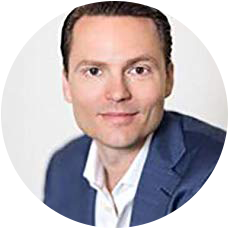
Kyle Walters
Kyle Walters is a partner at L&H CPAs and Advisors and managing partner of Atlas Wealth Advisors, where he helps entrepreneurs, physicians, executives, and retirees simplify their financial lives through an integrated advice platform. He holds the CFP, CPWA, and CIMA designations, among others, and his work has been featured in The Wall Street Journal, Accounting Today, and on NBC and Fox. He is the author of The Personal CFO: The Secret to Getting More Out of Your Money and Your Life.
📚 Books by Kyle Walters

Transcript
[0:00:27] Charlie Hoehn: You’re listening to Author Hour, enlightening conversations about books with the authors who wrote them. I am Charlie Hoehn. Author hour is about answering one question: How can you get the best ideas from great books without spending so much time reading? Every week, we take you behind the scenes with a new author, about the most important points in their book. So if you love to learn while you're on the go, you’re in the right place. All of our book summaries are 100% free and we do more than a hundred episodes every year. So please subscribe to and review author hour on iTunes. Today’s episode is with Kyle Walters, author of The Personal CFO. In today’s society, it’s easy to get overwhelmed by the constant bombardment of do-it-yourself advice and while the self-help gurus claim that you can and should manage every aspect of your career, personal matters and finances, the truly successful people know that they need a partner to handle all the details. In this episode, Kyle shows you how to collaborate with a new kind of adviser who can free up your busy life, so you can focus on what really matters. Kyle is the founder of Atlas Wealth Advisers and L&H CPA’s and Advisors, which specializes in helping entrepreneurs, physicians, executives and retirees simplify their financial lives. By developing a key relationship, you can become the CEO of your life, so you could put time and energy into what is most important to you while letting a trusted partner handle the moving parts. By the end of this episode, you’ll know how to reclaim the one thing that money can’t buy and now, here is our conversation with Kyle Walters.
[0:02:45] Kyle Walters: For the last 15 years and thousands of meetings, I’ve been spending a whole lot of time where I thought was teaching clients or educating clients on the intricacies of financial advice. Taxes, estate planning, insurance, investments, all of these different things and I get very excited about these subjects because I am passionate about them, I love it, this is what I would read on the beach. I came to the conclusion probably a year or two ago after I sat in several back to back meetings. It really became clear that clients, they just weren’t really engaged with what I was saying and I started asking them “What’s most useful for us to talk about in these meetings,” assuming that they would tell me like, “I want you to talk about the stuff you normally talk about” and that wasn’t it at all. They really didn’t want to learn about these subjects as much as I thought they wanted to. They just wanted to have everything taken care of for them and handled for them. So that really led me to the build out of our tax and accounting side which we really needed in order to be able to handle everything for clients, but it led me to I guess my internal mindset shift which was I need to stop and I am air quoting here, I need to stop empowering and educating these really successful, extremely smart people on things they don’t care about. I think our industry – and that made me pull back and look at our industry and look at the way the other advisers that I know act. So much of it is talking to people and trying to explain things to them that most of the time, they really don’t care about and these are already – I know most of my clients are smarter than I am and the assumption is that they cared about these things and they just really didn’t. So what I wanted to do was talk about what is a different kind of a role where this is the group that handles all of your stuff, like we can take care all of these things for you and what are the moving parts in order to get that done.
[0:04:38] Charlie Hoehn: Wow, amazing. So you realize this that your clients effectively didn’t care about the explanation. They just wanted the result and you change your business around that new assumption. What did your business look like before and after, or was it just the way you communicated?
[0:05:00] Kyle Walters: I think it was both. A lot of it was having conversations with staff. A lot of it was having conversations with myself and rebuilding what we discussed on twice a year, four times a year, however often we are having those client meetings. It was going back to I guess the drawing board or whatever you want to call it, asking the clients, “What do you want to talk about?” and most of what they talked about was: “We don’t necessarily care about how the sausage is made or how the watch works or all of those moving parts. We just want to know do you know everything about us that’s important, do you know where we want to go and have a clear and sure of understanding. The route is you need to figure that out but we want to make sure that you understand those two points as much as possible” and what we really rebuilt everything that we operate on is rather than talking about how we’re the expert at all these different subjects, we need to ask so many more questions. And become the expert and the client because there can only be one expert and a client right? The other experts they’re in, they’re a commodity. We can bring them in and out as needed but we need to say, “How do we become the expert and the client so that way whenever they do have a question or concern or whatever that may be, we’ve got the right lens and we’ve got the most accurate lens to be able to provide counsel, a seat at the table to give them the best advice we can”.
[0:06:13] Charlie Hoehn: That’s phenomenal for any business owner by the way and I’ve made this mistake countless times myself and I have only recently started to realize how just listening, just learning as much about the client as possible so that they know you are fully in their shoes so to speak empowers you to be their trusted adviser and they want to work with you. They are dying to work with somebody who really understand them, so I love that. So in your book in part one, you talk about information overload. Talk to me about that.
[0:06:50] Kyle Walters: Yeah, so going back on how we completely reframed our strategy, the way that we approach clients and talk with clients and work with clients – what I started to realize looking around in our industry especially in our industry in the financial space, clients who may or may not want to hear about any of these things are absolutely bombarded with information. So one, you have an industry that is constantly trying to give them more information and then you have social media and all of these channels. So from every angle, you know we wake up and we’re just getting so much data and so much information that it just becomes overwhelming to the clients to the point they really can’t proceed because there is no relevance. There is no filter that says, “And this is what it means for you”. So in this day and age, information and data is really not the answer. We talk about how do we almost mitigate some of that information that is coming at our clients and just say, “Here is what’s most important you don’t need to worry about the rest”.
[0:07:43] Charlie Hoehn: So could you give an example of that?
[0:07:45] Kyle Walters: Yeah, so for example our lobby is the perfect example. So our lobby, one of my favorite places that I’ve ever been is the Galapagos Islands. So no natural predators, the birds just hang out, let you walk out and step over, it’s a very interesting place. So in our lobby is a DVD of the Galapagos and it’s got the birds and all the marine iguanas and all of these. We don’t have CNBC on in our lobby because that is just information, right? There is no relevance, there is nothing that says, “And here’s what it means for you and by the way there is always breaking news” there is a red bar across 100% of the time. It’s breaking news. None of that is breaking news or it might be breaking news, but it is not relevant news. None of that is going to impact anything that’s related to your goals in the next 20 years, so we don’t have it on. So that’s just another piece of information that they don’t need. That is not going to be helpful if anything. It just starts raising their stress levels to the point where they are not able to make as good of a decision as possible.
[0:08:43] Charlie Hoehn: Absolutely, yeah you do have a great quote from Derek Sivers at the beginning of that chapter about if we all really acted upon the information that we were looking for, we’d all be billionaires with six pack abs.
[0:08:58] Kyle Walters: Right, I have neither, so I need less information clearly.
[0:09:02] Charlie Hoehn: Me too and yet, we have all the information in the world at our disposal. So you also talk about decision fatigue and this is a very underrated concept. Can you explain why you included this in the book?
[0:09:17] Kyle Walters: Yeah, I mean one of the things that I think the biggest challenge when working with clients or one of the biggest challenges is helping people make decisions that are going to move them forward, especially when you are dealing with complex issues where there is so many moving parts and so many factors and so many variables and professionals involved. How do you clarify the issue where you can just isolate a decision and allow them to move forward? Because in today’s space, you know there is so many decisions that are made from the second we wake up to the second we go to bed, most of them are not very important but what happens is the more options that you are presented the less likely you are able to do anything because the brain can’t really distinguish. So many of these options are so close to each other. It’s not the difference between eating a habanero and an orange anymore. There is so many variations that each flavor and every color and my wife and I were building a kitchen table, a dining room table. She wants a table built for us and they dropped off all of these different wood colors and there is something like 200 wood colors and I would have been much better off with two. Do you want the light wood or the dark wood? So we basically – my wife just says, “I mean there is no way we can make a decision,” so that happened last night actually. And that happens in all aspects of our lives. The more options you are facing that don’t have a clear difference or don’t have a clear alternative path, the less likely we are to actually make any decision at all.
[0:10:42] Charlie Hoehn: Yep, exactly. In this chapter you have on becoming the CEO, is the reason people don’t act like the CEO you say is because they are overwhelmed with all of these decisions, right? So how do we become the CEO?
[0:11:01] Kyle Walters: Yeah, so this was a really big – the title of the book, The Personal CFO, is only relevant and this is what I talk about all the time, it really doesn’t matter at all. The only reason that matters is for what it means for our clients, which is our main job is to help them become the CEO of their own lives right? Every family unit has all the same moving parts with assets, liabilities, income, expenses, these other professionals, there are all these different pieces. What happens is busy professionals and families and entrepreneurs and everybody they’re just overwhelmed with minutia, most of which doesn’t matter right? They are overwhelmed with the how and in reality, we’ve got to back all the way up to the why, what are our core values, vision, direction, all these moving parts. So we see is people come in wildly overwhelmed that aren’t able to act like the CEO’s, making the highest level decision possible because they are trying to keep the wheels on all of these moving parts because other people have not taken that over for them. So I look at the CEO and we talk about we don’t have clients, we have CEO’s and really what that means for everybody is how do we get people focused on really important decisions and why they have to take a step back.
[0:12:09] Charlie Hoehn: So it sounds like you’re relationship with your clients isn’t really about managing their money. It’s about allowing them to be better at their job.
[0:12:21] Kyle Walters: Yeah, I think that if you look through the book there is no term of money management or investment management because yeah, it’s something that is a method not a goal, right? So we focus on the goal. You know all of these things, all of these solutions are just solutions to get to where we want to go. So being good in investing, that’s not really a thing right? And we have access to all of the experts so that is not really a big deal.
[0:12:44] Charlie Hoehn: And how do you mean by that, what do you mean?
[0:12:46] Kyle Walters: When we talk about either the industry that I am in, so financial services industry has – they’ve hung their hat on the reason that you would work with a certain financial adviser over the other is because they may have this really special investment strategy. Well here’s the thing – or they may have the secret that they can do and then you’ll make more money or have better rates of returns or whatever, well here’s the thing about a secret is if you told anybody especially in the investment world, it wouldn’t work anymore because it gets arbitraged away. So just by definition some idea that “I am going to work with the adviser that is going to give me the highest rate of return,” is a total fallacy. It is not really how you should be basing decisions because the market gives us what it gives us. What we need is how do we get access, so how do you have an adviser that could really access anything and then has a lens that says, “But I know how all these moving parts work”. So the biggest value that we provide working with clients is not necessarily the investments, the investments is going to happen, we’re great at it that’s fine, but the biggest value that we give back to our clients is the only non-renewable resource that they are most focused on which is we give them back time. So what are all these things that really need to be coordinated that are really not being coordinated because it is too overwhelming. And even if they did want to do it, it would take an immense amount of time and resources that they would rather be spending elsewhere, grandkids, nephews, nieces, whatever it is, we give them the permission to say, “Hey I know you don’t care about this stuff and we’ll handle it because what are the things that are important to you”.
[0:14:15] Charlie Hoehn: So before we get into the roles that you described in the book, I am curious what is your main hope with writing this book, what are you really hoping that readers will get out of it?
[0:14:28] Kyle Walters: Yeah, you know I think I was getting into the book before I started even realizing like what I want to be the end game, like what’s the goal. I think the goal is so much of our industry in the financial services space is people that are passionate about these subjects were taught by people that are passionate in these subjects, so it almost feeds off itself. So, when I grew up in the industry, I had people telling me, “Oh you need it”. “When you learn about these things you need to go tell your clients about these things. Talk about all of these different pieces”. Well it’s not really how it works because clients don’t care. They are not passionate about it, right? So, I have basically been taught the wrong thing for a really long period of time and our whole industry I think has. I think maybe some clients really enjoy going through the intricacies of this. That’s not really who we work well with, right? We work well with the client that says, “I’ve got a ton of complexity and a lot of moving parts. I have these professionals, I know there are things that need to happen. I don’t know what they are and I need somebody to coordinate and facilitate it with and I don’t care, I really don’t care about these details” and I had so many inevitably clients who would come in, super successful, they had a business, they sold it, they did whatever, physicians, who knows? Very successful people in what they did and they would come in and they would hang their head and they would say, “You know I don’t know much about this stuff but I know I should and I know I should care”.
[0:15:46] Charlie Hoehn: Yeah so they feel guilt.
[0:15:48] Kyle Walters: They feel guilty about not knowing these subjects or not knowing which questions to ask or whatever and I think the point of this book is you do not need to care about these things. If you cared about them, I would be out of the job because again, information is not the problem. Everything I’m going to tell you, you can find somewhere. It’s all accessible right? I think the goal of this book was to help people be okay with not caring because I think right now people are a little embarrassed to say to their friends or family: “Yeah you know I’ve got somebody who handles this because I don’t care about it”. It’s not that they don’t care about the goal, it’s not that they don’t care about securing their family’s future, not running out of money, making sure they’re protected, whatever. Of course they care about that, right? They just don’t care about how the sausage is made. You don’t have to watch Bloomberg, you’ll never going to get to the point. Hopefully you never get to the expertise level of your financial adviser or you should fire your financial adviser. So what’s the point of spending this time working up the stress levels on saying, “Geez I wonder if I should be thinking about this,” just ask your adviser. I think a lot of this book is identifying a role that the adviser needs to take and expectations that clients should have of their adviser that is not driven by picking the right stocks right? Or any sort of product, it is driven by “is this person the expert in me and can they coordinate and facilitate the people that are needed in order to get me from point A to point B the way that I want to get there”.
[0:17:10] Charlie Hoehn: How many people in your industry have you found operate like you do at this point? I mean you used to operate the old way right? Now you are focused on the client’s needs, truly focused on what they need. How many people in the finance industry do that?
[0:17:26] Kyle Walters: I think I wrote the book and I am not – you can ask my wife or anybody that really knows me, writing a book is about the last thing that is in my capacity. I am not just very good at it which maybe will show up in the book but I found that –
[0:17:38] Charlie Hoehn: You don’t have to feel guilty about that Kyle.
[0:17:41] Kyle Walters: Yeah, exactly. I don’t have to feel guilty about that and there are a lot of great people in our industry, right? I am friends with a whole bunch of them and I am from Texas. So you start any of these comments with “bless your heart” right? So bless their heart, here is where I see people ending up. I see a whole lot of really great advisers who love this stuff, so they think their clients love this stuff and they are one, they may be a little bit too focused in one area and realizing they’re trying to become experts in an area when in reality, they need to become an expert on their client. The majority of the meetings needs to be asking questions, we get two ears and one mouth for a reason, right? So the majority of the time spent with client needs to be clarifying the why, where do you want to go, all of those types of things versus just talking about the how because that is not really helpful for the client. So you have people that are really passionate about what they do but maybe missing the mark on what clients really need and as we move forward into the future, as technology expounds and all these really we have a crisis of just managing all of these moving parts rather than one silo. So you’ve got really smart people who love this stuff thinking their clients really love this stuff which I think is not the case usually and then the other side of and then I think you do see advisers that think, “Oh my clients don’t care”. The challenge with some of those advisers is those are advisers that frankly don’t understand. What I’m talking about when I talk about the personal CFO managing and getting the client to simplicity, I am not talking about – none of this is simple right? This is highly complex and it’s very difficult to actually make the complex simple and I think the challenge with advisers is they are on these simple side of simple, versus they are simple and then there’s complex and then on the other side, there’s elegant simplicity and I think they are stuck on simple. So when they’re like, “Oh my clients don’t care so therefore I don’t need to know these things either,” that’s highly dangerous. So I don’t see a whole lot which is I think why I’ve spent the last year working on my thoughts on what it means for the industry and what it means for clients.
[0:19:37] Charlie Hoehn: Yeah, well it’s an important shift. Now you talk about the roles that the personal CFO takes on, right? In your book, you have the advocate, the catalyst and the integrator. Are these the essential roles of any good personal CFO?
[0:19:53] Kyle Walters: That’s what I think. I think those three roles are – if you are doing those three things within and again, a lot of these there’s a whole lot of moving parts. With any subject, it is important to think how can we explain it simply? So when we talk about the advocate, the catalyst and the integrator, what is something that when a client is thinking, “What should I be looking for or what are the expectations that I should have on my team?” Those are three core components. That maybe you can always expound on any subject but those are three core things that without one of those, it is going to be really difficult to move forward as efficiently as you can.
[0:20:27] Charlie Hoehn: So the advocate I take it it is somebody who is in your corner, fully understands you first and foremost right? That’s why it’s the first role.
[0:20:36] Kyle Walters: Yeah, so when we say the advocate it means a couple of things. One, when we say the advocate obviously this is the person in your corner, the thinking partner, the trusted adviser so they know everything that is going on. It is the expert in you, I mean that is the biggest thing that I always drive home is I am highly conversant, and I know a lot about a lot of different subjects, but my main expertise is in each one of my clients and what their needs are. We can bring all the people that is needed, right? The other component of advocate is you know as an adviser, we’re not a conduit. So if a client calls and says, “Hey I want to buy some gold,” that not how we really operate. I mean that’s a method not a goal, right? So that would be followed up with a whole lot of why’s. So when we say we’re an advocate, I am not just going to do what you tell me to do. That is not why you paid me. You can have an order taker anywhere. It is much less expensive. You can get that on E-trade. I think it is $7 a trader, who knows what it is now. The reason why clients work with us is because we’re going to say, “How is this relevant to where you want to be in the future and based on all the things that we’ve talked about, has anything changed in your situation?” So advocate really just means we’re going to have your best interest in mind. We are going to tell you what’s best, we’re not just always going to agree with you.
[0:21:45] Charlie Hoehn: And catalyst and integrator – catalyst I assume is the person who gets things done or at least starts them and then the integrator is somebody who integrates the plan within your existing business or lifestyle.
[0:21:58] Kyle Walters: Yeah, so when we talk about catalyst, so all these conversations that we could have and all of the things that we could talk about they’re great, they’re very interesting conversations but unless we can get somebody to move forward and implement the things that we know they’re going to put them in a better position, we’re failing as a team. So when we talk about catalyst, one of the things that we wanted, that we do and we say is: “Where do you want to be by when and what are the things that need to happen in the interim and how can we hold you accountable to get these things done?” I think some other teams or firms or mindsets may miss the mark as they say, “Well hey, I sent this information to him and they hadn’t gotten back to us. So we’ll just wait until they get them back to us,” and that’s not the way that we operate. If we have a highly successful family, they’re clearly good at things. Now they clearly may not love this so we say, “How do we make getting these things done as easy as possible and get you to 99%,” where you’re just pushing the button or you are saying yes or no or moving, estate planning is a great example. Most people need to either do it or fix it but they don’t because there is so many things that need to happen. So we can run interference on a whole lot of it and get you to a decision point and then take over. So catalyst is the team and is the person that you are working with actually doing things and moving forward and helping you move forward and an integrator, you know when you talk about increasing levels of complexity, at some point when you are younger, you’ve just got – you do it yourself and then as complexity grows you have a couple of people help you and then what happens is complexity is increasing and increasing. You are thinking, “Okay I got this people but nobody is talking and if nobody is talking, what is the chance that all of these things that they are doing individually are working together and it is close to zero right? So who’s the one in the middle and what I tell all clients that coming in I say, “Hey look, good news is you are the CEO whether you like it or not, whether you’re a good one who knows? But you’re also the CFO unless you have somebody coordinating and facilitating all these moving parts into one plan,” into one cohesive plan. And then most people freak out a little bit which is understandable because they realize, “Oh I didn’t know these people have to talk to each other, or I don’t realize there needed to be some sort of glue in the middle that is holding everybody accountable to the client’s goals” and to meeting the expectations.
[0:24:09] Charlie Hoehn: Right. So let’s talk about that, clients goals. You talk about coming up with a road map and creating a plan. What kind of goals do your clients have typically? What kind of clients are you working with? Where are they in their financial journey?
[0:24:26] Kyle Walters: So most clients they are coming to us, I guess you would call them at the mature part of their journey. So their complexity is risen past the point where they’re like, “Okay I don’t want to do it myself not because I couldn’t but because it is not what I am passionate about. My time is valuable and I would rather spend it with my kids,” or traveling or whatever, right? So they just don’t want to spend their time doing this but they have resources and they have complexity and they have sometimes other professionals that we need to manage. But when we talk about the things that we need to do for somebody which is first we draw the map and build the map. So when we talk map that means we need to have a clear and shared understanding of your point A, where are you now, we need to have a clear and shared understanding of your point B, so where you want to go? So point A is really not that easy but it’s simple. We are looking for we build out things like financial statements. So your net worth statements, your income statement, which is you would never invest in any company if they didn’t have those things. Yet successful families go all about their business and they make decisions without actually having some baseline financial data. So I always ask, “How is your current advisory team making any of these decisions without this information?” And we get a bit of an eye wiggle, right? But it is kind of scary that these things are happening without any real information. So that you know we established a point A, what are your family’s core values, those types of things and then point B being the goals and goals are really different for everybody whether it’s we want to own a couple of vacation homes or family can go visit because in reality, we don’t get to spend enough time with our kids and we need a place that we can all go to but at its core, most people don’t want to run out of money. They want all the complexities taken care of. They want to be able to do the things they want to do and not have to worry about, “Am I going to be okay and are the things that I want to happen going to actually happen?” Once they know they have a team that is actually accountable to getting those things done and that we talk about here, everyone at the office is a Velcro suit, right? So when you give us a problem it’s going to stick. We are not going to say, “Oh you should go call Tom or Mary”. So having a team where they can just assign problems that’s what we love. We love to solve their problems, so everybody’s goals are a little bit different but it all boils down to, “I want to make sure I can do the things that I want to do, not run out of money and have the freedom to go live my life without being burdened with complexity that frankly I don’t want to deal with.”
[0:26:44] Charlie Hoehn: I love that. That is a super liberating thing to hear. So once you have point A and point B determined, you create the road map with your client right?
[0:26:57] Kyle Walters: So without – and that is really important. You’d be amazed or maybe you wouldn’t, I don’t know but I am always surprised by almost no one comes in with a really clear version of each of those. Your point A or point B like financial statements, they are usually incomplete. Sometimes totally wrong, sometimes non-existent and all of that is totally fine. That’s what we do right? But I wonder how our decisions are being made today? How are they being made now? So once we get to point A, once we get to point B which is where you need to go, what is most important right now, we break out and say, “Okay now let’s build a plan,” just like map. It is a noun but more importantly it’s a verb, right? So when we talk about plan, planning is a verb so that is a process that we are always going through together because things are always in motion right? A lot of this stuff is fluid, so we want to say: “From a planning standpoint, what are the decisions that will have the biggest impact on your life right now, in your opinion, that are going to give you the most peace of mind?” And then from our perspective, what are the biggest gaps and the biggest things we need to address? Let’s put that together into executable items and let’s start knocking it out with you delivering as little grunt work as possible so we handle everything that we don’t need you for. We will take care of it. Now there are certain things we need you for, like I need you to be making these decisions or I need you to actually give me the thumbs up or thumbs down. So, we guide you to decide but the minutia can be managed.
[0:28:20] Charlie Hoehn: Excellent. I love that. So you help them get the system in place. So you are the system so that it can run and they don’t have to worry so much about having this area of their life handled and one of the last parts of your book, you emphasized something really important. Measuring, measure what is happening that which doesn’t get measured –
[0:28:44] Kyle Walters: What gets measured gets managed.
[0:28:46] Charlie Hoehn: Yes, there it is. Great save, so talk to me about measurement.
[0:28:51] Kyle Walters: Yeah so if I just said, “Hey let’s build a map then let’s build this plan. Let’s work this plan” etcetera. Without any sort of define metrics that you can say that the client can say, “Hey here is how I know I am on track,” how are they going to sleep better at night? Because that is all I care about. If everything is going according to plan and going perfectly and they’re on track but they don’t have a way to know that and they don’t have a way to feel better about it. They don’t have whether it’s a score card or whatever is most powerful for them that they can look it up online or get a report from us or a phone call that says, “Here is how I know I’m okay,” we’ve failed. So it doesn’t matter if they are on track if they don’t know it. So what are the measurables that we can put in place that when we show you these things, this is how you know you’re on track and this is how you can feel good about where you are, right? So just like with any business, what gets measured gets managed and one, it holds us to an accountability level that is really important because we need the accountability. That’s again, that’s what helps us move forward and for clients they need to see, “Hey I have this team that they are saying they are doing things but if I am truly going to not worry about it outside of when we are talking, what is the information that I need to know so that I don’t have to worry about it?” Because or else without the measurement system you’re always in the back of your mind thinking, “Well I know they said that I’m good but how do I know? What am I measuring to?” So the measurement system is important with any business, with any family or household, what are the metrics that you need to know. So as much as you need but not more. So Einstein said, “As simple as possible but not simpler,” so what does a successful family need to know to know that they are on the right track, that they are doing the right things, so they can be confident and move forward and not worry about the stuff.
[0:30:31] Charlie Hoehn: So as simple as possible but not simpler. Do you have an example of a score card you have for one of your clients that is just super simple?
[0:30:39] Kyle Walters: I mean we have some clients that when we talk they want to know red light-green light. So am I on track or am I off track. Now on track there’s a whole lot of stuff that goes into this, on track or off track, but it is all about, if we are going from DFW to La Guardia, are we on track to land on time, right? So that’s when we talk about the importance of a map, point A to point B. I can’t call American Airlines and book a flight with that two airport codes. So on track means something different for everybody. Everybody wants a different level of detail. From a super simple standpoint, we have clients that just say, “Hey based on our initial plan are we still tracking our plan? Yes or no” and that is just a deliverable that says, “Here’s on chart. It is tough to do this over the phone,” but it is basically, here is the graph or where we should be and here’s where we are and here’s your dot essentially. I say, “Great, that is where I need to be,” not realizing that things shift, this is fluid. At any given time, we’re above or below. We are always the question you know just like with any plan, it is always in the wind stream. It is never exactly on that line. The question is, “Is this where we are expected to be?”
[0:31:42] Charlie Hoehn: So Kyle tell me about transformation you’ve provided to a client. Maybe your favorite personal success story you’ve had since you have taken on this new world view in how you are operating your business.
[0:31:56] Kyle Walters: I think what has been most impactful for me is watching clients start to relax on their chairs a little bit. It’s almost like I can see the worry start to melt a little bit when I just let them know that you don’t have to worry about this. You know it’s funny, we have an online portal where clients can log in and see all of their stuff. They can go look at all of these different things right? So it is all great, I love it. I would be there all day if I could and we can see when client – We get notifications with clients who are logging in and also if it has been over a certain period of time and clients don’t log in we get notified. I remember having a client, she had gone through – she was a widow, so nice and so worried about so many these things. So many of these moving parts is not something that she had managed before, and she had come in. We have been working together about a year and I said, “How’s everything going?” She said, “Oh good” I said, “Have you been keeping up with everything? Do you have any questions?” she said, “Oh no I have been looking at everything”. I said, “You know we can see that you haven’t logged in, in six months” she said, “Yeah but I remember, I am not worried about it because you said I’ve got everything. Everything has been taken care of and you are going to let me know if there is anything I need to do, right?” I said, “That’s right”. And she just kind of like before she would have been absolutely worried about that and now she knows that she’s completely taken care off and just watching her leave and just her not worried about any of these things because worrying doesn’t help. So I don’t know who said the quote but “If you can fix the problem why worry about it and if you can’t fix the problem, why worry about it?” So how could we remove worry. So what the market is going to do tomorrow, we can’t do anything so why worry about it? The most important planning components, we can fix that and we can do it so why worry about it? Let’s just implement it. So I think just seeing clients stop, having to think about stuff they just don’t care about and getting the real conversations where somebody says, “Hey I want X amount of money,” I want to get to $5 million or whatever. Some arbitrary number that maybe they heard from a friend or TV and we keep asking why. You know Toyota talks about the five why’s to get to the real problem with the real answer. So we just keep asking why and eventually, it comes down to the real goal or the real worry which was, “Well I saw what happened to my grandma and I don’t want this to happen” or “I just really want to get a house in Lake Travis so the whole family can go because I never felt I was close enough to my kids”. We can get to real goals that really matter and measure the things that’s going to give them a real sense of accomplishment and fulfillment. So I think that has been a big shift.
[0:34:20] Charlie Hoehn: I love that and I have heard the five why’s and I’ve also heard “Why until you cry,” until you got into the real reason why.
[0:34:29] Kyle Walters: Yeah, why until you cry, so yes that too.
[0:34:31] Charlie Hoehn: Excellent. Well how can our listeners get in touch with you and potentially work with you or even just follow you on the work that you are doing?
[0:34:42] Kyle Walters: Yes, so the new book, The Personal CFO, it’s thepersonalcfo.com. Our wealth management firm is Atlas Wealth Advisers and our accounting firm is L&H, so I guess that would be Larry Harry, CPAs and Advisors, those are the different firms.
[0:34:57] Charlie Hoehn: Excellent and before we go Kyle, I’d like to give our listeners a challenge maybe something they can do today or this week from your book that could have a positive impact on their life. What would you recommend?
[0:35:11] Kyle Walters: Yes, that’s a good question. A couple of things. I think first off, I would stop reading any media on financials.
[0:35:18] Charlie Hoehn: Ah you’re a man after my own heart. I love that.
[0:35:21] Kyle Walters: Zero relevance. There’s less than zero, you know this is designed to peak your attention, right? It is designed to sell advertisements. It is not designed to give you good advice because as soon as good advice is delivered, you’ll stop watching because that is the good advice. So I would turn it off and I would say, “Do I really know where I am and do I really know where I want to go?” Just soak on it. Spend an hour, just a cup – a glass of wine, a cup of tea, whatever is your bag. And think, “Do I really know where I am, and do I really know where I want to go and do I have the right team in place to get me there?” And if I do have the right team, that’s fantastic. Do they know, because clear and shared understanding is hugely important, do they know where I am and where they want to go, right? Because so much of people’s worries are driven by the uncertainty of not knowing that themselves or not thinking that the people that are implementing so much that’s important to them know these most important parts. So I would be thinking, do I know where I am, do I know where I want to go, are me and my spouse or my partner or my family, are we all aligned and how do I get my team aligned too so that way, I have the measurables in place and I don’t have to think about this stuff anymore because you really don’t. I don’t think about the carbonator on my car. I don’t think about all these other things that really smart people help me fix and it is the same in the financial services space.
[0:36:33] Charlie Hoehn: Yeah and it’s funny because a lot of us just don’t even think that way. We’re like, “Oh but I should. It’s my money. I need to know everything.” I don’t feel that way about my car and yeah, you are absolutely right.
[0:36:45] Kyle Walters: I go to my neurosurgeon, if I’ve got crazy headaches or whatever. Nobody thinks that when they go to their doctor that I really should know everything about my medulla oblongata. I’m pretty sure I didn’t say that right.
[0:36:56] Charlie Hoehn: Right because Web MD is available, I should know all these stuff.
[0:37:00] Kyle Walters: I need to hit up Yahoo Answers and see what a bunch of none doctors – you’d notice, there is never a doctor on any of these giving advice. It’s always somebody that said, “You know my grandma has the surgery and she drank a lot of orange juice and that helped her”.
[0:37:12] Charlie Hoehn: It’s anecdotal, yeah.
[0:37:13] Kyle Walters: Yeah, it’s anecdotal. There is no professionals on these because no professional gives advice outside of context. So knowing that just stop Googling, it doesn’t do anything because it is never going to say, “Well I talk about the what, the so what and the now what” so you can find the what but you can’t find the so what which is what it means for you and you sure can’t find the now what which is “And here is what you need to do about it”.
[0:37:33] Charlie Hoehn: The book is, The Personal CFO, Kyle Walters thank you so much for being on the show.
[0:37:39] Kyle Walters: It’s great being here. Thanks for having me.
[0:37:42] Charlie Hoehn: Many thanks to Kyle Walters for being on the show. You can buy his book, The Personal CFO, on amazon.com. Thanks for tuning in on today’s show. If you liked what you heard, here is what I want you to do next. Open up the podcast app on your phone or iTunes on your computer and search for “Author Hour with Charlie Hoehn” and then click “ratings and reviews”. Take 10 seconds to rate this show or leave a review. It is a small favor but it’s really the best way to show your support and give me feedback and if you know someone else who’d love Author Hour, take another three seconds to text them a link to this episode. We’ll see you next time.
Want to Write Your Own Book?
Scribe has helped over 2,000 authors turn their expertise into published books.
Schedule a Free Consult