Peter Sasin: Episode 156
Read the full transcript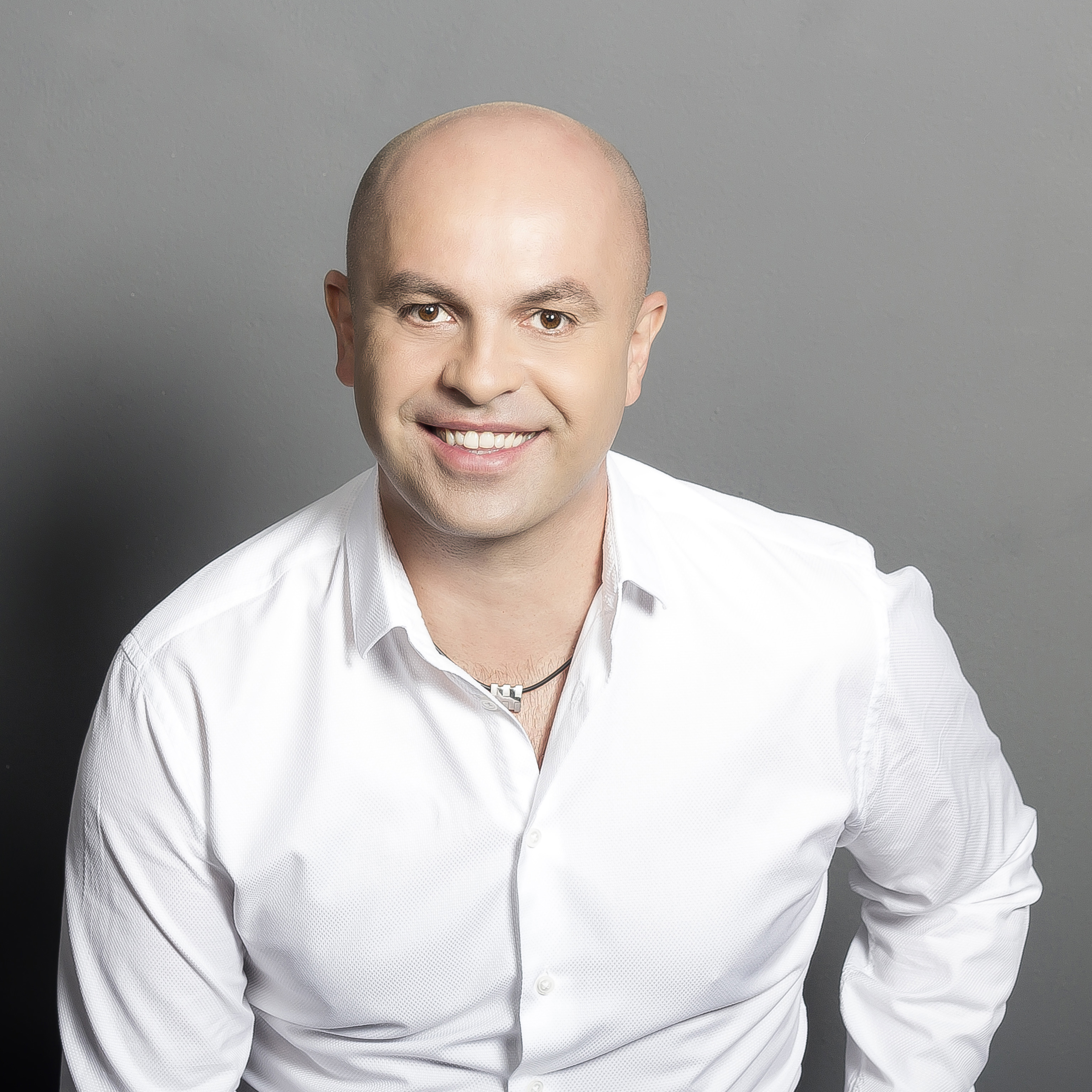
Peter Sasin
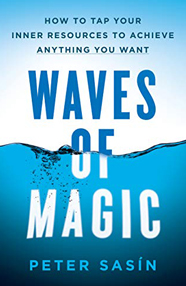
Peter Sasin is a public speaker, seminar presenter, and licensed, certified trainer of Neuro-Linguistic Programming who specializes in high-performance coaching. He has developed multiple methods that help his clients, among them business leaders, professional athletes, and artists, change limiting behaviors and beliefs and achieve results quickly. In his book Waves of Magic, he draws on his experience as an NLP trainer to show readers how to tap their inner resources to achieve what they want.
📚 Books by Peter Sasin
Transcript
[0:00:27] Charlie Hoehn: You’re listening to Author Hour, enlightening conversations about books with the authors who wrote them. I am Charlie Hoehn. Author Hour is about answering one question: How can you get the best ideas from great books without spending so much time reading? Every week, we take you behind the scenes with a new author, about the most important points in their book. So if you love to learn while you're on the go, you’re in the right place. All of our book summaries are 100% free and we do more than a hundred episodes every year. So please subscribe to and review author hour on iTunes. Today’s episode is with Peter Sasin. Author of Waves of Magic. Setting a goal and reaching it, are easier said than done. A lot of the times, we don’t get anywhere, no matter how much we feel that we’re applying ourselves. That’s where Peter comes in. Peter draws on his experience as a trainer of neurolinguistic programming. In this episode, he’s also going to share some exercises to teach you how to better define your goals and how to examine your core values and ultimately discover your natural talents so you can be closer and closer to the success that you envision. Peter believes you don’t need to struggle so much to live your dreams. You just need a little bit of magic. Now, here is our conversation with Peter Sasin.
[0:02:25] Peter Sasin: A first time in my life, somebody asked me, if you – and the question was, if you could, what would you choose for yourself? What would you do? My first response was like, I don’t know, never thought about that. No, really, what would you do? I said, what would I do? If I could? Yes, if you could. I think I will play ice hockey. Right. Then he asked me a different question and was a friend of mine, he helped me like, where can I apply for ice hockey and it came out that university in Munich has a beautiful ice hockey courses or ice hockey training for students and I came and I did this trainings and it was for first time in my life, I fulfilled something like a conscious dream, you know, because somebody asked me what would you do and then I have had no clue and after I stick little bit on that question and tried really to answer it, came something out. And I could remember, I went to the first training and you know, I’m – listeners maybe need to know that I’m from Slovakia and Slovakia is like hockey crazy country. You know, although we are only five million, people we produced some great hockey players for the planet like for example Zdeno Chára or Stan Mikita later from the earlier history. Many others. We were playing as children on the street almost every day, hockey. Then I went to the first training and you know, my thoughts were like, come on, I’m from Slovakia. These Germans, they cannot play ice hockey, you know, Germany is not hockey country. I’m going to show them what really hockey is, right? I came to my first training and I really self-conscious and I was so happy I’m there. The first exercise, a puck goes towards to me and the task was to do something with the puck and pass it on. I try to receive the puck and then something happened, I don’t anymore what but I was like ‘voom’ and lying on my back, on the ice. What was that? I was falling so I stand up and again, again, puck comes towards me, I try to stop it and do something with it and ‘boom’, again, what the hell is it? One more time and then coach comes to me and asks me, “Hey, what’s your name?” It was my first training, he didn’t know me, you know, my name. What’s your name? I said, Peter. “Okay,” he says, “Peter, when you fall the next time, release that stick because you could hurt somebody,” because when I was falling, I was making a huge bow with my ice hockey stick like ‘voom’. That was for me, something like my God, I wanted to show up you know to make a huge impact here and they are telling me I’m going to kill them with the way I was not able to play ice hockey. Then, I stayed and I trained and I – you know, went better and better and I can remember using for the first time in my life, something that I later on in my career named ‘magic reality creator’ because I was really rapidly up and up and I was better and better. Not only my dream was fulfilled, I was the part of the university team. I later on, I became a coach of a team, it was in my 30s and the guys playing with me were at least 10 years younger. This is kind of my story where it came out now in my, to make it really short. Now I am a trainer and you know, a mental coach to many professionals like business people, athletes and people from many areas here in Slovakia, I’m the bestselling book author and I’m on national TV and radio shows regularly. From the guy who feared his own potential, who feared to do big things because I always thought, it’s going to be a struggle, now I’m became kind of guy who helps others to fulfill their dreams but always on the easy way, on the easy path. This is kind of my story, Charlie.
[0:06:57] Charlie Hoehn: That brings us to Waves of Magic and your book. How did you decide you wanted to write Waves of Magic first off and second, what would you say is the big idea that you want people to take away from Waves of Magic?
[0:07:14] Peter Sasin: I would maybe start with a second question if it’s okay. The biggest idea I discovered for me and I want to give on to the people is stop this – stop struggle. Stop struggle because struggle is for me, wrong investment of energy.
[0:07:32] Charlie Hoehn: What do you mean by stop struggling?
[0:07:34] Peter Sasin: Yeah, I don’t want people to stop investing their energy because many people, when they hear stop struggle means stop doing anything or what do you mean by that? I mean, stop seeing the world as a fight, as winners and losers. You know, I don’t know if it’s in America too but here in my country is something like, I’m going to fight for my happiness, right? Facebook status or you know, on Instagram, I can see it regularly. Something kind of, I’m a fighter and I’m going to fight for my happiness. People, very often, do not realize by saying these kind of statements, they saying that you know, this is like something like hidden meaning, like presupposition, they’re saying, we can achieve happiness by fighting which I don’t believe it is the case. And then, if we can achieve it by fighting, there should be an opponent, somebody who wants us to prevent from our happiness, you know? Who you fight. And the third thing is, we can win or lose. This idea, fighting for my happiness says for our subconscious mind, we can lose that fight and fight can lead to happiness which I don’t believe. And the idea of fighting and struggling and why I want people to stop this because when I ask people and my clients very often. If they see that their progress is easy and playful. Very often, they forget to see the transformation on themselves because many of us like infected by the virus, only fight and struggle has value. I don’t know if you saw ever a Bruce Willis movie, especially the older ones where like die hard or something like this. You know, no matter – this is the cool thing about Bruce Willis movies, no matter where you go, a step in into the movie, if it’s on TV where you start watching, you immediately know by the amount of the blood on Bruce’s face, if the movie is starting or if it’s in the middle or if it’s ending, you know? The more blood on Bruce’s face, the more towards the end of the movie. Many of us subconsciously overtake the structure for our own living and we then think that only struggle has a value. Only when we overcome this huge problems. Obstacles, thank you, this was the word I was looking for. Sometimes okay, is it worth maybe to do a little bit of fighting in that but I see life as a mechanism of feedback or better said, I see life as a feedback mechanism, you know? Therefore, if you know, there is a metaphor in my book about the wave and if the wave is hitting you hard in the face then pay attention, it’s trying to say you something. You know, and many people do not pay attention, they just increase the tempo and you know, the volume and all. They get more hits more and more.
[0:11:01] Charlie Hoehn: I’m curious Peter, there’s the concept of the hero’s journey, right? This idea that we are addicted to stories where the hero struggles and that may be you know, we are the heroes of our own stories in that the biggest growth comes from struggle, what do you say to that about stopping those struggles?
[0:11:26] Peter Sasin: You know, the fact is, all great storytellers are all great movies, all great books are working on the same principle, since centuries. There is always struggle of the hero. All heroes struggling. I mean, this is great structure because it allows us to be with the hero to relive his journey. To feel why the hero is the hero. And, I think, we can choose for our lives to be not the same person as the heroes in the movies, as the heroes in the books. Because I would love for our listeners and for the readers of my book to be able to separate these two things. You know, very often, too often I see celebrities and you know, successful people telling something like you know, without hitting the rock bottom, you cannot achieve success. Which I don’t believe, I never in my life, I didn’t hit any rock bottom you know? Maybe it’s too late then, maybe – because I love what Dan Millman, the author of Peaceful Warrior is saying, universe is always throwing a ping-pong ball towards you. Like something like way correction. Ping pong ball. Then, if people don’t react, then the message needs to be more loud and more clear. I see life really as feedback mechanism and there are many stories, many examples in the book why I’m seeing that this way and it’s not necessary to struggle. If somebody choose, I won’t struggle and it works for me and it’s fine, go for it and probably the book is not for this kind of people. People who are feeling they’re tired to be hitting by their life, by the circumstances and feeling life like life is a chaos then this is I think very important tip to do not see the life as struggle far more see it as feedback mechanism. You know, the pain is a part of our life, right? I see pain far more than something that we should complain, or many people are used to pain and maybe they then take pain killers. You know, a metaphor I love to use is, when your head hurts because you’re hitting it against the wall, don’t take pain killers, stop hitting your head. In other words, if the wave is hitting you hard in the face, pay attention because it wants to tell you something.
[0:14:15] Charlie Hoehn: Beautifully said. Well, I want to talk about the major idea, the big acronym in your book which is magic. M-A-G-I-C. First, let’s start off with what M stands for which is magnetizing purpose and passion. Why do you want what you want? Talk to me about that.
[0:14:39] Peter Sasin: Yeah, it is something like finding your why. You know, to often, too many people I see, you know, choosing something for them like a goal, like they are future, like their idea of happiness which is not theirs. We want so many things we actually do not care about really much but somehow, we feel and other people in our environment, care about that. You know, there’s a saying that says something like, I hope I say kind of well, too many people are doing things they hate to impress people they don’t like. Something like this. This is what I mean, find what is your passion. This might be for our listeners, something like yes, of course, what’s about that? Passion is what I heard something, you know, like thousand times in every seminar and every book. This is okay. I will say, find your passion and far more, we need to go another step I think behind that model, over that model because I say, investigate and develop your passion. You know, I got dog, her name is Lily. A beautiful person, Russel Terrier, it’s something like Jack Russel but with longer legs, right? When she was a puppy, I took her to, I think that’s called agility, this is a sport where people and dogs are doing things together and running through tunnels and obstacles. First training, my trainer said to me, Peter, put your dog over there and you come here over and then you start with her. I said, “Okay Lilly, sit,” I go there, I turn to my dog and the dog is not there. You know, she was like sniffling and going and everything was far more attractive to her than the soup and agility. I said to my trainer, “Does it have a sense because she seems not to like it.” She said, “Come on, we give a little treat and that, everything’s working fine.” It seemed to me, Lily is not passionate about this kind of sport. Choose for her like let’s do this together. I think it was like third or fourth training, I came with the car, she was in the car and then suddenly something changed because she was like yeah, let’s do it. She ran out, she did some obstacles on herself, you know, like a little bit, did a little bit slalom and ran through the tunnel and I was wow, this is great, she likes it, she loves it. What do I mean by that and why I think the story could be important for people who are listening to this podcast is, give your passion sometimes a little bit chance to grow to, you know, not only find your passion but sometimes invest in your passion.
[0:17:39] Charlie Hoehn: Yeah, there’s this saying that’s, don’t follow your passion, follow your effort because if you follow where your effort’s going, your passion unfolds over time.
[0:17:51] Peter Sasin: Yes, you know, the main topic I think is focus. Because if you follow your effort and if you follow and do repeatedly the things, the skill you need or we need is focus, to be able to focus on one thing and then blend out everything else. I mean, many people are distracted and like you know, doing all many things at once and I think focus is for most people, for me to maybe, the most valued resource we ever possess. Because what we you know, what we focus on, it tends to grow. If we focus on a problems or if we focus on what we don’t like in life then you know, it will grow potentially. If we focus on what we want and if you focus long for long period of time on success for example. What we love, it will be more in our lives eventually.
[0:18:51] Charlie Hoehn: It’s the truth, it’s probably the most frustrating truth to know because it’s so difficult to maintain.
[0:19:00] Peter Sasin: Yes, because our time. Now, if you – you know, I like the old movies, I like old moves and old video clips, like first video clips from The Beatles and all the rock bands, if you see how long one it takes, one shot with the camera, it’s like forever. It’s like for 20 or 30 seconds. Come on, when are you today? Won’t make, when do you want make today great video clip. You know, three seconds is already too boring. It’s like bam-bam-bam, every single second almost new picture. In the music industry, we need something called a hook, I think every 15 seconds so people are able to listen to the music and the hook is a part of melody which is really in a nice sounding. So that catch people’s attention. When I remember the songs like from Deep Purple or Queen, like they building up the songs for seven minutes with the intro. I think nobody, just few people were, will be able to listen to that because it’s about focus. And what we can do about that is really, building these addiction, because addictions I think sometimes can be good because many people are addicted to distraction and I would, you know, suggest, build solid and good addiction to focus. It is possible and the book I’m telling the people few but very resourceful tips, how to train themselves to be more focused for longer time.
[0:20:40] Charlie Hoehn: Excellent. I’m with you on focus, on going deep, let’s talk about the letter A in magic which is all senses, what do you mean by this?
[0:20:54] Peter Sasin: All senses, I love them. Because this is the part of visualization and when I say visualization, that many people say yes, of course, I’m doing it and this is great. Like thinking about your future, thinking about your outcomes. What I have discovered -
[0:21:13] Charlie Hoehn: Just a second Peter. Before we move forward, I want to re-say like why magic? Who is this book really perfect for?
[0:21:25] Peter Sasin: Why magic? And who is it perfect for? Magic, because I think this is really magical. This is – I’m so happy that I was you know – I don’t think I developed this idea somehow on myself. I just think it was given to me and that was for me, magic, like to be able to develop something called magic reality creator was like wow, I need to share this with the world.
[0:21:51] Charlie Hoehn: It seems like the book’s really for people who are struggling to either express what they want or struggling to figure out how to get what they want.
[0:22:01] Peter Sasin: Yes, both ways, absolutely. You know, struggling to express what they want, you know, the first chapter before diving into the magic and the chapter just before that is called ‘Clarity’. Again, many people say, “Yes, clarity, I know.” But I’m explaining what clarity really means and at least, as I see clarity, right? To be clear on what you want is so important and the idea is why magic is, magic doesn’t involve necessary struggling. Because you know, on a different place in the book, I’m saying, if you will be able to choose the vehicle, the car let’s say, that will bring you into your future. That will bring you to your goals. Would you choose a broken one with where you – every few miles, just need to repair it and push it with emergency brake always on. Or would you choose nice car like a good one, nice one? Good looking and people say, of course I would choose good car. I love a good car, why should I choose broken one? This is what I see too often, you know, with my clients from business, from athletes, from sports. They just living for their lives, they need to choose broken vehicles. Very so stressful on so difficult. Like me playing basketball. You know, in the past, it was my choice to feeling that terrible, it was not the problem, maybe the coaches who were yelling at us but you know, my feelings were created by myself and not by them. I was choosing at that time, at my basketball player career, the broken vehicle because I hated it and it was so difficult and stressful for me. And therefore I mean, this is for people who feel maybe tired to try again and again and they are doing all the right steps and they are doing the right – they’re saying positive men trust to themselves. They are creating positive pictures and say to themselves, “Yes, yes, yes, it is going to be great.” And somehow, it still doesn’t work the way they’ve imagined and they feel maybe that they could accomplish things far more joyful, far more easier. Although I think very many people hate the word easy and we can maybe talk about that too because easy is like a red flag to many people like if I say, “It’s going to be easy.” I say, “No not worth it for me.”
[0:24:46] Charlie Hoehn: Right. So I didn’t mean to disrupt you in what you were saying about all senses, visualization.
[0:24:55] Peter Sasin: Yes and I mean visualization by all sense not only the visual one because the way I show the reader, I teach the reader to visualize is at least four times stronger than what usually people use. Because I discovered when some goals or some – yeah let’s call them goals, when some goals I achieved and some I didn’t and my clients too then very often was the hidden key was in how we thought about our goals and very often, the certain senses were missing. Like for example, if I was dreaming about success in my business, sometimes were sounds missing from my imaginations, from my thoughts. Actually, when I was speaking about the hockey time in the university in Germany and as fast I was growing, I realized just years maybe decades later, I was using all my senses in the subway sitting in that seat and thinking about hockey and I was thinking that I was just thinking about hockey. In fact, I was training myself and programming myself by the way how I was thinking about it. And I saw all that pictures in my mind when going to play in a few minutes. I was hearing all the sounds of the puck, of my skates, of my teammates yelling and calling and then I was feeling all the feelings and all the equipment of my body and if you would see me, if you would sit against me or somewhere near to me in the subway, you would see that I was in total deep trance state and I was programming my mind and I was smelling the smells. I don’t know Charlie, did you ever played ice hockey?
[0:26:54] Charlie Hoehn: Yeah.
[0:26:55] Peter Sasin: Yeah and you were in the locker room too?
[0:26:58] Charlie Hoehn: Oh I didn’t play in a league but I played growing up, yeah.
[0:27:02] Peter Sasin: All right.
[0:27:04] Charlie Hoehn: Which by the way, I know the locker room smell that you are talking about and it is horrible, yeah.
[0:27:11] Peter Sasin: It stinks, yeah it’s horrible and you know, it was easy for me to remember that smell, which ice hockey players are actually loving. It is an all factory anchor for them, you know smell and go like, “Yeah! It makes me feel good.” So I was sitting there and using all my senses and that was I know now, I wasn’t aware of it that time, I know now it was the key for me to grow like that and this is so crucial for people to use all their senses while imagining something that I call not only goal but something I call future scenario. Like what you are going to do in that situation, let’s say as an example you’ve got a sales person and the sales person goes to the meeting with the prospect, the client let’s say. And now, the sales person has the chance to think about this future scenario like meeting the client in a certain way and what I say in the book and what is the principle is backwards planning. Always start in the end state like shaking your hands with the client and saying, “Yes,” signing the deal for example. And then work yourself backwards from the end state through some steps in the process but always start with the end state. And the best way to do that at least to my experience is to do that by using all of your senses, all five not only one or two.
[0:28:54] Charlie Hoehn: Perfect and for G, you talk about the GPS, the map to the life that you want.
[0:29:02] Peter Sasin: Absolutely and this is so crucial because sometimes people do all the right steps, right? Like getting up early in the morning, doing their relaxation and then all this stuff and then they start business day or doing actions, some interactions with their children and you know somehow, they do all the steps right but sometimes these steps all head in the wrong direction. This step called GPS is like the next step of the model showing you if you get closer to your goals. And this is so interesting because very often people imagining it like I am going to feel certain feelings after I reach this goal. And the metaphor I am using the book is if you want to go to Washington let’s say from Chicago, you hop in the car and you have no GPS in your car and no maps. How would you know that you’re on the right track? So you would probably look for the signs on the road, right? So what you would look for is like Washington, Washington, Washington and you know, okay this is the right track. What would you do, is the question to our listeners, if you instead of Washington suddenly see Los Angeles, Los Angeles and it would say, “Damn it is the wrong direction.” And then you stop probably and then you will maybe ask somebody is the right direction is the way to Washington DC? And they say, “No, no, no you need to turn around and it is this way back.” This is what we usually do on the highway, in the life we tend to be the absolute opposite. Let’s say because there are very cool questions in the book, asking the reader what is behind the goal, we are looking the goal behind the goal because we never wanted the house or partner, just because of the house or because of the partner. It is something, we could call it values behind that goal or certain feelings sometimes and you know, in real life people say, “When I am buying or building this house, I will feel happy and productive. And you know I will feel harmony.” And then on the road, they are not looking for road signs like happiness, harmony, productivity, they seeing fight, stress and so on but this is the same thing as if you would want to go to Washington but following the signs of Los Angeles. And Los Angeles is a beautiful city but if it is not your destination, you know, so this step, the first step in the magic model allow the reader to recognize and really understand the feedback life is giving us in order to understand if we are getting closer or if we go far away from our dream.
[0:32:05] Charlie Hoehn: Right, so I am going to give you a choice Peter to do either the letter I or the letter C and then we’ll leave the rest to the listener to actually go check out the book. So what would you prefer?
[0:32:21] Peter Sasin: I prefer, let’s hop to the end. Although I think inspired action is very important in that process because it allows you to be in the present, not in the future, not in the past and let’s hop to C, create with the waves. and this is maybe the shortest chapter in the book. However it is at least – I will choose, let’s go into the C, like creating waves, and the creating waves is where we can really create waves not only do attempts and tries and that means consistency. C stands for creating waves and for consistency and we need to be consistent because many of our listeners know the yoyo effect, right? And I think there is no such thing like yoyo effect. This is only a come back to the old style of living because if we are consistent with our new lifestyle then we can create waves and there is such a beautiful story I was a part of. I was jogging here in the neighborhood in Bratislava, Slovakia and around a lake, a little lake in my neighborhood and I saw boys playing soccer. We call it football here but soccer in American, right? And the ball, it was a fence on the side and the ball just flew over the net, over the fence and right into the water and they just ran out and you know the impish part of me said something like, “Somebody is going to get wet,” you know? And I stopped and said, “Who’s the guy that is going to the water?” And they just didn’t. They just looked for something on the bottom and I said, “Wow they are looking for a stick. A long stick so they could pull the ball towards them.” And they seem to be picking small things from the floor so not a stick. I was wrong again because I was thinking somebody is going in to get wet, you know? And then they threw the rocks because what they were collecting were small rocks, little small stones. And then I was thinking like, “This is genius.” They are throwing the rocks behind that ball and it created currents and something like 20 seconds, they’ve got the ball because the sea level – The water level is very deep sea so two steps and you are totally in the water. It is very deep sea and they were throwing the rocks behind the ball and then the currents pushed the ball towards them and nobody get wet. They just took the ball and continued to play football and then I saw that they used all the magic steps, you know? Because they were magnetizing their purpose, they loved what they were doing, they knew they want to continue the game. And they probably used all the senses so they knew how to throw the ball and how does it feel when they touch the ball and they used their GPS, nobody was blaming anybody. They were joyful throwing the rocks, they were laughing and I was like, “Wow!” I was standing there and learning this huge lesson for me and they showed me how magic works and it was so beautiful. Inspired action, they were inspiring me. They were of course constantly doing it still so they could continue. So they were consistent and they were so inspiring. So I don’t know if it’s enough about consistency and all the chapters.
[0:36:21] Charlie Hoehn: No, it is. I am curious, what have been some of the transformations that you’ve seen with your clients who’ve used these ideas that you’ve packaged into this book.
[0:36:33] Peter Sasin: I am speaking in the book about more clients and most importantly two major ones are two guys. One is Horado who was injured in the past like a few years ago. He cannot remember or recall how so traumatic was it for him and the doctors said to him he will never be able not only to walk but move from his neck downwards. So according to their words, he will able to only move the eyes, face and so on and then somehow he told me that. He somehow came to my podcast I have here in Slovakia in Slovak language and then he started to listen to it and then he visited my seminars and then we started to work on his beliefs, on his way to doing things, on joyful doing exercises because he came with an assistant who was constantly pushing, there is always somebody to help him. His name is Horado because he wasn’t able to take care of himself and his huge dream was at that time to walk again and to drive the car again and to have children and to have a beautiful wife. And you know, most of the dreams are fulfilled already. He drives the car by himself and you know he has a beautiful partner and he is now sporting director of a handball club because he is an athlete. He is a very good hand baller and what he learned for example to apply magic in his life and all of these steps was using all his senses to again recall how does it feel to use his legs again and somebody is maybe calling it fake it until you make it. And when you do that procedure, really the most useful way than it starts working then his body started to build – I am not a doctor but how do I explain it to myself his body because his nerves were broken, they were apart, he really wasn’t able. The future diagnosis was really correct. He wasn’t able to move himself but somehow his body managed to replace and this is my explanation, not a professional one, it seem to replace the nerve connection in different ways. So he is able to move himself, he’s able to drive the car, moving by himself and as I saw him because I visited him one year after the seminar and he was able to stand for a little while, to be able to stand up and not stand up but still stand still, right? And it was so amazing and one of the part was enjoying the process. It was like this GPS step in the model. He was starting to laugh in every exercise he did and he had very religious parents and his father who is also very religious is the right word. And he was always crossing himself because he heard his – crossing over himself, he heard his son laughing out loud in his room alone like “Oh my son went crazy,” but it was part of his process to enjoy it and the laughter, you know I imagined that like the laughter awakened all this chemistry in his body and now, I believe he is going to be able to walk again. It’s no doubt for me. So this is one client.
[0:40:26] Charlie Hoehn: That’s a pretty big testimonial my friend.
[0:40:30] Peter Sasin: Yes, it is a big one and I am so thankful for that. So another one is maybe worth to mention, a man who here back in Slovakia who wasn’t able to went out for three and a half years of his apartment and he was nine times in psychiatric clinics and his words were if he goes to there next time he probably would kill himself. So he sent me a help call. It was a really helping call in the last moment and we applied the magic again and I don’t want to awaken something like I didn’t stood over these guys and uttering my hands like voodoo moves, you know? Like saying not understandable words, you know? What I did was I helped them to use their inner resources in a way that were absolutely helpful to them so that Horado can continue on his dreams and this other man was able to leave his apartment and feel much better about himself. It is not dark magic or secret magic. It is a normal thing that everybody could use by understanding which resources really live inside of us.
[0:41:47] Charlie Hoehn: That is a wonderful place to wrap up. Two more quick questions, one how can our listeners connect with you and potentially work with you?
[0:41:57] Peter Sasin: So they can connect with me via Facebook and it goes like Peter Sasin Official. Sasin not assassin. So simple Sasin, Peter Sasin or very simple way is the name of the book, wavesofmagic.com and this is maybe the best way to connect. So there are some certain links for Instagram or Facebook but over to wavesofmagic.com certainly.
[0:42:34] Charlie Hoehn: And the final question is, could you give our listeners a challenge, something quick and easy that they could do today that will improve their lives?
[0:42:46] Peter Sasin: Something that is quick and easy to do to improve their lives. All right, I am going to give them a little exercise if that is okay which is also the part of the book and it is really easy to do and okay, so what I want to share with the listeners right now is a little exercise which is also in the book and it shows us how words can have a huge impact on ourselves, on our potential, on our power. So we build a little set up right now. So let’s imagine if somebody from our listeners need to close their eyes. Do it, if you are driving the car then do it not. So let’s imagine you are standing on the floor and right in front of you down on the floor is a big metal sphere and you can see it is metal and it seems to be really heavy because it is maybe a metal sphere and now I want you to go down and touch it with your hands and then maybe you feel the cold surface of this sphere and now, I want you to try to lift it. So try to lift it, that’s good. Now release it, go back and look around and now, go back into that set up. Into the imagination where you stand in the floor, right in front of you the same heavy metal sphere. Now touch it again, right. That’s good. You are feeling the surface, it’s cold maybe and now lift it. Just lift it, that’s good and now, that’s it release it, come back. The exercise is done. Great job. Now maybe we cannot gather the instant feedback from our listeners but what I imagined and what I very often do with my clients, with my seminars with this exercise is I am asking them: In which from both these situations the first one or second one, they felt they could bring the ball or the sphere more easier? And the answer is very often in the second one. The second one was easier for most of the people and if our listeners did the exercise then maybe the experienced the same thing and why it was easier, it was the same sphere, it was the same environment, it was the same you but one thing was different and in the first situation I used the word try. I said “try to lift it” and that many people say, “I tried but it was so much heavier in the first situation when I tried” because I may be made something and then that was it and in the second scene when I said “lift it” many people go with their arms over their head and that means what is the tip for the next days, think about to stop the word try. Think about it like which you can leave it out or which word do you want to use instead. You know instead of saying maybe “I tried to do that.” Just do that because your subconscious mind is always listening and it reacts with the amount of energy it sends to you or it takes away from you. So maybe that little insight from one of the exercises in the book will be helpful for our listeners to stop maybe to use the word try.
[0:46:34] Charlie Hoehn: The book is Waves of Magic. Peter, thanks so much for being on the show.
[0:46:39] Peter Sasin: Thank you for inviting me. It was a pleasure for me. It was so playful and easy and I loved it. Thank you Charlie for inviting me.
[0:46:47] Charlie Hoehn: Many thanks to Peter Sasin for being on the show. You can buy his book, Waves of Magic, on amazon.com. Thanks for tuning in on today’s show. If you liked what you heard, here is what I want you to do next. Open up the podcast app on your phone or iTunes on your computer and search for “Author Hour with Charlie Hoehn” and then click “ratings and reviews”. Take 10 seconds to rate this show or leave a review. It is a small favor but it’s really the best way to show your support and give me feedback and if you know someone else who’d love Author Hour, take another three seconds to text them a link to this episode. We’ll see you next time.
Want to Write Your Own Book?
Scribe has helped over 2,000 authors turn their expertise into published books.
Schedule a Free Consult