David Aduddell: Breaking the Coaching Code
Read the full transcript
David Aduddell
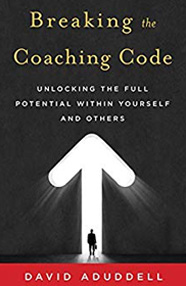
David Aduddell is an international speaker, business coach, and senior leadership development consultant based in Denver, Colorado. As CEO of Zoe Training and Consulting, he has spent more than two decades developing leadership programs for Fortune 500 companies, municipalities, non-profits, and government agencies. He holds a Master of Business Administration with a specialization in leadership development. In Breaking the Coaching Code, Aduddell lays out a practical approach for turning managers and senior leaders into first-rate coaches, built around his four coaching zones of feedback, training, mentoring, and collaborating.
📚 Books by David Aduddell
Transcript
[0:00:17] Charlie Hoehn: You’re listening to Author Hour, enlightening conversations about books with the authors who wrote them. I’m Charlie Hoehn. Author Hour is about answering one question: How can you get the best ideas from great books without spending so much time reading? Every week, we take you behind the scenes with a new author, about the most important points in their book. So if you love to learn while you're on the go, you’re in the right place. All of our book summaries are 100% free and we do more than a hundred episodes every year. So please subscribe to and review author hour on iTunes. Today’s episode is with David Aduddell, author of Breaking the Coaching Code. Too many workplaces are caught in a corporate vortex of misguided culture and toxic success. While many managers think that making a change will be costly and difficult, David believes that learning to be an effective coach is actually easy. In fact, with the right tools, he believes anyone can do it. David has more than two decades of experience working with Fortune 500 companies and he has created a surefire approach to turning managers and senior leaders into first rate coaches. In this episode, David is going to explain his coaching zones and teach you how to set a foundation for success where you can identify opportunities and make a difference one issue at a time. By the end of this conversation, you’ll know how to optimize your time and impact as a leader in order to get the most from yourself and your team. Now, here is our conversation with David Aduddell.
[0:02:34] David Aduddell: Early on in my career, I had just taken a job with a major telecom company and they brought me on, I was young, I walked into this office full of people, we were kind of, it was back in the day when only 40% of the world had cellphones and I was coming into this new industry and it was exciting and a lot of energy going on and I was watching how all these people were interacting with one another. And this office and we had these marketing folks in one particular marketing woman named Jen. Jen gets, you know, she seemed to be this sweetheart of the organization, everyone talked about how great she was and everything about her, she could do no wrong, she was the one that everyone wanted to speak at the – hey, come say a few words, she was doing such great work. Over time, everyone kind of marked her for hey, she’s the next senior leadership position that’s going to open up on the fast paced path to growth. Then, at some point, things changed and things started unravelling for her and she quickly became - I watched this where she quickly became no longer the darling of the organization but now the noose of well, doesn’t feel like she’s the cultural fit for what we’re trying to do. Her numbers started hurting, her team started turning against her. Things started happening and I watched how it spiraled for her. In fact, I was there the day that they called her into the office and it seemed like most people knew what was going on but she gets called in the office and she walks in there and about 20 minutes later, she comes out – Remember, this is a corporate office and she screams. “I’m free!” Everyone, it’s almost like the whole room stopped. People stood up and looked and there was Jen, and yelling in the hallways, throws her papers into the air just like you would see in the movies and she walks out. The thought on the story that always got me was that it wasn’t that everyone talked about Jen, it was the fact that everyone went back to work as if it never happened. That’s where my story really began. Because it was, could we do this better? What happened? Did we give her all the tools, did we set her up for success? How was it six months ago, she was the darling and now she’s gone. And no one seems to care and it was fascinating for me, as I went through this process in my career of - I want to be a vehicle of change for this.That the Jens of the world, the people that are struggling, that they can get out of this and you know, to be honest with you, it was also about my own inability and as I do this journey was about how we all kind of fall into this trap, especially new managers. They get stuck and they’re not sure how to start creating the right environments that bring out the best in who people are. Eventually, over time, I took my own senior leadership sales team and I found myself in the same pitfalls where numbers were great, you’re riding high, numbers go bad, you’re no longer the cultural fit and you’re riding these waves up and down, you’re thinking, does it have to be this way? I learned the hard way which is the way I don’t want most of these people that read my book to know. I want them to learn the easier ways without having to go through the hard knocks lessons that I did. That it doesn’t have to be this way, you don’t have to be in what we call the corporate vortex and that was the beauty of how can we do this thing called leadership of helping empower and inspiring people of getting results. Do it in a more impactful way.
[0:06:38] Charlie Hoehn: That phrase, that corporate vortex. I think probably resonates with a lot of people. What do you really mean when you say corporate vortex?
[0:06:49] David Aduddell: Well, in the book, I really identified, the corporate vortex is the motions that we’re continuing to go through, that we create, I used the term, toxic success, meaning, we have created these systems in place that allow us to be successful numerically. But in many cases, we are hurting our own selves in the long term. That’s why often times in many organizations, we see two symptoms of corporate vortex. High turnover and low engagement. And so, what creates these toxic or vortex moments is really the whirlwind of “Hey, we just got to keep doing whatever we’re doing and it doesn’t matter if it’s right or wrong, it’s just, I love the quote that says, “We don’t have time to do it right but we have time to do it wrong over and over again.” The corporate vortex is that, it’s where we continue to get on this treadmill and we keep working hard and hard to try to do things but we’re not always sure that we’re doing the right things. Then, it starts building it to negative behaviors where we are back biting, gossip, a lot of the things of mistrust, feelings of you know, things that start to self-sabotage an organization from the inside out. I think that that’s what people really start to feel and they’re like, how do we break the cycle and we get into a lot of that change in the book of how do you break the vortex or the cycle? You know, I grew up in Oklahoma and we had Tornado Alley right there through our area and one of the things was, is that, we kind of got used to the impact of having a tornado come through at any point in time. I mean, it was this whirlwind that just kind of you know blew through and you’re going, my gosh. On the devastation that it would lead at leave. What people don’t realize is that that’s kind of how they lived their lives every single day with their team members and their bosses and leaders. They live in this whirlwind that’s constantly flowing and they’re exhausted and then we wonder why they don’t last long and why they have to move to another position or why people fall out. They’re not engaged in the business and we lose innovation, all those things.
[0:09:09] Charlie Hoehn: Yeah, societally, it’s like this massive, massive problem that everybody’s just like you said, become accustomed to you. And I remember researching what the cost is of lost productivity and everything of people just not being happy at their work and not being engaged in the process, something like 500 billion dollars a year collectively. Which, the point is not to put a number on these things because it’s about more than numbers but it’s also just a stunning amount of lost wealth that we could be uplifting entire civilizations but we’re not. Because we exist in Tornado Alley, both the mentally, spiritually and physically in the corporate world. Your book is Breaking the Coaching Code. What are the new rules of coaching? What are you proposing we do differently?
[0:10:13] David Aduddell: I think that you have to begin to look at people differently. It begins with how we look at the individuals that we partner with, whether we supervise them or we – they’re peers of ours, are we working the same organization together? I love the concept of the vessel versus the acorn because you know, I’ve been in any of the classes that I teach, I bring in a vessel and I say, this is the way many people tend to see their team members. I’ll pull out this vessel and I’ll say, it’s kind of like, our recruitment offices, our HR teams, what they do is they come in, they try to find the most qualified person possible. They take them and they go through and yes, we want great experience, we want all these ideas, we want this great skill, and then, they get into the role and the supervisor looks at them and says, “No, hang on, this is not how we do it here. This is not how we – this is not part of our culture.” And it’s almost like they dump out all that experience say, that’s not what I’m looking for and then they proceed to pour themselves into them and it’s going to – I want you to do exactly the way I want it done, the way I think and so, we kind of treat people like minions almost where hey, you’re here to make me look good or to do it my way. I’ll often ask a group of people in the audience, I’ll say, how many of you have worked for a vessel leader. Someone that treats you like a vessel and of course every hand goes up in the room because we’ve all felt that. Where our ideas or our way of thinking or our creativity wasn’t really valued. It was more of, “Hey, I’m treated like I’m only as good as what people want to, what I can do that supports these ideas.” Then I’ll pull out an acorn and that acorn and I’ll say, “What is this?” Someone will say, “It’s an acorn,” I’ll say, “What does it grow into?” They’ll say, you know, “Tree.” I’ll say, “Yes, how many of you know how big the average oak tree gets?” And people will guess and I’ll say, “200 years.” I said, “What’s the average height of an oak tree?” They’ll guess and I’ll say, “150 feet high, with the circumference of up six feet in diameter,” and I said, “Now, that’s pretty big, that’s pretty incredible, this little acorn could become all of that.” And I said, “How many of you can create an oak tree?” Of course people are like, “Well I can’t create an oak tree.” No, we can’t. But we can grow one. What we have to do is plant it in the right environment, really feed it, water it and then get the heck out of its way and allow it to become everything it needs to be. What I do is I show how, if by this mindset, when a leader looks at you as everything inside of you is really already brilliant. It’s my job to try to bring out your best. My job to try to plant you in the right environment and turn you lose, to become everything you possibly can. I’ll ask the same question, “How many of you would like to work for that leader?” And they’ll look at me and every hand goes up and they’ll go, “Yes, I want to be that.” Then I come back with the next question which really haunts them and that is, “How many of you are that leader?” That’s where this process really begins. Because we have to start with ourselves, we have to look it ourselves and others a little bit differently and not going, there’s only one way of thinking here, there’s only one way of doing this and it’s my way. It’s more of, how can I get the brilliance out of these incredible people that I have the privilege to work with. That’s where you start the process turning. Then we move in to okay, once we take some ownership here, because most people don’t fail at coaching because the coachee or the person we’re trying to coach is not coachable. That’s what most people think but really, most coaching fails because the coach failed to present the right environments or the right tools in the right moments. What we try to do through this process and –
[0:14:30] Charlie Hoehn: What do you mean by that? What’s a typical example that a coach who is an experienced coach may be who just has this as his blind spot or her. What’s an example of that?
[0:14:45] David Aduddell: Well, let me give you one. I was in a Starbucks the other day waiting on a meeting to begin and I stop in there. It’s a packed-out house. The manager of the Starbucks comes over and decides to have a one on one with one of their baristas and they bring them over to the table. Now, keep in mind, this is on the floor, the place is loaded with people and the employees, the other partners are sitting there watching this event happen as well. I’m overhearing their conversation and the manager’s doing his pleasantries and he finally goes, “I need to talk to you very quickly about the fact that you have relationship problems with your team and with the people coming in to the Starbucks itself.” I was horrified for the person because I was like, “Wow, if I’m hearing this, then they’re hearing this and we’re all being partnered to this and this is not a safe environment.” Then you know, you start thinking, is the person going to respond well to this coaching environment? Are they going to be open before it ever begins? Even if this guy is brilliant and has great insights and can help do great questions, he failed before it ever began by putting him, this dear woman in front of all of the people he’s talking about and saying, you know, you got issues here that you need to solve and he’s solving it right in front of everybody. The safety in that environment is gone. Then we have where he is not listening to the woman, she’s trying to talk about some of the things and the way she sees things and you obviously can tell, he had allotted a certain amount of time to this conversation because he automatically started to hurry her up and wasn’t listening to her. It was like well, you know, I had a problem like this too before. Let me tell you how I solved it and gave her the answer right there and said, “Here’s what you need to do.” She was smart enough to know, it’s not going to help for her to argue with him, it’s not going to help for her to try to disagree. All she’s going to do is sign off and say, “Yes, I’ll do it,” that’s all he wanted to hear anyway. 15 minutes later, or 10, 15 minutes later, she signs off, he says great and he thinks he’s had a successful coaching moment. Whereas I watched her as she felt defeated, she wasn’t heard, she didn’t have a chance in a safe environment to really deal with the deeper issue that might have been going on there. We saw how it was - this person was trying to get somewhere so quick that they failed to really make it worthwhile or impactful for what they’re trying to do.
[0:17:20] Charlie Hoehn: Yeah. In that scenario or variations of it are all too common I’d imagine. Especially in the corporate world. But let’s get into how you structured your book which is feedback, training, mentoring and collaboration. Those seem to be the big four parts of what you suggest for a better way of coaching, right? Where do we begin with feedback?
[0:17:53] David Aduddell: Well, let me back up just for a moment and just say, these are coaching zones. Any time I would go in to a group of people and say, “What is coaching?” Here’s what I found. I found that many people, if you had 30 people in the room, you’d have 30 different ideas of what coaching is. Some would say it’s feedback, some would say it’s mentoring, training, collaboration, I mean, you would have it all over the spectrum. Instead of trying to force everyone into one way of thinking. What I did was I broke it down into four zones. Because you need all of them to be really – I think an optimized coach and that’s what our goal here is using the right tool at the right time and so instead of you know, executive coaches say, “Well, collaboration is the only way to do coaching.” I would say, no, not really. There’s a time and a place for feedback, there’s a time and a place for training, mentoring and collaborating. It’s using the right tool at the right moment that optimizes the event for these folks. There are four zones –
[0:18:56] Charlie Hoehn: Just a quick question David. What are the right moments to know when to use the tool? I mean, that may be way too broad about question, maybe it’s not a very good one or won’t lead to an interesting answer but I’m curious, how do you determine, okay, I need to use this tool now?
[0:19:16] David Aduddell: I think that it goes back to the scenario. Here’s the way I broke it down and this is how it helped me to know when I was doing my own coaching. It’s kind of like with feedback, we ask the question or we have – you have a problem, go fix it. And that’s really what feedback does. It doesn’t necessarily give the answer, you can give the answer in that but for the most part, when we have scenarios of feedback, it’s more of, I don’t have to have a high level of trust relationship. I don’t have to be in the total security area, it doesn’t have a lot of risk to it all the time. It’s just you have a problem, I’ve identified it, go fix it. Here it is, it can be as simple as, “By the way, your bag is undone and you’re about to lose your stuff.” I mean, that’s feedback. That’s something that they’re unaware of with it, then you move to training and it’s more like, “You have a problem, here’s how you fix it.” At that point, we start giving the tools and resources straight to someone of I’m assuming this is a knowledge issue. In many cases, we assume people have certain skillset or knowledge and they don’t. In this, we have identified what the problem is and now we’re going to give them the tools or the resources or the knowledge, whatever it is, to be able to make it successful. Mentoring is where we see a shift. This is where self-awareness really kicks in there. It’s, I have a problem, fix me. Now, it’s the coachee that his identified the problem and is going and looking for help with it. I tend to, in the book, I really identified it, you know, think of this as a doctor situation, I go into the doctor, I know I have a problem and I go, “Hey, fix me, what do I need to take? What do I need to do to fix this particular problem that I’ve got?” It needs an expert. Mentorship usually implies an expert in the area that I’m looking for. We can get more into mentorship later and what the caveat differences are. Then the last one is collaboration and this is, “I have a problem, help me fix me.” It’s not, “I want you to fix me,” it’s not, “I need you to give me all the answers.” It’s, “I need you to walk me through a process that helps me identify those answers within myself.” Those are the big differences that have helped me and I hope they help readers really identify what section am I going to be in.
[0:21:42] Charlie Hoehn: Let’s tell some stories about you coaching with giving feedback and maybe some common mistakes that you see coaches making when they are giving feedback as well? Let’s begin with the power of feedback, what you’ve done for people that you’ve coached?
[0:22:03] David Aduddell: Well, I would say the power of feedback, it’s really just helping someone become aware. I love John Whitmore’s quote which says, “The things that I’m aware of, I can control, the things that I’m unaware of control me.” I believe that that’s great place for what the whole point of what feedback does. It creates an awareness for folks. Now, I get into - feedback oftentimes is what HR departments use for tips, performance improvement plans, counseling statements, those kinds of things that are more formalized, tools to say look, you’re not meeting the mark, now, I’m identifying what we need to see happen here, here’s what you need to move and go do it and then we’ll evaluate this in 30, 60, 90 days, whatever it is. So, with feedback, if you take it to the formal side of it. I tend to say that they can be motivating, they can be demotivating. But at the same time, feedback always tends to lead towards an awareness of something that we aren’t seeing in ourselves that gives us the opportunity to take control over that and move it in the right direction.
[0:23:18] Charlie Hoehn: What are some common mistakes that you see coaches making in this part of the process or with this tool I mean?
[0:23:26] David Aduddell: I tend to see people beating the snot out of other people with information and so it’s like, “You need to go fix this and you need to go do this”. It’s funny because one of the premises of the book that I do in the map section is really helping the coach first do their own work so they are not trying to do their work through others and you maps are really about mindset, attitude, your plan and really identifying your situation. That protects them so that the Starbucks example that I gave where the manager came out in the wrong situation and the wrong mindset and the wrong situation giving this feedback where it failed. So if we go through our maps beforehand, we helped get in the right frame of mind. So some of those mistakes that takes place and feedback are where, “Hey I am angry. I’m frustrated and I am going to give this feedback out in frustration,” and so it tends to come out as an attack on the person instead of the behavior that we are trying to coach to. So the goal is that the coach would do their own work before they got into that conversation. We’ve all been in those conversions that either people with love, spouses or any of those people were hooked. We’re emotionally hooked on something and our brains aren’t as engaged as they need to be to have a good conversation and we tend to say things that we regret or things that we wish we could take back and that’s what I think the problem with text message and email nowadays have hurt us. It’s because it’s too easy to send the email or the text message where we are looking at things and going, “Come back, come back.” And we want to get that back but the truth is making sure that we are going into the coaching with the right mindset that we are not trying to hurt or trying to do some things. An example of this is I was coaching an executive this week that was having a problem with one of their team members and as we were going through the process. And I was coaching them they were telling me about the team member and they say, “You know what? They’re a B player and I don’t have B players on my team,” and I said, “Wow that’s interesting,” and so as we were going through the conversation, some of the conversations that this particular leader was having with their team member would go, “Wow what did you set this up for?” And many of the comments that they made to them were highly emotional and demotivating. And it was actually moving them in a negative way in a negative relationship to what it could be and so through the process of unhooking and realizing, “Oh my gosh, I could do this a little bit differently and maybe I could look at the person a little bit differently. I might get different results.”
[0:26:15] Charlie Hoehn: Yeah, you know giving feedback in a way that doesn’t damage the individual really is an art and you can tell by listening to you, David, that you have a gentleness and a warmth I’m sure and kindness to the people that you coach. How do you ease coaches that are used to beating people up verbally? How do you coach them to get them to be softer and kinder?
[0:26:44] David Aduddell: I think that goes back to awareness. I think that people have to be aware that what is the end in mind? I mean begin with the end of mind as a caveat-ism here but I think that they need to think about what they’re trying to achieve instead of just plowing through to get what they want. I’m reminded of one marketing executive that I was brought in to coach and their teams had a lot of negative feedback on some pulse checks for this particular organization. And the senior leader was just oblivious to how they were coming across and through the conversation, it was very clear. They said, “You know yeah, for some reason we’re getting this negative feedback but I have implemented a new process.” And I said, “What’s your new process?” And she goes, “I have a checklist over here by my computer that every time someone comes in I give them a compliment and I check it off that I did it.” And of course, I don’t think this woman realized how that sounded or how –
[0:27:45] Charlie Hoehn: Like a robot.
[0:27:47] David Aduddell: It wasn’t authentic or genuine and I was listening to her and I was listening to her and I said, “How’s that working for you?” And she says, “It’s not, and they’re still complaining, I don’t know what else they want.” and I said, “Do you really believe in giving compliments to your team?” And she stopped and she says, “You know what? My leader doesn’t give me compliments. I don’t know why I have to give them to others.” And that was a huge moment. And where I was able to ask the question, “Do you think that that might come through in how you give your compliments then?” And she stopped and she said, “Yes I think it could.” And I said, “So what do you have to do differently in order for your people to respond a little bit differently to you and to what you’re trying to do?” Because your end result is I want the team to be higher performers. I want them to execute better, I want better results whatever it is. So we can all agree to the end, it’s just that getting to the point where people will see that hey, I’m changing not because a lot of leaders get stuck and they think, “I’m not going to change for other people,” and I am thinking then you are not really leading. We’ve got to be able to bring the team along so that you can achieve the goals that you are looking to do.
[0:29:03] Charlie Hoehn: And you’ve got to have that social intelligence to know when to not robotically compliment people just for entering the room. So I want to jump to your section on mentoring. A part in the book called ‘The Seven Traits of an Effective Mentor.’ and I remember when I was in my early 20’s I just was on a virtual internship with Seth Godin and I emailed him and I asked him how I ought to approach somebody who I wanted to be my mentor. And I would never forget, he said, “Just because someone is successful doesn’t mean they’re going to be a good mentor.” And it really gave me pause and so I am curious, what are some of the traits of an effective mentor?
[0:29:59] David Aduddell: Well I think that you have to have someone that wants to be in that role and I think that sometimes just like the feedback that you received, hey just because someone is good at the job doesn’t mean that they are good mentors, we see that with sales people too or people going to management that they might be highly successful as an individual contributor but very terrible at the other aspects of leading people because if I can still align from Malcolm Goldsmith which is, “What got you here won’t get you there”. And I think that that’s in many cases finding a mentor that has as you mentioned it, it’s a high EQ or higher emotional intelligence that can get out of their own way to be able to help you get out of your own way. And so in order for someone – someone has to do their own work. That’s the part where I’d really try to treat in the book to encourage people. We tend to go to people we know instead of going to the people that will tell us what we need to hear. Or the right people that will help us, that will identify the right behaviors that we need to do and so I think that that’s where my comments in those that section is really to help people identify who’s really emotionally intelligent to be able to help you. Sometimes we also go to people that can politically help us instead of people that will tell us the truth and I think a good mentor, one, wants to be there, two is very aware of their own inadequacies and understands their own journey. Has done their own work and also through that process will help other people from a maturity standpoint not just tell their stories but bring out the stories in others in an effective way that will get people again to deal with their own stuff. The brilliance is inside and so good mentors can go over to that collaboration side and become great coaches too, to help people walk through that process.
[0:31:57] Charlie Hoehn: You have all these great stuff in the book on collaboration, of course there’s more on training and at the end of the book you have a section called ‘Breaking the Coaching Code’ where you talk about optimized coaching, the maps concept that you mentioned earlier and the coach’s playbook. What is the coach’s playbook?
[0:32:21] David Aduddell: Well I think people don’t do coaching because they’re not sure how to start. They get in a pattern, they’re not sure what to do. I was reading a coaching book during my research and stuff before writing the book and one of the things that I was going through with some of the other authors were - principles that they looked at and were highlighting and one of the things that I noticed in one particular very popular coaching book that’s out there was that they kept reiterating this one concept, coaching is hard. Coaching is difficult and that was if you are dealing with normal people you have those unicorns out there, those people that will sit back and go, “Oh I can do anything,” and they pick it up and they can do anything and they’re great at that stuff but then you have the average leader that’s out there that is overworked that doesn’t have a lot of time, is frustrated, is burning out and in many cases, if they’re burned out and they’re struggling at work, they are also struggling at home. What we didn’t know about Jen that you find out in the book is that Jen’s marriage was falling apart at home too, which was causing a lot of the problems she had. She was losing her world and in so many cases people out there, the average leader that’s just trying to get through the day and getting stuck in that vortex of problems and on this culture and surviving hit the numbers, hit the objectives that keep seem to constantly be moving and they are frustrated. They’re alone, they’re not sure what success is. That’s who this book is written to and it’s not to those unicorns that kind of go, “You know what? I could just pick up something and it’s difficult and I make it work.” And for me, I don’t need another book that told me how difficult and give me a complicated process to make things happen. It’s really about how do we simplify these steps so that anyone can pick this up and go, “If I start through this process from a tactical standpoint, I can get closer.” And again, I don’t want to say that you will master coaching by reading this book. I don’t think that that’s what the intention of this book is. It’s about I can be a better coach today by just doing a few simple things. In fact there is five truths that you’ll see in the book that are really meaningful to me that were the premise of why I wanted to write the book and the first one of that is coaching is easy. And people would go, “Well if it is so easy why is not everyone doing it?” I will say, “Well it is also easy not to do,” because the things that make it easy are those there are things that every person is capable of doing. Well, they’re also the same things that we choose not to do and so that’s what makes coaching difficult.
[0:35:12] Charlie Hoehn: Yeah, I’m with you. I am curious David, what has been your proudest coaching moment in your career? What’s the story you wish you could tell?
[0:35:24] David Aduddell: That’s a tough one. I would love to say it is about helping turn results around and I’ve had plenty of those but I have to say the story that impacts me the most was the story of Scott and John. Scott was a manager or a leader that came to one of my workshops on coaching and it was interesting because I was coaching him while he was trying to coach his team members and he came to me and he said, “David I want to talk to you.” On the break he pulled me aside and he said, “David I am struggling. I’ve got this guy that’s worked on my team for years. His name is John.” And he said, “I’m really frustrated because he used to be an all-star employee. He used to deliver good results but over the last year, he’s not been hitting his numbers, he’s showing in late all the time, he’s doing poor job at work, doesn’t seem engaged and frankly, I don’t think he wants to be there. And in fact, I have already started working with HR about the process that we’re going to be working him out.” And I looked at Scott and I said, “Scott are you open to before you take those next steps are you willing to explore another option?” And he looked at me and he said, “Okay,” and so I said, “Here’s what I would recommend. First of all, I hear in your language you kind of made up your mind and that’s one of those places where if you have already decided that he’s going to make then there’s not a whole lot he can do to change to make that happen. Are you willing to see him in a different light?” And he stops and he says, “Yes I am willing to explore something different.” I said, “Great. So I hear you’re saying he’s always late. Well is he always late?” “Well no, not always.” “Okay, how many times is he late?” And so we just go through this coaching process that you see in the collaboration section in the red where we really start with the facts. What are the facts, is he late five times? Is this late 15 times? But let’s deal with the real number instead of, “You’re always late.” Which puts people on the defensive. And so he says, “I can find out that information. What stuff does he not deliver on, can you give me that?” You know, as far as break that down. And so he said, “I need to go do my work,” and I said, “Fine. You find out those answers.” And then I would sit down with him and go through the process that we unfold in the book and he comes back the next day. I am setting up in the morning and he said, “David can we talk?” And I said, “Sure, how did it go?” And he said, “Well I am embarrassed” I said, “Why are you embarrassed?” And he goes, “Well I went and had this conversation with John. I got the facts, found out that he wasn’t late as much as I thought and there were certain reports that were done, not done and I told him that. I stated the facts, I told him what story that I told myself. I asked him his part of it and what he thought and he started to give me an excuse and I remembered what you said to me. I remember you said don’t buy into it, just keep asking the right questions and going through the process that we covered.” And I said, “What happened?” and he said, “Eventually he told me the truth.” And I said, “What’s the truth?” and he said, “I’ve got to be honest with you Scott, my wife has cancer and the reason I’ve been late is because I have been taking her to chemo therapy and I’ve had a hard time going back and forth and being there for her.” And he said, “The other part is I am trying to balance being the husband I need to be and the family man and delivering our results and to be honest, I am not doing either very well.” And Scott looks at him and goes, “Why did you not tell me? If you would just have come to me and told me about this.” “I don’t know I am just a very private person.” And they worked out and they went through and worked out a plan to fix it and I said to Scott, “Scott that sounds like a huge success, why did you say that you were embarrassed?” And he said, “Because the truth is I wasn’t, it wasn’t about that he just is a private person. The truth was I was so busy trying to do my job I wasn’t doing the right job of listening. I wasn’t inviting it. I’d asked him about why he was late and told him he needed to get a new alarm clock or talk about ways he’d get a new pathways to work instead of just being still and listening to someone that I care about. That’s where I failed.” And the thing about the story was that six months later, I heard back, Scott told me that John not only fixed and didn’t have another late issue but he was doing higher performance than he had even previously and I thought wow and it wasn’t because of my brilliance. It was because the process works. If we can get out of our own way and really help to dig in and deal with humans like they deserve to be dealt with and that was exciting to see that this man’s life was changed. He didn’t lose his job and Scott probably learned more than John did through the process that well, how much more could he get from doing his job if he did it slightly differently?
[0:40:36] Charlie Hoehn: Wow, that’s a beautiful story and it really illustrates the power of just being seen and understood and I really believe that’s what people really truly crave deep down and they just don’t get that enough at work. So that is wonderful that you were able to play a part in having that impact on those individuals’ lives. So this has been great David, could you give our listeners a challenge before we head off? Something they can do this week or maybe even today that can have a positive impact on their life from your book.
[0:41:15] David Aduddell: Sure. I think that the one challenge that I would leave with people is the same thing that I struggled with every single day. Is that being a good coach is not a process, it’s about a lifestyle. It’s about how I interact with other human beings and how we choose to do this relationship thing, better. I think that good coaches are people that will look to find meaning instead of just trying to get something from other people and my challenge would be for everyone that will hear this is to think about how you can start today creating meaningful moments in the people around you. And it’s amazing how it’s little things that make all the difference in the world of making our work environments different and this is one of the things, I was doing an article the other day for a magazine and one of the questions that was asked of me was, “If you’re top level doesn’t make this change then what hope do people have?” And I said, “Most great revolutionary moments don’t happen from the top. They happen from the middle with one person that’s willing to make a difference and do things just a little bit differently.” It only takes a spark to get the fire going and it usually will bubble up to the top and all the way through the other parts of the organization. And so if you are discouraged today, if you are feeling like, “Man I’m trapped. I’m stuck in this vortex, I don’t know how to break the cycle. I want to be a different manager. I want different results but I don’t know how to get it.” I will tell you it’s within you. You can make a difference and a lot of people don’t feel like they can. They go through and they feel trapped and helpless and I am here to tell you as a voice out there that has felt trapped and helpless, you can do things differently and hopefully the book will show you some of those simple steps that make this easier for you that even in your business and your weariness that you can start a different path and making a difference in the lives that you are touching.
[0:43:28] Charlie Hoehn: How can our listeners get in touch with you and potentially work with you?
[0:43:33] David Aduddell: They can reach me at david@zoetraining.com. Zoe Training is the organization that I own and we work - it’s been around for about 35 years and one of the things about the organization is really we try to find the solutions that help people whether that’s coaching or consulting or other things. So they can definitely reach out, we’ll do whatever we can or I can do whatever I can to make sure that we’re offering the right tools for success whatever they need.
[0:44:06] Charlie Hoehn: Excellent. The book is Breaking the Coaching Code. David, thanks so much for being on the show.
[0:44:12] David Aduddell: Thank you.
[0:44:14] Charlie Hoehn: Many thanks to David Aduddell for being on the show. You can buy his book, Breaking the Coaching Code, on amazon.com. Thanks for tuning in on today’s show. If you liked what you heard, here is what I want you to do next. Open up the podcast app on your phone or iTunes on your computer and search for “Author Hour with Charlie Hoehn” and then click “ratings and reviews”. Take 10 seconds to rate this show or leave a review. It is a small favor but it’s really the best way to show your support and give me feedback and if you know someone else who’d love Author Hour, take another three seconds to text them a link to this episode. We’ll see you next time.
Want to Write Your Own Book?
Scribe has helped over 2,000 authors turn their expertise into published books.
Schedule a Free Consult