Naz Barouti: Love, Death and Money
Read the full transcript
Naz Barouti
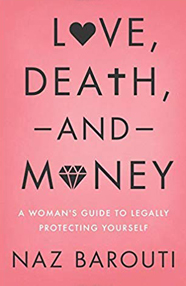
Naz Barouti is a Los Angeles attorney and the founder of Barouti Law Corporation, which has served clients across Southern California since 2011 with estate planning, asset protection, wealth management, prenuptial agreements, and international tax law. She earned her JD with a specialty in elder law and estate planning from William Mitchell College of Law, her BA in political science from UC Berkeley, and an MBA from the University of Phoenix. She has spent her career empowering women with the knowledge they need to protect their estates, their families, and themselves, and she hosts the radio show Love, Death, and Money on Talk Radio 790 KABC. In her Amazon best-selling book, Love, Death, and Money: A Woman's Guide to Legally Protecting Yourself, she walks readers through the essential components of an estate plan, from wills and trusts to advance healthcare directives, prenups, and powers of attorney.
📚 Books by Naz Barouti
Transcript
[0:00:21] CH: What’s up everybody, it’s Charlie Hoehn, the host of Author Hour where I interview authors about their new books. Today is a super valuable episode with Naz Barouti. She is the author of Love, Death and Money. Her book is really a woman’s guide to legally protecting yourself. No one likes talking about death, no one likes talking about taxes or financial planning but so many smart, well educated women are blindsided when unexpected curve balls in life just throw their personal and financial lives into chaos and Naz believes you need a comprehensive and easy to follow guide to help you get all your legal affairs in order so that you’re ready for anything that life throws your way. Naz is well-known in the legal world as an estate planning guru and really, an advocate for women. In 2011, she established Barouti Law Corporation which now has five offices in Southern California and she’s also the cohost of a weekly radio program called Protecting Your Family. In this episode, we talk about the most important things you need to know in order to plan for the unexpected. Whether you’re a young single woman who is just starting out or a mom who is concerned for her family’s wellbeing, this is the episode that will allow you to face the future fully prepared. Now, here’s our conversation with Naz Barouti.
[0:02:10] Naz Barouti: A lot of people when the first meet me, you know, I look very white, I look very American, you know, blue eyes, blond hair but they don’t really know my background and my story unless you know, I tell them my name. I wasn’t born here, I was born in the middle-east, I was born in Iran. My story’s a really interesting one because I literally am an American dream. My parents came here when they were really young, I had to basically just adapt to a new surrounding, new language, new lifestyle. And my parents did an excellent job of adapting and not – you know, a lot of people, when they move to America, they try to find cities now where people that speak the same language or have the same background are. You get comfortable in that bubble. I’ve always been put into situations where I had to be uncomfortable where it’s either people spoke a different language, they had a different background, a different religion and so, I’m very blessed to have grown up like that because I think it makes me a people person. I can adapt very easily, I can get along with anyone, you can put me in a room with a hundred people who are from different backgrounds, different religions, even if they speak different languages and I will find a common ground with them and that’s because of how I was raised. I mean, it was very difficult in the beginning but I’m so grateful that I was exposed to different people and religions. I went to Catholic school my whole life and my family wasn’t even catholic. I always wanted to be a lawyer, that was never a question for me but once I started my practice and I started seeing clients that were coming into my office, mostly people that were married, trying to plan for the future, for the data, you know, if they weren’t around, making sure their kids or their families were protected. I was noticing a trend where the men were dominating the conversation or the men were the ones scheduling the appointments or they were, you know, giving off some vibes where they weren’t being transparent or forward with how much money they had. Because they didn’t want their spouses, their significant others to figure it out and I could read the body language, I could see that the women were very uncomfortable or then I had women making appointments. Saying you know, “I’m getting a divorce, I don’t have anything, I don’t where anything is, I don’t know where to start.” And it was really important for me to kind of be an advocate for women because my parents sacrificed everything to move to America to give me a life where I would have so many freedoms and it wouldn’t be an issue where, you know, my husband or a man was controlling my life, my dad raised me like a son, he always taught me the importance of having your own career, having your own money, being independent. You know what? When I was 17 and I was ready to go to college, he’s like, you should go somewhere far away and that’s kind of unheard of with a Middle Eastern parent to say just go, go live your life and when he gave me that freedom, I realized it was so important to kind of teach women how to have financial independence because financial security is so important and a lot of people use money to control. I was seeing that trend and I was seeing that women didn’t know how to protect themselves or they felt intimidated with coming into a lawyer’s office. I really wanted to be like a best friend in this book that I wrote and a lot of people kind of have coined it the legal bible for women, because it’s so easy to use. You can open up any chapter and apply it to your life at the stage that you're at. That’s really my story and that’s what motivated me and pushed me to write this book because I had been thinking about doing this for years and I don’t know if it was just – I didn’t want to confront the issues that were at hand or I didn’t have time but I finally was like, okay, you need to just take some time out of your work schedule and focus on this because so many women can use a book like this.
[0:06:11] CH: My gosh, yeah. I can only imagine how rewarding it must be to help women in those circumstances. I’ve witnessed it myself, in others, women whose husbands have passed away and suddenly you know, the money issue is – has never really been totally transparent and so it’s this scramble to figure out okay, what is reality? What I’m curious about is like, you talk about why you need a plan and then you say, because the government already has one for you. What is the government’s plan and is it really so bad?
[0:06:55] Naz Barouti: Well yeah, it is bad. Because I mean, just imagine someone, a stranger walks into your life and has access to all your bank accounts and says, “Okay, well this checking account is going to this person, this checking account is going to that person.” You’re like, wait a minute, you don’t even know me, you don’t know my family, you don’t know if I even talk to my family members. Every state is different by this book is geared for people that are in California and in California, there is something called interstate laws which means that if you die without a plan, the state already has a formula in place to divide your assets and there’s a story in the book that’s really interesting and it’s a true story where a woman came to my office and said, you know, this gentleman died and he was very wealthy and I’m his daughter. But he doesn’t know and he didn’t have a will or trust. This man’s worth like 15 million dollars and here comes someone that has never had a relationship with him. This man didn’t have a trust or a will and according to the laws of California, if you don’t have a trust and you don’t have a will and your spouse has already predeceased you, everything goes to your kids. And so she was a rightful heir. She got a big chunk of his estate and it’s really scary to think that someone is going to come in and tell you how your assets you worked so hard to attain are going to be divided. I mean, it’s just not right. Not only that because some people are like. Okay, well I want my spouse or I want my kids to get everything, what’s the big deal. Well, the big deal is that, you have to hire an attorney who is going to charge you hourly and then not only the hourly fee but the courts have a statutory fee depending on the value of the estate. They take 4% of the first hundred thousand of the estate and then there’s a formula. On top of the hourly fee, you’re giving a percentage of the estate to the lawyer, then you’re doing all the filing fees for the court and it’s just a nightmare. It’s expensive and its time consuming. This is not a process it’s going to take like two weeks and it’ll be done. There are some probate cases that it can take anywhere, by probate, I mean, when you die without a trust or will, they can take anywhere from six months to two years. I’ve seen cases that have been in probate court for five years.
[0:09:14] CH: Gosh. Let’s really dig in to how bad this can actually get because I want listeners to feel a sense of urgency because I’d imagine, a huge part of the reason why people put this stuff off is I’ll die 50 years from now, right? Or the unexpected is not going to happen to me, but it can happen at any moment. How bad can things get if you put this off or avoid doing it?
[0:09:43] Naz Barouti: I mean, just turn on the news any day of the week and you’ll see that tragic stories don’t discriminate against your age or gender or religion or background. People that have this mentality that I can put this off for 50 years, they really need to change that mentality because life is not guaranteed, we’re not Superwomen and Supermen. Accidents can happen to anyone. I would say to – it’s really important to know that at any time, something can happen to you and so these are documents that need to be prepared in advance. And I always give the analogy, not having a plan, a legal plan in place is like, driving a motorcycle without a helmet, getting into an accident, hurting, injuring yourself, having the ambulance come and say, wait, I want to go back and put my helmet on. You can’t do that. It’s too late at that point. Just like anything else, I mean, we insure our cellphones, we insure our television sets and this is an insurance policy to make sure that our families are protected, the courts are not getting involved, we’re not putting our families in situations where they have to pay lawyers thousands of dollars and have to go through the court process. Just take care of it. It’s as simple as that. I mean, it boggles my mind how much money people spend on ridiculous things. I mean, an iPhone now is like a thousand dollars, we spend a thousand dollars on an iPhone and yes it has many functions to it but if we really step back and compare a thousand dollars to getting a phone or getting these legal documents, you know, our priorities are kind of out of whack.
[0:11:29] CH: How much do these legal documents cost typically?
[0:11:35] Naz Barouti: Well, it just depends on the attorney that you’re working with and just a cautionary tale for anyone who is listening, you can google like this online resources and you can drive down any major boulevard and you can see signs that say like $99 for a will or online resources that you could just fill out your own stuff but I don’t recommend that. I have seen major horror stories with people that did things online.
[0:12:02] CH: Like what?
[0:12:03] Naz Barouti: A lot of people thought that everything, for example, when you own a home, if you go online and you do like a trust and you get all the paper work you sign it, notarize it. Sometimes these online resources don’t tell you that the title to your home has to be changed and it has to be recorded in the name of your trust. It has to be titled, the ownership to the trust. The trust has to own it and so if that title, the deed is not changed, it’s kind of pointless having the trust because it wasn’t transferred properly. You’ll still go through probate. It’s just little things like that that it‘s so advisable to work with an attorney who can tell you these things and also, it’s not advisable – I mean, how are you going to determine how you divide everything in like a box that’s set to like 320 characters where you just type it in. I mean, lawyers are trained to see 20 steps ahead of what can go wrong. It’s not just as simple as okay, I want to give everything equally to three people. Well, what happens if those three people are gone, we got to have a backup plan. Lawyers are trained to see that and it can cost anywhere from a thousand to $5,000, it just depends on the value of the estate, are you doing any further protections like there are a lot of people that are in careers where they’re at high risk to getting sued. Then, we need to do asset protection plans where we want to protect them from lawsuits or you know, there are people that want to transfer properties into trust that they can never change, those are irrevocable trust. I mean, there’s so many different tools and options but a basic trust in my office for example can be anywhere from 800 to $1,200 or $1,500 which is not a lot, I keep my prices low because I want to make sure that the price is not deterring people from getting these documents done and then they don’t go. It’s not like shopping for a tire, you don’t call five different and try to find like a place that’s $50 less. That’s not what we do in estate plan. You got to go to someone that is specialized in this field and another caution that I will like to tell listeners is that you know, a lot of people are like okay, well, I went to this immigration attorney and they did my estate plan and they charge me $100 less than the estate planning attorney wanted to charge me. My response to that is, when you have a heart condition, you don’t go to an OBGYN, you go to a special doctor that specializes in heart conditions, you know? You go to cardiologist. It’s the same thing with lawyers. Make sure the lawyer you’re working with specializes in this area.
[0:14:44] CH: Right. Now, you also talk about the importance of just talking to everyone that’s affected by your estate plan. Do people tend to not do this at all?
[0:14:57] Naz Barouti: Yeah, I can’t tell you how many people come into my office, get these documents and then say, “But I don’t want anyone to know. I don’t want to tell anyone.” I’m like, I think there’s this like fear – I don’t know if it’s paranoia that they – you know, that person’s going to then want to know, how much is in this account and what am I getting and that’s not the way to think about it, I mean, the whole point of getting these documents is that so you can kind of warn people. “Okay, listen, if something happened to me, these documents are safe at home and these are the people that I selected to manage the estate, these are the percentages of how I divided things.” And I think a lot of people don’t want to hurt feelings for family members. They don’t want to hurt their feelings and they don’t’ want to say, “Okay, well I didn’t really trust you to be the manager of my trust after I die or I only left you like 5% and I left your brothers and sisters 10% more.” You know what I mean? They don’t want to face those conversations but it’s so important to do that because then when you’re gone, and you leave the mess for everyone else to figure out where they’re like, “I wonder what their reasoning was for naming this person?” You’re just leaving a lot of chaos behind. Yes, you planned but you’re leaving conversations that are not had and it’s crazy what the imagination in the mind can do when you don’t have the right answers, right? We’ll come up with any answer to please ourselves.
[0:16:21] CH: Right. By having these conversations, you spare your family, once again, from the emotional chaos rather than the literal chaos of finances, yeah. Got it. Part two of your book, you talk about avoiding the traps and I want to start with the first trap that you mention which is college. Talk to me about this chapter.
[0:16:47] Naz Barouti: Yeah, you know, it’s really interesting because when you go to college, you don’t even think like I need to protect myself because you’re like, well, I don’t have anything to protect. What’s important about estate planning, it’s not just about when you pass away, it’s also about when you become incapacitated and making sure that you give power of attorney to whoever you want to make decisions on your behalf either to step into your shoes financially, to sign checks or access bank accounts. Or to step into your shoes from a medical point of view as far as do you want to be an organ donor, do you want to be on life support. These things are very important and in this chapter I discuss, you know, a young college student who unfortunately gets into a car accident and had some money in a bank account and is on life support. Her divorced parents are the ones that have to make the decision of whether to keep her on life support or not. We have a parent who is very religious and wants to leave everything up to God and then we have another parent that is a little bit more logical and science and wants to not put their child through –
[0:18:00] CH: End the suffering, yeah.
[0:18:02] Naz Barouti: Suffering, yeah. On another layer, on top of that is, this child had a bank account with quite a bit of money on it and there’s no beneficiary and so, it becomes an issue of are you pulling the plug because you want to access this money? It creates so much conflict between the parents and the other children have to suffer. Her siblings have to suffer. If she had simply prepared a healthcare directive and said, “Listen if I’m in this state, if I’m in this vegetative state, I don’t want to be on life support or I do want to be on life support.” We don’t have these conversations with 18 year old’s because we just say okay, well their parents will make the decision but you’re an adult at 18, you can vote at 18, you can do a lot of things at 18 and you should be able to make decisions about your medical condition. I mean, we all know the story about Terry Schiavo and the government got involved, the president got involved in that case at that time. There was a battle between her spouse and her parents to whether to keep her on life support or not. These are very important conversations to have and a lot of parents think that once their kid goes to college that they can still access medical records and they can call the hospital and they can call the bank because they’re paying for the kid’s bills. You can’t. That person is an adult and there’s privacy laws, there’s HIPAA laws which are federal laws in place that you can’t access someone’s medical records without popper authority from that person or you know, something that’s signed on paper that allows you access to that person’s medical records. These are all important conversations to have and I wish college campuses would bring experts on to college campuses to kind of go over this stuff. Because I see a lot of these cases. I know it’s hard to believe that something can happen to an 18 year old but again, I mean, let’s not forget all the crazy parties on college campuses at sororities, how many times do we hear these tragic stories where someone got drunk and fell off, you know the roof of a house or a balcony or got into a car accident or got hit by a drunk driver. It’s really important to have this conversation.
[0:20:08] CH: Yeah, you mentioned healthcare directive and let’s say I’m a listener in college and this is like man, listening to Naz right now, I got to do this. What are the first steps for that person and keep in mind, this is a person who might be like me in college, super embarrassing to admit but donating plasma to raise money to buy beer. They’re strapped for finances, what do they do?
[0:20:38] Naz Barouti: Well, you know, a lot of hospitals have preprinted healthcare directive forms that you can use, they’re not as detailed as one that you would get from an attorney but you can go to the campus hospital and ask for a healthcare directive form. I think they have them for you available and you just fill out, you know, do you want to be an organ donor, do you want to be on life support and you just sign it and leave it on file with the hospitals. So if you are strapped for cash you know there are solutions to getting a document like that. You don’t have to go to an expensive attorney that charges 5, $600 an hour.
[0:21:11] CH: That’s an amazing super valuable tip and if your local hospital or your campus hospital has that on record what if you get injured out of state?
[0:21:21] Naz Barouti: Oh that would still apply because that is a decision that you made. So if your family member or someone could get a hold of that document, that is why I say it’s important that if you are going to have these documents give it to the people that you are putting in charge to make decisions for you. So that if something does happen to you they can take that document and go to wherever you are and do what you’ve asked.
[0:21:42] CH: Got it, amazing. All right, so college kids take note of everything - do exactly what Naz just said.
[0:21:50] Naz Barouti: Yes, listen.
[0:21:52] CH: Yeah and so in your 20s I mean you talk about being not as invisible as you feel. Is this similar advice to the college chapter or is it extended into something else.
[0:22:06] Naz Barouti: Yeah, it is. It is more for young professionals that are now starting to make some money and they think that, “Okay well I am not married and I don’t have kids so I don’t need to plan.” And that’s not the case because once you start making some money and you have some assets and you have real estate. It is really important to designate who you would want to inherit your assets if you don’t have a spouse or you don’t have young children. And I think it becomes harder for a single woman or a single man who doesn’t have many family members to try to figure out where do I leave my assets. And those are definitely important conversations to have at a young age and I don’t know if you have seen this trend but we are seeing more and more young people get cancer and MS and I don’t know if it is just the chemicals that are in our food or we are just not taking better care of ourselves. But we are seeing a lot of young people deal with terminal illnesses. I mean I especially see it in my practice because a lot of people come to me when they do get sick and I am seeing a trend of younger people getting sick. So it is very similar to the college one but now we have a person who is making money and there is more at stake.
[0:23:17] CH: Yeah, so before we started this conversation you said this book goes nicely with a big cocktail or a glass of wine and for those listening who are like, “Oh man this is stressful.” You know how much peace of mind do you really get after these legal documents are taken care of?
[0:23:38] Naz Barouti: You know I always joke with my friends and I say that I am the grim reaper. Because I always have bad news but I know it is a tough conversation to have but there is such a sense of relief when you get these documents. I mean nine out of 10 times when clients leave my office they hug me after I leave or before they leave. And it’s just a security. It is just knowing that you could put your head down at night and know if God forbid something happened to you tomorrow the people that you love are not going to have to go to the courts and lawyers and there’s no fighting. It’s just everything is taken care of.
[0:24:13] CH: Yeah and that is ultimately what we’re driving toward, is peace of mind and happiness, allowing our self and others to carry on gracefully and smoothly and adversity is not a bad thing but not this type of adversity. You want to avoid this pain because it can go on for way too long and speaking of family, let us talk about something near and dear which is marriage.
[0:24:39] Naz Barouti: Oh Lord, okay.
[0:24:41] CH: My wife and I are celebrating our two year anniversary this weekend.
[0:24:46] Naz Barouti: Congratulations.
[0:24:48] CH: Thank you so much. I appreciate that and to get myself in the spirit of the anniversary, let’s you and me Naz talk about prenuptial agreements.
[0:24:58] Naz Barouti: This is my favorite topic.
[0:25:00] CH: Oh me too.
[0:25:01] Naz Barouti: It’s my favorite topic because everyone gets so uncomfortable talking about it and I love to push boundaries. So I mean it is a scary topic for some people but I find prenuptial agreements to be a very beneficial tool. I actually think that they preserve the romance and –
[0:25:19] CH: Are these always that - is this the misconception that they’re always done before getting married or can they be done at any point?
[0:25:27] Naz Barouti: So after you’re married it is called the post-nuptial agreement but it is always harder to get a spouse to sign and complete that when you are married after they have trapped you so -
[0:25:37] CH: Yes it is in the name. I should have known pre-nuptial, duh. Okay yeah.
[0:25:41] Naz Barouti: Yeah pre-nuptial and post-nuptial. So I love pre-nuptial agreements only because listen, I always ask my clients would you rather talk about finances when you love the person you’re about to get married to? Or do you want to talk about it when emotions are high and you just filed for divorce? I mean it is a very logical question and I know that some people get offended when you talk about pre-nuptial agreements because they feel like you don’t trust them but it is not about trust. It is about life gets complicated. People change, feelings change and you have to prepare in advance for those changes. Because I hate when people have to pay, believe or not, I hate when people have to pay attorneys so much money just to divide the money that they have. I mean if we really step back and think about it, it’s crazy. I am paying someone to decide how to divide money. It is just insane. So when you decide that amongst yourselves it just makes everything so much easier and smoother. And I think women have a negative connotation when it comes to talking about prenups because they think that it is not to their advantage or it is a document that is restricting their rights and power but it’s not. You can use the document as a tool to protect yourself and we are also seeing the trend where women are getting married later in life because they are working, they’re going to school, they are building their own careers. So now women have more money that is being brought to the table and so it’s very important for women to protect their assets and we would –
[0:27:19] CH: And it is also a little bit of - I guess just doing one almost feels like even though on a rational level it is like, “Okay plan for the worst, expect the best,” sort of thing it still feels like, “Okay this is potentially the outcome. Let us talk about what happens when this fails.” And it is such an emotional thing rather than a clear cut, “Yeah let’s do this.”
[0:27:50] Naz Barouti: It is emotional but I mean if you look at the percentage and the odds of something like that, it’s like 51% of marriages or 50% end up in divorce maybe higher in California, Los Angeles area. So the odds are not in your favor, unfortunately. So you know it is better to just have these conversations and you know I always tell my clients if you want to blame me and you want to say I am the one that pushed you to do it blame me. I don’t care. I always say that I keep count of all the engagements that I break up and then my client comes to me very upset because this person didn’t want to sign it and I’m like, “Well you know listen, it is better that you understand who you are getting into a partnership with now than later.” And let me tell you, let me be really clear, these pre-nuptial agreements, I am not just an advocate for marriages. I am also an advocate with business partners talking about before they get into a partnership, a business partnership, “Okay let’s talk about first how we’re going to divide the business if it doesn’t work out.” I’m doing this in any partnership whether business or romantic. It is always important to start backward that gets you - because I am a lawyer and I can see and I have seen what happens when you don’t have these conversations of how things are going to get divided. It is a very emotional topic but it not only protects my client. It protects the other side as well.
[0:29:18] CH: Right and I’d imagine at least from my perspective having that conversation a bit - it feels a bit like, “Okay this is to protect me.” But it is really to protect both of the people. It is a team conversation. It is not a divisive, oddly enough I think in just remembering that can make it easier as like, “Look we are on the same team. This is helping both of us not just one of us.”
[0:29:52] Naz Barouti: Yeah and that’s really important to remember that if it is a one sided document that is going to get thrown out right away. It has to be fair to both sides. So I think that because we see a lot of celebrities in the news with prenups or not prenups like recently Alicia Silverstone, she went through a divorce and she has to pay her husband $12,000 a month for the next five years and I always scratch my head thinking you think she had an advisor or lawyer that told her, “Hey maybe you should have this conversation.” I think a lot of advisors and lawyers do tell these celebrities like, “Hey, get one.” But I think that they want to – they think that they are not going to be one of those statistics and then they end up having to spend so much money and so –
[0:30:41] CH: Yeah, we are starry eyed optimists in the face of love.
[0:30:45] Naz Barouti: Yeah, I just want people to know that it is a tool that can protect both sides. Don’t think that it is a one-sided document.
[0:30:51] CH: Yeah, I mean I know this is specifically directed toward women but I always think of that Bill Burr stand up bit where he’s like, “How many of these great men are we got to see chopped in half?”
[0:31:06] Naz Barouti: Yeah, well you know this is the great thing about the book is you could take every story and take the woman and replace it with a man so yeah. I don’t want men to feel alienated. You can buy this book too.
[0:31:18] CH: Oh yeah, I mean I am fascinated with this so I super appreciate that you put this book together and I want to talk about kids now too on a personal level. We have a one and a half year old who is the sweetest thing in the world and she’s growing leaps and bounds but I also want to be prepared for the unthinkable, as you talk about. So what do I need to prepare for?
[0:31:43] Naz Barouti: Okay, so this conversation always makes my clients cry, when I talk about it because it is the idea of I may not be around one day to see my child grow up and it is really, really, really vital if you are listening and you have kids that you get these documents. Because if something were to happen to you and something were to happen with your wife, you want to make sure that you were proactive and you selected who was going to take care of your children. A lot of people have the misconception that, “Okay, if I am gone the Godmother or the grandparents are just going to step in and they are going to be able to take care of my kid.” It doesn’t work like that. They would have to go to the courts. They would have to show so many records and documentation of how much money they have, where they live, how long they have known the child, can they take care of this child and then the court would have to approve it. It doesn’t matter to the court that that person has been in that child’s life for 17 years because if the child is under 18 they still need a guardian. So that’s why we do the will and in the will, we would go over with the client who they would think would be the best guardian and we list people. Like we will do a list, first this person, second this person, third this person and I always tell my clients before you come into my office, I want both of you to make a list of your top five people. And then see where that list overlaps because you don’t want to have this conversation the first time in my office. Because it can get really uncomfortable and awkward because you are assuming that your spouse would want the same person or your partner would want the same person and sometimes that is not the case. So you need to think about how you want your kid to be raised religiously, what kind of schools you want them to go to. Even down to your political affiliation. I know it is really important to some parents that their kid gets raised in an environment where either that person is conservative or liberal or whatever the case maybe. These are all important conversations to have even down to the kid’s diet. I mean if you are this organic freak where you don’t put any chemicals in your body and you don’t believe in fast food and you want to raise your kid like that you probably don’t want to send your kid to Aunt Jan’s house who puts lard in everything, you know what I mean? So it is really important to have these conversations and especially if you are a single mom and the dad is not around and they have given up their rights. It is even a harder conversation to have or a single dad and you really need to take the time to evaluate who would be the best fit for your child.
[0:34:25] CH: So I want to breakdown once again not the cost but the amount of time this potentially saves. So it may seem intimidating to listeners like, “Ah this is a lot to think about. This is a lot to go over.” What is the time investment with someone like yourself in your office figuring all of this stuff out versus what it could be if they avoid it all together?
[0:34:50] Naz Barouti: Okay, so when you come to my office I am on you to make these decisions. I don’t put a gun to your head and say, “Okay you have to decide before you leave my office.” But I give you some time and within three to four weeks we’re done with the documents. We’ve signed them it’s over. If you leave my office and you never respond to my emails or phone calls then that probably means you are never going to come back because you don’t want to make the decision. So within two to four weeks I have all of these documents done with my clients.
[0:35:21] CH: Amazing and again, not having the documents could equal two to five years of utter chaos for your loved ones.
[0:35:32] Naz Barouti: Yes.
[0:35:33] CH: And not just that but having really poor outcomes because of it.
[0:35:39] Naz Barouti: Yeah, I mean listen so let’s say – I mean there is a story in there where there’s a lesbian couple and they pass away and they have kids and one of the spouse’s sisters who lives right down the street wants to take care of this child but is not as financially equipped as another sister that lives in another state and is very conservative and didn’t agree with her sister’s lifestyle and the court ends up giving custody to a sister that saw the kids only on holidays. So you can only imagine the impact that has psychologically on a child where here is the child who’s lost both parents and then the only person that they have seen as a second mother figure or a third mother figure is this aunt who lives down the street but then now they have to get shipped off to another state with an aunt who is conservative and didn’t even agree with the mothers’ lifestyle. You don’t want to put your child through that.
[0:36:36] CH: That is effectively putting them up for adoption or it is the equivalent. It is not the exact same obviously but yeah, it is rolling the dice. And there is so much in your book that is so valuable, I want to save a few of the chapters especially the traps for people listening, so that they go out and buy the book and read it but what I want to talk about briefly is what have been some of your favorite for a lack of a better term, success stories. People that you’ve helped, what things have really stood out to you as, “Oh thank God, I am so glad I worked with them.”
[0:37:16] Naz Barouti: Oh that I worked with them or the client says they’ve worked with me?
[0:37:19] CH: Either way, I mean both sides are equally thrilled that they were able to get what they needed.
[0:37:26] Naz Barouti: I mean it is a bittersweet conversation only because the moment that I get happy that my client did these documents is also the time where they’ve passed away. So it makes me sad but then I get relieved knowing that they thought ahead and protected their family. So when their child calls me and says, “Hey, you know my father passed away and it was really sudden but we have these documents and we don’t know where to start.” It continues the cycle of me helping the family and that is the important thing with estate planning. The attorney that you pick it’s not just going to be a onetime thing where you meet them for a couple of weeks and then you never see them again. As your life changes, so do these decisions and you need to be with someone that you trust and there is a funny story, whenever someone walks into my office I look relatively young for my age. And they get a little nervous and I just tell them, “Listen, you want an attorney in this case that is going to outlive you not die before you.” And so I am going to be in your life for a very long time. So it makes me happy that I help them and then when they pass away I am helping the family still by organizing everything, guiding them through what they need to do and then that child comes me and does their estate plan and then it just continues a cycle of helping the family. Like a generation of family members. So it makes me feel good knowing that I am helping someone and I am protecting their assets and I am making sure that people who don’t deserve the money that they worked so hard for can come in and just swoop it up. So that’s what keeps me going and knowing that if I wasn’t there it could have been much worse.
[0:39:13] CH: Right, Naz what is the best way for listeners to potentially get in touch with you or to contact you?
[0:39:21] Naz Barouti: Yeah, they can go – I have two websites. I have my law firm website which is baroutilaw.com or they can go to nazbarouti.com.
[0:39:36] CH: Perfect and the final question I have for you is to give our listeners a challenge. Of all the things we talked about, what is the one thing they can do from your book this week that will have a positive impact?
[0:39:49] Naz Barouti: I think getting the health care directive or the power of attorney. I think those two are actually probably the most important because it is such a scary topic but it is such an easy thing to fix. Just to you can either go into your doctor’s office, get a health care directive, say whether you want to be an organ donor where if you don’t want to be on life support and just sign it. It literarally takes 20 minutes like less than 20 minutes. So then that way you don’t leave the burden on your family members to make that tough decision if something were to happen to you.
[0:40:23] CH: Amazing. So valuable and the book is Love, Death and Money. Naz, thank you so much for being on the show. You did fantastically well, this was super valuable.
[0:40:35] Naz Barouti: Thank you.
[0:40:36] CH: Thanks again to Naz Barouti for being on the show. You can buy her book, Love, Death and Money, on amazon.com. Be sure to check out authorhour.co for show notes and the transcript of this episode. We’ll see you next time. Thanks for tuning in on today’s show. If you liked what you heard, here is what I want you to do next. Open up the podcast app on your phone or iTunes on your computer and search for “Author Hour with Charlie Hoehn” and then click “ratings and reviews”. Take 10 seconds to rate this show or leave a review. It is a small favor but it’s really the best way to show your support and give me feedback and if you know someone else who’d love Author Hour, take another three seconds to text them a link to this episode. We’ll see you next time.
Want to Write Your Own Book?
Scribe has helped over 2,000 authors turn their expertise into published books.
Schedule a Free Consult