Diana Wu David: Future Proof
Read the full transcript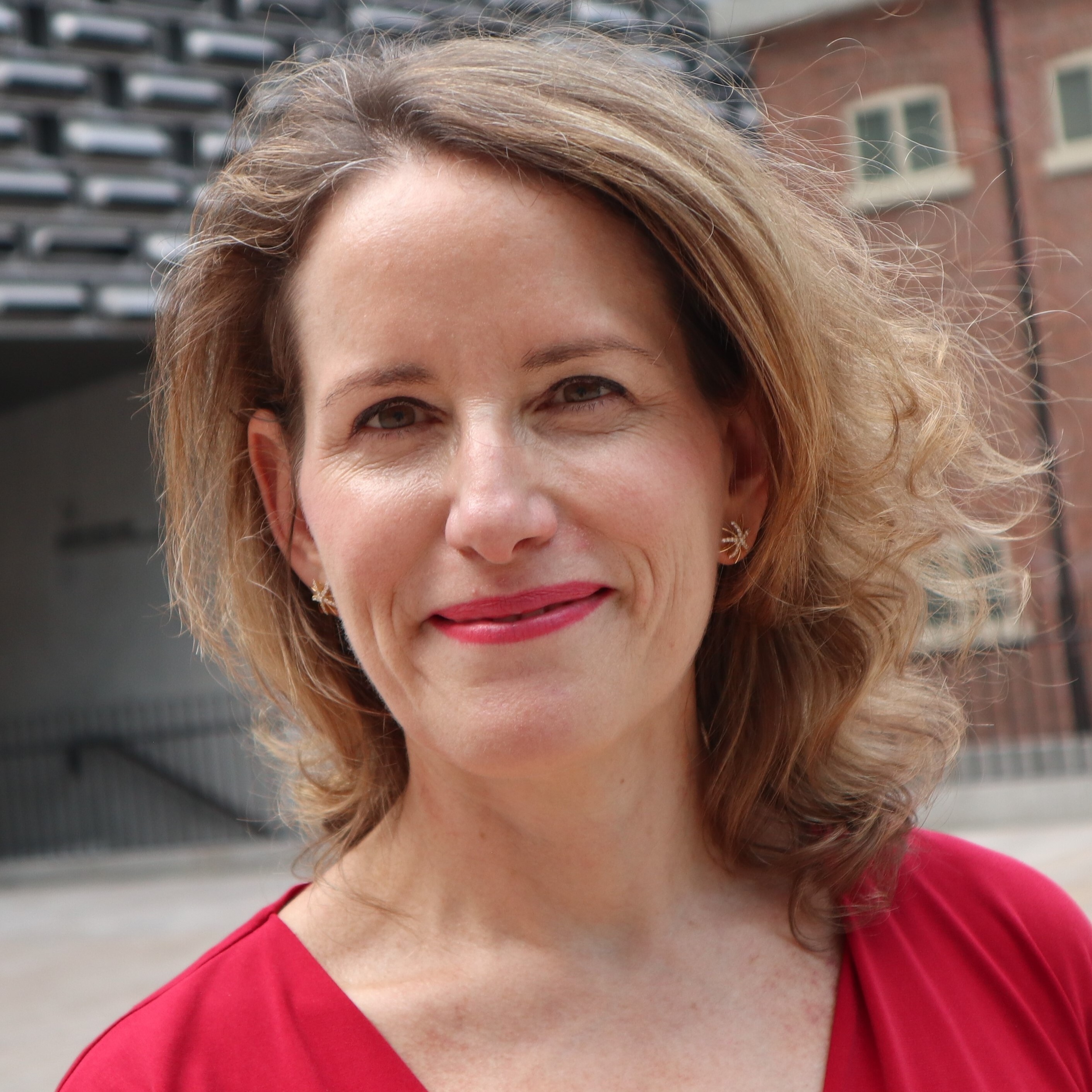
Diana Wu David
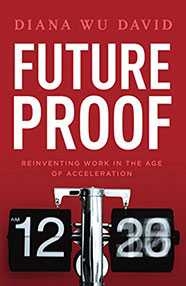
Diana Wu David is a futurist, author, advisor, and leadership coach based in Hong Kong, and the founder of Future Proof Lab, where she helps individuals and organizations build the agility to thrive in a fast-changing world. A former Financial Times executive, she has taught as an adjunct professor in Columbia Business School's EMBA-Global Asia program and holds an MBA from Columbia Business School. She is the author of Future Proof: Reinventing Work in an Age of Acceleration, a guide to adopting the mindsets and practices that prepare people for success across a longer working life.
📚 Books by Diana Wu David
Transcript
[0:00:17] CH: What’s up everybody, it’s Charlie Hoehn, the host of Author Hour where I interview authors about their new books. Today’s episode is with Diana Wu David. She is the author of Future Proof. For most people, work feels like a treadmill where we have to sacrifice our personal lives and even our soul. Diana believes that having the career that we want shouldn’t require us to lose ourselves. We all deserve a sustainable work environment and now, we can have it. Diana’s book is about reinventing work in the age of acceleration. She tells this story about how her own career shifted after the death of a friend. Led her to the realization that there was a better way to work. Before she wrote the book, Diana was a strategist and an innovator and an entrepreneur. She was the founder of Sirona Capital and Sirona Labs. Her work was focused on transforming how executives work and she helped them prepare their companies to be more entrepreneurial and resilient and successful in this era of constant change. She also led executive education initiatives for financial times and in this episode, she’s going to share real life stories that will help you become more innovative in your career and your life so you can stay resilient and relevant and enjoy your life in an ever changing global landscape. Now, here is our conversation with Diana Wu David.
[0:02:12] AWD: I got a call when I was at the financial times and sitting at my desk and really, I know that she had been going through some hard times but she was always the one that was sort of – had a lot of hutzpah and really was like, “Come on Diana. Get off your ass and do something, don’t wallow in it” and her husband called me and said that she had put a bag over her head and actually killed herself and that was really – it was so shocking and so devastating. Really, something I had never spoken about it until I did the TED X talk. It made me realize that that was – it happened a couple of years before, it’s not like that wakeup call that you know, that transforms your life. I love to be that proactive or even emotional but truly, it was like, what matters, you know? Sort of that, what matters moment where I had spent the day before thinking. My god, my kids have to be in music lessons. I mean, seems like everybody’s – instrument and they are not playing an instrument and maybe I should get on that and I don’t have time for that. What everybody goes through. I mean, if you don’t have kids then it’s like your own aspirations that are left unfulfilled. I just thought, "wow, this really doesn’t matter.” What if I’m – I really thought about my kids for – what if I’m pushing these kids to be the best that they can be for all the external markers. They’re not resilient enough to cope which you start to see a lot around the world where people are just supper ambitious and in pursuit of these external successes without the ability to bounce back. That was fundamentally the sort of a touch stone for me when things get crazy and was also a time when I was working eight hours a week and I was really obsessed about sort of the security of my corporate job and security financially, I was a prestigious and was traveling the world and I spent so much time kind of in that, that I was never investing time and making myself more resilient. If I lost my job I would have been a totally at a loss and I spent a lot of time on you know, thinking about both my kids and local school kids and stuff but I was never making myself kind of Future Proof. I wasn’t investing time in being more adaptable or having a broader skillset or even just being more resilient. That’s my very personal story and then I worked with incredible senior leaders, I set up this independent board training and these guys were CEO’s in major corporations and had started their own companies. We were teaching them some fundamentals of how to be more effective in their boards or how to transition to those experiences or those obligations or those opportunities. They would always say, “Diana, can I have a coffee with you? Can we talk about like some next steps” and I thought, “My god, these people are like 10 times smarter than me, what on earth are they, - what on earth can I tell them?” It made me realize that a lot of them were going through a version of this where these guys were looking out at a longer life, they had been incredibly successful. They had just not really taken the time. You know, they were sitting there looking at the next 30 years going, how could I possibly do anything that will top what I have right now? How can I be in the world in a time when longevity means I’m going to have a hundred year life but I’m not really sure what to do. An organizations haven’t kept up, the world hasn’t kept up with this experience this sort of collision of disruption and longevity that we see in the world.
[0:06:08] CH: Thank you for sharing that story about your friend and starting us there. I know how hard it is to lose somebody you care about in such a shocking way and I appreciate you starting with the hard stuff. You know, to your last point about these successful people who are knowing that they’re likely going to live to a hundred, or close and also dealing with disruption and acceleration, maybe some people think “hey, that’s not such a bad thing. How hard can it be for them really? “ “They’ve been successful, what’s the big deal here?” Can you kind of paint the picture a little bit for why it is such a challenging problem for these people?
[0:06:55] AWD: Yeah, I can totally relate to that feedback because I spent a lot of time and you know, the sort off equivalent of the inner city working with secondary school students and these are people who, in a big city of seven million people will have come into my office and have never been on to the central business district. Have never been in a city full of skyscrapers, they have never been up the elevator to like, the 40th floor. And sat in a boardroom talking to somebody who is really different than them and so I spent a lot of time with – on the future of work with people who I feel really don’t have access and here we’re talking about people who frankly do, right? That – one of the things I feel is that it’s so important to capture this group of people and have them still engaged to contribute and you know, we have so many problems in our society that it would be a shame that people at age 60 were like okay, well, you know, I don’t have a job so I’m going to just binge on Netflix. I don’t know, you know, there’s many other things.
[0:08:08] CH: Haven’t a lot of them Diana been sold on that as the dream? I mean, instead of Netflix, maybe some of them think golf or hang out on the beach like retirement. For a lot of them is that.
[0:08:20] AWD: It’s a dream, right? It’s like the –
[0:08:22] CH: The cease of work.
[0:08:24] AWD: Yeah, I think that that’s the dream that it’s kind of like a bait and switch from what I’ve seen. First of all, people are working so hard that – not taking time to slow down or enjoy their hobbies. That that seems like, I can’t wait you know? I’m finally going to get an opportunity for work but I think as you have seen, you know, or as you’ve experienced with people you know, it’s – even in my generation, I’m a gen Xer I guess. We learned and you know, went to university and then we did our job and then we were promised the nirvana. But the reality is that, very few people can do that for 30 years I mean, most people I have seen will spend maybe you know, six months, maybe a year, kind of reconnecting with the things that they like to do when they didn’t have to always be running around. Then I get bored. The reality is that they probably will live a lot longer, they probably will have if they retire at 60, 30 years for themselves, they’ll be healthy so they can work and a lot of them need to either because there’s just this sense of fear of that length of time. I mean, you can say, great, I’m 60, I worked like 40 years but is that going to pay for the next 30? You know, I think that that’s something that at all levels, people – there’s a pride from work, you know? There’s a financial necessity, There’s a pride, there’s an intellectual stimulation. I think that people really want to continue working in some capacity, maybe not 80 hours a week and flying all around but they want to contribute. I mean,, we even did a survey when we set up the program for financial times for board directors and we said, why do you do this? You know, is it intellectual stimulation, is it the money, what is it? They said, we just feel like we’ve developed all this knowledge and we really want to give back. We want to have it be useful for the businesses or organizations or causes we care about as in the next several decades.
[0:10:32] CH: yeah, I mean, it extends your life too. To be – to have that satisfaction from work is among the highest contributors to happiness and health and so it is essential that people are working. I want to talk about part one in your book where you go over how the world of work is really changing. Can we get into this bit of the specifics of the future of work? Is this all stuff that we’ve heard of like the robots are coming and AI and whatnot? Is there more to it?
[0:11:07] AWD: I think that what I wanted to do in terms of the first part of the book is, you hear a lot of the threats of automation, you know, this sort of headlines about how jobs will be lost and I have spent time working at a sort of governmental policy level on those issues and I think that they’re important and that sort of policy level. An organizational level. I think actually, a policy level is the most awareness because people are thinking about transition to things like basic income and those kind of things and I am involved with a whole group of global Silicon Valley beast. Future of work. People centered economy folks. That’s out there and I think if you read the press then you’ve seen that headline before. I wanted to make it salient to people who were kind of at the leadership level and I wanted to make it personal because I think that it’s just, does it really matter, these people will just go golfing. I think that that – okay, that’s true, that’s what we know approach it but I think that that’s changed in organizations that companies are just waking up to, you know, that we’ve had the millennial conversation and now, most organizations have not really thought about that, they haven’t thought about on a sort of company level, whether or not they would raise their retirement age. They might not have thought about – “I can continue to have some of that talent,” you know? They’re really struggling with it and people who are in really senior positions are often thinking about the future of work from how can I protect my team, how can I protect my organization, how can I contribute to the community I’m in to make, could give better access to train or educate kids or how can I educate my own kids. These are the last people to think, what is the future of work mean to me? It does mean that you know, it’s not robots are coming for – to automate the factory, that’s the biggest, I think, impact, that’s the biggest impact you’ll see and it makes the best headlines but a lot of people are not thinking about, how will disruption change the way that I’m working or contributing and they’re also not thinking about it from an opportunistic point. That was sort of – it was revelation to me that after having like a running original sales team and having to deal with that, for instance virtual teams, really worked so well for me when I had a portfolio career. Now, everything was on Google docs and Google calendars and we called in and I could be anywhere in the world and it really just worked. I can set up a team and so many people that I talk to would say sure. I did setup my own fashion label which was AI enabled and I had 15 people working for me and no office. Those are some of the things –
[0:14:17] CH: AI enabled fashion label?
[0:14:20] AWD: Well, yes. It would scan you to tell you what your size was and then manufacture clothing, specifically based on that and the AI sort of aspect would be learning all the time what it was you liked what it was you didn’t like, what might be better for you, et cetera. There was a lot of technology behind it. It was an idea with a huge group of virtual workers coming together, you know, the website done in Ukraine and a freelance PR person to do global PR. Those are the kind of things that I think that entrepreneurs know. I mean, I really work with a lot of entrepreneurs, invest in entrepreneurs, they’re like yeah, l of course. But people who have been in corporate entities have had less exposure to that and they’re you know, less opportunity to realize that if they are going to transition to something which is a little different, there are all these opportunities in the future to not do some of the things that can be automated. To collaborate so that you don’t have to do everything yourself. I think that you know, regardless of whether you're going to stay and transition your team or your company to something that’s more Future Proof or you’re going to try and do it yourself. That people need to know more about some of the elements that go on. It’s not the robots are coming and we’re all going to be out of work. It’s much more like, the robots are coming. How can we work with machines to make this better? How can we do more and you know, on personal basis, in addition to just transforming the company at scale or transforming your department.
[0:15:59] CH: Yeah. I love the label by the way, that’s so cool.
[0:16:05] AWD: Fabulous?
[0:16:07] CH: I do want to shift gears – what’s that?
[0:16:09] AWD: I said Fabulous, I’ll put you in touch and you know, we’ll get you all set up.
[0:16:13] CH: Excellent. One of the many perks of being a podcast host. I do want to shift gears a little bit to the next chapter in which you talk about investing in yourself. Now, people listening to this want to know how to be prepared for the future. How do they invest in themselves?
[0:16:34] AWD: I think that you know, I spend time in the intellectual future of work world and when I tried to do this book or when I wrote the book, I was hoping to include something that you don’t see in the future of work conversation as much which was the time that it requires to really think about what will make your life successful. When you’re thinking about the future of work, and you’re thinking about the sort of the perpetual reinvention that that might require an experimenting and trying to put really disparate pieces together of your life and your experience over time. The thing that is the big anchor for me and for others that I spoke to was really the kind of values that you would anchor your life and would be a through line in terms of your personal narrative and also, the sort of collaboration or the support network that you put in place because we at least I don’t, I don’t live in the town that I grew up in and I don’t have sort of natural, I don’t necessarily have a neighborhood where I’ve known the people I do now. You know, I’ve moved quite a bit from my career and for the promise of adventure. So I think that people don’t have those support networks and that is an aspect of the future or work where we all have a job every two years and we have different projects and it is sort of the gig economy as well where people really need to consciously think about where they’re going to have a network of support, a network of collaborators and what kind of things that they can do to whether it’s really promised to be really exciting. But it is also volatile and uncertain. So that is the essence of that part of the book and I feel like I couldn’t do it justice without really anchoring all of the innovation that I bring to people’s careers with some of the more fundamental aspects that in aid of acceleration often drop to the bottom of the list or we don’t even think about it at all because we’re not taught that in school.
[0:19:00] CH: I am curious Diana, in the making of this book I know that this book is from a career and obviously thinking about these things for a long time but in making this book, did you make changes to your own life? For instance you talked about having values be a threw line throughout your life. Did you get more clear on your own values perhaps?
[0:19:25] DWD: Well I think that it was an opportunity. It was an opportunity to be inspired by the stories of other people who are making different choices. So I could see in the people that I interviewed that they had decided to often make hard choices to either spend more time with their families or to pursue something that seemed crazy to most people and so in that sense you know I made changes, I think less maybe to the ideas that I had and more to the execution. Because we all say that we want to be healthier, we want to spend more time with our family but very few of us then spend our time that way. So that was a big change that I had to be constantly reminding myself off or in some cases my children would say, “You know mom you said that…” one time I was booked to speak about the book. I was so excited writing a book and all of these ideas and I was booked. We’re invited to speak in Singapore and I was on the phone going: “Yeah, that would be great!” I could totally see this big internet companies were there and I got a little carried away and I got off the phone and my son said, “Mom are you going to Singapore on my birthday?” and I was like, “Oh damn!” you know, sort of those – the publically putting it out there that I am going to change my life and these are my priorities, that did change and also it was exactly what I described in the book was experimenting. Which during my corporate career was going off to try other things, getting involved in other organizations, joining boards, I was joining the board of a robotics education company because I wanted to know more about how people were getting prepared for the future of work and so working with machines I think is incredibly important but those were experiments that I did and then tried to get feedback from to then live my life and that is one of the things that really changed. It is something I did in my corporate job as a corporate entrepreneur and as a non-corporate entrepreneur. The idea of defining a test and doing it and getting feedback and iterating and taking small bets. I did that much more consciously in my own life and hopefully I can share with others.
[0:22:03] CH: Yeah, so you interviewed a number of people for this book and I am curious, what are some of your favorite stories or case studies from them particularly in part two, in cultivating the virtues for people to stay engaged and relevant. Do any stories come to mind?
[0:22:25] DWD: Yeah, I think that one of my favorite stories in the book is Brian Tang, who I have known for some time and he started out as a lawyer at a white shoe law firm called Sullivan & Cromwell and then he went to Silicon Valley during the dot com boom and at the time that I met him, he was at a bank, Credit Suisse and heading up and trying to develop their Chinese investment banking joint venture. So the kind of person who you’re like, “Ray you’ve done it all, go golf”. Poor golf, you know we’re picking on golf but you know you can do anything, right? So he left his job at the bank to go set up Asia Capital Markets Institute because he really felt like conduct was one of the issues during the financial crisis and that he was dealing as a lawyer with regulation but he wanted to form a body whereby he can have more impact by as he put it sort of leaving the aircraft carrier to herd the ships or to herd the aircraft carriers and really make a difference in that way. And he was like, “I have done the majority of the top IPO’s in the last couple of years. So do I just want to keep doing this or do I want to try something else?” and he also set up on the side, he also said to himself, “What do I want my kids to be looking at when they look at me? What would be a good role model for my children and how can I spend more time with them?” so he started Technovation which was cultivating maker mindsets in kids including his own son. And that was something that I had the privilege of many years so it wasn’t just writing the book and even during the book his involvement’s changed but he went from doing this thing where everybody thought he was crazy to then adding on this maker fair and everybody said, “You’re like a capital market legal guy. What are you doing starting a maker movement for kids?” and the interesting thing overtime is that he plugged through the uncertainty. He was doing things like the first rig tech hackathon in Hong Kong and recently it’s all come together and he was appointed the founding director of the Universities Inter Disciplinary Law Innovation, Technology and Entrepreneurship Program and so that to me is such a great story because it’s not like you go off and experiment and reinvent yourself in one moment. It is really this journey of thinking about the things that you’re already fantastic and all of the experience that you have had. And then other things that you think are interesting and a lot of people look out and go, “And then you are taking all of these small bets like does that add up to anything” and I think that he is always been engaged and has had this fantastic growth and learning but he is the only person who in my opinion, who could ever have that job and those are the jobs that I think are the jobs of the future and so he’s definitely one that it is exactly that. He was like, "how can I stay engaged? What is important to me? How can I stay relevant? I could do the same job and be paid well and probably do it incredibly well but how can I be even more ambitious for myself in crafting your own life, my life on my terms. “
[0:26:16] CH: That is such an inspiring story. Very, very cool and it made me think of the famous line from Steve Jobs where he talks about, you can’t see the lines connecting or the dots connecting until you look back and everything had led him to being the person who could make that happen and I’ve just loved that he stayed sharp of thinking of that stuff. That is really fantastic.
[0:26:43] DWD: Yeah, absolutely. I think it is easy to be Steve Jobs in saying, “You just have to weigh it and have these experiences and then it all becomes Apple”, right? I think that there are lots of stories of people who are in the experimentation stage where they’re going, “Why did I drop off of Reed College and what was up with that calligraphy? What was I thinking?” it is nice to be able to know that there’s people who are in the experiment stage and yet still having a fantastic time of it. They are learning, they’re growing, they’re contributing and sometimes it coalesces into this one beautiful moment but a lot of times, it is still experiment, contribute, it is still messy and that is still okay and that is still really worthwhile and some of what we talk about is addressing how to keep yourself going during those moments where you think, “Oh you know my linear job…” like the bill of goods I was sold about going to university and then working at a job that just seems so much more simple. You know there is this tendency to feel like, “Oh I just go back to that” but I think that that’s just so impossible for so many people right now in this environment.
[0:28:04] CH: Since that was such a good story Diana, I would love for you to tell one more story from the third part of your book which is maximize the impact of your actions. I know the previous story fell a little bit into that category for sure but could you maybe tell another story from this section of the book?
[0:28:24] DWD: So yeah, I think that the last part of the book is really coming back to the environment that we live in and the deeper values you hold and where those two can intersect. I talk a lot about rebalancing a portfolio and redefining success in those chapters because it is something that I think that it is not specific to people who are maybe embarking on an on core career. It is something that everyone will have to be thinking about because if what the future of work pun that say it’s true, we will spend more time having careers and transitions. And then going onto a new job or project or career and maximizing the impact is about also maximizing those moments of transition. To really think about not just what do I want to do but what do I want and is all the work that I am putting in here giving me the life that I want to look back on. So that is really redefining. You know it is living your work in the context of your broader life as oppose to living the life within the context of your work which is maybe there is so many more people. Who are wiser than me but that was what I had done for most of my life and frankly what I think I was taught to do and the rebalance the portfolio is really an approach to get there. So thinking about auditing doesn’t usually inspire a lot of people but I talk a lot about really an audit of relationships and time spent and really reviewing that to see, “Is this what I said I wanted and that I am doing it?” in a nutshell and most people find that maybe it’s they aren’t. So Tim Ferriss famously looks back at the time that he spends he’s really good at this every year and says, “What did I do? What did I spent my time on? Let us look at the calendar” and then he rigorously prunes it much better than I could ever do the things that are not really serving his definition of success or even his day to day sense of fulfillment. So that is something that I think is really actionable and has been really successful and really defines the people who are running around thinking: “Oh well, maybe I’ll do this, that and the other” versus the people who are really intentional about crafting a life where contribution and work is a part of it but really working on some of the other aspects and soft skills and skills that will allow them to be great people in addition to have a great career.
[0:31:25] CH: Beautifully said and again, the book is Future Proof. It is going to be on Amazon by the time this comes out and I’ve got a few more questions for you Diana. The first question I have is what is the best way for our listeners to connect with you and follow you?
[0:31:42] DWD: I think that they can go to the website at www.dianawudavid.com and I have a Future Proof checklist there which is mercifully short because I have a very short attention span. I’ve had a lot of people say, “So you know, where do I start?” and I have a couple of questions that just allow you, 11 questions, go through to see where the gaps are because it is a pretty broad outlook and it goes through life, it goes through career, it goes through a lot of things. And that allows you to think of where can I start, what is it that I want to work on now and then of course, they can certainly feel free to connect with me on LinkedIn where I spend most of my social media time or many of the other social medias but that is the one that I pay the most attention to.
[0:32:37] CH: Excellent and the final question is, give our listeners a 15 second challenge basically. So what is the one thing they can do from your book this week that will have a positive impact on their life?
[0:32:51] DWD: So I think that they can ask themselves if you lost your job or your industry today, what ideas do you have that could reinvent yourself to take steps and take steps towards making the connections or building the skills and trying things out there? So that is really, what could you do to reinvent yourself if all that what you have right now is no longer available? What are the steps that you’re taking to make small progress to that by the connections, etcetera? That would be one and for people who find that too daunting, it would really be to write down five things that nurture you. For me it is going for a walk when things get really bad or going to have coffee with a friend, very simple and just write them down and put them in your bathroom mirror because in addition to the full bore ferocious ambition to do new things, you need to have the support that will help you go through a very uncertain process to get fantastic results.
[0:34:04] CH: I’d encourage the listeners to not wimp out and actually do the daunting challenge. I think that is the better one. The second one is definitely valid and invaluable. So the book again is Future Proof. Diana, thank you so much for being on the show.
[0:34:20] DWD: Thank you Charlie, it was a pleasure to speak to you.
[0:34:23] CH: Thanks again to Diana Wu David for being on the show. You can buy her book, Future Proof, on Amazon. Be sure to check out authorhour.co for show notes and more on this episode. Thanks for tuning in on today’s show. If you liked what you heard, here is what I want you to do next. Open up the podcast app on your phone or iTunes on your computer and search for “Author Hour with Charlie Hoehn” and then click “ratings and reviews”. Take 10 seconds to rate this show or leave a review. It is a small favor but it’s really the best way to show your support and give me feedback and if you know someone else who’d love Author Hour, take another three seconds to text them a link to this episode. We’ll see you next time.
Want to Write Your Own Book?
Scribe has helped over 2,000 authors turn their expertise into published books.
Schedule a Free Consult