Andrew Sillitoe: The 4 Keys
Read the full transcript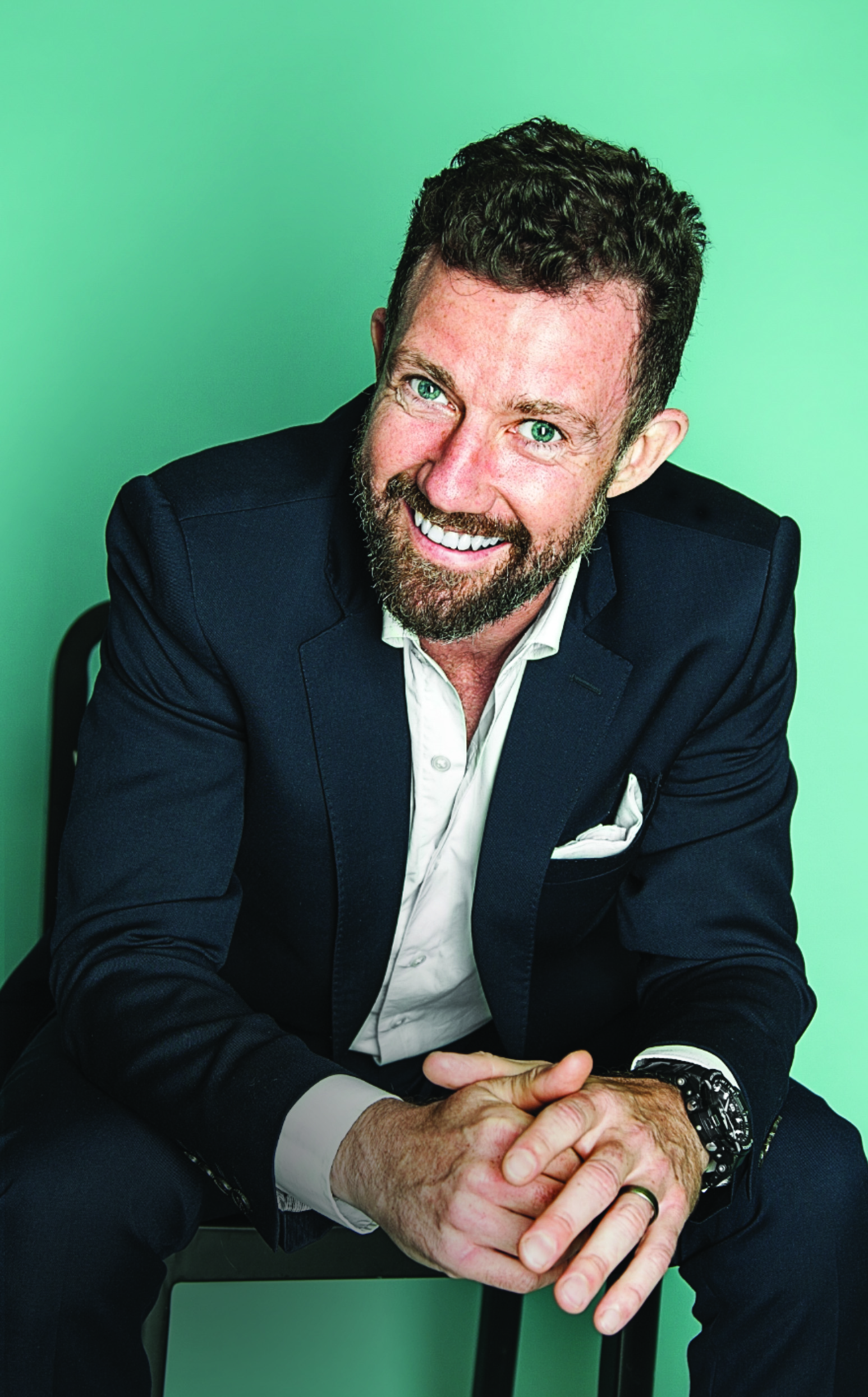
Andrew Sillitoe
Andrew Sillitoe is a business psychologist, speaker, and the author of The 4 Keys: How to Win in Your Business, Body, Relationships, and Mindset. His approach to leadership and work-life balance has led him to work with global companies including Pfizer, Nationwide, Virgin, and the BBC. Drawing on his work with C-suite clients and his own hard-learned lessons, he helps people bring balance back to their lives through a ninety-day game plan across work, body, relationships, and mindset.
📚 Books by Andrew Sillitoe
Transcript
[0:00:18] CH: What’s up everybody, it’s Charlie Hoehn, the host of Author Hour where I interview authors about their new books. In today’s episode, it’s with Andrew Sillitoe, author of The 4 Keys. This episode is really for entrepreneurs, people running businesses, leaders who have it all together on the outside, you know? They have their three year business plan, they’re channeling all their energy into it but on the inside, everything’s starting to fall apart. Your health is deteriorating, your partner might leave you, your relationship with your kids is becoming toxic and as a result, the business you’re working so hard on that you’re hyper focused on, is going to suffer because everything else is falling apart. Andrew believes that if you want to achieve all your business goals, you need to stop neglecting the stuff that happens outside of work. In this episode, Andrew shares what he’s learned along the way because he’s experienced this himself and so have his clients so if you want to bring your life back into balance and still do really well in your business or even better, this is definitely the episode for you. Now, here’s our conversation with Andrew Sillitoe.
[0:01:50] Andrew Sillitoe: I come from a family of bakers, I live in a small town called Tunridge Wells which was about 45 minutes Southeast of London. My grandfather actually had a bakery in North London as well. My dad took over the business and I was always destined to be a baker myself. The whole family, I have two brothers, two sisters, we all worked in the bakery growing up, older than me. I, as far as I was concerned, I was always going to work in the bakery and take it over but my dad, when I was 11, actually sold the business. He was influenced by a friend, so called friend who said that the property market was booming and my dad should move in to property and the bakery business was going to struggle because supper markets were now baking bread on site and it’s too competitive. My dad sold the business and to be fair to him, he made a lot of money in the property market and we had a wonderful big house, amazing holidays, we used to go to Marbella and have these incredible holidays, big hotels, there was always some sort of celebrity in the hotel or an athlete, I always remember. As quickly as my father made his money, the financial crisis kicked in late 80’s and he lost all of it, lost all the money, we ended up downsizing and the classic cars were gone, the holidays stopped, his health deteriorated with that and never really made it back. I remember one night I was watching a Rocky film, this was march 21st, 1993. I was 16 at the time. My dad came to the living room, he said, “Andrew, I’m going to bed, come and give your dad a hug,” and I knew he had a few beers and it was a Sunday evening and I said “No,” he actually asked me three times to have a hug. He went off to bed and that was the last time I saw him, he died that night of a heart attack at age 48. He was young and it’s obviously has always stuck with me, it’s had a profound impact on my life and my siblings. I still to this day don’t really know if that was the catalyst for the industry that I moved into because from quite a young age, I wanted to be some sort of consultant and or a coach. I work with businesses and I think I always had this desire, this entrepreneurial spirit that I would have, if I’d had the bakery, it would have become something much bigger than it was. It would have evolved into something, there were lots of schools local and we had this amazing oven that would have cooked incredible pizzas and things like that. I always had this desire to run a business. Things progressed. I ended up working in marketing and I was in marketing, I had a career playing roller hockey and coaching and had an amazing time in working in the ski industry but then I got into corporate world and had some success to Yellow Pages where I was selling advertising but ultimately, I was consulting with businesses on the grave plans and we had to utilize the yellow pages to – when Yellow Pages was a big thick printed book. It doesn’t exist anymore which is amazing. I really enjoyed that time of consulting businesses, started to get this desire to be a business coach and then really, just by luck, I call it luck. I was approached by an old school friend of mine who was a COO at a performance improvement business who was working with some of the top companies, Vodaphone, Sky, some of the big corporates, O2, Barkley’s, he asked me if I’d come on board and start going into business and coaching business leaders. Also make the comparison between sports and business. I was going into these companies and talking about leadership, how to get great locker rooms spirit and had a real, just really found my purpose and have never really looked back. That was around 2007. I started coaching more, moved into some corporate roles, learning development roles, HR roles and in 2012, started my own business, a consultancy business and immediately, found myself traveling to the US to the Middle East, coaching out there so I was between Dubai, Jordan. I had a young family as well, my daughter was a teenager then, previous relationship and my wife become her step mom, they were very close and then my wife and I had to – got two children. What I found was that I was so immersed in growing the business that actually, whilst I was observing other business owners and business leaders struggling with their own health and managing their own relationships and growing businesses. I found myself in the same situation. It really kind of hit me sign blinded me. I was also struggling with my health. We joke about it in my family, I suffer with gout, I don’t know if you’re familiar with gout, like a form of arthritis and we joke about the fact that my dad had it and it’s the only thing he left me. I look at it as a blessing now because I think I’m a much healthier person because the way I manage it. I noticed that my health was deteriorating. Along with that, my relationship started to suffer with my wife and started, “Hang on a second, this is a serious case of couple issues here, I’m recognizing that my clients are having health problems because they’re so focused on the business, their relationships become a dysfunctional, not just with their partners but with their children.” I was having some pretty personal coaching conversations with my clients and in the back of my mind, thinking, “I’m experienced in this as well.” I’d always talked about business, I always talked about mindset and I always talked about body, you know, having come from a sports background. It was always a very enthusiastic about sports and making sure that we look after ourselves, I wasn’t always doing it in the best possible way. In fact, for the most part, was training too hard. I hadn’t really thought about the relationship, it always occurred to me the relationship when I was playing hockey because I often with the relationship was bad, my hockey game would suffer. It was always in the back of my mind and I always had this idea that you know, working with business owners if the relationships weren’t strong and your business was going to suffer. I started sharing this idea and I was experiencing life and several people started to really connect with it and I was at a conference in Ibiza speaking. I just decided to share a very different message. Normally I would have talked about leadership, talked about locker room spirit, how to create a high performance culture and I said to them, "Look, you’re all business owners and business leaders. You’re here because you have huge ambition, you’re here to learn about how to grow a business” and I said, “You probably told your partners about your three year plan and how it’s all going to come good and you know, just hang in there” and I said, “Here’s what’s going to happen, in three years’ time, your partner won’t be there, your health would have deteriorated and the relationship will be dysfunctional.” Kind of silenced the room a little bit but it also really got their attention. Here’s what I’d like to do, I’d like five volunteers to come and join me in a Mastermind, we’re all going to train together, we’re going to wake up early in the morning, we’re going to meditate, these were gregarious business leaders. I was really taking a risk and I said, “We’re going to work out together, we’re going to do, start really planning, be proactive in our relationships, let’s just see what happens over 90 days. We talked about the four keys, business, body, relationships and mindset. It’s very in its embryonic stages, going back to September 2017. I also have five volunteers and 10 hands went up, later in the evening, several people came up to me and asked me about it and they’d like to join the group and we started this group and in 2018, January 2018 a year ago, pretty much the day. I setup a Whatsapp group with a few of us, I put a very rough and dirty online program together with this kind of this program. The feedback was just great, I didn’t charge anybody for it, we’re just all in it together and supporting each other and then I put a Facebook group together and they were up to about 250 people. It’s just gone from there and I just thought, well, let’s write the book, let’s just share some of the – my experience of working with business owners and also the case studies that we’re coming up with the Mastermind which I share in the book.
[0:10:13] CH: Wow. First of all, thank you so much for being vulnerable in ensuring your own personal story and that it just have to be getting this sad but very moving. Second, I’m curious, the four keys, how bad do things really get when people neglect these. I really want to grab the listener’s attention right now because there are a lot of business people who listen to this podcast, a lot of entrepreneurs. They all tend to neglect one or more of these areas in service of their business. Can you really emphasize it, paint the picture of how bad things can get when you do neglect this stuff.
[0:10:58] Andrew Sillitoe: Well, we’ve seen people lose their business, you know, and have a thriving business and they lose it because, or at least it ends up in a rut. They don’t want to be there, seen that a lot in SME business owners and business leaders in large organizations. But the things outside of the work environment have become so overwhelming that it becomes such a huge distraction that they can’t focus on the game, you know? Their mind’s just not in it in the same way and some are playing sports, you’re just distracted and you don’t want to be there. With that performance starts to suffer and very quickly, the business ends up in a rut and then some cases, completely folds. What’s interesting, for me, that I noticed about a month into the program, my business psychologist kept coming on which was where I would ask the group, you know, "What sort of support do you want in the way of developing your business, you know? Do you want tips.” If I was to put a video together on how to with new clients or improve business process or leadership and so on. The feedback was always the same from the group, "We don’t need it, what we’ve realized is that by going all in on our health and keeping our mindset in check and really being proactive in our relationships, the business is taking care of itself" and that was really interesting for me when we think it’s – we got to focus so much on the business. When your relationships are thriving and you feel great and confident because you’re looking after our bodies and we’re taking time to have some headspace and think and slow life down a little bit. We turn up to work just so focused and ready and so much more productive that it all just starts to feed into the performance at work. That’s been my experience. Obviously I’ve shared my experience with my father where he ultimately ended up in having a heart attack. It wasn’t just the business you know? It was – he let his relationship suffer, and his health massively, he gained a lot of weight and is very hard to turn that back you know? It’s not impossible obviously, we work with a lot of business owners and all my clients of telling how incredible results with weightloss and so on, it’s just, I try to avoid the word balance, whilst I use the word balance because it’s easy to understand about bringing balance back into our lives but ultimately it’s not doing the work, you know, one of our mantra’s, core values is do the work which is if you want a strong relationship, you have to do the work, you have to put some work into it, same with our bodies, same with our mindset and same with our business.
[0:13:49] CH: You know, Andrew, your book actually reminds me a bit of the book, The Score Takes Care Of Itself by Bill Walsh, are you familiar with him?
[0:14:01] Andrew Sillitoe: I’m not familiar with it, I’m familiar with the concept but I’ve not read it.
[0:14:05] CH: Yeah, Bill Walsh is considered one of the NFL’s greatest coaches. He took the San Francisco 49ers from being basically terrible to one of the greatest franchises in the sport. His philosophy was to take care of the little details that we tend to neglect. For him, it was – are you tucking in your shirt, are you showing up on time, are you always speaking respectfully, these things that we tend to neglect at the fringes, we don’t care as much about. I think it’s similar to your book in that your readers, your clients are so focused on their business that they tend to neglect these things that they view as maybe trivial on the side. Maybe they think I can cut corners on sleep or I don’t need to exercise but as soon as they start taking care of that stuff, the business takes care of itself. Is that fairly accurate?
[0:15:10] Andrew Sillitoe: Absolutely. Obviously, coming from a sports background, I’ve coached an insatiable level. I think that those parallels have come across. If we take care of the process or have some kind of consistency, results take care of themselves. If the behavior’s right, if we’re engaging in the right way in the locker room, we’re doing the right training, those small things and those small things add up in our personal lives but they can also add up in a negative way. You know, if we don’t take care of the relationships, all of a sudden these things start to build up and then we’re talking about human beings, some of the things that I neglected over that time, my wife is still – you know, I’m still building trust around it. It will take time. We can do the good things and we don’t do the right things that builds up negativity and we lose trusts and that can be a challenge to turn around and that is what I am seeing a lot with business owners that share that with me that they’ve done so much on their work assuming that because I am making money and providing for the family that that’s enough but the truth is, the family don’t really care about the Range Rover and the five bedroom house and the fancy holidays. What they want is time and you know that’s what we have to be mindful of.
[0:16:32] CH: Yeah, so tell me a bit about what results you’ve seen from clients you’ve worked with who do start paying attention to the four keys and they do nurture them and they really focus on those areas of their lives. What kind of transformations have you seen?
[0:16:53] Andrew Sillitoe: So it is interesting because the transformations vary. You know someone will come up to me and say, “You know what? My relationships are just perfect. The business is doing well but I am really worried about my health. How can you help me with my health?” and that was coming up a lot which is one of the reasons why I studied to be a health coach last year. So we have seen some dramatic results where people have just dealt with some form of arthritis. Perhaps, they just suffer from inflammation so it could be as simple as that, weight loss. Now I share like I study in the book, one of my clients Rob, he just really turned his life around and it’s actually quite emotional when I see him because he wants to introduce me to his wife because it’s had such an impact on his personal life and I have a former England rugby player. He shares his story in the book and just how he literally – he talks about how he just literally turned his life around just by paying attention to his relationships. And it was him and his business partner and a few of the others that said, “Look if we can just go in all in our body, our health, our relationships and mindset, our businesses are just taking care of themselves” literally taking care of themselves because we go into work ready, pro-active, energized and with no distractions. So I mean there is more to it than the actual program. So yeah, better relationships with daughters, daughters that they have not spoken to for a long time. And the daughters are in their 20’s and now they’ve started to form better relationships that have lost their way is another example. It is interesting the relationships one is the one that comes out a lot and you know whether it is with a partner, their children, we have one where it his mother. He had no relationship with his mother and started to just pick up the phone. So you know varying results but quite dramatic in some cases.
[0:18:54] CH: Oh yeah and quality of life, I mean this is business results aside, this just exponentially improves your quality of life these four areas. So just to restate what the four keys are, can you say it one more time?
[0:19:11] Andrew Sillitoe: Yeah, so business, body, relationships and mindset.
[0:19:15] CH: Great, all right so in your book you lay out your program the three parts to embrace these four keys, nurture them and to rally just make your life and your business that much better. Now I don’t want to cover necessarily everything because people listening I think it’s worthwhile always to get the book and to go through it but if you have to share one part of the book that you really want listeners to walk away from this episode with, what would you say you’d pick?
[0:19:47] Andrew Sillitoe: So I think the biggest councilors for change is where people start to understand the patterns of their life that have shaped them and that are getting in their way and slowing them down. So the three parts you mentioned start with the vision. It sounds a bit cliché but you know it is just having a direction and so it’s interesting someone said to me the other day, “I really don’t believe in this vision boards. You know what’s the value in all of this? It is just a dream.” You know it’s just a vision. The second part is to turn that vision into reality and that’s where we get more pragmatic and start looking at 30 day, 60 day, 90 day targets so we can start to really accelerate this and that is where the values come. The third part of it is about how to live the vision and that is around changing patterns, negative patterns and legacy. Having a really strong legacy that you essentially leave behind but not just financially but in a way values. And I think that where people have that aha moment is they realize that they can’t do what they have always done and they keep doing what everybody has done because of some sort of behavioral pattern. I don’t want to position myself as a guru. I’m a business psychologist, I understand psychology. My nativism with these things that they start to get perceived as a little bit wooly or fluffy but what I’ve learned is that when people really start to understand what are the things that they’re doing that are working against their goal. Their improvement goal from a behavioral perspective. When they start to realize what assumptions they’re making at a subconscious level, it is a very subconscious level, what assumptions they are making if they were to do the exact opposite of these things and that might seem obvious but when someone starts to recognize that they are operating in one way and they realize that they identify what the exact opposite of that is to work in a different way which will lead them faster to their goal, that’s when the break comes on because they go, “Actually I am not sure if I want to do that”. So they’ve got one eye on the vision, they got their 90 day game plan, they are really excited and they want to move forward but they’ve got this break and I noticed this is not always working with elite sports teams. You have the conversation in the dressing room, everyone is brought in, they know what to do in the rink in practice and you see them doing the exact opposite and you get everyone together and you say, “So what’s going on? Everyone understands what we’re trying to do here in a way of which one implements the tactics”. And everyone says, “Yes sure,” and they go out and do it and they do it wrong again. When you see coaches lose their mind and start blowing their whistles and yelling at people because it just doesn’t make sense but there is this underlying resistance to changing because of some sort of fear and what I’ve recognize is when people identify to that fear and they are close to that fear and they embrace that fear, it becomes very empowering and that for me is where we send the most significant change when people recognize that point that is actually holding them back. And they feel that as if they break free and it doesn’t happen straight away. They have to practice it and work at it and they will fall down and they’ll go back to their old ways but then they will have another go at it through coaching and it is like building a muscle because there is some hard wired pathways in the brain that are wanting to go back to the old habits and then creating some new ways of operating.
[0:23:12] CH: Yeah, so can you give an example or even a personal fear that you rewrote? It doesn’t have to be you, it could be one of the people that you’ve worked with.
[0:23:24] Andrew Sillitoe: Yeah, I guess there is one example. One case study that I share which is quite common actually from a leadership perspective where I had a leader who was just maxed out working all the hours, 16, 17 hours. This relationship become dysfunctional. He kept going on how he wanted to improve his work life balance, common stuff and when we started to explore his objective which is to free up more time to recognize that you need to focus more time on strategy. Working on the business rather than in the business. He had a good team, he had a good MD reporting in to him, a sales manager reporting into him and ultimately, it came down to letting go. Delegation, you know delegating more. So we started looking at all the things that he was doing on a day to day basis that prevented him from delegating. So he would turn up to every meeting for example where he would join every conference call. If things weren’t moving quick enough he would take control of it and start to work on the task himself and just ignore everybody’s says, “ No I would just do it” and that was causing some distrust in his people as well because he just do it. “Well we were trying to, we have no autonomy to work on this. So we put a two week test in place where he came up with all of it. I didn’t make any suggestions, I was just coasting through it really and he said to me he would not attend the conference call. He would let the sales manager run the meetings and he wouldn’t attend any client meetings and to test it, you know because there’s a risk there. We let him be mindful of the risk but all his assumptions that the business would struggle as sales manager wasn’t up to it, his team wouldn’t succeed, if he didn’t go see clients they wouldn’t engage with his sales managers were just assumptions. None of them were true. So a lot of it sometimes is particularly those scenarios is about letting go. You know letting go of control and being mindful of ego because ego was definitely the thing that was manifesting itself but also what we recognize is it was happening across the four keys. So what’s interesting is when we identify something like slowing someone down in one key, it is playing out in other keys as well because it is just a behavior that it was part of his personality. Behavior to take control and take charge and that was he recognize that he was also playing on his relationship. With his partner and his children and just that he recognized it and in a very subtle way with his friends whether it was playing sports with his friends that it was coming out often and it was very empowering for him to let go of that and I think it was quite a 180 shift in.
[0:26:25] CH: Yeah, so if any of this is resonating, if you are listening to this and you are thinking, “Oh my gosh that’s me” the book is The 4 Keys. You can get it on Amazon and I’ve got a couple more questions for you Andrew. The first one is, how can our listeners get in touch with you? How can they potentially work with you or just follow your work?
[0:26:52] Andrew Sillitoe: So LinkedIn is an area, a place where I spend a lot of time, a lot of my real engagement on LinkedIn. So LinkedIn, feel free to connect with me on LinkedIn. Instagram, Andrew Sillitoe on Instagram if that’s a place that you’re interested I am on Instagram. You can email me, I usually pick up an email so andrew@andrewsillitoe.com, @andrewsillitoe on Twitter but LinkedIn is an area that I am going to be focusing more attention on and then putting out content. So if you are around leadership and managing these facets of our life and so I am quite excited about 2019, I am going to be putting some stuff out there.
[0:27:35] CH: Excellent and my final question is give our listeners a challenge. Let’s say you want them to do one thing from your book this week that will have a positive impact, what is that one thing?
[0:27:49] Andrew Sillitoe: Well that is a difficult one because there are –
[0:27:53] CH: There are four.
[0:27:54] Andrew Sillitoe: Well it depends on where the person is at. You know I am a strong believer that yes, everything – it is good to have a vision, it is good to know where we’re going, it is good to know what you want for yourself and what motivates you in that way. You know whether it’s to make more money, to have more holidays with your family, to buy a nice car, whatever it is I think some of these even if they are materialistic, I am not a huge advocate of it. Because I don’t think it is that necessarily that important but there are some things in life that we should focus on that serve ourselves but if we really want to thrive, it is getting very clear on how we serve others and that for me is the why. It is what gets you out of bed every day and it could be as simple as how do I serve my family, how do I make sure that we’ve got some stability, certainty, how you serve your client, just have a very clear purpose of really asking why do I what I do. I think that is really important for us all to establish and there is a balance between serving yourselves and serving others. From a practical perspective, I would just what can you do in the next week that is going to move your relationship forward? What can you do today that is going to move your relationship forward? What does that thing that is of low value to you, maybe doesn’t cost that much but it is of high value to your partner, something that they would really appreciate? And often, we don’t recognize that that there is something that is of huge value to your partner but you might not recognize it. There might be something just being proactive, what could you do in the next few days that could really make a difference in your relationship.
[0:29:35] CH: So the book is The 4 Keys. Andrew Sillitoe thank you so much for being on the show.
[0:29:42] Andrew Sillitoe: Thank you Charlie. It’s been a pleasure.
[0:29:44] CH: Thanks so much again to Andrew Sillitoe for being on the show. You can buy his book, The 4 Keys, on amazon.com. Be sure to check out authorhour.co for show notes and a whole lot more. We’ll see you next time. Thanks for tuning in on today’s show. If you liked what you heard, here is what I want you to do next. Open up the podcast app on your phone or iTunes on your computer and search for “Author Hour with Charlie Hoehn” and then click “ratings and reviews”. Take 10 seconds to rate this show or leave a review. It is a small favor but it’s really the best way to show your support and give me feedback and if you know someone else who’d love Author Hour, take another three seconds to text them a link to this episode. We’ll see you next time.
Want to Write Your Own Book?
Scribe has helped over 2,000 authors turn their expertise into published books.
Schedule a Free Consult