Kyle Mk: The Economics of Emotion
Read the full transcriptKyle Mk
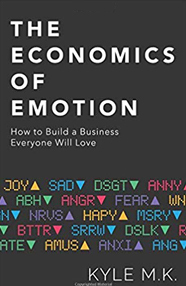
In The Economics of Emotion , business consultant Kyle M.K.
📚 Books by Kyle Mk
Transcript
[0:00:14] CH: What’s up everybody, it’s Charlie Hoehn, the host of Author Hour where I interview authors about their new books. Today’s episode is with Kyle M.K. He’s the author of The Economics of Emotion. A lot of businesses today focus on data, numbers and sales projections but Kyle believes that finding success is more about understanding people and what drives your customers. Kyle learned this while he was working with and studying companies like Apple, Disney, The Ritz Carlton and Starbucks. What he observed was the potential of emotion. He believes it is the number one untapped market is what people feel when they participate in an experience with your company. If you know your company might be losing customers because you’re making them upset and you want to create joy and actually keep them, this is the episode for you. Now, here’s our conversation with Kyle M.K.
[0:01:33] Kyle Mk: My career started at an Apple retail store and I was what they call a concierge which is no longer a thing. Concierges all they did was like answered - they were at the doors greeting people, they were checking people in for their [inaudible] appointments and then they were answering the phones and in the back of the store. It wasn’t my first job ever but it was like my first job out of high school and I was trying to figure out how to play the game of professionalism like how do I grow in a company and I saw a lot of – I was very good at observing what made other people successful and trying to emulate that and one of the things that Apple teaches every single one of their retail employees is that the relationship is far more important than the product. If you build a relationship then the products and like the purchases will come but not to focus on doing a hard sell of an iPhone or of a MacBook or anything but rather like, figuring out what people do for a living and how technology could help them but it’s not necessarily like, “Have you thought about this? This has all this really great features.” Tt’s more of like, “Well, have you thought about this, it has all these really great benefits for you,” right? Just the feature versus benefit argument. I eventually became a trainer for Apple retail where I got to kind of preach what I have been practicing aand see these ‘aha’ moments in people and I was like, wow, what seems kind of obvious of like yeah, you’re selling to a person so shouldn’t you focus on the person not necessarily the product because like the product’s not going anywhere but the person could. It seemed obvious to me but folks who were coming in from other jobs or like other backgrounds or just like – it was very clearly this is like a new concept for them.
[0:03:42] CH: Why was it a new concept for them?
[0:03:44] Kyle Mk: That’s a good question. I don’t’ know, I feel like there’s a lot of training, like a lot of these folks are either coming out of college or from other jobs and both of those places, you’re not really taught to focus on the individual who is consuming. You focus on the product that they are consuming. Let’s think about like if you go to school for civil engineering, you’re not thinking about the people on a bridge, you’re thinking about the bridge and how the bridge is structured, right? You’re not really thinking about how the bridge will help alleviate stress when it comes to a commute or anything, right? Some of the best civil engineers will think of that but that’s not what they teach. That goes with nearly every major that you could take in college outside of anthropology or any sort of human studies, right? Then any other business world like if you had to do sales somewhere else, like a Best Buy or something, you know, which is common for Apple store employees, they never tell you to ask questions of the customer and see what the customer is really looking for and like if the customer comes in for an iPad but what they really need is a computer. There’s no way to find that out unless you ask questions and you know, places like Best Buy or you know, Fry’s or whatever, they don’t consider the repercussions of selling the wrong product, they just focus on selling the product. When I was seeing this aha moments at Apple, I was just like, one, it surprised me that nobody or not nobody but most people were like wow, we don’t even have to like memorize all the features of a computer, we just have to talk to people? It seemed like a world where they were just like, how on earth does Apple function with that type of like mindset and I think they quickly found out like once they got on the floor, that this is actually brilliant, it takes a lot of stress off of - none of them worked off of commission or anything. Took a lot of stress off of them and they’re like, if I don’t sell it, it’s just because that the product wasn’t right for that person or that I didn’t uncover a need by asking enough questions but it wasn’t because the product is bad or because they’re bad, it’s just because it just wasn’t right. And a lot of times, that was like the minority of experiences that you would have as a retail employee where someone would come in wanting to get a computer and then they would walk out with nothing. That rarely happened. The product might change, they might have walked away with an iPad versus a computer or vice versa but in most cases, you know, when you focus on the person, it ends up working out for a sale or more so for the relationship because they come back, they want to see you, they want to hear about your life now and you start to gain friends and you – they want to come to the Apple store for a Genius Bar appointment rather than doing it on the phone because they know that people in the store are super helpful and friendly. Maybe they can see their friends there and they come in for training. Apple was really like the seed that was planted on how they manage stuff and then when I left Apple to go found what later turned into a lifestyle brand, we were writing this coffee table book for this lifestyle brand and I was going around Texas and interviewing small business owners of all different types, about like, their story and their success story and you know, what makes them want to do stuff and nearly every single one of them just you know, was running into this problem, they’re like – “Our market is so saturated that with makers and we don’t know how to separate ourselves from the next person who makes, bespoke necklaces or boots or jeans or you know, baseball bats even.” Just like, it occurred to me like okay, well like the employees at Apple who were going through training, it’s kind of a microcosm for all the people that exist in the business world. They’re trying to separate themselves and they’re putting so much effort into the design of their necklaces and the design of their jeans and stuff like that but they’re not thinking about who are these people who are wearing the necklaces and wearing these jeans. How do you want to make them feel? Do you want them to be more comfortable in their own skin? Do you want them to be a little bit more bold when it comes to fashion? So you create more bold necklaces. If you’re not planning on making someone feel something with your product then why make it at all, right? It’s just like, why make a complacent product? It doesn’t make sense. There was this like huge ‘aha’ moment for me and you know, hindsight’s 20/20. You look back on your life and you’re like wow, there’s this pattern or this through point that goes all the way through and says, there’s this one theme throughout your professional career that if you were to put it in a nice package, this is what it would look like. The thing that motivates me the most and the thing that gets me excited when I talk to people and especially like business owners that I’ve either consulted for or just talking to in casual setting, the thing that I found that nobody really thinks of that is like the biggest untapped market is like, how people feel when they participate in an experience. Whether that experience is like a football game or a shopping experience or a movie even, no one really puts the experience of a customer first. They don’t consider that their product of their new phone or is the product of their stadium or is the product of you know, what you’re trying to do is get someone to fall in love with you and be loyal to your company. If you’re not focused on that then what are you focused on, that’s the equation that you’re trying to solve for but no one’s actually looking after the equals sign. They’re all focused on the equation.
[0:09:56] CH: Yeah, man, I love this message, I love what you’re saying. Because I’ve thought about this as well just from a personal standpoint, I’ll give you a personal example of like, I’ve thought about it in terms of dating and sales. Early in your life, when you have never had a girlfriend and you want to have a girlfriend. You’re desperately trying to figure out, okay, how can I get this person to – you’re almost trying to manipulate them for your sake and then once you ease up and get comfortable in your own skin and you’re like hey, like a product, I’m not going anywhere. Why don’t I get to know this person and see if they’re the right fit for me? Everything starts to fall into place. But it takes a long time to get there and I think what you’re maybe hitting on and you tell me if I’m wrong is a lot of these companies that don’t care about how people feel are sort of operating from this place of scarcity. They need to sell, they’re focused on what they’re going to get rather than helping their customers fall in love with them by actually paying attention to what they’re going through, is that fair to say?
[0:11:19] Kyle Mk: Yeah, it’s really funny because what these companies are doing, they’re coming from a place of scarcity but really, it’s a place of fear, they don’t want to fail. Even in the book, I explain that fear does this thing to you to where you might put so much effort into a single thing because of fear but it’s all short term effort, right? Like you are so short sighted when it comes to fear that you’re missing the actual objective, you know? When a startup is in survival mode and they’re running out of cash, they’re going to start making like really bold choices that are all short sighted, nearly every decision is going to become short sighted when you’re running out of money because they need to see profits sooner than later, they need to get in the black. Whatever it is, they are like, we need to figure this out sooner than alter and whatever it gets us there faster is better but then, like a credit card, after you get funding or something. You start to realize, shit, I have to start paying off all of this debt, all of these shortsighted decisions that I made, I have to go back and undo all of it to make it a little bit more long term. Yeah, these businesses who are not focusing on the person, not focus on the relationship, rather focusing solely on their product, obviously, you have to make a great product but you know, if you’re only focused on the product and nothing else, you’re living in this box, you have these terrible horse blinders and it’s such a short sighted fear-based response to sales and to business. It’s just like not the right way to go about product development or service development, you know? Anything like that, you just – it’s very short sighted.
[0:13:03] CH: Yeah, it says in your book that you’ve worked with and studied not just apple but also companies like Disney, the Ritz Carlton, Starbucks, world class industry leaders. Did they impart you with the same lesson when you study them or were there other things that you learned about how to build a business that everyone will love?
[0:13:28] Kyle Mk: No, they definitely have the same foundation as like putting people first which is why I believe like they’re at the top of their respective industries.
[0:13:38] CH: Give some examples, I mean, it sounded like you were going to go into it but yeah, give some examples.
[0:13:43] Kyle Mk: Yeah, if you take Ritz Carlton for example, their motto is we are ladies and gentlemen, serving ladies and gentlemen, right? It doesn’t say like, we have the cleanest floors and rooms and like we provide the best service, it doesn’t talk about the service or the products that they’re contributing to society. It talks about like the people who are not only making the experience great but also the people who will take part in the experience that ladies and gentlemen serving ladies and gentlemen. It puts the employees on the same level as the professional guests or distinguished guests that they serve. It very clearly states, we care more about people than our product. Disney is similar, Disney, their entire purpose statement is we create happiness, right? I think the full thing is we create happiness by providing the best in entertainment for people of all ages. But it says, we create happiness, right? Six Flags which is very similar to Disney world, you know, in the sense that they have a theme park and have a bunch of characters that they could use. Six Flags is like, you know, our mission is to surround the best rides in the world with entertainment from music and theater and film and television. Nowhere in there does it explain like, express like how they want their customers to feel at all. They’re just like, we have the best rides with the most coffee and, we have the best rides with – I’m thinking of Starbucks.
[0:15:21] CH: Right.
[0:15:21] Kyle Mk: We have the best rides with the best entertainment and that’s it. We don’t care about your happiness, we just came up with a rollercoaster, okay.
[0:15:36] CH: I think you accidentally tapped on a great business idea there as rollercoasters and coffee.
[0:15:42] Kyle Mk: Yeah, I’m sure that’s not dangerous.
[0:15:46] CH: Yeah, Starbucks, how about them?
[0:15:48] Kyle Mk: I spoke with the president of Starbucks and I was actually building an app that was trying to, because everybody has to have a side hustle. I was trying to find a way for like retailers and coffee shops and hotels, I wanted them to be able to personalize a customer’s experience in real time and without having to like, impose on someone’s privacy. It’s like this huge project and I ended up in front of the president of Starbucks. It was an interesting conversation because they’re trying to solve this problem, how do we make things more human-centric, right? Where we can recognize people as they come in and say like “Hey, it’s good to see you, how are the kids?” You know, that kind of stuff. We had a really long conversation. I probably learned more about how Starbucks functions than me trying to sell him this app. I completely lost focus, I was like, “Tell me more about how you function.” You know, you go back and you like read about everything that Starbucks was built on and what they do and their foundation is that they want to inspire and nurture the human spirit one person, one cup and one neighborhood at a time and you’re like, damn.
[0:17:12] CH: Wow.
[0:17:14] Kyle Mk: Right? Dunkin’ Donuts, I’m from the northeast. Dunking donuts are just like, you know, the mecca of all energy, theirs is like, we want to make the freshest, most delicious cup of coffee with the freshest, most delicious donuts, quickly and courteously in a well merchandised store. And you’re like, compared to Starbucks where they want to inspire and nurture the human spirit. You’re like yeah, I’ll choose Starbucks over Dunkin’ Donuts 10 times out of 10, you know? The only reason why I would choose Dunkin’ over Starbucks at that point, if what you’re trying to go for as like I want a company to care about me then the only reason why you would choose Dunkin’ is if they were closer or more convenient. But even that case, I know plenty of stories where people would rather travel further to a business that they like and that their loyal to them to a more convenient location of a competitor.
[0:18:11] CH: Right. You know, what you’re describing and maybe this is a bit heavy but you know, the Starbucks versus Dunkin’ comparison is a good one because both of those are very successful businesses, right? I mean, Starbucks is the third largest fast food restaurant chain. They have close to 30,000 locations around the world. Dunkin’ donuts is an 860 million dollar company, also super successful but they have completely different missions, completely different feels and I think you’re tapping into almost like having a higher spiritual or emotional purpose. I mean, maybe this is a bit too woo but I think about this stuff of like, we’re on a spiritual journey and we all are, for our companies, they are a reflection of where we are in that journey. Do you want to push higher in your service or do you want to be more utilitarian and more focused on just the basics? Both can work but they bring in a different type of customer, right? If you’re speaking from that deeper place and your mission is in service of that journey, you attract a different type of customer even though on paper, both of them are – I wouldn’t say the same amount of success but both wildly successful.
[0:19:55] Kyle Mk: Well, the thing is like, if you’re a business and your goal is to have a delivery company that has like 100% or a high completion rate let’s say. You want to make sure that everything is delivered within 48 hours and that’s your whole purpose, then what happens when someone who has a better logistical mind than you finds a way to do it in 24 hours with a higher completion rate. You just lost all of your customers. If you’re a one selling point was that we deliver things in this amount of time at this level of success and then someone comes in and they’re like, actually, I’m better than that then like, you just lost all of your customers, there’s no reason why anyone would stay with you because you only sold them on these features of yours. But if a delivery company comes along and says, we have the friendliest delivery people out and we want to make sure that every single package is handled with care because we know the reason why you’re receiving this is because the people who sent it to you care very much that you get it, right? Then, any company that comes along after that says like hey, we’re going to deliver in 24 hours, then people are going to be like yeah, you can deliver in 24 hours but it’s probably going to be like trashed by the time it gets there, you’re not going to take care of my product or take care of my package, right? I’m going to stay with company A in that case, I want someone to like take care of it.
[0:21:21] CH: That’s a good lesson in positioning and reframing by the way is like the company that can get it there the fastest, the next company just says, well yeah, is it going to show up and not be damaged, we actually take care of it.
[0:21:37] Kyle Mk: Yeah, you can just imagine someone throwing a box from one truck to another because they’re trying to do it as quickly as possible, right?
[0:21:42] CH: Right. What do you think about Amazon Kyle? I mean, the companies you’ve talked to have done a great job with emotion. How do you think Amazon is doing?
[0:21:51] Kyle Mk: Amazon is such a weird thing because it is probably the most consistent online retailer. I know what to expect when I order from Amazon versus if I ordered from a Walmart or a Target and I think that their - Amazon’s super power is very clearly logistics. How do they get things to you as soon as possible? My only trepidation when it comes to being a customer of Amazon is that they don’t really put people first, right? Although it’s a consistent experience and it’s very convenient, it’s like very process based, right? They put a lot of focus on their process but very little focus on their people up until recently like they obviously didn’t have a reasonable like minimum wage for the amount of hours that people were putting in and you just hear these stories on like - these are the people who were serving you and like, they’re being worked to the bone and they don’t have another choice, it’s very difficult to find a job. You start to think, well, the more I use Amazon, the harder those people need to work and not everybody is that conscious when they are buying things, I understand that. But you know, it goes into the purpose of the business. If you think about Amazon, their whole purpose and I don’t actually have their purpose statement memorized but I would imagine that it is close to we want high market share. We want to be able to have products that we can ship to people and all over multiple industries. We want to be able to ship appliances and books and we want to make movies now. We want to ship entertainment to people. They just want to fill people’s homes with stuff it seems. I think their best product so far has been like the Alexa, the Echo and that’s one of those things where they definitely put the customer experience of a digital assistant before the digital assistants. I mean obviously you’re thinking of making a product better but if you compare it to Siri which I think is the worst digital assistant which is hard to say being a former Apple person. Like when you ask Siri something, she’s super slow to respond. She doesn’t always understand what you are saying and I asked her what the weather was - what did I say, it was a stupid query that I have, it was like, “On average how much is a dozen roses?” And she’s like, “Here’s the weather.” and you’re like, “What?” Rather than saying, “I don’t know,” here’s a completely different thing and I have a screenshot where she understood what I said, the dictation worked but the assistant part didn’t. She just couldn’t get it so that is like a small rabbit hole but the thing about Alexa is that I’ve read that Jeff Bezos was so obsessed with the response time for Alexa that if someone asked the question just like a human being like you shouldn’t need five seconds to process. You should be able to process while they’re talking and you should be able to get back to them as soon as they’re done, if not shortly after they are done.
[0:25:15] CH: Yeah, I am with you on Alexa and Siri and it is — I love Apple but when it comes to being a close system they get destroyed when it comes to voice assistance, when it comes to maps, they just can’t keep up with their competition unfortunately. So I want to shift gears a bit and actually dive into some of the chapters in your book and so your book is divided up into three parts. You could have get into the history of how we got here. And then part two is the emotions explained, can you give us an overview of these core emotions and a beginner’s guide to these emotions.
[0:26:02] Kyle Mk: Yeah, so this whole part of the book, there’s three parts and this part, part two is all about the psychology behind emotions or as much as you can put to a small section of a book. And a lot of this information came from a very well-known psychologist named Dr. Paul Ekman and he has written a bunch of books. He’s has a TV show based off of him. He was the main psychologist behind the Pixar movie Inside Out. He just knows a lot about human communication but mainly in emotion and facial expressions and body language. He is like my Justin Timberlake, right? I aspire to meet him one day and go to his one of speaking gigs and get a shirt signed type of thing.
[0:26:52] CH: By the way, just a side note what do you think is his best book?
[0:26:56] Kyle Mk: I don’t know, he’s got two classics. He’s got two classic books, there’s one called Telling Lies and it’s how to tell if someone is lying to you or not and then another one, Emotions Revealed which I have read seven times which is all about the facial expressions and body language and how emotion works and all the studying that he’s done and then he also co-wrote one with the Dalai Lama, I am forgetting the name of which is really that’s an interesting – It is based off of conversations that’s he’s had with the Dalai Lama and they’re very close friends. So that was cool to read but I think the best one, my favorite one is the emotions revealed one just because that feeds into what I am interested in.
[0:27:43] CH: Yeah, totally. Sorry to cut you off. So you broke down Paul Ekman’s work in your book.
[0:27:49] Kyle Mk: As best as I could and if you are to do a cover of a Justin Timberlake album, obviously it is not going to sound as good and it is not going to have as much heart but I did the best that I possibly could without offending him and it was distilling down five core emotions that he thinks make up the rest of our emotional DNA and it’s joy, sadness, fear, anger and disgust. So it is the same emotions that you find in the Pixar movie Inside Out. And then there is a sixth one that is the red-headed step child, it is surprised and quickly going to that, you could think of surprise in the vowels. You have A, E, I, O, U and sometimes Y. Surprise is the sometimes Y and so this whole part like he says here is how joy works, here is where joy exists from an evolutionary standpoint. Here is how to recognize joy, here is how to recognize joy in business. It talks about the spectrum of each of these emotions and how –
[0:28:56] CH: So let me pause you there. I want to dive into joy specifically. Why does it exist from an evolutionary standpoint and how does it look in business?
[0:29:05] Kyle Mk: It exists to show people – well to tell us when we’re in a safe environment, right? So it’s meant to make us feel safe and comfortable. So when we feel joy especially if someone makes us feel joy, we feel comfortable with this. That is why at least my wife will say, my way out of my league wife will say, “Well he’s funny.” It’s because I make her laugh and I make her happy and that makes her feel safe of course. So it is all about identifying who and want we want to be surrounded by.
[0:29:44] CH: Wow so I believe on the Maslow’s Hierarchy of needs safety, is at the very bottom. Is it a foundational one. So is it fair to say if you are not experiencing joy there is a possibility that you are not feeling safe?
[0:30:00] Kyle Mk: Yeah because if you were to break down the other core emotions like fear clearly is not safe, disgust is not safe, anger is not safe and sadness, that is you are suffering. You are clearly not safe so out of the five core emotions yeah, joy is the only one that provides a strong feeling of safety.
[0:30:20] CH: Wow, so if – okay, all right so let’s talk about joy in business then.
[0:30:28] Kyle Mk: Yeah, so when you think about joy in business it is surprising how rarely businesses will attempt to trigger joy directly rather. Obviously they want – people are like, “If you have a happy customer then you’ll have a happy business.” But they don’t really design their product or service to trigger happiness. They just want their product to work and to fit a need like,“I am thirsty. Okay here is a Gatorade.” You don’t really think about how happy someone is made. Coca-Cola thinks about how happy and they push that a lot. So joy in business is like when you get a coupon in your email that says, “Hey, happy birthday. Here’s a free drink from us from Starbucks.” That is them trying to attempt to joy. I feel that approach is kind of cold. It would be better if you’d walk into the store and they’re be like, “Hey, happy birthday!” But you know that’s them trying to trigger joy and say, “Hey, happy birthday! We want you to celebrate, here is a thing on us. Here is something that you don’t have to worry about to make your birthday less stressful,” or whatever. Give you less things to worry about, finances in this case.
[0:31:45] CH: So how can businesses – let us do some examples of ways that you think would be good for them to trigger joy. Is Starbucks a good example of a way to improve it but let’s do BestBuy maybe like what they do now is they have – I hate going into BestBuy because they have two people at the front typically and they greet you and it makes me upset because I know the purpose of the greeter is not actually to greet but to reduce theft.
[0:32:18] Kyle Mk: Right, just to be like, “We’re watching you.”
[0:32:20] CH: Right, exactly so it irritates me. I don’t want to interact with them. So what can they change to trigger joy?
[0:32:27] Kyle Mk: Well for one they could put more people on the floor so when you are looking for something it doesn’t take 30 minutes. The thing is that I guess there’s two different ways to look at it. You can either positively trigger an emotion or negatively trigger an emotion and what that means is when you positively trigger an emotion you are trying to trigger a specific emotion. When you are negatively trying to trigger an emotion what you’re trying to do is reduce a certain emotion. So if by having more people on the floor will reduce the frustration of having to find someone that gives like you won’t feel angry because there’s a thing - you may not feel joy and maybe you are happy because you got in and out. But you know in the moment, you won’t feel joy that you found someone so easily, you’ll just feel relief that you didn’t have to go out and find someone which is different. And to trigger joy from a BestBuy standpoint, When someone comes in, you know the thing that I hate is when someone comes up to you and says, “Hey, do you need help with anything?” And you’re like, “No, I am fine. I am just looking around.” And then not two seconds later a different person comes up and says, “Hey, do you need help with anything?” And you’re like, “No, I am fine,” and then four more people over the course of the next 10 minutes all come up and ask you the same thing. If you are actually trying to help someone then you should do it at the front of the door. You should wait at the front and say, “Hey, can I help you find anything?” If someone is saying, “No I am just looking around,” then you say, “Okay, no problem. Well if you need somebody go to these places and that is where you’ll find them.” We are not going to roam aimlessly throughout the store looking for people who need help. We’re going to tell you where we are and then if you need help from the get go, I am here to help you know and I am going to walk you through the store myself, right? That seems a way to like, if someone who needs it or needs help comes in that is a way to get them help sooner than later not make them find – if someone needs help they’re going to go to that front person and say, “Hey, where do I find that?” And that person is not going to be able to walk with them. So they are going to just point and be like, “Oh it is in the back of the right corner of the store.” And then they get over there and they find their product and now they have to go find someone to unlock the cage. To get the product and then that person, the Best Buy employee doesn’t feel comfortable leaving it with you because you are going to have, I don’t know, because you are going to escape the store somehow with that product now. So either they walk with you to the front but not because they’re trying to be nice. It is just because they think you’re a criminal or they just bring it up to the front themselves and they’re like, “Hey, you can just find this at the front.” It is a terrible experience all around. If you actually want to help people, you would stand at the front and say, “Hey, do you need help?” And you’d be like, “No I am just looking around.” “Great, well if you need help this is where you find someone.”
[0:35:16] CH: You know it is funny as you are talking through this I am realizing how common these scenarios are that it is almost dumbfounding that these retailers don’t really think about the emotional experience. I mean literarily what you described with shopping and having four people come up and ask if I need help, that is literally why I stopped shopping for jeans completely. My sister used to work in retail and every time I need a pair of jeans I call her up and say, “Please come with me and deflect customer service.” Because she has a much higher threshold for that kind of behavior, she can just deflect them. I get so upset because I am like, “I just want to be left alone to go through this process.” I don’t need somebody talking to me while I am trying on pants getting undressed over and over.
[0:36:17] Kyle Mk: Right, I don’t like someone looking at my legs while I am shopping, right.
[0:36:22] CH: It is so irritating, yeah and I mean I’ll call them out, Lucky Jeans, I will never buy you again because you have the most obnoxious sales people I have ever experienced because of that and again, they think they’re doing this huge service but the emotional experience is so frustrating. So I love that you are talking about that and I agree, these experiences is a huge untapped market and that’s why a lot of I’d imagine these clothing - ship to you type companies have really taken off because they have removed.
[0:37:01] Kyle Mk: Or like Trunk Club and Stitch Fix and yeah.
[0:37:04] CH: Yeah, Trunk Club. Yeah exactly so part three of your book, you talk about the emotion in business, leading with emotion, designing for emotion, developing relationships. We don’t have time to time to get into everything nor do I want to get into everything because I want people to pick up this book but break down for me designing for emotion a little bit more. Are there any stories from the book that come to mind or case studies you want to share?
[0:37:35] Kyle Mk: Yeah, so when you’re designing for - so this is talking about design your product or your service, the customer facing thing that your business does for emotion and the main part of that section talks about how to build a product that either negates the frustration or negates a negative emotion or a promotes a positive one, right? And when you think about your entire experience like let’s say the shopping experience of Lucky Jeans or how the unboxing process of a new drone, every little tiny design detail whether you like it or not as a manufacturer or as a business, will trigger some sort of feeling and this goes even to the website or your app that you use, right? If your app is slow you are going to frustrate people. If your unboxing process has so much tape and a bunch of styrofoam that gets everywhere that’s going to frustrate people but if it is super simple and smooth and easy to open and clean and not dirty you are going to negate all of this disgust. You are going to negate frustration. If a product doesn’t have a full battery whenever you take it out of the box, you’re going to promote sadness and people aren’t going to feel good about that. They are going to be sad and frustrated at the same time because they can’t play with their new thing that they just bought. If you are not thinking about the emotion or the emotional experience of the person who is buying into your product or service then you’ve lost the game already. If that is not the first thing you’re thinking of you have lost.
[0:39:19] CH: Totally and I want to give an example here because I’m so glad you brought up apps. Apps is, everyone who gets into apps realizes how short it is. It is really hard to retain users and one of the best apps that creates joy that I’ve seen is Wish. If you haven’t checked out Wish, download Wish and go through their onboarding experience as a customer. They give you a free gift and mail it to you and this is their way of gathering your information, your shipping, your team and doing it in a way that creates joy rather than frustration, right? Because they know that that information is so valuable they’re willing to give you a free gift and here’s the craziest thing. This app is not that old. It is worth $8 billion. It is worth more than Sears, Macy’s and JCPenney combined and they just sell products at a massive discount. That’s all it is so they’re a legit competitor to Amazon. An app and I think a big part of the reason is this initial experience of joy that no other shopping app has ever provided really.
[0:40:40] Kyle Mk: Yeah, no that is genius. Every shopping app needs to get your payment information and shipping information anyways, they are just giving you a thing. You are not even thinking about, “Oh this is me giving them my information,” it’s just like, “Oh this is me getting a gift.” That’s genius.
[0:40:56] CH: Exactly.
[0:40:57] Kyle Mk: Yeah, that’s a perfect example. That is definitely a perfect example and a bunch of app companies are like, “How do we get all of this information to our app without making someone feel like their privacy is being compromised?” Or whatnot. And that is the problem that I was trying to solve with my app years ago. It is like, “How do you make someone feel like their privacy isn’t going to be compromised or taken advantage of in order for them to get something that they want?” which is like a personable experience with really great service.
[0:41:23] CH: Right. The book is The Economics of Emotion. This has been super valuable Kyle and I want everybody who really dug this episode to grab the book. There is so much more in it that can bring you up to Kyle’s level of understanding and so I want to wrap up the episode with a couple final questions. The first question is, what’s the best way for our listeners to follow you and potentially connect with you if they want you to come and help them with their company, with their service and products and creating more joy?
[0:42:01] Kyle Mk: Yeah, well I have a monopoly online for everything that is Kyle M.K. related and so, if you go to kylemk.com that’s where businesses can get a hold of me and see what services I offer and then anyone who just wants to follow me on any of the social media just look up Kyle M.K.
[0:42:21] CH: Cool and the second question I have is what is one thing that our listeners can do from your book this week that will have a positive impact on their business? Give them a 15 second challenge.
[0:42:38] Kyle Mk: As a business owner, I would encourage other business owners to look at one aspect of their business. They could be internal or external. Just any aspect and consider the emotion that it provokes and how it makes the customer or how it makes your employees feel and I am willing to bet that nine times out of 10 when you do that with any portion of your business, you will find an improvement or you will think of an improvement right away.
[0:43:10] CH: Excellent. The book is, The Economics of Emotion. Kyle, thank you so much for being on the show.
[0:43:18] Kyle Mk: Thanks so much Charlie, it is good talking to you.
[0:43:21] CH: Thanks again to Kyle M.K. for being on the show. You can buy his book, The Economics of Emotion, on amazon.com. Be sure to check out authorhour.co for show notes and a transcription of this episode and be sure to leave a review on iTunes, it means a lot. Thanks for tuning in on today’s show. If you liked what you heard, here is what I want you to do next. Open up the podcast app on your phone or iTunes on your computer and search for “Author Hour with Charlie Hoehn” and then click “ratings and reviews”. Take 10 seconds to rate this show or leave a review. It is a small favor but it’s really the best way to show your support and give me feedback and if you know someone else who’d love Author Hour, take another three seconds to text them a link to this episode. We’ll see you next time.
Want to Write Your Own Book?
Scribe has helped over 2,000 authors turn their expertise into published books.
Schedule a Free Consult