Mark Roman: Conquering the Boundaries of Friendship
Read the full transcript
Mark Roman
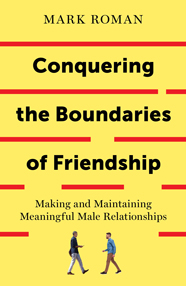
Mark Roman is the author of Conquering the Boundaries of Friendship: Making and Maintaining Meaningful Male Relationships. He spent a year collecting interviews with men from dozens of countries and found that the societal and cultural boundaries that keep men from close friendship exist everywhere, leaving many longing for a connection they struggle to find. In the book he shares stories and techniques that have helped men cross those boundaries and build lasting friendships, and he examines the effect stronger friendships have on the women and children in their lives.
📚 Books by Mark Roman
Transcript
[0:00:32] CH: Hey everybody, you’re listening to Author Hour, the show where we interview authors about their new books. Today’s episode is with Mark Roman, he is the author of Conquering the Boundaries of Friendship. So, men are at a disadvantage when it comes to forming relationships with other men. As boys, we’re taught to suppress our emotions and avoid vulnerability at all cost to be winners and warriors. But Mark believes that’s what prevents men from forming friendships later on in life. He spent a year collecting hundreds of interviews from men from dozens of countries around the world and he found that these societal and cultural boundaries exist everywhere and they’ve created population of men that deeply longs for friendship, yet they can’t find it. And this doesn’t just affect men, it hurts the women, the children and the families who love these men. In this episode, Mark’s going to encourage you to develop and maintain these deep and meaningful relationships with other men. He’ll share stories and techniques that have helped other men find success in crossing these boundaries and in turn, helped them become better, happier and more connected humans. If you struggled with loneliness or lack of friendships in your life, this is the episode for you. Now, here’s our conversation with Mark Roman.
[0:02:09] Mark Roman: The foundation was laid for the book probably 13 years ago. My best friend is 27 years, my junior and my contemporaries were cautioning me when I would introduce Ben as my best friend. They'd say, “Mark, be careful, what does this kid want, why does he want to be your friend and what does he want? Is he looking for money, is he looking for whatever?” And I mentioned to Ben that you know, that some of my contemporaries were having that reaction and he laughed and he said, “well, Mark, I’m getting the same thing from my contemporaries. Dude, this guy could be your father.” And Ben would say, “well, it’s a matter of fact, he’s the same age as my father.” So ,it wasn’t really a problem but it was the genesis of us and started examining other relationships that I had and came to realize that we have a lot of boundaries that we have to cross, we have to conquer to make and maintain those friendships and I got very interested in friendship and I started reading a lot of the academic material on friendships. And every model at the time was basically a life cycle. It was initiation, maturation and then termination of the friendship and it was always perplexing to me, “why did a friendship have to terminate, why did I have to have this life cycle, why couldn’t I initiate and then just grow with somebody for the rest of my life?” So, I started actually having a discussions with a number of other friends and Ben and I actually came up with the concept when we were on the Bourbon Trail that there are different boundaries that you cause when you move from being a platonic friends to work friends or sports friends to other types of friendships. So, that was the problem if you will, that was the problem statement. And you know, I’m an old consultant, right? So, what does an old consultant do? You form a hypothesis and then you gather data to confirm or to refute that hypothesis. I genned up, I don’t know, about 70 questions that I went about asking and I launched via social media through LinkedIn and Facebook. I request for anybody and I would send people a synopses of the book, what it was going to be about and I had an overwhelming response of men and women who said, “Mark, you really ought to interview my brother or husband for the following reasons,” and everybody had their beliefs and their criteria around why somebody should be interviewed for the book and that’s how Conquering the Boundaries came about. It was really focusing on what are those boundaries and then seeking advice from men who had crossed or conquered those boundaries and how that advice could be leveraged through the written word to help other men and women understand what men go through, when it comes to making and maintaining friendships. And the reason I wrote the book or the catalyst if you will, the seminal event was in January of 2018. I had emergency brain surgery for an undiagnosed asymptomatic birth defect, so I had an aneurism and I realized at that point in time when I was blind and was told I would never walk again, that if I was going to really share my beliefs and share the views of all of these men that I was starting to line up that there’s no time like the present. So, that was the catalyst if you will to initiate and really put fingers to keyboard to write Conquering the Boundaries and I say one thing, when I woke up from surgery, my wife and my best friend were at the foot of my bed and it was very comforting to see both of t hem and I could tell by the look on their faces that things were critical, but it wasn’t terminal. At least, not yet. And I came to realize that I have a tremendous clan of friends because I had friends who flew in from California, who drove down from Michigan, who drove up from Kentucky, I had people who were reaching out after they had heard what had happened. And everybody was offering their support any way they could financial support, moral support, help with things around the house. And I gave my cellphone to my wife and she was answering and she was kind of playing my executive assistant in filtering calls that she thought I would want to take and calls that she thought were just really nuisance calls. And she had pretty darn good judgment of all of the friends that I’ve got. She made sure that I was able to return the call or to talk with people. And you know, that one thing helped me to feel normal and after you have that kind of a traumatic shock to your body, and you’ve got people telling you that you’re going to be blind the rest of your life and you’re never going to walk again. You want to get back to normal as quickly as possible and I realized that my friends were there to support me and to help me to get to my new normal and I couldn’t have done it without my wife and I couldn’t have done it without my clan, my tribe of very good friends. And you know, as a consultant as I mentioned, I would give client communications to one of my friends and he would read it and he would read my proposed response to the client. And he would coach me, “Mark, is this really what you mean to say? Because this is how I interpret it.” And so, my friends helped me get back to work and get back to having a productive, at least a financially productive life. And as I mentioned before, interviewing over 200 men for Conquering the Boundaries allowed me to delve every interview took about an hour and a half. 300 plus hours of men’s lives, talking about friendship and talking about how they have benefited from friendships and this very specific types of benefits that they’ve gotten. So, one of the messages in the book is, don’t wait for a traumatic event like I had to maintain and to harvest those friends to – friendship takes work, it doesn’t take a heck of a lot of work, but something as simple as sending a text message to let a friend know that you’re thinking about them. Or shooting off on email are easy ways to keep in touch and when I told my brain surgeon that I was going to be writing a book. He looked at me and he laughed and he said, “Mark, if anybody can do it, I think you can.” And I said, “well thanks.” I took the opportunity since we’re sitting in his office in his exam room, I asked him about his best friend and he said, “I don’t have a best friend.” I said, “how can you not have a best friend? You’re a smart guy, you’ve got a lot going for you, you’re certainly sociable, you’re not some pariah.” He said, “well, life happened.” He said, “I did have a best friend when we were in residency when I was in neurosurgeon residency.” And I said, “when was the last time you talked to this guy?” He said, “it’s been about 10 or 12 years.” I said, “wow, 12 years? Seriously? Do you have his cellphone number?” He said, “I’m not sure.” He said, “I’ve got a cellphone number, but I think it’s probably old.” Because they had both gone to different areas of the country and as he said, life happened. He got married and started having kids and his best friend, in his surgical residency who helped him stay in med school several times. I said, “well, get your phone and send him a text and just say you’ve been thinking about him.” He looked at me and he said, “you’re serious, aren’t you?” I said, “yeah. Get your phone.” He got his phone and he sent, this is his best friend from surgical residencies, his name was Scott, he sent Scott a text and said, “hey, talking to a patient here. Just thinking about you.” And he sent of the text, he didn’t get any reply while I was still in his office. But my surgeon called me the next day and he was choked up, he had, I could hear he had tears in his voice and I said, “what’s up?” He said, “Scott called me last night while I was driving home from work and we talked for 90 minutes,” and he said, “man, it was like there was absolutely no time, 12 years had passed.” And he said, “I took another piece of your advice,” because one of the pieces of advice that I give and this isn’t just me speaking but a number of men talk about scheduling some time with your best friend so schedule a sync up maybe once a week or once a month or once a quarter. And he said, “I talked to Scott and we’re going to do a biweekly sync up and we’re going to skype, we can actually see each other.” And I said, “wow, that’s really cool.” He called me after their first Skype session and said, “man, this is so great,” and he was asking me about how I’m progressing on the book and the interviews and things of that nature. You know, he said, “man, it’s such a catalyst,” he said, “not only did we skype and talked to each other but we are planning to get our families together for a vacation.” And I thought, “wow, that’s really cool.” It’s as easy as sending a text to somebody to just say, “hey, Charlie, I’m thinking about you.” Doesn’t have to be anything more than that and there are a number of calls to action and challenges that I issue in the book.
[0:12:23] CH: I want to get to some of those, but I just want to jump in and say that I fully advocate what you're talking about, what you encouraged your surgeon to do, I did the same thing with one of my closest friends, five years ago. And he and I have talked once a week for an hour, for the last five years and he has attributed that to being tremendously helpful to him during parts of his life. I personally have attributed that to getting through some of the hardest things I’ve ever had to get through. Just having somebody to spitball with, to laugh with, to not take life too seriously with. And this book Conquering the Boundaries of Friendship, which is now on Amazon by the time that this podcast is out, this book is so amazing for men in that this is such a challenge for so many people that they don’t always identify on the nose as, “I don’t have friends.” They’ll say, “I’m really lonely, I’m depressed.” But it’s simply to have friends to nurture those friendships. It seems like something that is so obvious and should be second hand for everybody, but it’s not. And so, one other questions I had, when you were working on this book, did you come across any other books that you felt like yeah, they did a great job tackling this issue, it seems like one of those books that there aren’t that many of.
[0:14:04] Mark Roman: No, I have to be quite honest with you Charlie. And say, I did not. I did a fairly extensive search of the literature and spent a good deal of time on Amazon and barnsandnoble.com and looking for other books on friendship and particularly, male friendship. The one book that I did gravitate toward was a book called The Adaptation to Life and it’s by George Vaillant. And he is the steward, he’s the current steward of a 75-year study of graduates of Harvard and there were two cohorts of individuals. There were what could be construed as very privileged Harvard men who graduated from Harvard and were followed for 75 years and the second cohort were inner city, under-privileged Boston men youth and George I think has done a specific job and shares stories of men that have literally been followed for 75 years. And interviewed every year, their extended families have been interviewed, wives and children and they’ve undergone extensive testing like MRI’s and functional MRI’s to look at their brain function and things of that nature. And George kind of isolates and I quote, one of his observations in one of the chapters, what he boils it down to is the fact that privilege or not being privileged didn’t really contribute as much as you might expect to a man’s health. What contributed the most to a man’s health over that 75 years were his relationships. And those men who had solid relationships, both male and female were absolutely the happiest and the most healthy after 75 years. And those that were isolated or depressed or didn’t have strong relationships were the least satisfied and the least adapted to life and success in life. And success, he doesn’t define success. Each of the men defined success for themselves so it wasn’t financial, some hurdle rate, some metric that the men had to make to be successful. It was really each man’s definition and their satisfaction with life and the – as I mentioned, if you distil an 800-page Harvard study down to a 300-page book, the one most significant contributing factor was meaningful relationships and that human connection. And you know, as a technologist, I think that technology is both a blessing and a curse because I see so many people that hide behind the technology and won’t reach out. And I think in some cases, technology has actually become a substitute or an excuse for not having human interaction. And yet, by the same token, I in the case of my surgeon, a simple text and a Skype call on a biweekly basis, it was all that was necessary to rekindle that relationship and congratulations to you, Charlie because my best friend and I do a Bourbon sync up every Friday and we Skype or FaceTime or Zoom, whatever technology happens to be available. Or if we’re physically in the same city, we’ll find a park where we can go hike or go fishing or whatever, get outside and play, that will resonate with you. But you know, I do that with some of my clients. I do executive and personal life coaching and I’ll do that with particularly with some of my executive coaching and they’re always kind of put off by that, it’s like, “what do you mean you want to meet at a park?” Well, “let’s go for a hike, let’s get outside but I want to physically get together with you.” I mean, yes, we could Zoom or Skype or whatever if we’re in – if he’s in San Francisco and I’m in Cleveland. That we’re not going to physically get together, but if we’re in the same city, I have the preference for getting together physically and I think that technology has been a real blessing for being able to keep in touch with people and I give some hints in the book on how to reconnect with long lost friends and how to Google and use some of the other tools that are available to you to try to connect with people. And again, in some of the pre read, I’ve had some guys send me an email and my email in the book, so people can contact me and there are no automatic responders or bots or anything of that nature on that email address. I will respond to everybody because I am really interested in the results coming out of Conquering the Boundaries and the challenges that I’ve issued to men in the book and the outcome, the results of those and how people have benefited from those calls to action. I’m continuing in, really, the purpose of Conquering the Boundaries is to help as many men as possible to develop and to maintain those meaningful relationships. But I also want to continue the dialogue going forward of how men make and maintain relationship and open this up. We’ve had some discussions around women’s views and the boundaries that women face and I know one of the editors asked me why I wrote the book just for men and I said, “well, I am a man, I didn’t feel qualified to necessarily delve in to women’s relationships but I know that they have boundaries that they have to cross as well.” So, maybe that’s a future collaborative effort with some female author who is interested in taking that on as a project.
[0:20:19] CH: Women are relationship oriented and men tend to be more goal oriented and so, we are still hardwired the exact same, in our brains, neurologically, we are hardwired for connection in relationships. It’s arguably exactly why we are on planet earth is to have these friendships and relationships and to connect with each other. Men need more help I would argue than women do. It’s less instinctual, we’re less, there’s culturally a lot of issues, so you talk about this in the book, right? You talk about, that there are cultural things that can prevent men from having friendships as easily because of expectations of how – what it means to be a man and what are some of those obstacles that men really have to overcome in order to have friendships?
[0:21:17] Mark Roman: The vulnerability issue in not asking for help or avoiding being vulnerable at all costs is certainly an inhibitor to men’s friendships. All of the things that we are taught as boys of big boys don’t cry. Man up, grow a pair, you name it and I’ve literally interviewed people from I think I summed up about 60 different countries and it didn’t matter whether you were in India and playing cricket or whether you are in France playing soccer, every man that I interviewed had some undercurrent of big boys don’t cry and you don’t ask for help, you don’t show your vulnerability. And that certainly plays in our – I call it left over programming. And sometimes, as far as our emotions are concerned, I don’t think men are necessarily as good as women are in dealing with their emotions and understanding why they’re feeling something and one man particularly that I interviewed was interesting. He said that he would snap at his kids if his one of his kids was banging a pot in the kitchen or something of that nature. And he said that he literally had to sit down one day because he was going into a rage and he realized that what he had was left over emotion from something that had happened at work and he was going to take out that emotion, that anger that he had on his five year old and all his five year old was doing was being a five year old. So, I thought that they were some pretty insightful observations from a number of the interviewees and that’s one of the challenges or one of the exercises that I outlined in the book is to really think about why you’re feeling something and as your anger or whatever emotion you happen to be experiencing at the time, are you really directing it at the right person, at the right place or is it really left over emotion from something else that’s happened? There are cultural and religious boundaries and by cultural, I mean, all types of cultures. I was absolutely astounded by some of the men that I interviewed, one man who is a devout Orthodox Jew said that he had never left New York City and was in a neighborhood that was Orthodox Jewish and when he went to school, he was hesitant to make friends with somebody who was being friendly to him because they were a gentile. And he said he could literally hear his grandfather whispering in his ear, “be careful of the gentiles because they were the ones who enslaved us.” And you know that programming and that cultural programming if you will, came through in a couple of other individuals. One man who was from Trinidad and Tobago said something very similarly, he had gone to the mainland to the US to go to school. And his mother said, “just be careful because those men won’t understand you.” And he said, “because they’re white?” And she said, “No because they’re not islanders.” And that theme of not being an islander came up in a man that I interviewed from Haiti, who has very similar reaction from his mother and grandmother that it had nothing to do with black or white or religion. It had to do with the culture of being an islander versus not being an island and what I found to metaphorically was we can become islands onto ourselves if we let ourselves become isolated. But every time we have an opportunity for cultural exchange is an opportunity for us to learn something about somebody and it is not a boundary. It can actually be a bridge. It can be something that we can leverage to get to know someone better and to share my culture with your culture and so there were cultural boundaries. There were work boundaries as I eluded to earlier when the men are friends outside of work and start perhaps working for the same company depending upon the reporting relationship. There are boundaries that are established then with reporting relationships and integrity or are you true to your friend, are you true to the company? A number of men talked about challenges that they were faced with as to where they loyal to their friend? Or were they loyal to the company? When their friend was accused of doing something, but they knew that their friend had much higher integrity than that. So those types of relationships. And I think one of the other ones that really stands out in my mind Charlie, was the socio-economic boundaries. I interviewed a number of men who would tell me, “oh, I could never be his friend because he makes so much more money than I do or he has XYZ degrees and I don’t have those degrees.” So, I think in some cases, men have an issue with self-worth and having the issue with understanding or being validated by external measures. And those are societal things and, in many cases, because when I had the opportunity to interview both men who are in some of these situations, it wasn’t an issue for the men who were friends. It was more issues from the external forces whether it would be age or whether it would be socio economic or educational status.
[0:27:19] CH: Totally. So, what I am curious about is you interviewed hundreds of men and you gathered all of this data, all this wisdom from each of them. Is there any one particular story that really stands out either as this guy exemplified what it means to be a man with great friendships or stands out because it was really surprising to you?
[0:27:48] Mark Roman: There is one that stands out about a man whose wife committed suicide and his stepson and he were living in the same home and he was afraid to be alone with his stepson because he didn’t know how to approach the fact that his stepson’s mother had committed suicide and that his wife had committed suicide and he had some spectacular friends. He said that about four days after the memorial service, one of his friends showed up at the door, at the house, about 6:00 with a pizza and a six pack of beer and a six pack or root beer for the son and let himself in and the son and the man were – “what are you doing.” He said, “well, we are having a pizza party. We’re going to watch the game and we’re going to…” So, he said that he was just amazed that two of his friends took up similar, one decided to take his stepson to a basketball game because his stepson was really into basketball. So, there were several stories of that nature, of men who had tremendous friendships and I actually had one where a friend of mine who was going through a pretty ugly divorce had his children and he was living alone in an apartment and I had gone over and we had grilled out some steaks and he said to me, “hey, why don’t you just stay here with me tonight?” And I said, “you know I haven’t drunk that much” and I literally lived about three and a half miles away from him and he said, “no.” He said it would be really good, he said, “I am concerned about you driving home.” And I just laughed and said, “okay, you know I will sleep in one of the kid’s rooms or I will sleep in the couch it’s fine.” So the next morning, we got up we walked to the grocery store, we picked up some eggs and some sausage and some orange juice and we made breakfast and I drove home and when I was interviewing him for the book he reminded me of that and he said, “didn’t you think it was a little weird that I wanted you to stay?” And I said, “yeah, I thought it was a little weird.” I mean certainly I wasn’t drunk and I could have walked home. I mean three and a half miles it wasn’t like it was 4:00 in the morning, but I said, “you sounded like you needed it.” And he said to me, “you could have saved my life that night.” And I said, “what the heck are you talking about?” He said, “I was really low. This divorce has been tough. My soon to be ex-wife is potentially forcing the sale of the business that I have an interest in.” And he said, “you know I was contemplating suicide.” And I had absolutely no idea. I felt that that night that he needed it and I didn’t know particularly why, but he asked me to stay so I stayed and it was one of those where you don’t want to let somebody get so isolated that – you know so there is a couple of stories of that nature that repeated themselves. And another man whose son committed suicide and his friends gathered around him and they really made him – I hesitate to say feel better about the event, but they relieved him of some of the guilt that he had. He was beating himself up and that self-critic kept saying, “I should have known something was up. I should have known that my son was despondent.” But everybody talked to him and said, “you know your son was a star basketball player, had a steady girlfriend now for 13, 14 months, never gave any indication, was an honor roll student.” Etcetera because that self-critic had kicked in. And he was beating himself up pretty badly. And the self-critic cracked into a lot of the stories of men who felt that they weren’t worthy or they weren’t capable of having a friendship with another man because they just weren’t worthy and that self-critic. So that is something that I deal with within the book as well, the techniques that a number of men talked about in dealing with that self-critic and how men have helped each other to back themselves out of those corners. And one of the challenges that I have in the book and one of the things that I do with my close friends on an annual basis is what I call a friendship audit and it could be a little awkward the first time you do it, but I like to sit down and say, “how can be a better friend to you this coming year?” And a lot of times people find it very difficult to answer that and it is one of those things where it is a good exercise to go through and I found some really revealing commentary from people. I had one friend last year tell me, “Mark, I prefer face to face communication and I know you travel considerably. But one of the things that really distracts me is when you send a text that says I am thinking about you or you send a photo” because he said, “it just reminds me that I cannot physically see you.” So, he said, “I know it probably makes you feel good, but I find it really distracting and I get monkey brained. All of a sudden my brain starts flooding with reminiscences of what things that we have done together and I start getting remorseful and I start getting depressed.” And I said, “wow, thank you. I had absolutely no idea.” So now I don’t send him text unsolicited and he is one of the folks that I have a bi-weekly phone call with where at least we can talk. He doesn’t like Skype either. He doesn’t like the video conferencing, but talking on the phone is the next best thing. And I would have never known that had we not done the friendship audit and actually talked about how I can be a better friend to him in the coming year. And had he not been honest with me to say, “Mark, I find it distracting when you do that.” And I’ve got other friends, you know I put myself through schools of photographer. So, my wife always jokes they are going to put on my tombstone, “hold on just one more,” because I am always snapping photos and I’ve got a number of friends. I’ve got Google Photos and I’ve got Amazon Photos apps where you see things from years ago. And I just had one pop up into my feed the other day of 17 years ago when one of my business partners and I were meeting and had the drinks and that popped up in my photo feed. And I sent it onto him and he replied back, “oh my god, look how young I was you know?” But it’s just the little things of that nature so the friendship audit is one of those challenges that I challenge everybody to do and to really sit down. And the other thing Charlie that I think we as human beings are, we are not programmed to think about what we want. We are definitely programmed to think about what we do not want, what we do not want to happen, we have a negative proclivity. And so, when I have asked men to define what it is that they would want in a relationship and I do this with some of life coaching clients, I ask them to do an ideal day exercise where they write in as much detail as they possibly can literally down to where they’re at, what is the temperature of the room, in the 70’s, are you outside, what do you smell? I want to get as much physiologically as I can. And when men do that exercise, they are able to find holes or areas in their life where they believe a friend could provide assistance and when men share stories with each other. I have seen some pretty amazing revelations and some pretty amazing interactions where men said, “well, I can help with that.” And here is how you can help, but I think it leads back to that vulnerability to be able to develop and maintain a meaningful relationship, you have to be authentic. And one of the things that I have found I think was universal with every man that I interviewed who talked about the friend who tries too hard. The friend who tries to fit in too hard, If he would just be himself, he would fit in with the group but he is trying too hard and so there is some tips in the book as well on how to avoid that, this trying too hard to fit in. But the socio-economic walks of life and interestingly race never came up in any of the discussions. One that did come up was sexual preference. Some men who identified as gay were concerned about how many straight friends they had because their gay friends would be busting their chops about, “oh there you go, trying to turn another straight gay.” And there is actually two men I interviewed, Chandler and Wes in the book and I highlight their story because I had the chance to hear the same interaction from both men. And Chandler is an all-American football player from a big 10 school. And Wes and I will also mention that Chandler is about 6’4” probably 240 pounds. Wes is a self-described gay nerd, but he was also an all-American. He was on his college and his high school golf team and he even toyed with going professional at one point in time and Chandler and Wes both worked for the same company. Chandler was responsible for sales and Wes was responsible for marketing. And Chandler resisted taking suggestions from Wes because he knew Wes was gay. And yet after some work event, Wes said, “hey, you know you want to get a drink?” And Chandler said, “you know I’m straight, right?” And Wes said, “Yeah, you know I am gay right?” And Chandler said, “so, this isn’t like a date or anything right?” And Wes said, “Don’t flatter yourself, I am not into the Neanderthal look and you’re a knuckle dragging Luddite and so no, it is not a date. I find nothing about you physically attractive.” And so, to hear these men tell the story individually is hysterical because Chandler said, “Wow I was really put off,” he said, “I’ve never had anybody tell me that I wasn’t attractive and here is this little guy telling me,” – and oh by the way, Wes is a scratch golfer. He has a two handicap and the long and short of the story is both men got over that boundary. And they celebrated one evening when Wes shared with Chandler that he was having some romantic problems with his partner and Chandler said, “hey Wes, you ought to have some soft music playing when your partner gets home, have a nice bottle of wine, have a few candles lit and treat him to a nice homemade meal.” And when both of them realized that here is this straight jock giving the gay nerd romantic advice, they knew that they had conquered that boundary. And it was interesting because Chandler told me had he not gotten over that boundary, he would not have what he considers to be his best friend today. And yet he said it helped him to examine how he treated other gay man and how he may not put as much credence into what they say because of the sexual preference boundary. And so, I thought that that one really came through loud and clear and like I said, to hear the story from both sides when Wes says, “no it is not a date, you are a Luddite, a knuckle dragon Luddite.” I just thought that number one, it’s hysterical, but the other thing I talk about in the book that we talked about in a lot of the interviews was relationships with your children, your nieces, your nephews, your extended uncle network and how you can have a little micro adventures, things that you can do with kids of your friends to demonstrate meaningful friendships. And one of the men said that his best friend in front of his kids gave him a hug and said, “man, I really love you.” And he said, “man, I love you too.” And the kids actually picked up on it and said, “wow, you know uncle Eddie just said he loved you and you said you loved him.” And he said, “yeah, that’s right I do.” And it is amazing how kids are sponges and how you as a man can use that extended uncle network to demonstrate meaningful relationships and you both can take your kids on these micro adventures. And you know if you look back at some of those challenges, it is to really challenge to look beyond the external factors, look at those obstacles and boundaries as opportunities for learning and for creating new friendships, new relationships. And you know it is not having meaningful relationships is not benign, it’s really toxic. And there are some pretty heavy consequences of not having meaningful relationships.
[0:43:24] CH: Extremely toxic.
[0:43:26] Mark Roman: And you know there are a number of stories in the book about men who are supported by their friends in making career transitions. One man in particular that I highlight is a tenured professor at another university and he and his wife were big into yoga and they wanted to open their own yoga studio and how this gentleman’s family said, “it’s impractical, it’s fanciful, it’s crazy, something is wrong with you.” And his best friends knew that no, he really hadn’t been happy in the professorship position. And that since he and his wife both loved yoga this was an opportunity for them to work together, which is something that he and his wife had both wanted as oppose to – and there are just a number of stories of that nature in the book.
[0:44:34] CH: And there are like we said earlier, just hundreds of interviews that you have done and so many stories. You’ve cover so much ground and I hope every man out there gets a chance to either read this book or be impacted indirectly by somebody in their circle that has read it and implemented it and Mark, we are coming up on time. So, I want to ask you, what is the best way for our readers to get in touch with you or follow you in your journey?
[0:45:04] Mark Roman: Sure, well the email for the book is CTBF book, Conquering the Boundaries of Friendship book, ctbfbook@gmail.com and that address goes directly to me and then on Twitter, I am @markjroman. And on Facebook, I use an alias because when I joined Facebook I had about 20,000 people working for me and over one night, I had 3500 Facebook request, friend request and Facebook got testy about that. They shut my Mark Roman account down. So, I am actually one of my cats on Facebook, so I am Pierre Luigi Roman on Facebook but yes, ctbfbook@gmail.com would be the most direct way and more things coming in the future, Charlie.
[0:46:05] CH: Excellent, yes you have another book coming but I’d encourage everybody listening to go out, get Conquering the Boundaries of Friendship on Amazon. Mark Roman, thank you so much for being on the show.
[0:46:18] Mark Roman: Thank you Charlie, I greatly appreciate your support and it’s been entertaining and fun. I greatly appreciate it, Charlie.
[0:46:26] CH: You got it. Thanks so much again to Mark Roman for being on the show. You can buy his book, Conquering the Boundaries of Friendship, on amazon.com. Be sure to check out authorhour.co for show notes and a transcript of this episode and take a second to leave us a rating or review on Apple Podcast, it means a lot.
Want to Write Your Own Book?
Scribe has helped over 2,000 authors turn their expertise into published books.
Schedule a Free Consult