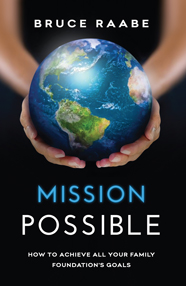
Bruce Raabe: Mission Possible and the founder and CEO of the company, Relevant Wealth
Read the full transcript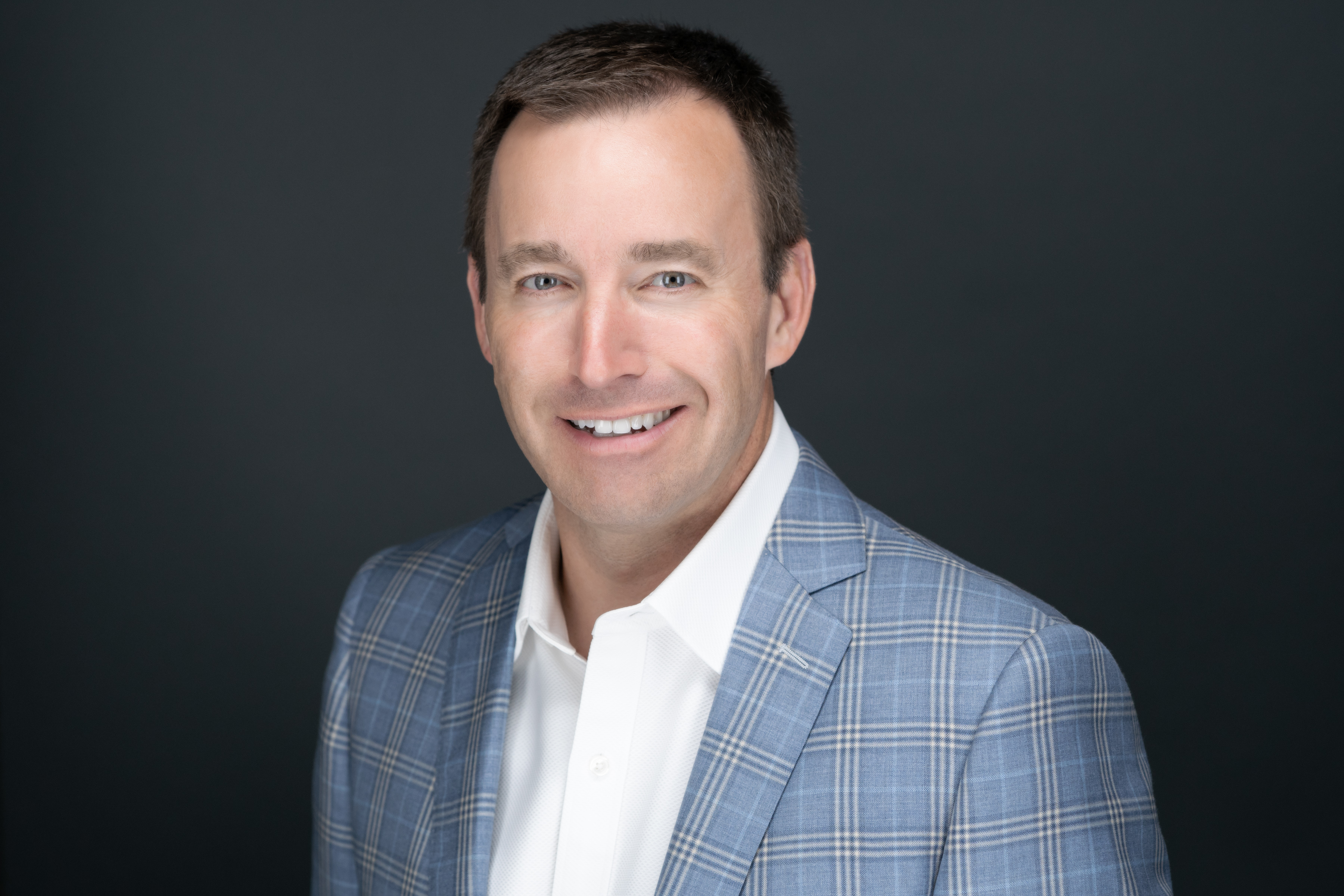
📚 Books by Bruce Raabe
Transcript
[0:00:31] NVN: Not too many people segue their careers from bridge engineering to wealth management. But my guest today, Bruce Raabe, is one of those people. Bruce is the author of Mission Possible and the founder and CEO of the company, Relevant Wealth. Bruce does more than just manage people’s money though. He specifically focuses on helping families invest for and run their nonprofit family foundations. When we think of family foundations, our mind tends to go to people like the Rockefellers and the Gates. But the truth of the matter is that tens of thousands of families across the country have established this type of organization and through that, they’re contributing to making the world a better place on both niche and large-scale levels. In today’s podcast, Bruce talks about the emotion of money, what it really takes to establish and run a family foundation and the amazing feeling that comes with leaving a legacy.
[0:01:28] Bruce Raabe: I started my career as a civil engineer, Nikki, designing bridges, for the State of California, I really enjoyed that challenge and the technical aspects of engineering. But everything changed for me on October 17th 1989, that was the day of the Loma Prieta earthquake and that day, not only shook California, but it shook up my career. We had a pretty significant earthquake in San Francisco that many of us remember. And as a bridge engineer, I was brought to San Francisco to help shore up the damage freeway overpasses and bridges and then ultimately to remove the Embarcadero Freeway on the San Francisco water front.
[0:02:06] NVN: Wow.
[0:02:07] Bruce Raabe: Yeah, it was pretty exciting time, you know, it’s working outside, working with contractors and the city and the state to make this process go smoothly. During that time, I really got a chance to reflect on what I enjoyed doing most and that was working with people to solve the problems. I enjoyed that working on the Embarcadero project. I also got intrigued by finance and being in downtown San Francisco. I had the opportunity to take classes in the evening and study finance and upon completing that project for the state, I decided to shift gears in my career and leave the world of engineering and began working in the financial service industry in 1991.
[0:02:48] NVN: That’s a pretty fascinating shift.
[0:02:51] Bruce Raabe: Yeah, you know, for me, it was great. I just – having not had a lot of experience in the financial world growing up. I grew up, my father’s a professor and my siblings and I all went to college and studied science and engineering and whatnot. I really got intrigued by financial services and that’s how I started my career and ultimately that led me to really start to work with family foundations and families and really appreciate the emotion that is embedded in wealth.
[0:03:22] NVN: So, I'm fascinated. Before we dive into family foundations. Do you think there was anything about your engineering mind that you transferred over to the world of finance?
[0:03:32] Bruce Raabe: Absolutely. You know, it’s interesting. Money is so emotional; engineering is very, very dry and practical. And I do believe my technical training to solve problems without emotion and really focus on the facts and circumstances has made my career as successful as it has been. I do believe it’s helpful working with all of my clients to bring that level of technical analysis and process to complex conversations.
[0:04:02] NVN: That’s a really interesting point and you and I have had previous conversations and one of the things that you really drove home to me was something that you just referenced which is that money is an emotional thing, we think of it as this logistical thing and there’s so much more to it. Can you talk a little bit about that?
[0:04:23] Bruce Raabe: Oh, here’s a perfect example, you know, I had a client in here just 30 minutes ago talking about his estate plan and we were walking through an estate plan document that he’d prepared and I said to him, I said, “you know, you’ve talked to your family about what you're going to do when you pass away?” He said,” oh, no, I haven’t. I don’t want them to know anything about it until I’m gone.” That’s not an uncommon perspective. Peopled don’t like to talk about their wealth and their money particularly as they get older and transitioning and that’s a terrible strategy, just terrible. And I tried to explain to them how as difficult as it is to talk about money and wealth and expectations around the transfer that wealth, it’s so important to do so throughout your life and particularly around philanthropy, the two are tied together.
[0:05:11] NVN: Now, let’s talk about – you mentioned previously that you work with family foundation. First of all, let’s explain to listeners what exactly those are and also, how you found that niche for yourself?
[0:05:24] Bruce Raabe: Sure, well you know, our country is blessed with opportunities for people to come and be successful in their businesses. And we see this time and time again particularly in the San Francisco Bay area. Often times, you find a family where the founders have had amazing financial success and they’ve accumulated far more wealth than they will ever need for themselves or their families. And they choose to set part of that wealth aside to give back to society and a common structure is the family foundation structure, which is a nonprofit entity that is a legally separate entity that allows families to segregate money that will always be used for the public good. I kind of just fell into this years ago and got really intrigued by meeting people that were so generous, you know? It’s amazing to meet people that are willing to say, “you know what? I’ve got too much, I’ve got more than I need for myself. I’ve got more than I need for my kids and I want to give back. I’ve had such a great fortune and opportunity that I want to give back to society in a permanent way.” And so that for me is inspiring and just naturally draws me to those people.
[0:06:33] NVN: You know, it’s interesting. I feel like family foundations are one of those things that kind of flies under the radar. So, we all know about the Rockefellers. We know about the Gates and those are sort of our two go to people in terms of pop culture and the consciousness of family foundations. Talk to me a little bit about what they can look like and how you’re seeing family foundations fit in to the millennial mindset?
[0:07:01] Bruce Raabe: Absolutely, you know, there’s tens of thousands of family foundations in the United States and they go about their work quietly, typically, they’re not looking for a lot of attention. The Gates Foundation and others are very large and attract attention for the amazing work they’re doing around the world, but families of any size that have had any level of success can start a family foundation with any amount of money. Now, typically, we see foundations start with a million dollars at least to set aside, there are some operational cost and what not that go into creating a foundation but typically, these foundations have between 10 million and a hundred million dollars in assets that have been set aside for families to give away over their lifetimes or forever to cause that they feel most drawn to.
[0:07:49] NVN: So, let’s kind of start to weave this all together here. You were talking earlier about the emotion that comes into play with finance. How does that specifically relate to families and family foundations and what’s your role within that?
[0:08:05] Bruce Raabe: Well, the concept of having a family foundation is really intriguing. Nikki, imagine, you know, you win the lottery, whatever you sell your business, and you have this money and it’s more than you need and you say to yourself and your partner, “hey, let’s do something special, let’s keep most of the money we need for our family, but let’s take a big chunk of that money and set it aside into a family foundation.” “Let’s engage our family, our kids, or other family members in the process of giving back to society.” Well, it sounds great. I mean, it sounds fantastic, who wouldn’t want to have that experience? Now, the reality of it is money is a loaded topic and when you start talking about giving money away, different people in your lives are going to be concerned about how it might affect them and there’s a lot of emotion and feeling that goes into those decisions. And so, often times, it’s not so easy to just start a family foundation, have everybody show up at the table and engaged and excited to help make a change in the world. Many times, you’ve got the founders who are maybe a little older or more along in life and have a vision as to how they want to spend their time and they’re trying to engage family members who may be younger and busy, starting their lives and starting their businesses or their careers. And so, there’s a lot of challenges to making what appears to be a relatively straightforward idea and having it play out in a way that does achieve all that’s important to a family.
[0:09:32] NVN: You know, the other thing is, it’s my understanding from you that there are a lot of restrictions around family foundations, so people are trying to find this balance between a family project and also, navigating all of these restrictions and regulations and that type of stuff.
[0:09:50] Bruce Raabe: Well, I think like everything, you know, working with experts really helps people find the success that they’re looking for. I don’t do plumbing at my house, I don’t even, I don’t work on my cars any longer and you know, starting a family foundation is a great idea, but there are complications that come with that because it is a business, it’s a nonprofit business, the federal and state governments have regulations around how these foundations are to operate and if you’re not familiar without the rules and the technicalities behind operating these organizations in accordance with all the regulations. You can find yourself getting into trouble by accident and that’s the last thing you want to do is when you create a foundation to give away money you worked hard to earn and to accumulate and then find yourself tripped up over technicalities that were just either you weren’t aware of or you didn’t understand the nuance and that’s not common but it’s not uncommon either and so it’s really valuable for families that want to have the real success of having a family and foundation to engage subject matter experts like Relevant Wealth or others to make sure that they’re not caught in the weeds with the detail and the minutia of the regulations that are actually changing over time as well.
[0:11:08] NVN: Right, how frustrating to want to do something good in the world and then run up against regulatory issues?
[0:11:16] Bruce Raabe: Well, it can be embarrassing and we’ve seen that, you know, the Clinton Foundation and even the Trump Foundation. You know, well intentioned families with deep resources of expertise can make mistakes and the last thing you want to do is somehow damage your family’s reputation or have an embarrassing problem that might be drawn to the public’s eye, when all you're trying to do is really give back and say thank you for the wealth that you’ve created.
[0:11:45] NVN: Again, we have these touch stones of this really visible families and this idea of the sweeping, often global work that their foundations do. Talk to me a little bit about the grander scope of foundations and what that might look like for the average family who has some extra wealth that they wanted to disseminate. What can foundations be used for?
[0:12:08] Bruce Raabe: Well, you know, first of all, there is a tax benefit to starting a family foundation when you give money away to a charity, we’re all kind of familiar with – you got a tax deduction and you can get that deduction by setting money aside and do a family foundation. There is a tax benefit. Now of course, families would be better of keeping that wealth and not giving that away. But there is some incentive and it’s terrific that our tax code creates an incentive for families to set money aside and then also, as that money grows over time, it can also grow essentially tax free and so there’s another real benefit there. The advantage is that you can give away more money because it’s growing tax free and then just have more money to give away. So, you’ve got a great platform for making a real difference. Fortunately, family foundations are very nimble, they can decide to give money to money to just about any qualifying operating charity in the US or internationally and they can do that in a way that can be dynamic overtime. It can be geographic. It can be for a specific type of cause. There is tremendous flexibility. So, it is a great platform once you understand the technicalities of the process and the governance. So, you know I think it is a tremendous way for families to create a legacy. And we all make charitable gifts from time to time for causes that we believe in and we’re happy to do that I am sure you are as I am. But ultimately, by setting money aside in a family foundation, typically these foundations distribute it about 5% of the value of the foundation every year and then the design is that it will last in perpetuity and that is a really powerful opportunity for generations to pass along the gift of philanthropy, to future generations in their family.
[0:13:58] NVN: I love that idea of legacy and these foundations going beyond the lifetime of the person that starts them impacting not only society, but also their families and maybe generations that they never actually met.
[0:14:13] Bruce Raabe: Absolutely and it could be a training ground too for families to help generations have a mature perspective about the privilege that many of us have particularly in the United States and the benefit and actually the reward of giving back. There is something powerful about giving back and contributing. And you know if you don’t create the structure around that it can be forgotten.
[0:14:39] NVN: Are there any foundation causes you’ve seen either from working with them or just being aware of them from being in the field that really stand out to you because they capture something that a certain person or family was passionate about that may have been not received funding otherwise?
[0:15:00] Bruce Raabe: Sure, you know one of my clients started a foundation that only supports for horticultural gardens like botanical gardens around primarily in the United States, but also overseas and he had a real passion towards plant life that were ornamental plants like orchids and roses and whatnot. Not plants like corn and wheat that are grown for commerce. And so, he set aside part of his estate to benefit just botanical gardens primarily. And so that foundation makes grants of about $700,000 a year to 50 or 60 botanical gardens around the world and you know those little incremental grants you know they are very important for these small organizations to remain solvent. Once the small charity like a botanical garden goes out of business, it doesn’t come back and so that is one example that I think is really inspiring where you can really have a focused intention with your philanthropy in that regard. And you know I have a real passion for disadvantaged kids and education and making sure all the kids in our country have the same benefits that my kids have had growing up with education. So, you can have the flexibility to decide how you want your grant making to go and you don’t have to lock it in either. You can if you decide to like with that horticultural trust, where it is going to focus on one thing but you can have your criteria be quite broad. So that generations to come can redirect grant making into areas that they find most inspiring and really make it a valuable and powerful experience for future generations.
[0:16:35] NVN: That is really cool too. So, you are not locked in, there is room for evolution.
[0:16:41] Bruce Raabe: If you want it. When you set your family foundation up you have the flexibility to make it as broad or as focused as you’d like depending on your intention.
[0:16:48] NVN: Got it. Okay, so as you see families starting foundations, what is the one thing you wish that you could have people sit down and think about beforehand that perhaps eludes most people?
[0:17:03] Bruce Raabe: That is a great question, Nikki. You know people start family foundations with this vision of achieving important philanthropy goals and bringing family together. They don’t actually think about investing the money and that is a really important part of a family foundation. Typically, a foundation will be created with a certain amount of money or maybe it is company stock that a family had that is set aside into an investment account that needs to be properly managed and allocated. And invested and so that it can grow overtime and be the source of future grant making. Now that is an industry in itself and one that we focus on but it is not something you could take likely. And so, families can often times forget about the importance of keeping that financial engine running and running well of overtime and through generations, so that their foundation and the philanthropy and the grant making can also be successful.
[0:17:56] NVN: So, it is not just putting your money aside in a savings account and then that’s it, the money sits there is doled out?
[0:18:03] Bruce Raabe: Well you could but typically their investment strategies that can deliver a very attractive long term returns that can help leverage that initial donation and that is through the benefit of having an investment expert of a chief investment officer work with your family foundation to help you navigate those decisions so you can focus on what is really most important and usually that is the grant making and the philanthropy.
[0:18:30] NVN: Got it, okay. So, you were an engineer, now you work in finance and wealth management and also in your spare time, you fly airplanes correct?
[0:18:41] Bruce Raabe: Yeah, you know years ago I had a client. He said, “Hey Bruce, let’s go have lunch.” I said, “Terrific Jed, where do you like to go?” He said, “Well, you know let us jump in my airplane and we are going to fly up to Petaluma and have lunch at the airport” and I have never been in a small plane. So, you know, Jed took me flying and I really got the bug about 20 years ago and it is something that it is one of my passions and I love sharing that with friends and family and clients now but yeah. It is terrific to have the success that I’ve had to be able to afford that sort of a hobby. So that has become an important part of my life.
[0:19:13] NVN: Since I don’t talk to too many pilots, I am going to seize this opportunity, what to you is the biggest lesson you’ve learned from flying?
[0:19:22] Bruce Raabe: Well don’t go alone. You know it is interesting learning to fly requires obviously you have to have access to an airplane, but you have to have an instructor or a coach and I have been blessed to have just some amazing flight instructors teach me how to fly and actually you never stopped learning how to fly an airplane. And so, your reoccurring training is something that is an important and in fact required for private pilots like myself to stay current and abreast of my own skills. The changing flight regulations and things like that and really managing your foundation investments it is the same thing. You can’t set it and forget it and the financial industry is changing. I have been doing this for 25 years and the investments today are so different than they were when I started. The opportunities are different, the risks are different, it is just a different landscape and there is a real opportunity to take advantage of those changes. Or there’s a liability of being subject to not realizing how the landscape is changing and that can ultimately result in a loss of principle or poor investment strategies. Mostly you know just like flying, flying is all about mitigating risk. You want to take off, you want to go somewhere, land the plane safely and enjoy the trip along the way. Managing your family foundation is exactly the same. You want your investments to perform as you’d hope within some range. You want to understand how they are invested, what might go right or wrong, be prepared to respond. You don’t want to be caught unexpectedly. And unfortunately, many investments that were available to wealthy families can be quite risky, can be very complex and understanding them is a real challenge, even for experts. And so that is why I think partnering with someone like our company and this is why I wrote the book to really explain the real value families can take away from partnering with a chief investment officer. Or the way I partner with a flight instructor to really make the experience enjoyable. That is what life is all about.
[0:21:24] NVN: I am very intrigued by how you found these threads that weave throughout different industries and practices. I think there is a lot to be taken away from that both on a business level and personal also.
[0:21:38] Bruce Raabe: Well you know it is personal and business is personal and wealth management is very personal. It is a little different than say tax or insurance or estate planning, which are somewhat transactional and whatnot. Investment management is very personal. People have different risk tolerances, they have different experiences growing up about investments and you know, a generation that lived through the great recession and that has had a real taken its toll on people. As we think forward about how to invest and you know, in 2007 and ’08 and ’09, when the markets are collapsing and there was panic in our country, you know there is a worry, is that going to happen again? Well no one saw it coming and it was devastating and what can we do to make sure that doesn’t happen again? So, that is where we come in with education and the process that ensures that family foundations can be successful over the long term.
[0:22:33] NVN: Excellent. All right, Bruce is there anything else you want to add that we didn’t get to?
[0:22:39] Bruce Raabe: You know I think what I really enjoy is how much fun it can be to work at family foundations and for foundations to really achieve their goals and that is why I called it Mission Possible, the book, because you know it is possible to have just an incredible experience with your family and your family philanthropy. I mean family dynamics regardless of whether you are talking about just sibling rivalry, you know blended families, financial constraints it is stressful enough. But you know working with an expert I really enjoy the value we bring in helping families be successful managing their family foundations and their wealth and having opening their mind particularly to the second generation or to family members that don’t have the experience that others might have. So that when the families come together, they come together as a team. They feel like they are doing something together and it creates a real bond that I think is often lost in our society.
[0:23:35] NVN: Excellent. Thanks for joining us for this episode of Author Hour. You can Mission Possible, on Amazon. A transcript of this episode as well as all of our previous episodes is available at authorhour.co. For more Author Hour, subscribe to this podcast on your favorite subscription service. Thanks for joining us, we’ll see you next time. Same place, different author.
Want to Write Your Own Book?
Scribe has helped over 2,000 authors turn their expertise into published books.
Schedule a Free Consult