Marjan Stojanovski: Episode 387
Read the full transcriptMarjan Stojanovski
Marjan Stojanovski spent sixteen years as a computer engineer for the Customs Administration of the Republic of Macedonia before leaving to pursue his passion for investing and trading. He earned his broker's license from the Macedonian Securities Exchange Commission in 2003 and holds a triple certification from the Chicago Mercantile Exchange. After eight years as an independent consultant, he served as general manager and chief portfolio manager for a hedge fund, and he now works again as an independent consultant, applying principal-protected investment strategies for clients around the world. He is the author of Don't Lose Your Money or Your Mind.
📚 Books by Marjan Stojanovski
Transcript
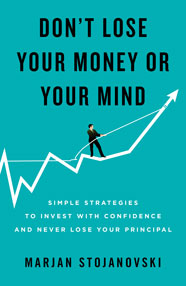
[0:00:18] NVN: Author Marjan Stojanovski’s new book, Don’t Lose Your Money or Your Mind, is about finding success in trading and investing. But really, it’s a book about being human and about how the innate quirks and flaws in the human mind cause us to look at trading in correctly, to overcomplicate matters and ultimately, to make bad decisions. In this interview, Marjan breaks all of this down, including sharing with listeners the cognitive biases that everyone must work around in order to trade successfully.
[0:00:51] Marjan Stojanovski: I studied computer engineering but I never worked in that field. I was always interested in economics and especially the markets and so I was patient, there was no problem for me to wait 15 years and after that, everything fall into its place.
[0:01:09] NVN: The 15 years before you jumped into this field but when you were in your career, were you observing, trading in the market during that time?
[0:01:20] Marjan Stojanovski: Yes. First, I started educating myself, the next step was paper trading then it was trading with little amounts of money and then trading with bigger amounts of money. There was a kind of evolution.
[0:01:36] NVN: Yeah. I feel like someone who came into this, right after they finish school as they were beginning their career. It seems to me that there would be a sort of pressure with all of this that you didn’t have because you had your other job and a source of income, so you were allowed to just learn about, and observe something that you enjoyed.
[0:01:59] Marjan Stojanovski: That’s correct. I have the added benefit of let’s say, looking outside of the box, looking from outside in. When you are an observer, sometimes you can see things better than the people actively engaged in the process.
[0:02:16] NVN: That makes so much sense. What kind of things were you observing from the outside that you feel like perhaps people were missing from the inside?
[0:02:24] Marjan Stojanovski: First, the big picture about the trading, investing as a profession, people involved in it. There was a written code of behavior, of thinking, which I found very strange since the beginning. Let me make it clear. For example, trading is perceived as something stressful, time consuming. What I found it: anything but, actually quite different. You can make boring, not time consuming. You can make it requiring a couple of hours a day instead of 15 hours a day and that was my conclusion from the years of observing and later, I confirmed it through my experience of actually doing it.
[0:03:10] NVN: That’s fascinating. What do you think is happening there? Do you think people are going in with an expectation and then just sort of turning that expectation into a reality?
[0:03:21] Marjan Stojanovski: Yes, definitely but for the ordinary people, not the professionals, that is always a rude awakening. By ordinary people I mean, people which don’t have trading as their profession.
[0:03:32] NVN: What do you mean by rude awakening?
[0:03:34] Marjan Stojanovski: Usually people fantasize about get rich quick schemes and to hit it big, to hit the one that will take it to the moon and things like that. But those things almost never happened.
[0:03:47] NVN: What is the, I don’t want to say the ideal tactic but maybe that’s the word. Instead of expecting to hit the moon, how do you think people are better off to go into trading?
[0:03:58] Marjan Stojanovski: You have to completely change your mindset because trading is opposite of any other known profession. I mean, opposite in the mental space. For example, we were taught that success in life requires hard work, working long hours, being enormously intelligent, being brilliant, things like that, but in trading, you have to aim to being average and it’s very difficult to grasp. For example, if you are a surgeon and today you have 10 operations and you cannot say, “Okay, five people died but I saved five lives. I’m average. I’m quite okay for today.” No one will perceive you as success. For example, if you are coffee shop owner or run a little bakery, you know, you cannot say, “Okay, I served hundred coffees today, 50 of them were total crap but 50 were okay. I have my reputation. Okay, it’s not in danger.” You cannot say that. It’s counterintuitive but in trading you have to think exactly this way and any other way is the wrong way.
[0:05:10] NVN: Why is that? Why is average so optimal in trading?
[0:05:15] Marjan Stojanovski: Because firstly, it’s human. Everyone, not just you, me, your brother or sister or mine but everyone. We’re born to fail in the markets, in the way our mind operates. The market is designed to make anyone engaging in the market, the market has the purpose to make them look stupid. Every little or big, in the term of psychology, every little pit falls that we have, the markets will find them and use it against. For example, someone is overconfident, someone is workaholic, someone is too lazy, someone is afraid of taking action. You know, someone thinks that he had figured it all out and especially in that case, the market is the way of humiliating those kind of participants. We are designed to fail. The purpose to be successful is to aim for being average.
[0:06:09] NVN: What you’re saying is really interesting. I’ve never heard this advice offered in any field before. This idea of average, keeping in mind that the market goes after these qualities like overconfidence and things like that. What is it about being average that shields you?
[0:06:29] Marjan Stojanovski: First of all, what does it mean being average? Every trader, even the most successful one, they are not right in every trade. So there will always be a losing trade and it will be more than one. The trick is to balance the losing ones with the winning ones. There is no super trader who wins all the time with every trade success. That’s not possible, that does not exist. There will always be a losing trade. The point is, when you have the losing trade to cut the losses quickly when you have to winning trade, to ride it all the way. It’s easier said than done but that’s the way to go. That’s – by being average, it means balancing your winning and losing trade. When you lose, you have to aim to lose small. When you are winning, your aim is to win big. Finding this balance means being average, contrary to what I said to you about being a surgeon. Here, the trick is exactly that, to balance them. You are allowed to make mistakes, that’s the difference.
[0:07:31] NVN: That’s just refreshing in general to hear because you're right. There are so few areas of life where we’re told that. What comes to mind to me as you’re speaking is this is certainly a mindset thing but it sounds like there’s also an element of balancing your emotions out here also.
[0:07:51] Marjan Stojanovski: Definitely, this is the big point. You have to keep your emotions in check, you have to have a plan and the discipline to stick with it. Erasing your emotion is impossible but managing them, it is possible. Managing your emotions, it’s crucial and having a discipline. Being very smart doesn’t help you if you don’t have discipline, that’s the most important –
[0:08:15] NVN: This strikes me as one of those hard won lessons in life. I’m wondering how you got here. Were you always able to trade like this or did you go through a period where you are making a lot of these mindset and emotionally-based mistakes that others make?
[0:08:33] Marjan Stojanovski: This is the interesting one. I have to tell you, I was blessed to discover the secret almost from the day one of my beginning of trading and the curse is that I like the hero’s journey. I don’t have to tell the stories how I started bad, I lost it all and then I got to my senses and then I learned the right way. I cannot say that because this is what is missing in my hero’s journey. It was good for my career but very bad for storytelling and for making some points from the story. I make the spark but I could not find a replacement. That’s the way it is.
[0:09:12] NVN: Does this just happen to be how you’re built? Is this how you are in other areas of your life and you just transferred it over to trading or is this just sort of, trading is sort of your sweet spot and there’s something about you that just gets these best practice behaviors?
[0:09:29] Marjan Stojanovski: I can tell you that I first learned the secret of trading and then I noticed that you can implement wisdom into the other areas of your life. Private, professional, connection with people. It’s all the same. The principles from the markets, I found them everywhere. In people dynamics, even some things which occur in the nature. It’s fascinating too me. But the point is I stumbled early on to the solution of my problem of never losing money in the market and I spent almost a decade and more playing the devil advocate, trying to find the holes in the theory. Some kind of pitfalls and wrongdoings but I couldn’t find them which was good and after that, finally, I decided that I’ve tried it all. By the way, along the way, I understood it all and then it was time for me to decide to put it into the book.
[0:10:26] NVN: For people who – where this is not their automatic reaction. Where they’re stuck in these mindsets that ultimately don’t’ serve them. How can they begin to snap out of that, look at the market in a different way and also, act and react to the market differently?
[0:10:44] Marjan Stojanovski: First, they have to learn not to react. That’s the crucial thing. How do they accomplish that? Every time you enter a trade, the same moment of entering, you have to have an exit plan right in that moment, not later. “Let’s see how it will play out,” no. The beginning, you have to set your parameters, “Okay, I’m in, now, and I’m out under so and so conditions,” and then discipline to stick to the plan. Very easy to say but very difficult to play.
[0:11:20] NVN: I’m guessing that the trick here is the word that I threw in there which is react. People have a plan and then something happens and they react in a way that they were not intending on reacting, is that right?
[0:11:33] Marjan Stojanovski: That’s correct. The first mistake, it’s not having a plan and the second one is you start with a plan but along the way, you start to react emotionally to the things happening and you abandon your previous plan and you finish up in the same position as not having a plan in the first place. There is a very popular saying about this topic. I think it was from the famous boxer, Mike Tyson from the 90s, you remember him. There is a saying, attributed it to him which says, “Everyone has the plan until they get the first punch in the mouth.” That’s about saying it all. You can start in the plan but you react along the way to the internal things and you forget your plan.
[0:12:16] NVN: That sounds like incredibly appropriate description of how this works. The market does feel like it punches you in the mouth sometimes and it’s hard not to change your plan of action when that happens.
[0:12:27] Marjan Stojanovski: You become emotional every time the markets punch.
[0:12:31] NVN: This is something that you have observed plagues not only people who are dabbling in the market but also people who are – their full time job is trading. They still fall prey to this habit of reacting and becoming emotional and, well, I’m guessing they probably have a plan that it’s a more a matter of changing it.
[0:12:50] Marjan Stojanovski: Yes and that was the thing that surprised me the most in my early years because I thought that people who were professional that have already found a system to deal with it but I was really surprised how much these things happen even in the professional world. I think that even most of the – not some but most of the professional succumb to this condition every day.
[0:13:13] NVN: Well, as a non-professional, that makes me feel a little bit better about my bad decisions at least.
[0:13:18] Marjan Stojanovski: And you have a right to feel that way, yeah.
[0:13:23] NVN: In terms of creating a plan, let’s offer people some guidance with that because obviously, you’re not just choosing a number, to have a plan and then sticking with it, no matter what happens. I’m assuming that there is a whole process that goes behind creating that plan. Can you get people some advice in terms of what that should look like?
[0:13:42] Marjan Stojanovski: There’s no need to make it any more complicated. This is simple. It’s just like I said. You make a plan. You decide whether to enter or not to trade. You decide to enter the trade. You define the moment you’ll exit, that’s it. It’s nothing more complicated than that. That’s the problem with the people psychology. The human race have a problem accepting something simple as productive or efficient. There is a tendency in our mind too equal quantity with quality. It’s very difficult for every one of us to accept that something very simple could be very effective. Somehow, it doesn’t take hold in our brain, I don’t know why. There are also some very – so called cognitive biases, maybe 200 of them, but there are five to 10 that every trader falls victim to so you have to identify the most damaging cognitive biases and to put yourself in the position how to eliminate their influence on you. That’s about it, that’s all.
[0:14:45] NVN: Do you talk in the book about these quirks or flaws of the human mind that hinder us? So I can see how exactly that is.
[0:14:54] Marjan Stojanovski: No one is any different and no one is immune. I mean naturally, you have to manage that.
[0:15:00] NVN: You mentioned cognitive biases, run me through with some of those cognitive biases are that we all hold onto.
[0:15:07] Marjan Stojanovski: I identified I think five of them, especially the constant trading, which are the most dangerous ones. For example, one of the most dangerous is the so-called confirmation bias. Then another one is hindsight bias or someone called it, “I knew it all along,” bias. Yeah that is the official name so yeah. Then there is a recency bias, regret aversion bias and shared mentality bias.
[0:15:37] NVN: What is recency bias?
[0:15:39] Marjan Stojanovski: This is the tendency of human mind to think that what has been happening so far will keep happening in the future despite the evidence to the contrary. That is recency bias. So in investing, what does it mean? For example, during the bull market, which means when the market rises we usually assume – we forget about the possibility of a bear market, which means the falling market. So if there is a long rise, a long bull market, we start to think that things will be forever like this. And it doesn’t only plays to the financial markets, stock markets and commodity markets. You could see that it is especially recognizable in investing in real estate. You know the saying, “Oh real estate always go up. Real estate never gets down. They don’t make any more land,” or things like that you know. “The supply is limited.” Things like that, and suddenly every 20 or 30 years there is a big crash in real estate. In the stock market usually we don’t have to wait 30 years! It is a little bit shorter but there are times that there is some kind of euphoria and people start thinking that the stocks always go up and I remember two of them, one in 2008 and one before that in 2000. I was witness to both of them and I know the feeling. I could recognize it. Or for some people that is, what, two years ago, about crypto currency things like that you know? Anyone can fall victim to this. It doesn’t matter how intelligent or not we are. There are famous people through history, especially there is a famous example of Sir Isaac Newton. He fall victim to one of the biggest bubbles in his time and we all know that he was one of the greatest mind that society ever produced, not only a couple of centuries ago but ever in history, but even he was not immune to the market euphoria and bubbles. That is a recency bias at best.
[0:17:41] NVN: We can all make ourselves feel a little bit better with that. If Isaac Newton can fall prey to that there is not much hope for the rest of us.
[0:17:48] Marjan Stojanovski: No, there is. But you have to learn the lesson that high intelligence is not enough for being successful in the markets. Like I said before, to plan and the discipline. That makes you better than the most intelligent person in the world if they don’t have discipline. That’s all you need.
[0:18:07] NVN: The other biases here, they sound more straight forward than recency. I’d love it if you can just run through them one by one and give listeners an idea of what each of these biases entail.
[0:18:21] Marjan Stojanovski: Hindsight bias, like I said, someone called it, “I knew it all along,” effect. So, first of all, it is based on our memory’s reconstructive nature, which means our ability to fill in factual gaps with beliefs instead of trusting our ability to predict outcomes. For example, let me give you an example. Let’s say your sister brings home a new boyfriend, who charms you, your mother, your father, your entire family, your uncles, your nephews, everyone. They marry but then several years they divorce because it turns out he was unfaithful. There is a very big chance that someone in your family will rise up and say, “I knew it all along from that first time I saw him that he was a jerk,” although such thing never happened but this is hindsight at best because people project and the reconstruct them and what is – and they convince themselves that they knew something a long time ago, which we are feeling the effect of it now. Which is the most important is not true, it never happened. It is just a way in our mind deluding ourselves. So in investing, when we fall prey to this hindsight bias. It tricks us into believing that we can predict the outcome of our investment. Why? Because we have some reconstructive memory that sometime long ago we predicted how things would happen and this give us false confidence to expect the same in the future. The next one, regret aversion bias. Maybe also easy to explain that I will tend to make it short. So someone called it the fear of consequences of omission or commission, which means we worry about not buying the right investment or worry about buying the wrong one. So the regret aversion bias make us feel fear of the outcome, which investment will result in that maybe we will not like so based on this. Ultimately we take fewer risk when we should take more and sometimes we leave money on the table when we should be active.
[0:20:29] NVN: So my question for you about that one is, am I interpreting that correctly that that is sort of a function of not living in the moment but instead trying to project what we are going to regret later on when we don’t really know and we make spontaneous decisions based on that?
[0:20:47] Marjan Stojanovski: That is the exact one. You explained it better than me, thank you for that.
[0:20:51] NVN: You’re teaching me. I am picking it up.
[0:20:53] Marjan Stojanovski: And you are teaching me. That is the good thing about making these kinds of conversations, you know? Everyone learns something.
[0:20:59] NVN: I am curious to hear just the synopses of all of this. I think it is helpful for listeners.
[0:21:04] Marjan Stojanovski: This is the herd mentality bias, you know, safety in numbers, things like that. Looking what your neighbor is doing, your brother in law, and fall into their influence, in short that is the herd mentality bias but let’s make some better explanation. The main reason for this is we always fall prey to the social pressure and pressure of conformity. We have a natural desire for acceptance and this desire drives our behavior more often than we would like to admit. So when we follow a group or we become a member of a group, social acceptance is gratifying at this level. As a result of this, as a member of a group, all of us tend to behave differently than if left to our own because of this social pressure and the nature of acceptance. For example, many investors are guilty of herd mentality both in the stock market, in the real estate investing. For example we see others profit from an investment. Often that is enough for us to move forward with the same investment not thinking twice. The problem is when we follow others, what we do, we end up chasing the same assets whether there is stocks, real estate, commodities. We chase the same assets and we drive the markets up non-organically and it lasts until the bandwagon stops and prices full dramatically. By the way that is some of the things that happened to Sir Isaac Newton, following the herd, and the herd mentality is the main reason for why we have asset bubbles in the market. Also, there is a sense of safety, of conformity. There is a sense of protection that comes from following the herd. For example, if you see everyone else investing and everyone makes money, you suddenly start to think that, “Hey, it must be safe. Everyone is doing it and everyone is making money. Let’s jump in.” That is the main effect of this herd mentality bias.
[0:23:05] NVN: That is such an interesting point. When I look at my own investment history, whenever I’ve made decisions based on what other people have done or told me, I literally can’t think of one example where it’s worked out. When I’ve just done something because it feels right or because I like it and believe in it, those have worked out well.
[0:23:25] Marjan Stojanovski: There is psychological pressure is very high. You feel like a minority in the cases you made successful investment on your own and you like the feeling of safety. The false feeling of safety belong to the group so I suppose it was a not very easy for you to overcome this psychological barrier. Sometimes you look like a fool or everyone around you tells you you’re a fool and you have to overcome that and sometimes even you yourself starts to feel that you must be doing something wrong because no one else is doing it. That’s the problem. I am sure you have to go through that.
[0:24:00] NVN: And especially with money, which it since provides our sense of security. I feel like there can be a lot of fear wrapped up around in it anyway. So that’s sort of compounding it.
[0:24:10] Marjan Stojanovski: You put that very nicely. That’s correct.
[0:24:12] NVN: So I think there is one more cognitive bias left?
[0:24:15] Marjan Stojanovski: Like you said, last but not the least, this is very, very important one. This is confirmation bias. We have problem from confirmation bias in all areas of life, not just investing. Confirmation bias is the habit of finding evidence and interpreting it in a way that supports and confirms our existing viewpoint, no matter what we have in our viewpoint. About investing, about politics, about sports, sometimes in some critical periods of the world history. Sometimes about our own country, my country, whether right or wrong, things like that. Supporting nationalism and things like that. It means that with this bias we only accept the information that supports our perspective and we reject any challenges but the irony of it is that we are deluding our self that we are searching for real information, objective one, that we act rationally, but the reality is quite the opposite and so we delude our self that we act rationally. That we are looking for the truth but the reality is we are looking for the truth that we have accepted in our subconscious. That is the problem with this kind of bias. So this kind of bias is our enemy in every aspect of our life but of course I used it here and how it affects us in our investing. For example, if you have some good or bad opinion of some stock or some company or some investment, we only look for anyone that supports our point of view, and that if we stumble upon something different, we just dismiss it. Or the point is that we discard everything that doesn’t confirm our already formed opinion, that’s all; while deluding ourselves that we do the rational thing.
[0:26:05] NVN: Everything that you are talking about is so fascinating to me because I feel like you have written a book that is about finance and economics but really, it is a book about psychology and human nature in so many ways.
[0:26:17] Marjan Stojanovski: That is the essence of investing. It took me a long time to accept this and to discover – and first – and then accept this, but the final point is that everything is based on psychology and when you look at the markets every day, it seems like someone is buying, someone is selling, there is some reason, but usually there isn’t any reason. It is not an easy thing to say, you know? For example if you ask any financial expert, “Why is the world press falling or why is this happening or that?” They feel obliged to come up with some explanation because they wouldn’t expect it from them. But usually there is [inaud] with these kind of things, you cannot find the right one. It sound counterintuitive like something, “Oh don’t worry about that. Don’t beat your head too much,” but that is right attitude. Hard to believe huh?
[0:27:17] NVN: When you hear about it as a summary it’s like, “What?” It completely sounds counter intuitive but once you talk through it, I think that most of us can see how we do this all the time in other areas of our lives and begin to understand how that would easily translate over to investing as well.
[0:27:36] Marjan Stojanovski: Everything in investing is psychology but especially the last one, the confirmation bias is everywhere. Even the famous psychologist and Nobel Prize winners for example, Kahneman, or I don’t know if I pronounced his name, the father of behavioral economy as they call him. He himself says that you cannot beat the cognitive biases. No one can beat them so the only way is to create a system to automate the investing process and to let things happen mechanically but by your design and that is the only way to conquer cognitive biases especially this one, the confirmation bias, is the big menace of them all I think.
[0:28:19] NVN: Thank you so much for joining us today. I have taken a lot out of this conversation.
[0:28:24] Marjan Stojanovski: It was a great pleasure for me. Sorry for my broken English but don’t take it against me please.
[0:28:29] NVN: You did wonderful. Thanks for joining us for this episode of Author Hour. You can find Don’t Lose Your Money or Your Mind, on Amazon. For more Author Hour, hit the subscribe button on your favorite podcast service. Thanks for joining us, we’ll see you next time. Same place, different author.
Want to Write Your Own Book?
Scribe has helped over 2,000 authors turn their expertise into published books.
Schedule a Free Consult