Dartanyon Williams: Episode 438
Read the full transcript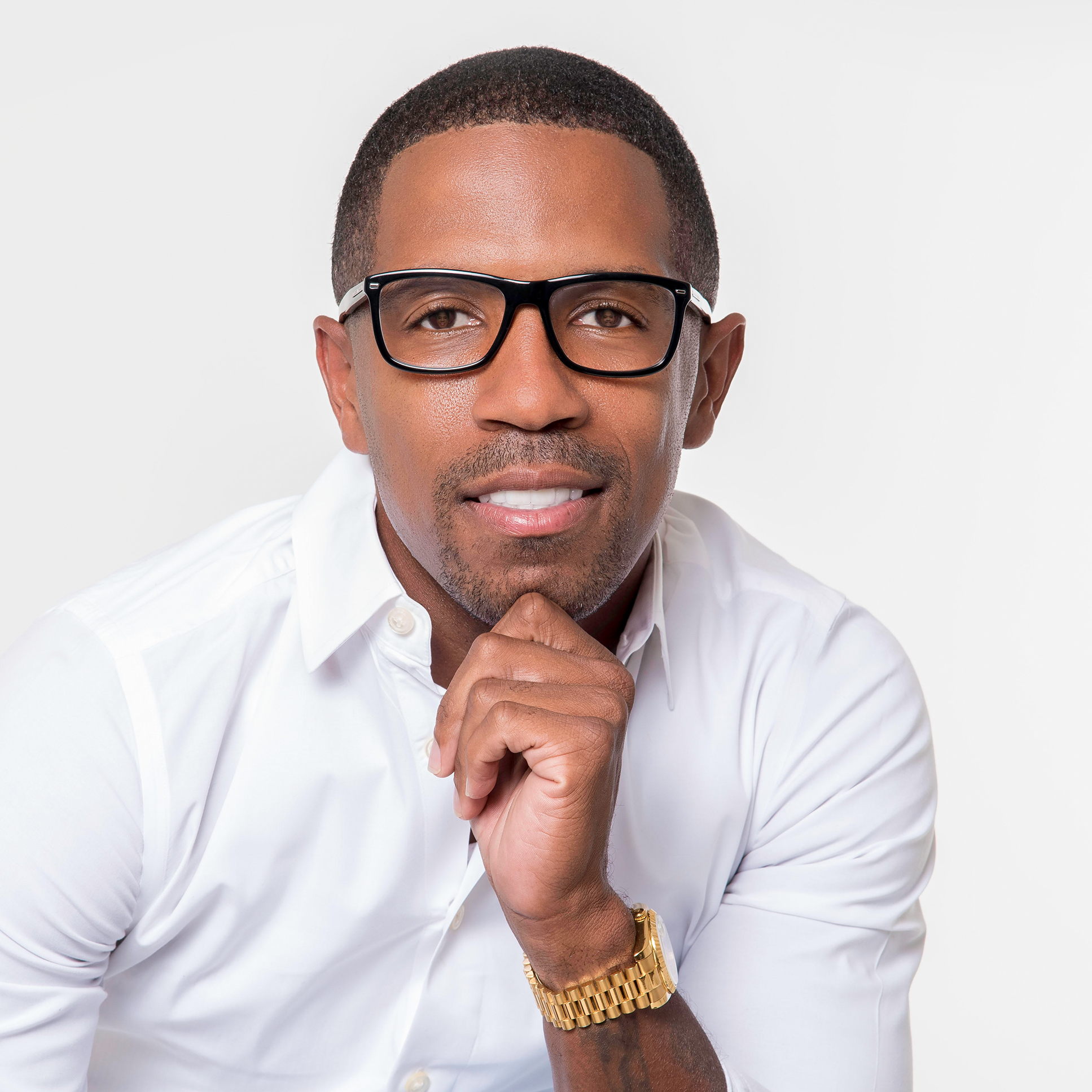
Dartanyon Williams
Dartanyon Antwaun Williams was the student teachers loved to hate and one of his classmates’ favorites. He graduated with a near 4.0 GPA and technical training certifications, then promptly set it all aside to pursue criminal aspirations. The unprecedented sophistication of his crimes earned him consultancies with the FBI, Secret Service, Louisiana Bureau of Investigation, Louisiana State Police, and US Attorney’s Offices for the Eastern and Middle Districts of Louisiana, helping their respective agencies better understand, prevent, and mitigate identity theft. He is an advocate, consultant, content expert, evangelist, serial entrepreneur, public speaker, and founder of the software firm DuckPond Technologies, Inc. and The DAW Group, LLC.
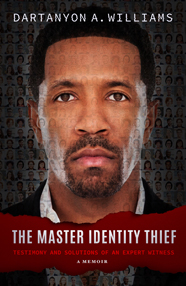
📚 Books by Dartanyon Williams
Transcript
[0:00:25] NVN: There’s really no other way to describe Dartanyon Williams than fascinating. As you’ll hear in this episode, Dartanyon fell into the profitable endeavor of identity theft at the age of 15. By the time he was 23 years old, he had built a million dollar, 40 member, multi-level crime ring. Then, it all fell apart. Dartanyon went to prison, including a three year stint in solitary confinement. Since then, he has served as a consultant to everyone, from the FBI and secret service to the US Attorney’s Office. In this interview about his new book, The Master Identity Thief, Dartanyon not only shares his own story but also insight into identity theft, how what we don’t know can hurt us and steps for protecting ourselves. This information is especially pertinent now because as Dartanyon explains, just as identity theft soared in the year following the 2008 recession, we can anticipate a similar phenomenon in the wake of the current pandemic. As Frank Abagnale, the subject of Catch Me If You Can, says of this book. Dartanyon’s testimony, which mirrors my story in many ways culminates with praiseworthy, relevant solutions. I’m excited to be here today with author, Dartanyon Williams, the author of the new book, The Master Identity Thief — Testimony and Solutions of an Expert Witness and Dartanyon, I am fascinated by your story and I’ve been looking forward to talking to you for a while now, so thank you so much for joining us.
[0:01:58] Dartanyon Williams: Yes ma’am. Thank you guys for having me, I’m excited, I’m thrilled to get into the story, to share with your listeners the essence and the beginning, the foundation of my mastery as an identity thief and how it’s scaled and developed throughout my criminal career.
[0:02:13] NVN: Absolutely. I’m going to let you take it away and let us know how this all started.
[0:02:20] Dartanyon Williams: Well, at the adolescent age of 15 years old, when I was consumed by naiveté and curiosity, I decided to take it upon myself to peek into my father’s credit worthiness with respect or regard to his Capital One credit card. Those curiosities led to the actual theft of his credentials. More specifically, his social security number, date of birth, home, address and all those things that were necessary to access his account. Starting at the age of 15.
[0:02:51] NVN: You mentioned curiosity as something that compelled you to do this. What led you to actually take action?
[0:02:58] Dartanyon Williams: The constant repeat of the host of Capital One commercials that I was watching that as a kid, at that time, there was 'Purchase power.' I knew that my mom and dad had a Capital One credit card because I used to see the billing statements on the kitchen table and pass it. That curiosity in terms of the contents of those billing statements, of those envelopes led to the connection between those commercials and I just decided to pursue it.
[0:03:27] NVN: There is the power of advertising right there.
[0:03:30] Dartanyon Williams: Yes, ma’am, it is. Very compelling and convincing.
[0:03:35] NVN: How did that situation play out? Were you able to get away with that?
[0:03:39] Dartanyon Williams: For a season, I was able to get away with it. Until my spending habits got out of control in connection with some gambling habits that I was developing as a kid, neighborhood gambling in terms of shooting dice on the street corner, playing table cards at community card games. When I got to a place where I could no longer keep up with the minimum of the payments, Capital One alerted my parents by calling and to advise them that they had either missed a payment or they were short on the payment and boom, there it was.
[0:04:11] NVN: I am – it’s funny, this story, the way you told it, I had jumped to conclusions in my head. You were actually making the payments, that’s – pretty responsible for a 15 year old, identity theft aside. But you were basically conducting your business there, even though you were young?
[0:04:30] Dartanyon Williams: Yes, ma’am, I take it upon myself to become a member of the house of —management of the household economy.
[0:04:39] NVN: How did your parents react when they found out?
[0:04:41] Dartanyon Williams: Well my mom was livid and my dad is more a democratic, he has more of an appreciation for the democratic mode of parenting but my mom is more of an authoritarian. In essence she’s also the disciplinarian and she wanted to actually engaged the cops and report me to the local police, but my dad was not having that.
[0:05:01] NVN: Wow, I mean, good mom right there, she was trying to prevent what ended up happening from happening right there at that first instance, it sounds like.
[0:05:13] Dartanyon Williams: Yes, ma’am she was.
[0:05:15] NVN: Talk to me about how thing escalated from there?
[0:05:18] Dartanyon Williams: Well, I had to sell my dad’s identity, I went on to take a peek into my mom’s credentials and credibility. At this time, both of my parents were 'A' tier credit levels, my dad having a 756, I remember it very vividly, my mom’s somewhere in terms of the 760 plus, at this time. After having exhausted my dad's credentials I went on to my mom. And then after my mom, I went out to both of my grandparents.
[0:05:42] NVN: How did that turn out?
[0:05:45] Dartanyon Williams: It evolved in, for me, being that it was family and I was the grandchild, that was doubted upon, there was no real consequence internally from my immediate and nuclear family members. But those things scaled and as long as I was getting away with it, it scaled, developed and evolved to the commission of greater and grander schemes with regard to identity theft, credit score fraud and check fraud.
[0:06:10] NVN: Talk to me about how you were able to pull this off? Because you were so relatively young when all of these was happening, how were you able to access the information that you needed to perform identity theft in the first place once you moved outside of your family?
[0:06:27] Dartanyon Williams: Well, this is in the late 90s, early 2000s and technology then was not what it is now. Hotels in Monroe, Louisiana and some of the smaller metropolis cities, they would keep their credit card or transaction receipts in storage boxes, tucked away in storage closets that were surprisingly, left unlocked. In those storage boxes and as part of those transaction receipts, copies of the patron’s drivers license, front and back carbon copies of their credit cards, were all right there, subject to my accessibility and gathering information and having to learn how to manipulate it and make use of it, by practicing some on my mom and dad and both sister and grandparents, positioned me very uniquely to explore the field and landscape of identity theft in a way that was novel to the system. That had not yet begin to peak on the radar from both a federal state and local level as it appreciates law enforcement.
[0:07:27] NVN: Tell me what you mean by that? What were you doing that was novel at this time and what did that look like?
[0:07:34] Dartanyon Williams: What I was doing was, I was taking advantage of two types of methods of transaction. We had, at that time, the instant credit market, was fairly new and merchants was not privy to as informed in this space and area of identity theft. The using, conducting trasaction by way of facsimile. We were able to make full orders of purchases, in fact, so did that credentials to perpetrate the scan.
[0:08:05] NVN: Wow, very entrepreneurial of you, I have to say.
[0:08:09] Dartanyon Williams: Yes, ma’am.
[0:08:13] NVN: You went on and this became a million dollar, 40 member multi-level crime ring, is that correct?
[0:08:20] Dartanyon Williams: Yes, ma’am. By the time I was 22, 23, I had amassed a 40 member organization.
[0:08:29] NVN: Wow.
[0:08:28] Dartanyon Williams: 20 men and 20 women, all of whom are most of whom were older than me. Because, the reason being is that I learned in the field of trial and error, was that sometimes, the credits approval amounts and the credit scores did not match my youthful appearance as an identity thief. I quickly learned that in order for this thing to be perfected and as such, to pass the credit’s approval amount and the credentials needed to assume who was of an older age and criteria. So that they can engage in transaction without question.
[0:09:02] NVN: Was this all limited to acquiring credit cards and then buying on them or did you branch out from there in any way at any point?
[0:09:11] Dartanyon Williams: Absolutely. Credit card fraud was actually the land gap up of the entire identity theft operation. The way at what you want is that I had the benefit of having access to my targeted victim's credit profile, which means, I could have their credit reports in hand and possession to peruse and examine it very thoroughly to make a determination, what price points or what return on profit or rather investment that I was set as a goal going into the theft of that particular identity based on the credit score and criteria.
[0:09:52] NVN: How were you able – we talked earlier about how this was a different time and this information was more accessible. It could be lying around in a material way, unlike it is today. But it seems to me that once that this grew bigger and bigger, it must have been more systematic than just being in places and stumbling into information you could use. Is that right?
[0:10:15] Dartanyon Williams: Yeah, absolutely, the 40-member organization consisted of two type of operatives. One, I called it field operative which engaged in field in terms of the much itinerary, they engage the field of operation and the other operative is what I call the info operative, that’s the individual that worked as an employee in some of the more frequented establishments such as restaurants, hotels, tax preparation companies, retail stores, high-end retail stores, car dealerships and other places where consumers readily deposit their information, finally trust in the system without care or conscious.
[0:10:56] NVN: Wow, okay. As you were doing this, did you feel morally or ethically conflicted by it in any way?
[0:11:04] Dartanyon Williams: No, ma’am, not at that time and in that season, absolutely not. It was a suspension of emotion and in order to engage at that level, the identity thief, the master identity thief has to assume a dark mind and have no regards for the emotions, the ramifications, the consequences that his victim feels, appreciate it victim impact. When that question is raised to be, I always refer back to my parents and use that as an example for it. If I had no regard in terms for my parents and how perpetrated their identities, then certainly and surely the world was next, in terms of targeting with an organization.
[0:11:50] NVN: Yeah, that makes perfect sense. Talk to me about how this all came down on you?
[0:11:56] Dartanyon Williams: Greed was the motivating factor in terms of how I got caught initially. I accumulated 3.1 million dollars in cash at the age of 23.
[0:12:06] NVN: Woah.
[0:12:07] Dartanyon Williams: No longer was it about accumulating the money, collecting the money, it was about advancing the scheme, perpetrating scam, playing cat and mouse, cop and robber with law enforcements. It was about outsmarting those who had captured me and incarcerated me. It was about now targeting them, it was about me against the system and how I can outwit it in such a way that I will make an example out of it in order to prove that I can beat the system.
[0:12:42] NVN: At some point, I am assuming that the system caught up with you, is that correct?
[0:12:50] Dartanyon Williams: Yes, ma’am, absolutely. The system caught up with me and 2003, February the 2nd. I was taken to state custody for some probationary violations and from state custody, I was transferred over to federal custody, having been on the investigation for a period of the last two years, perceived in that probation violation arrest which led to my first federal conviction, conspiracy to commit identity theft.
[0:13:18] NVN: When you hit this level, did anything about your mindset change? Where were you at emotionally and mentally?
[0:13:31] Dartanyon Williams: When I fell into incarceration?
[0:13:33] NVN: Yes.
[0:13:35] Dartanyon Williams: Well, the thing about being incarcerated and not – well, let me just explain, we’re a briefly to two different systems. In a state system, as long as I was being arrested, I was able to make bond, you got to keep in mind that in between the age of 18 and 23, I was arrested 23 times.
[0:13:53] NVN: Wow.
[0:13:53] Dartanyon Williams: That’s all as a result of me bonding in and out of state custody but when my charges were adopted by the federal government, I came to find out real quickly that the system didn’t work as such and then you have to argue, why the federal government should release your bond as one who is a flight risk nor a danger to society. Although, I argue to this day that I was not a flight risk because court records show while I was fighting those state charges, I attended each and every court date date. Me running from responsibility and accepting my actions on accepting those responsibilities and facing the consequences of my actions, for me, that was not an option. But in terms of again of being a danger to society, I was definitely that and the government rightly argued to my remanding, to the constant and precedent of the marshals.
[0:14:48] NVN: It’s pretty incredible to hear someone to say after the fact that the government was right about that and you were in fact a danger to society at that point in your life.
[0:14:57] Dartanyon Williams: Yes, ma’am. I mean, I had that regard for the rule of law, law enforcement, even the underserving, unwitting consumer, it was all about the game, the chase and the adrenaline, the motive, the drive of advancing and accelerating in a space that few exist and still even fewer exist at the level that I existed and occupied.
[0:15:24] NVN: When you describe it, it sounds like being almost doped out on adrenaline.
[0:15:31] Dartanyon Williams: It was. In those days, I would suffer from insomnia before I knew what the sleep disorder was because the mental and intellectual exercise that goes into preparing and organizing and orchestrating constant schemes, sophisticated scams, at that level, requires focus, dedication, concentration and dark consecration in order to be able to exist in a space where distraction is not permitted nor disruption allowed.
[0:16:06] NVN: Makes sense. How long were you ultimately incarcerated for?
[0:16:11] Dartanyon Williams: Well, I served two stints in federal prison for the first federal probation, conspiracy to commit identity theft, I will sentenced to 18 months and on that 18 months sentence I served 16 of those 18 months, I got out of federal prison, I stayed out for nine months, I stayed out for a period of nine months, only to find my set back in federal custody for a drug charge. Which was two counts of distribution of 500 grams of cocaine, which led to my second federal conviction which ended in a six-year term of a police man. Accumulatively, I served about eight years of federal prison.
[0:16:49] NVN: What is it like being in prison? It’s hard to imagine that scenario if you haven’t been in it.
[0:16:56] Dartanyon Williams: Well, state prison and federal prison are vastly different. When I was in state prison, I mean, that's just underfunded, poorly operated, poorly managed and even more if they’re privatized and owned by the state incarcerated. For me, state prison was very challenging and very trying. If one can survive state prison then most surely, he or she can survive federal prison. But while I was in state custody, on this last federal arrest and ultimate conviction, I was housed in a state facility [inaudible] parish [inaudible] Louisiana [inaudible] parish. I was housed at [inaudible] parish jail and it is perhaps where I did my hardest time having endured three long years of unconstitutional solitary confinement. For some shenanigans I was perpetrating, under the watchful eyes of prison operations but had not been caught in the act but nonetheless because I was suspect and I always subject it to solitary confinement. 24/7 for three long years.
[0:18:02] NVN: Wow, how do you come out of that? I have to imagine that that changes you and really profound ways, especially for that amount of time.
[0:18:13] Dartanyon Williams: I mean yeah; one or two things happens in solitary confinement. I just like to pause here in reference that the United Nations has established that any term or rather, any period that exceeds 15 days in solitary confinement is considered as torture.
[0:18:32] NVN: You were in for three years.
[0:18:34] Dartanyon Williams: Yes, ma’am, I was in for three years. The thing about solitary confinement. I mean, once you understand that the human mind is like a garden, whether it’s tended to or left unattended to, its going to cultivate and grow or rather, if attended to, it’s going to cultivate in the right direction. If left unattended to, or unoccupied, it’s just going to grow weeds and as such, collapse into itself and that’s how insanity begins to set in. For me, I decided to use that period of isolation, not knowing when my date of exploration would be. I decided to use it and take that penal experience and transform into a collegiate reality, with myself in the four walls. Obviously, with a whole lot of prayer, fasting and one on one interactions and conversations with Yahweh and the holy spirit that helped me or rather empower me, equipped me to endure such horrendous circumstances.
[0:19:36] NVN: Yeah, wow. I am so sorry that happened to you and what strength of mind to come out of that?
[0:19:44] Dartanyon Williams: Yes, ma’am. When we consider that stories, there’s a documentary about Kalief Browder and how he got lost in the system in New York and how he was in solitary confinement for more than a thousand days and how basically he lost his mind. The system is designed to force compliance by way of attrition. If you don’t conform to the system, if you don’t fight against the system, if you don’t defend and guard yourself against the system, the very mechanisms that it has designed will overtake you and overcome you. We see that very clearly in his story and how he developed extreme paranoia and how he developed schizophrenia and how these other mental illnesses left unattended to overtook him and ultimately led to him taking his own life, very sadly. In that regard, in that way, it is necessary for me to say as the world will recognize once they gauge that documentary, that the system failed him. The system did exactly what the system was designed to do, it broke him, it crushed him, it’s just a sad reality.
[0:20:59] NVN: Yeah, instead of crushing you though, you found faith.
[0:21:02] Dartanyon Williams: Yes ma’am, absolutely. Instead of questioning, I found faith and fortitude. That situation became very transformative, the constant prayer, the daily prayers, the weekly fast and the looking beyond myself until greater source of power enabled me to endure those strenuous circumstances, although Yahweh has one of seven ways in which he speaks out to man, praying is my only line of communicating unto him. And then, therefore I was going to endure solitary confinement, I was going to make it out without losing my sanity, I needed to have a different level of conversation and a different dimension with extra days in pursuit of development of intimate relationship.
[0:21:48] NVN: This is a spoiler alert for people who have not read the book yet but this has obviously stuck with you. It wasn’t something that you used just to get through that period, it has become woven into who you are.
[0:22:01] Dartanyon Williams: Absolutely, yes ma’am, I mean, I pray morning, noon and night. In fact, if I may digress, her for a sec, starting March the 31st and ending on April the 19th, I’m going to make an announcement and undertake a national COVID-19 fast, so we’re going to do 19 days, 19 hours each day, starting in March 31st and expiring, April the 19th to fast against this COVID-19 fast in hopes of eradicating this disease, the seed of the enemy from our world.
[0:22:40] NVN: This is obviously off topic but I’m fascinated by this, as we’re recording this podcast, it’s March 20th. Just to put this in context, this is the week where it’s all sort of come to a head. After solitary confinement, how much longer was it until you were completely released?
[0:22:59] Dartanyon Williams: Approximately one more year. At the solitary confinement, well, actually, I was transferred to Bastrop Federal Correctional Institute over in Bastrop, Texas from solitary confinement. The only way in which I was going to get out of solitary confinement is if I was transferred out of [inaudble] parish. That’s clear in retrospect. Approximately one year. I did one year at Bastrop Federal Correctional Institute, after, I was released from federal custody and have since been released ever since.
[0:23:31] NVN: We talked about this faith that you found during your incarceration and especially during solitary confinement. What else changed for you? What were some of the differences between the version of Dartanyon that walked into prison and the version that emerged?
[0:23:50] Dartanyon Williams: Yes, ma’am. A couple of things changed, Fatherhood, servanthood. More specifically, if I may expound on them with specificity. Before the term of imprisonment, it was all about Dartanyon Antwon Williams, I just didn’t know what it means to make provisions as a father, to protect, but I did not really began to appreciate what it meant to be a father and even more so, I didn’t begin to appreciate the fatherhood of my dad, until I was separated from my own children for an extended period of time and I began to realize how much they need their fathers to be active participants in their daily lives.
[0:24:31] NVN: Okay, your story is really cinematic so ultimately, you end up on completely the other side of this. Since being released, you’ve earned consultancies with the FBI, the secret service, Louisiana Bureau of Investigation, Louisiana State Police, the US Attorney’s Office. How did that happen?
[0:24:52] Dartanyon Williams: Well, it happened in two phases. Way back in 2002 and 2003 when I was being investigated by the FBI, I would remind the audience that identity theft was just coming on the scene, coming on the radar, having had a constitutional law established in 1998 which is the Identity Theft Assumption in the Determent Act. My criminal career as an identity thief was not therefore removed, in fact, four years prior, I had already stolen my dad’s identity in 1995, laws were passed in 1998, so the system in terms of law enforcement community was trying to catch up to this crime that was evolving and scaling way faster than the manpower could comprehend it and my curiosities and my jumping edge on having committed it at the age of 15 and perfecting it 15 to 18 gave me an edge and an advantage that law enforcement did not have. While being in federal custody, after having been transferred to federal custody from state custody. My FBI case agents were curious to learn what I knew and as such, we debriefed and I consulted them.
[0:26:04] NVN: How did you feel about doing that?
[0:26:05] Dartanyon Williams: I was ambivalent to begin with, that’s a scary situation to be in at 23 years of age. It is formidable, it’s unexpected. You don’t have the state police and local police will come and what you have 22 encounters that you can anticipate responses and reactions and outcomes. Now, you have the big boys if you will. You know, you have the guys that you see on TV, now staring in your face, wanting to know how. "We know when you did it but we just don’t understand how you did it." Part of my sense of mitigation was to share with them how I perpetrated my identity theft schemes, I had to disclose my psychology and not only the psychology but also the practice and perpetration of these sophisticated problems.
[0:27:02] NVN: Yeah, that seems intimidating for me, although, I mean, you’ve talked a lot about how when you were younger, you thought that you could beat the system and were blind to the sort of the implications of this on other people. Is intimidating the right word for what it was for you at that point or was it something else?
[0:27:27] Dartanyon Williams: Intimidating is one word. But in a weird sense feeling accomplished is another word, as I stated. It was kind of ambivalent, I was intimidated to some extent or degree, I was scared but yet, once I figured out what was going on after my attorney and I had a sidewalk, said, you're actually educating the advisement and informing, a body of professionals on the subject matter that they did not fully understand to the extent or degree that you did heretofore. So after that side bar, I come back to the debriefing with a stabilized level of confidence that okay, I can breathe. I don’t have to pat my foot up on the table as I was before. I don’t have to be calculated in my communicates and think before I speak. I can just engage and communicate with confident ease and in confidence knowing that nothing I would disclose or share could be used against me other than the protections I have been offered for me.
[0:28:32] NVN: Yeah, I mean what you are saying makes sense. It is an accomplishment in some way because for a 23 year old with giving the FBI information that they are not able to crack on their own. I mean again, not a situation most people have found themselves in.
[0:28:48] Dartanyon Williams: That’s right.
[0:28:49] NVN: This book is interesting because it is in part your story, memoir. But also you want to share information about identity theft, in it’s different forms with people today. Let’s start by talking about why that’s so important to you at this juncture in your life?
[0:29:09] Dartanyon Williams: Because people just don’t know, Nikki. I mean people are just so unaware and there is over 300 million Americans and I would venture that 299 million of them are at risk and exposure to all forms of identity theft. And it is my calling in part and it is my duty to engage the masses and take the initiative to not only just offer information that’s readily available that they can do and steps that they can take to better protect themselves but to getting in ditches and trenches. And say, “Hey, here is what’s out there, here’s what’s lurking around the corner and you ain’t got no clue.” And if you walk blindly and not with calculation and not in circumspect that you are going to be a victim.
[0:29:59] NVN: Let’s talk about before we get into the four different types of identity theft, you mentioned that a staggeringly high number of us are potentially victims of this. Can you mention some common things that put people at risk that they’re just totally oblivious to.
[0:30:20] Dartanyon Williams: People are too trusting of the system. They’re too careless with their credit cards, with their driver’s license, they believe in password protections, they are just novices to the protective in preventative measures that they can take to limit and decrease their chances significantly of being victimized by identity theft. A lot of what we witness and see is just the careless transaction of consumer data and not just only by the consumer, but by the merchant as well. And it’s kind of hard to put protections in place, to mitigate against identity theft and the compromise of consumer information from the merchant perspective because these are the institutions that we hold dear and near and that we trust very blindly. But there are things that we can do from a consumer's perspective to limit access to our information and as such exposure of that information to identity thieves, that are waiting to prey upon you.
[0:31:33] NVN: Okay, it sounds like one of the things we can do first of all is just be more aware of what a threat this actually is and that we are vulnerable most of us.
[0:31:44] Dartanyon Williams: That’s right, absolutely and one of the things that we can do on it at first, everybody to do is to contact one of the three major credit bureaus either online or by calling one of their toll free numbers that the Transunion, Equifax or Experian and put a credit freeze in their credit profile and make it password protected to minimize that exposure at identity theft. And what happens as a result of that is that before they can retain a new credit account themselves or before any creditor can issue new credit they would need to verify that identity of the borrower.
[0:32:24] NVN: Dartanyon, let’s talk about the four different types of identity theft. I believe you call them the four corners, is that correct?
[0:32:32] Dartanyon Williams: Yes ma’am, actually there are more than four types but these four pillars and posts are the corners in which general identity theft exists and a lot of identity theft schemes evolve and exploding and grow and everything in proportions.
[0:32:49] NVN: Let’s go ahead and run listeners through those.
[0:32:52] Dartanyon Williams: Well I will start with children identity theft. Now children identity theft is not all of that new. I mean it has been in the market place for the last 13 going on 15 years and essentially what children identity theft is, is children's, babies', kids' social numbers without the hyphens. The institute recognize them in a form of acronym, they call them CPNs and this acronym can stand or mean one of three things, credit protection number, credit privacy number or credit profile number, depending on the CPN company organization where you purchased the number. And what it is basically is the stealing, the purchase, buying, stealing of a child’s social security number that is not active in the system and ascribing it to a common name in an attempt of effort to establish new credit on that kid’s name, on that child’s name.
[0:33:55] NVN: That’s so creepy.
[0:33:56] Dartanyon Williams: And it is an industry within identity theft, in it of itself and it continues to scale annually based on statistical data and reports.
[0:34:06] NVN: So basically our kids can step into adulthood with a battle that they have to wage before they even begun to establish credit or exercise any purchasing power whatsoever?
[0:34:20] Dartanyon Williams: Absolutely.
[0:34:21] NVN: Wow, so what does that mean for parents? Should we be checking our kid’s social security numbers to make sure there is nothing out there? What do we do about that exactly?
[0:34:33] Dartanyon Williams: Yes, absolutely. I mean precaution is always better than cure. And I go back to advising what parents should do, they should do the same for their children as they will take initiative to do for themselves. And that’s contacting the three major credit bureaus and putting freeze alerts and profile alerts in their children’s profiles. For extended periods of time and that way, the children cannot be exploited by CPN companies and the individuals that buy those numbers for a period of exploitation.
[0:35:06] NVN: Okay that is a great tip, super simple to do.
[0:35:09] Dartanyon Williams: Another type of identity theft is medical identity theft and it is the new scare in healthcare. And medical identity theft is simply stealing the identity of the patient to take advantage of their medical benefits and it happens for both sides of the spectrum both from the consumer side and the healthcare provider and or professional side. It is not new to us that we read these reports where doctors in violation to HIPAA laws have defaulted Medicaid or Medicare to the tune of millions. And this is merely a repetition of patient information that they already have in the system and calculated measures in terms of stealing and exploiting that patient’s information under the guise of fraudulent billing. Now the consumer acts side of it is when someone steals someone’s medical information and takes advantage of the insurance of the Medicaid or Medicare benefits. So as to receive services, medical services that they otherwise would not have qualified for. And it is rather easy to do because the system internally is not as integrated as it needs to be and there is a disconnect between dental provider and general physician MD, medical provider, healthcare provider and specialists in between their systems. We have these in network out network insurance companies that have a type of integration going on. But there is still a disconnect and a glitch within a system that’s easily exploited and capitalized at all and is why medical identity theft is scaling at the alarming rate in which you do this. This gaps and glitches and loopholes is what’s driving this particular type of identity theft into the buildings on an annual basis.
[0:37:04] NVN: So is there anything that we can do about that or is this more of a systemic problem that has to be resolved at higher levels.
[0:37:12] Dartanyon Williams: There's not a whole lot that a consumer can do because you have to disclose your information to your C medical services and you are disclosing it to a system that you trust and that you walk away from trusting and believing that you are just as safe or if not perhaps more safe and secure than you were before you walked in the medical facility, and that’s not the case. So it is a systemic problem. It has to be resolved by the people, the powers that occupy the system. By the entities that are making billions of dollars off of the consumer patient but are not invested in those profits and that revenue back into protecting and securing that very consumer off of whom they make astronomical [inaudible] and profits.
[0:38:01] NVN: I don’t know if this is a question that you can answer or not. We are in such an unpredictable time and this may not be related but do you feel like there’s any chance, I mean it seems to me that in the wake of what’s happening right now with COVID-19, we’re going to have to really get serious about looking at healthcare in a new way. I don’t think there is any way around that at least I would hope not. Do you feel like this is one of those things that could be a silver lining of what we are going through right now, that maybe things like this will also be analyzed or is it separate?
[0:38:36] Dartanyon Williams: I mean Nikki it has to be taken into account and consideration. I mean we are in a defining moment right now. Every short coming, every gap, every mishap, every misstep is going to be called and it should be called into accountability, from a government perspective, from a law enforcement perspective and from the providers that make us the consumers who we are, the merchants and providers that make us who we are. A lot is going to be exposed and disclosed to the American populous in terms of the changes that will take place and will continue in those directions of change as a result of an aftermath of having experience what we are about to experience and what we have begun to experience on a national level.
[0:39:22] NVN: Okay, so we have youth, medical. What is the third big one to talk about here?
[0:39:29] Dartanyon Williams: Sure, so the third and I am glad you asked that the third big one to talk about is what I call suicidal identity theft. Now to give you a brief description and definition of what suicidal identity theft is, it is simply the perpetuation of fraud against one’s self and we recognize this and I made the connection. I documented it in my book, I mean no industry supposed expert or leader in the space of identity theft made the connection but I knew what was happening. And why in 2008 at the time of the great recession, identity theft has spiked and peaked in that year and we saw the numbers drop significantly in the succeeding or following year. So in perpetuated fraud against themselves now news according to the economists and news reports, we are on the verge of in turning into another recession and what happens when people find themselves out of work, no income, their finances are strained, they turn to that which is most immediate to them. And that is their own resources. They begin to perpetuate fraud against themselves and how they do that is that they max out their credit cards, they establish new accounts with the intent to max them out, in order to report them as fraudulent activity but they do this as a means of subsistence with the intent of surviving a crisis that they need to engineer, know or design and they feel like this system owe them from a psychological perspective and perpetuate this crime as a means to system out.
[0:41:07] NVN: So presumably this is something we will probably see an uptick in again, in the coming year.
[0:41:13] Dartanyon Williams: Oh absolutely, you are going to see identity theft numbers rise. We are going to see credit card fraud cases and reports rise. We are going to see a lot of fraud in this season and it’s going to be mostly in the space of financial — we are going to see a lot of check fraud rise and increase. We are going to see numbers off the chart. Because the system is not designed to sustain or to guard against such an influx of fraud at a massive scale. So instead of getting this fraud in measures and increments, as is recorded on an annual basis by various institutions, we are going to see numbers that are off the charts that are doubled or tripled in 2021. We get new reports come out in February speaking to this statistics of fraud and specific in certain categories, perpetuated in the year 2020.
[0:42:08] NVN: You know this is such – I wouldn’t have guessed this before this conversation but this sounds like it is such a timely conversation not that people need anything else to worry about right now and that is not what I am advocating but just being armed with the knowledge that this is something we can anticipate being on the rise, so that we can be on the lookout for it. And hopefully if something happens catch it quickly or prevent it in the first place by doing things like putting freezes on and some of the things that you were talking about earlier.
[0:42:42] Dartanyon Williams: Yes ma’am absolutely. It’s inevitable. It’s going to happen, I said it here first Nikki.
[0:42:49] NVN: You did. I mean it makes sense. But I think I am probably very indicative of the general public and that it is not something that I would have thought to correlate with this, identity theft is not.
[0:43:03] Dartanyon Williams: Absolutely and let me just go on record and say that people don’t have these ill intentions to begin with. I mean the perpetuation of these frauds are not intentional. They are a last resort when the system when their elected officials does not provide remedy and recourse in a timely matter or so I believe the rationality is. Otherwise, we are talking about consumers, we are talking about people who will never think to perpetrate such a scam or scheme but hey, if they can get away with it then they are the more emboldened and encouraged if not motivated to at least attempt it.
[0:43:39] NVN: And the fourth type of identity theft that we are going to discuss today.
[0:43:44] Dartanyon Williams: The fourth type of identity theft is something that admittedly I manufactured and created back in 2003, 2004. I have been working on it –
[0:43:57] NVN: This is trademarked?
[0:43:58] Dartanyon Williams: It is. There is a pending patent. You know that I am ready to introduce, so as to not allow it to scale and go nowhere fast. So yes ma’am. But this type of identity theft I call it as vehicular identity theft. Vehicular identity theft in terms of subject matter came on the scene around 2013, 2014 but the experts if you will, their description of it was simply copying the VIN number off of a vehicle and somehow selling it to a chop shop and it just didn’t make a whole lot of sense mathematically. And then I read in some places that the win which they are to called to do is that the vehicle owner should guard against themselves and that they should take a piece of aluminum foil and put it on the VIN number in their vehicle and then they should be protected. No ma’am that is not vehicular identity theft. Vehicular identity theft is so much more sophisticated. So much more convoluted, so much more intricate than that description. Vehicular identity theft is simply stealing the identity of a vehicle while it is stationed in a place whatever it is and ascribing it to another vehicle for the purposes of committing a multi-faceted crimes particularly insurance fraud and bank fraud and wire fraud and identity theft in the commission of that particular crime. So there is a lot of crimes that is happening in the context of vehicular identity theft and it is very simply stealing the identity of a vehicle and ascribing it to another vehicle for the purpose of ultimately commit a string of frauds.
[0:45:50] NVN: Okay, wow.
[0:45:51] Dartanyon Williams: We’ve seen what grand theft auto was in the movie in which Nicolas Cage star, Gone in 60 Seconds but those days are long gone and then it went from stealing the actual vehicle miss Nikki to identity thieves stealing the vehicle owner’s identity and going to the dealership with replicate of registration and insurance papers and getting a duplicate key only to come back and steal that physical vehicle, what has since evolved and graduated to letting the vehicle stay parked in the garage. We'll just go steal identity of it and we are going to put it in a different system and exploit it in such a way we’ll buy — just as long as we have the skeleton, which is all the documents. We can get proof on the surface that the vehicle does exist. That this for the insured that it is for the own by replication of a counterfeit bill of sale both perpetrate the fraud that way.
[0:46:43] NVN: It makes my brain twist just thinking about that and what it would entail.
[0:46:48] Dartanyon Williams: Yes, I would give a hint here in an effort not to go into too much detail because I don’t want a listener to get motivated.
[0:46:57] NVN: Right.
[0:46:58] Dartanyon Williams: See there are a lot of online VIN numbers if you will to any type of vehicle that you want and these VIN numbers are not registered with any office and motor vehicle or insurance company and because they are not registered in either one of those systems that makes that VIN number readily and immediately available for uses in the commission of vehicular identity theft, that is about as far as I would go with this Nikki.
[0:47:29] NVN: Yeah totally that makes sense though. I like how you described it as motivated.
[0:47:36] Dartanyon Williams: Yes ma’am, our guardians and keepers within the system are going to this so distracted by trying to manage and mitigate this COVID-19 pandemic and that a lot of attention or divided attention that otherwise would have been given to the systems and other topics of the issues is going to put a strain in somebody and something has to give. And in the space of fraud there is going to be a massive exploitation to come back all the things fraud and to engage the future fraud. The immediate way I think that it is going. I founded myself working on it, which is names Duck Pond Technologies Inc. Duck Pond being named after the rural area just outside the city limits of St. Joseph, where I retreated with my parents' credentials to devise my initial schemes and their scams. So I went back to Duck Pond to find the remedy and solution to the crimes that I once used Duck Pond to perpetuate and commit and it is this company under which I am celebrating with you here on this podcast today, Miss Nikki. That as of March 10th of this year, March 10, 2020 I filed 10 unique patents via the wise and counsel of Manning, Morris and Martin out of Atlanta, Georgia to introduce and implement technology that I think will go a long way in terms of keeping us protected as consumers, as merchants, as the general population.
[0:49:11] NVN: Dartanyon, what do you anticipate with this? Do you have any sense of timeframe about when this might be available or is that all unfolding at this point?
[0:49:21] Dartanyon Williams: We got it anticipated and projected launched dates as early as October 24, 2021. So there is a development period, there is a beta testing period within, there is an end of rotation period in terms of flicking to walking period and all of that stuff is happening simultaneously. For the last year alongside widen the port, I was also developing or rather designing the technology as the story unfold. As I got into those dark places to which I had to escape to and re-engage criminality over a mentality that I once carried, I carry with me a flashlight so that I may see the solution at the end of the tunnel while being in that space.
[0:50:04] NVN: I love that description.
[0:50:05] Dartanyon Williams: Yeah, we are looking to bring these technologies to market as early as 10-24-21, October 24th, 2021 and I’ll tell you I say it right here, right now Miss Nikki, credit card fraud as we know it, will be no more once sim-pin data code technology hits them off. I am going to make it impossible for credit card fraud to ever be committed again.
[0:50:36] NVN: That is a big promise.
[0:50:38] Dartanyon Williams: I am guaranteeing right here.
[0:50:40] NVN: Wow, all right folks you heard it here first. Dartanyon, this is amazing. You know I talk to people pretty frequently who have fascinating stories and people who have a lot of information to share but you really are just this perfect marriage of both of these things together and the information you are sharing is relevant to all of us.
[0:51:03] Dartanyon Williams: Let me just say it wasn’t intentional. A lot of circumstances, a whole lot of poor decision making and some very unique events has brought about this historically evolved and developed the way which it has.
[0:51:18] NVN: Yeah but you have turned it around certainly. There was decision making at play here but it’s impressive how you have turned this entirely around. The last thing I want to ask you is — and I don’t mean to project anything on you but I am curious, because of where you’ve come from and how you got here, is there any sense to you of somehow righting wrongs by writing this book and putting this information out there for people to understand?
[0:51:51] Dartanyon Williams: Yes, absolutely. So some of it is fruit of my redemption, absolutely. I am glad you asked that question, which leads us to the appendices of my book. In this book, I have written in my own accord without engaging in any research or reference materials such as existent laws or any state or federal level. I have written and reduced 50 legislative proposals that are designed to detect, detain and detour identity theft from suicidal identity theft to children identity theft to medical identity theft. To income tax identity theft to vehicular identity theft to illegal gun purchases and acquisition of full operation by way of identity theft. All in the 50 legislative proposals and dependencies of my book plus an additional ten. On top of that I have designed and I am in the process of developing ten pending patents in the space of payment card fraud, check fraud, identity theft, vehicular identity theft and all things fraud for that matter as of March 10 in fact those unique patents were filed by Morris, Manning & Martin of Atlanta. I am celebrating that by participating on this podcast.
[0:53:11] NVN: Very nice, I am glad we could celebrate together and I love that you are taking action against the holes you saw in the system that you were able to exploit. That is so wonderfully full circle.
[0:53:23] Dartanyon Williams: Yes ma’am. So that is what we’re doing. We are out there like I said before, I am in the ditches. I am in the trenches, I am ready to get engaged. I am willing to come to and fro wherever, church, organizations, financial institutions. So it is not to necessarily share my story, it is always good to hear the foundation and the backstory. But more so educate in the interest in their area for the purpose of advancing and accelerating their education in the form of the consumer possessing a working knowledge taking preventive and proactive steps and measures to safeguard themselves and their loved ones.
[0:54:01] NVN: Well, I think that all of this information certainly packs a heavy punch hearing it from somebody like you. So again, the book is The Master Identity Thief and I am joined by author Dartanyon Williams. Dartanyon, is there anywhere else that listeners can go to find you?
[0:54:22] Dartanyon Williams: Absolutely, so if anyone wants to get in touch with me they can find me all over social media. You can find me on the book’s website, themasteridentitythief.com. You can find me on my personal website, dartanyonawilliams.com. You can find me on Instagram @dw.ceo or you can find me again on Instagram @dw.4us2. You can find me on Twitter @a_dartanyon or you can also find me on Twitter again @dw4us2. You can find me on Facebook at Dartanyon A. Williams straight up, and you can find me on LinkedIn @dw-duckpond.
[0:55:19] NVN: Awesome, you’re everywhere.
[0:55:20] Dartanyon Williams: I try to be. Hey, I mean I did end up itself is ubiquitous. So you have to be everywhere if you are going to make a significant and aggressive advancement against it.
[0:55:33] NVN: Yeah, that makes perfect sense. Dartanyon, such a pleasure. Thank you so much for joining us today.
[0:55:40] Dartanyon Williams: Yes ma’am, well thank you for having me and I am looking forward to next time.
[0:55:43] NVN: Absolutely. Thanks for joining us for this episode of Author Hour. You can find The Master Identity Thief, on Amazon. For more Author Hour, hit the subscribe button on your favorite podcast service. Thanks for joining us, we’ll see you next time. Same place, different author.
Want to Write Your Own Book?
Scribe has helped over 2,000 authors turn their expertise into published books.
Schedule a Free Consult