Debi Kleiman: Episode 453
Read the full transcript
Debi Kleiman
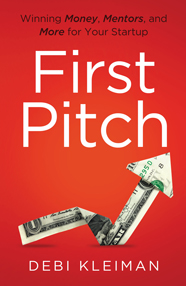
Debi Kleiman is an award-winning marketer, educator, startup advisor, and angel investor with more than fifteen years of experience coaching founders. She earned her MBA from Harvard Business School and spent a decade leading brand development and innovation at Coca-Cola, Welch’s, and Procter & Gamble. She served as executive director of the Arthur M. Blank Center for Entrepreneurship at Babson College and is a managing partner of The Upside Angels, which invests in early-stage startups. In First Pitch, Kleiman draws on that experience to show founders how to craft a compelling, memorable pitch that wins money, mentors, and more.
📚 Books by Debi Kleiman
Transcript
[0:00:28] NVN: Today’s guest, Debi Kleiman is the executive director of the Arthur M. Blank Center for Entrepreneurship at Babson College, the country’s number one school for entrepreneurship. She’s also the author of the new book, First Pitch. This book calls upon Debi’s years of experience, working in the entrepreneurial and academic space and also, her experience as an award winning marketer, mentor and angel investor. In this book, she puts all of this knowledge into application. Walking entrepreneurs through the startup pitching process in both a high level and step by step way. With all of this, she also talks about how to create winning pitches not only for investors but also for press and mentors. Today, Debi talks also about things to consider when it comes to pitching startups in the wake of COVID. I am joined today by Debi Kleiman, author of the new book, First Pitch. Winning Money, Mentors and More for Your Startup. Debi, thank you for joining me today.
[0:01:33] Debi Kleiman: Thanks for having me Nikki.
[0:01:35] NVN: I’d love to start by giving listeners an idea of your professional background.
[0:01:41] Debi Kleiman: Sure. I spent about 20 years in marketing. I started working in consumer packaged goods companies and brand and innovation. Really built a very classic brand marketing background through that. I took that marketing experience into the tech world and worked on startups and smaller tech companies, also ran a media agency, worked on as an advocate for the Boston innovation community. A bunch of different things sort of led me to really focus my work on startups. I developed this real passion for them, working as a board adviser, as a mentor, as a part of a founding team, all these things really developed into something that I was so excited to do every day. And then I got the opportunity to go to Babson and Babson is known as one of the top colleges for entrepreneurship education. In fact, it’s been ranked number one for over 25 years. Very core of what we do at Babson is about training entrepreneurial leaders and particularly for me, as executive director of the Blank Center for Entrepreneurship at Babson, orking with early stage founders on building their businesses and helping them move forward.
[0:03:04] NVN: It seems to me with that breath of experience, you could have written a few different books and I’m curious why this idea of first pitch is what really called out to you?
[0:03:17] Debi Kleiman: Well, in my role at Babson, I work with so many early stage entrepreneurs and it’s not just students, it’s also – I teach a workshop in exec eds, I’m also working with adults who are first time entrepreneurs and time after time, they say how much they dread pitching and they feel overwhelmed by this process. It shouldn’t be something to dread, it should be something really exciting. You’re getting to tell the world about what you’re building and trying to have them join you on this journey, creating an invitation for them to be part of it. I wanted to take some angst out of that process and provide some really concrete ways to create a compelling and memorable pitch but also, delve into some of these other dynamics around pitching that are a bit mysterious but so important like demonstrating the right interpersonal skills, proving your coachability, building relationships and really understanding your audience and so some of those things actually come from this marketing lens that I have. There’s this distinct approach in the book where I apply a lot of the things that I learned as a marketing leader to the pitching world. I think it’s a very unique angle on pitching but it’s also really meant to help these early stage entrepreneurs who are feeling overwhelmed and afraid of pitching when it’s one of the most important skills they need to have as an entrepreneur.
[0:04:40] NVN: It makes a lot of sense that your marketing background would feed into this in a really positive way. I wouldn’t have thought of that on my own but that makes so much sense now that you’ve said it.
[0:04:53] Debi Kleiman: Yeah, it’s funny because, you know, if you think about it, marketers are meant to convince people and be persuasive and move them emotionally to buy something or consider something and that’s exactly what you’re doing with pitching, right? You’re trying to be persuasive but at the same time, you’re trying to make an emotional connection that will compel people to engage with you. There are a lot of lessons from the marketing world that can be applied in this process and frameworks that you can use from the marketing world that will allow you to create a really great pitch.
[0:05:27] NVN: In this book, you’re talking about a lot of strategies and looking at both the high level and drilling down but I’m curious if there’s one overarching thing you’ve seen in your experience, that people tend to miss or be particularly challenged by when it comes to pitching that would really move the needle for them if they can begin to wrap their heads around it.
[0:05:51] Debi Kleiman: I think that one thing, if I had to pick one thing, it would be storytelling. Storytelling is a skill that you can develop that’s very important in the pitch process. People love stories and in fact, our brains are wired to remember stories. Bringing your pitch alive with storytelling is really important. It makes it memorable, yes, so that people interested in helping you can tell your story to others. But it also puts people in listening mode. They’re kind of leaning and they’re engaging with their body and their mind to this story, they want to know what’s going to happen next. Versus when you’re sharing very data-based, dry information, that puts them more in evaluation mode so they’re judging the idea, they’re looking for errors, they’re looking to be critical just by nature how our brains work. Storytelling can put them in listening mode and it also helps to make an emotional connection with your audience as I mentioned before because it’s really important to connect with your audience in a deeper way. Most startups have some element of an emotional or social need that they’re meeting for their consumer. Maybe something they didn’t even know they had. Being able to connect to that emotion in your pitch can get people to really feel more engaged with I, feel more connected to you, really start beginning to cheer for you and want to be part of your success.
[0:07:17] NVN: I’m curious, with that in mind, of all the pitches that you’ve seen in various capacities, over the years, if there’s any story that really stands out for you about someone who gave a pitch that was really effective from the storytelling angle.
[0:07:34] Debi Kleiman: Yes, one of my former students had an invention, it was a magnetic ink that you can use on plastic that would allow it to be sorted more effectively and therefore have more of it be recycled and so there’s this whole element of people don’t really realize that most of the plastic that they are recycling at home isn’t actually getting recycled once it gets to the recycling centers and that’s because there are different types of plastic that are on these products that they’re buying. My former student Ravish, he had created a magnetic ink that would allow these pieces to be separated. He’s very logical in nature, very soft spoken, but the truth and the core of what his business was about was really about saving the world from our horrible plastics recycling problem. He has a solution which is a magnetic ink that will allow us to recycle more plastic in a way that we couldn’t before and then in a way that would surprise people to know that you know, all the plastic that they’re sorting for the garbage man is not actually getting recycled because it can’t be separated in the right way. It’s one of those stories where you sit there and when I first met Ravish, I was like, “I can’t believe you created this, this is amazing.” But when he gave his pitch the first time I was like, I have zero idea what you’re talking about and you know, you're using a lot of technical terms, you’re not painting the picture for me about why I should care and so we really worked on that and now he tells the story about his invention and about why he created it and about what it can do for the world and you just see people lean forward. And their eyes widen and you know, the images that he shows and the way he sort of unfurls the story and then the solution is really incredible. That’s one of my favorites I think just because it was such a switch from beginning to the end.
[0:09:33] NVN: Absolutely. Was he funded?
[0:09:35] Debi Kleiman: Yes, well, he went on to win several pitch competitions where he won a lot of money. He started doing pitch competitions when he got really good at pitching and win money there and then he went on to actually raise money from angels. He’s in the process of continuing to raise money but he’s also had some paid pilot programs with some major consumer products brands that are also funding the business.
[0:10:03] NVN: A very cool and what a great product to hear it came out like that too.
[0:10:09] Debi Kleiman: But there’s millions of those stories. I mean, I work with hundreds of entrepreneurs every year and every year and every single one of them ends up in a better place once they realize that they have a story to tell, they have this really inspiring purpose to why they’re building this company and people want to know about it and it’s about giving them the confidence to tell that story and to feel excited to share with the world.
[0:10:32] NVN: You know, another thing you talk about in this book that was interesting to me. When I think of pitching, I think of it as being all about funding. But you’re talking about different scenarios and then different reasons startups can be pitching. I’d love you to just speak to that a little bit.
[0:10:47] Debi Kleiman: Yes, absolutely. Thank you for bringing that up actually because that was a big part of why I wanted to write this book because I think people just assume that your pitch deck is – and your pitch is just about talking to investors when it’s not. Entrepreneurship is a team sport, you need a lot of people to help you succeed with a startup. It takes so many types of people and not just funders. We talk about in the book, this idea of, you know, your pitch can also win you mentors and advisers. People who want to help you move forward – whether or not they give you money, almost is irrelevant because they might have a network or connections or industry expertise that can accelerate your forward motion. But then there are also people like the press or influencers or early adopter customers who you also need to pitch to, to get them engaged with what you’re doing and to take a chance on you and to help you tell your story in a bigger way and those pitches are equally important because they will do a lot to help you get the story out and to move the business ahead. It’s all kinds of stake holders in the startup world. It’s a very relationship based business, you know, you have to build great relationships and a lot of those relationships begin with a pitch. It turns out that pitching is actually really personal, you really get to show yourself and the kind of founder that you are. And then, you know, it’s funny because people also forget and a lot of serial entrepreneurs will tell you this is that they learn a ton about their business in the process of developing their pitch. They really get to sort of play with assumptions, see what works, find holes and how they’re talking about it and it really – it shapes the business at the same time it’s shaping the pitch and then that pitch can go on to be used as your business plan, it can be used for recruiting new people to your team, it can be used as the basis of a sales deck, it’s not replacing a sales deck but it can be used as the basis for sales deck and how you talk to customers. There are lots of uses for it once you kind of get the pitch really nailed down.
[0:12:57] NVN: You know, when you were talking about the importance of relationships, that brought me back to what you were saying earlier with stories and it makes sense again that they would be so important because even if someone decides not to fund you, if the story still resonates, it seems like your odds of that going somewhere else that’s unforeseen but beneficial increase quite a bit I would think.
[0:13:19] Debi Kleiman: 100%. That’s why being memorable is so important and speaking in really simple direct language is so important because even if that person who is directly hearing your pitch doesn’t have something that can help you whether it’s wisdom or wealth, they might know someone who can help you and their ability to then repeat what they heard or convey about your business because it was memorable and easy to understand is invaluable.
[0:13:48] NVN: Just for a little bit of insight from the other side, talk to me a little bit about what you really look for as an angel investor?
[0:13:59] Debi Kleiman: Well particularly now, I am looking at how the founder is thinking about this new normal that we’re in, this COVID-19 world and potentially the post-COVID-19 world. You know are they being thoughtful about how they’re going to pivot their business model or how they’re going to deliver their product or9 service given how much the world has changed. So to put that in a larger context I am looking for founders who are really self-aware and who are really capable of tapping into an interesting insight about their target customer that will drive a really special business. And part of that comes from the founders being really good at understanding their customer and being able to sort through all the things that customers tell you to get at the heart of what they really, really need because sometimes the basis of a phenomenal startup is about a social or emotional need that they don’t even know they have. So I like to see founders who can listen for those types of insights and then action on them and turn them into companies.
[0:15:12] NVN: There is so much humanity in everything that you are talking about. It seems like a very common thread throughout here.
[0:15:18] Debi Kleiman: Absolutely. It really is and you know like I said at the beginning and also I must say it like 17 times in the book, pitching is personal and a big part of being successful in that is really understanding who you’re pitching to. So there is a whole section of the book about understanding your audience because you are pitching to all of these different types of stakeholders that we talked about but they all have different motivations. They all have different things that they want from you or are out of these experience and speaking with you so you really have to understand where they are coming from too and put yourself in their shoes, know what really lights their fire so that you can speak to that and play to that in your talk with them.
[0:16:01] NVN: I’m so glad you brought up COVID and the new world because I would – whatever that turns out to be – because I would imagine that there is a population of people out there who have been working on their businesses before all of this started and you know were perhaps getting ready to go out and pitch and now things seem different and uncertain and I just would love to hear what you have to say to those people. You know, if you have any thoughts and insights about what maybe ahead, understanding that of course none of us have been through this before.
[0:16:37] Debi Kleiman: Well I think there’s definitely some parallels to other downturns in the economy that we could look at and say, “You know, we know that investment will be harder to find,” but it is still out there. There are plenty of people still investing because they know that now is a great time to invest, right? We were in a period before COVID where evaluations were very high. People were paying a premium to get in on the best startups and now the environment’s completely changed. So companies that might have been out of reach for an investor might be more in reach or they might be able to work out a valuation and that’s more reasonable or a situation where they can be really helpful to a startup they might not have been connected to before. So I think that yes, to a certain extent there is going to be less venture capital funding floating around. A lot of those venture capital firms will be trying to triage their current portfolio and helping them weather the storm versus going out and making investments. But at the same time, they are all sitting on big funds that they raised and they have to deploy that capital at some point. So the entrepreneurs that are prepared with a great pitch with the insights to show that they really understand what’s going on and how their business is going to serve their target customer, they will still win. They will still get funded. It will be harder no doubt but that makes having a great pitch and understanding how to build relationships in this business even more important today.
[0:18:15] NVN: Debi, with all of this in mind, are there any particular opportunities that might be awaiting entrepreneurs in this new environment?
[0:18:25] Debi Kleiman: I don’t think it is all bad news for startups in this environment. There is definitely a segment and several industries that will thrive in this environment because they have innovative solutions that are important to people. They are meeting a real need for people in this really tumultuous time. It could be obviously bio tech and healthcare are massive opportunities right now that we have seen but even things like how you work from home. And enabling digital communications and the home office, those are places where people with great innovations are going to do really, really well. So it is not all bad news and for some companies, it might just take the chance to kind of look at what they are doing and say, “How can I pivot this into something that really works now?” so what they are doing before this happened might not be the right solution but with a little bit of leaning into the moment and a little bit of creativity they might find a different business model that is beautiful for this period of time and that can help them thrive through this and far afterwards. So there are plenty of silver linings for startups that are working on things that can be meaningful or find their way to be meaningful to consumers in this time.
[0:19:48] NVN: With that in mind, is there anything that should change in pitching moving forward into these next several months or is it just really a matter of doubling down on what you already need to be aware of?
[0:20:03] Debi Kleiman: I think people are going to have to get comfortable with pitching in virtual settings and pitching online comes with a set of technical and personal things that you aren’t dealing with when you are pitching to someone in person but at the same time, you really have to work hard to show yourself, to be transparent about the type of founder you are and what it would be like to work with you. So conveying that online is definitely harder and pitching online is definitely harder and because this is such a relationship based business, it might take longer. To build the kind of relationship with an investor or a mentor or an adviser that normally might have happened over a coffee. It could take a little bit more time but you can do it. It can be done. I do know plenty of investors who are still out there looking for deals and looking for great startups right now.
[0:20:57] NVN: I’m sure that is great news for a lot of people to hear and also hearing you talk about virtual pitching. I can see how there are several challenges with that but for those who are nervous going in the door, I mean it almost seems like there is a bit of advantage of at least being in your turf and having that element out of it, you know?
[0:21:17] Debi Kleiman: Yeah, I mean you are in a more comfortable environment right? It is all familiar to you so make that work for you. You know let your hair down a little bit. I talk for a full chapter actually about some of the interpersonal skills that kind of come up when you are pitching, being coachable not being defensive when you get criticized, showing that you are open to other people’s ideas and feedback. All of those things you can do online just as well as in person. And maybe to your point, even more so when you are in an environment where you feel comfortable and you can kind of let the real you show. It is very important to anyone who is going to work with you, whether as a partner or a mentor, an employee or an investor, that they are able to see the real you and imagine what it would be like to work with you because doing a startup is super hard and you are going to go through some really tough times. So you need to all be comfortable with that you really understand how this person is going to act when times are tough.
[0:22:17] NVN: Excellent. Debi is there anything else that you want listeners to just bear in mind if they are thinking about pitching? Any final thoughts?
[0:22:28] Debi Kleiman: I think it is important that people not memorize a script when they pitch. We didn’t really talk about a ton of the tactics. There is a whole set of tactics about preparing to pitch and in the pitch but one of the things I see people do a lot is memorize a script and you know online or in person that doesn’t work well. I think the other thing that I council is just around if you are using a pitch deck making sure that deck does a really good job of communicating about your business. And being aligned to how you want to represent yourself in the world. Design really matters and it is a reflection upon you and your brand and this company that you are building. If your deck looks sloppy or amateurish or has lots of errors in it, people are going to assume that you are sloppy, amateurish and have lots of mistakes being made. So you know I think entrepreneurs sometimes forget that the deck even though it is this PowerPoint document, it is a reflection of you and it needs to be amazing.
[0:23:40] NVN: I really love this mix of very high level information and then also getting deep into the strategy and tactic. That’s cool.
[0:23:49] Debi Kleiman: Yeah, thank you. That was the goal to kind of cover it all soup to nuts, I think you know one of the things that I saw in working with my students is that they saw many places they could get information about pitching but it was all in this bite size chunks and really spread out and you know part of my goal with the book is to put it all in one place so that they felt like it was both really concrete and practical but also gave them strategies that they could take action on right away and that’s a very Babson thing is to having this bias for action and really taking a step and learning something so you can take the next step.
[0:24:25] NVN: Beautiful and now it is in book form.
[0:24:28] Debi Kleiman: And now it is in book form. I am very excited. I hope it helps a lot of entrepreneurs. That is the goal.
[0:24:35] NVN: I love it. Well I am not an entrepreneur and I’ve learned a lot here so I have to imagine that it will and I love your delivery too. You are so calm, it infuses a sense of calm about this, which I feel like is very important.
[0:24:49] Debi Kleiman: Yes, it is. You know what I love to see is when entrepreneurs start to get really confident with this that they can relax and enjoy the pitching process because it really is a really special time for you. It is an opportunity to show what you are building to the world and so it should be fun and you know when you get good at this and when you’ve practiced it a lot and you start to feel natural about it, it should come out of you like breathing. It should be so part of you when you get to that point, I just see – you see these entrepreneurs light up when somebody ask them what they are working on instead of shrugging to themselves and become terrified, they actually can’t wait to share with the world what they are building and so that is what we are trying to get them and you know they really feel that very viscerally once they have been successful with it.
[0:25:39] NVN: Well that seems like another really good point there too that even if you do pitch and it doesn’t end up the way you wanted to it’s still moving you closer in that direction of being in different situations and learning how to navigate them with more ease.
[0:25:54] Debi Kleiman: Without a doubt every opportunity you get to tell someone about your business is an opportunity to learn something new about it. You have no idea what kind of feedback you’re going to get. You have no idea how someone is going to react to what you say. They might expose something in what you say that is confusing that you can fix really easily and you didn’t realize it or they might just give you an idea of some place to look for help or places that you can find resources that you didn’t know about. So every opportunity to talk about your business is an opportunity to learn something and to move it forward.
[0:26:27] NVN: Perfect. The book again is First Pitch: Winning Money, Mentors and More for your Startup. Debi, outside of this book where else can listeners find you?
[0:26:39] Debi Kleiman: Well, I am on Twitter @drkleiman and I love Twitter. Twitter is probably my favorite place to be. I am also on LinkedIn and those are probably the best places to find me. I am working on a website for the book that will be ready by the time the book launches in a couple of weeks and that’s called thefirstpitchbook.com. So they’ll be more resources for people about pitching and opportunities to learn about pitching and relationship building in the startup process at that website.
[0:27:12] NVN: Like a true educator.
[0:27:13] Debi Kleiman: Yes, absolutely.
[0:27:16] NVN: Awesome Debi, thank you so much for joining me and best of luck with the book.
[0:27:21] Debi Kleiman: Wonderful, thank you so much Nikki this was so fun.
[0:27:24] NVN: Thanks for joining us for this episode of Author Hour. You can find First Pitch on Amazon. For more Author Hour, hit the subscribe button on your favorite podcast service. Thanks for joining us, we’ll see you next time. Same place, different author.
Want to Write Your Own Book?
Scribe has helped over 2,000 authors turn their expertise into published books.
Schedule a Free Consult