David Mcdonald: Episode 461
Read the full transcript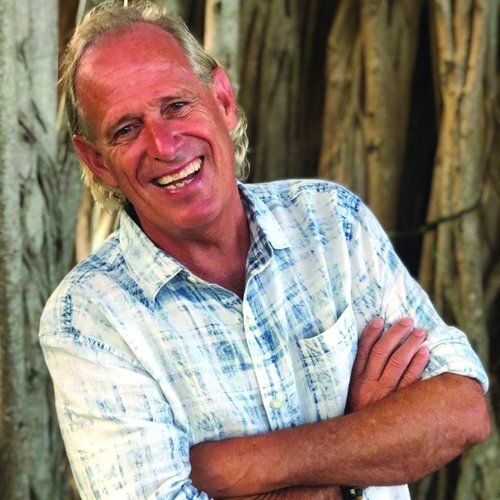
David Mcdonald
David McDonald is the founder and CEO of LIFT Healthcare, a research and strategy firm that helps health systems, life-science companies, and public health advocates better understand the people and communities they serve. An anthropologist by training, he has worked for more than 25 years to advance patient education and well-being, and he is recognized as a thought leader for applying ethnography and design thinking to healthcare. He is the creator of the Five Dimensions of Emotional Truth, a framework used to decode human behavior and motivation. In What’s Their Story?, McDonald shows how anthropology and design thinking can reinvent healthcare marketing. He lives in Jupiter, Florida.
📚 Books by David Mcdonald
Transcript
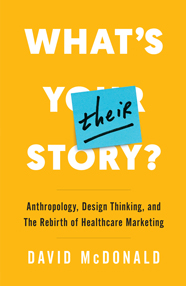
[0:00:21] NVN: David McDonald is a healthcare anthropologist and a founding partner of LIFT, a healthcare design and marketing firm. In his new book, What’s Their Story?, David calls upon his decades of experience to explain how anthropology and design thinking can merge together to create a healthcare experience and environment that’s not only patient-centered, but also human centered, taking healthcare workers into account as well. Obviously, in light of COVID, this is something that a lot of us have been thinking about. My conversation with David was very enlightening in terms of what some of those changes might look like in practice and effective application. I am joined today by David McDonald, author of the new book, What’s Their Story? Anthropology, Design Thinking and the Rebirth of Healthcare Marketing. David, thank you so much for joining me today.
[0:01:14] David Mcdonald: Well, you’re welcome, thanks for having me.
[0:01:16] NVN: Absolutely. I’d love to start by giving listeners an idea of who you are and what your background is that led you to this book?
[0:01:27] David Mcdonald: Okay, sure. My name is Dave McDonald, of course as you just said. I am a healthcare anthropologist. My background in anthropology started at university. I worked in a project called Gen Tech which was an eighth language project, we study language acquisition in non-human primates, primarily the study of linguistics. In my case, language acquisition, I became very interested in how humans form language and very interested in how animals behave and form language as well. My three daughters included. I just became intrigued with the notion of gestural communications, which is the movement of your hands or your body or your face or your eyes and the way we talk or speak and communicate and how that influences or forms of behavior in cultures and in communities. Ultimately, I slipped off into healthcare and started a company called True North, which was, at the time, a fairly large media company that produced educational materials for healthcare providers and healthcare patients. That started my career in sort of healthcare behavior, if you will, and so I spent my entire career working in healthcare, patient education, and patient outreach and consumer education and, ultimately, behavior change.
[0:02:36] NVN: David, what a cool background. No one has ever given me that answer before or really anything close to it. My next question for you is, obviously, we all know what anthropology is, and healthcare, but I’ve never heard about the two fused together before. Can you tell me a little bit about healthcare anthropology?
[0:02:57] David Mcdonald: Yeah, let’s just start with kind of what anthropology is, if you don’t mind?
[0:03:02] NVN: Of course.
[0:03:02] David Mcdonald: Anthropology is this study of humans, if you will. Specifically, there are several dimensions of anthropology, several schools of anthropology, one being cultural anthropology and another one being physical anthropology, I think archeology. There’s a couple of more but I studied what’s called physical anthropology and a little bit of cultural anthropology. There’s sort of an arm of anthropology or a discipline of anthropology called ethnography, which is a form of sort of inquiring into how people lived their lives. It sort of seeks to document and detail the patterns of social interactions, the perspectives of people who form groups or societies, and of course, to understand their context in those groups or societies. In healthcare, it’s all about understanding what we call the burden of disease, the lived experience, the burden of treatment, the sort of the human condition at ground level as it relates to healthcare conditions, for example. We work in rheumatic diseases quite a bit, rheumatoid arthritis and related diseases. We seek to understand the lived experience of the patients, their caregivers, their parents, in the case of juvenile arthritis, their caregivers, healthcare providers and clinical staff members. We use that understanding to build better tools to engage with or empower the healthcare consumer. That’s sort of fundamentally healthcare anthropology, through my lens. Another aspect of that would be in public health or other dimensions of community building. Understanding the communities that we work in, that we live in, and delivering messages within the context of sort of the cultural belief systems in that community are super important.
[0:04:49] NVN: Wow, that sounds like amazing work. In this book, you’re writing about a patient-centered approach to healthcare design. Again, I’d love you to just break down exactly what you mean by a patient-centered approach. What does that look like in practice?
[0:05:06] David Mcdonald: Well, understanding the patient point of view is what that means, the notion of patient’s centricity and healthcare in America is nothing new. It’s been around for many years longer than most people realize. There was a researcher in Great Britain and the midcentury 1960s, I guess, 70s maybe. Her name was Ina Bailant and she really coined the term patient-centered care and in sort of – she sort of kicked off what we called this thing called the bio psychosocial model of care, which was further defined by a gentleman named of Engel George Engel. Patient centricity seeks to understand the biological, psychological, and sociological aspects of a patient’s reality. In healthcare, it’s not just patient centricity, it’s stakeholder centricity. It’s about understanding all of the stakeholders in the healthcare transaction and so again, I go back to again, pediatric arthritis, where you have a parent taking care of a child and these children become young adults and so understanding the journey and the lived experience and the environment of that sort of healthcare ecosystem is super important. Putting the patient’s voice and the patient’s beliefs and the patient’s needs at the center of how we approach healthcare solution or how we approach educating a patient about their disease or how we approach care delivery, or therapeutic diagnosis and therapeutic administration is very important. Patient centricity is also called human centricity, stake holder centricity, person centricity, but it’s all about putting the individual who is the focus of the healthcare transaction, again, on either side of the transaction, the care delivery side or the recipient patient side. About understanding their realities, understanding their needs and their lived experiences.
[0:06:53] NVN: Okay. With the understanding that this patient centered approach is not new, you talk in your book about how healthcare professionals who are generally interested in the human condition are still flying blind. Why is that in your mind?
[0:07:11] David Mcdonald: Well, I think you know, the idea of leveraging ethnography, which is a domain of anthropology, and design, what’s known as design thinking I should say, is relatively new in some domains of healthcare. A lot of people in the space aren’t familiar enough with it, so I wanted to demystify it. I felt like I meet too many people in the healthcare space who are intrigued with the notion of leveraging anthropological approach into their strategy, or leveraging a design approach into their strategy. I meet these folks and they’re intrigued but they don’t understand it, and so we find ourselves sort of teaching the fundamentals of what it is to champion an anthropological approach or what it is to champion a design approach. It led me to believe that a lot of folks just don’t possess the tools, the foundational understanding of what this means. Without these tools, I think they’re flying blind. I think that the need to understand the stakeholder reality is crucial. With this most recent pandemic, the global pandemic but certainly here in America, we’ve learned that there’s a tremendous need to focus on the stakeholders inside the healthcare system because there’s a lot of stress on those folks. To really put them at the center of the conversation in terms of how we relate to them, how we direct them, how we engage with them, how we educate them, or empower them, is crucial and the only way to do that is to truly understand their point of view. That all starts with empathy, you know? The idea of taking an empathic approach is something we all talk about, and I don’t want to say give lip service to, but it’s not something that we all know how to do really. So this book is intended to sort of just lay some of the fundamental groundwork, take away a few nuggets of what it means to understand empathy, what it means to put the patient at the center of the conversation, what it means to leverage ethnography, a tool, or again, an area focused within the context of anthropology, and what it means to leverage design, design thinking into your strategic sort of tool kit. Without those tools, I think you’re flying blind because we’ve tried a lot of things as it relates to transforming or facilitating the transformation of this American healthcare system. People say we need a new system of care, people say we should have government healthcare, people say we should have private healthcare. We have the system of care we have because it’s the system of care we want here in America. In order to really make the system useful for everybody, we have to engage with some new tools and those new tools, in my mind, are the tools found in the practice of anthropology and the tools found in the practice of design.
[0:09:49] NVN: I mean, David, what a timely moment for this book to be released? Because you’re right, this is definitely at the forefront of a lot of people’s minds, and I feel like, from the healthcare worker standpoint, the public in general is paying attention in a way that I don’t think we ever have before.
[0:10:08] David Mcdonald: No doubt about it and the only thing that really matters is the people. The density of the human condition cannot be stated. As much as we want to rely on technology, and as much as we want to facilitate healthcare transactions using digital numerical devices or apps or computer systems. Those are all fine things, but to truly connect with and empower and build competency in the people who are really the core of our American healthcare system, to really understand that little design problem requires us to understand them, to really know them and, again, understand them within the context of their reality, not ours.
[0:10:49] NVN: You just brought up such an interesting point. When we hear about technology as it relates to healthcare, it’s generally in a very positive way because it represents advances in medicine, more accessibility, things like that. But, based on your angle, I can see how there are absolutely also negatives to that. Can you talk to me a little bit about how in your opinion technology has impacted healthcare up to this point?
[0:11:18] David Mcdonald: Well, in the book, I refer to a couple of quotes. One out of Fortune Magazine in 2019, and one from a forester.com researcher. Those quotes are as follows, “10 years after president Obama signed a law accelerating the digitization of medical records with the federal government, so far shrinking 36 billion into that effort, America has very little to show for that investment.” The other quote is, “The US healthcare industry has invested billions on technology solutions in the past decade, but those solutions have largely failed to impact the cost or quality of care being delivered. Why does technology fall so short? It’s really about the human condition.” I have three daughters, I had three FitBit’s. One wound up on a horse’s ankle, one was on a rabbit, and one was on a dog after about three months. Because the ability to adopt technology is a human function. The ability to engage with technology successfully, in a competent way, is a human function, and the human condition, as I said, is a very dense thing. The idea that AI or technology is going to revolutionize healthcare at ground level, it is a bit naïve in my opinion. I think that technology as it relates to cultivating competencies and empowering an acceptable level of patient involvement in their own realities and their own health and wellbeing. I think that technology is sort of a mile wide and an inch deep in that sense, at this point in time. I don’t think that we’re going to change that for a long time. There was a pretty important debate at Cambridge back in 2019, and I write about this in the book. The Cambridge union, there at Cambridge university, debated artificial intelligence. It was a compelling event. A computer debated both positions, and the report that came out after that basically said it was a little bit unnerving to hear that artificial intelligence will not be able to make morally correct decisions, which could lead to disasters. It can only make decisions that it has been programmed to solve and so, the idea that technology is a silver bullet is in my opinion not completely accurate. I think I may be naïve myself and I may be a dreamer, but I think it’s all about humanity connecting with humanity and understanding humanity. We can still have the system we have, but the only way to function within the system we have is to truly understand the stake holder point of view, and to try to communicate through a lens and in a voice that’s relatable to those stakeholders. Then you might just move behavior in the right direction.
[0:14:12] NVN: Absolutely. I mean, that was quite frankly somewhat of a jarring point that you just made about AI and morality. Which makes so much sense when connected with healthcare issues and healthcare decisions.
[0:14:26] David Mcdonald: Yeah, I mean. I interviewed David Farucci, who was the lead engineer of the Watson back when Watson played Jeopardy. Watson is a super computer that uses natural language processing to provide perspective, to provide guidance, or to provide answers, and in healthcare is about perspective and guidance. Watson, an artificial intelligence, is not a deterministic thing. I guess it could be deterministic in certain instances. What’s the temperature outside? But it’s really more probabilistic when it comes to healthcare, it’s about the probability of what might be the case based on the data I have inside of my computer cache or memory. Again, the ability to look someone in the face, to look around their environment to see how they live, to understand the stimulations and the context and the circumstances under which they live on a daily basis, or the types of cultural interactions they abide by and interact within on a daily minute-by-minute hourly basis. That’s powerful stuff. That kind of stuff will give you some good information that will give you some ability to do a better job with your marketing and patient education strategies.
[0:15:40] NVN: I am sort of flipping around and U-turning a little bit here but I did want to land on design thinking, which going back earlier in this conversation you mentioned quite a few times. Can you talk to me about design thinking and how that should in your mind be applied to healthcare?
[0:16:00] David Mcdonald: Sure, design thinking if you look on Wikipedia, you’re going to see design thinking identified or defined in a number of ways. Design is a lovely subject. Many people think – especially in marketing, we think of design as visuals and graphics and things like that, and many people think of design and as leading to brand, you know? Brand design and things of that nature. But to quote a guy by the name of David Kelly, who is the founder of IDO, who many of us know who he is. Basically, I say this in the book, “Design thinking uses creative activities to foster collaboration and solve problems in human centered ways. Design thinking leads to creative confidence. Creative confidence is the belief that everyone is creative and that creativity isn’t the ability to draw or compose or scope, but rather a way of understanding the world.” That’s a quote from a guy named David Kelly. If you look on Google or Wikipedia, you’re going to see that the standard definition of design thinking is something that is an iterative process and all this kind of stuff. Well at LIFT, we think of design thinking as an innovative problem solving process that focuses on the value that a solution can provide to the stakeholder. In healthcare, it requires, in any application, that design thinking requires a deep understanding of the human condition, which is why it pairs so well with anthropology, and in particular ethnography. In fact, I say this in the book, that design thinking sort of picks up where ethnography leaves off. Everything we learned about a patient’s reality, within the context of an ethnographic immersion or an empirical sort of study. Ethnography is basically observation, and empiricism is knowledge gained throughout this observation. So everything that we learned through this empirical methodologies that we use or that I suggest people use, all of that data can be folded into design thinking, programming that can lead to better solutions. Design thinking – you can replace those two words. Design thinking, strategic planning, creative ideation. You know, that is maybe over simplifying it but to sort of demystify design thinking, take the two words design and thinking and creative ideation, problem solving, strategic planning, design thinking is a way to do those things. To really understand what design is, and not just design thinking, the process of design thinking is the process of creative problem solving if you will, with using as many stakeholders as possible, but what is design? It is important to contemplate what is design and to understand design, there is a thing called four orders of design that Dr. Buchanan wrote many, many years ago. There are four basic orders of design, and this is in the book, but I will make this easy for you. Let’s use a business card for example. There are signs and symbols, that is the first order of design. Topographical signs and symbols, logos that the words that might be printed on business card. Those signs and symbols become words or images. It is the work of graphic designers if you will. The second order of design is objects and artifacts, and so if I give you my card, I am giving you an object or an artifact that has signs and symbols on it. The third order of design is experiences or interactions. By giving you my card, I have created an experience and so you have received the first three orders of design just by receiving a business card from someone. An interaction, an experience, that resulted in you acquiring an artifact that has signs and symbols on it. Then the fourth order of design is complex systems. So in the case of giving away a business card, I’d like to initiate a conversation with you about doing business or conducting research or whatever the case may be in terms of my vocation. The complexity of my system, of wanting to further my business and my relationship with you, is the fourth order of design. The complex systems. So in healthcare, especially in patient education, we take words and pictures, signs and symbols, we build artifacts digitally or otherwise, and we create experiences that impact that complex system, and that is what design is. Design thinking is about building tools or solutions, solving problems using those orders of design.
[0:20:19] NVN: What a great way to break it down. I really like that. It is so visual and we can all relate to that.
[0:20:24] David Mcdonald: Yeah, it is a neat way of looking at it.
[0:20:26] NVN: I love this. So what you’re basically doing in this book then is presenting – I am going to use the word philosophy but it is more than that – research for what human centered approach should really look like. And then also, through design thinking, it sounds like somewhat of a flexible framework for what that would look like in practice. Am I interpreting that correctly?
[0:20:49] David Mcdonald: Yeah, I think so. I think that if you sort of follow the path of – insights provide data. So ethnography, anthropology. and ethnography provide good empirical data. It is defensible and it is often times generalizable, but certainly thematically and strategically sound data. Those data points become discussion points within the context of a design environment and in a design environment, there is a process, there are phases of design thinking. So the first phase, in fact of design thinking, is empathizing. Understanding the stakeholder point of view, problem seeking and solutions, defining problems or opportunities, and seeking for solutions. Definition is the next phase. Ideation, creating ideas is the third phase. Prototyping, coming up with the sketches. So prototype, as Diego Rodriguez said, “A prototype is nothing more than an idea embodied,” and that is a great way of framing what a prototype is. It can be at the back of a napkin, it can be on a whiteboard, it can be on a schematic of a computer, whatever the case may be. Then testing those prototypes, putting them back through the stages of emphasizing, going back into the community, sharing these prototype with the community, emphasizing and learning, defining what worked and didn’t work. Ideating some more, prototyping some more, and testing some more. So the process of design thinking is sort of cyclical in the sense that you are always looking for the solution that works, right? The best way to do design thinking is to start with an empathic understanding of the stakeholders, which is what ethnography does for you. So we have a really elegant way, at the LIFT agency, we have a very elegant way of taking what we learned through empirical research, organizing that data in a way that is very compelling and very powerful in terms of creativity, and then engaging with stakeholder communities in a design thinking workshop environment to leverage that into a solution design. And so that is the process of what we do, and then once we have a solution design, we build the educational tools and the materials or whatever the case may be to put the ideas to work.
[0:22:57] NVN: I am curious hearing all of this, if in your opinion there are either any institutions or organizations, domestically or globally, that are really doing a good job of exemplifying the sort of system that you are talking about here.
[0:23:16] David Mcdonald: Yeah, I mean there is a handful of really great organizations out there who do design really well. I mentioned a guy named David Kelly a minute ago who is the founder of a company called Ideo, which is based in Stanford. There is plenty of people using design. In healthcare not so much you know? I think that I have learned over the past five years of talking about this to my colleagues in healthcare, that it is misunderstood. That is why I wrote the book and that’s why earlier I said that, without these tools, I think you’re flying blind. I don’t think you have a shot of being competitive and what I would call the next normal here in the American Healthcare System, especially post-pandemic or even during the throes of this pandemic. The need to truly understand and the need to solve problems in a unique way, has never been greater. These two tools, anthropology and design are powerful, powerful tools. And so there are plenty of people using in the country, automobile manufacturers, you know hotels large corporations, companies like Ideo, and other design organizations across the globe. LIFT is sort of probably the only healthcare marketing agency that uses these two aspects of the work or aspects of strategy anthropology design. LIFT is probably one of the few agencies that really built our agency on this bedrock but there are people who use it. There will be more people using it for sure and I talk about that in the book, you know, crossing the innovation adoption curb, crossing that chasm. I think we are at the point where healthcare is ready for more anthropology and more design and I think they are really ready to try to leverage those tools doing more to evolve and improve the system of care we have here in America.
[0:24:58] NVN: So I have to ask you, since I have an expert with your background on with me right now, I am curious, just from your opinion obviously, in the wake of this pandemic what things do you foresee changing for the better and what eminent challenges do you think that the healthcare industry is going to have to confront, along the lines of what you are talking about in this book?
[0:25:23] David Mcdonald: The opportunity is huge. I think what is going to happen post-pandemic is going to really move the ball a little bit, move the needle I should say a little bit on sort of the evolution of our healthcare system. Every time we have a presidential election or every time we have a political debate, healthcare is at the center of many of those conversations. Healthcare is the reformation of – the redesign of the American Healthcare System is what Richard Buchanan, who’s an esteemed design theorist, what Dr. Buchanan would call a wicked design problem. It is nothing more than a design problem. Evolving the American Healthcare System, changing it is going to have occur over time, and we’re going to have to emphasize, we’re going to have to prototype, ideate, prototype, test and learn and do it again. So everything that’s happened as the result of the affordable care act has contributed to the next iteration to our healthcare system. And everything that happens in the coming years, politically, functionally or otherwise, will contribute to the iteration of our healthcare system. The beautiful thing that’s happening with COVID is that a lot of walls have been torn down. A lot of hesitation has been pushed aside, and telemedicine is a great example of that. There are many reasons why hospitals and health networks don’t want to use telemedicine or did not want to use telemedicine pre-COVID. There are a few compelling reasons why they use it now more than ever. Pediatric practices, primary care practices, were doing maybe one or two telehealth visits a month in January of 2020. They now do 200 telehealth visits a day and so all of the various barriers – and there are some problems that still need to be fixed because the issue of fraud and waste and abuse are there. So you do have fraud and abuse already popping up in telemedicine with the opioid clinics and things like that. And people – just dishonest people. The notion that COVID can have a positive impact on the evolution of our healthcare system is pretty powerful, and it can. I don’t think we’re going to put the genie back in the bottle. I think we are going to have more telemedicine. We are just going to have to figure out how to pay for it, figure out how to monitor and regulate it, and then figure out how to dispense it. You know we are involved in a design or research project right now, with several large universities, esteemed universities and research institutes, to study the value to do a comparative effectiveness research study around the value of telemedicine in the pediatric care environment. So we know that there is going to be money invested in that, and that money is being invested because the walls are coming down. Three months ago we would never have been designed studied because it would just be too risky. So this is one example of how COVID is going to help out. I also think that I’ve heard folks like yourself say, “You know, I want to stay home more. I like being around my family. I think I love a simpler life.” You know I think there is something to this that may help build a little fiber, or connective tissue if you will and muscle tone, in our sort of moral character in the country, which I don’t think will hurt.
[0:28:37] NVN: I agree with you. I absolutely agree with you. You know leaping back to telemedicine, I am glad you brought that up. I was that popped to mind when we were talking about technology earlier. Before this all hit in January, I felt really sick and just couldn’t bring myself to go to the doctor, and I actually had my first telemedicine visit, just because I felt so lousy and wanted immediate relief, and I couldn’t wrap my head around it. It felt like it was going to be a very cold medium and I was so pleasantly surprised, from a patient standpoint, it actually made my life better. I got to sit in my own home when I wasn’t feeling well. I didn’t have to wait and – this is all healthcare provider by healthcare provider obviously – but the doctor I had just felt so attentive. It felt like I was the only patient because I wasn’t in an officer where I could see other people waiting or hear what was going on around me. This stuff is just very, very interesting.
[0:29:42] David Mcdonald: I think that telemedicine is not a bad thing. I think that the study we’re designing is focused on pediatric telemedicine. I don’t think that is a bad thing for primary care telemedicine, especially pediatric telemedicine, because one thing that doctors can’t do is see inside the home or see inside the lived environment. I will give you an example. A colleague of mine who is a pediatrician and a researcher was telling me a story in the clinic. He was seeing, via telemedicine, a young early teenager who was having trouble sleeping. There were some other behavioral issues but nonetheless, he was doing a telemedicine visit and he asked the patient’s parents, “Walk me through your house.” So they walked through the house and it’s called an environmental scan. An anthropologist would call that an environmental scan or a health care social worker would call that an environmental scan. But he basically did an environmental scan and he saw three screens in the kitchen and two screens in the living room and ultimately he said, “Take me to the child’s room, I want to see the child’s bedroom.” There are seven screens in the bedroom. He said, “Basically turn those screens off and your kid will go to bed. Get those screens out of that room and your kid will go to sleep.” So the point is – that is very over simplified and very easy to understand. The point is the ability to do an environmental scan is sometimes very important because not all patients are the same. In healthcare we tend to have expectations of patients because we know what is bio-medically the correct thing to, do but oftentimes we don’t know the psychological or sociological dimensions of the patient’s existence or reality. Oftentimes, an environmental scan, the ability to see inside the home, the ability to see the patient in their lived environment, can tell you a lot of stuff. We talked earlier about gestural communications, and physical movement, the environment, are they impoverished, do they live in squalor, do they have lights, do they have many steps, what all is in this house and the environment that they live in that could create a problem for proper healthcare outcomes? So I think telemedicine is going to be valuable in that sense and the study we’re developing has an aspect, has one arm, that is going to look at the environmental factors that could be captured to telemedicine, which is not something that’s ever been studied I don’t think.
[0:31:59] NVN: I never would have thought of that but that makes so much sense. That is fascinating.
[0:32:04] David Mcdonald: Yeah, you know? And so I think – I don’t know what is going to happen, but a lot of novel ways to interact with patients is going to happen over at telemedicine. Of course, there is a lot of walls that need to come down, a lot of privacy issues. We can hear a lot of policy, people to tell you a 100 reasons why you can’t do it, but one of the reasons healthcare is so complicated is because it is the most over regulated and under designed industry in the world. You know we haven’t done a lot of design work, we haven’t done a lot of anthropology and design in healthcare especially community healthcare.
[0:32:34] NVN: Yeah. David you’re fascinating, and I am so grateful that I got to talk to you especially right now. Obviously, I have nothing to do with healthcare but form a patient standpoint this stuff is really interesting to think about and to hear what leaders in the field are considering.
[0:32:54] David Mcdonald: Yeah, I appreciate it.
[0:32:56] NVN: David, the book again is What’s their Story? Let’s let listeners know where else they can find you and LIFT.
[0:33:04] David Mcdonald: Well, the book is on Amazon, and the agency could be found at lift1428.com, and of course my email address is david@lift1428.com. I would be happy to answer any questions anybody has.
[0:33:24] NVN: Perfect. David, best of luck with the book. Thank you for spending the time to talk to me today.
[0:33:29] David Mcdonald: Well I appreciate it. Thank you.
[0:33:32] NVN: Thanks for joining us for this episode of Author Hour. You can find What’s their Story? on Amazon. For more Author Hour, hit the subscribe button on your favorite podcast service. Thanks for joining us, we’ll see you next time. Same place, different author.
Want to Write Your Own Book?
Scribe has helped over 2,000 authors turn their expertise into published books.
Schedule a Free Consult