Kain Ramsay: Episode 471
Read the full transcript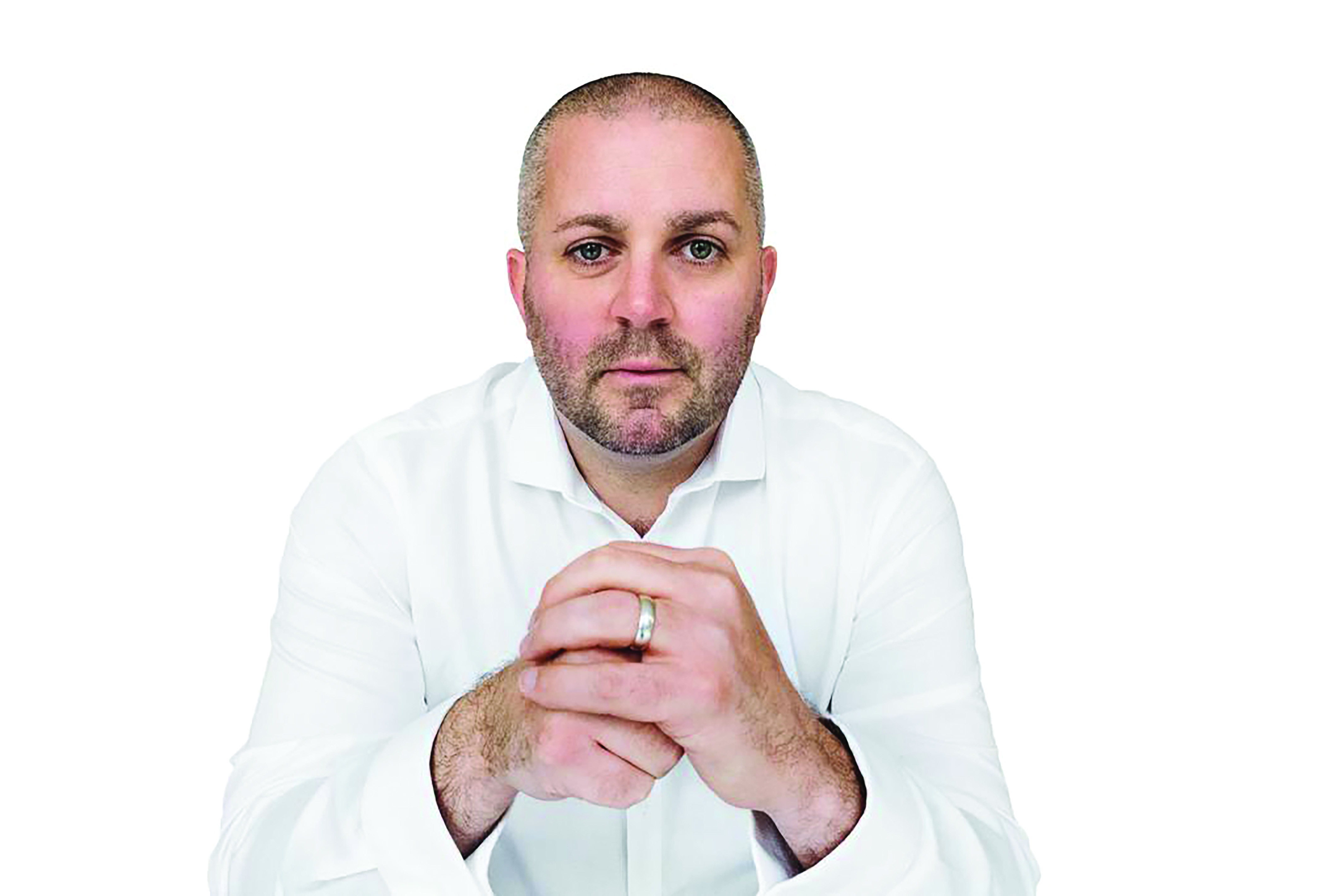
Kain Ramsay
For over a decade, Kain Ramsay has worked in the fields of applied psychology, social entrepreneurship, coaching, mentoring, and training. Known for his distinctive teaching style, Kain inspires individuals, audiences, and organizations worldwide to realize their highest potential.
After beginning his career in the British Army, Kain Ramsay gained international experience in business development before establishing himself as a leading expert in the field of life coaching. By coaching social entrepreneurs, coaches, and leadership teams, he helps focused individuals realize their potential and contribute to a better world.
Kain lives in Scotland with his wife, Karen. Connect with him at
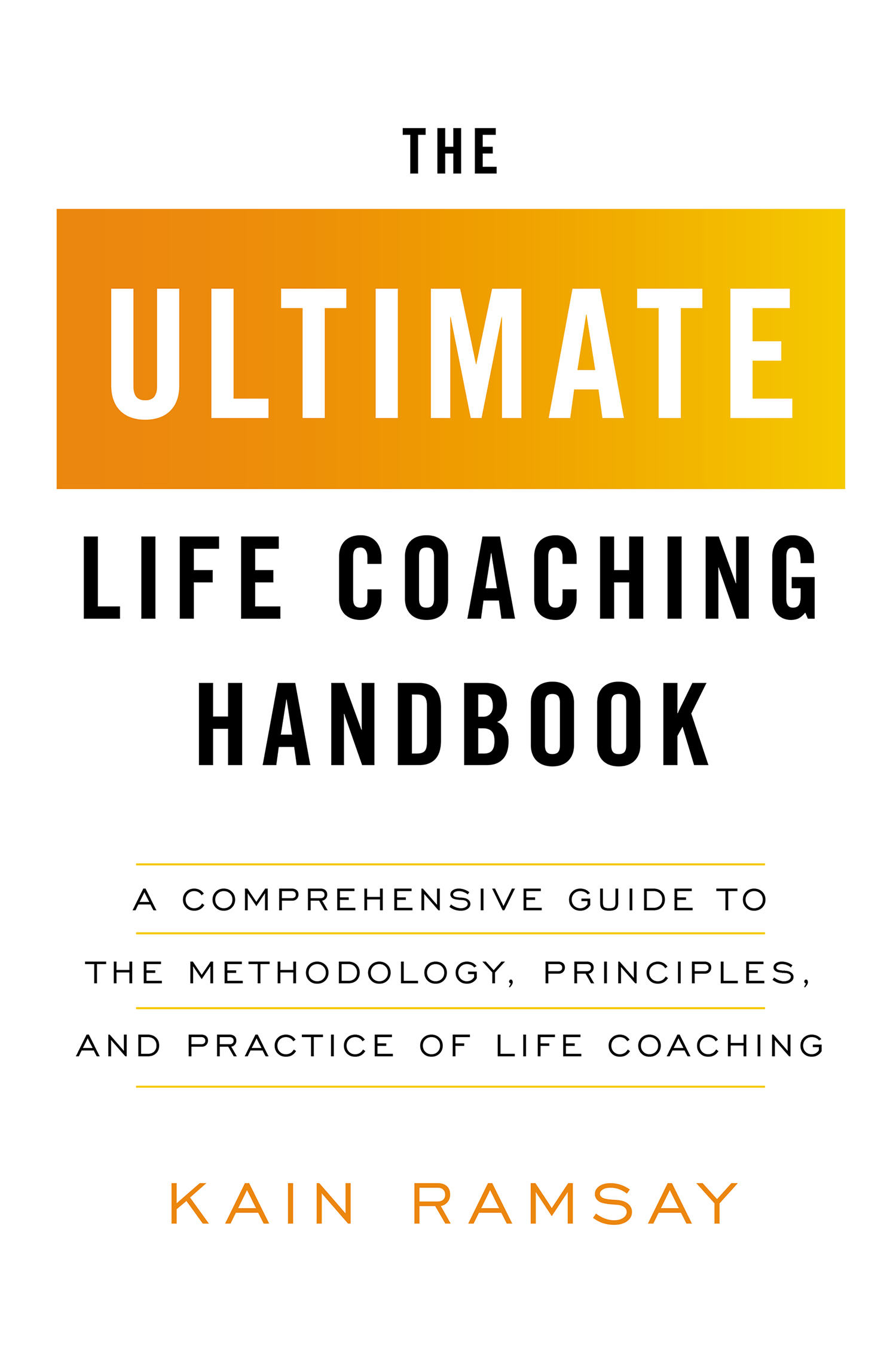
📚 Books by Kain Ramsay
Transcript
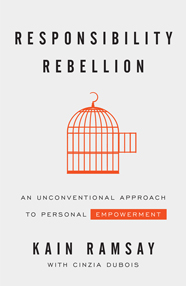
[0:00:25] NVN: Kain Ramsay is one of those people I could talk to for a really long time. Way longer than you want to spend listening to this podcast. In this conversation, Kain and I discuss his new book, Responsibility Revolution: An Unconventional Approach to Personal Empowerment. In this book, he teaches readers how to take ownership of the direction of the direction of their lives. In this interview, he talks about his very interesting background in psychology, thoughts about the field, especially from an educational perspective, and shares insights about what opportunity really looks like versus how we think it should look. Welcome, I am joined today by Kain Ramsay, author of the new book, Responsibility Rebellion: An Unconventional Approach to Personal Empowerment. Kain, thank you so much for joining me today.
[0:01:15] Kain Ramsay: Hello, thank you very much for having me.
[0:01:19] NVN: I’m so glad to have you hear. I’d love it if you just start out by telling listeners a little bit about your background and focus in psychology.
[0:01:31] Kain Ramsay: My background in psychology. To be honest with you, I was actually more for my own interest than anything else. My first career was actually in the military, I joined the army at the age of 16 years old and left just after the second Iraq war. In the five years that followed, I ended up falling to a bit of a pit you could say. As many guys do, you know? I definitely wasn’t the first and most certainly won’t be the last. What I got into, it’s more kind of a personal development to begin with. Reading your average book – standard self help books. I just found them so flat, not so much looking for a little bit of inspiration or a little bit of high energy motivation, “you can do it.” I kind of needed something a bit more substantial, a few ideas that I could really build into my life and relate to. This is when I started exploring the various applied psychologies over the 15 years, almost 20 years that followed. I ended up becoming pretty grounded and pretty much all of the main schools of thought, I explored various modalities such as coaching, neurolinguistic programming, cognitive therapy. I think my goal was really to get a grounded, balanced understanding of myself. What I found through the process was that the more I came to understand myself, the better I was able to relate to other people. When I started out coaching. Essentially, it wasn’t like I really got into the industry intentionally. I kind of got into it by accident if that’s even normal to say that sort of thing – when I started getting into the applied psychology, it was more of a goal of helping other former military people through this transition from military to civilian life, which was essentially the main issue that I struggled with, and that was kind of where I got started.
[0:03:12] NVN: I mean Kain, that’s fascinating and also, what a baby you were when you went into military.
[0:03:21] Kain Ramsay: Yeah, I was very keen to do something, what I perceived back then, to be significant with my life. I guess going on to spend anything up to another six or seven years studying after school just did not appeal to me whatsoever. I think back then, I was kind of born into a generation where some certain labels and terms were assigned onto certain people who couldn’t learn, or who found it difficult to learn a certain way. I’m not going to say much more than that. Essentially, through my primary kind of school years, one of the main lessons that I’d taken away was that I really found it difficult to learn conventionally. I guess I didn’t really want to go and devote another five or six or seven years to studying through conventional channels, I just wanted to go and delve into life, and get some experience, and the channel that was most accessible to me at the time was the military. I was told that I simply needed three GCSCs, which in the UK is our main standard grades, grade C or above. That was my goal, that was what I got and three weeks after, leaving school, I was in the army.
[0:04:32] NVN: Wow, you know, education is such an interesting topic to me and especially a couple of decades ago, we looked at it, education wasn’t such a box. We didn’t recognize the different ways people learned. It’s so interesting to me to hear you talk about how you weren’t interested in education but yet, it sounds like when you found your thing, it just sucked you in and you learned all these different modalities and styles.
[0:05:00] Kain Ramsay: Yeah, what I interestingly found, as I really delved into my own studies, my own research, was that ironically the most effective way through which I would learn was through teaching. Now, I can remember going back to my childhood, maybe being five or six or seven years old, and the thing I would commonly get told off for, I would get in trouble at school of parents, for speaking too much. My thing was, I was a talker. The teachers would tell me off, no speaking in class, I would get reported to parents, told off at home, getting in trouble for literally speaking. I never realized back then, or what no one ever showed me, was actually through talking about that which I was learning that I would come to understand what I was looking at. What I found was – especially, fast forward a few years now. When I’m now interacting with many other former military personnel, which was kind of where was I during about a decade ago, many other guys and girls actually have not too dissimilar experience from me. Many of them had left school with the same sort of idea that they just couldn’t learn. What I’d found was it wasn’t just kind of coaching or conventional psychology that I was practicing. I was taken more of an educational approach. It was actually one of my mentors at the time that shared with me a fascinating idea. I was studying full time social sciences course, alongside part time therapeutic counseling course, alongside a few other disciplines, pretty much at the same time. My mentor had said, “You know, it’s interesting. Some people might find it quite challenging to counsel, or coach, or support another person through something that they haven’t first been trained in.” What I realized was that, you know, many of the problems that people experience mentally, emotionally, behaviorally, through life, isn’t so much of a psychological illness sort of problem, but it’s more of a lack of education problem. This was what I saw has been the main opportunity that I could start tackling.
[0:07:17] NVN: Yeah, you know, you’re very humble, and I don’t want to use the word irony but what’s very interesting to me about your story, hearing all of this, is you’re actually a top-rated psychology and personal growth instructor today.
[0:07:35] Kain Ramsay: Yeah, I’ve had a little bit of experience under my belt but I don’t’ like to brag about it. Again, it’s another one of these things that I just kind of got into. I started out, as I say, in the personal development, self-improvement world, and this was my main objective. Going back 10 years ago, I was passionate about coaching and counseling people through the process, that I hadn’t received coaching or counseling through. The five years of military transition, having left the military, entering a new civilian life. I struggled. I’m being completely honest. It was a challenging, difficult, lonely time. I would probably say this became my main motivator. I saw that through me developing a grand understanding of myself and my own psychology, my own behavior patterns. I was able to convey that which I was learning about myself to other people and away that was enabling them to better understand themselves, and adopt and adjust their behavior styles, attitudes accordingly. We’re not just talking about regurgitating theory here, we’re not just talking about taking an academic approach to fixing people. I was really devoted to the process of understanding myself so that I could convey this understanding to other people in a practical, common-sensical way, that just makes sense.
[0:08:46] NVN: Yeah. I love it when I talk to people, and you absolutely strike me as one of these people, not just based on your story but with the tenor of your voice when you talk about it, as someone who has just found exactly what they were meant to do. Truly believes in and is excited about it.
[0:09:06] Kain Ramsay: Well, I think there was a few different frustrations that I had. Is it okay just to be honest here? I once had suggested this: our regret frustrations can actually point us in the direction that we just need to go in life. What I found, a round bout 29 to 30 years old, I reentered education as another learner. This was me starting to explore the various social sciences and schools of psychological thought, the various psychological modalities. I wasn’t taking these training courses for certificates or accreditation, or to go and get a job at the end of it, I was taken these courses to essentially understand myself and actually do some good with this knowledge. What many people find interesting – as you see, yeah, one of the top-rated psychology instructors, pretty much in the world today. I did not complete my psychology degree. I left halfway through, absolutely disgusted with the education system. I’ll tell you why. I was about halfway through the second year of my studies. I was so bored, looking at theories that I really couldn’t relate to. Theories that were, some of them were so outdated and so irrelevant. I actually launched a coaching practice, whilst I was studying, this was just to support my, pretty much support my – pretty much support my studies and obviously keep some food on the table. My psychology lecturer at the time, who you would think would be an expert in the field, possibly with some experience, some understanding, ended up coming to me in confidentiality. I give no names but for counseling, and an absolute emotional train wreck. Obviously we had a few conversations and sorted a few things out but afterwards, I was left thinking to myself, how on earth can I study under the instruction of a person who has absolutely no comprehension of the principles and the theories and the ideas that she’s teaching? Ironically, I was studying, I’m going to say I’ve immerse myself in study for a couple of years, I did do. I ended up studying in Andrew Carnegie Business School, which I live in a place called Don Ferlin, which is just north of Edenborough in Scotland. This was actually the home place of the late, grate Andrew Carnegie, one of the forefathers of the industrial era. Now, the fascinating thing was even if I go back 200 years ago, when education or current system as it stands today was set up, it was essentially put in place to make back then – and this might sound a little bit unusual – but education was put in place to make an illiterate people, literate and ready for a workforce. To essentially boost national economies around the world, through engaging in industrialism and becoming a workforce. That was what the education system was initially set up to accomplish. If you go back 25, 30 years ago now, the times have changed, industry’s dead. Whilst the need of our global society have changed, the model through which education is generally delivered and received has remained exactly the same. Education is still being delivered to the younger generations today and the same way that it was going back even 50, 60, 70, 100 years ago. The reason why this is interesting is because I was studying Andrew Carnegie College, and again I was looking to study leadership, I was studying organizational culture, business, again, just a different way of understanding human interaction. It was around about the same time I’d say I set up my business. My first business I ever set up. I ended up going to my accountancy lecturer, asking for just a little bit of practical guidance on how I should best formulate a basic set of books, to do book keeping, to manage my finances, me and financial management, hadn’t gone to well, up until then. I was met with an other response that absolutely digested me. This was, “Kain, terribly sorry but I’m not he best person to ask here.” I responded saying, “What you mean you’re not the best person to ask? You are teaching accountancy. I’m coming to you asking about how this and that I can set up and put in place a basic set of books to manage my finances.” The response I got was, “Yeah, but look, I’m just a teacher. Three years ago I was teaching Scottish history. This is just a curriculum that I deliver,” and I realized the flaw with our education system. This is – I am not going to say in all instances, in all higher educational establishments, but in many, we have a scenario where the blind are leading the blind. Teachers and fully grown adults with no experience in that which they’re teaching are leading the younger generations. Yes towards perhaps getting some educational credit, some certificates, but having a head knowledge is very, very different from having a depth of understanding, which only comes through experience. So I decided to do something about it. I decided to, instead of regurgitate psychological theories and concepts that few people can actually relate to, I formulated and devised a curriculum centering around applied psychology, and this was something that I pretty much invented. I came up with over a process of around about six or seven years, where I actually broke down all of the main ideas taken from all the schools of psychological thought, tied them into relevant helping expressions such as counseling, coaching, mentoring, so on, so forth so that the average lay person could understand the concepts and apply them in the context of his or her life. Not just as therapists or as professional psychologists but as moms, as dads, as managers, as leaders, as bosses, as employees, as innovators, as influencers. I want to make psychology relatable and relevant to people in the context of their everyday life, not just a body of irrelevant theories that hide behind a high price wall, pretty much blocked by many higher educational establishments. So if it sounds like I am compassionate about this stuff it is because I am.
[0:15:05] NVN: I love so much what you said about the difference between having knowledge and having depth of experience. That is such an important point.
[0:15:15] Kain Ramsay: I would say so. I mean I would say just in recent times, the world has changed. The world is changing. I mean if you look at COVID-19 thing that is still going on in recent times, going back to the start of 2020, there are some people who would deny online education and I’ve been educating online for close to six years now. I was one of the first to get in teaching subjects of a psychological nature and many people would deny them. You know the feedback I would get said, “You can’t teach this stuff online. This can only be taught in a classroom” I would ask the question, “Why? Classrooms are outdated. Why on earth would anyone in their right mind would hide these life-transforming concepts and principles behind high price wall, highly priced higher education, that only a few people can ever access?” This is the difference between people becoming established and growing into their lives and many people are not sadly. You know if you think about it, these days I don’t know how this following idea is going to be received, but if we look at what the younger generations are getting taught in school, they’re getting taught how to speak a foreign language, how to speak two foreign languages, they are getting taught humanities, gender studies, can pretty much be any gender that you want these days. Fair enough, whatever, but how about teaching people how to understand themselves? How to self-regulate, how about teaching the younger generations how to communicate well, how to listen well to other people, how to manage themselves, how to express creativity in unique ways? Which are all concepts centering around various schools of psychological thought. Why is this stuff being missed? Because the younger generations are being done a serious disservice. You know many older generations have just missed the boat. It is sad, but it is one of these things, and online education now makes, and the way the education is gone now makes ideas like this available to anyone who is ready to learn. These are exciting times.
[0:17:09] NVN: Yeah, you can’t see me but I am sitting here nodding my head along as you are talking and I would absolutely agree that 2020, only halfway through, has certainly borne out the point that you have been making for quite some time now.
[0:17:22] Kain Ramsay: Well, you know I was obviously, financially, I don’t mean to brag, but I told you so. I see many people trying to desperately get into online education now and I’ve got a few people reach out to me who denied, who rejected, who told me I was barking mad going back four or five years ago who’ve changed their minds. Okay, you know maybe we could work together on something and I am sure you would love that but ain’t no way. We’re kind of through now. The times have changed and it is one of these things. If we are not committed to the process of change then we are going to get left behind. It doesn’t matter what we do in life. I mean change is one of these interesting things. I think this is probably one of the main ideas I like to convey through at the book. Many people undermine themselves in life through doing their best to remain the same. People love their comfort zone. They love the safety bubble and when things change, people experience crisis. They panic and they will experience a little bit of angst, a little bit of fear and those who are uneducated will then be knocking on the doors of the next mental health organization, the mental health experts, to get some medication. Perhaps get some therapeutic guidance and advice, and the last thing that very few people ever think to do is just to educate themselves. So what our form through society are all expressions of dependent and codependent relationships, where people genuinely believing that their emotions are illnesses, the emotions that they have and response to the changes that they are going through, when all they simply need to do is devote to self-education. It has never been more accessible than this before. So when I say that the times are but a-changing, change is kind of like our only constant in life. But it is the one thing that most people will, or some people, I won’t say most, some people will devote anything up to the entirety of their lifetimes trying to resist change. It is the one factor that will remain with us and constant until the day we die. So understanding how it is that we best handle change and navigate our way through change, as we change personally, as people that we do life with changes, as the economy changes, as our geographical landscapes change. If we are not changing, then we will get left behind. COVID-19 was a great example of people getting left behind because many have become comfortable and were are not ready or willing to change. So some people get caught out and this is where that we all are finding ourselves in today.
[0:19:45] NVN: I am struck by the use of the word rebellion in the title of your book. Talk to me about why this is specifically a responsibility rebellion.
[0:19:55] Kain Ramsay: I’ll tell you why it is a responsibility rebellion, because people are rebelling against taking responsibility for every aspect of their lives. We look at this, I was recently sent a survey by a young man who lives in Britain and Scotland. One of the most prestigious universities I shall not name any names, there was a research project and this research project was inviting the entire nation of Scotland, obviously it contains many international students as well. From their perspective what should the government do to promote mental health, what should the government do to help people get back into work? What should the government do to help people generate enough money just to make ends meet, just to get by and pay their bills? What should the government do? And to be honest, I got about halfway through the first page and I was sickened, I thought, “This is the rebellion that we are talking about here." Granted, as I mentioned in response to one of your previous questions, we’re brought into the world as babies, as clean slates. We learn to become dependent on our parents. For some of us, our parent’s upbringing is better than others. So I’ll just use that simple word for now. Granted, some people are brought into the world and don’t have the greatest parental upbringings or experiences, but sometimes we learn our responsibility in the family home through mollycoddling or whatever. As long as we are rebelling against taking responsibility, we’re undermining ourselves. We will be rebelling against taking responsibility for ourselves as long as we are pointing fingers and waiting for someone else to come along and take responsibility for us. That person will never ever come. There is an interesting model that’s extracted from the school of cognitive psychological thought, called the Karpman Drama Triangle. This is a very, very basic diagram that allows us to appreciate some of the more common un-held for relationship dynamics that some people find themselves in. This is where some people go through life and stuff happens, they will experience some nasty things, some nasty people, they might get some outcomes or have some experiences that just aren’t good. Now, but we have options. We can either learn the lessons that we need to learn so that we can grow and build the rest of our life upon the foundations of what have happened, or we can pick these experiences up, kind of liketen ton weights and carry them around with us for the rest of our lives as if it was some sort of burden. Many people play the martyr, and for those people who take option number two, they develop this victim mindset. You know, we’re victims of circumstance. We have been traumatized by our past, by the people, by the experiences that we’ve had, and if you think about it, for those people who go through life playing this victim game, you know defining themselves as a victim. In order for there to be a victim there must be a bad guy. There must be a bad person, which means that there is always a perp. There is always a perpetuator. Now, this is the second component of this drama triangle, is the drama that many people live throughout their lives. You never come across a dramatic person? This is often the drama that people go through. So many will see themselves as a victim and as long as they are a victim, there is always going to be a bad guy. There is always going to be an enemy ,and as long as there is an enemy and as long as they’re the victim or even the bad guy even a disempowered one, they’re forever going to be waiting for the hero to come along and save them. This is the responsibility rebellion because what responsibility actually looks like is us learning the lessons that we need to learn, in the years in of our life in which we were perhaps a little bit less responsible than where we are today, so that we can extract the lessons that we need to learn and share them with the future generations, with friends, with those are the people in our lives to help them get father faster. We can either be the victims or we can be the victors. I am not using this all cheesy cliché here. If anyone thinks it is a cheesy cliché, this is the choice that we have. We will allow ourselves to be crushed by life, or we’re going to go out there and we’re going to crush life. We are going to crush it, and it is a choice. This is the responsibility rebellion, we’re going to resist taking ownership for our lives, for our issues, for our problems for our goals, our aspirations, our dreams, our concerns, or we’re just going get our heads down, we’re going to work hard and we are going to make something happen. That is to be determined by each of us alone.
[0:24:33] NVN: Beautiful. I don’t think we are going to end on a more inspiring note than that. Kain, it was such a pleasure talking with you today. Again, the book is Responsibility Rebellion by Kain Ramsay. Kain, where else can listeners find you?
[0:24:48] Kain Ramsay: Well, you can find me, interestingly enough, I actually pioneered, I co-founded an online academy around about two years ago called Achology. This is the Academy of Modern Applied Psychology, and this was part of my own personal education rebellion, which might be book number two that we are working on right now, who knows? And this is actually to take education online and rather than the conventional experience of education that many people have i.e. sit in a classroom and receive our curriculum that is regurgitated by certain academic scholars, we’ve created a community peer learning model where I have created a number of online courses. In fact, an entire curriculum looking at all the schools of psychological thought, and the community simply studies the various concepts. We have a faculty in place. They host of workshops and live events. For those people who perhaps want to become practitioners or coaches, or better moms or better dads, or better leaders or better managers, or just better human beings in general. So you can find that full curriculum and content over in Achology, The Academy of Modern Applied Psychology, or I do believe I am the bestselling psychology and personal development instructor over in Udemy as well.
[0:26:03] NVN: Beautiful. Kain, thank you so much and best of luck with the book.
[0:26:08] Kain Ramsay: Thank you very much.
[0:26:10] NVN: Thanks for joining us for this episode of Author Hour. You can find Responsibility Revolution on Amazon. For more Author Hour, hit the subscribe button on your favorite podcast service. Thanks for joining us, we’ll see you next time. Same place, different author.
Want to Write Your Own Book?
Scribe has helped over 2,000 authors turn their expertise into published books.
Schedule a Free Consult