Doug Foley: Episode 516
Read the full transcript
Doug Foley
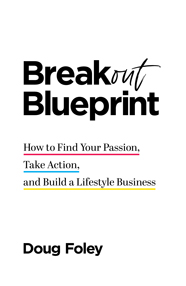
Doug Foley is an entrepreneur and podcast host who helps people build businesses around the lives they want to live rather than the other way around. He launched two six-figure agencies in less than eighteen months and hosts the podcast The Happiness of Pursuit, where he explores how ordinary people follow their passions into extraordinary lives. After interviewing more than 150 entrepreneurs, he distilled what they had in common into his book Breakout Blueprint: How to Find Your Passion, Take Action, and Build a Lifestyle Business, which lays out four pillars of a successful venture: passion, expertise, need, and value.
📚 Books by Doug Foley
Transcript
[0:00:16] MR: Many of us live in a prison of our own making. We spend our lives dreading Mondays, looking forward to paychecks and working longer hours, only to shoulder even more responsibility. It’s a never-ending chase. But life doesn’t have to be that way. It’s time to stop going through the motions and start living. It’s time to build a business that offers you the freedom you want and after interviewing more than 150 entrepreneurs, Doug Foley realized they all have one thing in common and it wasn’t a fancy job title, car or house. Instead of building their lives around their businesses, they built their businesses around the lives they wanted to live. In Doug’s new book, the Breakout Blueprint, he provides you with a blueprint you need to break free from the typical nine to five and create a deeply fulfilling career on your own terms. And in today’s episode, he talks about how to find your passion, how to identify your zone of genius, why you should start before you think you were ready, what happens when you bump into imposter syndrome and so much more. Enjoy. Hey everyone, my name is Miles Rote and I’m excited to be here today with Doug Foley, author of Breakout Blueprint: How To Find Your Passion, Take Action and Build a Lifestyle Business. Doug, I’m excited you’re here. Welcome to the Author Hour podcast.
[0:01:54] Doug Foley: Thank you so much for having me, I’m excited to be here.
[0:01:57] MR: Yeah, I’m so excited to talk about this topic specifically. But before we jump into that. First, why don’t’ you share a little bit about who you are and what inspired you to write this book?
[0:02:08] Doug Foley: Yeah, it started off regular sales guy just working through multiple jobs and eventually fell into the trap of entrepreneurship when I started my own agency. Over that nine year period, my primary goal is just trying to figure out how can I make as much money as possible because I wanted to “live the dream” and it wasn’t until we had some challenges during the pregnancy with our daughter that I had a really rude awakening. It was in those moments right after she was born when we realized that she was okay, that I realized that everything I had been doing was wrong. I had been trying to build businesses for the selfish purposes. Instead, of trying to live life of making an impact. Right after she was born, I started to have that internal search of what could I be doing better with my skillset and what I’ve learned in life and I decided to launch a podcast called the Happiness of Pursuit. Which in that process, I interviewed everyone from just normal people who found jobs they love up to billionaires who had built massive companies and the thing that I realized was, there was really three things they have in common. One, they identified the thing they were passionate about and it built a business and lifestyle around it and they took action towards that lifestyle they wanted to build. When I realized those founding principles, I actually interviewed Zach Obront who is one of the cofounders of Scribe Media and after interviewing him, I was like well, he said, “you really need to turn this into a book,” and that kind of opened up the three year process of documenting all those stories into the foundational principles that make up the break out Blueprint.
[0:04:03] MR: I love the title of your podcast and just that concept, you're basically turning everything on its head so instead of the pursuit of happiness, which it sounds like you were trying to do before, trying to make as much money as you could. Live the dream, pursuing that sense of happiness, you’re turning it on its head and you're essentially saying, really, it’s about the happiness of pursuing the things that you love.
[0:04:28] Doug Foley: One of the interesting things. I was really fortunate. Episode 100, I interviewed Tom Bilyeau, if you're not familiar with him, he’s the cofounder of Quest Nutrition. He also has a show called Impact Theory. He explained in the interview that if you try to pursue happiness, it’s almost like you’re chasing something that’s momentary. You could have a chocolate bar and you’ll be happy for the moment you eat it. But you’re always then chasing that next thing and what I started to realize that it really was more about fulfillment, if you’re going to be building a business or if you’re going to be doing the same thing every day, you want that feeling of happiness to be lasting. If you think about like the name for the show. Business and life that’s more of a journey. You might as well enjoy that journey so instead of chasing happiness which is kind of fleeting or never ending. I wanted people to build a life that is fulfilling and has more joy and fulfillment in it.
[0:05:29] MR: The Breakout Blueprint, the title of your book. Now, what does that look like? What is the blueprint for breaking out?
[0:05:35] Doug Foley: If you think about most people, they’re in their job, they feel trapped. I actually use the example of Peter Gibbons from Office Space. Where he’s literally trapped inside the cubicle and he hates life and he’s trying to figure out how do I break out of this typical lifestyle, this nine to five of trying to keep up with everybody. And just live life on his own terms. The book itself just gives you the framework to understand how to repackage what you know and what you love and give that to people who have a need and would value that experience or expertise. I have yet to meet somebody who doesn’t have some specific knowledge set or skill or value that they can bring to the world. They just haven’t been able to connect it to people that would value it and be willing to pay for it. The purpose of this book is just to help connect those two things so people can build either a business or a side hustle or find that career that gives them the fulfillment that they should have every day.
[0:06:45] MR: I love that. Before we’re able to get in to even providing the value that is meaningful for people. First in your book, you talk about connecting with the things of course that fulfill you and that lights you up so how do people find their passion?
[0:07:02] Doug Foley: I think a lot of it comes down to just slowing down and taking a look at your life in general. We all, whether it’s the books you read, the podcasts you listen to, or even some of just the activities you do day in day out, there’s a lot of hidden signals around that we just tend to ignore. I finally get so caught up in either trying to be something we’re not or we’re just so busy trying to grind it out day to day that we almost ignore that inner child, those things that we were really happy doing. The one thing I do want to be really clear about though, I’ve seen too many people take what’s a hobby and try to turn that into a business and t here’s a little bit of a difference between a hobby and a passion. Like me for example, I love hunting, fishing, playing golf. I did try to turn those into a business but what I found is when I really double down and tried to turn my business into – I had a hunting and fishing blog as an example. When I was trying to grind it out and turn that into a business. I realized I was actually stealing from a happiness because I turn that thing that I love, that I used to seek, into a job. Then I started to test, well, I’m doing this because I have to work at it. But what I really dug down and I started to look at what do I really love to learn about? What were the podcast I listened to, where did I find like the most joy in like learning and providing value? It really came back down to marketing, communications, and small business. Those enabled me to do more of my hobbies. But my true passion was helping small businesses grow and using the knowledge that I had acquired through both some of my failures, my successes, and repackage that to provide small businesses and other agency owners, the tools to succeed. And seeing their success is ultimately where I got my own fulfillment from. Sure I’m happy when I catch a big fish, I’m really happy when I hit a good golf shot, especially I don’t play as much. But fulfillment came from helping others find joy in success.
[0:09:25] MR: Yeah, that looks very different that hitting that tee shot, right? You mentioned it being hard for people to really take the time to sit back and identify these things and I couldn’t agree more. In the age of distraction and in the attention of the economy. To get people to really sit down and think about what it is that they truly want and what fulfills them and lights them up is very difficult. Usually they’re being told what they should like and what should fulfill them. What’s one strategy or one thing you recommend the people do to sit back and really identify those things?
[0:10:04] Doug Foley: I will tell you, there’s a few things that I did when I was trying to go through this journey and for some people, you’ll have this quick spark and it will happen. For others, it may take years. I mean, it took me almost seven years to go through the process and having some challenges and failures along the way. But one of the best things I did is I actually texted some of the people closest to me, past bosses, a few friends, people with clients and I ask them a simple question. What is the one skill or thing that I do, you think the world would value and be willing to pay for? What was really interesting is that people all came back at me with you know, communication or you know, motivating others and one person in particular replied back. He says, “I’m shocked you don’t own an agency already.” The signals were there and that kind of validated the business idea and then I had already been doing that work about observing and writing down, you know the types of books I was reading. I wasn’t a big fiction person; I was always reading books about business or it might have been an autobiography about somebody like the founder’s a Virgin or Steve Jobs. Any of those entrepreneurs, it was always enamored that what are those things or like, what is it that they did, I started to compile that particular validation and communication and marketing. It’s also what I went to school for with this other side of passion, small business. It was like okay, well, if I can combine that skill, you know, with this passion for entrepreneurship and I can help that market, then I knew I was on the right track.
[0:11:48] MR: I love the idea of going back and asking people who know you, you know, I think one of the few things that we don’t think about is the idea that other people’s perception of us can help better our understanding of ourselves and of course, it can detract from it in some situations but using other people’s opinions and perspectives of ourselves as the data points can really help guide us in that direction and help us see maybe some blind spots that we’ve never seen before. I really love that idea. There’s a term in your book. Zone of genius which I really like. Explain to the listeners what that means?
[0:12:26] Doug Foley: when you look at the zone of genius, it really comes down to that super power you have. Everybody has it and for most people, it’s hard to find but it’s that thing that is so effortless to you that you almost take for granted and you may not even actually see that as your super power because that skill is just so simple. For me, when I looked at ad platforms or I look at how a marketing funnel was built, I could break it down, I could explain the platform, I could see how things were connected and people looked at me and just be like, “it’s almost like you’re speaking another language, can you slow that down?” For almost everyone I’ve explained this to, they all have this very specific subject matter expertise and it could be in anything. It could be in just the ability to narrate classic literature? One of my podcast guest makes well over six figures because he’s so good at articulating and taking on characters. For somebody else, it might be forensic accounting. They see things in the numbers that just other people miss. Taking the time in putting yourself in a position to go learn about yourself and figure out what is that thing that I’m really good at and then honing your business to that angle is how you ultimately are able to get into those high ticket sales and position yourself to do the consulting. I can tell you, there’s not necessarily one specific tool, it’s just finding ways and opportunities to put yourself in a position or put yourself in a room with the right people to pull that out of you and to showcase, okay, you know what? I actually do know what I’m talking about when it comes to marketing or I do know what it comes to do with your specific niche. But I think most people just haven’t taken the time to just observe their skillsets, they’re so preconditioned, I got to live in this box because it’s what my employer wants me to do. That they’re not out there using that thing that they’re amazing at.
[0:14:35] MR: Right, so what happens then let’s say someone is able to, after asking friends, family, people they’re close to their strengths and their superpower and they are able to look at and they are able to see it more for themselves and then they’re able to even identify, there is zone of genius that one thing and they’re excelling at it. They’re great at it and now they’re wanting to turn that into a lifestyle business and they run up against imposter syndrome because now, it’s like: “Okay, but really I’m not this. I’m a fraud underneath all of this even though these other people may see this in me and even though this may feel effortless to me, people can still feel like an imposter when they start to say, “Charge money for it” so what would you say to people that run into that?
[0:15:25] Doug Foley: The short answer is to just take action and I’ve had to be super honest with you, I run up against imposter syndrome all the time and even writing a book, even through the publishing process is like, “Who am I to write this book?” and I kept being reminded both by the community. So it is not necessarily about that skillset or the passion but it is the belief that you have accomplished something and what you have accomplished is more than the person behind you. I don’t have to be a billionaire to be able to help somebody move up and create a lifestyle business and I will give you a really specific example. So I really close friend of mine, her son was coming out of college and he wanted to get a marketing internship and she said, “Do you mind taking him for coffee? He just has some questions about marketing” I said absolutely. So we sat down and he went through like I asked him, “Why do you want that internship at marketing?” He said, “Well, I thought it would be good at my resume” I’m like, “What do you want to do after you graduate?” he said, “Well, I want to play professional hockey” I said, “Well, why do you need a marketing internship for?” I said, “Why don’t we figure out how to enable that life?” The short version of the story as we went on, I asked him more about his progression in hockey and we uncovered an opportunity for him. I said, “If you want to really learn about business and you want to create a mechanism that you can continue to play hockey, why don’t you turn around and help people move up to the next level in hockey?” because he had grown up. He wasn’t a top draft pick. He wasn’t the shining star that was going to be in the initial draft and straight to the NHL but there is a lot of other avenues to play professionally like the ECHL or over in Europe. What he ended up doing is he ended up creating a program that enabled athletes who weren’t drafted to then get scholarship in the NCAA. So essentially, normally they would have been done playing hockey at 16, now they are playing hockey into their mid-20s and it also gave him enough revenue that he could then go professional hockey at the lower level. So he was able to fulfill his dream of playing professional hockey meanwhile making an impact and helping others continue their hockey career later but when he first started, he had the same things like, “Well, who am I to try to teach these kids?” I said, “Well, you’ve already got a scholarship. You have already signed a professional contract. You just want to show them the breadcrumbs to follow in a similar path” and the greatest thing that is going to happen is one of them at some point will surpass you. It is like Mr. Miyagi when grasshopper becomes the teacher. So everyone has this learning or this experience that they can pass on. The hard part is understanding how valuable it is and having the courage to monetize it.
[0:18:20] MR: Yes and you don’t have to be as you mentioned in your analogy basically at the top of the ladder you could be five rungs up the ladder and then be helping people who are on the first or second rung to the next rung higher and so there is always a guide in that sense and so we talked about the imposter syndrome and how we can bump up against that but this also brings us to another area where we can kind of have a really hard time with. And that is trying to create something that has to be perfect before we release it, right? Like a book, so how do we put stuff out there before we feel ready and what is the risk in not putting something out as we try to make it perfect?
[0:19:06] Doug Foley: I think there is a common quote where they say, “version done is better than version one,” and so many people will wait and they will go through, “You know I am going to create a website. I’m going to register my company, I am going to create a logo, get business cards, get all sorts of swag, t-shirts, hats,” and I actually wrote that in the book where I talk about those being as false starts because until you have a customer you don’t have a business. And you would be shocked about how easy it is to just find your first customer and what happens when you focus on finding a customer first is you start to build momentum number one but number two, you also start to create revenue. It is a lot easier to get swag and build a site when you have revenue coming in than going into a negative cash flow position right from the start and for a lot of people getting that first customer they get stuck and a lot of it has to do with not knowing what to charge. Or you know, having imposter syndrome. I am not good enough to bill, so one of the things that we recommend is just simply having a script to follow and just very similar how we asked those people about the communication is just go close to your network and figure out who in my network either knows or is somebody that would probably be an ideal prospect for my business and simply send them an email, a text or call them and just ask. Say, “Hey, I’m launching this business with the goal of helping these people accomplish this. You would be perfect fit but I want your opinion before I take it to market” and I am almost willing to guarantee that if you do that with 10 to 12 of the close people that you respect, one or two of those are going to become your first customer and no matter how much time you spend trying to perfect your offering, your business is going to evolve multiple times over the first year until the third year. It almost never stop, you’re going to continue to make the pivots based on the feedback. I have yet to meet anybody who has a perfect business coming out of the gate. They are always going to have to change. So the one piece of advice I would give to people is make sure that you go get that customer, get the feedback and continue to iterate but delaying starting or doing non-productive tasks in the beginning are just slowing down your progress to building the life you really want.
[0:21:35] MR: Yeah and one of the best ways to really find that audience as you mention in your book is to really focus on solving a problem, right? So what are the problems that these people are having and then how can you solve them? And then really essentially providing value to them, right? So what is that look like as far as wanting to provide value to people and how that can essentially generate income for you?
[0:22:03] Doug Foley: There is a lesson I learned early in life, “the greater the implication of a problem, the more people are willing to pay,” and if you look, I mean medicine is probably the greatest example. The reason the rates are so high in medicine aside from any of the politics, it’s because the consequence is so high. It is literally life and death and if you look at the problems that you are able to solve with that defined skillset, what people are willing to pay is often proportionate to that problem. And for the most part, I think some of the biggest businesses that have been built in our time have come from problems of where people solving their own problem. They realize like, “Oh I was so frustrated by this. I couldn’t find a solution so I just made it.” So if you are just a constant observer like what are problems that I’ve solved either in my past or what are problems I’ve solved over my career that benefited either my past employer or clients?” You can start to dig deeper and see the pattern of, “You know that’s something that comes up over and over again” and then when you start to align all of these pieces together like your passion along with your expertise and you start to see, “Hey this is actually a problem people have to solve in order for their businesses to grow” and when you start to really understand how big those consequences are, that’s when you can start to get into the higher ticket consulting.
[0:23:38] MR: And so what does that look like? If people are able to identify their passion, identify problems and then how to solve them and then the audience that they’re able to then provide value to, what does it look like to build a lifestyle business around those things? Maybe we could even start with the definition of what a lifestyle business is and perhaps some examples of lifestyle businesses.
[0:24:02] Doug Foley: The whole concept of lifestyle business is really creating a mechanism that enables you to live life on your own terms and I find it out the hard way by building a business that was almost a trap and I’ll be honest, have I not fixed it I probably would have been single, never written this book, probably would have had a stroke in the process because for most people, when they start a business especially if it is an agency, you had some type of event. Whether you got laid off or whether you just wanted to create a better life, you create this thing with this vigor and passion. It’s like, “Oh this is like my life is going to be so much better” and before you know it you end up working a 100 hours a week for half of what you used to make. So when I was writing the book, I tried to look at it from the perspective of I’d rather people build a business by design that enables them to live a lifestyle they want. So that they can do more of the things they want whether that means that you’re home to take your kids to school, to pick them up, to be the coach of their baseball or basketball team or whether it’s you want to travel the world and just find a mechanism to pay to visit all the countries, a lifestyle business gives you the opportunity to design it to fit what you wanted in life instead of being held to a clock and a desk to try to figure out like, “How am I just going to pay my mortgage this month?” And the one thing I will tell you, one of the greatest gifts about entrepreneurship is twofold. Number one, it gives you no ceiling. You can make as much as the values you can provide but number two, which is the most important, you have an opportunity to change and impact the lives of millions of people, which is not as possible when you are working a nine to five because you control the outcome and how and the value can bring to your audience and into your marketplace.
[0:26:01] MR: And this just basically ties into how we started this podcast talking about the happiness of pursuit and not the pursuit of happiness in the sense that you aren’t trying to necessarily reach a certain place to then finally be happy but it is about designing your life in such a way where every day it is fulfilling you in the ways that you want.
[0:26:23] Doug Foley: Absolutely, there is no greater joy to know that you’re making an impact on other people’s lives and that will outlive your business and that is where you will see a lot of entrepreneurs who have made it and they start to talk about legacy and the mission they leave behind. That is probably one of the greatest gifts that a lifestyle business can give you.
[0:26:44] MR: Well Doug, it is also part of the thing that you have done with this book. So thank you for doing it and writing a book is no joke. So congratulations and if readers could takeaway one or two things from your book, what would they be?
[0:26:58] Doug Foley: The single most important thing I want them to takeaway is to believe that they are capable and deserved to live life on their own terms. They don’t need to be held captive to the frameworks that exist and the most important thing I want them to takeaway is that they deserve the happiness that entrepreneurship can give them.
[0:27:22] MR: Doug, this has been such a pleasure and I am so excited for people to check the book out. Everyone, the book is called, Breakout Blueprint: How To Find Your Passion, Take Action and Build a Lifestyle Business You can find it on Amazon. Doug besides people checking out the book, where can people find you?
[0:27:40] Doug Foley: The best place to find me is on the social channels with the tag @douglasjfoley. It is the same on all social platforms or my website, douglasjfoley.com.
[0:27:55] MR: Doug, thank you so much and thank you for putting in the hard work yourself and the sweat and tears to then create this book so it doesn’t have to be that hard for others.
[0:28:06] Doug Foley: Thank you for having me. This was a lot of fun.
[0:28:08] MR: Thanks again for joining us for this episode of the Author Hour Podcast. You can get Doug Foley’s book on Amazon and I highly recommend you do. The title is, Breakout Blueprint: How To Find Your Passion, Take Action and Build a Lifestyle Business You can also find a transcript of this episode as well as our previous episodes on our website at authorhour.co. For more Author Hour, subscribe to this podcast and thanks again for joining us. We’ll see you next time, same place, different author.
Want to Write Your Own Book?
Scribe has helped over 2,000 authors turn their expertise into published books.
Schedule a Free Consult