Ben Crawford: Episode 568
Read the full transcript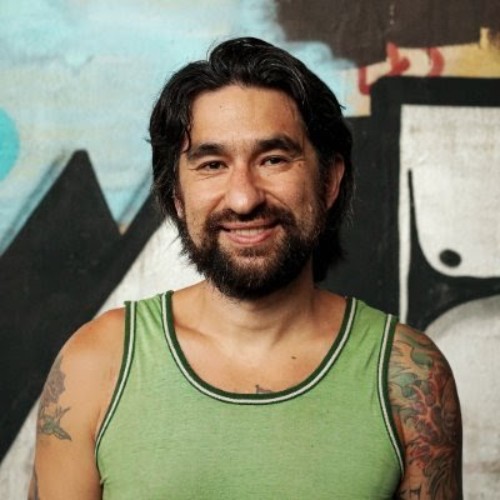
Ben Crawford
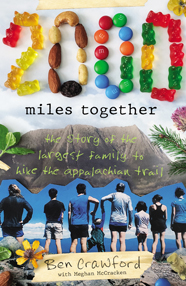
Ben Crawford is an author and content creator who, with his wife Kami and their six children, thru-hiked the roughly 2,189-mile Appalachian Trail in 2018, recognized as the largest family to complete the trek. He documents the family's adventures and his views on marriage, parenting, and family life on their YouTube channel, Fight For Together. He is the author of 2,000 Miles Together: The Story of the Largest Family to Hike the Appalachian Trail.
📚 Books by Ben Crawford
Transcript
[0:00:35] DA: Ben Crawford’s new book, 2,000 Miles Together is the story of the largest family ever to complete a thru hike of the Appalachian trail, defying skeptics and finding friends in the unlikeliest of places. On the trail, Ben battled, not only the many dangers and obstacles presented by the wilderness, snow storms, record breaking heat, lyme disease, rattle snakes, forest fires and spending the night with a cult. But also, his own self-doubt. The Crawford’s family self-discovery over five months, thousands of miles and countless gummy bears, proves that there’s more than one way to experience life to the fullest. You don’t have to accept the story you’ve been shown. By leaving home, you’ll find more than just adventure, you’ll find a new perspective on the relationships we often take for granted and open yourself up to a level of connection you never thought possible. Hey listeners, my name is Drew Applebaum and I’m excited to be here today with Ben Crawford, author of 2,000 Miles Together: The Story of the Largest Family to Hike the Appalachian Trail. Ben, thank you for joining, welcome to the Author Hour podcast.
[0:01:36] Ben Crawford: it’s good to be here.
[0:01:38] DA: Ben, can you tell us a little bit about your background?
[0:01:40] Ben Crawford: Wow, that’s a very difficult question to answer, in a way. I have a range of answers depending on who is asking and why. I have this weird side story where I played black jack for a living for almost, at least a decade. But the part of the background that’s probably most pertinent to this particular story is more the family, I guess, fatherhood side where I got married 20 years ago and we had six kids. And were raised fairly religiously — a lot of which has been a dynamic shift for us. And we started pursuing outdoor adventure early on because I think we’re pretty dissatisfied with a lot of what we saw as, like, traditional parenting models. And just felt frustrated by this narrative that when you get married and have kids, the good life as you knew it is over. So, at early ages, we started, I would say, pushing those boundaries. Not even trying to, just it felt really natural for us but other people would say — “You’re just being difficult or trying to challenge the status quo.” And we’re like, “No, it just seems natural to take kids outside.” That’s some of our background I guess leading up to this epic hike that became the basis for the book.
[0:03:13] DA: Yeah, now, I ask most people this question but it seems so obvious in this case and — what inspired you to write the book? Obviously, this is a hell of a story but it takes time to really put the pen to paper and get the words and the stories out. Was it just you completing this journey or going on this long journey or was it the fact that you needed to tell your story?
[0:03:39] Ben Crawford: Well, I guess to start off with, I had always fantasized about being an author someday. But for some reason, this story, or this book, didn’t really seem like — I don’t know why but it didn’t seem like it’s worthy of a whole book. I think probably because we made 120 videos on YouTube that tells the story already. So I kind of thought, okay, well we already shared this story, done. Why rehash it all and put people through the burden of having to read a book when they could just watch the video, because the video’s always seem, like, so much easier. But I guess what really sparked it was when we were on the trail, I don’t know if maybe a dozen separate people at separate times, all said, you need to write a book about this. And that just, like, being that I already wanted to write books, I think that showed me. There would be a demand for this format in addition to the video because as a video creator, I guess, you kind of have to believe in a way that video is the best way to communicate. But I’ve always loved reading books and it was weird for me to go backwards and write a book about topics that we’ve really covered in videos. But the book, of course, allows me to go into depth. You know, just a format that is so much different than the actual video. It’s like comparing apples to oranges.
[0:05:15] DA: Has writing the book changed your way of thinning at all? Did you learn any lessons during the writing process?
[0:05:22] Ben Crawford: Absolutely. Writing a book causes me to interpret my own life differently. When I’m looking at it through the lens of a reader and looking at story arcs and, I guess there’s a few stories in particular where we would get done, basically, writing entire drafts. And then I realized that there were events that happened that were the most climactic to me and our family. But yet that I had, like, skipped even writing about them at all. Because they were so internal and difficult to write about and so personal. And I just kind of feared the backlash. And me and my wife Kimmy in particular would have these discussions of like, how can we write a book about our story and claim that it’s accurate and good. And yet, it doesn’t even contain the most personal and the most internally difficult from our entire journey. And we would wrestle with that question and ask “Why — what can you talk about, what is the truth? And if we’re going to waste people’s time reading a damn book, why not just say what we actually want to say even though we’re scared about what people might think.” Those moments really cause us to wrestle internally with — “What is our story actually about?” Is it about what we want to show people? Or is it about the best story what we actually really did live?
[0:07:01] DA: It’s always the latter.
[0:07:03] Ben Crawford: I know, it was so scary and hard though, I would tell her, I haven’t written about this and she’s like, “That was the worst time on the trail for me.” And I was like, “Well shit, does that mean, like, if I just excluded the most important time on the trail for you, does that make me a fraud of an author?”
[0:07:20] DA: Right, that’s the toughest part.
[0:07:22] Ben Crawford: So we would go back and rewrite and add those elements and it ended up changing the entire story. It means kind of you kind of have to include things in the beginning that you wouldn’t have included. That was our process.
[0:07:33] DA: Who is this book for, Ben?
[0:07:37] Ben Crawford: Man, I guess the audience that I’m the most excited to have read it. I mean, it’s hard because I don’t feel like I have the right to decide. I feel like the reader gets to decide. And I really want it to be for anyone. So we write a lot about hiking but I want non-hikers to be able to understand and read it and understand the hiking world because of it. But in a way, it’s written through hikers because I consider myself one and I love that community. That’s who I dedicated the book to. But really, who I’m the most excited to get it is other families who are living a standard American comfortable life. And yet they’re — maybe subconsciously, frustrated and discouraged and have kind of given up because they’ve been — they’ve bought into a story that the best thing you can do is survive, get your kids through school and sports and, you know, dot dot dot. Whatever activity that they’ve been taught they need to do to be a good parent to make good kids. In a way, that’s nice but I feel like a lot of people have settled because they don’t know an alternative and what I want to do with our book, what I’m excited about is just to kind of shake that up a little bit and have people read our book and say, “Wow, if that’s possible, what things are possible in my life? What ways have I settled because I thought that I couldn’t do it or I wasn’t allowed to do this?” That’s come from hearing from probably hundreds of people from our YouTube channel and our story already that this has done that. That’s what gives me hope that it’s possible, not that people would go out there and start hiking with their kids, but just that whatever narrative they’re living out or motivation that they would at least start conversations about it.
[0:09:43] DA: Let’s dig in to this a little bit and I have to ask you the big question, why did this hike speak to you and why bring your family on a 2,000 plus mile hike?
[0:09:54] Ben Crawford: Well, in a way, those are two separate questions — like, why it spoke to us. When you get into thru-hikers — of which I consider myself one now, it’s one of those things where when you hear about a hike like this, just the summary is the hike is the Appalachian trail which is 2,000 miles from Georgia to Maine, it goes through 14 states and takes the average person five months. There’s a certain type of person that hears about that and then the second you hear about that, you can’t imagine not doing it.
[0:10:28] DA: Sure.
[0:10:30] Ben Crawford: You know, it’s just like those Edmund Hillary when they ask them like why did he climb Everest, he said, “Because it’s there.” It’s almost dangerous to get that type of information for someone like me because I was longing for something more. Normal life is pretty boring to me — figuring out how to pay the bills, not getting in a car crash, and getting three meals a day. I got bored with that challenge a long time ago. I wanted something more out of life, I wanted something that would teach me about myself and teach me about the world and connect me with other humans and connect me with nature. Challenge my own understanding of what I thought was possible for me and all of those types of things that just come with any — I guess you could say, like, deep challenge. And this trail became almost synonymous with those things. And I thought maybe it would do those things for me so we’ve been dreaming of the trail for almost 19 years. Then, this is the question that we always get asked is, “Well, why with kids?” That seemed like such a weird question to me, although it was a very normal question because I would more ask the question, “Well, why would you do that without kids?” If you care about all those things, connecting with people and nature, and finding out what’s possible, I’ve come to believe at least through my relationship with my kids, that they value those things just as much as much as me. It would seem really weird to either say, they can’t do it, or to leave him at home and go do it myself. I feel like I’d be cheating on them by getting this world class, arguably, once in a lifetime experience. And leaving my family to go and do that? That is more what didn’t make sense. I understand there’s a lot of hurdles to jump over for a lot of people to think that way. Because there’s just so many things that say, “Well, kids can’t do it” — or, “Kids don’t want to do that.” We talk a lot about that in the book because I think that’s what made it possible for us to even see the world the way we do but at the end of the day, it was very simply that we loved this experience. And if our kids are, in a way, cut form the same cloth as we are, it seems intuitive to think that they might love it too and the same ways it benefit us might benefit them.
[0:12:58] DA: Can you tell us a little bit more about your family and maybe the dynamic before you left and where it’s at now?
[0:13:06] Ben Crawford: Yeah, I mean, it’s hard because in some ways, every family probably seems normal to themselves. But I guess, to be honest, I have to acknowledge that our family is not normal based upon society’s standards. We have six kids that are currently now aged — ranged from four to 19. So that in itself is unusual because the number of kids and also the range, what is that? 15 year spread. We started our family, well, we got married when we were 20 and we had our first child when we were 21. That’s a little bit, I guess, flies in the face of the values of getting situated or prioritizing a career. And we have always done, I guess, what would be considered unschooling — which is we never sent our kids to public school. We did experiment with home schooling for a while but then felt like pressuring kids to learn was actually contradictory to the process of learning itself. We fostered a lot of freedom, a lot of adventure, we’ve tried to lead by inspiration versus by discipline so — like another story I think it was about eight years ago, I ran my first marathon. And at the time, I ran it with my seven-year-old son. He finished the full 26.2 miles and we never forced him to do it, he just wanted to do it because I was running. The next year, well, like, his sisters, saw us finish the finish line and they saw us get these medals and this free pizza. And they were like, “Medals and free pizza? I want to run a marathon too.” The next year, I think, maybe four or five of us, three other kids joined us to run the marathon. So now we have four kids running the marathon and me. My wife hadn’t even run a marathon. But then she got inspired and she saw it. That shows you a little bit about our family, on the inspirational side. But I want to also say that in terms of home life, our family is very similar to a lot of other people where there’s — I don’t know if a hundred is accurate but with eight people in the house, maybe 50 fights a day that go on in the house. And people are bored and people are confused and people are frustrated just because life is hard. And what I noticed about going on the trail with eight of us was that when we had this challenge that was very difficult. I mean, every day, we’re waking up, sometimes at five AM, sometimes six AM and we’re hiking. Sometimes to nine PM, so we’re talking 14 hour days of walking. Of work. And the amount of challenge that was just with calories and terrain and mental fortitude, that we started to use our energy instead of fighting with each other, we started to realize that we actually needed each other to accomplish this goal that we all believed in. And what we started to notice was that the kids actually started to come alive and a lot of the bickering and fighting started to fall to the wayside, not because as parents we were saying, like, “Stop fighting,” or, “Can’t you just get along?” But because the kids started to step into a challenge that we had given them that they believed in more than fighting, if that makes sense. It started to make me rethink the home life, especially since we got home. Of, I wonder if a lot of the — kind of dissatisfaction and fighting at home, it’s not a byproduct of kids actually wanting to fight, it’s a byproduct of kids actually being — the same way parents get bored and they’re told, like, “Hey, your life will end once you have kids.” Kids hear that message and they live that message. And it’s terrible because we all use our energy to kind of like get through the day and if we have nothing better to do, we’re going to fight about Cheerios or Legos. Or whose stuff is on whose side of the room, but that doesn’t have to be that way. Oftentimes, that’s the result of, I think, us as parents not having a greater way to imagine something that’s actually beneficial for our family units.
[0:17:31] DA: Now, when did the transformation happen for your children? Because a really fun part of the book is that you include some of their diary entries, which I’m going to assume this was approved. It shows the first few days, one of your children was writing, “I don’t like this, I want to be home in front of the TV.” When did it switch and go the other way where it’s — “We have this goal, we’re going to finish, we’re doing this together.”
[0:17:57] Ben Crawford: Yeah, first of all, all the diary entries were used with their permission and there’s some juicy ones in there. You never heard an 11-year-old cuss so colorfully as some of these passages. I mean, it’s all embarrassing, I guess, if I cared. But we just don’t have a problem with that, with our kids. But in terms of when they changed, there was no change I don’t think, in terms of a switch. There was an evolution that did occur for all of us, I mean, for goodness sakes, we’re starting our March first in 20 degree, literal freezing snow conditions. And then we’re ending in August where, first of all, we’re 14 states away but we’re hiking in the 80s — swimming. Everything was changing from what we wore to how we felt to what we could tolerate, to what we got excited about, to what we thought we were capable of. But it was all mixed all the time from day one. Day one was like, we hike eight miles and it was excruciating. I mean, we go — from one of the things that’s so — I get so frustrated about is — so we made these videos that we put on YouTube and it’s kind of like, people accused us of complaining a lot. But I’m like, “You get off a couch from a climate controlled room, walk with six kids in the rain with one strapped to your back in the cold temperatures when you're not used to carrying a backpack at all. And then you don’t complain and tell me how that feels.” But complaining wasn’t all of it, it was just a part of it. Because there were always these incredible pleasures and joys that we felt but it was mixed in with these excruciating challenges that kind of earn them, if that makes sense. I mean, I just remember probably in the first week, maybe it was the first three days. I was walking in the cold up these hills and we didn’t bring earphones on purpose. We didn’t — that is not something our family did on this trip. I might do it if I have to do it all over again. I might do it but that was one of our challenges we gave ourselves is, we are just going to listen to each other in nature. But I did put my phone on speaker phone because we also didn’t have much battery life. Like, you have one phone battery for three days essentially or could be four, five days sometimes. So we were like — I was like a Nazi about protecting the battery life because I was like, “This phone, the GPS might save us.” But I was like — “I am going to allow myself to listen to music and I just put some music in it.” It might have been Johnny Cash or something and I just started crying, like, tears are just flowing down my face because I am like — the sound of music felt so comforting to me in how much emotional volatility we had faced, just being, essentially yanking ourselves from comfort and home. But I never cry about music at home. I mean it doesn’t really — it is just in the background. It is just always there but it felt so beautiful to hear someone’s voice. And just the sounds that had been put there intentionally. It felt so ordered compared to the chaos we were in. So the kids, everyone experienced that. We had high highs and low lows the entire time. And it was all mixed and I think being in that type of environment, you just feel things that you don’t feel, which was like the whole point for us.
[0:21:34] DA: I want to dig in to just something you said a little bit, which was, you heard some chatter from folks online as you chronicled your journey. You received a lot of slack from, let’s call them keyboard warriors on the web. Can you tell us what some of those reactions were and how that affected you during your journey?
[0:21:53] Ben Crawford: Yeah, there was an incredible range. I mean, I guess I just wanted to start off by saying there was a lot of positive stuff. A lot of people commented on our videos and said, “This is amazing” and there was a lot of encouragement we found there. But of course, that’s not the stuff that we focused on. There is the psychology of it takes ten compliments to overcome one negative statement, unfortunately. And there was a lot of kind of forums dedicated to really critiquing the way we were doing everything. And I don’t think they were meant to be read by us, like, these people weren’t writing them to us but they just sit around and they pick things apart and they — everything from, “Oh kids shouldn’t be on trail,” to specific actions we were doing to saying, “Oh if I rolled into a shelter on the AT and I found out there were six kids there, I would be pissed off. So they are ruining the trail experience for everyone” — to, of course, parenting styles. And I would say, like, probably the most dramatic, which is probably one of the more difficult chapters to write and read in the book. And I am not going to give away what happened but it was a specific mistake that I made with our toddler and we made a video about it. And we called it something like, ‘Parenting Mistake.’ So we’re even like saying, “Hey, this isn’t something we’re proud of but this is something that happened.” And these people online, they just shred it, which was really hard at first. We had to sort out what type of information was actually helpful for us and not just true. Because a lot of times what we found out is a lot of things that people are saying actually contain a little bit of truth. So then it is easy to roll with those comments but they don’t also care about us at all. They don’t even know us. We’re just characters on a TV show to them. So it would end up being potentially really, really discouraging if we kept in contact with this information. So we really had to distinguish between — just because it’s out there, just because it has our name on it does not mean it is helpful to us. And therefore we had to ask this other question of “What is helpful for us and what can we handle being exposed to and then cut out whatever was not helpful.” And I guess I just want to follow up on that topic I opened up, which is, there is a sad thing to me that happened, which was seeing how much we were basically crucified for talking about this mistake. Not because I want to justify what I did but just because I believe parents should be allowed or have a place where they can talk about their mistakes and where they could not feel alone. Because while we did get probably, like, 90% hate for that particular video or reporting of that incident, which we do cover heavily in the book, we did get probably 10% of people say, “I am so glad you wrote about this. I have done this. I have seen this. This is my normal life and I don’t feel I could talk about it with anyone and it is good to know I am not alone.” And that just makes it all worth it for us to find that 10% or even less. And this is a book, maybe it is like a parenting mistake book. I am okay with that. It doesn’t need to be all inspirational. We are not trying to be heroes.
[0:25:24] DA: Now I want to talk a little bit more about the actual hike itself. And besides what you run into with the wilderness with weather and animals, you run into an interesting other issue, which was child protective services at some point. Can you talk us through that and what happened there?
[0:25:43] Ben Crawford: Yeah, it is just one of those funny stories where, I guess, I can’t even decide if it sounds worse than it actually is. Or maybe it was actually worse than we actually made it sound but — so we are hiking through Smoky Mountain National Park in March. So it is 5,000 feet elevation. I think it is technically still in the winter. We are going through waist deep snow and my parents were supposed to pick us up, like, for the first time we are going to civilization. We had this hotel reserved but because of the blizzard that we were hiking through. The road was closed so there is no access. So we arrived at this road and the only thing that’s there is this National Park public restroom, which, I mean like any restroom is bad enough, right? But this is a National Park public restroom. So there’s not even sinks. It is a cement floor. They said it was heated but that’s, like, technically heated. Like, there is possibly a heater up on the ceiling that kept the pipes from freezing. But it still felt amazing because outside I think it was probably 20 degrees, maybe drop down like 10 degrees at night. So to even have it at 40 degrees felt wonderful at this point. And so we decided to spend the night on the floor of the women’s public restroom, which was not being used by anyone because the road was closed. So it is not like, it wasn’t a high traffic area at this time. And then we wake up, hoping the road is going to open. And finally it does. And instead of my parents being the first people to welcome us, it’s these two people walk up to us and they say, “Mr. Crawford?” And I say yes. And it’s these two ladies and there is another sheriff with a gun on her side and they’re like, “We need to ask you some questions.” And we’re just like, “Oh” — I don’t know if I can swear on this or not but.
[0:27:47] DA: Yeah, go for it.
[0:27:48] Ben Crawford: Okay, we’re like, “Oh shit,” this is our worst fear because as out-of-the-box parents, like, if you are in home schooling communities and stuff, like, you know about CPS. And you know not only do they come after the traditional neglected drug addict parent kids but they also come after parents sometimes that are just like outside-the-box that they don’t send their kids to school or whatever — like that looms in your head as this threat, always. And that is the worst thing that can happen. So here we are, the day after walking through a blizzard. The night after spending the floor of the women’s restroom — I mean, I have to say it’s probably the worst sleeping conditions I’ve been exposed to in my entire life. Like, we are sleeping on the floor, we’re not sleeping — it’s, like, pretty bad. And now I have to be interviewed by the government on why I’m a capable parent and providing a safe, loving, caring place for my children to thrive and grow. And we’re just like, “Oh dang it.” And they separate us right away from our kids. In this parking lot, where it is still — I don’t even think it is above 30 degrees. So we are being interviewed. We see our kids across the parking lot being interviewed and there is a person with a gun there just to make sure no one does any funny business, I guess. So they can take our kids away from us if we don’t answer the questions correctly and we have never prepared our kids for this. I mean, that is the scary part of the story. Like, I don’t know, am I supposed to like give away what happened? Maybe I will make people suffer.
[0:29:29] DA: Yeah, you could save some stuff for the book. I think you have revealed a lot. I mean, I learned that I always thought women’s bathrooms were luxurious and had couches and now I know it’s not.
[0:29:39] Ben Crawford: Yeah, not the ones in the National Park Services, not — keep them that way.
[0:29:46] DA: Yeah, okay. There are so many details and we are just scratching the surface here. Talk to us about what recovery was like for you and your family. I mean many, many months all in the outdoors, 2,000 plus miles. You don’t just go home and sit on the couch.
[0:30:03] Ben Crawford: No, it is weird. It’s a cross between incredible joy and experiencing the luxury of just waking up and not walking. Like, one of the statistics from our trail was that we went 53 days without taking a break, in terms of, like what they call a ‘zero day’ out there. I mean, just the mental fortitude or — I don’t even know what to call it. I mean it is just being worn out and completely exhausted. Not just physically from walking but actually mentally from pushing from 53 days straight. And for me, as kind of the leader, at least personality-wise, pushing six kids for 53 days — and this was all done, like, I mean I know that she’s not the topic because she wasn’t the specific author but my wife, this was a team effort between her and I, Kami. We did this together but I felt like my personality — I tend to bring more of the energy and get them attitude where she tends to be more of a behind the scenes support structure in our partnership. So just that pushing to then wake up one day and have nowhere to go. It is even funny because on a trail when you don’t walk, you actually call it something. You call it a zero day. It is so notable that it has a name. But then you literally finish the trail and then every day is a zero day. It is not even a big deal anymore except for there’s this crazy transition period when you’re like, “What do I do with my life?” Every day on the trail you knew exactly what you needed to do and it was like, “Head north.” And now I am like, “Shit, I could brush my teeth for 10 minutes if I want. I could read a book. I could sit around and drink coffee all day long.” It just felt like, in a way, it was so nice but in another way, it was actually a little bit overwhelming and almost disappointing. Because, well, it sucks to be on trail pushing miles and going uphill in the heat. It is also hard to be at home and life is just hard for people. I think sometimes we get people that say things like, “Oh I don’t hike like you guys. I just hike for three miles with my kids.” They almost minimize their accomplishment when they compare it next to ours. But I look at them and say, “Getting out of your house and hiking for three miles, in some days, is harder than what we did.” Because we put ourselves in situations where we, like, had to do this, mentally. We didn’t have to make the choice every day. It was just what we did. But to leave comfort for three hours and deal with crying kids in a parking lot, that’s no walk in the park in life. It is all hard, so I don’t like to compare and I don’t like it when other people compare their story to ours saying, “Oh yours must be harder.” Because, in a way quitting, the trail and going back to society was also hard and we found ourselves going through all of these life changes. We saw the world differently, we got rid of a lot of clothes. We got rid of a lot of possessions because for five months we were living out of a backpack and it is so easy to keep track of everything. Life is simple and some people will say, “Well, it’s harder” — but in some ways it is easier. When you get home and you have an automobile to keep track of and three computers and internet browsing histories and bills and a standard schedule where you have stuff going on every single day, that’s hard too. So yeah, it was a crazy transition coming back to regular life. This is just one of the notable trail things is, I forget the exact number now but I think I lost something like 30 pounds in the first five weeks. And if you look at the before and after pictures of our family, it’s jarring. And when we got off the trail, my cousin said, she had gone through drug addiction therapy training, like, to council people and she was like, “If I hadn’t seen your guy’s teeth, I would think you guys are all meth addicts,” based upon just how — I mean we were so emaciated. So there was also this process of, like, wondering would our bodies ever go back to normal and they did. It was just like when you are walking 13 miles a day or, sorry, 13 hours a day. Well, I guess both 13 miles, you can’t keep up the calories. So there was also this physical component that was really wild also.
[0:34:34] DA: Now did you and your family have trail names for each other and if so, what was yours?
[0:34:39] Ben Crawford: Okay, we did not. So trail names, for those that aren’t familiar, is like a common thing on the AT where — how the tradition goes is you're assigned a name by someone else. But I guess you kind of have to accept, at some point. But usually it is early on in the hike and there are all these weird names that can be based upon, like just a funny story that happened at camp the night before. And some of them tend to be more negative or disastrous-based upon someone who’s spilled their soup or something like that. And we like our kid’s names. Our kids have crazy names that we took months sometimes to come up with, even after they’re born. And I didn’t want to have to memorize six other names because for those of you who live in large families, you know it is hard enough to figure out their real names at certain times, when you are under stress. And there is another aspect also that was the trail for us, we didn’t want it to be this escape from reality where we developed these alternate identities and ways of living. We were trying to hang onto, like, this being an extension of our regular life and relationship that we do take home with us. So those are our reasons. But I have no problem with people that did trail names and sometimes I wonder — and we did joke going back to the weight loss thing like my wife. We would call her Gandhi for the last month kind of as a joke. But there is some truth to that also but we did adopt the trail name of ‘The Family’ as we were hiking and that was because people would come up to us. And they would be like, “Oh are you the family that we have been hearing about?” And we’re like, “You know what? That is accurate. It’s true. It’s simple, it’s great” so that was our trail name.
[0:36:25] DA: That definitely counts.
[0:36:26] Ben Crawford: It should. It was one name instead of eight to remember, I felt like it was accurate.
[0:36:31] DA: Ben again, we just scratched the surface here and it is such a great story and you do make yourself so vulnerable and just writing a book in general is no small feat so congratulations on this.
[0:36:42] Ben Crawford: Thank you. It does feel like a huge thing to have done in terms of writing the book. And, I mean, it is, I guess, two years after completing the trail. So, in one sense that feels like an incredibly long time. And in one sense I am so happy to have this story documented for ourselves but really for other people. You know, I guess one thing I didn’t mention in terms of the recovery process is the trail was a traumatic experience for us as a family. I mean it is literally — you’re going through trauma with your body. It is like Olympic level training in a way and you’re getting stronger, you are getting chiseled, you are getting defined. But that has a cost too. And when we came home, none of us wanted to even talk about hiking or think about hiking or even think about the trip. And it was really tough. And I think it was maybe like three months after that, we started to edit together some of our video footage to publish, like, a documentary about our hike. And I slowly, I started to watch the kids gather around the computer and watch this footage. And you’d see tears in people’s eyes and then we all watched it together as a family when it was done and we put it up on YouTube and I don’t know. It seems like maybe once a week, I walk past someone on the computer from our family watching it. And I have that hope for my family with this book that when you are in the middle of the pain, all you can think of is the pain. But then a year, two years later, we look back as a family and we see, “Oh I don’t even remember the pain.” But I do remember the friendships and the good parts. So it is even a valuable experience for me, as an author, to have processed. I’ve spent two years processing this diary entries and this pain and this feelings and to be able to present that to the world seems like an accomplishment.
[0:38:47] DA: Yeah, it is an incredible journey and Ben, this has been such a pleasure and I am excited for people to check out the book. Everyone, the book is called, 2,000 Miles Together, and you could find it on Amazon. Ben besides checking out the book, where can people find you?
[0:38:59] Ben Crawford: Well, we’re on Instagram as Fight for Together. And that’s started off as our YouTube channel name. And I guess, actually probably the main way is our YouTube channel, which is also called Fight for Together. And there we have all of the videos of our hike and the documentary and we also have really maybe a thousand other videos of just our daily life back home. Which I think is important for some people to see because while the trail was a huge part of life, it is not our normal life. That was even a departure from reality for us. So those are probably the best places to find us.
[0:39:43] DA: Ben, thank you so much for coming on the show today.
[0:39:46] Ben Crawford: Yeah, thanks Drew. It was really fun to talk.
Want to Write Your Own Book?
Scribe has helped over 2,000 authors turn their expertise into published books.
Schedule a Free Consult