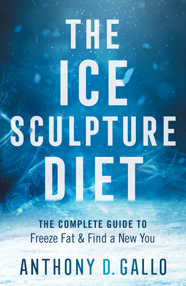
Anthony Gallo: The Ice Sculpture Diet: The Complete Guide to Freeze Fat and Find a New You
Read the full transcript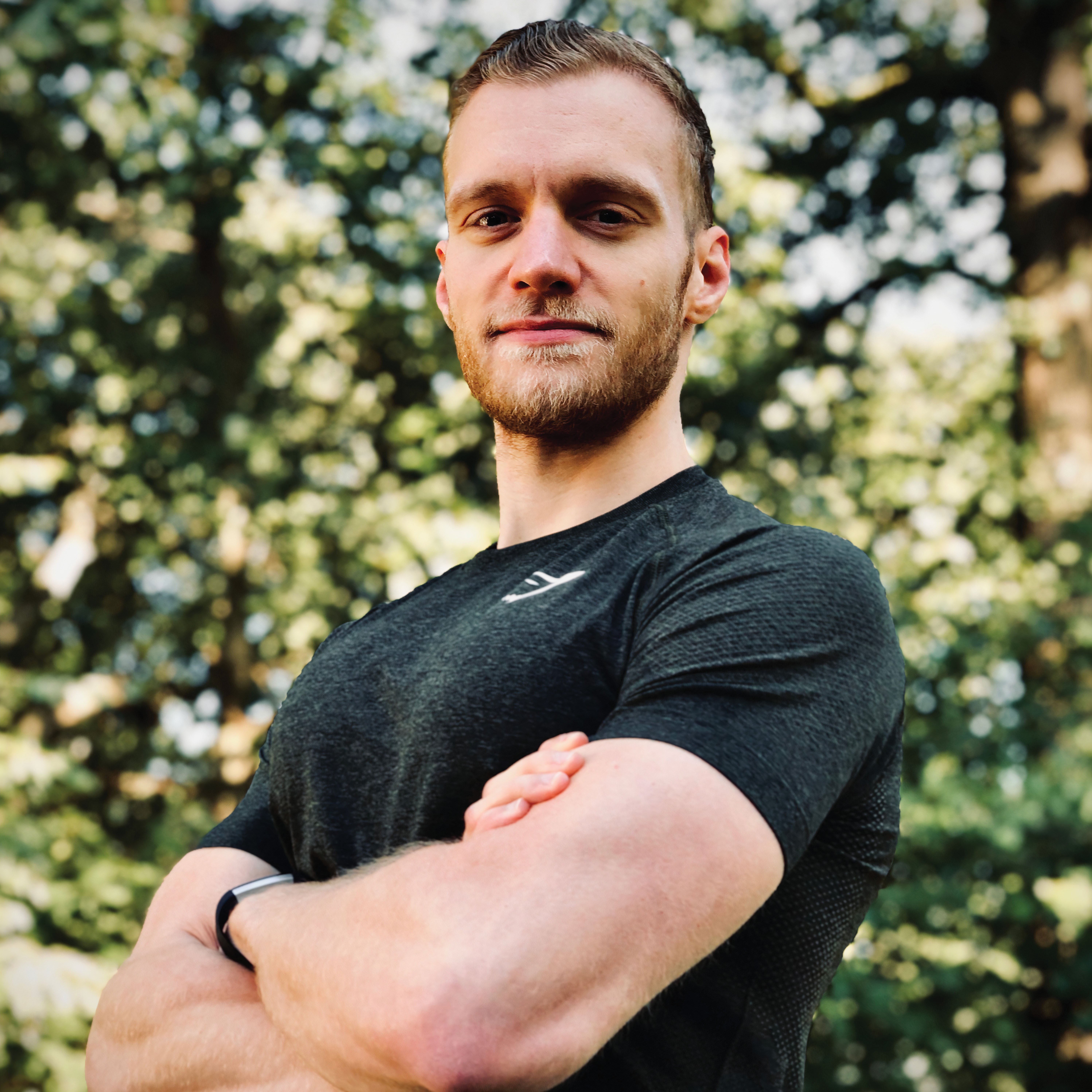
Anthony Gallo
Anthony D. Gallo is a NASM-certified personal trainer and biohacking enthusiast who has worked as a director of product analytics at Audible. After struggling with stubborn fat, he developed a fat-freezing weight-loss routine and used it to lose more than thirty-five pounds at home. He is the author of The Ice Sculpture Diet: The Complete Guide to Freeze Fat and Find a New You.
📚 Books by Anthony Gallo
Transcript
[0:00:35] MR: Are you one of the thousands of people who look in the mirror each morning and plead with your belly? “Please, please shrink,” Or have you been battling with stubborn fat that won’t seem to go away no matter what you try? Well, in the new book, The Ice Sculpture Diet, Anthony D. Gallo, a certified personal trainer, lays out a step-by-step guide to reshape your body, improve your health and make your abs visible again. In a first of its kind holistic plan, The Ice Sculpture Diet introduces a fat freezing routine, along with practical weight loss science and fitness tracking, to ensure long-term fat reduction. Following this plan, you’ll see and feel a distinct difference in the shape of your body in as little as one month. In today’s episode with Anthony, you’ll learn the power of leveraging technology to be healthy, how fat freezing works and how you can do it all from the comfort of your own home. If you’ve struggled with keeping weight off, this episode is for you. Enjoy. Hey everyone, my name is Miles Rote and I’m excited to be here today with Anthony Gallo, author of The Ice Sculpture Diet: The Complete Guide to Freeze Fat and Find a New You. Anthony, I’m excited you’re here, welcome to The Author Hour Podcast.
[0:02:03] Anthony Gallo: Miles, awesome to be here.
[0:02:04] MR: I’m so excited to talk about this. I’ve tried this once and I’m still so curious about it and there’s lots to talk about but before we dive in, tell us a little bit about your background and really what inspired you to write this book?
[0:02:18] Anthony Gallo: Yeah, sure, awesome. The lockdown for coronavirus really kind of got me into the idea of, “Hey, maybe this is the right time to write a book.” In February and March of 2020, I had been studying to become a personal trainer, you know, with the March lockdowns, I got certified right before the lockdown and I was like, “Oh man, I’m doomed, I can’t train anybody, what am I going to do?” You know? I had started a diet in January. I had started controlling my weight a little bit more, I had learned a lot while studying for the personal trainer exam and I had kind of stumbled upon this at-home fat freezing stuff that, at first, I thought was just not possible. I was like “I would have heard about this if you could do it at home, definitely not going to work”. I bought a few products off of Amazon, I tried a bunch of different ones just to test out, which ones work and which ones didn’t but ultimately, I saw some really good, really impressive results of using that and the combination of understanding your caloric intake and just some mindset stuff too, which I talk about in the book. I decided to write a book and my results were awesome. On the side, I’m a director of product analytics for Audible. That book piece kind of got me working in the book industry, kind of got me in there as well. It was really about that data too. I’m used to working with data, I love fitness, I was a personal trainer and I love reading. I was like, let me put this together and see if I can help other people like it’s helped me.
[0:03:44] MR: See, I’m really excited to talk about this. Coming from that perspective, because you’re coming from an analytical perspective, you were coming from a skeptical perspective and you’re coming from a personal trainer perspective. I feel like you have a very unique way of really analyzing this and looking at this and a lot of people at first, just like you, experience, when they hear about freezing fat, they might be like, “Oh, it’s another just kind of diet fad.” In fact, one of the reasons why you wrote this book is because diet fads and everything else are so hard to stick to. Let’s start there, why do you think that diet fads or exercise plans are really so hard to stick to in general for us?
[0:04:26] Anthony Gallo: Yeah, sure. It really all comes down to will power. it’s tough to do things that are just not fun to do. Exercise, certain forms of exercise may be fun. I personally like active forms, like kickboxing and maybe bicycling, that kind of stuff can be fun for sure. But if you're going to these intense things every day for a week or two weeks, you start burning out and with dieting, it’s the same thing. You may be excited early on, you start seeing some weight loss, you’re trying the new crazy plan, let’s go keto, let’s go all meat or let’s try vegetarian, all that kind of stuff. It’s fun at first but over – that’s a short-term kind of look at it. I’ve seen many people try these sorts of short-term diets, see some success, then they get off of it and a year or two later, they’re sort of back to where they were. It was fun for the time being, you know, they lost weight for sure, you got some good pictures out of it. But what I was looking for, was something that would work in the short-term and the long term. You see those results and you're able to manage it and keep it off so that you can maintain that look.
[0:05:32] MR: Right, you were mentioning too with diets, which I just wanted to kind of go back on, these diet fads aren’t necessarily for everyone and so people can try them out and maybe they’re not having great success and so they feel defeated and feel like it’s not working for them. What was your experience even trying keto? I know you tried these different diet fads to really experiment with these things but what happened when you tried to just do a keto diet?
[0:06:00] Anthony Gallo: Sure, I talk about this in the book too. I actually loved keto when I first tried it. I think the first time I tried it was probably back in 2013. I thought it was revolutionary, I was kind of sucked into the call, to the whole mindset, I was like “Oh, if you talk bad about keto, screw you, I’d never want to talk to you again,” you know? It was great, I felt wonderful, right? I lost a lot of weight too, I probably have a pretty good ab picture floating around somewhere on social media from back then. But unfortunately, four years later, I kind of came back to close to where I was, I didn’t get nearly as high but pretty close. There are some side effects, you know, there are things that you don’t always hear about from all the positive stuff that’s getting posted online. With keto in particular, it took me like three months to notice this but I started losing some hair, I was like, “Man, I’m losing hair way faster than I was before.” I was losing it slowly but I noticed that after three months I’m like, “Man, my hair is really thinning, what happened?” You know? It’s difficult to find people talking about that stuff online because you go on subreddit for keto or any of these diets really, you’ll see all the positive stuff getting upvoted and all the articles on Google will tend to be that positive stuff. Then you’ll get the really alarmist stuff from doctors whether it will be like, “This is going to kill you.” People just tend to ignore the alarmist stuff. They’ll ignore the alarmist stuff which may have some validity. They’ll accept the really positive stuff but they don’t look at that stuff that’s being posted by your average everyday person that’s just experiencing some, maybe some minor side effects that are not that good. My whole goal with the book is, let’s try to be healthy about it, lets still see great results, let’s make it maintainable and let’s make sure that we’re getting enough vitamins so that our hair doesn’t fall out.
[0:07:44] MR: Well, that’s why your approach with this freezing fat is so different and unique in the sense of, it can’t – it’s not necessarily right for everyone, which I would love for you to maybe dive into it a little bit but it is one of those things where it’s not like a diet fad where it’s only specific for a few, a small group of people and for other people, it could have these really detrimental results. Let’s jump into the freezing fat and what that looks like. What does that really even mean from that more scientific approach? What does it mean to freeze fat?
[0:08:19] Anthony Gallo: Sure, I would say, you know, in the book I go into the science of when this all started. I would say that the CoolSculpting company really got that fat freezing, kind of, on the map. They’re a professional services provider that, you know, you go in there, you have sessions for about 30 minutes per session, you can do a couple of sessions per trip and I think they really brought it to people’s awareness that it is possible to freeze fat. For a little bit of the science behind that. Essentially, what happens is, fat cells freeze at a higher temperature than the skin cells and other surrounding cells. If you apply the right temperature, you can freeze fat cells without damaging your skin or other organ tissue around the fat cells. If you have them frozen for long enough, they stop functioning, if you apply a little pressure to them in the form of massage or things like that, I like to use a percussion massager, but if you apply a little pressure to them, you know, you end up sort of breaking them or eventually, your body removes them. It processes them out just like it would any other sort of dead cell or damaged cell and in that way, you can end up reducing fat just by applying cooler temperatures. Now, there’s a lot of different ways to do that and you have to make sure you're being safe about it, you don’t want to just put ice on your stomach and that’s definitely not safe and I wouldn’t highly recommend doing that. Yeah, to your point, it is a little different, right? This aspect is not, it does not have to do with your diet so a lot more folks I feel like can do it but there are certainly things about it that you know, you want to check with your doctor, right? If you have low white blood cell count for example, if you are prone to shivering or hypothermia. I have a couple of other things listed in the book about that but anytime you do something like this, I recommend just checking to make sure that you don’t have preexisting medical conditions, things like that and talking with the doctor to see that this is something reasonable that is not going to cause you any side effects. I will also add too that fat freezing alone doesn’t or won’t solve everyone’s problems with fat. I think that the book itself talks about nutrition as the first foundation to really, that weight loss with a fat freezing being used as a method to break through plateaus and continue to progress. It’s really that combination. You can do fat freezing and see some success but if you combine it with that nutritional aspect, the foundation I call it in the book, that’s when you really start seeing the magic happen.
[0:10:42] MR: Yeah, that’s something I definitely want to talk about as well. You do such a good job approaching nutrition and really tracking it, which we definitely will talk about. As far as the freezing fat and CoolSculpting really putting it on the map, is this something that people have to go and do at a place like CoolSculpting or is this something that people can do at home?
[0:11:05] Anthony Gallo: That’s the thing that I like about this diet that I put together, it’s kind of, there are interchangeable aspects. If you really wanted to go on a specific diet, you can do that for the foundation. If you really wanted to do CoolSculpting, you can do that for the freeze, which is part two of the diet. That said, you don’t have to use CoolSculpting. I talk about using ice wraps and in particular, freezing, fat freezing products that I’ve tested and that worked well in the book. Now, it all depends, right? CoolSculpting has a price to it, if you go for like three or four sessions at a single time, it could run you 1,000, $2,000. That puts it a little bit out of the price range for a lot of folks that are trying to lose weight. With the at home options, the results are not as instant. They’re not like a one-time use and see results in a month or two. It’s more like, you have to do it consistently like one or two times a week for a month or two. You do see results with these. That’s why I really wanted to write this book because I thought that CoolSculpting was the “be all, end all,” that that was the only way to do it and I mentioned this in the book too but I tried CoolSculpting, I believe I tried it in 2019. It was either 2019 or late 2018, I should probably go back and check that. I mentioned in the book, my experience using it. I saw some great results, you know? It was a little pricey but I saw some great results but it didn’t last because I wasn’t eating right at that time. I wasn’t taking care of the other aspects of the book, the other two pillars. I think that once I got everything coordinated and put down, that’s when I really started seeing results and lasting results.
[0:12:36] MR: Yeah, tell us a little bit about those results, you tried CoolSculpting as you mentioned, saw some, but then you really took this into your own hands and you started to do this at home and you actually developed your own protocol, which you really talk about in the book. Tell us maybe a little bit about that protocol and then the results that you had doing this at home?
[0:12:55] Anthony Gallo: Sure. My protocol basically involved, there are three parts to the book, the foundation, the freeze and mindset and muscle. The first part is really understanding how many calories you need and how do you – what types of calories do you need in order to lose weight? That’s the first part. Along with that is really about tracking that too so I talk a lot about technology and the things that I’ve used to track that data and measure it and make sure that I’m seeing progress. In the analytics space, you see changes in things that you measure. If you don’t measure it then you're not likely to change it. I spend a lot of time in the book talking about, how do we measure this stuff, how do we make it easy to measure because a lot of people kind of are afraid of that, right? It’s a little – maybe it’s extra work to log these things or maybe it’s difficult. I talk about that, understanding how many calories you need, the food that you need, the macros, as well as how to track that. Then there’s the freeze aspect, which is about building a routine along with the nutritional aspect so that you consistently use these freezing routines every week. I recommend at least two – you can see results within a month but I would say two or three months would really work well paired with a diet. And then the final piece is about the mindset aspect and if you want the gaining muscle aspect but the mindset, I feel like, plays a huge part in diet and exercise. Some people just – if they tried a lot to lose weight before and they haven’t, that mental block will really stop you from succeeding and I saw that with myself. Whenever I thought about, “Oh, can I actually lose that much weight?” There is like a conflict. There was a conflict in my mind like, “Oh, I can’t do that. I’m not that kind of person. I can never be that skinny,” right? I talked about that in the book, “If I get that small, I’ll be a weak guy. I won’t have muscles,” And that stuff just wasn’t true. That’s why I put that third part in there because I think it really does have an impact. To touch on your point about results though, when I got the CoolSculpting done, I think I was around 191 pounds or 190 pounds. That was before I got CoolSculpting, the day of CoolSculpting. When I went back for my check-up, I think it was four weeks later, I was 193 pounds.
[0:15:07] MR: Wow.
[0:15:09] Anthony Gallo: I actually gained weight. Yeah, I actually gained weight in between so that’s a good sign that I was not eating right but I did lose a lot of fat. It was noticeable in the photos that I did lose fat but I did gain weight. Fat freezing isn’t necessarily about losing weight, they do tell you that with CoolSculpting, it’s about shaping the body but when I switched to this protocol I wrote about in the book, I went from I believe a starting point of, it was around 195 to a low of like 155, 154.
[0:15:38] MR: Wow.
[0:15:39] Anthony Gallo: At one point, I even hit, I think I hit 153 was the lowest I hit but maybe I was a little dehydrated that day. I like to credit the water loss a little bit there, just not to make everyone think that it is magical but yeah, I lost a lot of weight and the best part was just, I could see my abs. I went to a pool party shortly after the diet ended and I finally, one of my buddies, we had this competition. He always had amazing abs. I was like, “Dude, I am going to beat you this year.” I went there and everyone was like, “Dude, you beat him.” If you’re listening Alec, I love you.
[0:16:12] MR: Amazing, see that’s inspiration right there, an accountability built in, which I love. How long did that take you to lose the 30 to 40 pounds, consistently sticking with the nutrition, sticking with the mindset and obviously, sticking with the freeze, how long did it take?
[0:16:29] Anthony Gallo: Sure, so I say in the case study I have in the book, I had started Jan first to around June, so that’s six months. My last month, I don’t think I really lost that much weight because I kind of upped my calories a little bit just to – I was like, “Okay, I kind of lost a good amount of weight. Let me just bump it up a little bit so I’m maintaining.” You can do it in less than that and people have certainly many lost a lot of weight faster than six months. But what I’d like to say is that it wasn’t really difficult. I was quite comfortable the whole time. I was eating kind of whatever I wanted as long as I didn’t go over my thresholds. I was tracking, I was freezing consistently and if I hit any plateaus where the weight on the scale wasn’t moving, I just added another day of freezing, you know, here and there. Maybe I walked a couple more steps but I wasn’t really exercising like crazy. I was really focusing on getting my steps in, freezing and just making sure I was tracking everything properly and, yeah, it was smooth and I am still low. Right now, I think I’m around 163-ish, which makes sense because I am not really, you know, you do gain water weight back. The same thing happens with keto, the same thing happens with a lot of diets but yeah, I am not really struggling and I know if I want to lose like five more pounds, I could just lower my calories, maybe two or 300 calories on the tracker and do that for a couple of weeks and I’d be back down to 160 or 155 if I wanted to be there.
[0:17:47] MR: That’s amazing and part of it too, is getting rid of stubborn fat, right? Where oftentimes, you know, you can work out, you can be healthy more or less but there is always this like leftover fat that is really hard to get rid of. Do you find that freezing helps in cases like that?
[0:18:06] Anthony Gallo: Oh yeah, you’re preaching to the choir here. I was like, when I was young, I was very overweight when I was a child. I mention this in the book too but I was bullied when I was younger, elementary school, even in early middle school, for being overweight. I remember being on the soccer team and just being bullied because I was like chubby and I always kind of had that belly, like even when I got skinnier from keto and a couple other things, I always kind of had that stubborn fat. That was, I know I mentioned a few things that were a catalyst but the fat freezing was really like a catalyst for me to want to write the book because the fat freezing does target fat. In a lot of health magazines or health sections online they’ll tell you you can target fat with nutrition and it’s true, normally you can’t target areas on your body when you’re trying to lose weight, you just lose weight everywhere. Bwith fat freezing, you can actually target. You can say, “Hey, I want to lose some fat around my abs or maybe my thighs,” and if you apply the right tools to those areas, you can do that. I think it works great for stubborn fat. That’s one of my favorite things about it because you can go on a really strict diet, lose a ton of weight but you may not have a six pack because you lost a lot of weight, maybe on your butt or in your thighs or even your chest and with fat freezing, you can actually target the areas that you want to.
[0:19:26] MR: Well, it sounds like it’s leveraging technology in a way, for weight loss, and that’s something you talk a lot about in your book. There are many different ways we can leverage technology to help us with this and it doesn’t have to necessarily feel intimidating and one of the best things about being alive today is the access that we have to things like Fitbit and Apple Watch and all of these different fitness trackers as well as being able to gamify a lot of these things to make it easier on us. Tell us a little bit about your process for gamifying these things or using these different tools to track calories, steps, blood pressure or heart rate, all of these things. What do you use and what do you find that’s most helpful?
[0:20:09] Anthony Gallo: Yeah, sure. I love this question because it really has gotten so much better. You know, I just like to be grateful for the day and age that we live in, where we don’t have to write down calories of what we’re eating or buy a book and just look up the calories, right? We can just search in MyFitnessPal or Fitbit database and there is just a massive database of these food items that we can find the nutrition for super easy. I use, personally I use Fitbit, because I have a Fitbit. I like to track my steps with my Fitbit and I like that the Fitbit app allows you to sync with a lot of different things. I can use the Fitbit app to track my steps, I can use the Fitbit app to log my food and I can use the Fitbit app to sync with my Bluetooth scale so that my weight goes into the Fitbit app and what that does is it gives me a single app where I have basically all of my nutrition stuff and fitness stuff inn that single app. I can check the numbers every day. If I want to, I could export the data and it just makes it easy. I think that’s a big part of what I talk about in the book is, you want to make this journey as easy as you can so that you achieve your goal, so you can focus on your goal. Any extra effort you have to put into a diet, it makes it that much harder. I use Fitbit just because that’s simplified process. I will say that MyFitnessPal has a really good food database so that food database, it’s been curated for years, years and years of community members submitting different things. I have used them in the past. I do find their ads a little bit annoying to be honest. There’s a lot of ads in the app now but you can get premium if you wanted to and it would get rid of that. It does also sync with Fitbit so you can put your food in on MyFitnessPal if you like their database better and sync it with your Fitbit if you are using a Fitbit to track your steps. I haven’t experimented with an Apple Watch. Obviously, I have seen them everywhere and I have played with them before. I do know that Apple does not yet have a food database aspect to their health app. When they get that, I might actually switch to them because for one, Apple Watches are pretty cool but for two, that would be kind of nice to have everything in one app again but for now, I’m good with Fitbit. I find them a pretty affordable fitness tracker. You can get a lot out of their app without really having to pay for anything besides getting a tracker.
[0:22:22] MR: I think this is important as well because when you’re tracking these things and, like you said, the Fitbit can really – it holds all of the data and you can always export it but one of the beautiful things about it is being able to see progress and sometimes, when we’re looking in the mirror, we don’t necessarily notice it, right? But when we’re able to look at a spreadsheet and look at our progress across weeks or months, we can really see a difference and that can be motivation to keep going as well.
[0:22:51] Anthony Gallo: Yeah, that was a huge deal for me. Being able to see the chart just like tanking down every month. Even every week, you can look at it. I don’t usually check my weight or anything like that. I do weigh myself, usually daily, but I don’t usually check the charts that often but if you check weekly, you can really start to see some progress there. It is really a powerful thing and it’s really cool to be able to just like, you know, after three months, you take a photo of your chart, you post it on Instagram and say, “Hey guys, I did some good work in the last three months,” you know? It’s kind of a motivating factor for sure and I love using it for that sense.
[0:23:26] MR: Yeah, you get the social accountability in that sense too because, you know, next time you post it, you want it to look even better so it’s that motivation. That’s a little bit of gamification right there.
[0:23:38] Anthony Gallo: Yeah and you know, in terms of gamification, the Fitbit app and Apple does this as well, they do a great job of trying to push you or nudge you to get to your steps. You’ll get a notification on your phone, sometimes I’ll be at 8,500 steps and you usually target around 10,000 steps a day. It will be like a Fitbit app notification, “Hey, you’re almost there. You’ve got a thousand or 1,500 steps left. You can do it,” you know? Sometimes you forget about it, it will be like, you know, 9:00 at night, I am hanging out, I get that notification and I go, “Oh man I got to finish getting my steps.” It really makes a difference.
[0:24:12] MR: Yeah, you know it’s – we have an assistant essentially that will keep us on track to our authentic desires and what we really want and not necessarily what we are feeling in the moment but it reminds us our ultimate goal and what we’re trying to achieve and that’s an incredible tool to have by our side throughout the day.
[0:24:32] Anthony Gallo: Yeah, I agree a hundred percent.
[0:24:34] MR: Where can people find these at home freezing products? People should definitely check out the book to get your full protocol including tips like massage and everything after, that can really help with these, but if you were to just let people know, “Hey, the best thing to buy for this is X,” or is there a best thing, where should people start if they’re considering doing this at home?
[0:25:00] Anthony Gallo: Sure, so you can check out my website. It’s icesculpturediet.com. If you are interested in the recommendations for fat freezing in particular, icesculpturediet.com/recs, right now that drives you to my collection page on Amazon that has a bunch of different stuff even beyond fat freezing, about weight lifting and books that I’ve read about health that are really good but I will be putting up a little bit more content in the coming weeks for the website. There will be a lot of cool stuff there.
[0:25:29] MR: Yeah, I highly recommend people check that out. I did it before this podcast and you have the fitness trackers you recommend, different exercise equipment, everything is right there so it makes it really easy if this is something that you are considering, it is the one-stop-shop to figure out everything that you need. Anthony, thank you so much for doing that and putting together all of these resources and helping people achieve the results that you have. If people could take away just one or two things from your book, what might they be?
[0:25:59] Anthony Gallo: Yeah, so I think if I had to pick two things, I would say, one is that diet matters more than exercise in my opinion. I think that if you’re trying to lose weight, controlling your diet will do a lot more for you than if you worked like crazy and tried to exercise. I am not saying exercise is bad, I love exercise. It is definitely great for your health but if you are trying to lose fat, I would say that diet matters more so start tracking that. The book will help with that. Number two is that, don’t let plateaus stop you when it comes to weight loss. I think that a lot of folks will lose like 10 pounds, then the doubts will start creeping up. They hit a plateau, doubts will start creeping up and then they kind of end it there. That’s where the mindset part of the book goes in to try to help you overcome that and the freeze, the fat freezing aspect makes a huge difference there, knowing that you’re able to make a difference even if the scale isn’t moving and just pushing through that plateau.
[0:26:54] MR: I love it. Anthony, this has been such a pleasure. I am so excited for people to check the book out. Everyone, the book is called The Ice Sculpture Diet: The Complete Guide to Freeze Fat and Find a New You, and you can find it on Amazon. Anthony, you mentioned your website. Can you say it one more time and then if there’s anywhere else people can find you, let us know?
[0:27:14] Anthony Gallo: Yeah, it’s icesculpturediet.com. I am also on Twitter, Anthony D. Gallo. I am on LinkedIn if you’d like and I am always happy to talk about fat freezing, exercise and even books if you’re interested in talking about Audible, I am there too. I’ve got tons of recs for all of you.
[0:27:31] MR: Yes, well thank you so much and I am definitely going to be trying this out so you’ll be hearing from me.
[0:27:36] Anthony Gallo: Great, thanks Miles.
[0:27:39] MR: Thank you for joining us for this episode of the Author Hour Podcast. You can get Anthony Gallo’s book, The Ice Sculpture Diet: The Complete Guide to Freeze Fat and Find a New You, on Amazon. You can also find a transcript of this episode as well as our previous episodes on our website at authorhour.co. For more Author Hour, subscribe to this podcast and thanks again for joining us. We’ll see you next time, same place, different author.
Want to Write Your Own Book?
Scribe has helped over 2,000 authors turn their expertise into published books.
Schedule a Free Consult