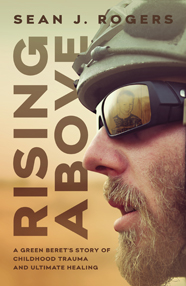
Sean J Rogers: Rising Above: A Green Beret's Story of Childhood Trauma and Ultimate Healing
Read the full transcript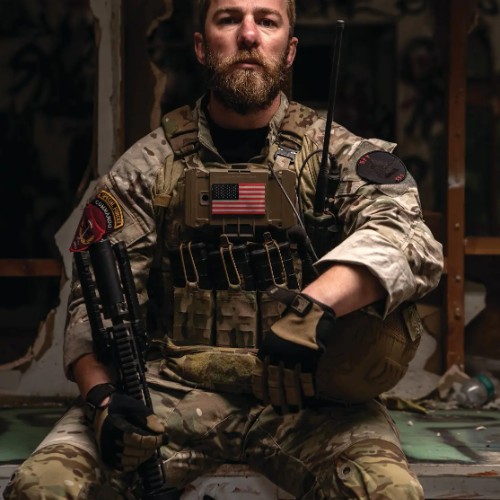
Sean J Rogers
Sean Rogers joined the military at twenty-one and, after a serious injury during Ranger selection, went on to become a Green Beret with two combat deployments to Afghanistan. After his military service, he served his community as a member of the Denver Police Department, earned a master's degree, and took up ultramarathon running. Today he helps the next generation of Special Forces hopefuls through his podcast, The FNG Podcast, and his YouTube channel, FNG Academy. In his memoir Rising Above, he chronicles his fight to confront the trauma of his childhood and reclaim his life.
★ Scribe Case Study
How Sean Rogers’ #1 Bestseller Helped Give People the Courage to Heal Their Deepest Insecurities
He joined the Special Forces to feel empowered, but Sean Rogers still struggled with his own traumas. Now, he's helping people learn to heal.
📚 Books by Sean J Rogers
Transcript
[0:00:34] Jane Borden: Today’s author, Sean Buck Rogers, escaped and overcame horrific childhood abuse, eventually becoming a member of the elite US Army special forces unit, the Green Berets. However, following a traumatic event in his marriage, he realized he had not actually overcome his past abuse but had only compensated for it. There began a writing journey to figure out how to transform his trauma and put it to use, rather than be controlled by it. The result of that journey is his new book. Sean joins us on Author Hour today to discuss the traps of victimization, how to break free from the cycle of trauma and well, how to train your dragon. Hi Author Hour listeners, I’m Jane Borden and I’m here today with Sean Buck Rogers, author of Rising Above: A Green Beret’s Story of Childhood Trauma and Ultimate Healing. Sean, thank you so much for being with us today.
[0:01:35] SBR: Thanks for having me, I appreciate it.
[0:01:38] Jane Borden: The book is heartbreaking but ultimately hopeful and really empowering. Tell me about the decision to write it?
[0:01:47] SBR: It was really not to write a book. I think the journey just kind of started as a way to get my thoughts out there and get my issues out on the paper and kind of like dig into my past and figure out what was affecting me so much and to really just start facing it. It was really started as just a journaling process of healing for myself.
[0:02:08] Jane Borden: Is that something you thought of, just feeling overwhelmed by your past?
[0:02:16] SBR: Yeah, I just felt like I kept making a lot of mistakes in life. It was just finally to the point where I was like, “I’m done with this. I need to figure out what’s going on.” I felt like it was a two-sided sword, I would accomplish things that I put my mind to and achieve quite a bit when I really dedicated myself but at the same time, I would always have some kind of self-sabotage and things would eventually take a turn for the worse because of my own actions. I felt like I just really needed to figure out why this was happening, to correct my course and stay on a path that was consistently good and not just all over the place.
[0:02:52] Jane Borden: Wow, to break the cycle. Can you tell our listeners a little bit about your background and what you were struggling with?
[0:03:00] SBR: Yeah, it was, you know, I was born in Phelan, California, it’s a small town out in the desert and you know, my dad left when I was one and then my mom, she got into a car accident when I was young, I was like between six and eight and from there, she got addicted to opioids. That started her down a path of just really horrible decisions and then from there, it just seemed like it was boyfriend after boyfriend of trauma and dealing with their issues and it just created this vortex of just constantly horrible experiences. Dealing with that was overwhelming as a child and then I didn’t end up getting away from any of that until I was about 15 when I staged a plan to run away to my dad’s in New York, who I had just met at 15, because I knew that anything had to be better than what I was dealing with at home. I eventually finally got out of the desert and moved on.
[0:03:56] Jane Borden: You worried about the importance of not letting oneself be a victim. I imagine that’s incredibly difficult to do when you were so clearly victimized as a child. First of all, why is it so important not to feel the victim and second, how are you able to overcome victimization?
[0:04:14] SBR: Well, I think taking ownership and taking responsibility of where you end up is completely on you. I think what it taught me the most being with my mom and really hating it tremendously was that I needed to change my circumstance and there was no one that was going to come in and save me. I would run away constantly and the cops would just bring me back because they were bound by law because I was underage obviously. I felt like at an early age, I started to adopt the idea that if you’re not happy, it’s entirely up to you to do something about it. I could sit there and blame everybody else and say how terrible my circumstances were but it’s not going to change that sinking gut feeling I wake up to every morning because I hate my own circumstances. I think it was just something I learned right out of the gate to just phase that out and acknowledge that, whether, regardless of how I started, it was going to be up to me to control where I ended up. I did not want to end up in a place that I was unhappy like that ever again.
[0:05:17] Jane Borden: You have, which is admirable. You write something so interesting that one needs to accept that your traumas have shaped both the good and bad qualities of your life but tell me what you mean by that?
[0:05:32] SBR: That was kind of something I learned going through and journaling and really picking apart my traumas, which I didn’t do until I was like 32. For my whole life, I just put those things away and so my past basically just didn’t exist. It was like a black hole that I tried to just forget and move on and runaway from and it wasn’t until I started digging back through it that I realized that the successes and the failures were all tied in together. The past and the trauma was – had tremendous benefits to my personality, the way I go about life, you know, the drive, the determination. It just so happened to be combined and intertwined with the negatives like the temper, the distrust, the anger, the short-sightedness in certain situations. I just kind of realized that these things were just bound together and if you throw one away because it had a negative experience, then you’re throwing the other one away too and you're wasting that negativity because it really did have a positive impact on you.
[0:06:38] Jane Borden: How do you do that, how do you keep the positive effect without holding on to the negative effect as well?
[0:06:46] SBR: For me, I think it was, lately especially, I started a YouTube channel and with the book and just being open about it. I started to use my past as something that makes me proud instead of something I’m ashamed of and that started to really change things for me because it allowed me to be more open about those circumstances and stop being angry at the fact that they happened. It allowed me to really appreciate why they happened and honestly now, it’s to the point where I thank God every morning that I had those experiences because they’ve allowed me to do things that I would have never been able to do without them. I think it’s just really important to just pull those apart and then face it and be okay with it, which, in reality, the biggest thing that has done for me is it’s made me okay with who I am as a person and that’s probably the biggest change.
[0:07:43] Jane Borden: Tell me why, tell me how that has affected you in turn?
[0:07:48] SBR: Before, I was just always ashamed of who I was. Everything I did was in an attempt to hide that person so people didn’t see it. I didn’t want them to see me. I would do things like getting an education, to try and prove that I was not this uneducated person from a trailer. I would run marathons, I would do these “achievements” to distance myself from the past and then the minute I started embracing who I was, I was able to be like, “You know what? It’s not something to be ashamed of to grow up on welfare and have a past riddled with child abuse.” It’s something to be proud of because you could say “Yes, I had those situations but look how far I’ve come and look what I was able to do with those things.” Embracing that has really changed my perspective, my outlook and I may be shoulder-to-shoulder with a lot of people in the same situations as me but if we really dig into the past, it’s almost guaranteed that they didn’t start where I started and that’s a source of pride for me now.
[0:08:51] Jane Borden: You write again and again in the book, we read about someone who has pulled himself up or gotten himself out and there was one passage I found so moving. You said, “The most important part was understanding that someone had already been there.” There being where you said you wanted to go, “They had already made the map from my location to the new destination. All I had to do is get the map and follow it”. That’s so empowering.
[0:09:18] SBR: Thank you. It still baffles me today when I see people and they come up with an idea of something they want to do and then you see them just, the minute they get caught in the thought of how to accomplish that goal, they completely freeze and they’re like, “Never mind, it’s not possible.” I don’t know if it’s something, again, it’s likely tied to the way I grew up but in reality, there’s already, like a hundred people have already done that thing. All you need to do is not get tied up in the how, figure out what you want to do, figure out what gives you that burning sensation of excitement and then just go find the people that have already done it and study them. See the steps that they took from where you are to getting to the goal and that’s been tremendous for me. Even being right here, right now, I wanted to get this into a book so, “Who has done it for me and who has done something that I enjoy?” Well, David Goggins did, I loved Can’t Hurt Me. What did he do? He went to this company and they helped him make it into a book so that’s what I’m going to do. That’s not something that I just say, it’s something that I put into practice with almost everything I do.
[0:10:28] Jane Borden: Did you have a similar path when you decided you wanted to join the Green Berets?
[0:10:34] SBR: Absolutely. This is why the channel does pretty well is because every time you decide as a person that you want to go into special operations, whether you’re coming from the civilian side or you're in the military already, you’re going to get hit right in the gut with just a ton of insecurity and that you’re not good enough and that the guys that do make it are just like these super humans. It’s important to associate with the people that – and identify people that you know that have already taken that step and made it through and then watch them closely, you know? Use their example, you know? I thought about, everyday in selection, I thought about a buddy of mine who had gotten selected and I was like, in the morning, I thought, “He woke up this morning and he made it happen and if he could do it then I could do it.”
[0:11:24] Jane Borden: What was the hardest part of training for the Green Berets?
[0:11:28] SBR: I think the hardest part probably was before going, before starting anything for selection, was the physical training I put myself through and just the mental agony of every single time you go out to train, thinking about whether or not that’s going to be a waste of time because you don’t know if you even have what it takes. I think the toughest part is dealing with your own thoughts before showing up. It’s a little easier once they start telling you, “Yes,” because then you could trust that they know what they’re talking about but before anyone’s had the chance to evaluate you, it’s all in your head and you have no idea what you're getting yourself into and I think that was probably one of the most difficult parts for me.
[0:12:10] Jane Borden: Well, you already practiced it, your methodology, that must have served you well.
[0:12:16] SBR: Yeah, it’s just like, “Listen, I set a goal, I found the path, I found the map if you will, I followed the map and here we go.” There’s no deviating and I always find it that when you set a goal, it’s just so much easier to just finish it than it is to jump off and then always have that regret and the doubt because that’s just going to bleed over into the next thing that you really want to do. Even if you finish it and it’s a failure, a complete failure, at least you know that you decided to go from point A to point B and then you went from point A to point B.
[0:12:50] Jane Borden: Okay, talk to me about the dragon and how you use that in the book to discuss two different kinds of dragons or maybe it’s the same dragon, you tell me.
[0:13:01] SBR: Yeah, so the dragon just kind of presented it to like my head and the way I thought about it when I was comparing, you know, my reaction to our childhood and my brother’s reaction to it and I felt like it was kind of the yin and yang of those things being intertwined. The good and the bad being intertwined was that dragon’s able to – it’s powerful and that is one thing that we don’t realize is how powerful it is and the dragon is just a representation of your past and how much, the more trauma you’ve been through, the bigger and more powerful that dragon is. I really hope that people will get from this book, is that the more broken they feel, is not the worst off they are. They are actually quite a bit stronger than most people because of that brokenness but you have to learn how to tame it and I think that from my experience and then watching my brother, we both had two different ways. I tried to run away from it by distancing myself from my past as much as possible through degrees, you know and achievements and medals and stuff like that to – it was all a façade though, you know? I was not able to run away from it. What I would find is I could tell you, I could tell somebody that I had a degree and for the immediate few seconds, you know, they’d be impressed or whatever but it would almost immediately – I would say something or do something that would clue them into the real me, you know, whether it’s lack of basic knowledge or just saying something that just doesn’t fit the narrative I was trying to portray and then I just felt like a fraud. That was kind of the cycle that I was in of trying to run away from it and then my brother, I felt like he was always just trying to fight it. He felt like if he could just face it and kill his dragon, if he can kill his past by just being constantly overwhelmed by it and you know, by looking into its eyes, then he would be able to move on from it and that didn’t work either. If anything, that it really caused him a lot of pain and a lot of suffering for nothing. You know, the dragon is not going away. I found through this process that you can tame it and not only can you tame it, once you learn how powerful it is and learn that it can be used as a weapon, it’s an amazingly powerful thing. You know, I always saw it burning down the places I wanted to go and now I see it burning down the obstacles, you know? It is really possible to train yourself into using your trauma.
[0:15:33] Jane Borden: It makes me think of another line that I loved. You said, “Broken boys want to break things. It makes sense if they are causing the pain and they are not feeling the pain.”
[0:15:44] SBR: That was just my personal feeling on it because I just remember as a kid, being out in the desert, doing whatever I wanted and when I was the one causing the pain to other people, for those brief moments it was like things were better because this person’s suffering. It’s not me for once. He is feeling the pain of me being here and if I’m so involved in causing another person harm that it’s like it takes me out of my own reality. I did a lot of things like, you know, lying to try to escape it and hurting others to try and escape it, you know, drugs, alcohol and so yeah, I feel like it’s an over-indulgence in its own way to avoid your own feelings. You know, similar to drugs and alcohol but for kids that haven’t got to that point of experimenting with that stuff yet.
[0:16:40] Jane Borden: Do you have advice for kids out there who might be feeling the need to cause pain in order not to feel it?
[0:16:51] SBR: Absolutely. I get questions from kids that want to go to selection and stuff on Instagram and stuff, and even as a cop, you know as a cop, I had to quit being a police officer because I would come across a lot of kids that had really terrible situations and I would see myself in them. You know, one kid, I remember pulling him aside and I was just like, “Man, I promise you it is going to get better but not just that like I know where you are sitting right now. I know that you are stuck here because you’re 16-years-old, your mom is crazy and doing crazy things and treating you like garbage and you still have two years of dealing with it before you are able to make your own decisions.” But I told him, “In those two years, once your two years are up and you’re essentially free, what you do from that point on is on you so the decisions you make and then you have the rest of your life to live the life that you want. So don’t allow two years to affect the rest of your life.” And I think a lot of kids, and I try to talk about it in the book, two years for a 16-year-old kid might as well be a lifetime. They start to get this mindset of they’re not going to think about their future. If you want to do stupid stuff, let’s do it, anything that takes their mind off the present. The one thing I would say is try your hardest to hold out for that freedom and then take advantage of it. Don’t let it go to waste.
[0:18:19] Jane Borden: What do you mean take advantage of the freedom?
[0:18:22] SBR: It is so easy to – you know, a lot of kids that I grew up with, I saw them do the same thing is, they get into that victim mentality the minute they get free. If something doesn’t work out for them, the minute they get their freedom to live their own lives, it doesn’t go the way they want so then they just use their past as an excuse and they fall into that trap and then they don’t take advantage of it. You have to not only plan out that future and what you want to do and know how you’re going to do it and find the map of people who have it before but go attack it. Don’t just, at your first failure on your own, because that is what we are designed to do, we’re designed to fail so we learn from it. Any kid regardless of their background is going to find failure when they step out into their own, even if they came from a perfect household but they don’t know that, right? They might think they’re meeting that failure because of the way they grew up and that’s unfortunate that they don’t realize that it’s a totally normal thing to fail and they need to keep pushing because it is really on them as to where they end up. It doesn’t matter how bad their parents were, it doesn’t. Nothing else matters because they are the ones that have to wake up in their own shoes every day.
[0:19:32] Jane Borden: Maybe also it would be helpful for them to write their stories as you did. You say in the introduction this book is not a result of the process, it is the process.
[0:19:42] SBR: Absolutely. I have been thinking a lot about that lately and people want answers to so many things from – to reach their goals and to achieve and regardless of how many people in history and like how many books they read and they all say the same thing. So many successful people talk about the importance of pen to paper and it’s just, the therapy that comes from that is unmatched in my personal experience, especially during hard times. Actually, when I was in Afghanistan, you know, almost getting killed multiple times, getting in gun fights and then having a really bad experience with my team sergeant while I was there, it was writing and journaling that got me through it because I write tonight when I am in a really bad spot but then two days from now, it subsides a little bit and I can go back and realize that I could read how bad off I was in that moment and then really embrace the fact that wow, if you just give it a little bit of time, it really does start to – fences start to mend, even two days later, I’m in way better of a spot than I was when I wrote this, “Look how upset and look how angry I am.” Journaling could really help them get through the hard times.
[0:20:54] Jane Borden: Because then the next time when something hard happens, you can remember in your head, “In a couple of days this won’t feel so raw.”
[0:21:03] SBR: Yeah, instead of just getting lost in that one moment thinking that everything is falling apart.
[0:21:09] Jane Borden: You mentioned your brother earlier and I wanted to ask, how has your family responded to the book? Have they read it?
[0:21:16] SBR: They haven’t read it, I haven’t – I don’t really talk to my family. My mother actually, I haven’t talked to her in years and then all of a sudden, I started seeing comments on my YouTube channel from her threatening me and stuff so I’ve had to block her from my channel. That’s what I told, I just did a podcast with this guy Andy and he’s like, “Well, did you mend things with your mom?” I am actually worried about it because even though it’s been years, I’m talking maybe even 10 years since I have talked to her, maybe longer, 12 years, all of a sudden just like that, you do something with your life that is successful in a way that people feel like they could take from you now and there she is, 12 years later, all of a sudden a book is coming out, now she wants to come after me. I am more worried about how she’s going to come after me than if, because I know she’s coming. It’s what victims do. They find somebody that has more than they do and they say, “You owe me,” and they just make up a reason for that to be true and they come after you until they find out that they can’t get anything and then they move onto the next person.
[0:22:25] Jane Borden: I’m sorry.
[0:22:26] SBR: Victim mentalities I mean, not victims obviously.
[0:22:29] Jane Borden: Right, thank you for clarifying. Tell me about your podcast and the YouTube channel.
[0:22:37] SBR: Yeah, I started the FNG Podcast and FNG Academy. I actually just looked it up today, it’s only been five months, as a way just to start talking to people and getting my story out and trying to help people in a way that I knew how, right? To help them become Special Forces. I know a lot of guys struggle with that, so you know, in five months I think we hit 44,000 subscribers today. I think the story is just resonating with people. Having someone from the special operations community can be open and honest and not have this like, “I am tougher than you,” bravado is kind of refreshing to the community.
[0:23:15] Jane Borden: What’s next?
[0:23:17] SBR: We got a trip coming up to Texas. We’re going to go see Tim Kennedy, he is a former SF guy, UFC fighter, and talk to him and do a vlog-style interview with Tim. We got a few podcasts lined up, a couple in Texas and then one in Vegas and then from there, once the book is out then it is really getting into the YouTube channel and focusing on how to make that even better and really grow it and expand the channel into something that’s more than just providing information and really giving back to the community in a big way. That’s going to be – I don’t know if you ever read the book, The One Thing, but it’s been monumental on my journey and once the book is out, the YouTube will be “The One Thing” and we’re really grinding on that.
[0:24:00] Jane Borden: Well Sean, I think the last thing I want to say is thank you for your service.
[0:24:04] SBR: Well, thank you.
[0:24:05] Jane Borden: It’s been a pleasure speaking with you, congratulations.
[0:24:09] SBR: Thank you.
[0:24:10] Jane Borden: Again listeners, the book is Rising Above: A Green Beret’s Story of Childhood Trauma and Ultimate Healing, and Sean, besides checking out the book, tell our listeners again where they can find out more about you and your work.
[0:24:22] SBR: Yeah, so the website is seanbuckrogers.com. The YouTube is the FNG Academy and the Instagram is @seanbuckrogers.
[0:24:31] Jane Borden: Okay, thanks so much.
[0:24:33] SBR: Thank you.
[0:24:35] Jane Borden: Thanks for joining us for this episode of The Author Hour Podcast. You can get Sean Buck Roger’s book, Rising Above: A Green Beret’s Story of Childhood Trauma and Ultimate Healing, on Amazon. You can also find a transcript of this episode as well as previous episodes on our website, authorhour.co. Make sure to subscribe to The Author Hour Podcast for more interviews and insights into life-changing books. I’m Jane Borden, thanks for joining us.
Want to Write Your Own Book?
Scribe has helped over 2,000 authors turn their expertise into published books.
Schedule a Free Consult