Monroe Miller: This Twisted Path: My Journey Through Abuse and Addiction in Amish Country
Read the full transcriptMonroe Miller
Monroe Miller, an Amish man, has experienced all of that heartbreak.
📚 Books by Monroe Miller
Transcript
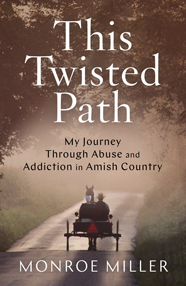
[0:00:23] Jane Borden: Today’s interview comes to us from Amish Country. Monroe Miller’s brave and compelling book: This Twisted Path. My Journey Through Abuse and Addiction in Amish Country, tells the harrowing story of the damage caused by childhood sexual abuse and caused by efforts to heal it. After a riding accident, the author was prescribed opioids and instantly developed an addiction, finding that the pills healed not only his physical pain but also a lifetime of emotional trauma. Monroe joins us on Author Hour today to discuss how he overcame his addiction and abuse, the power of love and partnership and the importance of faith and community. Hi Author Hour listeners, I’m Jane Borden and I’m here today with Monroe Miller, author of This Twisted Path: My Journey Through Abuse and Addiction in Amish Country. Monroe, thank you so much for being with us today.
[0:01:25] Monroe Miller: Thank you for having me.
[0:01:28] Jane Borden: This is a really powerful book and I imagine it took a long time to even get to a place where you thought you could write this story. Can you tell me about that process?
[0:01:39] Monroe Miller: Once I started on it, it actually just kind of rolled out. It was very healing and it just seemed, once I started pouring it out, I kept it bottled up for so long and once I started, it just came.
[0:01:56] Jane Borden: I imagine that was very healing.
[0:01:59] Monroe Miller: Yeah, it was. There are some days that just – it was so hard, I was ready to quit, I was going to quit a couple of times. It didn’t seem like it was worth it, why put myself through that? But I have a wonderful, caring, supportive wife and she kept pushing me. She kept after me and if it helps one person, it’s worth it, you know?
[0:02:27] Jane Borden: Your wife is wonderful. I feel like I know her after reading the book and we should all have an Esther in our lives, definitely, if we could all be that lucky. She’s been very supportive, as has your community, I guess, to some degree. Tell us about – you write about how the Amish community, once you’ve joined, you join for life and part of that is that you always have a safety net. Everyone helps each other in times of trouble.
[0:02:58] Monroe Miller: That was something that really, once I made the decision to go through rehab for the drug abuse, they paid for it, they were there the whole time and once I got out, they really kept an eye on who I hung out with. Just helped Esther make decisions on who to let – it was hard because some of my friends were users, English friends and I say English because you guys speak the English language and that’s what we call anyone who speaks the English language but it was hard because they were so available.
[0:03:37] Jane Borden: When you started taking the Percocet prescribed to you after an accident, it helped not only with the pain of the accident, you write, but also the pain of your childhood abuse. Can you talk a little bit about where the pain started?
[0:03:54] Monroe Miller: It started with when I was raped when I was just – I don’t even know how old I was. I know I still had a blankie and that just – the trust was gone. I didn’t trust adults, with the exception of women, and I never talked to anybody about it. I built walls that were just, nobody could get through and it made me feel like an outcast, I didn’t connect with other kids the way – I don’t know, I’m not even sure how other kids, because I never went through that, I was a loner. But when I started taking Percocet, for the first time in my life, I was comfortable around anybody and it just – I mean, it was almost an instant addiction.
[0:04:48] Jane Borden: Emotional at first and then very, very physical?
[0:04:52] Monroe Miller: Yeah, it’s hard to explain. I’m sure if people have gone through that, they know what I’m talking about, it’s just hard to explain what it does to your mind and what – yeah.
[0:05:10] Jane Borden: Yeah, I want to ask you a little bit more about that but first, it’s got to be so difficult to write about childhood abuse and you made a choice not to go into too much detail about it and I’m wondering if you can talk a little bit about that push and pull between the importance of remembering and the importance of being able to forget.
[0:05:36] Monroe Miller: That’s – I’ll never forget, there’s a lot I don’t remember. The smell, the taste, I tried to bite, I got smacked across the face and it knocked me out and when I came to, it was too late. I do remember my – trying to reach my blankie and I was suffocating. I was throwing up but I couldn’t throw up because it was all my – I was blocked. I could breathe a little bit through my nose but I just remembered my blankie and trying to reach it and I just – it felt like, if I could reach my blankie, I’d be safe and I didn’t know it at the time but I was passing out and that’s about all I remember as far as I did pass out but, and then yeah, just from the hair and you know.
[0:06:50] Jane Borden: You write, “To survive, I learned at an early age to hate myself and to never show emotion.” That was your first coping mechanism?
[0:07:00] Monroe Miller: It was, yeah. I just – that’s why this book is so hard. As far as my whole life, ever since I can remember, to show emotion was to give somebody a weapon against me. To stay in the background, to just not be seen or heard was safety and it just feels like putting this book out there is just – it’s making me, it’s hard because it goes against the grain. I can’t – I just feel so vulnerable. Now, everybody knows everything about me and I know it probably won’t but it’s hard.
[0:07:52] Jane Borden: Yeah, you're very brave. Have you had response from early readers?
[0:08:02] Monroe Miller: Yeah, so far it’s been unbelievable and that helps too, that keeps me pushing forward. The support I have is just unbelievable.
[0:08:14] Jane Borden: We’ve been discussing abuse; the book is really about the effects of abuse. Tell me about – you said something that I thought was interesting. You said it was harder after rehab.
[0:08:27] Monroe Miller: Yeah, I think a lot of that was because I knew that all I needed was a Percocet to be myself again or that’s how I looked at – that’s how I viewed it and I know what helps, I just can’t have it and that was – any time something went wrong or somebody said something – especially after I got out of rehab and I found out that I could never have kids and remarks were being made about it and I just wanted – I knew all I needed to do is take a pill and I’d be fine but I couldn’t have them.
[0:09:07] Jane Borden: Speaking of your support systems, let’s talk a little bit more about Esther. The book is about abuse and addiction and also about the Amish community, which I want to ask you a little bit more about in a minute but it’s really an incredible love story. The two of you, how old were you when you got married?
[0:09:25] Monroe Miller: I was 22, she was 21.
[0:09:29] Jane Borden: She’s strong, she’s a strong woman.
[0:09:33] Monroe Miller: Yes, she is. I put her through so much, it’s unbelievable.
[0:09:39] Jane Borden: You worried about how heartbreaking it is to think about what you put her through and with addiction, we do tend to hurt the ones we love the most. Do you think she saved you?
[0:09:54] Monroe Miller: Without a doubt, yup. There’s no doubt. I mean yeah, she did.
[0:10:03] Jane Borden: You write about, in the first facility, they moved you to a different house so you would have more access to the telephone because they recognized that she was the most important part of your recovery. What was that like to have access to her during that time?
[0:10:20] Monroe Miller: It was amazing because I felt very alone. She was always the one, the strong one and just to be able to hear her voice in the evening is just – I slept better, I was calm, yeah. That helped beyond words. I mean, I can’t even. I was the only Amish guy there, which that had nothing to do with it. I mean, everybody was fine with it, I had a lot of friends, I made a lot of friends. It was just, I did feel alone. It was a little bit of a culture shock. It actually wasn't as bad as I thought it would be but I got there, I was high, I didn’t – you know the first couple of hours were fine and then I started getting nervous and what do people think and I started questioning everything and just talking to her in the evening is just – it was awesome. It just relaxed me.
[0:11:31] Jane Borden: But then, you didn’t have her when you were in a separate facility. Tell us about what led up to the second facility?
[0:11:41] Monroe Miller: I was just having – I just wanted pills. I was having a hard time and I was struggling with not having kids. I was really struggling with that because I always wanted my little girl and I felt bad because Esther was – I was putting her through stuff. I saw it. The pills were always on my mind and we had had an argument and I don’t even remember what it was about and I threatened to kill myself and I was going to do it but I had always – My plan was always to overdose on heroin, just take huge amounts of heroin and just get it over with but I didn’t have any. I was just tired of it, I had a gun and I was going to do it and she knew I needed help. She went for help the next day. I calmed down, my brothers just happened to show up at our house and they talked to me for a while and she went for help and they offered or asked her if I have been selling stuff that meant a lot to me and I had been and that really worried them and they took me straight to the hospital.
[0:13:07] Jane Borden: You write that the only way to survive the onslaught of emotions was to become numb to them and completely block them out and then you say, “As I began doing that, I slowly lost my identity. I became very adept at becoming whoever I thought the people around me wanted to be.” That must have been very lonely.
[0:13:30] Monroe Miller: It is. It is.
[0:13:34] Jane Borden: Do you feel like you have your identity back now?
[0:13:36] Monroe Miller: I do. I still struggle with it now and then, you know, depending on where I’m at, I do. But for the most part, I’m just me. If people don’t like it, I try to tell myself it’s not me that’s ugly, it’s society but when you hear it enough, my tendency has always been just to hide, just to get away. Not having to face it and it is very hard.
[0:14:13] Jane Borden: I imagine it is helpful to be part of such a tight knit community and you write really beautifully about the Amish community, especially your childhood. What do you want people who don’t know much about the Amish to know?
[0:14:33] Monroe Miller: We’re just people just like anybody else. There is no difference and a lot of questions that people have about the Amish, I got a bunch of them when I was in rehab and they can be answered pretty much with the same sentence, any question, and that is some do and some don’t. Some Amish, there’s so many different Amish communities, they all do things differently, individually. That pretty much answers it all, you know? Whatever question it is, some do and some don’t.
[0:15:12] Jane Borden: Tell me about the role of faith in your journey to healing.
[0:15:18] Monroe Miller: That was huge, that was a turning point for me and I think, I was so stubborn and I was so scared, so lonely. Just even with Esther, you know, I just never felt I was good enough for her. She deserves so much better. I think I just had to hit complete rock bottom to where I could absolutely not go any further before God was able to help me. I always wanted to do it my way instead of His way. It was always about the money instead of Him. It was I always just felt like if I could have this, I’d be happy. If I could have that, I’d be happy and I just – that was huge for me. That was a clear turning point for me was to accept Him and just let Him take the reins instead of just doing it myself.
[0:16:10] Jane Borden: What makes you happy now?
[0:16:11] Monroe Miller: When I come home in the evening, open the door and Esther is waiting on me. That’s the best. Summertime, just relaxing. I still have a tendency, I love the outdoors and I have a tendency of when something goes wrong or I’m really stressed out, I just head for woods or the river or just to be by myself and I don’t really – it is good to be by yourself but when I do that, I get a little bit too far into my own head, like into my own thoughts and it gets me down more, but I’m happy. The place I work at, they’re just unbelievable, such a support team. It’s amazing, I am just surrounded by good people.
[0:17:08] Jane Borden: You write, “At long last, I’m free, truly free. It’s so exhilarating. Sometimes, I just look at the sky and smile. The world around me seems brighter and more colorful.” You say, “I imagine that’s how a butterfly feels in the spring.”
[0:17:28] Monroe Miller: Yes, just let go. I just – for so long, and I still get triggered at gas stations or just sometimes a smell or taste, but for so long that just ruled my life. I had no idea who I was, I was just scared and to just leave that all behind and just – that’s amazing. I mean, I don’t really know how to even describe it. It’s just free, like I know he hurt me but he can only hurt me once. That’s, from then on, it’s just me hurting myself. I just have to let it go.
[0:18:16] Jane Borden: It took you a long time to process the abuse. I wonder, what do you want to say to any listeners out there who also suffered this kind of abuse as children?
[0:18:34] Monroe Miller: There's a lot of us out there. You’re not alone. There’s so many of – there’s so many, you’re not alone. Just don’t feel alone. Talk to people about it. You’d be amazed how many people have been through that and can help you with it. Any hardship or pain that you go through, all it is, is an opportunity to help somebody else go through what you’re going through. That’s – you’re not alone.
[0:19:13] Jane Borden: Wow, that’s beautiful. You are not alone either, Monroe, and I am glad for it.
[0:19:21] Monroe Miller: Thank you.
[0:19:22] Jane Borden: Thank you so much for talking with us today. It’s really been a pleasure and I’m so happy for you that you’re free and that you’ve shared your story and hopefully it will help some other people find their freedom too.
[0:19:42] Monroe Miller: That’s – yeah, that’s what it’s for. That’s the only reason I wrote it, maybe a little bit of good can come from a bad situation.
[0:19:55] Jane Borden: Listeners again, the book is called This Twisted Path: My Journey Through Abuse and Addiction in Amish Country. Now Monroe, you’re not on social media is that right?
[0:20:06] Monroe Miller: No. There is, my boss set up a Facebook page for This Twisted Path, so if theres any comments or anything that you want to leave on there, feel free to do so. I would love to hear from you all what you think about the book and stuff.
[0:20:23] Jane Borden: That’s great and they can find it just by searching for the title of the book on Facebook?
[0:20:28] Monroe Miller: Yeah.
[0:20:30] Jane Borden: Okay, great. Thank you so much for your time. Be well.
[0:20:33] Monroe Miller: Hey, you too. Thanks for having me.
[0:20:37] Jane Borden: Thanks for joining us for this episode of The Author Hour Podcast. You can get Monroe Miller’s book, This Twisted Path: My Journey Through Abuse and Addiction in Amish Country, on Amazon. You can also find a transcript of this episode as well as previous episodes on our website, authorhour.co. Make sure to subscribe to The Author Hour Podcast for more interviews and insights into life-changing books. Thanks for joining us.
Want to Write Your Own Book?
Scribe has helped over 2,000 authors turn their expertise into published books.
Schedule a Free Consult