Peter Voogd: Episode 787
Read the full transcript
Peter Voogd
Peter Voogd has been recognized by Entrepreneur.com as the world’s leading authority for millennials and entrepreneurs. An international best-selling author three times over, Peter also founded the prestigious Game Changer’s Academy—the premier networking community for entrepreneurs and leaders worldwide—as well as the wildly popular podcast The Young Entrepreneur Lifestyle 2.0.
Peter started his first business at the age of fifteen. His irrefutable passion and determination delivered him, through success and failure alike, from broke to multimillionaire before twenty-seven. Today, Peter Voogd is revolutionizing the way entrepreneurs do business, helping millions of his followers succeed for themselves while living life on their own terms.
📚 Books by Peter Voogd
Transcript
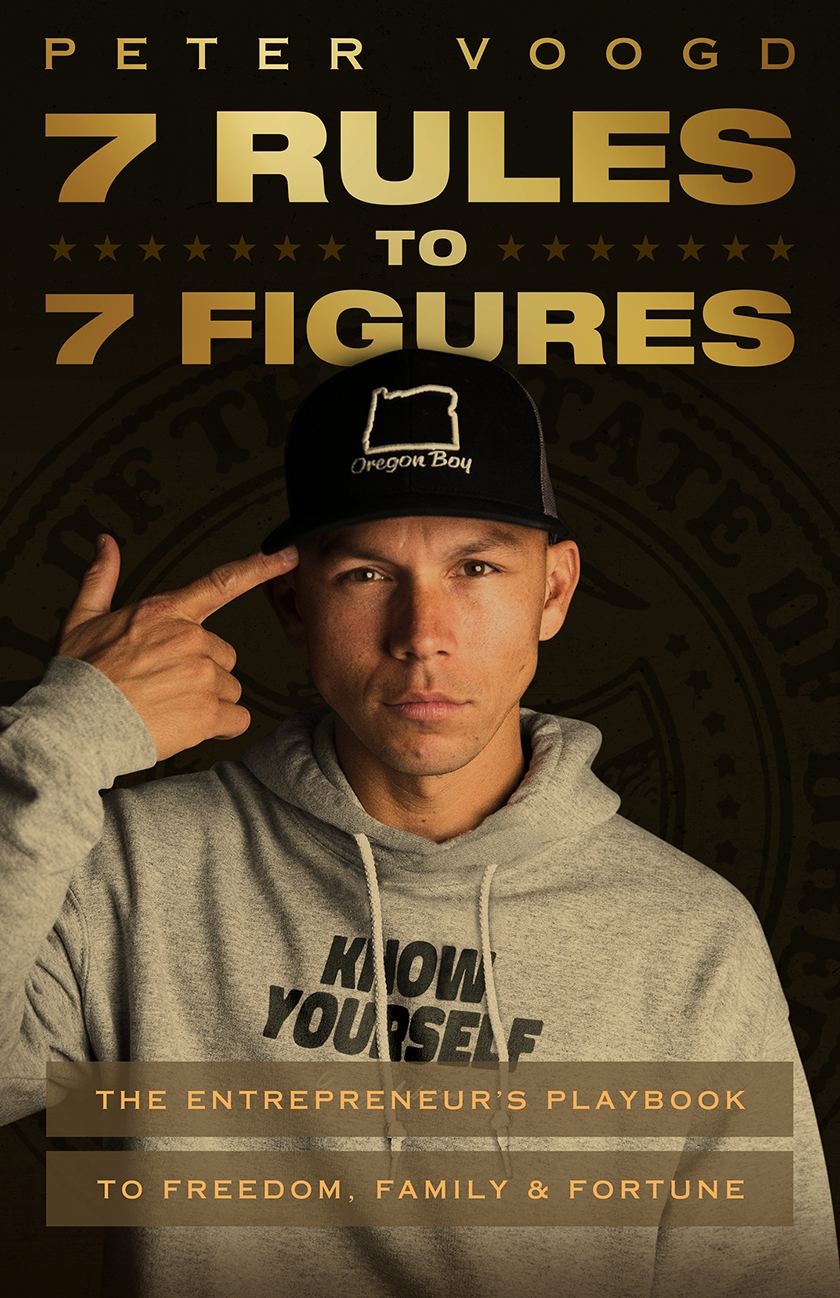
[0:00:24] BB: Since the 2014 release of the global sensation 6 Months to 6 Figures, Peter Voogd’s strategies have been featured in Forbes, Entrepreneur, Huffington Post, Business Insider and many more. Now in 7 Rules to 7 Figures, Peter lays out the keys to a truly world class life. One in which you can have your cake and eat it too. Wealth, family and the freedom to enjoy it all without sacrificing your personal values. Given the lightning-fast technological revolution of the past five years alone, there's been no better time in history to be an entrepreneur than right now. The early adopters who shift into the new economy today will be perfectly positioned to succeed at a whole new level. Anyone can have a world class life you just have to be willing to go after it. In Peter's own words this book is about you, your results, your future, your income, your story and your legacy. Welcome into the Author Hour. I'm your host Benji Block and today I am honored to be joined by Peter Voogd. He just authored a brand-new book titled 7 Rules to 7 Figures: The Entrepreneur's Playbook to Freedom, Family, and Fortune. Peter, so glad to have you to joining us on Author Hour today.
[0:01:42] Peter Voogd: Thank you man. I'm excited to be here thanks for having me.
[0:01:46] BB: Absolutely! So, Peter some are going to be familiar with your first book, released back in the end of 2014 6 Months to 6 Figures. But for listeners who may be new to you and your work. Catch us up to speed, give us a snapshot, provide some context on you and your background.
[0:02:02] Peter Voogd: So, I grew up in a super small town, so even hearing you say that I wrote a book is still surreal to me and it's — and I've already had a book for six years. So, because, small town, 6000 people, didn't really have any entrepreneurship around me. Didn't really have any knowledge of success, of money. And because of my journey of going to college, going to Business School, dropping out, getting mentored, getting into sales and entrepreneurship at an early age. I started to kind of figure it out just from being in the trenches. And my first book was after I went from broke to six figures in six months, and really started to finally build a life on my terms that I was proud of. I went through a lot of frustration, anxiety, stress, feeling like I let my family down, just a lot of challenges and once I started to really understand who I was and what I wanted and how possible it is to create a life on your terms and then build a successful business. When I started hiring mentors and going all in on building a business. I got so excited about the life I was building and I started teaching and coaching and sharing it with my sales team and other people and I got more fulfillment when they said I changed their life. And I ran a pretty big sales company and we were doing millions and I was helping these young, young entrepreneurs that were 19, 20 make six figures and really create financial freedom and I started understanding that you know the greatest currency there is, is the effect that you have on someone else. So, I wasn't an author, I didn't think I was an author. The book 6 Months to 6 Figures came out of just I couldn't sleep because I felt like I had a message to share. I felt like I had to get this stuff off my chest. I was broke and stressed and struggling once before and I was able to turn that into six figures in six months, and build a life I was proud of. So, for me, I wanted to reach back and share that with people. I didn't — I thought — if you would have told me it was going to sell over 1000 copies, I would have laughed. But it's now at almost 800,000 with 6/7000 reviews. So, it's mind boggling and it's been a crazy journey in the last five or six years. I didn't think I was going to write a new book but the same thing happened where I just felt like, I kind of hacked the system and it's hard to get to seven figures doing more of what got you six figures. It's a different way of thinking and this new book came from observation, conversations, experience, due diligence and just paying attention. So that's where this came from, this wanting to give people the next steps if you're already at six figures how to get to that seven-figure mark in a way that doesn't sacrifice your values, where you can build a life, you're actually proud of. So that's kind of the short story but it's been a journey man. I mean I could talk about my failures all day but…
[0:04:43] BB: Yeah, yeah, yeah. Talk to me a little bit as you're working on this, this second book, this new project. Who your ideal reader was in your head? Who you're imagining and who you're wanting to pick up this book?
[0:04:56] Peter Voogd: Yes, someone who is just working extra hard going extra mile. Working 80, 90, 100 hours a week and they just can't seem to get to that next level and they have anxiety and a little bit of frustration because they have a family, or they have people that are counting on them and they feel like the only way to make more money is to work more hours. And things just aren't sticking maybe they don't feel like they're technology savvy, maybe they don't understand what's happening in the marketplace or how to pivot in their business to go to the next level. It's just people that are frustrated and they feel like they're overworked at the six-figure mark and they want to reach that next level of success of peace of mind, of freedom but they don't exactly have the steps to do that. Or they feel like, in order to get to seven- and eight-figures in business, they have to sacrifice their family and their values and they have to work 100 hours a week. From my observation, most of the people that I connect with that are at seven figures, they have an amazing lifestyle. They're working less than people making six figures because people making six figures, a lot of times are working like chickens with their heads cut off as I once was. So, I wanted to let people know that are maybe overworking themselves or they don't have clarity on what's next, how to get a road map on building a successful business on their terms, their own way that doesn't sacrifice their freedom. And they do it in a way that keeps their values intact. So that's the ideal audience, someone that's just feeling like they have more to accomplish. They want to build a more successful business. They have people counting on them, and they want to get to that next level but they just don't have a road map.
[0:06:37] BB: That's great. Look, let’s dive into the actual content here of the book. I'll start with a quote you say this; you say “there is nothing worse than living a life somebody else designed for you or letting others’ expectations of you become your reality”. Talk to me about your personal awakening to this. Did you have a moment when it became really clear to you when you started looking around going “man, I don't want to live a life that somebody else designed for me”?
[0:07:03] Peter Voogd: 100%. I had — I did everything society told me to do. I went to school, I got good grades, I went to college, went to Business School. I did every single thing that people wanted me to do that in my small town was the way out. And I found myself stressed, frustrated, broke with no help. So, I'm like, hold on a second, how am I doing everything everyone told me to do to the T, and I feel frustrated and stressed out? When I started getting into business, I took advice from society and when I was struggling it's just “work harder, work more hours, work harder”. So, I'd work more hours. I'd work 60,70, I got up to 80, 90 hours.
[0:07:45] BB: Wow.
[0:07:45] Peter Voogd: Right? And because my results weren't moving, so I realized everything I was doing was based on society's expectations. So, at that moment I kind of took a step back and realized that most of the things I was doing was because of someone else. Or because of an expectation or because of my small my small town on mindset that I have. Because people, they lower their standards, they don't expect a lot because that's the reality. A lot of times right now in society, settling is the new normal and people validate settling when they could reach for greatness or build a successful business. There's never been a better time in human history to build a business on your terms if you understand how the market works, where it's going, how to really understand who you are, how to capitalize on your strengths. So, there's been a lot of instances to be honest, that I just felt like I wasn't in alignment with my values and my goals. So, for me I had a nine-to-five job because I thought that's the way out. I mean, I love my parents to death, my mom “You have to get a normal job” and I said I don't want I don't want a normal job. I don't want a normal life, but you have to start there. So, I'm starting there and I'm stressed, I'm frustrated, I'm adding up my paychecks and no matter what I do I get the same amount. So that just never sat well with me so I want — I feel like there's more people like me. And maybe right now, there’s a whole section called the ultimate nine-to-five escape plan. The death of the nine-to-five. Where a lot of people do feel like they have a gift or a mission or a message to share or they want to start a business, but they don't know how because they do have expectations from others. They are living based off other people's standards and they want to escape, they just don't have a plan. So, I kind of walk through that as well because I was once that person so there's been a lot of instances and I think if you ask the majority for help it's usually the wrong answer. You really have to start finding people who already have the lifestyle you want. The people that you look up to, that you respect, that challenge your thinking, that make you think different, then make you think bigger. There's a whole chapter. Rule number 2, is world class circle of genius — you have to elevate who you're around because who you're around is who you become. And a lot of people that are making six figures, all of their friends are also making six figures in the exact same way in the same bubble. So, for me, I only had when I was broke all of my friends were also broke. They were telling me “It's okay to be broke, you’re 22, you’re 23”. I don't know about you but it doesn't feel good whether you're 22 or 50 to not have choices and be great. So, I had to elevate who I was around so I literally kind of made a make it or break it list. And I elevated who I wanted to be around. I wanted to be around people that were growth oriented, inspiring versus people that held me back or let me off the hook, you know what I mean? So that's kind of where that came from.
[0:10:31] BB: Yeah, it's so vital because you said you know so often people settle and that's become the new normal and a lot of that does come from a lack of vision for our own life, right? So, we just start taking advice from anybody and everybody because we're just like “I don't really know exactly what I want” and we don't get really clear on a lot of things. And part of the reason I think we don't get clear, you address in the book because of how much information there is to consume, the content…
[0:10:58] Peter Voogd: 100%.
[0:10:59] BB: …I mean, between books, podcast, YouTube, social media we have endless, endless content at our fingertips. So, this can become an issue for people wanting to start things, right? You see this playing out where people are like I have to consume all this content and then we lack the ability to actually create. Talk to me about how you see that playing out right now and your thoughts when it comes to what people should consume.
[0:11:24] Peter Voogd: Well first, my entire life changed when I started getting addicted to outcomes and results, not information and knowledge.
[0:11:32] BB: That’s good.
[0:11:32] Peter Voogd: Everything changed because I was so addicted to podcasts, to reading, to videos, to audios, to learning, to growing, to learning to learning to learning and I realized I had to think back and have some deep reflection of why? And I realized it was actually easy. It was fun, it was easy. And building a business shouldn't always be comfortable and easy. So, I realized, most people get addicted to information because it's not that hard to read a book, it's not that hard to watch a YouTube video and people trick themselves and thinking they're being productive when the actual productivity comes in the execution of the right information. So that's when my life totally changed and I went on a journey last year — a year and a half ago about — and I only had one podcast I listened to, I only had one mentor. I consumed the least amount of information I've ever consumed. I went to one event and I wasn't overloaded. I was very strategic in what I consumed… That's tricky, maybe in a second. But I really, really had my best year ever results wise, peace of mind wise, success wise, income wise, family wise, business wise. And I just realized it's because I was so consumed with information beforehand that it would overwhelm me subconsciously. When you're overwhelmed, you seek distraction subconsciously. So, I was just always distracted, so now that's why in this book I give action plans and execution plans after every single chapter, right? So, I have, I've spent quarter million plus on personal development, masterminds and retreats and trainings and stuff and I wanted to simplify the things that have worked for me that have gotten me real results before I move on. And another reason I talk about master versus overload is because of all the information out there, I give a lot of stats on how much information is coming out there. So, it's just easy with social media with comparing with consuming with the information to get overwhelmed. And I want people to understand mastery is the highest form of accomplishment that there possibly is. So, for me before I take anything on, I ask myself, “Is this information congruent to my ideal six-month vision? Is this information proven and taught by someone who has the results I want and has similar values to me? Have I taken action on the previous information? And am I certain this is the best information in training available on the subject?” When you have a filter system and a checklist to make sure you've actually executed what you've already learned before you move on. It's almost like a breath of fresh-air. You feel relieved and you have more clarity because there's not enough — or there's no overload. Does that make sense? That’ where that came from.
[0:14:13] BB: Yeah. That's so good.
[0:14:15] Peter Voogd: It’s been a game changer for me.
[0:14:17] BB: Yeah. I mean focusing on the outcome is clearly the way we should do things. But obviously like you’ve said when you consume so much you easily get overwhelmed but you also get a dopamine hit from the information you're consuming. And I think that's part that we don't often talk about because we become like self-help junkies or like entrepreneur. I mean we just take in all the information because it feels good, because it almost feels like well, I'm working on my business, I'm working on myself because I'm hearing somebody else's story of how they did it but we didn't actually do anything yet.
[0:14:48] Peter Voogd: And people ask me too they say, “What amount of time should you focus on consuming and creating and executing and thinking?” That's a little bit long to go through now but in the book, it talks about that. It gives the exactly there's a time for thinking and there's a time for execution and growth. And if you if you're thinking when you should be executing, you're going to go broke and be stressed out. If you execute when you should be thinking and growing, you'll also be stressed out and be discouraged. So, you have to strategically and intentionally plan your schedule where there is growth but there's also execution, and then there's also thinking time for your business and I just feel like people take too many random acts of action. And here's the scary thing you can get the six figures taking random action. Being overloaded. Being overwhelmed. Having ambition. It's taking action, but it's nearly impossible to build a sustainable successful business, that allows you to have freedom for your family, by taking random acts of action. There has to be strategy and purposeness, does that make sense? You have to be purposeful — and that's what the book is about.
[0:15:52] BB: Yeah. Talk to me about this culture of instant gratification. It flows out of all the things we're talking about, that you talk about the need for in a culture of instant gratification, the need for delayed gratification. And you talk about clearly defining goals we kind of hit on that — when you talk about rewarding yourself and visualizing a realistic future. And you do in the book, you mention this idea of the six-month plan. How was some of that developed, thought through? How are you executing on that? How often are you looking at that? I mean there's a lot that goes into that sort of plan. But it's all with this purpose of delayed gratification, right?
[0:16:28] Peter Voogd: Yeah, the focus is, if you delay things until later and you choose growth in the moment you just make that tough decision. Instead of eating the cheeseburger you eat the salad, instead of hitting the snooze you wake up early. You know what I mean? All these things you make the tough choice in the moment. Life is just about the tough choices in the moment and when you make tough choices in the moment, because you're delaying the gratification and result of it, life becomes a lot easier and businesses are built because of that. If you take the easy route and you want instant pleasure life becomes a lot more challenging. That's kind of where that came from, and I wanted to hit this in one of the first chapters because I want to clear people's state of mind to make sure they're in the perfect state of mind to go after the first or second seven-figures, eight-figures. And there's just a lot of things that hold people back subconsciously. There's a whole 10 years — 15, I think it was 10 to 15 years’ study of anybody who had parents that were paycheck to paycheck, that didn't think about the future. There's no, how do I say this, there's no recollection of now and future, there's no difference. So, a lot of people right now, subconsciously they're only in the now and they're not focused on delayed gratification. And they are wondering why they’re struggling. So, a lot of people that grew up a little more scarce, where the parents were just trying to survive — which is not bad. You have hunger from that. But if the parents don’t have the focus of now and the future, the kids don’t. So, they have no thought process of what I can do now can be delayed until later, and that’s the scary part. So, me, I’m almost over focused on delayed gratification. Where I don't sometimes enjoy so I give that happy medium on how to do that. But when you have delayed gratification and you set goals in place you have a six-month vision that you look at daily. Things start to happen positively in your business because you're focused on good things happening later — and eventually later comes. So, that's why I talk about that. It’s a tricky thing to simplify — that's why I had a whole chapter for it. That changed my life when I when I focused on setting the milestones and being patient in building the business the right way. Adding value first. Building the foundation, understanding who I am my area genius. Making sure I have the right vehicle for my business because I've seen a lot of people who, maybe they do delay gratification — but they're in the wrong business model. And they put five, ten years in this business model and realize “Oh shoot this isn't even what I wanted to do”. So that's why you kind of need all of the rules in order to make this lifestyle happen and it starts with delayed gratification.
[0:19:16] BB: That’s good. Yeah, so much of what we actually desire is a long-term journey. It's not, it's something that can't happen quick so you have to train and build that muscle that's great. I want to shift…
[0:19:27] Peter Voogd: ...and I was just talking about, really quick before we shift — my son just turned two and he's brushing his teeth now and stuff. And me and my wife were talking yesterday about how important that is. It’s so simple, but understanding when he's older showing him if this happens, if you don't brush your teeth two three times a day. You fast forward we could show him someone — so simple — but you show him someone’s teeth that are super messed up, this is what happens. It doesn't happen tomorrow it doesn't happen in a year. But it will happen eventually that's why we have to respect now, but also think about the future. And if you teach kids that, it's such a game changer for them when they're older. There were studies of kids that have delayed gratification — are, they have more peace of mind, they're more successful, higher SAT scores, more conversational, better in the workplace. You know what I mean there's just so many studies so I just that's why I'm passionate about that subject.
[0:20:16] BB: That's good. Yeah, if you have kids teach them young. I mean that is — like you're saying, both bad example and good example. But those —I mean we get to help train that next generation and if we can instill delayed gratification, we're making the next generation better for it, that's amazing.
[0:20:33] Peter Voogd: 100%.
[0:20:34] BB: So, shifting topics slightly here. One of the main ways we create change that you've alluded to is deciding who we spend our time with — so our friends, our network — that changes our mind. That changes and elevates our perspective. How — again you give so much great content and practical feedback on ways we can do this. But talk about effective networking and common pitfalls to avoid.
[0:21:00] Peter Voogd: So, networking is tricky but I feel like if I had to narrow down everything that's happened to me the last 15 years. And which one made the biggest difference on my bottom-line results, it's been networking. It's been connecting with the right people. And I've done it the wrong way and I've done it the right way. So, there's — I talk about a couple keys to networking in the digital age. But I also talk about the deadly sins that people do that are the wrong thing to do. So, the wrong way is not having a standard. Not having a standard of who you're reaching out to, how you're reaching out, the follow up system. Maybe you're asking for something right away. Maybe you're making it about you and not them. So, I talk about the biggest pitfalls. So, the number one thing that I've seen in connecting with successful people asking them, “Hey, when someone — when you get 1000 messages or emails what makes you respond to certain ones and ignore the rest?”. By doing that 1000 times, the last ten years I'm starting to realize why most people can't get ahold of anybody. And why the two percent that do it the right way can get ahold of anybody. So, first thing is, the number one thing successful people value is time. Number one thing. And what's the number one thing most people ask for right away?
[0:22:16] BB: Yeah, their time.
[0:22:17] Peter Voogd: Right away, “Do you mind if I can steal like 10 minutes of your time?”. And it's like you're instantly going to get ignored. So, I give a script I — and I, it's funny, I was hesitant because I'm like I really went all out and just gave all my…
[0:22:31] BB: Yes, some secret songs…
[0:22:32] Peter Voogd: Yeah, just everything. So, I give my exact script that I use to reach out to people. And how to get people to respond. And the key is being intentional, the key is taking action first and the key is following up strategically and intentionally. So, I talked about a story in one of the networking sins is just being like everybody else, and there was a girl that wanted me to take place in her summit. And I've turned down a lot of different summits. She wrote a letter to me, personalized approach, told me how much she loved the book she said “I already reviewed your book and passed it out to a couple of people”. So, I responded and helped promote her summit. It probably made her a good amount of money. Just because she reached out differently. She took a different approach by mailing a handwritten invitation. She showed she was serious by taking action before asking you for anything. She shared the why, and she got me emotion involved. And she followed up with me on multiple platforms. So, that's what you have to do in this new economy, is be different. I talk about the three things: create a dream list — and you have to figure out what category you're reaching out for — why. Is it paid mentorship? Is it quick advice? Is it a book endorsement? Is it you want them to speak at your event or you want to speak at their event? Is it to do business with them or express gratitude? Maybe do a partnership or promotion? A lot of people don't have goals, or specific things they want when they reach out. And then you have to find similarities of people that are similar to your values and your vision. Maybe they're in the same industry. Similar missions, similar lifestyles. Maybe same religious or political views. And then you have to define the end goal. What's the ideal end goal for reaching out to this person? And a lot of people aren't doing that. So, I talk about that I give the exact script and I really share what you have to do and how strategic and relentless in a way you have to be if you want a network. So, there's two sides, one, there's the networking of high-level people and then two there's your network like your circle of influence. There's asking people for something. And then there's the people that you're surrounded by. And here's one of the biggest breakthroughs I've had in my entire life is — I used to bang my head against the wall trying to figure things out on my own. What are my next steps? How do I do this website? How do I create an affiliate program? How do I do these partnerships? How do I get to speak on stage? And most of my stress was from that mentality. The figure it out myself mentality. When you have the right network, you no longer have to figure it out on your own. Just ask your network. So, every single business problem I've had the last five years, is solved by a phone call or an email. And it makes life so much more rewarding, fulfilling. I have more time with my kids, my wife, my family. I can travel because I don't have to solve problems anymore. My network can help me solve the problems. That's what people don't realize, is — I think the most deadly mentality you can have in 2021/2 and 3 is “I'll figure it out myself”. It's just — that's not an intelligent mentality anymore, and it's causing people a lot of frustration and pain. So that's what this chapter is about the rule is just circle of influence and understanding how powerful it is to have the right people by your side that can solve your biggest problems.
[0:25:45] BB: Yeah, when we're talking strategies and scripts and all these things that you're giving away, I mean the chapter is incredible. But really what it is and what I would boil it down to is it's a human approach, right? It's putting yourself in the other person shoes and just really thinking through again — strategy shows that you're intentional. And intentionality is what any relationship was built on. So having that level of intentionality and thinking through why you're doing what you're doing is so important I loved — I love that chapter. And again, it was just so practical that's every end of every chapter. The amount of time to just sit down and answer the questions that you give I think that's worth the price of the whole book because that's where you turn, read chapters into actual content you're going to start putting into action in your life.
[0:26:32] Peter Voogd: 100% and that took a lot of frustration.
[0:26:36] BB: I can't even imagine.
[0:26:37] Peter Voogd: But I want it to be super actionable because all the books that helped me the most are ones that had action steps.
[0:26:43] BB: Yep.
[0:26:44] Peter Voogd: You know what I mean, and had execution plans so I really wanted to include that to make it less work for the reader and easier for them to execute what they felt was most important based on their situation, so I'm glad you noticed that.
[0:26:55] BB: We're going to start to wrap up here, but you give these stats. You say 76% of people right now are actively disengaged and don't like what they do. 87% of people have no passion for their job. Yet the jump to entrepreneurship, the fear of the unknown can stop people from action. So, you provide — and we mentioned it earlier — a nine-to-five escape plan that's again worth the price of the book, but what would be your advice to someone that's beginning this work and they're thinking “Man, I got to find my way out”. Just any words of advice and motivation as we kind of start to wrap things up here.
[0:27:33] Peter Voogd: Yeah. I mean it it’s really first of all, understanding that in the new economy, age is becoming completely irrelevant. I know 18-, 19-year-olds making millions and millions of dollars. Buying their third, fourth, fifth house buying houses for their mom and dad. And I know broke 50- and 60-year-olds that have 25 years of experience. So, it's getting over anything to do with age in your past and figuring out who you are and what you're willing to give up to get what you want. It's taking a step back, and I've been there trust me — it's not easy. If it was easy everybody would do it. But understand that when you start figuring out what's ideal for you and you start thinking about your six month or one year vision and you ask yourself, “What's ideal?”. If you start asking yourself those questions and you base it off potential and what's possible, not your past or insecurities. Everything changes. So that's where you would start from. If I didn't have insecurities — everybody does — but if I didn't have those. If I didn't base things off what I'm doing now, or my past, or my network, what is ideal for me in the next year? And then you work backwards and you read a book like this and you actually execute these things it will teach you how to make that a reality. But I just feel like people get in their own way.
[0:28:57] BB: Right.
[0:28:58] Peter Voogd: So, what I would say is, a lot of people right now live on “someday I'll”: someday I'll be successful. Someday, I'll start my business. Someday, I'll quit my nine-to-five. Not now, but someday. And they're waiting for the perfect time and there is no perfect time. Most people spend the first half of their life saying they're too young to chase their dreams and the second half they say “I'm too old to chase my dreams”. That's why I say now matters more than ever. It's never been more possible in human history to build a business on your terms — if you have the right blueprint in the right network. It's never been a harder time if you try to figure everything out on your own and you based things on your past or insecurities, not what's possible, on your potential that's all I'd say. I mean if you want it bad enough right now you will make it happen. And if you have people counting on you, you should double down on the reasons why you want to make this work. And I hope the blueprint is the book. I hope this gives you the competitive advantage that most people don't have. Because I didn't have a book like this — I had to go through a lot of struggles and frustrations and discouragements and insecurities and wasted time and wasted money wasted energy. Because I didn't have a blueprint. I read 50 to 100 books, but they were just too all over the place for me. I needed something that was concrete and tactical and comprehensive and that's one of the reasons I created this. So that's what I would tell them, is just it's time to bet on yourself. You know it's time to really put everything on you. When, ten years ago people valued paychecks and they valued the government and they're like “Oh well I'll get security for my paycheck”. There's no security anymore, if you look around and you see what's happening with AI coming and replacing 40 000 000 jobs in the next three to five years, there's no security except the security and confidence you have in yourself and your ability to make things happen based on how bad you want something. So that's what I would say.
[0:30:46] BB: That's great man. For those that want to connect with you further, Peter how can people stay up to date on things you're doing and maybe reach out?
[0:30:55] Peter Voogd: Yes, so we have — I'm all over on Instagram and Facebook and all that stuff. The book they can purchase on Amazon and we have a really cool — I'm really big and over delivering — so I have a workbook with the book where it simplifies everything to just a workbook status, that they can get with the book if they go to peterjvoogd.com/bonus and then on my website, we're always updating what we're doing and what's coming out. We will update when the audio book comes out, stuff like that. So, I'd say connect with me if you have any questions regarding the book, please let me know I'd love to help you out. And thank you so much for your love and support. This book is definitely something I feel, for me, was relieving to get off my chest. But I don't feel like it's about me, it's about the people that really do want to claim some of their freedom back and build a life on their terms they're proud of because I feel like if someone builds $100 000 000 business, but they don't have a lifestyle to be proud of I almost feel like they did it wrong. So yeah, they can connect with me on all platforms. If they want the book, it’s on Amazon, and it means the world to me. Thank you, man, for who you are, and what you do and for this great interview and I appreciate you guys. Absolutely yeah. honored to talk to you here on Author Hour man, I know 7 Rules to 7 Figures is going to be a great resource for so many, so thanks for chatting today, Peter. Yep, have a great day.
[0:32:11] BB: Thanks for joining us for this episode of Author Hour. You can find 7 Rules to 7 Figures on Amazon, a transcript of this episode as well as all of our previous episodes is available at authorhour.co. For more Author Hours, subscribe to this podcast on your favorite subscription service. Thanks for joining us and we'll see you next time same place, different author.
Want to Write Your Own Book?
Scribe has helped over 2,000 authors turn their expertise into published books.
Schedule a Free Consult