From Walk-On to the Big Screen: How Candler Cook's Book Changed His Career and Started a Movie
✨ Episode Summary
Candler Cook walked onto the University of Georgia football team as a junior with no high school starting experience and went on to play in an SEC championship game. His Scribe-published From Underdog to Bulldog launched in 2019. Seven years later it has hit #1 on Amazon in five categories, got Candler hired into the private debt firm where he has worked happily for seven years, and is being adapted into a major motion picture with a $6 million budget, Patrick Schwarzenegger or Tanner Buchanan attached to play Candler, and Denzel Washington or Al Pacino in the running for the mentor role. As Candler puts it, "[The book] is a multiplier effect on everything else you ever do. It's like a tailwind for the rest of your life."
⭐ Top Moments
- The Book Is Becoming a Major Motion Picture. "[The film production company] made an introduction to this film production company that was interested in turning the book into a movie. The screenplay writer just mentioned... his name's Alec Roth. His dad, Eric, wrote the script for Forrest Gump, Dune, and A Star is Born. And Alec actually just recently won the UK Film Award for his screenplay, Billy Knight, which has Al Pacino in it." $6M budget. Patrick Schwarzenegger or Tanner Buchanan as Candler. Denzel Washington or Al Pacino as the mentor. UGA partnership active for the first time in college football movie history.
- The Book Got Him His Current Career. "A couple weeks after it came out was when my now CEO read about it... my now CEO reached out to the head of the alumni chapter and said, Hey, I love this story. I have to meet this guy. I could tell immediately that it was going to be a home run fit." Seven years and counting at the company that found him through his book.
- A Book Is a Multiplier Effect for the Rest of Your Life. "I describe a book as a multiplier effect on everything else you ever do. It's like a tailwind for the rest of your life. By forcing yourself to push through your fear and really build something with it, you build your courage muscle so it becomes that much easier in other areas of your life." A TIER 1 declarative quote that earns its own moment from a 7-year-out Scribe author whose book is becoming a movie.
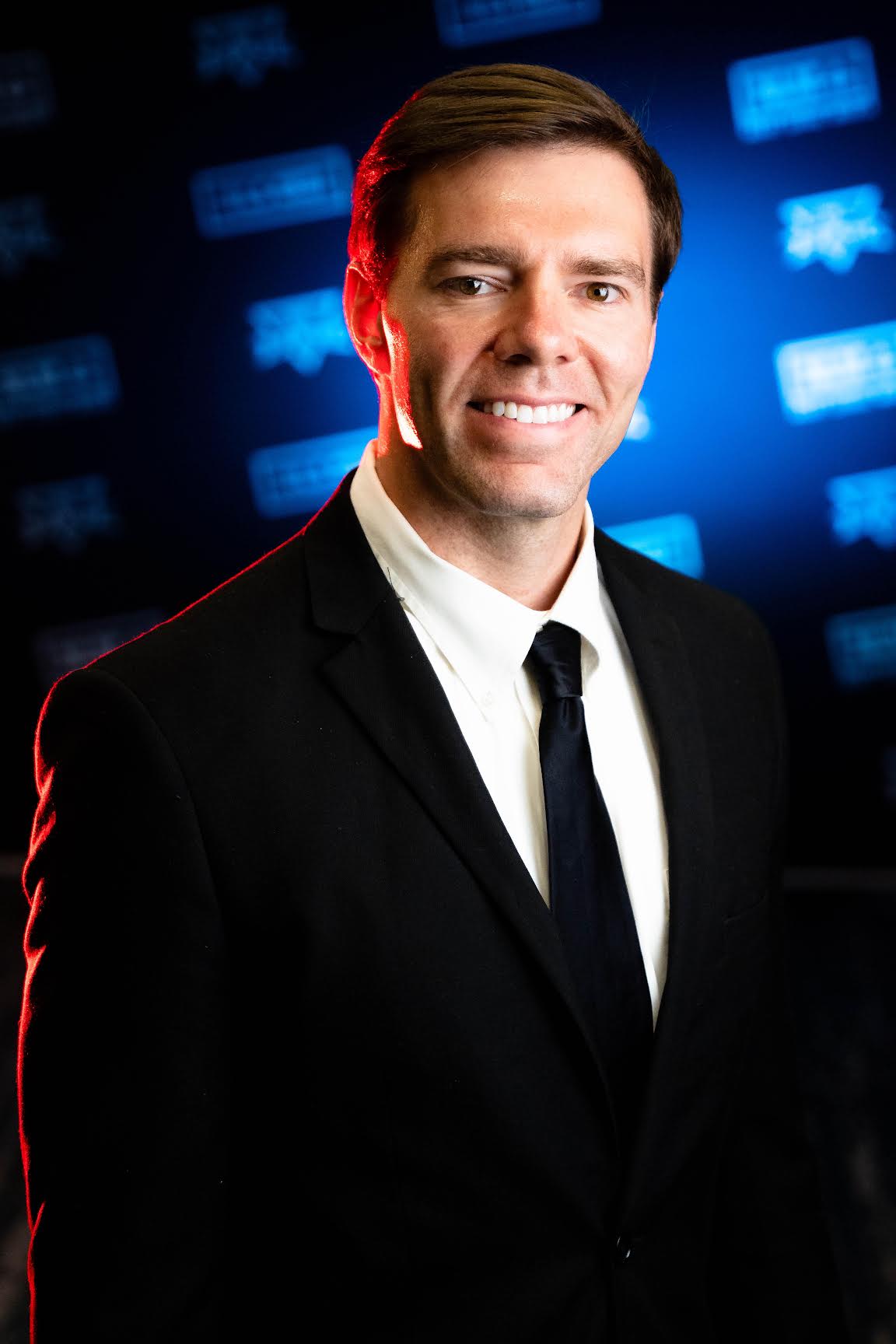
Candler Cook
Candler Cook is a private debt investor and the author of From Underdog to Bulldog. He walked on to the University of Georgia football team his junior year, played in one game, dressed for many, and stood on the sideline at the SEC Championship his senior season. He published his book with Scribe Media expecting little more than a few signings at the campus bookstore, and instead watched it reshape his career: a chance mention in a fraternity alumni email led to the private-debt role he still holds today, and the story is now being adapted for the screen, in development with full University of Georgia partnership. Written to pass on the lessons he first learned mentoring one young player, From Underdog to Bulldog reached number one in five Amazon categories at launch.
★ Scribe Case Study
Candler Cook's From Underdog to Bulldog Hit #1 in 5 Amazon Categories, Got Him Hired Into Private Debt, and Is Becoming a $6M Major Motion Picture 7 Years After Launch
Candler Cook walked onto the University of Georgia football team as a junior with no high school starting experience and went on to play in an SEC championship game. His …
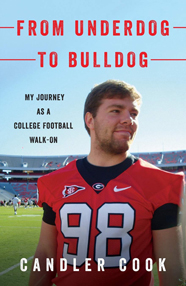
📚 Books by Candler Cook
Transcript
Guest: If you already have an idea formed in your head, you're probably thinking about it multiple times and it's coming up again and again. It's your subconscious telling you to go for it. And you can come up with excuses for why you're busy, but everyone's busy. And at the end of the day, if that is more than a fleeting thought, you're meant to put that book out there. take the jump and everything will become less scary because you don't feel ready for things and then begin, you begin and then you feel ready as you go through it.
Eric Jorgenson: Let's start with a little bit of background. Tell me, tell me like your, your life story up to the moment where you realized you should write a book.
Guest: Great question. Yes. So I'm born and raised in Atlanta, huge University of Georgia sports fan. I used to go to football games with my dad. UGA was the only college that I applied to is the only place I saw myself going. I went to school here, graduated in 2011. and walked on to the football team my junior year. So I got to play for two seasons and dress out for a bunch of games and play in one of them. And then also be there for the SEC championship, my senior season. And then after that, I went into insurance for several years and was getting my financial services licenses. I realized I liked that part of the business a lot better. So I switched to a more traditional finance path and worked for Home Depot and later Aarons, both of which are in Atlanta. And after that went and got my MBA in the evenings because I wanted to switch the private side of finance and worked for a private equity firm here in Atlanta. And then seven years ago, shortly after publishing my book, switched into private debt. So kind of the cousin of private equity. And that moment when I felt like I should write the book came When I was mentoring a younger friend of mine who was also a UGA and he had the same dream that I did which was walking onto the football team and he had very long odds he did not play much at all in high school thought people would make fun of him didn't really want to talk with people about it. And I helped mentor him and he put in a ton of work and he ended up making the team as well. And so after that, I felt like it would benefit more people than just my friend, John, if I wrote the story down. And so that was the beginning of the idea. And then not long afterwards, got in touch with scribe.
Eric Jorgenson: That's awesome. So this like I love when books come out of conversations, especially with like one person. Like when you when you realize there's one person who needs this and to make that leap to like, I'm sure there's thousands, tens of thousands of people who have similar dreams, but no one has shown them the path, shown them the blueprint, but will help them believe that this was doable.
Guest: That's exactly right. So to me, the book was written to tell a story about how seemingly ordinary people are capable of extraordinary things and how a lot of people can relate to having a big seemingly impossible goal. How do you go about breaking that down into bite-sized pieces, things that you can check off every day to get you a little bit closer until you look back and see all the progress that you've made and you're there. And so it's really written as a how-to manual for other people to set and achieve these big goals and then told through my football story.
Eric Jorgenson: I love it. Okay, so what was the process of writing like for you? Did it come easily? Did you enjoy it? How did you go about it?
Guest: Great question. So I started writing it actually a little before I met Scribe. And as someone who has never written a book before, that was tough. I would sit down at night and kind of push myself at the beginning to write a certain amount of words. Sometimes that came easier. Sometimes that was tougher. It was a very busy period in my life. I was working full time. Then I would go to business school from six to nine, then get some dinner. And so between 10 and midnight each night, I would write some. And I'll say this, it was, it was very fun, but it also felt. I guess a little more pressure than I thought, because I felt like each, each paragraph had to be perfect. And so I would kind of go over it again and again. And that's where scribe helped me a lot in terms of dialing in my voice. and also in terms of kind of letting go of some of the minutiae because trusting that I have someone else's eyes on it and that I don't need to obsess over whether each word is perfect or whether I start sentences with the same word too often or things like that.
Eric Jorgenson: Yeah, that's what we always call the first draft, the vomit draft. Like it's not going to be pretty. You don't overthink it. Don't worry about the polish. Just get it out. Get it out. Get it down. That's right. I totally trust the rewriting process.
Guest: Yeah.
Eric Jorgenson: Yeah. So how long did it take you to get that first draft down? You know, just writing at night.
Guest: The first draft was about six months.
Eric Jorgenson: Okay. And how did you feel about that first draft?
Guest: I felt probably about a six out of 10. I was glad that I wrote it. There were parts that were better than the other. I also needed to lean in and trust a second set of eyes because there were parts of the story that maybe were meaningful to me that would not be as meaningful to the audience or wouldn't really push a book along. And also the goal was to get it to be right about three hours to read it. And so what I originally wrote would have taken about four hours. And so there was some extra material in there that we were able to cut out without losing any of the heart and soul of the book.
Eric Jorgenson: Yeah, that extra pair of eyes is so helpful to just help you see through the reader's perspective, what really is important, what really helps and what really moves them along. I know this is like I'm baiting you a little bit here because I know that there's an incredible story, but I always. get good stories when I ask this question, which is what unexplained good things or surprising good things have happened as a result of your book?
Guest: So much. I could have never in my wildest dreams envisioned what doors this book would open in my life. At the beginning, I hoped a lot of people would buy it. I even hoped that it would open some doors and I could meet some interesting people through it, but I had no idea the magnitude of the impact this could make in my life. A couple weeks after it came out was when my now CEO read about it. He happened to be in the same fraternity that I was in at the same school a decade before me. And as part of the marketing, I'd reached out to my fraternity and had them add a few sentences to a monthly alumni email. And so my now CEO reached out to the head of the alumni chapter and said, Hey, I love this story. I have to meet this guy. When can you set up a lunch? So he got a contact info and I could tell immediately that it was going to be a home run fit. It wasn't that long. It was probably a month and a half. After that, when my old private equity job changed a good bit, they went through a sale of a good amount of their portfolio. And so at that point, I jumped in with two feet with my new company, been there for seven years, absolutely love it. It's just a perfect fit for my skillset in terms of dealing with, it's a finance job, but it's dealing with numbers and dealing with people. That's what I like a lot about it. I've spent, you know, many years of the beginning of my career, grinding away reports in a cubicle. And there's a lot to be learned from that. I'm sure a lot of that's changed now with AI, but it, that was helpful background work and laid the groundwork for me to have roles that increasingly allowed me to interact with people. And so that's what really made it such a good fit. So that, that was the big thing was a job where I'm very happy and make more than I have before just excellent fit for my skillset. And then over the last two years, I had a film production company that had gotten ahold of my book. And that was through an attorney that I know who's helped refer my company some deals and he's invested with us before his name is John Myers. And he made an introduction to this film production company that was interested in turning the book into a movie. And that's not something that I had really thought of before. But I think they did an excellent job of taking the book and adapting it to film. Because while I mentioned there are things that happened in my story that don't translate well to a book, there are things from a book that don't translate as well to a movie. So in the book, when I talk about how I gained 120 pounds of muscle in three years. I take a page and I lay out what my diet looks like and I take a page and I lay out what my exercise routine looked like and it's not very long, but the screenplay writer just mentioned that doesn't translate very well to film. We're going to turn this into a montage instead of you just talking about eating and working out and then. There were other tweaks that he had where basically I told him to go ahead and have creative liberty with it as long as he did not exaggerate anything that I achieved on the field. I wanted to keep the heart of the story the same. But so he basically mentioned that he wanted to add a love interest to it. And then he wanted to add a mentor character. And so I gave him runway to create those. And so I think he did a great job with the script. His name's Alec Roth. I'm super excited to work with him. His dad, Eric, wrote the script for Forrest Gump, Dune, and A Star is Born. And Alex helped him on a few of those. And Alec actually just recently won the UK Film Award. for his screenplay, Billy Knight, which has Al Pacino in it. So I was excited to work with him, really like where the script is. And then we started talks with the University of Georgia and that's been kind of a fun winding path. They've had a good amount of turnover and a good amount of change in the landscape. of college athletics between they had an NIL entity, the classic city collective. And right around when we were talking with them, they shut that down and they went to a third party marketing company. So they had us meet with a third party marketing company. And then when the Supreme Court made the ruling, the college football players are no longer student athletes. They're employees of the university. and the schools have to pay between the sports a $20.5 million recurring salary every year. That was an unexpected annual expense for these schools. And so they actually then fired the third-party marketing group and started back up a new NIL collective under the name Glory Glory. So it's been an adventure, I would say, but a good one as we kind of navigate the different people that are decision-makers and that used to be decision-makers but are not involved anymore. And so far to date, there has never been a film that's had UGA or its football facilities in it. There are a lot of other big schools that have been in a movie before everyone thinks of Notre Dame and Rudy. But more recently, there's been safety with Clemson. There's been Arkansas with greater. Tim Tebow's movie Run the Race shows Florida, Touchback has Ohio State in it. Even if you go back long enough, Forrest Gump has Alabama and Bear Bryant in it. And so Georgia is one of those big schools that has never been in one of those movies. And so it was not a small ask of them to be willing to let us film at their facilities, which was important to us because we wanted to showcase what they're like. And we also didn't want to have to create all these sets from scratch. And so it ended up being a really good partnership. And so those are the two massive doors that were opened by the book that I would have never, ever guessed when I was writing it.
Eric Jorgenson: That's unbelievable. I mean, so are you going to be the new Rudy? Is that what's going to happen here?
Guest: There are a lot of parallels for sure. I totally understand that. So yes, that is the goal there. There are some things that are different. We were actually just talking about film comparables the other day and why that one is not the greatest because they were having to forecast what the VHS tape sales look like. And that's a very different environment than what it now looks like with doing limited film release streaming services, but the heart and soul of the movie. Yes, that type.
Eric Jorgenson: Yeah, I was thinking of like the piece itself, which is cool. Is it such a formative movie for so many people? And I can absolutely imagine a new Rudy of our era resonating. I know that this is, well, who plays you in an ideal world? Who do you wish, who do you think would emulate you as an actor? Who brings the star power to you on screen?
Guest: Yeah, so we talked about that. And it has to be someone who is young enough to get away with playing me. Like initially when we were talking through the dream list, they said, well, couldn't it be great if we got Glenn Powell? He's a star, but he's too old to be playing a college player. That's why. In his TV show, Chad Powers, it's the joke is that he's, you know, 28 or something and, and pretending to be a college football player. So basically in order to make this as efficient as possible and impactful, they wrote the budget at 6 million for it. And so the couple of actors that they came up with are Patrick Schwarzenegger. He was recently in white Lotus season three. And he's kind of in the process of becoming a star, just kind of getting some leading roles. He's the right age. I would absolutely love for his dad to play the strength coach in the movie.
Eric Jorgenson: Oh, my God, that would be hilarious. Also, he's got the genes to put on the huge muscle in a short amount of time. And that becomes great content backstory for the movie. That's that would be all.
Guest: That's right. And and he's been the kind of the first one we thought of alongside Tanner Buchanan may not be as well as well known yet. But he played Robbie Keane in the show Cobra Kai and part of the Karate Kid franchise. He's another athletic guy, young enough to play a college kid. And there's some other names they're considering, but those are the first two that came to mind. And so the idea is they want to have a bigger name play the mentor role because that role is going to have 15 to 20 minutes of screen time. So you can have a bigger name actor without breaking the budget. So far the two that they want to reach out for, and this would be, you know, shooting for the moon would be Denzel Washington or Al Pacino. They feel great about Al because he was just in their movie, Billy Knight, and it's coming out in the next couple of months. And he's called them saying that he, you know, he'd love to continue working. He actually just had a son two years ago, so he's kind of going through a career revival and like wants to get back at it in the swing of things. Cool. So they want to shoot really big for that mentor role. So that'll be in terms of cast, that'll be the majority of the budget.
Eric Jorgenson: Love it. So is there anything replicable for other authors in how this happened for you? I talked to a fair number of authors that are interested or think that their books or memoirs have movie potential. How did this happen for you?
Guest: Good question. You know, I hesitate to take too much credit for it because it kind of fell into my lap through my network.
Eric Jorgenson: you know, it was kind of, and you don't have like, it's not like you have an entertainment network. It's just happened to be your personal.
Guest: I don't correct. So it was just an attorney friend of mine who happens to know, you know, other people that are attorneys. One guy was a film attorney that was involved with it. And so he's been involved in the entertainment industry a lot and it was his company. And so the introduction itself kind of fell into my lap, but then I quickly dove into it and it, It really reminded me of the process I went through with scribe in terms of me being involved, making sure it captures the voice, but allowing someone the creative liberty to make the story right for the medium it's going through. So while you guys helped me dial in everything so that it's a tightly written book, it flows very well. Just trusting the screenplay writer to do the exact same thing for film. So I would say for people, for authors that are looking to turn it into a film to be proactive and look through their network, look for people that have already made films or they have any kind of experience or that are tangentially related to it, like an attorney who's in the film space. or someone could even be an insurance agent who's written insurance policies for film, all other kinds of things. It really is about who you know, I've since gone to some film events and made some good contacts. But I would say being proactive about that is important and making sure that you're connected with the right people who have the same kind of vision that you do and want to take it the same way you do.
Eric Jorgenson: I love this story. This whole thing blows my mind, because let's go back, you published this book in 2019. When you published it, what was your wildest hope for what the impact of it would be on your life?
Guest: I hope that it would reach people to inspire them to go after their big dreams. I hope that it would turn a profit from a sales perspective and maybe that I'd get to sign a few copies at the bookstore on game day.
Eric Jorgenson: And it's, it's led to a career inflection point, uh, like a massive kind of level up in, in job. If I understand that transition just through your network, by having this book out there and just sort of being exposed and having that surface area. And now it's being turned into. a major motion picture. It's so wild that a book that has nothing to actually do with your career had such an unbelievable impact on your career. You start with humble goals of like, I wanted to capture the conversations I was having with a mentee and just share them because I might reach people that I wouldn't have otherwise reached. And, you know, as you say, sign a few copies on game day. And here we are, you know, casting young Schwarzenegger in your, in your, your biopic. This is amazing.
Guest: It really is. I could never have imagined this, but it's been exciting to see it unfold. That's why I would encourage anyone if they're watching this and they've not yet written a book or they're thinking about writing a book to take the plunge. Cause you know, I'm, I'm part of the email list you guys have every month and read a lot of scribe books and they're powerful and you guys do a great job of. kind of help me pull the story out of the authors like maybe they have it in them but they haven't put it down yet and they don't know exactly how to make it flow and you guys structure very well and so if that book's not out there then none of those opportunities are going to come your way yeah it's it's really it's difficult to explain to people that haven't
Eric Jorgenson: felt the the tailwind. Like I describe a book as like a multiplier effect on everything else you ever do. It's like a tailwind for the rest of your life. And it's hard to imagine that if you can't if it's why I love collecting these stories and sharing them with people, because the more of them you hear, the more you're kind of like, Oh, my God, wow, this really I don't know exactly what's going to happen, but I know that if I increase my surface area and I put this amazing package of myself and my expertise and my story out there, more good things will happen.
Guest: I think there is an overflow into other areas of life because, you know, writing a book is no small venture. It's something big. Even if you've done it before, it's something big, let alone if you've not, it's really taking a plunge and it's scary putting yourself out there. You know, what if people judge me? What if people don't like it? What if only my mom buys a copy? Things like that. And so by forcing yourself. to push through your fear and really build something with it, you build your courage muscle so it becomes that much easier in other areas of your life to push through a little bit of fear. And so I think it adds significant momentum that spills over into work, relationships, all kinds of areas of your life because you had the willingness to go through something that could be difficult, it could be time consuming, and that you could easily make a million excuses not to do. And you chose to actually do the work and go through the process. And it is a process. You're not going to come up with a book idea and then the very next day be taking pictures with the cover. So the fact that someone's willing to set a goal like that and put in the work, it makes it that much easier in any other area of life to follow through with other goals that you have.
Eric Jorgenson: Yeah, that overcoming that fear of being judged and the persistence to stick with a big long-term project. I think you're absolutely right. It's a huge, so many people dream of writing a book and so few sort of go through the process and the work and muster the courage to get it done. So kudos to you and it's great to see a bearing fruit, especially unexpected and massive juicy fruit. How did you get it out there once it existed? This has all happened over the last seven years. How did you approach, I don't know how you want to think about it, marketing promotion, just getting it out there? Because I should also say, the book has done well, but it's by no means like, it's not like this became a rapid bestseller. It's not on the front shelf of Barnes & Noble. Like these things are happening, even though it's still a relatively like niche book, I would say.
Guest: Yeah. I agree with you. I thought the scribe team was excellent. I got the marketing package, which helped me a lot. I gave them a list of websites, companies, things I would like to go on podcasts. And they got me on all of them except for ESPN. And that was kind of shooting for the moon. But Saturday down South, I know they've renamed their podcast, but they had, I think it was 14,000 listeners per episode at a time. And they got me on there ended up being multiple times and they wrote an article and all kinds of stuff. So to me, it was sitting down, making a list of places that were important to me to get it in front of the right audience. And you're right. I knew going in, this was never going to be a New York Times bestseller. I'm glad we got to number one on Amazon in five categories and that was a good effort. But you're right. It hasn't been in Barnes and Noble. It's not some worldwide bestseller. And so the fact that the right book reaching your right audience can have this kind of impact means a lot. And that shows how well you guys kind of honed in the message and then how we got it in front of the right people.
Eric Jorgenson: Yeah, this is the era of publishing that we're in. I feel like a lot of people still sort of conflate like, oh, if a book is going to be successful, I have to sell 100,000 copies. I have to make these national prestige lists and stuff. And we just see over and over and over again, authors, as we say, sort of become famous in the room or saturate their specific market. And that's why we work so hard to define the readership and the transformation and You know the results that people want and oftentimes if you really do a good job of reaching those people that are. that are actually your target audience that are really want to hear the message that you have and you reach that group where they already are, the unbelievable things can happen. It's really quite fantastic. I talked to a lot of authors whose books have just published and it's really fun to have one where it's like, no, this is six, seven years down the line. These dividends just keep coming.
Guest: That's right. I think the more clarity you can have on who your target audience, the better. It may sound nice to say, Oh, well, everyone could like this book and sure, maybe everyone could learn one or two things from it. But at the end of the day, your, your book should be the most impactful for a small segment of people. And you want to get it in front of them and that, and in front of media related to that group of people. And that's how you go the deepest and get the best results.
Eric Jorgenson: Did you have a discipline over the last, you know, seven years in like a lot of people tend to kind of let off the gas and right or wrong. Have you been sort of consistently doing something to promote the book or get it out there over the last few years or did you sort of. do a year or three years or like, how has that looked?
Guest: Good question. So the, the first few months were definitely the biggest push, but I've continued to make a few pushes each year. I have worked with UGA and gone to one game a year to do a book signing. They'll usually have like a few alumni authors. And so typically they stock up on copies right before then. And then sometimes going on podcasts I've gone on as a repeat guest a few times. So I wouldn't say that I'm doing as much marketing by any means now that I was the first three months, but I continue to make somewhat of a push and I've noticed I'll see a slight boost in sales each time I do something like that.
Eric Jorgenson: Yeah, that's a really good, a really good model is finding the things that happen every year to sort of like attach and keep that drum beat so that it stays relevant, but you don't feel like you're still kind of sprinting at, at launch pace, but you bring it up when it's relevant and when kind of the, the tide rises. Yeah. Super interesting. Is there any more detail to that on like how you are you reaching out to those podcasts? Do you just focus on the ones that you've been on before? How did you approach that university originally to kind of become part of that alumni author network?
Guest: Great question. Yes. So for the podcast, it's typically people in my network are people who I've gone with before that I'll follow up with and maybe once a year they'll have like a season preview episode and they think I'd be a good guest for it or something like that. In terms of University of Georgia, I got the email address of the bookstore manager and just reached out and they had been, I guess, wanting to mix it up and have a couple different authors there. I think they had a group of like a core five authors that were there at that event every year. and had wanted to bring in a couple of new books. And so they were excited to add someone else to that. And so it has been kind of continuing those same relationships, but that's because those reach the target audiences. And that's who I want to get in front of. Yeah.
Eric Jorgenson: That's so, did you have any sort of platform when you, when you started, did you have an email list? Did you have a social media audience? Anything like that? When you launched this book? Nothing.
Guest: I started a Facebook page for the book on launch day.
Eric Jorgenson: That's awesome and speaks to, I think, the success you can have if you are thoughtful about who your reader is and where they already are and you can be proactive about accessing platforms like UGAs and the games and the alumni networks and your fraternity network, your personal your personal networks. This is fantastic. I think a lot of people are, especially if they try to go the traditional publishing route, sort of feel cowed when someone's like, oh, you don't have a hundred thousand people on an email list, like then we can't, then you're never going to sell enough books. And I hear plenty of stories of authors just like you are kind of like, no, the book was kind of my I started building my platform on the book. I didn't, I didn't have 10 years to build my platform before the book came out. And I hear amazing stories. And I've done quite a few interviews on this podcast about authors that have sort of the book led to the platform rather than the other way around.
Guest: I think that happens really often. I mean, that immediately makes me think of David Goggins who went through scribe right around the exact same time that I did. And I wasn't familiar with his story, but I really was after reading that book.
Eric Jorgenson: Yeah. Yeah. He, he definitely, he was kind of just starting to take off and it was a similar thing where traditional publishing didn't see the value in him. They gave him offers, but really low offers. And he was like, Nope, this is, you know, I, I know, I know what this is worth. I know I'm going all in on this. I know this is going to be a huge success. And, and he was obviously right. So he bet on himself and the rest is history. You know, it's, it's, it's an incredible story. One of the most, successful memoirs of all time, certainly the most successful independent self-published memoir. One of my kind of traditional closing questions here is what advice you have for other authors who are in the spot you were maybe 2017, 2018, when you were just kind of starting to flirt with this idea, teetering with like, do I need a book? Do I not? Is this worth it? How do I go about it? What advice do you have for somebody who's in that spot on the road right now?
Guest: I would say that if you already have an idea formed in your head, you're probably thinking about it multiple times and it's coming up again and again. It's your subconscious telling you to go for it. And you can come up with excuses for why you're busy, but everyone's busy. And at the end of the day, if that is more than a fleeting thought, you're meant to put that book out there. And so just take the jump and everything will become less scary because you don't feel ready for things and then begin, you begin, and then you feel ready as you go through it.
Eric Jorgenson: I love that. I catch a lot of authors who are like really stuck on what step eight is. And I'm like, you haven't even started step one. By the time you get to step three, step eight will be clear. But, you know, it's really hard to map every maze and make every decision until you start going. The right next step sort of reveals itself along the way. Action reveals information, I like to say. Amazing. Thank you so much. Where should people follow along? It sounds like there's a lot of news coming. Where do we pick up the book? Where should we follow the Candler Cook story?
Guest: Yeah, absolutely. So you can pick up the book on Amazon. You can follow the story either on LinkedIn or Facebook.
Eric Jorgenson: Okay. Just your name, your personal accounts is where you share this?
Guest: And on From Underdog to Bulldog, the book name.
Eric Jorgenson: Okay. From underdog to bulldog. This is going to be a really cool, is that the same?
Guest: For now, that's the same working title. Once we get the director in place, they may decide to change that. But for now, that's the title of the script.
Eric Jorgenson: Amazing. Okay. This is going to be a really exciting thing to watch unfold. Thank you so much for the thoughtful advice, the time, and the inspiration. I think this is going to really help people understand the unconventional and surprising ROI of getting their books out there in the world and hopefully encourage them to do so.
Guest: Yeah. Thanks. I really appreciate it, Eric.
Eric Jorgenson: All right. Take care.
Guest: Thanks.
Want to Write Your Own Book?
Scribe has helped over 2,000 authors turn their expertise into published books.
Schedule a Free Consult