There'll Never Be a Right Time: Dr. Richard Harris on White Coat, Heavy Soul
✨ Episode Summary
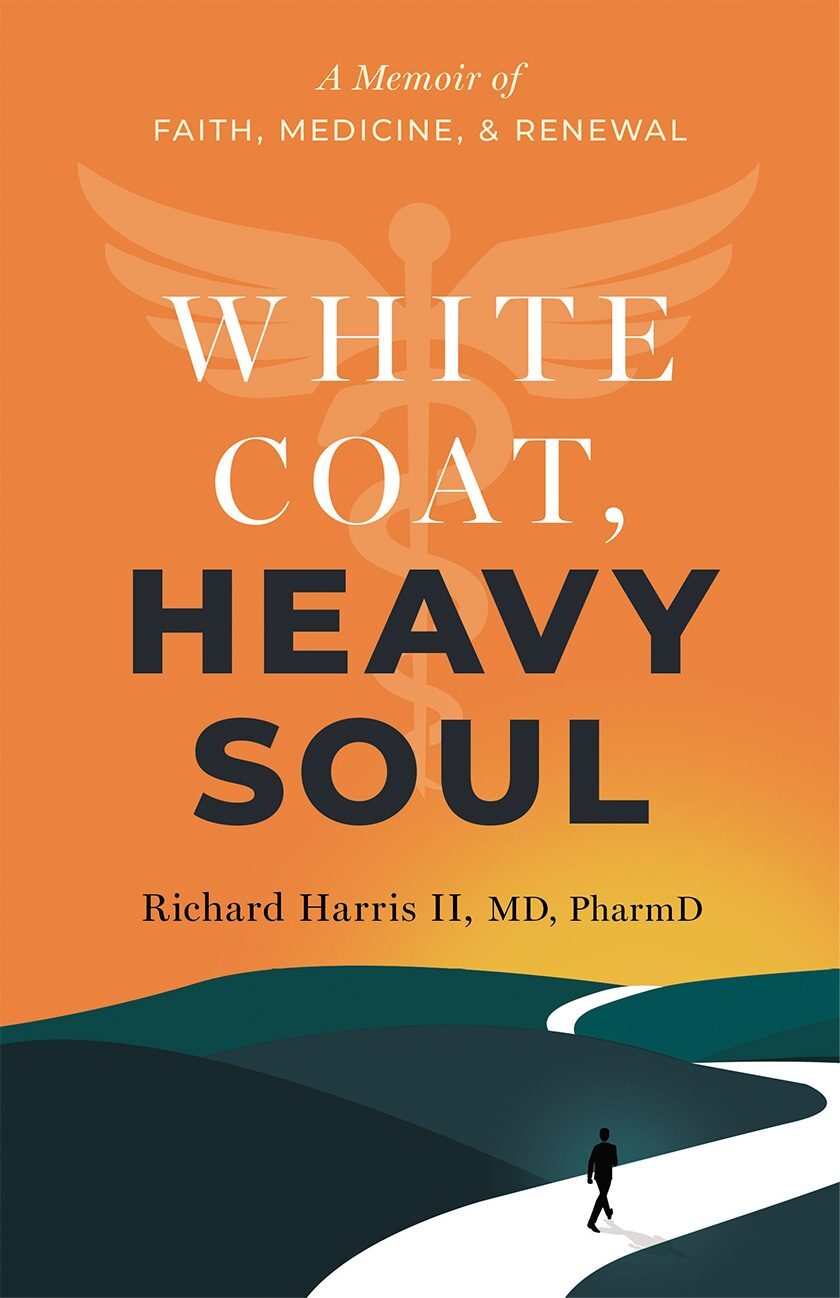
Physician, pharmacist, and professional speaker Dr. Richard Harris turned eight years on stage into White Coat, Heavy Soul, a human-centered account of what it is really like to be a doctor, published with Scribe Media. Just weeks after launch, a retired judge in a small Indiana town began handing the book to people around him, and those secondhand readers started reaching out to Harris directly. As Harris puts it, “I pray that this book just helps one person. And it would be all worth it if it changes the trajectory of one person, one family, one friend group.”
⭐ Top Moments
- “There will never be a right time. You just start.” His advice to anyone waiting for a sign is the line that named the episode, followed by the insight he teaches from the stage: “A lot of people get motivation wrong. They think that in order to act, they have to be motivated. And that’s not how our brains are wired. Our brains are wired to act first. And then the motivation comes.”
- A book passed hand to hand by strangers. The part Harris never saw coming happened after launch. A retired judge in a small Indiana town started giving the book out, and the readers reached back to him. “It’s been really, really magical seeing that and hearing from these people who secondhand got in contact with my book because of someone who believes in you.”
- The book as a family legacy, and a five-star verdict on the process. Harris frames the book as something his son will one day read: “This is our legacy. This is the legacy of a Harris. We do hard things.” On working with Scribe Media through a hybrid model that kept his autonomy, he was unequivocal: “It was a five star wonderful experience. I would do it again. In fact, I already have some ideas for the next one.”
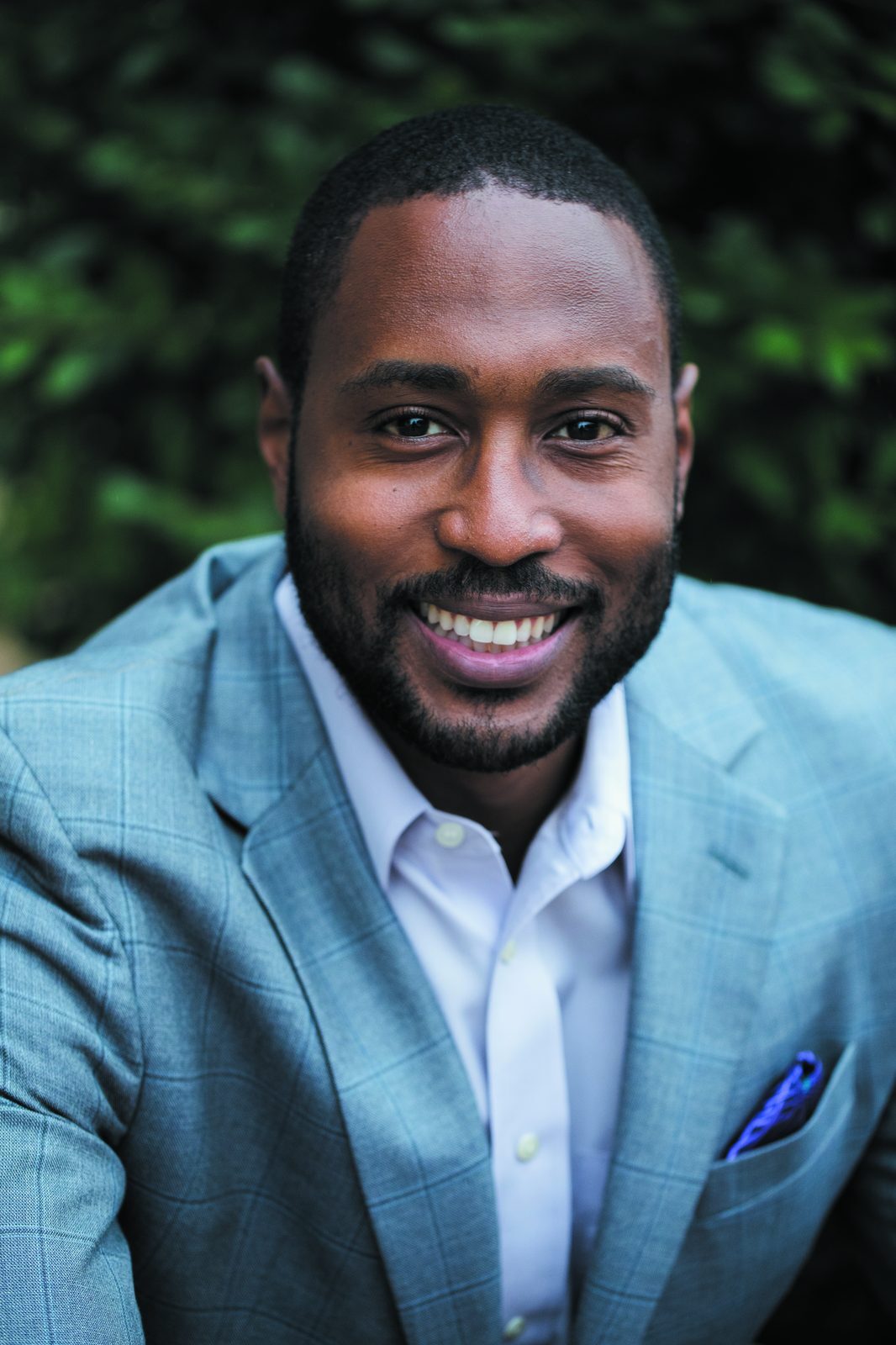
Richard Harris
Dr. Richard Harris is a pharmacist, a board-certified internal medicine physician, and the chief medical officer for Nimbus Healthcare and Script Health. His client-centric view focuses on building relationships and establishing trust through a comprehensive lifestyle medicine system. Dr. Harris has been a guest speaker at several national conferences and has served on advisory boards with leading minds in medicine and holistic wellness. An avid reader, weight lifter, and video game enthusiast, he enjoys sports, traveling, philanthropy, and attending church.
★ Scribe Case Study
Dr. Richard Harris’s White Coat, Heavy Soul Is Reaching Readers He Never Expected to Meet
Physician and speaker Dr. Richard Harris turned eight years on stage into White Coat, Heavy Soul. Weeks after launch, strangers were already passing it hand to hand.
📚 Books by Richard Harris
Transcript
There'll Never Be a Right Time: There will never be a right time a sign or a signal right you just start don't be in such a hurry to get your work out there that you forget to enjoy the journey and so yeah I'm connected with people in this amazing spiderweb or six degrees of separation however you want to call it because another person that I'm close to believed in my work so much that he wanted to share it with others. And that was something I never expected, but it's been really, really magical seeing that and hearing from these people who secondhand got in contact with my book because of someone who believes in you.
Eric Jorgenson: All right. I want to start with your title because I think it's carries a lot of weight and it's one of the best titles I've seen this year. So white coat, heavy soul. How did you arrive at that?
There'll Never Be a Right Time: Being a doctor is wearing multiple hats, right? And I felt like proverbially when you're an intern, Well that proverbial literally when you're an intern your coats are heavy because you're packed with tons of gear. You've got books and stethoscopes and charts and all of that. And as you go on in your career it gets lighter where you just really have your stethoscope. So at first there's this heavy actual physical weight. but the coat gets lighter. But then as you progress into your career out of residency, into being and attending and taking care of patients, then there became this mental and spiritual load. And that weight kept getting heavier and heavier as I got further from the vision of medicine that I had when I was a child. And that's where the title came from, was being crushed under that title of being a physician, that image of the guy in the white coat. And how do I practice how I want to practice? How do I help people how I want to help people? But at the same time, have the ability to live my life the way I want to live my life. What was that the biggest source of that tension? I think for me, I've always been focused more on preventative care. Ben Franklin said, an ounce of prevention is worth a pound of cure. We've known this for a long, long time. And the American healthcare system is dominated by private equity, hospital groups, These groups are trying to squeeze as much revenue out of the system, which may not necessarily be the best thing for patient care. Right. And I ran into that where it was all about metrics and reimbursable things and not really anybody was asking, well, how are your patients doing? And that created a lot of angst for me and a lot of pain because I really cared about my patients. And then at the same time, a lot of my patients, I would care more about their health than they cared about their health. And that's really, really hard when you're pouring everything into somebody and they're just like, eh, I don't really care.
Eric Jorgenson: Yeah. I imagine that gets heavy. So when did the sort of kernel of the idea for this book first emerge for you?
There'll Never Be a Right Time: I think it's something I'd always wanted to do. If I look back, I thought it'd be really cool to be an author because it's hard. And I'm the kind of person that I love doing hard things. I don't shy away from hard things. I turn into hard things. And I had this idea kind of rattling around in my head and it went through multiple iterations and people kept telling me I need to write a book and I didn't have the story together. I didn't really know what direction I wanted to go. And then our son was born and we went through a traumatic birth. And I said, this is the end of this part of the chapter. This is the end of this part of the story. I've accumulated everything I need to write the journey that I want to write. And I stepped away from our companies at the time and I started working on the book. Newborns just sleep all the time and my wife. So I had a lot of time. So I poured like 12 hours a day into writing this book for about three months. And that was the essence, the backbone of the story.
Eric Jorgenson: Wow. So this is something you'd yearn to do for a long time. And I imagine you could have written any number of books. What was the process of sort of arriving at this particular shape and frame and, you know, target reader like this specific version of the book?
There'll Never Be a Right Time: Yeah, that was really tough for me because I'm a professional speaker. I've spoken across stages all across the U.S. about lifestyle medicine and personalized care. My audience is so varied. It's pharmacists, it's physicians, it's researchers, it's patients. And how did I or how could I craft the story that reaches all of those different groups? Right. And so I decided to settle on more of a human centered view of what it's like to be a physician. Because that's something that everybody can resonate with, because I bet you every person in this country has seen a doctor at least once in their lives and have some association or experience with health care. And that was what I decided to speak to. And being on stage, I had all of these ideas that I tried out before and talks that I had given and talks that worked and didn't work. And really, a lot of the book comes from talks that really resonated with diverse audiences. And I said, OK, this can resonate with an audience of all those people I mentioned. I can write this and it can reach a large amount of people.
Eric Jorgenson: It is a universal experience that people have and sort of what you hinted at earlier, which is like you have this as a child, you have this notion of like doctors as heroes and almost kind of mystical, like arcane knowledge that they've accumulated. And in particular with the technology we have, I feel like it's, we're really performing miracles. And then you get into the nitty gritty of the system and the constraints and the challenges that you actually have in. Once you're on the inside of that kind of process and seeing little more close up how challenging it is to actually perform some of that stuff. I can imagine there's so much curiosity and it's a common social issue. Like healthcare is an issue every election, every politician. Like it's a system that needs work. And I'm glad that we've got people like you kind of telling the story from the inside. They can help people understand what's going on and empathize with the humans who are caught up in that system on both sides.
There'll Never Be a Right Time: Yeah, absolutely. I feel bad for everyone, every stakeholder in this. That's the actual person, right? The system's not working for doctors. It's not working for patients. And I just wanted to shed a little bit of light in my journey through as a pharmacist, as a physician, what I've experienced, how I've learned to practice how I want to practice. And hopefully it helps patients engage with a healthcare version that suits them and it helps future providers become the type of clinician or doctor or pharmacist or nurse or whatever that they envisioned when they were kids.
Eric Jorgenson: Is that the goal of the book to give every stakeholder a little bit of a transformation that will help them get closer to their ideal role in the system or to change the system itself?
There'll Never Be a Right Time: I think so. I think to change the system, it's going to have to come from all of us asking and demanding better of the system. Because if you look at it from an economic perspective, if people stop buying something, if they stop using something, the manufacturer or whatever company makes it will change it to consumer preference. And so if we all start demanding better systems, I think that will happen. But in order to do so, we have to know that those options are out there. Most people don't know that those options are out there and that they can really find a type of health care that fits them or their needs. And that was really what I wanted to do was show my experience navigating through all of that to help patients find what suits them and help other providers find what suits them.
Eric Jorgenson: You made a pretty big choice to go off on your own. You went to do direct primary care, right? And you left the kind of classical hospital system. Yep. That's correct. Okay. So tell me about that, that decision. Cause I imagine that was a big, like a massive life change. And also that was your kind of relationship to, all right, I'm controlling what I can control here. I'm controlling how I participate in this. Sure.
There'll Never Be a Right Time: Did that decision stem from the moment I was doing a performance review of my first job and they were looking at how many of my patients got colonoscopies? How many of my patients were on statins? And I was like, wait a minute. I'm never going to be the type of doc that wants to be judged by how many of my patients are on a medication. That's a surrogate outcome. The outcome is actually, how are the labs doing? How are they feeling? How has their risks changed over time? That's what matters. And that's what I realized that you have to get outside of that traditional system in order to do that kind of medicine. And that's where direct primary care came in, because there's no hidden fees. There's no surprise billing. You know exactly what you pay upfront. It's usually a monthly subscription that may include labs, some clinics that may include certain medications. And it's just an easier way to interact with your physician. It's an easier way for you to know exactly what your finances are going to look like when you interact with health care. And it's just a way for people to get out of the system what they need. You know, most of these direct primary care clinics, you can spend an hour with your physician regularly. They have appointments the same day or the next day. So you don't have to turn to chat GPT or something else to try to figure out what's going on with you. You can actually talk to an expert. And so it's beautiful what's happening inside these these direct primary care clinics. And I think it's something that you're going to continue to see grow in the future.
Eric Jorgenson: Yeah, I mean, I would rather just pay someone to take good care of me than worry that there's, I mean, quota or an incentive to prescribe something or do a procedure that a patient may or may not need. That's a fucking nightmare. That is a horrific thing. Not only are they not trying to do the lowest intervention possible or encourage lifestyle changes that actually make you healthier or prevent the case in the first place, but they're incentivized actually to over prescribe, over intervene. That's Pretty dark.
There'll Never Be a Right Time: Yeah. Yeah, because if you look at our guidelines that I wrote about this in the book, they're written at the population level. Right. And that makes sense. If you've got 100 million people that you're looking at and you're giving advice, you're going to give advice that's going to work for the most amount of people that overall causes the least amount of harm. That may not necessarily be the best thing for the person who's right in front of you. And last I checked, I'm not a population doctor. I'm an individual doctor. Right. And so I have to have the leeway to do what I think is best for the person right in front of me. And if you work in a healthcare system, you're often told what you can and can't do, what you can and can't prescribe, what procedures you can and can't do. So it really takes your autonomy away to deliver individualized care, which is essentially what the patients want. They don't want to be treated like they're an assembly line. They want to be treated like they're their unique individual that they are.
Eric Jorgenson: Yeah, of course. Well, we kind of breeze through your your writing of the manuscript. I don't know if it was as easy as you made it sound, but you're like, yeah, no, we had a baby and then I wrote 12 hours a day and I finished in three months. Does it actually feel easy to you or like let's go deeper on that process?
There'll Never Be a Right Time: I think for me it did because I had known that this was something I wanted to do for a long time and I had a lot of mental notes And then being a speaker to an author, I think a lot of people do it the other way. They author to speaker. I had already taken a lot of material and converted it into a format that was deliverable to an audience. And so having that experience for eight years really made it easy to sequence through the information that I wanted to. And I'd already had, like I said, a library of talks that I had done where I'd found things that work, things that resonated. People had come back to me and said, Hey, your talk on this was really great. I learned this or I did this with my patient because of your talk. So I knew that material was good material. And then it was just a matter of packaging it in written word to where that logically flowed. So, and I had the time, I didn't have any other distractions.
Eric Jorgenson: Right. Yeah, the ability to focus deeply on it, whether that comes in an hour a day early in the morning or just a period of life where the other responsibilities kind of fall away and you've got space, makes total sense. Some of the most productive writing I had was after I got out of the hospital after a procedure and I just had an absolutely clear calendar and I was stuck in bed and I had nothing else to do. I was like, all right, 12 hours a day on the laptop, like no opportunity costs. Here we go. So that that does that does resonate. And I think what you're saying about the speaking thing makes a ton of sense, too. It's so a lot of authors, I feel like fly blind. You know, they just kind of sit there and like try to come up with something that they think will resonate. And they don't have a feedback loop. You know, they don't they don't have like historical data on what works in the same way that speakers do or bloggers like, you know, some of the most successful authors of the last 10 years have been big on blogs and social media, James Clear and Morgan Housel. My own work, that is how you see what resonates and close this feedback loop. When people start saying things back to you or you can just watch them light up when you say something, you're like, oh my God, that's a chapter title. When you've got the talks and the feedback from it, I think that's a huge advantage coming into a manuscript because you give Not only do you have the material, but you have conviction in the material, and it really removes a lot of that kind of creative doubt that you might get as you go through the process.
There'll Never Be a Right Time: I still had that for sure, because it's, you know, you're sitting in a room and my wife was the only person who read certain areas of it. And there still is that fear because it's personal, right? So sitting at the someone and then them critiquing the book. I remember when I got the first draft back from the editor, I was super emotional about that, right? And then you have to get outside and say, no, this person is not trying to tear your work apart. They're not trying to hurt you. This is not an emotional thing. They're really just trying to make your work better. And this is what they do as a profession. And so you have to fight against that emotional and that fear and that anxiety response and just keep going and putting out the best material that you can. And I think at the end of the day, when I sat down when everything was done, I asked myself, did you do the best job that you possibly could have done with what you knew at the time with the resources you had at the time with your time constraints and everything else? And the answer to me is resounding. Yes, I think I did the best that book that I could possibly do at this point in my life. And I'm very, very happy with that.
Eric Jorgenson: That's an incredible feeling and a great mindset, right? I think so many people, they imagine a future version of themselves that could hypothetically do a better book and they get stuck on waiting for that future version of themselves. And I think that is, you phrased it exactly right, which is like, did you do the best you could as who you are now within the constraints that you have? And that gets you to the threshold of like, okay, I'm comfortable and confident publishing this book. I don't think anybody's ever nobody's saying has ever had 110% conviction in pushing a book out into the world. It's too scary. It's too personal. It's too intimate. It's too hard. It's too like, you know, you're too close to it as a creator to ever kind of get rid of that last point zero one percent of like, maybe there's something else I could do. But that's a really that is a great frame in particular, I think, for first time authors to appreciate. It's a personal thing. I appreciate what you said about the feelings too. One of our internal mantras is we'll hurt your feelings before we let you publish a bad book. It is so much of it is managing the emotions or the ego or processing information that feels like criticism and is only ever in the interest of making the book better so that it's something that you're really, really proud of. We want you to be proud enough of your book to put it in front of the most intimidating person in your network. If you're not proud to hand this to every new patient who comes in your practice or your peers or your supervisors in the hospital, then maybe we didn't do enough collectively to make this something that you're really proud of representing you.
There'll Never Be a Right Time: Yeah, you just hit on something big that I didn't know would happen after I wrote the book, right? So any authors out there, one of the mistakes that I made is that I researched the writing process and the publication process and what happens when you do an editor. I didn't research what happens post-production and I didn't talk to anybody about what happens post-production. And so it's a whole different ballgame once your work is out there and what happens. And one of the things that I didn't expect was there's a close family friend of ours who's a retired judge and he lives in a small town in Indiana and he's walking around his small town of Indiana with my book, just giving it out to people. Right. And some of those people have reached out to me. And so yeah, I'm connected with people in this amazing spider web or six degrees of separation, however you want to call it, because another person that I'm close to believed in my work. so much that he wanted to share it with others. And that was something I never expected, but it's been really, really magical seeing that and hearing from these people who secondhand got in contact with my book because of someone who believes in you.
Eric Jorgenson: That's so cool. Yeah. The loops that close like these long loops that kind of make their way back to you are really wonderful. And for context, like, I mean, it's only been what, six or seven weeks since you published your book, right?
There'll Never Be a Right Time: Yes. February 24th was the day the print copy went live and then the audible went live, I think three weeks ago, something like that. So it really hasn't been that much time. And I've seen so many. Rewards, of course, there's the monetary stuff, but everybody always says don't write a book Anticipating huge monetary rewards, right? Yeah, especially if you're a doctor. Yeah But that's like anything in life if you do it just for the money It's probably not gonna go the way you think it's gonna go right? Yeah, but all of the other things that I've seen happen because of the book and One of the really surprising things was my wife and her coming to me and just be like, I am so, so, so, so proud of you for doing this. And now having my son who can one day read this book and look at what happened in my life. And then having the ability to talk to my son about, hey, son, we're a family who does hard things. And here's the proof right here. This is our legacy. This is the legacy of a Harris. We do hard things. And it's just all of those other aspects and benefits. I think our reasons why you should write a book And not just look at, okay, what can I profit from it or what goal does it help me achieve? I had all that. This was a platform book for me. I wanted to get on more stages. That's what the original goal was. But now I've seen all these other secondary benefits. And those to me are way more impactful than the goals that I started off with when I wrote the book.
Eric Jorgenson: That's so cool. And it's a very, it's very hard to fully explain this to somebody who hasn't sort of felt it themselves. Like, you know, sometimes I say like a book is a tailwind on everything else you ever do, or it's a multiplier effect, or doors will open that you didn't even know were there, you know, there's unexplained good things sort of start to happen as a result of just having this new surface area out into the world. I talked to somebody yesterday who was like, you know, I had a rough sense that it would help my sort of consulting practice. I did not expect to get invited to like do a workshop at the UN General Assembly. And I was like, oh, really, really cool. Yeah, that's just unexplained. Good stuff just starts to happen. And it's to your point about the legacy. It goes for years like, you know, our books will outlive us. And I think a lot of people spend so much time focused on the. the financial inheritance or legacy and not the intellectual, the cultural heritage of the family. I would say there's no object I wish existed more than a book written by my father. I know that I will have left a shelf of books behind of like, here's how I thought about different things. Here's what I thought was important. Here's what I thought was worth immortalizing. Your kids at different ages will be able to understand you as they go through those ages and the decision that you made and how you laid the foundation of the family that they're growing up in, which I think is just a really incredible thing. So podcasts are great and videos are great and social media is great. But there's a longevity and a stickiness to books that just is different. And we're still reading books from 2000 years ago. It is just a very different kind of medium.
There'll Never Be a Right Time: Yeah, absolutely. I don't think it's anything that will ever be replaced. There's something inherently human about taking your knowledge and putting it on paper. And that survived the test of time. And we know in medicine and certain things that we've been doing forever. Before we knew there was benefit for him, we still passed them on things like yoga, right? I don't even know how long humans have been doing yoga, but it's been consistently human. And now we know there's all these benefits for it. And I think the same thing is true about transmitting knowledge in written form and even doing so in audio form. There is some data, some interesting data on that on the, on, retention of information between like audio and spoken or audio and written books and there really doesn't seem to be that much different. But I think it's that mindset that you're in. It's a different mindset that you're in when I'm listening to a podcast. versus when I'm listening to a book or when I'm reading a magazine versus when I'm reading a book. There's a special mindset that I go into with a book. And I don't know where that comes from or if you have that or if other people do, but that's just the way I look at it.
Eric Jorgenson: I do generally feel happier and more fulfilled when I'm consuming longer form content. Basically, I'm happier listening to a book than a podcast. I'm happier listening to a podcast than a I don't know, short form social media, watching TikToks or whatever. And yeah, same thing with books. So yeah, I definitely feel that same thing. I'm curious, you've dropped one or two of these already, but looking back, if you were speaking to someone who's maybe a year or two kind of behind you on the road towards becoming an author. They had the same inkling you did. It's like, I think I want to write a book someday. I know I have this in me. I'm looking for either the sign or the signal or the fog to clear, whatever it is. What sort of guidance would you offer somebody in that position?
There'll Never Be a Right Time: There will never be a right time, a sign or a signal, right? You just start. So I talk about this all the time on stages. A lot of people get motivation wrong. They think that in order to act, they have to be motivated. And that's not how our brains are wired. Our brains are wired to act first. And then the motivation comes. Right. And so if you're just waiting for this magical sign or the universe to give you something or to feel motivated to start, it won't happen. Everyone I've ever talked to that's written a book, just they've made a conscientious decision that, for example, on February 1st, 2027, I'm going to sit down and I'm going to write 10 pages. And they just start that way and then everything kind of goes from there and it doesn't matter if it takes you five years or five days to write your book. Just get it done get it out there refine it tanker with it and you will. earn so much from that process. Another thing I tell people is don't be in such a hurry to get your work out there that you forget to enjoy the journey. This is something I talk about in the book that I was in such a hurry to get through medical school and to become a physician that I rushed like 13 years of my life. and didn't stop to enjoy the moments along the way. The really cool and interesting things I got to do. I got to save people's lives. That's a really, really cool experience. And I didn't really stop along the way to take pause and say, reflect on, wow, what really just happened. What did I learn from it? And so those are just some, some things that I would tell perspective authors.
Eric Jorgenson: I love it. Yeah. It's one decision to start and then a thousand to not quit and just keep going. Yep. What are you looking forward a little bit? You know, we're only a month or two out from your, your launch so far. I would love to talk to you again in, in two years. What do you hope will have happened over the next two years around your book?
There'll Never Be a Right Time: I think the coolest thing would be, and I talk about this in the book, I read Gifted Hands by Ben Carson. And at that moment is when I decided that I wanted to be a doctor. And I got to meet Ben Carson and I got to tell him that. And I watched his face just beam with pride. It was radiating off of him. And in two years, if some kid comes up to me and says, hey, I became a doctor because I read your book. That would be the coolest full circle moment of my life.
Eric Jorgenson: I love that as it is really interesting how often The answer to that question is actually one person. A lot of the most motivated and successful authors that I talk to have a story like that. I want one person to choose to become a doctor. I want one person to choose to not go down a dark path personally or legally or logistically or whatever that is. I want to say one person from an abusive relationship. Those are such powerful and personal motivators. I think there's actually a paradox where those end up becoming some of the most successful books because it's really easy to stay in the mindset of I'm talking to one person. I'm not trying to broadcast something to a million people and affect all of them. This is a very intimate one-to-one thing and you can really bring an authenticity and an energy to that that can affect a lot of people by focusing on just affecting one.
There'll Never Be a Right Time: Yep, that was my prayer from the beginning that I pray that this book just helps one person. And it would be all worth it if it changes the trajectory of one person, one family, one friend group. That's a truly magical experience when you get to do that.
Eric Jorgenson: Incredible and I have no doubt that it will. When you were sitting with this manuscript and looking at the broad landscape of different ways to sort of get it out into the world, how did you approach that? You said you researched the publication process thoroughly and editors and it's a tough thing to navigate. How did you approach that and how did you make the decision?
There'll Never Be a Right Time: I looked at what was important to me and I think the number one decision I made was I wanted full autonomy. Right. And being a physician for so long and having my autonomy stripped from me, I couldn't go through that process again. All right. So that was something that I was totally unwilling to do. And so that played a big part in it. But then I also realized that I couldn't do the best work possible on my own. I needed subject matter experts to help me along the way. And that's when I decided that the hybrid publishing model would be the best for me and my goals. And I've always been someone who's been collaborative. If I don't know something, if I don't know how to do something, I'm reaching out for help immediately. The people smarter than me, better than me, people I've experienced, that's always been in my workflow. And so this publishing model that you have is exactly what I wanted. It allowed me to retain my autonomy, but at the same time get the help I needed to deliver the best possible work that I could.
Eric Jorgenson: Awesome. Love it. It's been a huge honor for us and across our whole team and extended team to play a part in bringing this book out into the world and helping you realize this vision. Really appreciate you taking the time. I love the story. I love the book. I have no doubt that it'll have the impact that you're hoping for, praying for, and more. I really do hope we get to close this loop in a year or two. You got a lot more stories to lavish on us about how successful the book has been and how many doors it's opened for you. And all the loops is closed and helps more doctors and aspiring doctors find a healthy win-win path into medicine and care and preventative medicine. Because I think this is one of the most important questions of our time. So thank you for working on it. Thank you for teaching people about it. Thank you for speaking. And thanks for being here today.
There'll Never Be a Right Time: Yeah, I appreciate you have me and I appreciate your staff and everything they did for me. It was a five star wonderful experience. I would do it again. In fact, I already have some ideas for the next one.
Eric Jorgenson: Right. It's a little addicting, isn't it? Yeah. Once you've been through the maze, you're like, oh, I can run that again. That sounds fun. Where should people go to follow along, learn more about you, get the book?
There'll Never Be a Right Time: Yeah. So easiest place is my website, drharrismd.com. It has everything about me, my social media links. I post a lot on YouTube and Instagram about just lifestyle medicine and preventative medicine. Easy things that you can do to improve your health today. That's really what my passion is.
Eric Jorgenson: Love it. All right. I'll see you there. All right. Appreciate it. Take care.
Want to Write Your Own Book?
Scribe has helped over 2,000 authors turn their expertise into published books.
Schedule a Free Consult