75 Books a Month: How Michael Erath Built a Three-Book Author Ecosystem at Next Level Growth
✨ Episode Summary
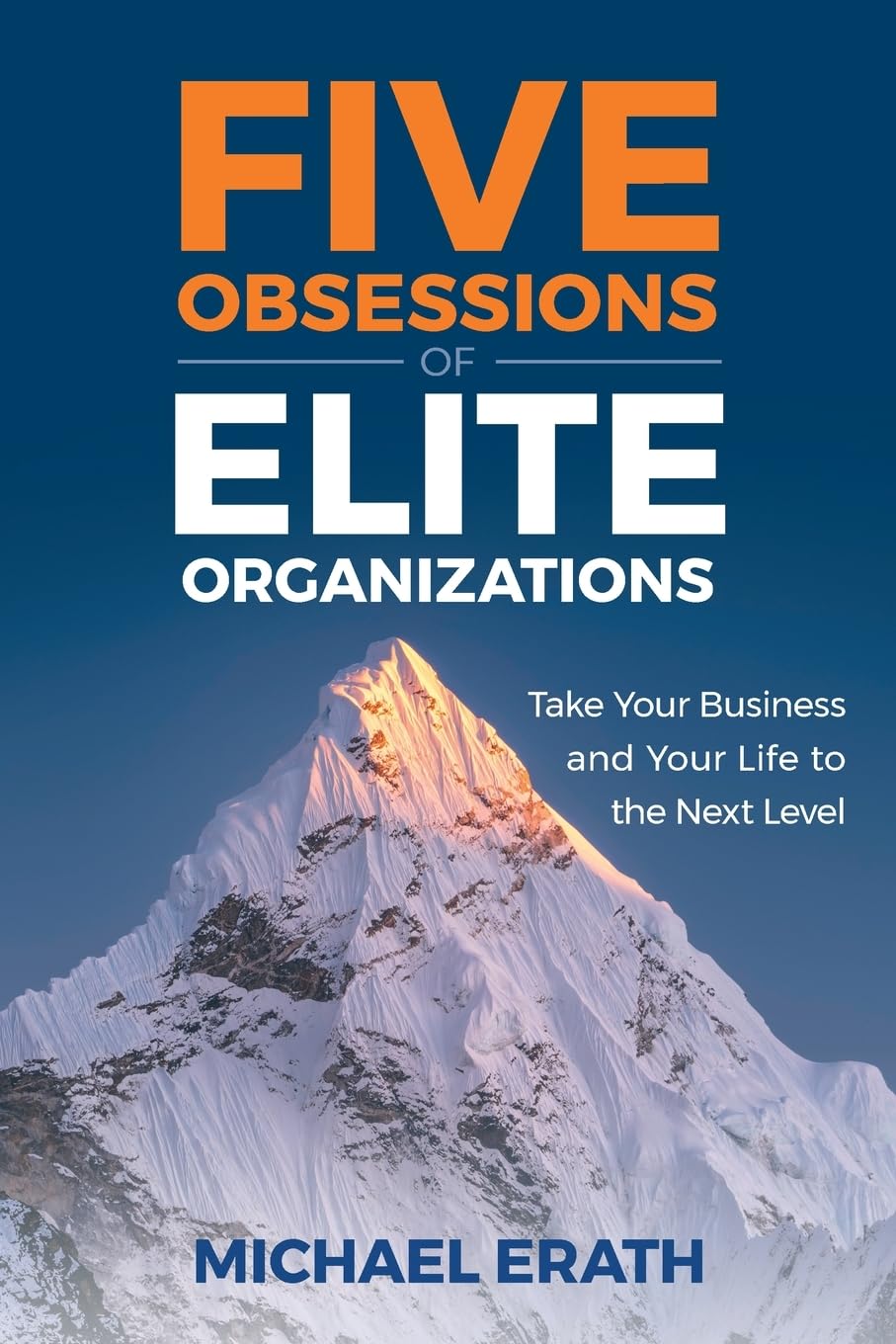
Michael Erath has turned three Scribe Media books into the engine of his coaching firm, Next Level Growth, mailing 75 to 100 copies a month to targeted prospects and calling the book the best lead magnet the firm has. In one recent discovery meeting, a CFO Erath had never met pulled out a copy of Five Obsessions of Elite Organizations, several pages already highlighted, that he had handed a direct report to prep for a hard conversation. And after re-recording his own audiobook, Erath realized he had made something he never planned to: a recording of his own voice that his grandkids’ grandkids will one day be able to hear.
⭐ Top Moments
Top 3 Moments
The book is his best lead magnet
Next Level Growth mails 75 to 100 books a month to targeted prospects at an all-in cost around $16 a copy. Erath runs it as customer acquisition math: if one in fifty books turns into a client, it pays for itself.
"Because of the amount of context that the book provides the reader, it's without a doubt the best lead magnet that we have."
A CFO handed the book to his team to prep for a hard conversation
In a discovery meeting, a CFO Erath had never met produced a copy of the book with several pages highlighted, which he had given a direct report before a difficult conversation.
"He had a copy of the five obsessions of elite organizations and was telling me that one of his direct reports had a really difficult conversation later that day [...]. He had actually highlighted several pages in the book and had given that to them to prep for the meeting."
He re-recorded his own audiobook to leave his voice behind
After a voice actor read his memoir without the emotion, Erath re-recorded the audiobook himself through Scribe and realized he had created a permanent recording of his own voice.
"I now have in my voice a digital recording that will live forever of me telling my story. So my grandkids, grandkids who will never see me, never know me can actually hear a great, great grandfather in their voice telling their story."

Michael Erath
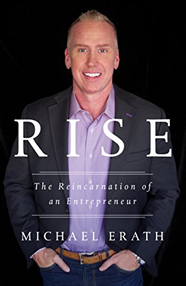
Michael Erath spent the first twenty years of his career growing his family's manufacturing business to $45 million with over two hundred employees before becoming the first Pinnacle Business Guide behind founders Greg Cleary and Duane Marshall. Michael is the founder of Next Level Growth and, in 2017, published his first best-seller, RISE: The Reincarnation of an Entrepreneur.
★ Scribe Case Study
Michael Erath's Five Obsessions of Elite Organizations Became the Best Lead Magnet at Next Level Growth
How Michael Erath turned three Scribe Media books into the lead-generation engine of his coaching firm, Next Level Growth, mailing 75 to 100 copies a month to targeted pr…
📚 Books by Michael Erath
Transcript
Guest: The emotion wasn't there. The intonation didn't hit with how I wanted it to. So I actually... went back in studio through you guys and re-recorded the audiobook myself. And a couple of things came out of that. One, people who listen to it can hear and feel the emotion in the really vulnerable, difficult parts. Because as the person who lived it, it's hard to read those without the emotion coming out. And so it creates, I've had people say they felt really connected to me listening to it. But the other thing that really was an unintended you know, a surprise that like, well, of course this makes sense, is I now have in my voice a digital recording that will live forever of me telling my story. So my grandkids, grandkids who will never see me never know me can actually hear, you know, a great, great grandfather in their voice telling their story. And there's something just from a personal family perspective that like, wow, that's, that's really memorializing some very cool things. I'd love to have something like that of my great grandfather, right?
Eric Jorgenson: Well, you're a scribe veteran and a veteran author. So I'm excited to have you here. I feel like we got a lot to learn from you.
Guest: Yeah, they say the third time's a charm, and it seems to be.
Eric Jorgenson: Did it feel that way? So you just published your third book. How different was that from your first time through?
Guest: You know, they were all three very different. We pivoted on the third one, and I ended up, instead of using a ghostwriter, switching to someone as a coach. So I ended up writing the entire thing with a coach versus having a writer do it. So it was a totally different experience. But it was the right call, for sure.
Eric Jorgenson: How did you feel about it? Like, how did you feel going through that process as the writer now?
Guest: Yeah, it was. What's the statement? I despise writing, but love having written or something like that.
Eric Jorgenson: It was kind of that.
Guest: It was a labor of love that the book was more technical in nature and it just didn't make sense. for someone to have to learn the content to be able to then rewrite about it. And so I just need somebody to guide me through the process.
Eric Jorgenson: Sure. So zoom us all the way back out. Take us back to like maybe 2015. What was your kind of career and setting and life situation that led you to add author to your bio?
Guest: So I had been, I transitioned kind of a career path. I had had a family manufacturing business that I was the owner of for about two decades, and I was switching into coaching and consulting. You manufactured families? Well, I have. So we, we manufactured hardwood veneer, kitchen cabinet industry. And when I transitioned as part of that kind of backstory I had in that business, I had a, I brought in a business partner that had embezzled over half a million dollars, committed bank fraud, hit right in 2008. So we had a massive, massive loss. He ended up spending time in federal prison. It was, it was a crazy story. And as I started getting into this coaching and consulting world and sharing my story with people, more and more people was like, like that needs to be a book. And so I was like, all right. And Cameron Harold is a dear friend of mine and he's written a couple of books through you guys. And he had recommended me speaking to you at the time. And that was, that was kind of all it took. The first, the first book rise came out in 2017 and that was more of a personal memoir and story. But it was really just to kind of get my story out there. And it also yielded a lot of credibility. When I was writing the third book, I was doing some research and there's, as of 2023, there were over 53,000 people in the US on LinkedIn that call themselves a business coach. It's become that saturated. So I really wanted to be able to get my story out there as a differentiator.
Eric Jorgenson: And clearly saw results from that book. What happened from that first book that led you pretty quickly into starting the second and now the third?
Guest: Yeah, the second and third books really came out of during my journey as a business coach and consultant. I initially became part of EOS and part of that system and broke away in 2020 and kind of built our own more principles based flexible framework. And I was initially doing that with a good friend of mine, Greg Cleary, who started Pinnacle Business Guides. I was one of the original co-creators of that. And he and I co-wrote a book, Path to the Pinnacle, which I want to say came out in 22, perhaps, 22 or 23. And so that was its own process going through. We did use a ghostwriter for that one, and it was more storytelling. But even with a really good friend, the co-authoring experience is a whole different journey. So that one was kind of to get our methodology and ideology out there. And then I I broke away from that group and decided to build my own framework and the five obsessions of elite organizations which is the third book and then this is the one that I had that I ended up deciding to write myself with a coach through through scribe that one really I wanted to. I wanted to build something in the book that was taking a lot of what we teach our clients and really giving a lot of it away through to the point of like, here's how to go do this yourself. Like if this is the tool you want to use, here's how to use it. Here's how to implement it and walk people through that as a guide. with the idea being that it would create value for smaller companies or companies that just wanted to do it themselves. But it would also be a business development tool that for companies that like the concept and like the tools, they would just want to bring one of us in to help them do it faster.
Eric Jorgenson: It is interesting thinking back, all of these EOS and scaling, all of them seem to either come from or eventually end up as a book. You've got Traction, Scaling, Path of the Pinnacle, Five Obsessions, Elite Organizations. It just feels like one of the linchpins of the strategy to give away everything and then people realize how hard it is to implement and then they engage you to implement it.
Guest: Yeah, exactly. And the real reason behind the third book, so originally I thought, well, I've done two before with a ghostwriter, I'll do this with a ghostwriter as well. But the challenge with the third book is, and you go back and you mentioned some of these systems you talked about, one of the things that I realized along my journey was that when you leverage in your business a prescriptive, rigid system, By default, I don't think it's as much by design, but by default, it puts primacy on the system, not the user. And so regardless of your company, regardless of your culture, your industry, your size, it forces you into someone else's system. And so what I wanted to focus on was how to like all of those books you mentioned, they're all. fundamentally about the same principles. And so if you instead create a framework around principles and help companies focus on the principles and excelling in those, the system becomes secondary and it becomes also more fluid and custom tailored to the organization because then it doesn't matter where the tools come from.
Eric Jorgenson: Yeah. And that makes, I mean, having gone through a light EOS implementation, it also, you know, great people often chafe at being forced to adapt to a system rather than being allowed to be great as themselves. Right. Yeah. So tell me about the impact of some of these. that some of these books had, you know, I often say like unexplained good things result from having a book out into the world. And I'm sure you've got, you know, from three books now, tons of stories about that of how it led to, you know, connections or new business lines or new opportunities or new clients, anything like that.
Guest: It's definitely helped from a from a client acquisition perspective. It establishes authority. And it also is a it's it's kind of a force multiplier to get the message out there beyond your ability to necessarily directed at people so you know somebody recommends the book to a friend that you have no idea that person as they read the book and now all of a sudden there's a connection and they they know about you and what you do but I think some of the things for me when I when I wrote rise. I made a choice to be extremely vulnerable about the blind spots and mistakes I made and how that affected. There's a chapter in the book, I talk about a time that my success in the first business had gotten to my head and it actually affected our marriage. My wife and I separated for a short period of time before kind of figuring that out. And so I got really vulnerable in that book and I've had so many people that have read it come up to me and say, gosh, let me tell you what happened to me. And it's, you know, as entrepreneurs, we don't talk about, you know, failures and mistakes. Everybody talks about it's kind of the country club conversation about how great everything is, right? It's what you see on social media. And I think that that has been very fulfilling for me, because it's it's helped other people feel comfortable sharing their stories and coming to terms with that. And then, you know, the other thing that's just been been great to see is periodically going back and getting to read some of the reviews and just, you know, again, people you have no idea who this person is and hearing how something they read impacted them. I was I was talking yesterday with a actually it was a discovery meeting with a prospect. I was meeting with the executive team of this company, the CFO I had never met before. He had a copy of the five obsessions of elite organizations and was telling me that one of his direct reports had a really difficult conversation later that day they were going to be having with one of their direct reports. And he had actually highlighted like several pages in the book and had given that to them. to prep for the meeting because he felt like the content and if they if they understood it would help would help them navigate that conversation. So things like that that are just unexpected examples of how something you put out there that you believe is valuable. Now you're getting affirmation other people are finding finding tremendous value in.
Eric Jorgenson: Yeah, that's a great story because I feel like everybody's hope. So many people's hope is that the book will be useful. You know, it's great to be interesting. It's great to be entertaining. But, you know, I as an author yearn for those stories that you just told where it's like, no, we had this problem. I opened this book. I handed it to this person. This information like Helped us through a difficult time or a difficult decision or change our trajectory That might have resulted in yeah, you know six or seven figures of improvement to the organization and to all those families like that's the That's the hope that you have when you write a book is that yes, you're gonna find people right I think to your point I think and this is maybe for people considering writing a book
Guest: some of the feedback I hear and I've had people that were reluctant to actually read the book that I had given it to and then eventually, you know, when they do, I get really good feedback. And one of the more common things I hear people say is, you know, everybody's writing a book now and so much of it is just regurgitating everything else that's out there. And I think if you're going to do this, really think about what What is it that is of utility that you have to offer? And make sure that you're giving that in the writing of the book, because that will create, if there's utility in it, then people will be drawn to it, whatever that utility is. And then the rest of it comes along, right? But if it's just a 200 page sales letter, that's not the context of a great book.
Eric Jorgenson: Yeah, I like to say, you know, there's a trap where people focus on originality. They worry that they're rehashing something that's already out there as originality is a trap. Like if you're trying to be original, if you go to original, you're not going to be useful because we're all in the process of sort of relearning the same lessons that everybody else had to learn. You know, when you read some of these great books from previous generations, they're still amazing and they're still useful, but they need to be updated. for our time and our application. But if you're a mix of authentic and excellent, truly generous, as you said, like, I wanted to put everything I knew in this book, I wanted to give away all the secrets, I didn't hold anything back, that's how you actually make a book that is impressive and useful to people, that really demonstrates your full expertise. Yeah. Was that a difficult decision for you? Or did you know going in that you wanted to sort of give away everything you knew, teach everything, hold nothing back?
Guest: Going into the third book, that was exactly the strategy in writing it. And a lot of that came from when I was working as an EOS implementer and getting to know Gina Whitman. That was his strategy behind writing Traction. was give enough of it away that people can use it without your guidance, let the book be the guide. Which is scary. Which is scary, right? But then the reality is the reason most organizations aren't great is because, it's not because entrepreneurs don't know what to do, it's they need the discipline, they need the roadmap, they need it laid out for them because otherwise they're busy with everything else and it kind of falls to the wayside. And so what tends to happen is smaller companies will self facilitate and self implement a lot of these things. Larger organizations typically if they try to do it themselves they get to a point where they realize they're not doing it well and that's where it becomes very easy to bring someone in who does this on a daily basis and help them kind of figure out how to make it fit make it work. So it's kind of in those stages. And I actually, with this last book, I built out an AI clone as a companion so people can actually use that clone to get insights and guidance as kind of a step in between just having the book by itself or paying for a full-time guide.
Eric Jorgenson: Yeah, it's interesting. The gap between information and outcome is often so big. In particular, with some of these traction, and I imagine next level growth to a great extent, the hard part is the hard conversations, the human pieces. And some people need a human context for tackling those really hard conversations. It's not everybody knows where the issues are on an intellectual level, but it's the context to unpack them and really break the log jams sometimes. What was the process and the decision to go from kind of coming in, you thought you were working with a ghostwriter and then you decided to write on your own. That's an interesting path. I've seen a few people do that, but it's certainly not the majority. So tell me about that decision, because I think that's an interesting one.
Guest: Yeah, you know, the book started out like every other one that I had done. And so I was working with my contacts at Scribe and we were going through, I believe we were in the outlining process. And as we were working through that, it just became really clear that for me to get a ghostwriter up to speed on the technical nature of what I was trying to put in the book. It just was not that wasn't going to work. So the person I was working with it said scribe kind of on the back of house. That's where we just got into a conversation about like, I feel like I need to write this myself and I'm not really sure that the book ever gets written. How does this work? And they made a pivot. And I believe the woman that I worked with as the coach, I think she was a writing professor at, she was in Colorado. I don't know if it was at University of Colorado, but that was basically what she did. And she taught writing. So she came alongside me and help me through the entire process. It took longer because, of course, I'm writing every word of this thing and typing up all the revisions myself. But it was a great process. It was a ton of learning. And there's something, I think, also now to be able to say that, no, I actually wrote all the words in this book. It wasn't me translating it or giving it to someone else to translate and write. So that was kind of a fascinating outcome that I didn't expect to be as positive as it was. Was it harder than you thought? Much. It was. Parts of it flowed really well and parts of it were harder. there were some sections that like the first draft was the final draft and others that you know probably went through 10 iterations to to get right yeah that's it's so interesting it's so funny how that that works out did you feel like you got a better
Eric Jorgenson: You know, command of the material by being forced to write it out. Did you like learn things about your own tools and process?
Guest: I think it just everything it locked everything in a lot deeper in terms of the content. Yeah. And to your point of having to go back and reread and rewrite and reread and rewrite is just the absorption gets so much deeper and stronger.
Eric Jorgenson: Yeah, it is, it is really, it is really interesting. I think people first time authors likely underestimate the number of reps in particular, if you're writing your own book that you have to go through. It's not, you know, it's not that there's a writing process and an editing process is that there's a writing process and an editing and an editing and an editing. Right. Exactly. Exactly. That's a lot of rounds. So tell me about how you use these books in the context of your business, right? Like I think you, you represent a really common, sort of archetype for scribe and for authors generally, which is the book is one part of kind of a broader machine that is, you know, whether it's consulting or services or something else. So having been through this three times now, how does it fit into your ecosystem? How are you using it that, you know, you and prospects readers are finding useful?
Guest: Yeah. So the way my business is structured right now, there are nine of us that are doing the coaching and consulting work. So, so I wrote the book. intentionally to be the voice of our of our brand not just just me as kind of a solopreneur or the you know the sage and so a couple of things we do we've we've got the audiobook so i did i did do an audible and i recorded it myself We've got that on our website. You can't actually navigate to it, but there's a link that we can give people to listen for free on the website. So that's one way we get it out there. We give away books all the time. We mail books out to targeted lists.
Eric Jorgenson: To get the opt-in or you just you kind of buy a list from somebody of specific types.
Guest: Yeah, we're not even buying a list. We're using you're using AI tools to get the list for us. Oh, interesting. And so now you're not having to pay for it. And then our marketing coordinator validates addresses, things like that. And then we send those we send books out, giving them away at events that we sponsor, things like that. And The idea being it's getting the book in as many people's hands as we can. It's kind of like like planting seeds and the harvest eventually comes but it's relevant or relative to how many seeds you planted. Right.
Eric Jorgenson: And so about how many do you give away per you know I don't know month quarter year just for reference for people.
Guest: I would say on average we're giving away. 75 to 100 books a month okay yeah that's a great clip yeah so it's you know and when i look at this from a customer acquisition cost perspective it's because of the amount of context that the book provides the reader it's without a doubt the best lead magnet that we have.
Eric Jorgenson: And they spend hours and hours learning about you in like a high prestige medium. Exactly.
Guest: Like this really well curated experience. Yeah. Exactly. And even when we, you know, the second chapter of the book explains in great detail how we differentiate ourselves from kind of the world of sameness, the EOS's and the scaling ups and all of that. So it allows us, when people read that, to say exactly the way we want it said. This is how we're different. This is why it matters. This is this is where the value is and so, you know the idea being it's for for my landed cost of a book and I send I do send these books out FedEx ground So I spend about 12 bucks 11 12 dollars per book to send them out I don't want to do media mail which you could and it's a lot cheaper But I you know, we've got a very nice branded package that goes out so it's you know FedEx guy walks to your door and brings it to you and so It's a it's a good experience, but my total cost is about $16 per book that I send out right so so so sending the books out relative to if you know if one in 50 books ever turns into a client. the customer acquisition cost is, is perfectly fine.
Eric Jorgenson: Yeah. You're, you're about 20,000 a year just sending out books, right? Maybe call it a thousand books a year at, you know, or 12,000 at 16 bucks each. Interesting. And that, I imagine that's difficult to track with specificity, but you kind of, you just know that these seeds, some of these seeds are growing enough that it makes business sense.
Guest: Yeah, so we do add these to our CRM when we send them out. So we are able to track, as people do enter our funnel, we are able to track that. And in the book, in the additional resources section, we have tools you can download, things like that. So those have opt-in pages, right? So now we're collecting information on people that downloaded tools from the book. We've got a nurturing campaign around that. but the book also directs people to the AI clone. So if people opt in and sign up for that, so we can kind of see what it is that they're, they're doing them back into the digital world. Correct. And so then we know, you know, we sent out a hundred books. We know that, We know these 12 people read it because they've been downloading the tools or they signed up for the clone or whatever the case may be. So we can start to track behaviors.
Eric Jorgenson: And you just match that on what the name and the organization? Correct. OK. Yeah, because you don't necessarily have an email when you're sending it out.
Guest: Right. We just we have we have we have the person's name, the company name. So we establish the lead without an email address. And then when that person and company come back in through one of the opt in pages, Yep, you can connect the dots.
Eric Jorgenson: Super interesting. Okay. Is that the main campaign, the main kind of place that you use the book and spend to spread it in the world?
Guest: It is. We do, like, so for example, there are some associations that we pay to sponsor. And then as part of that, we ask that they distribute the book to their memberships, things like that. So, you know, again, it's really like, what's the best way to create targeted distribution? to get it in as many of the right hands as possible knowing that at some ratio it will come back to you.
Eric Jorgenson: Yeah. So you're not, you're not focused on selling books in a traditional way at all? No. Yeah. You just want them in the hands of your sort of specific target reader. Right.
Guest: I think, you know, and you would probably have data on this, but I think if your, if your goal in writing a book is to retire on book sales, It's probably not going to happen. Right.
Eric Jorgenson: The median outcome is not financially transformative.
Guest: But if there is some business that you use it to then promote, and by growing that business is how it comes back to you, then it's a fantastic tool for that.
Eric Jorgenson: Yeah, absolutely. And this is a well-honed playbook by now. I mean, you probably did something similar with The Path to the Pinnacle and are able to implement the same thing now with five live sessions. And there's precedent, you know, both, as you said, both scaling up and traction. you know, the book was sort of the linchpin, I think, at least from the outside, it seems of the strategy of growing those, those organizations and that kind of movement or system or whatever you want to call it. Correct. Yep. Exactly. Yeah. Very interesting. And anything else that you tried that didn't work that you cut off?
Guest: Yes. So actually with, with rise, the first book, which again, that was a memoir. I opted for the audio book to have a voice actor read the book. And what I realized was hearing somebody else read my story. It just was off the the emotion wasn't there the intonation didn't hit with how I wanted it to so I actually. Went back in studio through you guys and rerecorded the audiobook myself and a couple of things came out of that one people who listen to it can Can hear and feel the emotion and like the really vulnerable difficult parts? Because as the person who lived it's hard to read those without the emotion coming out right and so it creates I've had people say they felt really connected to me listening to it. But the other thing that that really was an unintended, you know, surprise that like, well, of course, this makes sense is I now have in my voice. a digital recording that will live forever of me telling my story. So my grandkids, grandkids who will never see me, never know me can actually hear a great, great grandfather in their voice telling their story. And there's something just from a personal family perspective that like, wow, that's, that's really memorializing some very cool things. I'd love to have something like that of my great grandfather, right?
Eric Jorgenson: Yeah, that's so cool. I say often, there's no object I wish existed more than a book written by my father. And that now that we have the ability for really anybody to preserve their experience and their family legacy and these digital tools in a really high quality artifact, there's no excuse not to, and it'd be really, it'll be cool to see what a few generations look like kind of in this, of compounding lineage and context look like in this era. That's a great point. So a closing question here is what advice do you have for someone sort of considering writing their first book? You know, maybe there were you where you were 10 or 15 years ago.
Guest: One, I would say to trust the process. Don't don't try to shortcut the process because that will that will not work out as well. And at the same time, when you get into the editing phase, really, so when somebody goes to sell a business, private equity firms typically try to get them into what they call deal fatigue, where toward the end of the deal, you're so sick and tired of going through the process that you just want it done, so you take something of a lower standard. I would say that same logic applies when you're trying to get to your finished product. Stick with the editing and revision process as long as you need to to get to the outcome you want. don't throw in the towel a little too early because you're just, you don't want to have to go through one more iteration. Do the work. It will absolutely be worth it because you're going to have this thing forever.
Eric Jorgenson: I love that. Craftsmanship has no deadline is my maximum for that one. Just, yeah, trust your gut in the editing process and stick with it and yeah, make it, make it an artifact that you're really proud of. Cause it'll, it'll outlive us.
Guest: Right.
Eric Jorgenson: Exactly. Michael, thank you so much for taking the time. Where should people go to find your books, read more about you, follow along?
Guest: Yeah. So you can find me on Amazon, look at me up as an author. We've got a website, fiveobsessions.com that gets you into that book. And everything's available also through our website, nextlevelgrowth.com.
Eric Jorgenson: Awesome. You've done a really remarkable job building the ecosystem and tools around your book. So if people are thinking about that as a strategy, yours is a great thing to take a look at and find some inspiration in. Sure. Awesome.
Guest: All right. Thanks, Eric. I appreciate it.
Eric Jorgenson: Appreciate it. Take care. All right.
Guest: Thanks. Bye.
Want to Write Your Own Book?
Scribe has helped over 2,000 authors turn their expertise into published books.
Schedule a Free Consult