Best Team Ever: David Burkus on Turning a Book Into a Speaking Business
✨ Episode Summary
David Burkus published four books with traditional houses before he published one himself. Best Team Ever is his fifth, and the first he owns outright. He sat in on Guided Author with Scribe in June 2022, and the book was on Amazon and everywhere else by May 2023. “No publisher is ever going to work that fast.”
He gives every author the same math, and it starts with writing the proposal either way. “I assume that a successful book is going to sell a minimum of about 10,000 copies. And if you do the math somewhere between a 75,000 and a hundred thousand dollar offer is where you should like, okay, take the money and don’t professionally publish, take the traditional published money, right?” Below that the trade stops working: “Like 20, 25 grand is something your agent would be excited about. That’s not enough to deal with all of the hassles of signing away your IP […]”
Speaking is now the bulk of his business, and the book is what feeds it. That is why control mattered on this one: he can ship a client 100 copies himself instead of asking a publisher. On the writing, five books in, he has stopped believing in the block: “when you write nonfiction, there’s no such thing as writer’s block. There’s just you haven’t researched it enough.” Six months of research in piles on the floor, then 500 to 750 words a day.
⭐ Top Moments
- If the offer is $75,000 to $100,000, take the money. Burkus has walked both paths, so he treats the choice as arithmetic rather than identity, and he tells authors to write the proposal either way. “I assume that a successful book is going to sell a minimum of about 10,000 copies. And if you do the math somewhere between a 75,000 and a hundred thousand dollar offer is where you should like, okay, take the money and don’t professionally publish, take the traditional published money, right?” Under that number the math flips: “Like 20, 25 grand is something your agent would be excited about. That’s not enough to deal with all of the hassles of signing away your IP and they’re, they’re being involved in so many different decisions, including covers and all that sort of stuff.”
- Two speaking gigs in the entire history of that book. His third book was half personal networks and half organizational networks. The publisher pushed it toward a career book, because a career book was the thing they knew how to sell. “They really, really pushed hard to make it kind of a career book […] and it worked and we sold a decent amount of copies. But I think in the entire history of that book, I’ve gotten two speaking gigs from it, right?” His diagnosis of the root cause: a traditional proposal gets written “for an audience of one, and then you’ve got one person’s fingerprints and tastes on it.”
- There is no such thing as writer’s block in nonfiction. Burkus does not open a document until the research for that chapter is finished and physically stacked. “It’s all actually still out in print, in piles on the floor. These bookshelves behind me, the floor in front of them becomes as a pile for each chapter. And I don’t start until I know that that pile has everything I needed.” That is where the block goes: “when you write nonfiction, there’s no such thing as writer’s block. There’s just you haven’t researched it enough.” Then he writes like a marathoner, not a sprinter: “500, 750 words or so is the target.”

David Burkus
One of the world’s leading business thinkers, Dr. David Burkus’ forward-thinking ideas and bestselling books are helping leaders and teams do their best work ever.
He is the best-selling author of four books about business and leadership. His books have won multiple awards and have been translated into dozens of languages. His insights on leadership and teamwork have been featured in the Wall Street Journal, Harvard Business Review, USAToday, Fast Company, the Financial Times, Bloomberg BusinessWeek, CNN, the BBC, NPR, and CBS This Morning. Since 2017, Burkus has been ranked multiple times as one of the world’s top business thought leaders. As a sought-after international speaker, his TED Talk has been viewed over 2 million times. He’s worked with leaders from organizations across all industries including PepsiCo, Fidelity, Adobe, and NASA.
A former business school professor, Burkus holds a master’s degree in organizational psychology from the University of Oklahoma, and a doctorate in strategic leadership from Regent University.
★ Scribe Case Study
How David Burkus Left Traditional Publishing for Best Team Ever and Built a Speaking Business Around It
David Burkus published four books with traditional houses before he wrote Best Team Ever with Scribe Media. He went from his first Guided Author session in June 2022 to o…
📚 Books by David Burkus
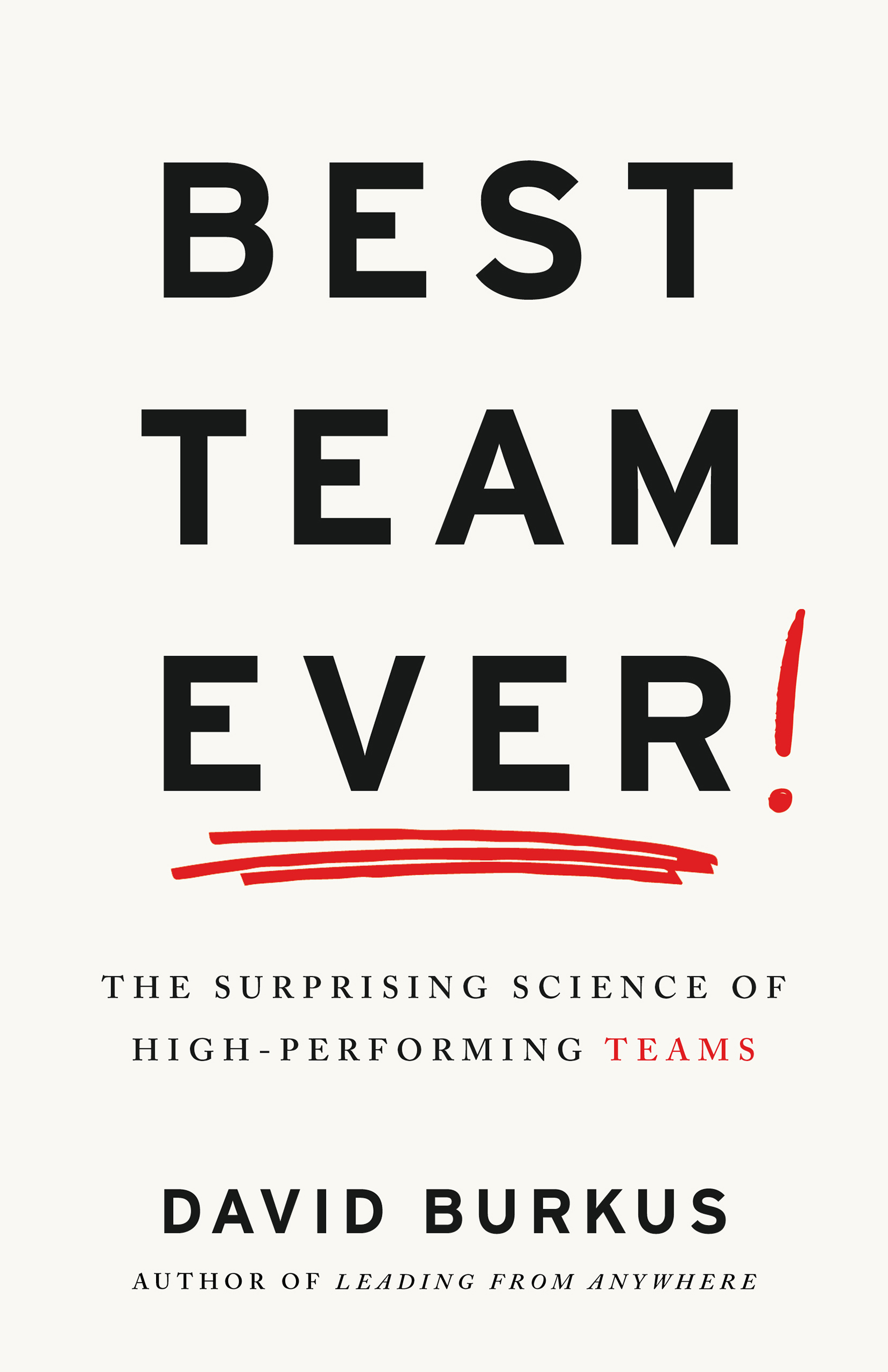
In this episode of Author Hour, Eric Jorgenson sits down with David Burkus, author of Best Team Ever, to talk about the math he gives every author weighing a traditional deal, the networking book that produced exactly two speaking gigs, the caveman test that named this one, and why nonfiction writers never get writer's block.
Transcript
Eric Jorgenson: I love Tucker and I mean, we could just start there like Tucker has done incredible things for it sounds like both of us. He was helped me publish my first book back in 2019. He's you know, I've learned a lot from him as a writer and as a as an author and he's the reason I got, you know, so passionate about saving Scribe because I thought his original vision and what he built deserve to be, you know, to be saved. Yeah, yeah.
David Burkus: Oh, great.
Eric Jorgenson: Agreed. And where did you first meet him?
David Burkus: So I met him, I think, in 2016 at Jayson Gaignard's MastermindTalks. That was through Scribe and I was in the middle of I don't know, I don't remember which book now, probably the second book. And you know, of course, he is like he's an evangelist for professional publishing, right? So anybody who signs a contract, you know, out loud on stage is like, stupid, don't do it. Don't go to traditional publisher. But in private, to me, he was like, well, it depends on how much money they're going to give you and this and that. And so he was very helpful in shaping all the proposals. And for four or three books in a row that I traditionally published, I would seek him out when I got the offer and go, what do you think? Like, is this worth taking the money, especially the last one when the offer wasn't as good as the previous book's offer? So we're starting to decline. And and eventually, I mean, that's what when someone tells you they don't want your business because you're better off with somebody else, that earns a ton of trust. So when it came time to like, I know that traditional publishing is not the right route for this book. It was it wasn't like he was the choice. He was the only person I called. It was just like, hey, it's finally time. When did that happen? So I met Tucker in 2016. That was right. He was coming out. Book three was traditionally published in 2019. And then COVID hit. And actually, book four, I never intended to write. It was a book all about I had some previous work and research on remote work and remote teams and that sort of thing. And so the publisher of book two, which was also publisher book three, came to me with an offer I couldn't refuse. Right. It was like all of your speaking has been canceled because of COVID. You have nothing to do other than like Zoom school your kids. But do you want to write a book about remote teams? And here's a bunch of money. And I was like, yeah, let's do it. Right. But very quickly, like if you think about COVID, that created huge momentum for the book. The publisher moved faster than I'd ever seen the move. We that book published in January of 2021. But by, you know, summer 2021, it was like, OK, well, people are starting to talk about return to office like this. We're riding a wave right now, but the wave is cresting and we need to go back to something that's a little more evergreen. And so I had an idea for a book just purely on teams and team culture, location agnostic. But I knew a publisher wasn't going to get it out in time. Right. We were going to go back to the old cycle. And even if I started today, it would be out three years from now. Right. When the debate was over about remote and hybrid and all that sort of stuff. And so I needed something much, much faster. And that was why Scribe was the only choice. The other thing I wanted is I had taken a whole lot more on the speaking side where it was my dominant source of income. And it's so much nicer now to have a professionally published book where, like, I can just say, hey, would you like 100 copies of the book? I'll just give me an address and I'll ship them to you. That's obnoxious to do with a traditional publisher. But when you've got it and you could just go in IngramSpark and fill out a form and boom, it ships them off. It's amazing. It's such a better opportunity. So I knew this book was going to drive speaking and be bundled in with speaking. So I needed way more control over it.
Eric Jorgenson: Have you always been sort of speaker of speaker first is a fair characterization, but like they because they come together. But from an income perspective or does that sort of shift based on the book or the season of life you're in?
David Burkus: I mean, no. And in fact, that's something else I owe Tucker for. So my background, I always knew I wanted to be a writer specifically. I mean, I went to undergrad for English and creative writing, but also found organizational psychology and social sciences and went on this huge detour where I was a professor. I was the professor that didn't want to do academic research because he wanted to write for Harvard Business Review and eventually get a real book deal and all of that sort of thing. And so teaching and writing were a huge portion of it. And speaking was like I once had a buddy. I think this is probably the right analogy for it at that stage. He described it as like manna from heaven, right? Like it falls and you've got to collect it and or it'll go away. And so you have no idea how to drive it. You know, just every once in a while you get an email that's like, do you want to talk at this conference? Here's some money. And so you have to say yes to it. But it wasn't a primary driver. And in 2019, he and I were out to dinner at a conference and I was basically complaining about the kind of the thought leader industrial complex, the things you have to do on the research side and this and that. And he just goes like, I don't get it. You're so smart. And all you ever do is complain about the constraints. Why don't you find a way out? Right. And in fact, the line I think he used especially especially was, if you're so smart, how come you're not rich? And I was like, well, because this is like, no, no, no, no, no. You're giving me reasons why you you can't win against this system. Why are you still in the system? And that was kind of the beginning of me thinking, all right, maybe I do need to pivot. So now I'm in a place. And what are we? Seven years later, we're speaking is the predominant revenue, probably 85 percent of my inventory. So I originally was a professor who wrote and occasionally spoke. And now the business model is I'm a speaker and writing feeds the demand gen for that speaking is also a great takeaway. There's a bunch of different ways it's in the service of that. But the primary mode since since coming out of covid and in-person events coming back has been full time speaker. Yeah. And you've enjoyed that that shift, like leaning into it hard.
Eric Jorgenson: Yeah.
David Burkus: Yeah. I mean, teaching is fun. Being in an academic setting is fun. MBA students are great undergrad students. Not so much. But being able to actually be in a in a room like the sweet spot for me, probably sixty five percent of my work speaking is, hey, we've got the top hundred and fifty leaders in the company together for this all hands meeting. Or as I like to say, I don't speak at the sales kickoff. I speak at the day before the sales kickoff when it's just managers and the ability to come in and talk and share some insights and a framework and some takeaways and know that that's going to get applied like Monday. Yeah. Cool. That's a lot of fun.
Eric Jorgenson: That's super fun. And it's more you get a sense that there's a lot more applicability and you've got like a hungry audience for what you're saying. They're like taking notes. They're eager to apply it there. It's a really high leverage way to kind of because you're speaking to a very high leverage group of people. You're not kind of just, you know, a big room of people that are there to sell and to buy tickets.
David Burkus: Exactly. Exactly. Or when you're when you're talking to MBAs, you're like, yeah, this is all great and helpful. And in six years, when you're finally in a leadership role, it'll be applicable. Right. Yeah. So what's your total count on books now? So five books, four of which were traditionally published in the last one professionally published with scribe.
Eric Jorgenson: OK, so you're still running from you have not written another books in twenty twenty three.
David Burkus: No. No. You know, I've still it's kind of funny. The other thing that happened in with this new book and the reason I wanted it out fast, et cetera, is that it was the first book where I built a framework and spoke on a topic for 18 months or so before it was a book traditionally like that in the reader space. You're supposed to go off and come up with this grand big idea and research and write it all in silence and not talk about it because you might get scooped. And then you put it out in the world and you hope that that drives media attention and speaking and all of that sort of stuff. This one was a little different. I had clients specifically asking me for this content, constantly refining it, et cetera. And so even the process of writing it, I knew was going to be much faster because I had been on stage speaking it for like 18 months. Right. And that's new for me. And so now I think that's the only ever way I'd write a book. Like I don't know that I would write a book from scratch anymore. I will probably test the idea in a variety of different mediums and get it bigger and bigger and bigger before I go, okay, now it's finally a book length idea.
Eric Jorgenson: I feel like this is one of the secrets is just like how you get feedback into your ideas. You get exceptional feedback by speaking and workshopping and using these ideas and those conversations all refine and reinforce the key ideas here. I mean, this is how comedians obviously refine their material. It's also the secret behind what I think are some of the biggest authors is using that fast feedback loop online and then feeding it into, you know, the permanent artifact of the book.
David Burkus: Yeah. And especially for my work, you know, I, I'm a big fan of Nathan Barry's sort of flywheels concept. Right. And so for me, there's this awesome flywheel of kind of coming up with an idea, going out and speaking on it, hearing the questions that come up afterwards from the leaders that are trying to digest it or apply it. That refines the idea and the cycle just keeps getting better and better and better. Again, it's, it's a weird, not, not to sound self-indulgent, but yeah, it's a lot like stand up comedy doing the small shows with the notepad. It's kind of that, that same deal. And I just, I think it's a much better way to bring an idea to market than sadly what most, most people who do a traditionally published deal are still in this mentality of, I need to sell the acquisitions editor on the idea. And they write a proposal for an audience of one, and then you've got one person's fingerprints and tastes on it. And you have no idea if it'll actually work in the market and no surprise. That's why most of them don't, you know?
Eric Jorgenson: Yeah. And importantly, that one person who is not a studied proxy for your reader, your avatar, right? It's not like that person actually accurately represents, you know, this senior VP leader in a fortune 500 that actually you're the one writing to that's who is going to hire you and who's going to listen to you and who's going to apply your ideas.
David Burkus: Yeah, exactly. They're just taking sort of grandiose guesses. And I actually saw that in play. My third book, again, with Houghton Mifflin Harcourt, was about networks and network science. And the idea was that the first half of the book was about personal networks and the second half is about organizational networks and teams and the broader sort of zoom out relevant to leaders thing. They really, really pushed hard to make it kind of a career book, right? To make it about professional networking and what have you, because like, that's all they thought, you know, because they weren't representative of that avatar and, and it worked and we sold a decent amount of copies. But I think in the entire history of that book, I've gotten two speaking gigs from it, right? Because who wants to hire someone to come teach all their people to be great networkers so they can get their dream job? It's never going to happen. So not all that successful of a model because we, we didn't have somebody in there who could really actually adopt that avatar and think this is what they need. Instead, they just thought, well, career books sell, let's make it a career book.
Eric Jorgenson: Yeah. Super interesting. Okay. So as somebody who's gotten a foot on, you've ridden both paths all the way through, right? You've had three experiences on the traditionally published side, one on the professionally published side. How do you, I'm with Tucker and I sort of do this too, is like evaluate, help people evaluate the trade-offs. Like how would you coach somebody through the pros and the cons and who's right for which path or what books are right for which path?
David Burkus: Yeah. I mean, I think it's, uh, and there is, sadly, there is still some ego associated with being chosen by, you know, everybody, everybody wants to, there's all that. But the truth is, I think it's a pure, I think it's kind of a pure economic decision. What I tell almost everybody is that you should still write a proposal, right? And that's why I love even scribe with guided author starts with writing out an outline. That is, it's almost exactly what a traditionally published proposal looks like. Cause you should have a plan. You should have thought through the idea. You should know how you're going to market it. You should have a rough outline of how the chapters are going to work. You should still write a proposal. If you believe in that proposal enough to where you think you could get big money from a traditional publisher, great. Go find an agent, go shop it out there, go get offers. I assume that a successful book is going to sell a minimum of about 10,000 copies. And if you do the math somewhere between a 75,000 and a hundred thousand dollar offer is where you should like, okay, take the money and don't professionally publish, take the traditional published money, right? But anything, if you think you're not going to sell as many as that, then you probably shouldn't go to traditional publishing route. If you get an offer, sadly, most traditional publishers offers are nowhere near that anymore, right? I mean, they are for if you're super famous, right? Or you've got a hundred thousand person email list. But if you're the average person with an idea and a rough following is that you're probably going to get low five figures, right? Like 20, 25 grand is something your agent would be excited about. That's not enough to deal with all of the hassles of signing away your IP and they're, they're being involved in so many different decisions, including covers and all that sort of stuff. So mine, it's purely economic. Like, can you get an offer that's better than that? And if there's not, believe in yourself, put up your own money and do it because you're going to make more and have better control over it. But I think in both cases, you still start with that proposal. Think through the idea fully to the point where you could sell it if you wanted to, because then even the process of writing it in a professional publishing setting like through Scribe are going to be easier to do anyway.
Eric Jorgenson: Yeah, I like that. And I say something roughly similar. I was like, you know, if all other things being equal, if you get a six figure offer, you're probably better off to take it. It's a pretty good risk adjusted bet. Unless you, unless you have something really special to bring to the table. The other, which you mentioned earlier is also, unless you need to move really fast, um, unless you need to control your timeline and that's essential either to the message of your book because it's, you want to be part of that conversation that's happening right now, or, you know, you're working backwards from some sort of life or business deadline. You know, we have people that come in and are like, oh, I need to publish this by the time I'm 40 or I need to publish this before our, you know, my big conference or the speaking opportunity or whatever it is.
David Burkus: Yeah, I completely agree. I sat in on guided author with Scribe in June of 2022 and the book was available on Amazon and everywhere else in May of 2023. No publisher is ever going to work that fast. It's just not. I mean, what's funny is I know they can because they did for me during COVID, right? But unless you really sell them on this as a super timely idea, right, they're not going to move that fast. None of them are. And so if you need the book to get out faster, whether for personal reasons or for trying to to chase a market opportunity or something like that, you put traditional off the table entirely.
Eric Jorgenson: You're also competing for slots and internal resources. And so that's where the size of the advance matters. If you get a million dollar advance, you know, that's real skin in the game. They're going to work hard to make that book real. If you get a $10,000 advance and you took it, you're you're lucky to get scraps of time and resources.
David Burkus: You're going to be good for sending out free copies. And that's it.
Eric Jorgenson: Yeah, yeah, yeah. OK, you are like uniquely successful as a on the speaking side of your business. And I usually I want to just kind of dig a little deeper into that because I feel like so many authors have this like they're trying to build both sides of that kind of both sides of their business, sell more books, make an impact on that side. But and they know that speaking should be a part of it. Take me a little bit on your journey. What were the epiphanies or the changes you make? Like, how did you go from, you know, I speak sometimes to this is the overwhelming majority of my income and I'm a very successful speaker.
David Burkus: Yeah, I mean, part of it was deciding to to adopt that model, which requires thinking through, OK, what what does that mean? And it's interesting in in the literature space, right, everybody is obsessed with the big idea, right? There's really if you think about traditional publishing, they they take every book proposal that comes to them and they categorize it as either is it an instructional book or is it a big idea book, right? Is it seven habits for highly effective people or is it blink? Right. And everybody is obsessed with the big idea, the New York cocktail party idea that people talk about. Right. Because it sounds cool to talk about. Well, it turns out that that's actually a pretty hard idea to sell. I mean, you might sell some speeches in that regard because you somebody will read the book and go, oh, my gosh, this is great. Or they'll listen to you in a podcast interview and say you're exactly what I needed. But they they don't recognize it's hard to sell people something that they don't fully understand at first. And so figuring out exactly what your lane you're in and then exactly what problem you solve is much easier. Right. I had super clever names for my previous books, The Myths of Creativity, Under New Management, which is about the future of work, Friend of a Friend, which is about networking. Here we call the fifth book Best Team Ever. Why? Because what do managers want? They want to lead the best team ever, like super simple, like Donald Miller calls it the caveman test, right? A caveman should be able to read the title of your book and know exactly what it's about. It's kind of the same thing with speaking people who plan events and book speakers think in terms of lanes and problems. Right. There's a leadership lane. There's a marketing and sales lane. There's an inspirational speaker lane. There's only there's only probably five or six lanes that people are in. And then inside that lane, what's the problem they're struggling with? You know, in the leadership lane that could be leading through change. That's a different speaker than me. It could be employee engagement is low. Well, that's a culture issue. So that one hits my best team ever. Right inside that lane, they have those different problems. And so how you package yourself needs to be very, very clear on if you have this problem. I have this framework, this body of content, these takeaways, et cetera, that can meet that problem. Once you do that, it gets really easy. But that's the opposite of a big idea book that people are obsessed with sort of talking about. Right now, obviously, there's exceptions. Malcolm Gladwell, not hurting for for business. Right. But most people who read that big idea book never get famous enough to say, hey, this is sustainable. So the only other option is to go that route where I'm very, very clear on my lane and what problem I solve. And then I'm just waiting for people to have that problem and then find me. And people have that problem every day, every year.
Eric Jorgenson: You know who they are and where to find them.
David Burkus: And if I could if I could do this all again, I probably would have been like a marketing speaker because every every small business conference ever needs somebody that's like, how do we get the phone to ring more? That's that's a business that's never going to go out of style. But leadership and improving your teams and your performance of that is a is a close second. But yeah. Yeah.
Eric Jorgenson: What did you do differently? Or sorry, is there any other big changes you made along that kind of journey up the up the speaking ladder?
David Burkus: Yeah. So again, I think the other thing that happens is you the book becomes in the service of speaking, which means, one, you want control over it, which is, again, an argument for professional publishing. But two, you realize, like in the traditional publishing big idea world, the book is the excuse to market yourself. But if you're speaking, then you can't wait for the book. The book is always a great like juice. It's an easier way to get booked on podcasts and that sort of stuff. So the other thing we started doing was creating an awful lot more content. Right. And partly because I was at home at covid like everybody else. But we started a YouTube channel in like mid 2020 because we had nothing else to do. And a lot of those videos have become super essential to marketing speaker, not just videos on stage, but videos. I mean, I literally before we did this one is the reason my setup looks good. We're filming one right before this. That's why you got me nicely dressed and all of that because of it. We were filming a video about getting people to speak up more in meetings and arguing how to farm for dissent and that sort of thing. Those little micro videos are like little marketing pieces solving individual problems that then get found. Right. So thinking kind of video first in your marketing and being willing to put out your own content instead of just wait for the book and then hope people will help you promote the book and then hope people watch other people's podcasts and then start back to you. I think it works a whole lot better to just choose yourself in that regard. Choose yours. I just stole James Altucher's line. But hey, we'll go with it. That's OK. That must be a good line then.
Eric Jorgenson: Right. Did you did you start working with a professional speaker agent or bureau at any point or are you still doing all this yourself and just reaching out to your like they just come organically through your network and your market?
David Burkus: Yeah. So I work I work with a number of different bureaus. There's kind of there's kind of two different routes you can go. And early in my career, when I was an academic and a writer and just needed somebody to help, I went the first route, which is to be represented exclusively by an agency. So there are some bureaus that they want all they handle all of your inbound business. They have outbound business, but everybody's going to go through them. And it can be really convenient if you've got something else going on in your life, like, I don't know, running a turnaround of a company, you know, something like that. But if you're if you choose it like, no, speaking is going to be my number one focus. I don't actually think it's the best route because you're kind of everything has to go through them. So if you made it make a good connection, has to go through them. If another bureau wants to work with you, has to go through them and they can become a bottleneck. So when I decided to fully go and be committed on all this, I also decided to kind of represent myself, which meant that I got to go out there and meet a lot of different. And there's a lot of speaker bureaus that work. I call it exclusively non-exclusive. Their idea is that the event plan or the client is first priority. And so we don't have any exclusive representation. That way we can always recommend the best person for that specific client. I think a better strategy, if you're wanting to be a full time speaker and you're not super famous or super busy, is to make it on yourself to manage yourself and go meet all of those people, because then you've got a lot of different champions out there instead of just one person.
Eric Jorgenson: So you just have to kind of make yourself legible and known to to those exclusively non-exclusive bureaus. And then you're like in their network, on their list, and they can slot you in when they're planning an event or recommend you.
David Burkus: Yeah. So I did a couple of these. So first I had to go meet them all, right, and reintroduce myself to them because most of them knew me as connected to that other bureau and had to go reestablish that relationship. I had to get really clear on, you know, here's who I am, what problem I solve. The other thing I did when I was starting out because I was at a much lower fee is I said, you know, when they want these people, you know, it was Marcus Buckingham, Keith Ferrazzi, Daniel Pink, Adam Grant and Patrick Lencioni, like when they ask for those people and then they get sticker shock on how expensive they are, I'm a lot cheaper. So think of me for that. Right. And then the last thing I did is I usually if I if I really felt like I had a connection and I liked that particular agent and I wanted to work with them, if I got an inbound lead, I would just say, hey, do you want to contract this with me? I would give them some of the commission to contract it just so they could work with me on a deal and learn more about what I'm like to work with, which I think is like that. It's like the hidden secret of it. A lot of people focus on getting listed on bureau websites and having the right talk descriptions, all that sort of stuff. But if they don't know what you like to work with, they don't know how to sell you as much. But if you bring them in on a deal you already have now, they're sitting in on all of those planning calls. This happened to me earlier today. They're sitting in on the planning call with you and they're seeing how you sell yourself, how you prepare yourself. They know a whole lot more afterwards about how to sell you. So you get a lot more traction from that.
Eric Jorgenson: Yeah. And I'm sure from their seat, they're like, OK, I could send this client to any of 20 speakers who could fill this lot. But I know David's the easiest to work with. He's the most likely to close. He responds quickly. He never misses. And from their point of view, they're like, we're going to get the same commission for each of these 20 people who's going to make my life the easiest, who's going to make me look the best. So that's a very yeah, that's a really, really good point. OK, going back to the writing, the writing aspect of this, what did you do differently in your in the writing of your fourth book from your first book? Like how does your process evolve?
David Burkus: Well, I mean, I don't think anybody does the first book and knows anything about how to write a book like part of part of what you learn when you write the first book is how in the world I'm going to write this book. Right. And I remember I did I did really dumb stuff writing the first book. I wrote the first book in Word, right? Like in Microsoft Word, just different files for different chapters. And it was all spread out, et cetera. And then the second book, somebody told me you should use Scrivener because it's kind of like Word, but like you can tab through because and so I use it. No, I don't think the tool matters all that much. But like the idea of writing in a tool built for writing a long form document. Right. So there was that. I also sort of was writing and researching by the seat of my pants. And now for every book, I'm much more clear. Like I don't when you write nonfiction, there's no such thing as writer's block. There's just you haven't researched it enough. And so I am much more diligent about the research where I don't actually start the writing process anymore until I know this chapter opens with this case study. And here's the main takeaway. Here's the research supports the takeaway. And here's the three to five applications. And it's all mapped out. It's all actually I unfortunately kill a lot of trees. It's all actually still out in print, in piles on the floor. These bookshelves behind me, the floor in front of them becomes as a pile for each chapter. And I don't start until I know that that pile has everything I needed. And then when it comes time to write, I grab that pile, put it on the laptop next to me on the desk and I start writing. And you never get writer's block when you've got it all mapped out like that. You get writer's block when you didn't do enough research. So now you're like, oh, I need the right analogy here. And you're just stuck. I solve that problem in the research phase. So now I spend a whole lot more, probably six months researching and then another six months writing instead of 18 months dilly dallying back and forth and doing it all. What is what is that analogy? Trying to fly the plane as I've are trying to build the plane as I've already jumped off the cliff. I don't do that anymore. I build the plane and then we try and get it to take off.
Eric Jorgenson: Yeah, it's the, you know, four hours sharpening the ax to spend one hour cutting down the tree rather than that. You know, yeah, that's a great line. And I think I agree with it. I mean, I think there's writer's block. There's a problem upstream of some sort and it yields to effort. But you have to change what you're doing a little bit.
David Burkus: I do think for like for fiction or memoir, there's probably that because you can struggle to tell the story in the way that really read it. But for nonfiction, no, just spend a little more time researching what you actually want in that chapter and then it should flow.
Eric Jorgenson: Love it. How do you structure your schedule when you're when you're writing? I mean, these are very different phases, right? Researching and writing and editing. Like, what does your day look like?
David Burkus: So I'm a I'm a marathoner, not a sprinter when it comes to writing. So I'm like five hundred seven hundred and fifty words a day. And my brain will turn to mush if I've written more than like a thousand. Right. So my average day, like let's say I'm let's say, OK, for the sake of argument, let's say it's a school day, like it's not summer vacation. Kids are in school. So my day starts with my iPhone telling me I have to wake up and get the younger one up because this school bus comes earlier, getting them all ready. Right. That's a sprint. But once they're both on both of the buses, then I come down to this office, grab that stack. It's like first thing I do is write that five hundred or so words that usually takes me from like nine a.m. to let's call it eight thirty to nine thirty, ten a.m. ish. And then my brain is mush. So I just stop and I go I've done I have the I have the most beautiful addiction in the world. I've done Brazilian jujitsu for the last 20 years. And so there's an 11 a.m. practice. And so I drive over and go to the 11 a.m. practice. Right. And then I come back at noon, have lunch and then spend the whole rest of the day either doing like reactive work, recording a podcast, for example, kind of clear on my email inbox or doing a little bit more research if I'm still kind of in that phase. But I just the actual act of writing. I'm like, I have to do it first and I can't do too much of it. And I know other people who are bingers, right, who spend a whole weekend and come out with six thousand words. I'm just not that way. I'm much more. It's Anne Lamott's phrase bird by bird. Right. I'm much more just lay a little brick, come back the next day, lay another brick 500, 750 words or so is the target. It's actually the single most useful thing in that Scrivener app for me is not how you organize. It's the word count limit where you can tell it once you hit 500 words, give me a little dopamine satisfying alarm and let me know I'm done. I live for that little alarm when I'm in writing mode.
Eric Jorgenson: That's fantastic. And I think, you know, knowing that it's a marathon, you don't want to burn yourself out. You don't push yourself too hard. You just, you know, hit your mark for the day and know you're going to be there the next day and be disciplined about that goal. What is this is my favorite question of the podcast. What are some of the unexpected good things that have come as a result of your book being out in the world?
David Burkus: I'll tell you the coolest one ever. So my my second book, unfortunately, not the not the fifth. My second book is called Under New Management, and it was out there in the world. And we actually got a pretty decent international distribution. One day I got a LinkedIn message from a random guy I'd never heard of, but it said his name underneath was like event planner. So I was like, OK, this is interesting. So he's emails or he LinkedIn mails me. And all he says is you're Lithuanian, which is technically true. Burkus is a Lithuanian. I've lived in America my whole life. I'm a third generation American, but technically three generations ago during the Soviet occupation, my grandfather came here. Right. So I wrote back. I was like, yes, I am. But hi, how are you? Like, that's the weirdest thing. And he said, we pick up one. Yeah, he's like, oh, I'm sorry. Sorry. I just found your book under new management and I read it and I think it's really, really cool. I run a series of business conferences in Lithuania, Latvia and Estonia in the Baltics. And I think it'd be really fun for the audience to have a speech from an American author with a big book who's also Lithuanian. Do you want to come to Lithuania and give that speech? Now, it's funny that happened in like fall of twenty nineteen. So it took until fall of twenty twenty one to finally be able to do that. But like, you know, I Lithuania is a country of like four million people and I'm three generations removed from it. I was never actually going to go to my home, you know, my namesake. And I'm not I'm not Irish. I'm not that proud of it. Right. I'm not Italian. I'm not going to go back. But this was the opportunity to do it. And so it was super cool to go there. And then they even said, like, we're going to translate the book into that. And actually somewhere in this right here, that shelf, I can't pull it. But I have a Lithuanian language version of that book, which is just cool. So little stuff like that, no way to plan it, no way to expect it. And it just sort of pops up because the book's out there in the world doing the work for you.
Eric Jorgenson: Yeah. With the world, the book travels this very long loop all the way around the world and then makes the world feel small again. Those are really cool, rewarding moments. And the experience of going and speaking was was awesome.
David Burkus: Oh, it was super funny. I mean, they run it. They run a top shelf conference. And that was a ton of fun. And the way they do it, the model is actually really cool. It's the same keynote speakers in each city. So you're there for a week and a half and you go to Riga, Latvia and Vilnius, Lithuania and those sort of things. But you travel as a group together. So I also got to spend a week and a half with Adam Chair, who was the founder of Siri, one of the guys who founded Netflix, then went to jail for movie pass. He was fun guy to get to know Johnson. And I, the futurist, like we got to hang. So it was not only like cool to be in Vilnius. It was cool because of the way that conference works. So, yeah, the conference was awesome, too. That's an awesome structure. I love that.
Eric Jorgenson: Yeah.
David Burkus: Oh, it's brilliant. If you're in an underserved market, it's a brilliant. I don't in fact, I don't know why there's not a business that does that in the United States and like smaller cities like, oh, we're going to do Des Moines and then we're going to do Grand Rapids, Grand Rapids. We're going to take the same crew of people over the course of like three or four days and we'll make it up in economies of scale. Yeah.
Eric Jorgenson: Yeah, that's a great I mean, as I live in Kansas City, so I feel like that would that would certainly work. And as a speaker, also, it's like, you know, you go and whether if the if the. Purpose of the conference is not like your interest, necessarily. All right. Who am I going to hang out with? Like, who am I going to be really excited to meet? And so if you get to kind of travel with the other speakers and get to know interesting folks in this environment, this sort of fosters those those deeper long term relationships, it's not, you know, 12 hours at a time. That's a really cool experience. Yeah, yeah, yeah. Yeah. David, what other advice do you have for authors who are? I suppose you knew you wanted to be an author for a really long time. So you didn't have this moment of like, oh, I've got to like make this leap across the chasm. But what do you have to how do you sort of advise people that are just considering whether or not to make this leap into to writing their first book?
David Burkus: Yeah, well, I think the first question I ask them is, do you just want to be heard or do you actually have something to say? Right. Like, I think that unfortunately, the world is littered with books from people who just wanted to be heard. Here's my book. Right. And like, I've always hated that term. You know, your book is a great business card. Right. No. Do you actually write? Do you actually have something to say? Right. And the way that you know that is that people are already asking for that kernel of an idea that that intellectual property, whether it's a framework or a process, whatever it is, like if there's already some demand for that, then what I would say is you sort of the still the one of the best ways to show the world that that idea needs to spread more is to show them that it's packaged, that it's done developing. And we still live in a world where books are the way. I mean, there's a million other mediums out there and there's more every single day. But books are still the way to show the world like, no, this is finished. This is a refined, finished, ready to go idea ready to apply in your situation. And so if you've already got people who are asking you for that idea, then the way you're going to scale it and show the rest of the world that it's out there and it's worth it is still to put it into a book format. And that's what I mean when I say, do you have something to say versus do you just want to be heard?
Eric Jorgenson: Yeah, I feel like there's just an unbelievable arbitrage in putting an idea in a book. I'm a fan of blogs and podcasts and social and all this stuff, but it's also everything else feels very ephemeral and it's easy to ignore. And it's just dust in the wind in a way that books are permanent and perfect. And as you say, finished like it's a coherent, complete idea if there is a book about it. And it's you know, you've got to work hard over many months or years to to create that artifact and distill everything that you know and put it in that book. And that's what the world responds to. You know, they see that. And that's a signal that, you know, this person has something meaningful to say and to share and that you can access it and that they can carry the flag of this idea and spread it effectively and apply it with the world. So, yeah, I couldn't agree more. That's a great one. David, where would you send people to learn more about you? What's your how do you assign your reading? What's the order of people? Which people should consume your books? What's the universe? I mean, we're going to do it.
David Burkus: I'm lucky in that being Lithuanian, I've got a real purpose is a really weird last name, right? So all the handles are still open. There's there's two. There's me and there's like a 24 year old filmmaker. So if you just type that into to Google or search or ask ChatGPT, whatever you want about me, it already knows. Not because I'm super famous, just because my name is really weird. So I would go there. You could find that's the website. That's LinkedIn. That's whatever socials you want to have a conversation on. As far as book, I mean, I would tell them to start with Best Team Ever. It's the newest one. It's the one that was the most fun to write. It was the one I had the most freedom to write, because, again, it was professionally published. So it's it's probably still you're not supposed to have favorites among your kids, but you can have favorites among your books and best team members, probably.
Eric Jorgenson: Yeah, that's a that's a good you're allowed to have a favorite book, I think. Yeah, for sure. And it's really cool to see the impact of this. I mean, this this book is incredibly well reviewed. It was unbelievable. You had unbelievable blurbs on it. It's clearly, you know, with the demand for your your speaking and your presence really resonating with people. How what's your what's your pitch for the book? Who should read it and what will it offer them?
David Burkus: Yeah, well, if you've ever been in this scenario where you feel like this team should just be working better together, like you've got talented people and you just can't figure out why the culture of the team or the ways in which they're working is not drawing them out of them. By the end of the book, you will know why you're frustrated and you'll have two or three ways to solve it. Right. You already work for a great team. Yes, it'll help you diagnose why you love being on that team. But in particular, if you're like, oh, there's something going on here and I just can't figure it out, that'll help you diagnose it and figure out, OK, here's how we turn that around.
Eric Jorgenson: Incredible. That's something that feels like this amorphous kind of dark art that's really hard to figure out because it's a messy human thing. And that's, you know, the subtitle, the title of the book, the best team ever, the surprising science of high performing teams, which gives you the sense that it is. It's understandable. It's you can break this down and you can take actions to make it better. Yeah, yeah, yeah. David Burkus, B-U-R-K-U-S. The book is Best Team Ever. Thank you so much for taking the time and teaching us all and being so open and sharing everything, you know, mental.
David Burkus: I appreciate it. Thank you so much for having me.
Want to Write Your Own Book?
Scribe has helped over 2,000 authors turn their expertise into published books.
Schedule a Free Consult