Beyond the Cockpit: A Navy Fighter Pilot's Flight Plan to Financial Freedom with Jake Parsons
✨ Episode Summary
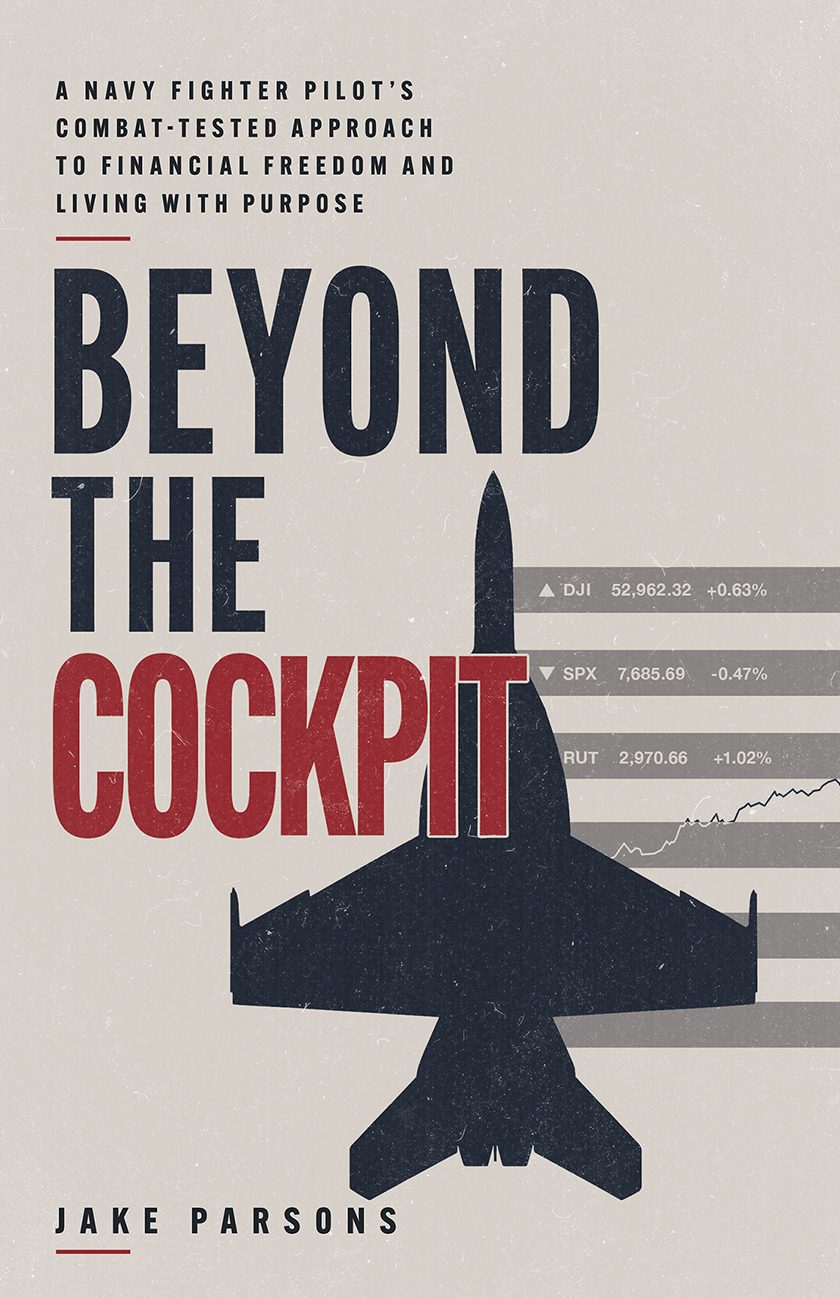
Jake Parsons spent 22 years flying for the Navy, a dream he took on at eight years old after his 14-year-old brother Trevor, who wanted to fly, passed away. In Beyond the Cockpit, out November 10, he follows a single carrier mission from preflight planning to the catapult shot and back to the boat, and ties each phase to a part of your financial life.
In this episode of Author Hour, Jake tells host Lex Statzer about the night his instruments failed on his first night catapult shot and he came within 50 feet of the water, and what that teaches investors about selling in a downturn. He explains why people put off a written financial plan, the first thing to ask any advisor, why financial freedom is not a number, and how he wrote the book one day a week in the mountains.
“I want folks to understand that money is a tool and a tool only.”
⭐ Top Moments
- Why a fighter pilot wrote a finance book. Jake built the book around one carrier mission for a simple reason: “I think flying is interesting to people. I think finances aren’t.”
- Less than 50 feet from the water. His instruments failed on his first night catapult shot: “And when my instruments came back, I was less than 50 feet from impacting the water.”
- The first question to ask an advisor. “So I think, I think a good place to start is tell me what the conflicts of interest are.”

Jake Parsons
CDR Jake Parsons, USNR (Ret.), is a CERTIFIED FINANCIAL PLANNER™ and the president and CEO of Statherós Financial Solutions. A combat-decorated fighter pilot, he served thirteen years in the active-duty Navy and nine years in the Navy Reserves before retiring from service in 2019. Jake is passionate about living life with a higher purpose, serving his community, and helping families and companies reach their full financial potential. He is a husband to Glory and a father to Trevor, Nieva, Joseph, and Daniel. Jake loves fly fishing, flying, and golf, and he strives daily to follow Christ well.
★ Scribe Case Study
Jake Parsons Turned 22 Years as a Navy Fighter Pilot Into a Flight Plan for Financial Freedom
Navy fighter pilot turned financial planner Jake Parsons wrote Beyond the Cockpit with Scribe, building a financial plan around a single carrier mission.
📚 Books by Jake Parsons
Transcript
Lex Statzer: Welcome to Author Hour. Today I am here with Jake Parsons, author of Beyond the Cockpit, a Navy fighter pilot's combat-tested approach to financial freedom and living with purpose. Coming out November 10th. Jake, welcome to Author Hour.
Jake Parsons: Thank you. Good to be here.
Lex Statzer: So today we're going to kind of go through the arc of your book. We're going to start where you start, work through some of the ideas, and end with how it all came together. So the book opens on a couple who thought that they've done everything they were told to do and still feel underprepared for their financial future. Why did you want to start there?
Jake Parsons: I wanted to start there, I think, because mainly I feel like once people become successful, they don't really know what to do when they get there. I think we spend a lot of our time working to become successful, quote unquote. And that definition is defined differently by everyone. But once they reach that success, I think there's another sort of fundamental problem of now what? Now what do I do? And I speak specifically to the financial perspective on that. I think people don't think about their finances until they begin to have some excess. And I think this couple that I sort of made up and described in the intro of the book is fairly common. It's just a couple who's finally gotten there and they got a couple kids. They're busy as ever and they're starting to make money and they're starting to enjoy their life a little bit more and having a little bit more flexibility, yet they don't know where they're at, sort of financially, and how long they have to keep doing what they're doing. So that's kind of the impetus of it.
Lex Statzer: So why do you think that that feeling of doing the right things, having that excess, and still feeling behind is so common?
Jake Parsons: Because I think people mainly don't know what to do to plan for their financial future after they reach sort of the income that they want. I think most of us start out and they know they want to become professional in some capacity, or they want to be a really good plumber, or they want to be a doctor, or they want to do whatever they want to career-wise. And so they know how to get there. They figure out how to get there, whether it's an apprenticeship or whether it's going to getting through the appropriate tests to become a doctor, and then going from pre-med to all their internships and all their career orientation that they have to do to get there. And then once they get there, they've achieved that, and they start to make, everyone starts to make money, and they get to this point where they're making money, and now they don't know what to do with that money and have that money work for them down the road. The only thing that typically people come to grips with is that they know they don't want to do what they're doing forever. And I think the complication comes in with what, now what? Now what do I do? I have this, I have a little bit, I've got my life is going, we're driving the cars we want, we're in the house we want, we still have this excess, now what do we do? I know that I don't want to work 60 hours a week for the rest of my life, so how do I prepare to not do that?
Lex Statzer: Yeah.
Jake Parsons: Yeah.
Lex Statzer: Before we get too into the ideas of the actual book, I want to understand where you come from a little bit. So, so much of this book is your story as well, and you were eight when your brother Trevor passed away, and his dream of flying became yours. How did that event shape this book?
Jake Parsons: Well, that event shaped this book in a number of ways. One of them was, I think probably the overarching idea is that there's, I just realized at a young age the brevity of life and how quick life can pass you by. And so I think that if there is any sort of high level approach that I have in life because of that, it's, you know, what are you living for? And choosing what you're living for is just a profound choice that we have to make. And it's something greater than us. And I think that that's sort of shaped everything that I've done. That in particular, you know, my brother wanted to be, he wanted to fly, as you said, he wanted to fly for the Air Force. And, and so when he passed, I was eight years old, he was 14. And I took that on myself and kind of made it my own and chose to want to fly for the Navy. And so that became, you know, sort of my mission at the time. Like, this is what I want to do. Kind of when I was talking about, you know, becoming a doctor, like I knew I wanted to fly fast airplanes for the Navy, starting at eight years old. So I, that became my mission. And then almost come sort of a little bit full circle is why that, that all, that all happened. I became successful doing that. I became that couple that in that intro a little bit. And then I realized that I couldn't keep doing that and raise the family that I wanted. It just, I was, my older son was having some issues when I was leaving for eight, 10 months at a time, and it was just too much. So I had to find something else to do that I was passionate about. And I happen to be pretty passionate about finance and money and just as much as my flying.
Lex Statzer: Yeah. I mean, and the finance really goes back to that brevity of life that you were talking about where planning for a future and not knowing what the next day is going to bring. I mean, that's part of that financial plan, right?
Jake Parsons: Yeah. I mean, I think, I think what, I think what finances do for us is provide us some flexibility in our life. And I don't think getting a, you know, having a lot of money is going to fulfill you, but I think what it does do for you is it provides you some flexibility. And, and what I'm trying to encourage folks to do in this book in particular is, you know, let's plan, let's plan well financially so that you can have the flexibility that you want, that's unique to you so you can fulfill your mission in life and your objective in life. And I think that's, I think that's kind of the, I think that's the key.
Lex Statzer: So walk me through the book's core framework. It's both a narrative naval mission and a financial planning guide. How did those two elements come together for the book?
Jake Parsons: I was just, I've always kind of wanted to write a book and just kind of write down some things even for my kids, you know, on a personal level, if they could hear some flying stories. I'm, I'm, I don't tell a lot of flying stories verbally and in person really to many people. I mean, so I think what I, what was key for me was, I think I have a, there's all kinds of finance books out there. I mean, there's tons and they're a dime a dozen and I didn't really want to write one that was just, you know, telling you how to plan appropriately and, you know, giving you, you know, my two cents on what these thoughts are and, and how to go out and do it yourself. This isn't really a do it yourself book at all. I wanted to take the approach of the, the unique approach that I had. And I think the unique approach I have is, is, you know, flying for 22 years in the Navy and having some different experiences in that realm. And what I think is interesting and the reason, the reason I chose that approach is because there's so many cool analogies with flying airplanes and what we did in the Navy on and in the combat missions that apply to your financial life more than you would think. And I think, I think flying is interesting to people. I think finances aren't. So my goal was to try and make the book, you know, half interesting and half quote unquote, a little bit more on the boring side of like the planning side that you have and just offer a different perspective and way to think about it. So the book is, the book is built around a flight plan and what we, all the aspects of flying that we did is it's, it's basically built around one, one flight in the Navy off of carrier. And so I take you from the pre-flight planning to the, to the actual brief, to the takeoff, the catapult shot, to the transit, to the target acquisition and back all the way back to the boat. Ultimately, you know, when we're eating at midnight, I'm having rations or what we call mid rats on the, on the carrier. And I, I just attribute each phase of that flight, that one flight to some aspect of, of your financial life. And I, ultimately each chapter kind of begins with a flying, a flying story of some sort, and then a personal flying story. They're all, they're all my personal flying stories with, with wingmen and friends and missions and whatever that, that I had a part of what I have done in the past. And then I just relate it to that phase of your financial picture.
Lex Statzer: Now I'm curious, what is one of the analogies between flying and finances? Like, what did you find is connected there?
Jake Parsons: Well, I think, let's see, what would be a good example? I mean, I tell, I tell a story of probably the best analogy or one of the analogies that I bring up in the book is I tell a story about when I, my first night catapult shot on the carrier and what happened, what happened in that catapult shot was it's your first, it's your first one. So you already have wings from the Navy, you're, you've learned how to fly what I call, you know, gray airplanes. So the F-18, Charlie in this situation, and I'm on the front end of a, of a carrier and a very, very black night. I mean, there's thousand foot overcast. You can't see stars. You can't see the, the, the ocean is black. Everything's black. And there's some lights on the carrier and you get on that catapult and you, you put the, you know, you put the motors at full blast and afterburners to get off the, to get off the catapult. And I, you, you go from, you know, zero to 200 knots in less than two seconds. And as soon as I did that for the very first time, you go from a little bit of light and a lot of noise to just basically silence. And you, you launch off the, you launch off the front end of that, that carrier. And what happened to me in this particular, my very first cat shot is I lost all my instrumentation. And so I went from instruments, some light, a lot of noise to getting launched off to complete silence and complete blackness. The only thing I could hear was the motors that were kind of, that are behind you in the, in the cockpit. And one of the things that happens to you is you, you, you can get what's called a somatographic illusion, which basically is like, think of it as if you went off a rollercoaster and you, you've caught a lot of speed in the, in the middle of the night, what happens is your vestibular system gets all screwed up. The, the hair in your ears gets all screwed up. And you think, you think that you're going straight up in the air. So you think you're going straight up in the air, like you're pointed straight up in the air. And what you do in the cockpit, if you, if you think about how you're feeling and you're flying with your seat, your pants, you take the, you take the stick and you naturally point it forward. Well, what's really happening is you're not going straight up in the air. And when you launch off the carrier deck, you're 60 feet above the water. And if you start to point towards, you know, push the airplane down, you don't have too much time before you're probably not survive, which has happened many times. And I had an instructor that briefed us on these and they, they talked to us about these, if this were to happen, but of course you never thought something like that would happen to you. And so that, but it did, it happened to me. I thought I was going straight up in the air. I started to push the nose forward and, and my instruments then came back. And when my instruments came back, I was less than 50 feet from impacting the water. And I had, what's, what's key there is that I remembered that brief that that instructor gave me. And I remembered thinking, okay, I feel like I'm going straight up in the air. I started to nose the plane over. And then I realized that I realized what I was doing. And I started to pull the stick back when, when I, my instruments came back and I saw I was, you know, second, you know, maybe a second away from dying. That analogy is a decent one. When you think about just getting started in your financial life, meaning let's say we've just started investing our money in an appropriate way and the markets start to tank, the markets go down. One of the worst things that you can do is sell everything and, and lock in your losses. And this is a, this is a pretty, you know, basic example, but when, when the stock market goes down, you're not necessarily losing money. You're losing some value in the holdings that you have, or you're not losing those holdings. And so what's key is to make sure that you don't, you don't do what you want to do, what your body is telling you to do, or your mind is telling you to do. You know, in an airplane, my mind was telling me I was going straight up in the air. So I wanted to push it, push the nose forward. Same thing can kind of happen as an analogy into your financial life. You could, you know, in 2008, when a lot of people saw a lot of the value of their stock market, you know, the stock market investments that they had go down, they wanted innately to do what their mind was telling them to do is to just sell everything so they could keep what they have, which could, you know, if I'm using that analogy, you could, could equate and do some financial death, you know, you're locking in 50% losses in that scenario. And what you should really do is listen to what that briefer told you and what your financial planner is telling you, which is just, just hang tight. Things will recover and you'll be okay. So that's, that's one example of the story and an analogy and how I linked the two together.
Lex Statzer: Yeah. I like that. That makes total sense. And I've never flown a plane before, so well explained. So you make the case that almost everyone needs or that everyone really needs a real written financial plan and yet most people never make one. Why do you think that we resist it?
Jake Parsons: Well, I think there's a couple of reasons why we resist it. I think probably the number one reason why we resist it is time. People don't want to make the time. We put our priorities where we, where we put them and most often it's going to be with your family and your career, which is where it should be. But what we need to think about is making time for our future, especially if we don't want to necessarily be in that career for the rest of our lives. So I think time prioritization is key. I think the second thing is control. I think when we get really good at what we do, we have the, I talk about this in the book a little bit, but we, we tend to correlate that relationally to some other aspect. So what I mean by that is if I'm a really good pilot, I'm probably going to be really good at something else. So if I'm a really good lawyer, I'm probably going to be really good at managing my own finances. And so I don't want to give up that control because this is what I'm good at. I know, I know I'm good at this. So I I'm surely, I can be good at this as well. And so a lot of us have, don't want to give it up and they don't want to, we don't want to give up that control. The third, I think, which is a really kind of a big deal. And I dive into this a little bit in the book, but, but financial advisors and financial people, quote unquote, are, are pretty difficult to trust. The industry is, is got what I always call a little bit of a, not a little bit, but a lot of slime on it associated with it. And so people, A, they don't want to give up control. And so they're not making the, making it a priority. B, they don't want to give up control. And C, they don't have anyone that they even want to talk to about it. And I think a lot of that comes with, they don't know how to find one. They don't know, they don't know what to look for. It's a very confusing profession to understand. And they're not, they're not, not all financial advisors are created equal, although they are, they're all pretty much called the same thing. So it becomes really hard to take those steps and to figure all that out. And so I think that's why people don't do it.
Lex Statzer: So with that slime in the industry, as you said, how should people be figuring out who to trust? Like how do you know whether somebody giving you financial advice actually has your back? What's something to look out for?
Jake Parsons: Well, that's probably the hardest question for folks to have answered. There's a, there's a couple of keys. Trust, it's, it's all about trust. I think this is a question that could be answered in, you know, over probably two hours, but I think the key is finding someone you can trust first and foremost. And usually how people do that is they have trusted friends and, and trusted friends will tell them who they're using in particular. So I think that's a good start. I think the other piece is to ask the hard questions of advisors. And I think when you look at that, I think really what you need to look at is what are the conflicts of interest that are there? There is, there is always 100% of the time going to be a conflict of interest with a financial advisor or financial planner. There's just no way around it. It's just part of, it's part of the industry and it's part of how folks charge for their fees. As an example, there's always going to be a conflict of interest. I think the, I think where you can start is understanding what those conflicts of interest are, and then making appropriate decisions from that point on. And I think the key in finding someone to trust is they should be almost starting the conversation with what, with what those conflicts are. What you find in the industry is people just, they don't even talk about them. They're supposed to, but they don't really talk about them. And clients don't particularly ask. So I think, I think a good place to start is tell me what the conflicts of interest are. And if an advisor or a financial planner can't tell you what they are right off the bat, then you should probably run away. I think that's the key. And then, and then make sure you're not being put into products. If you're being put into products, they're probably come with tons of conflict more often than not. And it can be okay to be in those products if you understand what they are and if they're being divulged to you, divulged to you, but more often than not, you don't need to be in any products. So what I mean by that is make sure that if you, if you put your money with somebody that you can take it away the next day, if you desire, meaning no contracts, nothing of that nature, you don't need to get involved in that. So that's how you can start to build the trust. If you know, and the advisor tells you that, Hey, you can put your money with me today and you can take it tomorrow. That's fine. My job is to earn your trust too, so that you can voluntarily keep it there. What I tell folks all the time is if you don't want your money here, I don't want to hear either. And so that should be a two-way street and it shouldn't be a transactional relationship. And that's what you see most of the time.
Lex Statzer: So that kind of goes back to the control thing you were talking about, why people resist writing out their financial plan. And that's one way to mitigate that a bit of making sure you maintain that control, right? Yeah, for sure. So you touched on this earlier and I wanted to circle back and go just a little bit deeper. In the book, you say that financial freedom isn't a number and it isn't retirement. So what exactly is it?
Jake Parsons: The way that I define it in the book is basically that financial freedom is when you reach a point where you're not obligated to making money a specific way. Okay. So what I mean by that is I think it's unique to everyone. And the example I use in the book is one of the founders of the firm that I'm a part of still works, doesn't need to work, doesn't need another dime. To be completely honest, he doesn't even get paid anymore. He just comes in when he wants because he wants to work. So that's a case of he likes to do it keep his mind active. He loves to help people. His mission in life is to help people where his gifts are and his gifts happen to be in finance and helping people plan. So that's an example of someone who has everything he and his wife need to live on this earth until he's not here anymore. He doesn't need money anymore, doesn't need any inkling of it. He's got plenty and yet he still works.
Lex Statzer: He's in it for the love of the game.
Jake Parsons: He's in it for the love of it. And he has a passion for it. And his sort of overall objective is to help people. And that's all he wants to do. Another example would be, I have many examples of folks who maybe have a small pension or they have or honestly just living on social security and they're happy just volunteering for the local church. So they don't need much to live on. They're financially free in the sense that they don't need to go out there and make any more money. They may in a specific objective that they want to do, whether it's helping with a nonprofit or working for a nonprofit or doing something of that nature. But their expense layout is low and they're content. And so I think financial freedom is getting to a position in life where you're not obligated to make money in a way in which you don't want to make it. So I think that just looks way different for everyone. And I think this kind of circles back to the reason why you need to have a plan. The plan is to get to a point where you can figure out what that is with a third party that can help you define what that is. So if you know how much money you need to spend and you know you don't need a lot, then you may be there well prior to what you think. And if you understand what the risks are on the other side of that, then you can start to fulfill that higher objective in your life sooner than later, which I think is ultimately what people want to do. I think people don't start living their higher objective in life as early as they can, if they even do, because they don't have a plan in place and they don't have someone helping them out.
Lex Statzer: Right. So it sounds like it's tied to purpose almost. It's like opening the door to your purpose. And I think money noise can be so loud. The room is just full of money, whether it's, I don't have enough, how do I get more? What am I going to do with the have? And there's no room for purpose in there. So it sounds like it's about having the freedom to quiet some of that noise a little bit.
Jake Parsons: A hundred percent. I think you can reach what I call liberation through delegation. So the hard part is doing the delegating. But I think if you can focus on your career and what I define as your weapons in this book, what you're good at, what your specialties are, if you can define what those are and you can delegate your financial plan to someone to help you build that financial plan so now you know what to execute, you can reach that liberation and that freedom a lot quicker and fulfill that purpose. In my mind, you reach no contentment if you don't have, if you're not doing something for some purpose. Well, what typically happens in life is money starts to replace purpose. So you start out as, just to use the lawyer example, you start out as wanting to defend the innocent, let's say, and then you start to do that. And then what happens is, what can happen is that it evolves into, well, now I'm making good money. Here's what I want to do. And now it's, how much money do I need to make? I just know I need to make more. Well, do you? I mean, do you need to make more? And what does that look like? And what do you want to do? What freedoms and flexibility are you going to achieve by making more money? And what does that look like? So it kind of goes back to my brother. It's like you learn that life is short, so let's not waste any of it. And let's not waste it just trying to make more. Let's define what more is and why it needs to be whatever it is so that we can fulfill something higher and greater in our lives.
Lex Statzer: Yeah, like what's it all for, right? So some of the hardest parts of the book and just in the financial realm in general is dealing with the things that none of us want to think about, meaning what we leave behind. Why was it important to you to face that directly in this book?
Jake Parsons: I think it's important because it's a huge, it's a big part of your financial life. The other sort of personal piece is just doing what I did in the Navy for 22 years. I had too many friends die at a young age for a variety of reasons associated with flying airplanes. It's not a safe career, to put it lightly. So what we had to do early on is come to grips with that we could be kissing, I could be kissing my wife goodbye and I could be the last one I give her on my way to work. And so we, in our community, we just became very upfront about it. We would talk about it. When I transitioned out of the military, I realized how kind of taboo that is to talk about. And I kind of, we really embraced it because we saw it and we would see new widows struggle for obvious reasons, but they had to move forward to the best of their ability. And these are conversations we would have with our spouses and our kids all the time. And it wasn't a fun conversation. You didn't want to think about it, but it's something that you had to do. I think in your financial life, it's key. It's a big part of it. So what do you make more money for? And if something happens to you, is your spouse going to be okay? Are your kids going to be okay? Are you set up appropriately to take care of them if your spouse remarries? Things of that nature. This all gets into kind of estate planning, which we talk about a little bit. And it's just something that it's better to keep in place. The one key that I find with all my clients is they all do not, when we talk about end of life and we plan for it and we talk about it pretty openly in my firm, it's just the number one thing they all say is I don't want to be a burden to my children. Well, if you don't want to be a burden for your children, then you need to get off your butt and do something about it. Meaning you need to get documents in place. You need to communicate it to the appropriate people. You don't need to tell your kids what you're worth and all of that. But you need to have someone who knows that can help with that and the financial planner can do that for you. And so I think just like we were talking about earlier when you're early in your career or mid-career and you start to become really successful, they don't use financial planner. Most people don't use financial planners just for prioritization. You see the same thing with estate planning. People don't plan. They don't want to talk about their death and they don't want to talk about what happens after that. They don't do it. And then at the end of the day, what happens is you become what you planned on not doing for your kids and you become a burden for them because now they have to figure it all out. They have to go through prograde. They got to do all these things that you didn't want them to do while they're in their mid-career successful time frame. And so if you don't want to be a burden, then you need to come up with a plan.
Lex Statzer: So by the end of the book and even during this conversation, we see that beyond the cockpit is about so much more than money. If a reader closes it and carries just one thing with them, what do you hope that it is?
Jake Parsons: I hope that they will read the book and gain different perspective on how to look at money. I want folks to understand that money is a tool and a tool only. It's a tool to enhance or create what your objective in life might be. And I want to offer a perspective, a different unique perspective on how to look at that and maybe how to plan for that. And just to take a different look and not make money your objective. So I think if you're smart with it, I think it is imperative to be smart with it. I think that what I would like you to take away is that if you're smart with it, you delegate appropriately, you can reach this not only financial freedom, but a freedom to live in the way that you want to and create more for others and create a higher purpose and achieve that. And I'd rather you do it sooner than later. And if you have a plan, you can do that. That's the goal.
Lex Statzer: Thinking about writing the book, putting the book together, the book creation process, what was the hardest part of putting the story together and what got you through that hard part?
Jake Parsons: I think the hardest part was, it's funny, I was just preaching about prioritization, but I think the hardest part was prioritizing it. I think the way that I was able to get through it was I would dedicate a day a week. I know there's a lot out there when I was reading some blogs or looking for some help with, I used to coach from scribe on this and it was just a lot of the recommendations out there were to work on it every day. I couldn't work on it every day, but what I would do is I would disconnect. I would oftentimes drive two hours away to the mountains, which I love. And I would sit there with my computer for about three hours. That's about all I could take of myself writing a book. And I would do that about once, I would do it once a week. And one of the huge keys was having an executive assistant that would make me do it and would schedule that and help prioritize it. And I think that was the best way for me. And I never give up. I never gave up on it. I didn't have any problems writing. I've always liked to write. I sure hate editing though. That was the worst. That was probably the worst part. I don't like to read. I probably won't want to listen to this podcast of me. I don't like any of that. But that was probably the hardest part. And I think I just had a lot of help with other folks that are close to me that helped me get through all of that. I think that was the key.
Lex Statzer: Yeah, you're not alone. A lot of authors, the editing is rough. So it's just part of it. But wow, a mountain view, that's not a horrible atmosphere to write. That sounds nice.
Jake Parsons: Yeah, I think it's the only thing that got me through it.
Lex Statzer: Was there anything that surprised you about how a book really gets made?
Jake Parsons: No, I mean, honestly, I don't think so. There's a lot to it. There's a lot of pieces and there's a lot I still don't understand. With all the different entities involved and how you get it published and how you do all of the business side of it was not that it was surprising, but it was a little bit new. I still don't really fully understand it all. But nothing, the book's not fully out yet. I would hope that hopefully there's more good surprises from that perspective. I have put out a few advanced copies and I've gotten some really good feedback, which is nice from people that I wouldn't necessarily expect it from or different aspects of what they took away were encouraging. So that part's kind of cool. But yeah, I guess the business side of it all was interesting.
Lex Statzer: Luckily, that's what Scribe is for, so you don't have to worry about all of that. So now that this is out of your head and onto the page, we're almost to launch. What's next for you?
Jake Parsons: I think what's next, I'm hoping that the message resonates and then I'm thinking I want to get into finding some speaking opportunities. And I don't want to get into speaking opportunities in my line of work. I want to get into speaking opportunities in other lines of work. So I think it would be great if I could get in front of, say, doctors or conferences that are built for something else and I can help folks get the message that, you know, let's do this. Let's be experts at what we're doing for another purpose in our life and let's figure out how we can reach that and make sure that you're taking care of your financial picture in the best way so that you can do that sooner than later.
Lex Statzer: You said earlier that you typically don't verbalize a lot of your stories from your days in the Navy. Do you think that writing this book helped you kind of get there and get more comfortable telling those stories?
Jake Parsons: For sure. I think the only time I would tell them, you know, tell some of them or some aspects of them in the past was after, you know, maybe one or two bourbons.
Lex Statzer: Gotta loosen you up first.
Jake Parsons: So I've kind of always been that way. I think, yeah, I think what I realized in telling it is how many I have and then how many more that are still there. It did cause me to really go back in time. I didn't really write any of these down prior and so I found myself remembering things as I thought about them. I had to go back and look at my log books for, as an example, look at specific flights and then try to re-engage with all that. I think the older that I get and the older we get, the more potential we can forget and I felt a little bit, I'm glad I did it when I did it. I hope I can continue to remember some more. There's just a lot there. So yeah, that was an interesting thing.
Lex Statzer: There is something that's so sacred about unearthing memories, especially when we're not quite expecting them to hit like they do. Yeah. This one might be a little bit tough, but one line or idea or story from beyond the cockpit up on a billboard, what does it say?
Jake Parsons: It says live for more than money.
Lex Statzer: And that's really the crux of it.
Jake Parsons: Yeah. It's kind of the crux of it.
Lex Statzer: Yeah. So beyond the cockpit is available November 10th. Where should people go to grab a copy and how should they keep up with you?
Jake Parsons: They can keep up with me. I'm trying to get on social media, which I'm not very good at, but I live my LinkedIn profiles are Jake Parsons or my call sign in the Navy was Slim. So I think you can look up Slim Parsons and it's there. We did start a couple of Facebook, Instagram and X were at our handles at flight plan to freedom. The number two is in there. You can keep up with everything in that perspective. You can also go to my website for the company and I have a book tab that has kind of everything that we have there. And that's www.stathirosfinancial.com, which is S T A T H E R O S. Let's see. Amazon, I think is going to be the best place. Goodreads is going to have it in. So I think that's the best place to look for the book here a week in November 10th.
Lex Statzer: Perfect. Well, on behalf of everyone out there who has been flying without a plan, we cannot wait for this one to hit shelves. Thank you so much for coming on, Jake.
Jake Parsons: All right. Thanks, Lex. Appreciate it.
Want to Write Your Own Book?
Scribe has helped over 2,000 authors turn their expertise into published books.
Schedule a Free Consult