Competing at Machine Speed: Roald van Wyk and Joan Smith on Commerce in the Agentic Era
✨ Episode Summary
Big consumer brands were built like cruise ships, and the market now moves faster than most of them can turn. In Competing at Machine Speed, Roald van Wyk and Joan Smith, with co-author Jared Zoghby, give executives a blueprint for rebuilding how a company senses what shoppers want and acts on it.
In this episode of Author Hour, Roald and Joan explain how one missing word can put a food brand on the pet food shelf, why every product now has two audiences, one human and one agentic, why adding AI to a slow company does not fix it, and why they wrote the book on principles instead of a step-by-step playbook that would be out of date before it shipped.
“We would be so thrilled if on Monday morning, somebody read the book and looked at it and said, I want to now see like, how does my company do against this?”
⭐ Top Moments
- Why more AI is not the answer. Roald compares bolting AI onto a siloed company to widening a highway. “If you add more lanes to a road, it’s been proven not to reduce traffic, right? It just creates more cars versus building faster trains and investing in better infrastructure.”
- The Yellow Pages moment. Joan’s warning for every heritage brand: “Google didn’t put a book online. Google changed how we search for things.”
- Two audiences, one product. “You have an audience, the human audience, and then you have an agentic audience that is looking for something completely different, but it’s the same product.”
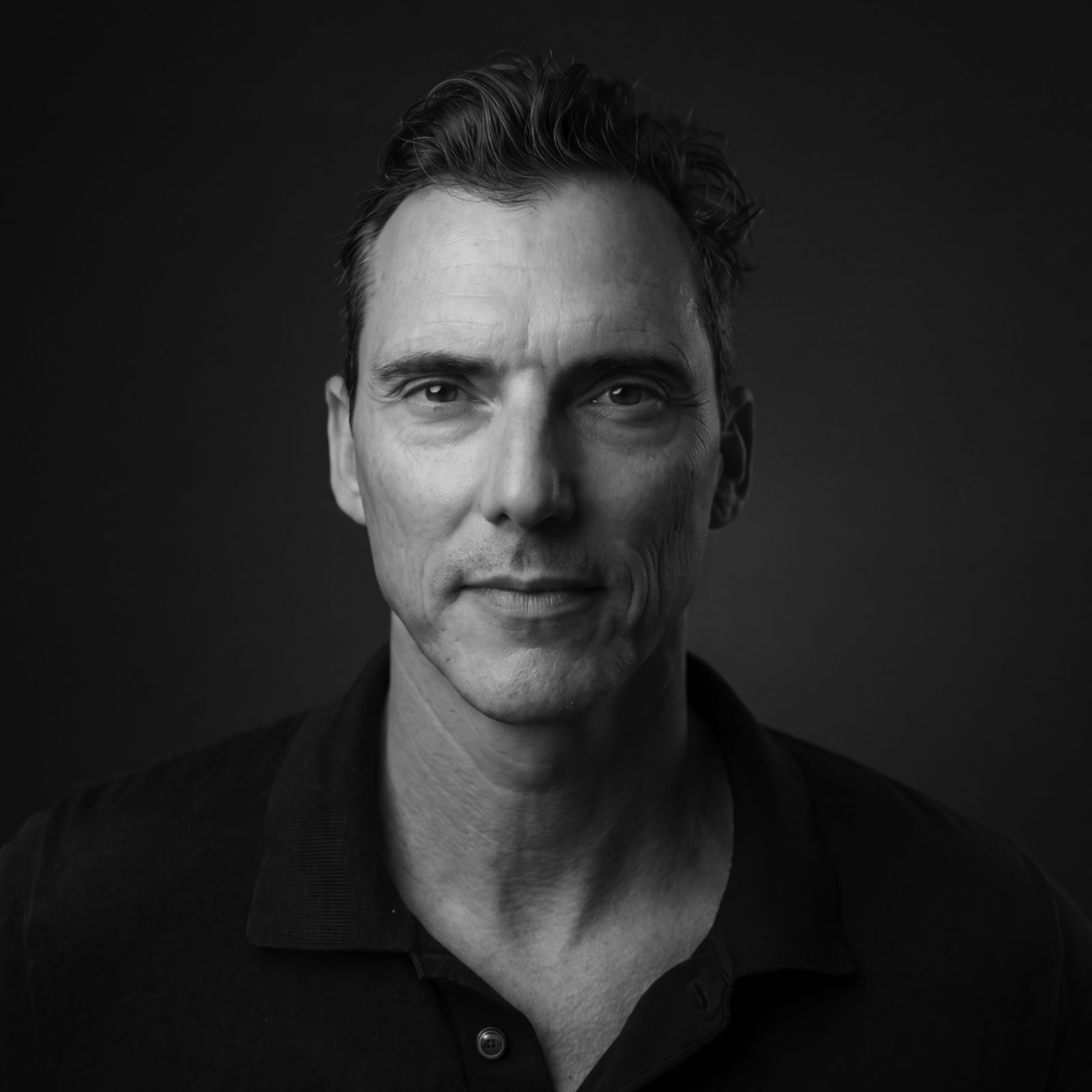
Roald van Wyk and Joan Smith
Roald van Wyk is co-founder and CCIO of ACOS Labs. He has spent nearly three decades helping the world's largest consumer brands across four continents navigate every transformation in commerce, branding, and artificial intelligence.
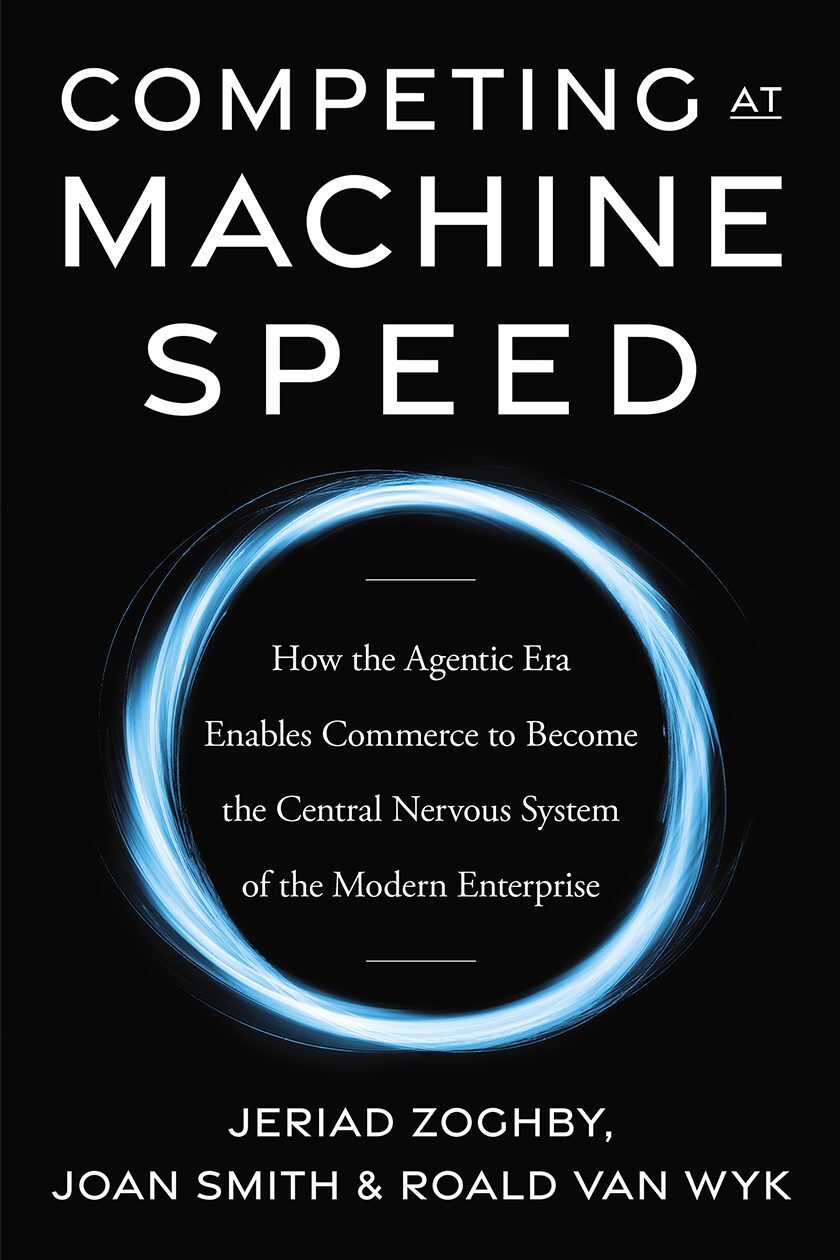
📚 Books by Roald van Wyk and Joan Smith
Transcript
Lex Statzer: Welcome to Author Hour. Today we are here with authors Roald van Wyk and Joan Smith, who alongside author Jared Zoghby wrote Competing at Machine Speed, how the agentic era enables commerce to become the central nervous system of the modern enterprise, which is out October 27th. Roald and Joan, welcome to Author Hour.
Roald van Wyk: Thank you.
Lex Statzer: Thanks, Lex. So let's dive right in and actually start with the title. What does it actually mean for a company to compete at machine speed? And why can't most big consumer brands do it well today?
Roald van Wyk: I can start. I think the title just comes from, and the simplest answer is, I think the market now moves faster than most companies can compete in. That's the simplest answer. We started seeing this already, I would say, years ago as we got into this business, and I think it's just been accelerated with the new advent of all the new technology, especially AI technology coming in.
Joan Smith: Add to what Roald is mentioning is big brands have been around a long time and they aren't built for agility with the current technology infrastructure and coming in as AI comes in. They're just not built for the pace that the world is moving today in that way. They're large. Think of them like a cruise ship, right? They've got lots of products and lots of people and lots of structure to make all that work. And so agility is sort of at the other end of that.
Lex Statzer: Hmm. So the book opens with a small, almost funny example. So there's a food brand whose products kept showing up next to pet food in search results because the listing never said that the food was for humans. One word fixed that. How is that story the essence of the whole book?
Roald van Wyk: I think what's interesting is you have to take a couple of steps back and realize a lot of these companies to advertise anything, say online or in e-commerce was a new thing at one stage. And I think they haven't really adapted to, I would argue, to what it takes to win in that space. So from the outside, it looks very simple that there was a miss, you know, a simple word missing in the description or they haven't updated a particular page. But historically companies have looked at digital commerce as kind of putting their catalog online. And the focus has been on the TV and the prints and the retail partnerships and kind of the traditional channels. So as ridiculous as it sounds, it's actually quite common to discover that really big brands are in the wrong category or on the wrong kind of digital shelf. So I think for us, it's a metaphor for where companies focus is. And at the moment, a lot of companies are still focusing on the traditional channels and winning in these kind of traditional shelves where we would argue that a lot of the consumers and the audience has moved on. So something as simple as not having, being in the right category or missing a couple of keywords in your Amazon description sounds so obvious to us, but it's a legacy problem for not being, for not taking that space seriously more than anything else. And now you can't afford to make one mistake because besides your traditional competitors, you have a whole new generation of competitors that are just born on these platforms and will absolutely, you know, annihilate you if you make one wrong move.
Joan Smith: To bring what Roald is saying to life, take a couple steps back and remember that the way we, here at Waze, consumers got products and services where we walked in a store. And when you walked in the store, you would clearly know that the food on the aisle was in, was human or pet because you were in the pet aisle or you were in the human aisle. And when we're in a digital world, those aisles don't exist. It doesn't, it's not the same. And so not having something updated, the way Roald's mentioning, thinking of it as your catalog, you're still assuming that you're in the pet food aisle or the human food aisle. And in the digital world, it's all blurred.
Lex Statzer: Hmm. So such a tiny little oversight, not prioritizing the right thing changes your entire digital catalog. So competing at machine speed argues that the way people shop has kind of split in two. There's the invisible automatic buying on one side and the discovery as entertainment on the other. Walk us through that split and explain why it's such a problem for some of these big heritage brands.
Roald van Wyk: I mean, I think it's even, that's two splits I think we touched on, but I think the big divide is, you know, we always talk about the difference between shopping and buying. And that also just came in, I would argue, overnight in the case of people still, brands still assume people are walking through the supermarket aisles, as Joan was mentioning, and kind of discovering brands or knowing where their regular brands are. But I think what we are seeing now is, you know, COVID kind of fast forwarded how we buy products online, how product get delivered. You know, the most powerful thing probably is the buy again, you have your existing set order on a lot of these retailers and you just click buy again. So you're not even looking at new products or trying a new product. So and then you now have agentic shopping. So you have agents, you know, looking for deals, price points, features, who don't get moved by emotional content, or, you know, beautiful language, they're looking for specifications for ingredients and things like that. So it is a massive, like change in how we are speaking to people, how we are trying to get them to buy our products, are we trying to tell stories from a brand perspective, and also how we're trying to introduce something and even introduce discovery, which was such a simple thing before, because you would just kind of display it, you know, on the shelf. So the big fundamental split is you might have two audiences now, you have an audience, the human audience, and then you have an agentic audience that is looking for something completely different, but it's the same product.
Joan Smith: Yeah, and then the shopping part, the discovery part, that's become entertainment as well. If you look at influencers and all the social media channels, a lot of times that's where our generations, our younger generations are discovering things because we're not walking through stores as much anymore. And with the number of products online, it becomes a lot of choice, right, to scroll through lots and lots of products. So we turn to influencers or our friends or trusted channels to recommend things for us. And so that becomes a bit of entertainment. And that's how you're finding things on the shopping side. But then the buying side, some of those, as Roald mentions, I mean, I don't know how many listeners will have their, you know, their paper products on buy again, and it just shows up at your house. But to that end, if even your favorite brand that you buy, if they introduce a new version or with some sort of upgraded features, you wouldn't know. You would just keep buying the same one unless they discontinued it, which is a whole other issue that can happen to the for the brands in that you might have discontinued a SKU and replaced it with another SKU. But now it's in somebody's cart as buy again as the old SKU and the SKU doesn't exist. Yeah. So you can actually lose customers that way as well.
Lex Statzer: Wow. So the book does have some interesting math thinking about on the brand side, a mid-sized company with 2,000 or so products across 10 retailers has to make over a million optimization decisions a year, about one every six or so minutes for a 50 person team, which is a crazy word problem. It feels like I'm in math class. But what are all of those decisions and what happens when a brand just can't quite keep up?
Roald van Wyk: I mean, I'm not going to list all the decisions, but it's a lot. But I just thought to take a step back. It is like just keeping your page refreshed, as they say in digital commerce to refresh your page with updated content, even seasonal, even picking up on trends or promotions or even that alone takes a lot of work. And even as much as a lot of these systems are automated, I think what we touch on is just doing the right job today is a near impossible job. And now you have so much more information and so many more signals telling you what you could potentially change or adapt or what categories you need to be in or new categories that have started. So I think the point we were trying to make in that chapter or that section is literally that you do need a new kind of operating model or a new way of thinking to just even manage what you have, never mind trying something new. The biggest challenge we would see in the past is sitting in these meetings with these brands, you know, in our previous lives as consultants, even if they knew that a piece of content needed to be updated, the time it takes to get that information across to the content team, to the Amazon team or the Walmart team or whatever, it still takes too long. It's just the way that these companies are designed, the silos and the gaps and the nature of things. So even if things are working really, really well and you have all the clear instructions, it is becoming an impossible task just to manage as it is. And that's everything from keeping the product description updated, updating the content, refreshing the shelf, the partnerships, all of that. And the problem is when consumers are seeing old content, you know, especially when it comes to cultural relative products and it's winter and you're seeing people sitting outside or it's a product that is not known for a certain market or all those things count. And the really, really good companies are the ones that are constantly keeping this stuff updated, constantly measuring and constantly testing. So, but again, this is all new, you know, this is stuff that kind of came in so fast into these companies that are built and structured to produce large amounts of traditional assets, TV ads, print, outdoor, even social. And traditionally they've treated digital channels that they put a bit of content out there. This is not necessarily the most premium content that they always have the budget for. And they kind of forget about it and you come across these pages. And in some cases these pages haven't been refreshed in six months or sometimes up to a year. And then, you know, you're dealing with, you know, all the challenger brands that come in and are refreshing the pages all the time, reading the markets, updating the descriptions, seeing what works, A-B testing. It becomes basically this battleground where, you know, these companies born on Amazon this morning are cutting into these really, really age old brands because they're just way more nimble and way more aggressive, you know, on these shelves or digital shelves.
Joan Smith: So you can imagine from a perspective of the larger brands, they have a team that probably doesn't have necessarily the breadth to handle everything that Roald is outlining. So what you find them doing is, like anybody, you focus on the things that have the most pain. So you focus on your large or the most gain to that, I mean, to say a bit more accurately. So you focus on your larger brands, right? The ones that make or break the portfolio, the ones where you know that, you know, are moving the most product or are your most successful or most customers need and want them. And you kind of let the other ones maybe take care of themselves or to Roald's point, you maybe touch them every six months or whatnot, because that's about all you can manage to do with the size of the breadth of the team that you have.
Lex Statzer: Hmm. A lot of companies would listen to this and think that the answer is add more AI. You call that the augmentation trap. Can you explain what you guys mean by that?
Roald van Wyk: I mean, I think it's an infrastructure play, meaning companies are not designed to work together traditionally. And I don't mean that as a swipe or a, what do you say, a swipe? I mean that in a way that they've built these incredibly disciplined teams that are doing incredible jobs and very skilled. And there's an assumption that AI is just going to make everything easier and faster. So the fact that before AI, you would see a signal and on the market that you wanted to act on, and it took six months to get that signal to the right team. AI is not going to make necessary, going to fix that overnight. That is how the teams are built, structured and everything. I think AI can make teams more connected, but AI is not going to solve your problems. I think the way I look at it is I think there's an infrastructure change that needs to happen and how teams are designed, you know, how companies work together and then bringing in, you know, the power of AI and the power of like agentic thinking. That'll make it so much easier because you can go and look at a large amount of data very, very quickly and you can process insights much faster and you can look at kind of hidden tension much quicker. But the team is not structured or a company is not structured to work together and to take in those signals and do something with it. I don't think AI is going to, you know, you can flick the switch and AI is going to solve it. And I think what we are seeing is I think it might even fast forward a lot of your dysfunction if you just bring it in as a tool. This is redesigning how you work together.
Lex Statzer: It's like speeding up a broken process just gives you a faster broken process, right?
Roald van Wyk: Yeah, I mean, it's done. Look, it's done wonders for content, especially from a brand perspective, because content is traditionally very expensive and it's where brands always want to save money. But from an operations perspective and how companies are designed, I think if it is well designed, it could potentially be the new glue of a company because the way that information can travel through an organization. But it's kind of like adding, you know, if you add more lanes to a road, it's been proven not to reduce traffic, right? It just creates more cars versus building faster trains and investing in better infrastructure. And I think it's a very similar situation. We are seeing that companies are just looking at AI as more lanes and just thinking it's going to reduce traffic where it really needs a rethink in how the company is actually structured and how the teams are connected.
Joan Smith: There's an example we use in the book. We call it the Yellow Pages moment, and it illustrates what Roald is saying really, really well. So back when digital first came online, Yellow Pages, for all the listeners who may be younger, were big old books, right? And when digital first happened, Yellow Pages started to digitize their book. So they took the book and were putting the book online. They weren't doing what they felt they needed to do. And similar and right around the same time, Google was coming into play. Google didn't put a book online. Google changed how we search for things. And so the Yellow Pages never got to a better way of doing things. They kind of fell into this trap of they augmented, they made what they had better, but it didn't actually solve the problem. So slightly different, but it's essentially what Roald is saying, that these companies sometimes have broken processes or they have gaps in processes that are filled by humans that no one knows about. Or a really common thing is they have different incentives and goals that they're trying to achieve between different teams, which makes it really hard for those teams to work together as one cohesive unit because they're trying to achieve different things. That works in a world where everything is siloed. Channels are siloed. But when you start to bring things together as the pace of the world is happening now, that becomes harder and harder to do.
Lex Statzer: In the book, you lay out something you call an agentic commerce operating system, a system that senses, decides and acts on its own inside limits that humans set. In plain terms, what does that actually look like running inside of a company?
Roald van Wyk: I'll give my version and then Joan can contradict my version. No, she comes more from a transformation background. Mine is more my background is more in creative. So the way I look at it and my take on it is it is about working smarter together. And I think there are things that took us six months that are now taking us seconds. To give you an example, if we are seeing a signal in a reviews or ratings reviews, for example, that everyone's talking about the community or the users, the customers are all talking about comfort in a particular shoe. But all the advertising and the marketing is around grip. The speed in which we are discovering that messaging and the speed in which we can get that signal to the right content team, brand team, innovation team, AI makes that so much more fast and effective. The operating system, I would argue, is how are you designed to all work together? Because traditionally, those signals aren't flowing very well. There's gaps, there's silos, there's politics. So the idea of building a better operating system is essentially it is an infrastructure play where how do we go from seeing something and putting it into practice as fast as possible that can not only affect making the content better and talk about grip instead of comfort or vice versa, but actually make a better product, shoot a better commercial, launch a better promotion. But at the same time, the speed in which we can now build a genetic system that are constantly looking at the market all the time and measuring and filtering out the noise, finding the hidden tensions that could impact things, the speed in which that signal can travel, can be vetted, can be approved, can be put into the right hands, that all is going to require humans working together in a much better way. But powered by an intelligence system, kind of an intelligence layer, an AI-powered system that can give you more faster and more effectively. But if you're not connected and the company is not aligned well with an aligned operating system, then all that kind of just becomes meaningless.
Joan Smith: And I agree with everything Roald just said. But my background is transformation. So I've often thought about it as, you know, we purchase tools to make tasks easier. But that tool sits there and waits until you have to do that task and then you engage the tool. A system is actually operating all the time, whether that be a technology system or a human and technology system, which is what we're talking about when we talk about the agentic system. If I'm going to give an analogy, if you start looking at today where airline travel has gone and the pace and the number of flights that come in and out of an airport in a day, you would actually probably be pretty worried if you felt that humans and a couple of spreadsheets were managing all of that. There are systems that help manage to make sure that there are collisions in air and everything's timed appropriately. So now bring that back to any company, combinations of technology with humans in the oversight or above it, paying attention and making sure that as with the with AI being out the layer of intelligence, they can make decisions, they can actually take action as those signals are connected. They can move it further and enable the humans to do more. The humans are then over it, providing their judgment and making sure that they are discerning right decisions, wrong decisions, or adding in all those things that the technology might not know. But they're able to handle a lot more if it's orchestrated as a whole operating system. It requires a big change. We would use the business terms of operating model or organizational design. All of that comes into play, plus incentives, plus teams, plus the roles. What people do for a living also has to change in order for all that to come into play and to be seen less.
Lex Statzer: One of the things I did want to ask, and we are touching on this so perfectly when we're talking about human and system working together, and Joan, your analogy made that perfectly clear with the whole judgment piece. But just to just to hone in on it a little bit more, the obvious worry here is that if machines are making these calls, what's left for people to do? So what's the line between what you hand to the system and what must never leave human hands?
Roald van Wyk: I think from a creative perspective, I'm more positive about the fact that we can use our best thinkers and best creatives and best ideas. If we can remove the people from having to do all the processing work, you could argue like the amount of research that's required, the amount of information that needs to be absorbed, and what the market is, the thousands and millions of signals that the marketplace is giving us on a daily basis. Traditionally, not that long ago, that required, I mean, we used to call it machine learning, but extensive systems and a lot of people, a lot of analytics teams, especially data analytics, need to find interesting insights and opportunities. If the fact that AI can now take that, process that, and actually then give us better briefs, better insights, better instructions for people to do what they do best, and to be creative, to bring a sense of taste, a bit of, I call it happy accidents, a bit of magic and creativity. I think this idea that the robots are going to replace the thinking and the creative, sure, but we've seen the results of that. We see what that stuff looks like and it's obviously going to get better. But I think the companies that reward their best people, that the best insights and the best briefs and the best strategy are going to see really, in my opinion, better work because you want your best people to do what they love doing. I think traditionally, a lot of these big companies, we've spent a lot of time working on a lot of information that is not always delivering the best results. So I'm excited from a creative perspective because I think from what I've seen is I'm getting smarter directions, smarter insights, and smarter, literally smarter briefs than I did before.
Joan Smith: Yeah, so Roald is touching on the soul of the brand, right? The soul of the brand remains with humans. The AI can never have that soul. It can't innovate on that soul in the same way. If you now extrapolate that a little broader across the organization, over the last 15 years or so as digital came onto the playing field, probably 20 years now, something happened in sort of the skill profile of most corporate employees or corporate workers, corporate executives. And you have a, think of a T, the letter T. You have a broad sense of understanding your craft, whichever area you're in, whether you're in finance or whether you're in marketing or whatnot, you understand your craft and you understand what the job is. But then that bottom of the T, that became a way of developing depth because as digital came into play, channels came into play and you needed to learn how to be deep in those channels, how to execute in those channels. So if you now give some of that to the AI system, those people who are spending their days operating, doing a lot of those doing, they become the orchestrators. So that broadness of the T still stays and it becomes really important that they understand a lot about their product portfolio and all the factors that there's plenty of signals that can be put into the AI. But like, if we're real, there's factors that come up every day within a company that the AI wouldn't know. And there might be a reason you would not want an action to be taken on a particular product because of a corporate goal or because of an earnings announcement or because of a weather anomaly that you're expecting next week. And the AI won't necessarily know all of those things. So the human's role really becomes that, that discernment and judgment layer of being able to look at something and say, do we really want to do that? Is that the right thing to be doing? And it becomes important that they know less about the depth of how to do that, although they still need to understand how it happens to make sure that the technology isn't, isn't missing something, isn't not seeing something.
Roald van Wyk: I think what's kind of interesting is we now have the first generation of graduates or kids coming out of the system that are going to be AI fluent. Uh, I think the first gut reaction that we saw with a lot of companies was obviously firing, retrenching, laying off a lot of people. And we saw a lot of junior level skills being removed. And it was kind of the technology that was, you know, was, was great if you had an expertise because it was this like support system, it's a rewarded expertise and it was really difficult to enter the market. But I think the, the, the opposite is, is, is kind of about to happen. And as we see this new generation coming in where people that have gotten used to being able to do a lot more than they are capable of, and have only known to do it that way, you know, knowing that they have a, a cloud design or, you know, a chat GPT or an agent that they've built that can actually process in a lot of information or go through a lot of, you know, signals and data, but still focus on what, you know, what I love doing and what, what, you know, makes humans who they are, like innovation, the creativity, the skill. And so I think there's a, I feel like every, every week we tend to try to do an assessment of what AI has done this week to our industry, you know, to technology. And it's like, it's, it's, it's, it's, it's true. It's needed and obviously it's warranted, but at the same time, there's also a cycle. I think that's about to happen where the ease in which we've now gotten used to kind of having this, this engine next to us and working with it. And like Joan said, it's, I think, systematic thinking and understanding that systems always been around, but I think what AI has done is really brought it into the foreground. Like this living, breathing entity that is focused on constantly looking, improving, you know, if it's guided in the right way, if it's structured in the right way. So I think the old way was kind of thinking this thing comes in, it's going to, you know, fast forward, replace, but pretty soon, I think it's pretty much how a company will be structured. You know, we'll have this kind of brain, this entity, this, you know, this is the system that it's not going to be that weird or that scary if you've already been using versions of it as you're coming, coming into it. And I think if the focus is to make the work better, make the product better, to innovate, to, you know, make the messaging, the storytelling better, you know, it becomes a reward rather than a fear factor in a way.
Lex Statzer: Right. And it does go back to that guidance, whether it's that creative guidance, like you were talking about, administrative guidance, it's still, you're saying orchestrating, like you are orchestrating the system, you're still in charge of the nuance and the judgment. And so that makes it really interesting to see how the two, human and system, can come together.
Roald van Wyk: Yeah. And I think you're going to see more of like that title that Joan mentioned. You're going to see more people being referred to as orchestrators as kind of as conductors and being comfortable in, in, in being multi versed in, in, in, in, you know, different skills and not being so siloed because I think that the price big brands are paying or big companies are paying is becoming too good at singular thinking. Now we're not seeing the results of it where the modern infrastructure is a lot more fluid, a lot more flexible, kind of a lot more easier to adapt, you know, what's happening.
Lex Statzer: Yeah. Very reactive. Yeah. So thinking about the book as a whole, who did you most want to reach with this book and what do you want them to do differently on Monday morning?
Joan Smith: So our, you know, our core audience, obviously the, the book is written very specifically in the product space. So consumer goods and products companies, and we are, it was written for larger companies. So our core and, and specific audiences, any executive in that from, from the finance through the brand, through the marketing, the senior executives who are making those day-to-day decisions about how to apply AI, where to put things and how they are competing and winning in the marketplace in terms of their own goals as a company, board members, same thing. But I also feel it's, the book is really applicable to any, anyone in, in the corporate world who's trying to, trying to build their own roles, build their teams and trying to figure out how the heck do we get more of our product to market to the customers who really want to purchase it? How do we find them and how do we keep that product in their hands at the pace that those customers want it? And this is a really, the book is built on principles. We didn't build it on employ these capabilities and do X tomorrow because the world of AI is still new. It's still emerging and it's changing really fast. So we built it on these principles that still require people to, they're going to have to consider through how would I apply that? What does that mean within my company? How would I create this kind of system? Even though we've given you a roadmap for it or blueprint for it, we haven't given you a step-by-step employee technology X today. So it actually applies to, in my opinion, to any executive as well as anyone coming out of school right now. If you're coming out of school and you're going to go into the corporate world, this is a really good book to really challenge your thinking about how do you, how would you design the, what's the operating system of the future? It's a good thought exercise.
Roald van Wyk: Yeah. I mean, for me, it's just been years of sitting in meetings with clients, initially with brands, with my advertising background, then I kind of became an accidental consultant. That's where I met Jared and Joan and, and seeing how companies have, we, I mean, we use commerce, I think as a, you know, as a kind of the, the, maybe as the main theme, but essentially it is a, it's a business transformation that's needed and how companies, you know, operate, but what's so interesting about commerce is that it came in, into the world in a way that clients and we saw businesses going, why should we care about this? You know, like we, we know how to do things. We've been doing things like this forever. It works. What are you talking about? Like, why pay attention to Amazon? You know, and then it became COVID had a big impact. It was a jumpstart into taking a world very seriously. That was kind of ignored. You know, I came in from the, from the brand perspective, just trying to tell, tell clients, like, you need to take this space seriously. It's a canvas where they are. There's a buy button. This is very unique. We've never had a canvas with a buy button, you know, we've done storytelling over here and we did that over there and then it became like, well, who's doing it and we quickly need to do it. And then it's going to fade away as COVID kind of goes away. And then it became, you know, and then it became kind of like help us. And then AI just fast tracked it in that sense. So it is something we've seen happen over the years and it's taken on different forms. And I think for me, the book is just, it's a, it's a great framework to look at your business and to kind of assess your business and using examples of what we've seen and examples of how companies approach the space and also just the incredible opportunity if you do it right, because every single thing that's written now is a threat to, to, to companies. I think if you turn it around, they all become opportunities. We've never, ever had this much information that we are able to look at when it comes to people telling us what they're like, what they're buying, what they think about, what they care about on just on a one single product page, the amount of energy, a single product page generates around one face cream is incredible. And it's just to treat it as a, you know, as an online catalog is, is, is ludicrous. And then nevermind 2000, 20,000, 30,000. And, you know, making it work on Amazon is different to making work on Walmart and just making to work on, you know, target or team or you name it. So you have this insane world that has just appeared and it's giving. Brands and companies, so many signals. And if you are structurally ready and prepared to, to, to see it and react to it, it's, it's giving you incredible information and opportunity to play in the market. So, yeah, I, I, I think the Jones point, I think anyone in business that's selling something would find it useful, but it is, I think the, it came from like a, a corporate executive, you know, position that's dealing and fighting these battles on, on, on, on a daily basis and giving someone a, a structure to look at their own company and look at a way to, you know, take on these challenges of what's coming and what's happening.
Lex Statzer: One thing both of you just touched on, and we've kind of discussed throughout this entire episode is how fast moving this world really is. So I want to know what was the hardest part of turning something so fast moving, so new every single week into a book?
Roald van Wyk: Don't look at the news as you, as you, as you, I think Claude went through five updates. Yeah.
Lex Statzer: Yeah. Keep your head down.
Roald van Wyk: But I mean, it's, it's, we use it, the termogenic and obviously we, we, we, we use it as a way we, which you can structure, but at the end of the day, it's a business, it's a business transformation book. It's, it's how companies are structured and work together and look at commerce as this, as the nucleus. So in that sense, it was, you know, we, we had written versions of this over the years in, in, you know, different, I would say in different thought leadership pieces and presentations. So the, the core of how we look at companies and businesses haven't changed. I think weaving in the immense impact that is happening now was obviously, you know, there was a need to, to get it out because it is happening so quickly.
Lex Statzer: Yeah. I mean, it's those principles that Joan was talking about where the principles do remain the same. It's just different technological applications, right?
Roald van Wyk: Also don't underestimate how slow companies are to change. So as much as we were racing, you know, against this, this technology updating itself every day, it is still surprising how structured and set in the ways of some of the biggest companies in the world are. And they, they do pay a price for it because the new upstarts that are coming in are coming in so aggressive. So there is an element of understanding how set the, the, the industry still is. And at heart that does require a new thinking, a new approach.
Joan Smith: Yeah. We were privileged to have been watching this pattern start to emerge for years as we worked through it. So that enabled, that enabled us to make a shift. I think even as we were writing World, we, we started to go down a path of like making the blueprint into like a guidebook and like putting, here's what you should do. And as we were doing that, Claude was updating the AI models everywhere. We're updating so darn quick. And we realized that's, there's lots of other books that'll give you the ham too on, on, on that, but that's not going to serve because it's going to be changed before we would even publish. So we, we pulled it back and looked at the patterns that we'd seen for years and went to this idea of the principles and sort of, this is a blueprint, an architectural blueprint that we're hopeful that executives are going to look and like apply to their company. We would be so thrilled if on Monday morning, somebody read the book and looked at it and said, I want to now see like, how does my company do against this? How does my team do against that part of the book? And actually apply the blueprint out. And use it as a guide to figure out how they should be changing or what's the right formula for them.
Lex Statzer: One thing I really find interesting about competing at machine speed is the book has three authors, but it speaks in a single voice. What did it take for the three of you to reach that end point?
Roald van Wyk: I mean, we all come from such different backgrounds and I will credit Accenture for that, for the way they bring interesting people, clearly very interesting people together. And that's, I think the idea that we worked in teams that we came from such different backgrounds. And I think from my side, being creative, you know, Jared has an incredible background in systems and technology and giant transformation. And, but I think the single voice came from like, we've always worked with single visions in teams. You know, and when you come in to help a company transform or evolve, there has to be a single focus. And kind of that was the, I would say the approach in that sense is how do we bring our different skill sets and things into the space and seeing it from different angles. And I think we kind of have had so many conversations in the past that we kind of, you know, I would say agreed on where we see things going.
Lex Statzer: Hmm. That shared finish line. Yeah.
Roald van Wyk: Not always. We spent a lot of time. Like mostly. Yeah.
Joan Smith: Yeah. We spent a lot of time on the outline and really like aligning that we were all, we all aligned to the architecture of how we were going to write the book. And that, that consensus is all the same because we were all used to a single vision on a team. It was easy for us to get into that mode with each other. That is not to say we didn't have some really good conversations along the way as we maybe, you know, when we, we didn't agree on a unified vision and then we just sort of navigated to find it. And then, then the writing just flowed from there and it was easy, it was easier to turn it into a single voice.
Lex Statzer: So where can people find the book and how can they keep up with you?
Roald van Wyk: I think the book is out on the 27th of October. I think it's on Amazon already for pre-order. So it'll be available on Amazon and I think all, all the books, major booksellers. And then we have a URL competing at machinespeed.com that'll have all the links. We also have a machine version that we've uploaded. So you can feed that to your robot. It'll make it much, make it much smarter. And then myself and Jared, we've actually founded a company called ACOS Labs. So if you go to acoslabs.ai, the book's link is on there and there's also some more information about the process and the thinking that we've been talking about.
Joan Smith: Yep. And then I'm, same, you can find me on LinkedIn or via my own, my own website, joepsmith.com.
Lex Statzer: Perfect. Thank you, Roald and Joan. We cannot wait for people to get their hands on Competing at Machine Speed. Thank you both for coming on Author Hour.
Want to Write Your Own Book?
Scribe has helped over 2,000 authors turn their expertise into published books.
Schedule a Free Consult