Dr. Paul Ohai on Integrity, Courage, and A Different Future for Nigeria
✨ Episode Summary
Dr. Paul Ohai was born and trained as a doctor in Nigeria, then spent more than 25 years running medical care inside some of America’s toughest prisons. His book, A Different Future: A Leadership Vision for Nigeria, out December 1, 2026, lays out six traits every leader should be measured against: integrity, empowerment, transparency, accountability, courage, and vision.
In this episode of Author Hour, Paul tells host Lex Statzer why integrity is the foundation of trust, why he chose transparency over honesty, and what prison medicine taught him about leading by example: staying through the whole shift, eating the same food as the men he treated, and being the doctor supervisors sent in to calm a unit before it became a riot. He also shares the question his editor asked that shaped how the book tells his own story.
“The best form of leadership is leadership by example. Example is not just talking.”
⭐ Top Moments
- The doctor sent in to stop a riot. “You can perform so good at it that your supervisors, they call you into places that there's a lot of noise or uprising to avoid like a riot.”
- Trust earned by service. “The best form of leadership is leadership by example. Example is not just talking.”
- The editor’s hard question. “We needed to demonstrate that in the book because the editor said, how dare you came here 35 years? How are you going to relate to these people?”
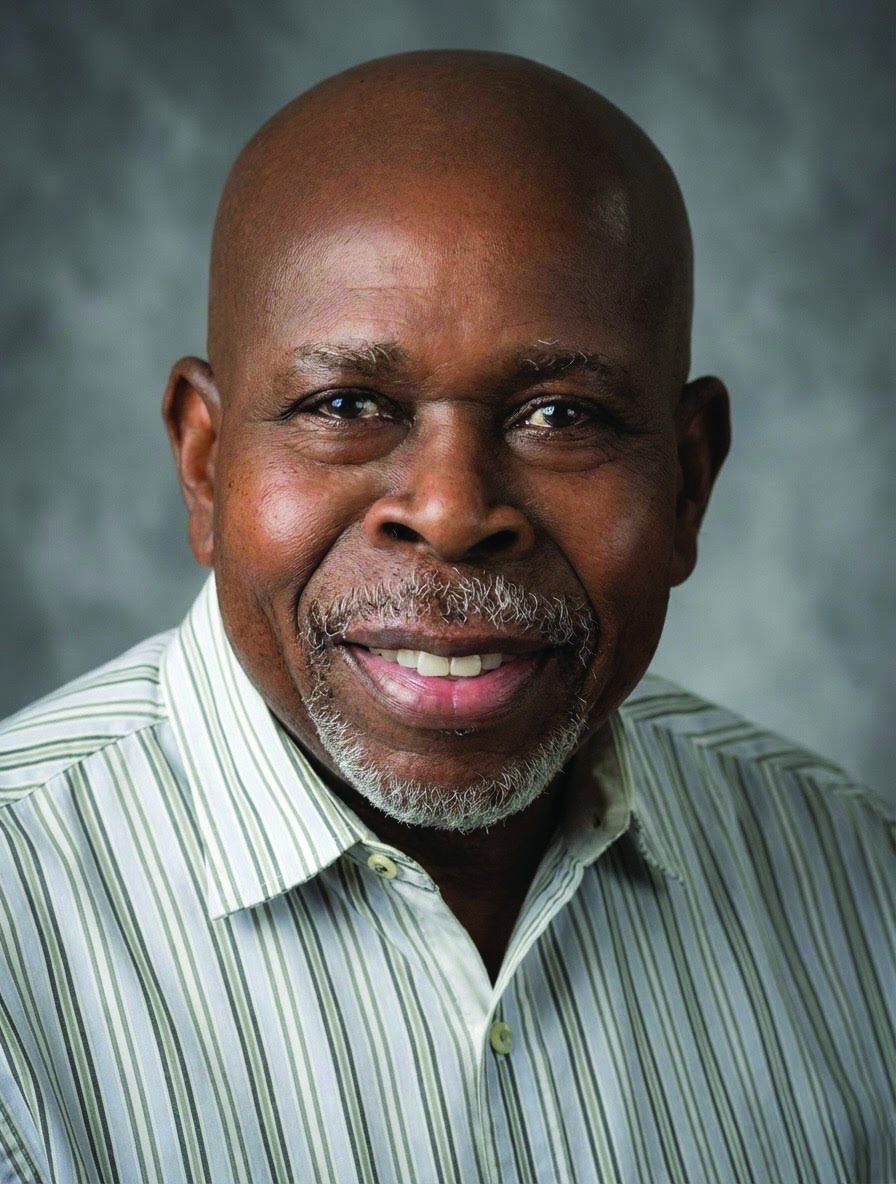
Paul Ohai
Dr. Paul Ohai is a physician executive with over 25 years of medical leadership experience in public safety and security. He is board certified in family medicine by the American Board of Family Medicine, in medical management by the American Association of Physician Leadership, and is a certified CCHP-CP through the National Commission on Correctional Healthcare. Dr. Ohai enjoys traveling, watching sports, and listening to music. He lives in Virginia with his wife, Charmaine.
★ Scribe Case Study
Dr. Paul Ohai Turned 25 Years of Prison Medicine Into A Different Future, a Leadership Vision for Nigeria
Dr. Paul Ohai spent more than 25 years running medical care inside U.S. prisons. In A Different Future, published with Scribe Media, he turns it into six traits every lea…
📚 Books by Paul Ohai

Transcript
Lex Statzer: Welcome to Author Hour. Today I am here with author Paul Ohai, who wrote A Different Future, A Leadership Vision for Nigeria, which is coming out December 1st. Paul, welcome to Author Hour.
Paul Ohai: Thank you.
Lex Statzer: So you were born and trained as a doctor in Nigeria. You spent more than 25 years running medical care inside some of America's toughest prisons. And now your new book, A Different Future, is coming out very soon. So let's get started in the beginning of everything. You open the book in Abuja, Nigeria's capital, in front of a billboard that reads, 2027 is settled, with armed police stationed around it to stop it from being torn down. Why did you choose to start with that as the imagery? What does that tell the reader when they open the book?
Paul Ohai: Well, I can't recall all the pages at what point that came out in the book, but I can clarify what that image says about what is going on right now. OK? That billboard in Abuja shows the current president of Nigeria, President Bola Ahmed Tinubu, with the billboard that reads that 2027 is settled. He indicates that he's sure about the result of the election. So in 2023, the current time of his presidency, there is allegations that that election was rigged. In fact, prior to the election, President Tinubu made a statement that it was now his turn to be the president of Nigeria because he has helped President Buhari, his predecessor, win the election twice, that this is now his own turn to help himself to be the president of Nigeria. He said it in his native language, Yoruba language, that it is now my turn to be the president. So the way the result was announced was mysterious to the Nigerians. At 4 a.m., they got the results that he won the election. Apparently, the result was not uploaded on the website the way it was supposed to. So the president of the INEC, the electoral commission, brought in the handwritten numbers alleging that the uploading of those things were not happening correctly. So they swerved it with the handwritten results. So that brought in an allegation of fraud, whatever. So the citizens did not take kindly to it, including the presidential opponent named Peter Obi. So that Peter Obi contested the results in the court that it was falsified results, but the judiciary threw away the lawsuit that it was not real.
Lex Statzer: Okay, so they upheld the election.
Paul Ohai: To go back to this 2027, so it's like making a claim again this time that he's the winner before the election was cast. He put it in the billboard. So the citizens are saying, how can you allege that you've won an election? We've not voted. The voting is going to be in mid-January 2027. So this sitting president is saying, forget about it. I've already won in the billboard. So the citizens are unhappy with that allegation, that statement of confidence. Here he is, the people are tearing down the billboard several times. You know, if he puts it, they will destroy it at night. So he's trying to, he used armed police guard to make sure the billboard is not being disfigured by the angry citizens, you know. So that's, I hope I've explained that billboard.
Lex Statzer: Yeah, yeah, I think so.
Paul Ohai: So he's trying to use the police guard to prevent them from destroying the, you know, the people are angry. They're not satisfied with his leadership. So they're protesting. There are a lot of protests from time to time, but that's not a protest in a way, but they're indicating to him that you can't do that this time. You can't say you've won when we've not voted yet. I hope I've explained that.
Lex Statzer: Yeah, so it's, it's a lot about leadership. The book is very centered on leadership, and you even outline six traits that every leader should be measured against. What are the six traits and why did you choose those?
Paul Ohai: Yeah, this is the foundation upon which many other qualities are built. Qualities such as respect, dignity, and trust. If the foundation of integrity is weak or fundamentally flawed, then being a person of influence becomes impossible.
Lex Statzer: Okay, so we start with integrity. Why is integrity the first one?
Paul Ohai: It's not determined by your circumstances, okay? Okay. It's not based on credentials. Character determines who we are. Integrity is not to be confused with reputation. The road to integrity is not an easy one, but it's the only one that will get you where you ultimately want to go. And the integrity, the benefit of integrity is one. It helps when it comes to integrity. It allows others to trust the person. And without trust, you have nothing. So it's the foundation of trust.
Lex Statzer: Okay, so we start with integrity.
Paul Ohai: Yes.
Lex Statzer: Because without trust, there is nothing.
Paul Ohai: There's nothing. From others, only when the person, the leader exemplifies solid character. So that's good. So what's the next one? Let's do it.
Lex Statzer: The next one's empowerment. So why empowerment?
Paul Ohai: That's empowering your followers. You see, when you're in position, you want to help the others to rise. So that means you have to lift people up from under, to be in a position. It's not about you, but depending on how much, the number of people you empower determines how successful your leadership could be. So it becomes very critical in a place like Nigeria, where most of the, 70% of the population are under the age of 30, and they are seeing these elderly or folks with a lot of money in position of power. So they are not, they've been on sidelines, you know? They don't like what's going on. So they need somebody that will empower them.
Lex Statzer: So it's about making sure the people that you're representing have a voice and feel like they have a voice.
Paul Ohai: Yes.
Lex Statzer: Okay. Okay. And then the third one is transparency. So where did we get transparency for this?
Paul Ohai: Transparency is being authentic, or being the way you are, what you say is what the people will see. That's important in leadership. It kind of goes back to that. You can't say one thing and do the other, you know?
Lex Statzer: Yeah. No, absolutely. It goes back to that point you made about trust with integrity. It does come back to trust. Transparency is showing people why they can trust you because I feel like when it comes to integrity, it's hard to gauge somebody else's integrity, right? Like you can't tell what kind of person they are deep down. You can only judge what they present to you. But with transparency, there is something you can judge there. You can actually see, does this person's word actually hold up with their actions?
Paul Ohai: That's correct. And without bragging about myself, if you read the book, you see that my experience working in the prison, being with the folks, being transparent, it's not an easy feat, you know?
Lex Statzer: No, absolutely not.
Paul Ohai: It gives you a lot of respect and trust.
Lex Statzer: Yeah. So let me ask, why did you choose the word transparency instead of honesty?
Paul Ohai: Hmm. Honesty is what you say, but transparency goes even further than just what you say. It's what you demonstrate, what the people see in you. Does what you say match? Transparency is even more powerful because everybody says whatever they like in politics, right? But transparency involves a demo that the people have to believe. So it's about the actions. Your actions speak louder than what I'm saying.
Lex Statzer: Totally. Okay. So then following transparency, we have accountability. So walk me through why that one's important.
Paul Ohai: Accountability is important because if things are not right and you want to fix it, it's not enough to let the sleeping dog lie. You have to hold the leader accountable. In fact, the leader should hold himself accountable if he's to hold others accountable. So first, it's self-accountability if there's something like that. The leader has to hold himself to a high standard of accountability before he expects his followers or subjects to try to aspire to be. It's not only about what is wrong, but even when things are right, the leader has to hold himself accountable. And it's important in leadership. That means if things, for example, procedures or something, you document them, for example, and people see that, you know?
Lex Statzer: So then the next one you write about is courage. Why courage?
Paul Ohai: Good. Courage is one of those things that's important. Courage and cowardice. It's the opposite of courage, you see? Yeah. People don't use that word, cowardice. But the courageous leadership is important because it means you can lay down, you believe, not only believe in what you're saying, but you demonstrate it by your actions. It's not enough to say, you can't even say, you're courageous, you know? It's something of a, you have to demonstrate by your actions. And that's very, it's not common in leadership. It's one of the strongest characteristics of a strong leader, being courageous. That means in the face of fear or uncertainties, you should take the right decision before that thing makes sense, always. Yeah, yeah.
Lex Statzer: I think that's a large part of courage for a leader is if people agree with you or not. I mean, that's the caveat, right? All the time is that there's going to be plenty of people that don't agree with you as a leader, and part of that courage is to forge ahead anyway.
Paul Ohai: Yeah, do it if it's the right thing. You do it whether, then later they will see that you are, you know? Yes, that's correct.
Lex Statzer: Yeah. Okay, so then the last one you write about is vision. So what do you mean by vision for leaders?
Paul Ohai: Vision is the future, about the future. Know where you are now, the future. So you can have your own vision as a person or a leader and a vision for an organization or a country. So my own vision for my profession, what I talked about, professional excellence, both certification, correction, all those things. Those are my personal vision about excellence, professional excellence. You're very good on your job. But the vision for the country is something that is more in thinking about the people you lead, the future for them, you know? So in my own vision for Nigeria, I talked about unity. I talked about safety and peace. Those are two visions. Then I talked about progress and prosperity, okay? You cannot meaningfully take a nation forward without unity. And particularly when there is diversity, like the type they have in Nigeria. We can see diversity is also... Our own country here demonstrate diversity. You can see that. You have to have a vision to unite the people because diversity gives any nation or collection of people unique strength. Everybody brings different characteristics. When they unite, it gives that collection of people more to say superpower because it's a collection of different characteristics, okay? That's what the unity is. The question, I hope I've talked about the vision, right? I talked about safety, peace. You can't have without peace and safety. Safety is the security. Very important. Peace is essential for progress. Security is how people feel. If people are not safe, they will not make progress. And that is important, particularly with what is going on around the world. You can see when there is security and there's a lot of uprising, protests, and all that. You can't be talking about and be developing. You can't do it, you know? Progress happens for nations and prosperity. When there is security, the population feels secure and safe. That's where you can make progress. You see this book, we use Nigeria in the front, at the top there for a particular reason. Because all around the world, all these things are featured in that book. We are seeing the failure of leadership in several parts of the world causing uprising. France recently, you saw what is going on. We don't want to measure. What I'm saying is leadership challenges is diverse. Even Israel or Iran, you know? People are going to protesting and all that. These are leadership issues of failures. Let me stop right there. Okay. So I don't digress. But you know where I'm coming from, right? We can't be too good.
Lex Statzer: Absolutely. So in this book, you lay out these six traits that every leader should have, every good leader should have. Your history is as a doctor and you worked in some of America's toughest prisons. So I want to know how did your training as a doctor and how did your experience working in these prisons teach you, how did they shape what you know about leadership?
Paul Ohai: Very good. Actually, to be candid, I wasn't prepared for what I met. So the prison helped my personal growth because during my job experience working with the guys, I had to develop leadership skills that helped me run the institutions effectively. And I'll tell you what I mean. You see the skill or those leadership skills, you can perform so good at it that your supervisors, they call you into places that there's a lot of noise or uprising to avoid like a riot. They have to quickly figure out that this, what is going on? We need to send out to Ohai here quickly to go calm the guys, to prevent the riots. So you become skillful in calming folks that are angry. We call it a noise, you know, background noise, where they become very, particularly those type of environment where they are secured, you know, it becomes dangerous, right? So you want to have doctors that engage the population, whatever the size, and you can't do it by talking. You can't talk. The guys, you have to be really, you have to earn their trust, respect, character, all those things we talked about. They're important. They look like minor details, but they're important, right? This doctor comes to work at this time. You don't even need to tell them. They will see where you come, where you live. If you are going out on lunch break or phone and things like that, they won't work. They're minor details, but they're important. It's not just he's saying that. See, once I step in the facility, I don't leave till the end of my day, whether it's eight hours, 10 hours, you know what I mean? I don't go on lunch break going to take break. You know, so other staff members go outside looking for their lunch break and all that. I take lunch break, but I eat the same thing that they eat. They see you. Yeah, you don't be, does that make sense? You're a part of them. Yeah, it's not a doctor that's just wearing a white coat is out there, yeah.
Lex Statzer: So, I mean, I can imagine that translating directly to leaders of a country of or whatever, you know, size, a mayor, whatever it is, a leader needs to be one with the people, just like you were able to do in the prisons. Yeah. And so when you were in that role, what were you learning at the time about what that kind of trust that you established does to the relationship? I mean, for you, it would have been between you and the inmates. For a leader, it could be between them and their constituents, whatever it is. What does that teach you about the relationship there that you're growing?
Paul Ohai: The best form of leadership is leadership by example. Example is not just talking. Yeah. It's there. Then leadership, it teaches me that to gain this trust, you have to serve them. Serve and leadership. I didn't write it in the book, but basically that's what it boils down to, you know, things like taking care of them. I'm talking about just not just service like outside, you know. Yeah.
Lex Statzer: Like humility.
Paul Ohai: You yourself take good care of them. You do procedures, things that will injure you. You're there for them, you know?
Lex Statzer: Yeah. You're there for them.
Paul Ohai: And even those you take care of. Tell the other folks that, look, doctor, I did this for me. You see this thing? I've had this thing for five or 10 years on the street. I had to come to prison to meet somebody like this. That was kind. Look at this. If you have something, go to him, you know?
Lex Statzer: Yeah. No, it sounds like it was a lot about humility for you.
Paul Ohai: Yes. Very good. Yeah. You're right. They don't care about all those bosses. They don't care, really. They don't even know what your boss is. They don't care about that. But you've got to serve them. You've got to touch them, you know? You've got to touch them, examine him, not just, oh, listen to his complaint. Touch him. To be able to touch him, examine him. That's what I'm talking. And then procedures. You can't do it if you don't. Injections in the joints, you know? Then follow-ups and absolute trust. Then if you have complicated cases, you send them out to other specialists so they can see that this guy takes good care of us. You're so good that they won't try to protect you from other detainees. I just mentioned that, right?
Lex Statzer: Yeah, because you built that trust with them.
Paul Ohai: You know what I mean?
Lex Statzer: Yeah. So you've built trust with them and established a relationship where you serve them, and in turn, they will serve you.
Paul Ohai: They will serve you. They will serve you. Yeah, they will serve you. You go for the lunch break in the restaurant. It's just a good feeling to feel safe yourself. I walk in the midst of 50 guys like that. We go in the same direction. The same thing, diabetics, you know? Yeah. Open the door. Even they will let you know that, look, normally I don't... They will even express how they feel about you. They will. Some of them will tell you, don't harass a doctor like that. We've never seen something like this. That we have doctors on the street who are there like him, even though he's one of us, you know?
Lex Statzer: Yeah, one of them. Absolutely. So thinking about the bookmaking process, writing the actual book, what was the hardest part to get onto the page for you?
Paul Ohai: It's the numbers. You see, we try not to put a lot of numbers apart from talking about the high amount of youth in Nigeria, which is unique. 70% of the population being under the age of 30.
Lex Statzer: Yeah, that's crazy. That's crazy. It is crazy, but it's true.
Paul Ohai: It's true. How you know it's true? Even Dr. Ohai and myself, we started from my own story about living in Nigeria. I graduated at the age of 25 as an MD. So I've done 45 years. You might not see if you look at me, 45 years as a doctor of medicine. At the age of 25, I was one, just like them. But I also did the National Youth Service Corps, which is still going on, 15 years. First 10 years in Nigeria, the last 35 years in the US. So I lived there. So I was part of that. We needed to demonstrate that in the book because the editor said, how dare you came here 35 years? How are you going to relate to these people? They will say, he's a high power doctor in the US. He doesn't know what's going on. Was he really born here? So we had to write it so that they know that I was born there. And raised. We didn't give all the numbers. So that's a good question you're asking me. What's part of the thing? We didn't want to share too much. That was the numbers indicating the magnitude. For example, the crises. Those crises are massive crises, by the way. Like the maternal mortality in Nigeria is one of the highest in the world. That's females that died during childbirth. One of the highest in the world. You know, that's bad because of poor healthcare, the accidents, mortality. People die a lot there. So that's, you said that was difficult because we didn't put the numbers of the crises. Why? You know that this thing happening there is massive. From the population of the country, that's a lot. 230 million Blacks. That's the largest population of Blacks in any country in the world. And the size of Nigeria is just a little of the size of Texas. Can you imagine 230 million people in this area, just about the size of Texas? We didn't say that, but I'm trying to say those things are difficult.
Lex Statzer: I can imagine that was very difficult to get down.
Paul Ohai: [A portion of this answer has been omitted from the written transcript.] So the problem, what I'm trying to say is difficult when you write a book like that. You don't want to be mentioning names, but it is will help a lot of people if they read it and they will because the book is going to be out there. I want to mention several characters. There was one I didn't, I would have done a chapter, but it was too late. Active listening, active listening. Most leaders that fail, there's a lot of noise out there, but they ignore it in several countries. So the way to solve that problem is by voting. We saw that in our own country recently. Am I making sense to you? When people are dissatisfied, they show it, the way to show it in a civilized manner is by voting, not like the way the French people are doing, Iran, all those things. Those are just Israel, you know. They say Netanyahu is so popular. Show it. Thank you. Let me stop. I get carried away easily because I'm passionate about leadership because failure of leadership is fairly common in the world.
Lex Statzer: So you say in the book that some of the most courageous leaders hold no office. Who are you thinking of when you write that?
Paul Ohai: One is the media, the press, because apparently I've not been there, but I watched the YouTube and the press. They are expressing how the citizens feel to the president. That's one, the media. They are courageous, but they don't hold offices. There are various press media, news and all that. They are courageous. Sometimes they get detained by the way, by the security agents of the government, wherever. That's one. The second one that came to mind is recently the Catholic bishops went to meet. They had a meeting with President Tinubu expressing how the citizens are suffering or whatever they are going through. He didn't, he did not, he denied the existence or he denies the existence of suffering. I think the Catholic bishops were courageous going and they represent the Pope by the way. The Pope, he sent them to go tell the man in a nice way. He didn't in fact, after the Pope, the bishops meeting with him, the government agents, like security agents started telling the Pope that this was supposed to be a private meeting between the bishop and the president. You're not supposed to come out and be announcing that the president does not agree with you guys.
Lex Statzer: Yeah, yeah, absolutely. So, A Different Future is coming out December 1st. So, where can people go to get a copy and how should they keep up with you?
Paul Ohai: Yes, to get a copy, Amazon is a good website. They can get a copy. So, in order to keep up with me, I have only one channel I would like them to use, LinkedIn only. I do not participate in Facebook, Instagram or YouTube. I will not try to.
Lex Statzer: Okay, so they'll keep up with you on LinkedIn?
Paul Ohai: Yes, only. What I like LinkedIn is that those in my network now, it keeps like a track of the communication between you and whoever you engage. Does that make sense? It's more, does that make sense? It helps you keep record of who is this guy and what did he say, how did he, does that make sense? I prefer that rather than something diffuse, Facebook. Those other Facebook, social, Instagram, they're more like people are emotional. Those like young folks are doing all that shouting and all that. But when it's time to vote, actually those voting and things to take somebody seriously, if they can write. LinkedIn is a good one, right?
Lex Statzer: Okay, so find the book on Amazon and keep up with you on LinkedIn. Well, Dr. Ohai, thank you so much for writing A Different Future and thank you so much for coming on Author Hour. It was very nice to have you.
Want to Write Your Own Book?
Scribe has helped over 2,000 authors turn their expertise into published books.
Schedule a Free Consult