Craig Handley: Hired to Quit, Inspired to Stay
Read the full transcript
Craig Handley
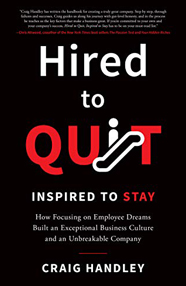
Craig Handley is the cofounder and CEO of ListenTrust, an award-winning call center company that employs more than 1,000 people and has been ranked number one in Business Products and Services on Inc. magazine's 500/5000 list. He describes himself as an entertainer and musician who moonlights as a CEO. Handley studied voice and piano in college, has written and produced hundreds of songs, and has performed stand-up comedy. He is also a philanthropist who has given away close to one million dollars over the past seven years. He is the author of Hired to Quit, Inspired to Stay, which describes how focusing on employees' dreams built an exceptional company culture.
📚 Books by Craig Handley
Transcript
[0:00:13] CH1: Author Hour is about answering one question: How can you get the best ideas from great books without spending so much time reading? Every week, we take you behind the scenes with a new author, about the most important points in their book. So if you love to learn while you're on the go, you’re in the right place. All of our book summaries are 100% free and we do more than a hundred episodes every year. So please subscribe to and review Author Hour on iTunes. Today’s episode is with Craig Handley, author of Hired to Quit, Inspired to Stay. Being an entrepreneur, building a company and turning a profit isn’t easy. Most businesses go through highs and lows and many don’t survive the tough times. To make it through and turn your business around, you need to create a culture of awesomeness. That’s where Craig comes in. Craig is the CEO of ListenTrust, a multi-million call center with a culture that honors personal values, giving back and allowing everyone at the company to pursue their own dreams. In this episode, he teaches you how you can do the same at your company. He draws upon the trials he’s faced to help you create your own ideal business. By the end of this episode, you’ll know what it takes to build a culture that inspires your employees and your customers and how to survive and enjoy the bumpy business ride along the way. Now, here is our conversation with Craig Handley.
[0:02:18] Craig Handley: I always wanted to be a music maker when I was in high school, I wanted to go to college for music and I actually applied to Julliard and Berklee College of Music and I ended up getting into both which was great. But you know, even in 1991, Julliard was like 49,000 a year and Berklee was 29,000 a year and so I couldn’t afford either because it was you know, I grew up without, I’m in middle class probably but we didn’t have extra money for me to go to college so I went in the US Army and joined the infantry because they promised me college money. They did, they delivered $570 a month which you know, it paid for my apartment so I can go to college at a local school and I studied music for a few years but I didn’t want to be a school teacher and that was a lot of, it was really emphasis on half note versus a dotted quarter. I’m like, I don’t care, they’re both about the same, it’s like a fraction of a second who cares?
[0:03:16] CH1: Wow.
[0:03:17] Craig Handley: Yeah.
[0:03:18] CH1: That’s pretty remarkable, you – I’m sorry, where did it kind of stop then? Or did it?
[0:03:24] Craig Handley: You know, I was in school and I was doing what a side hustle work to make sure I could do everything I wanted to do. Side hustle work meaning I was a disc jockey in a club, I did weddings, I even tried to DJ at comedy night on Sundays in order to fill my time. I did a night on at a hotel where it took me two hours to balance the books and I could sleep and may bring the bell if they wanted to check in or check out. I also ran a couple of pizza places, I umpired baseball and soccer because they paid like $100 a game for one hour, you know? I was like, well this is better money than I’m going to make anywhere. It’s $100 an hour. I was all about the side hustle and then I was going to school working out and taking classes and I just didn’t want to be a music teacher, I didn’t know why I was taking math and English and why am I taking social studies, you know? To be a music major. Somebody said I was really good at sales and I could talk so maybe I should try it. I ended up joining an insurance company that went door to door and I actually sold insurance door to door for two and a half years and I was one of the top guys in the country at doing it but at two and a half years, I was only making like $85,000 a year and then they only pay residual for five years, this particular company. I realized that I had been working 70, 80 hours a week and I had reached the peak of what I was probably going to earn with that company and I didn’t want to work the rest of my life for 80,000 a year. I then shifted and tried to figure out what else I could do with the sales talent and I ended up in a call center and it’s funny, I was making 80,000 a week in a call center too but people were calling me, it was much easier. I was really good at what I did and people said, you know, “you’re one of the best out of a thousand people, you’re one of our best people, why don’t you take what you say and put it into comply and try to train other people to read a script the way you do. Maybe you can improve results for others.” I ended up going from you know, just a guy on a phone, to a trainer to a copywriter, to managing centers and then I would leave and go into other call centers and offer the same service, I would rank copy, rate sales scripts and I would show their agents how to read a script that I had all these techniques that I would plug in. For example, up tones and down tones in your voice. I would put little arrows so they’d know that this was an up tone or this was a down tone and sometimes the way things were phrased, I found in one big call center, they had over $50,000 agents in the FAQ’s, from people who have questions, the agents would go well, the product has this and this. Okay, with an up tone. When I looked at data and the analytics around over 30% of the calls that came in that went through an FAQ were hung up at that question. All I did, this was one of my biggest claims to fame, I got $50,000 for this. On the FAQ, if somebody said, “hey, what do these product,” they’d say, well, it’s go this, that and the other and with that in mind, are you ready to go ahead and place your order or did you need a little bit more information first?
[0:06:26] CH1: Wow.
[0:06:27] Craig Handley: Instead of going okay, with an up tone, I said, if you need more information first with a down tone or did you want to place your order with a down tone? Ultimately, I mean, almost, out of those 30% of the calls that hang up, I would say that you know, almost 80% of them said no, let’s place my order, it was just so stupid and simple but nobody had thought about it.
[0:06:49] CH1: Why do you think that is? The way it is, is it shows insecurity if you’re an up tone?
[0:06:56] Craig Handley: Yeah, up tone’s definitely show insecurity.
[0:06:58] CH1: You don’t know what you're talking about?
[0:07:00] Craig Handley: Yeah, you’re like, okay? It also closes calls, if you’ve ever tried to get off the phone with your husband or your wife. You’ve probably done that where you’re like okay, I guess, that’s it, right?
[0:07:11] CH1: Right.
[0:07:12] Craig Handley: Who’s going to make the move here?
[0:07:14] CH1: You could tell that you’re done talking, right? It’s, okay? That’s one of those things that historically in American culture, when somebody does that, it means that you’re closing a call.
[0:07:24] Craig Handley: Wow.
[0:07:25] CH1: It was pretty interesting; we also did some further analytics where we found that 30% of the people that hung up called back in to order. We had all these duplicate callers that we eliminated through that process too. I became an expert at consulting in call centers around the country. The reason that I built my own center was there were techniques that I had put together that they didn’t want to do. One of them was in the greeting, I would fight and fight with companies because I believe in the greeting that you personalize and disarm your customer. Sometimes disarming a customer’s more important than personalizing. Depending on the customer’s psychology as you hear their voice and hear the type of buyer that they might be. I wouldn’t want to personalize and disarm. It takes about a minute and a half. Now, most of the call centers were answering the phone like this, they answer like you would call the DMV for your drivers license. They go, hi, what’s your first name? Your last name, and your address? And your credit card number? Okay, what’s the expiration. Okay, we also – then they’d go into the up-sells, we also have a second pot that you could buy, the second pot is for frying while the first one is for cooking omelets, did you want to get the second pot too? It’s depressing, you know? My theory in sales was personalized disarm. "Hey, thanks for calling about the super-duper pod today, my name is Craig, what’s your first name? Hey Joe, how are you doing? Where are you calling from? California? No kidding, you’re a skate boarder? Because I’ve always want to skate board down the boulevard. No, you’re north of there? Well, I wouldn’t skateboard in San Francisco with all those hills, right? It sounds dangerous. Anyway, glad that you called in, I assume you called to order the promotion there, right?” I just wanted that connection, to try to create that rapport and all of the companies I work with simple, that’s going to increase talk times. I said, it is on the front end but when you establish rapport and gain trust with a customer, what happens is, number one, they’re more trusting in giving you a credit card number. Number two, once you get the credit card number and you’re moving the up sells and cross sells, you’ve developed a relationship so they believe you, where you’re trying to up sell the cross sells. Your average tickets are going to be bigger. Further, it’s going to take less convincing than it would if you don’t do those thighs. Now you’re settling the back end, trying to build rapport after you get a credit card, you know, I think the philosophy is buy a girl a drink before you ask her to bed, you know? I mean, if you just go up to a girl and ask her to bed then you try to tell you’re a nice guy, she’s not going to believe you. That was my philosophy in sales. When I kept getting pushed back and pushed back, I said, you know what? If I built a center and compete, I think I will crush everybody else. When we opened 13 years ago within three years, we were I think, 500’s, fastest growing private company, we’re number one in business and product services, we were number 27 overall in the list, we did a 7,000% growth from 2009 to 2010 and we went from having about 50 employees to over a thousand. Goodness. It was crazy. If I would have been smart, I would have sold right there and then you know? I would have like, okay, somebody buy me
[0:10:27] Craig Handley: Yeah, I mean, you accomplished it, why didn’t you sell?
[0:10:36] CH1: I thought we were going to build a hundred million dollar company, I thought it was going to grow and grow and there were some things, look, I’m human, just like your audience is human. One of the mistakes I made was I didn’t see the limitations, we were marketing at that point, exclusively to the US Hispanic market and we were actually taking phone calls on 90% of the available TV media in the Spanish market. We were doing 15 million, well, there was no one media for us to take. It wasn’t a chance for us to grow beyond that in direct response sales. There were other Spanish phone calls in customer service and – but we were so focused on that one channel that we weren’t expanding into the CS channels yet or any of those things. Now, that’s why in my book, one of the most – you know, I talk about restarts and it’s because as the Spanish media, we come back for the Spanish media, we had to go through cycles where we struck the lucid money and have to add customer service. Then there wasn’t enough Spanish media in both areas, we had to add English customer service, we added English sales. I’ve gone through five or six times where we might have made a million dollars over the first six months in profit and then in the next six months, we lose a million dollars and have to rebuild it again and figure out what we’re doing. It’s been a lot of up and down, overall, we’ve been probably profitable out of the 13 years, maybe 11 out of the 13 and go in two of the years. We ended up losing money but we’ve maintained a pretty successful business on a revenue based, this was over 13 million a year and right around the thousand employees from the 13 years.
[0:12:16] Craig Handley: Goodness.
[0:12:17] CH1: This is a good place to jump in and really talk about Hired to Quit: Inspired to Stay. What did you learn about why companies really fail?
[0:12:28] Craig Handley: Well, there were a couple of things, the two primary things that I highlight in Hired to Quit: Inspired to Stay i culture and core values and I think today, we’ve grown from culture and core values into dream trust which is a whole different level of engagement with your employees.
[0:12:44] CH1: Dream trust?
[0:12:44] Craig Handley: Dream trust. What dream trust does is number one, we start with recruiting, we put ads out in the recruiting space that aren’t focused on money, they’re focused on culture and values, they’re focused on the fact that here at ListenTrust, we don’t hire you to be a call center agent, now, that’s ultimately what your job is to service customers, you know, on the phones, whether it’s sales or CS but that’s not the reason that we hire people. We hire them to teach them about happiness in life and to teach them how to dream and to fulfill their own dreams. We want them to know that when they come to ListenTrust, we’re basically hiring them to quit. You know, the expectation isn’t for them to be here forever and most jobs across the country, most jobs that people are sitting in are stepping stones to the place that they really want to be in life. You know, I have kids, I don’t want my son to have to work for me. I want him to go after his own dreams and his own goals, you know? I look at this as a father might look at his son and I’ve got great employees but if I love them and care about them, I should want what’s best for them and for them to go after their own dreams because not one of my employees at 11 years old was running around the living room with the phone headset on going, “Hi, thanks for calling, I want to help you,” they want to be a doctor or a lawyer or a dentist or they wanted to go to the moon.
[0:14:07] CH1: Or a musician.
[0:14:08] Craig Handley: Musician, like I wanted to be a musician, I am a musician, you know? I still play the piano, every day. It’s part of what makes me happy, you know? Part of what brings happiness into my life and I don’t think somebody has to have a passion as a full time profession but I think if you have a passion, you have to be doing your passion someplace in your life. You know? Maybe it makes you a little bit of money or maybe it’s just something that you do because you love doing it, you know?
[0:14:32] CH1: Yeah, it’s a creative outlet or whatever, yeah.
[0:14:35] Craig Handley: At any business, everybody I’ve talked to that runs a great culture has said that if they had anything they could do differently in their business, they would have put their core values and their culture together before they had a thousand employees. That’s one of the primary things but the other thing is when I talk about planning for success is understanding your finances, you have to have a creative mindset but you also have to have a data and an analytical mindset in order to be successful in business. Those are the two primary things they talk about is because we’ve gotten through a lot of restarts or turn arounds, you know, I’ve learned over the years that there are specific things in your finances that you have to be prepared to look at and prepared to execute on just in case something negative happens because as your business grows, I compare it to a – I heard this from Cameron Herald who is a good friend of mine. Cameron said, does your business grows, it’s like being a diver and when you’re just jumping in a swimming pool, your business does a million dollars, it’s like jumping in the deep end, eight feet deep. If you run out of air, you swim to the top. But as your business hits five million, it’s like a diver at 50 feet under water, you know, you can swim straight to the top, you might get a little bit of ocean sickness, the bins, but you’re not going to die. Once you hit 10 million, you’re a hundred feet under and when you know, hundred million dollars, you’re earning, in order to break even, you have to do $200,000 a week in revenue in order to make your business work. You could lose money fast and run out of oxygen fast and there’s a good chance you’re going to drown and so when things spin, you know, it can happen to anybody that listens to your show would understand where maybe a merchant account gets frozen and they’re holding $100,000 of your money or worse, they’re hold at war. Or google pulls your website from the search engine traffic because they think you’ve got some testimonials that aren’t true or you know, all these things that could happen to you in business that could basically close your business if you don’t know what to do are things that I address in the book, things that we’ve gone through and things that I want to share with others to help them, you know, maybe have a friend or some of that pain.
[0:16:47] CH1: Did you deal with that pain specifically yourself?
[0:16:51] Craig Handley: Yup, I was in the trenches, I was away from my family, I have an apartment in Mexico near my call center that I went down and dealt with every one of the crisis’s basically myself. I did it because number one, I want everybody in my center, the thousand employees that we have to know with confidence that I’m here and I am supportive of them and I’m supportive of the business and everything’s okay. You know, if I’m not here and people are hearing rumors, that’s not good for the business. But number two, I think I’m the one who is best equipped to kind of put all the pieces in motion in order to fix it. I’m the one like, I tell some great stories like we were in Africa. Richard Branson’s game reserve, I’ve been in the Necker island about six times and got to meet Richard several times and have a bit of a friendship with him, I mean, he answers all my emails so I’m sure it’s hard for somebody to say they’re friends with Richard but as much as one, you know, could say that they have a relationship with somebody at that level. It’s funny how Richard makes everybody feel like he’s a friend of yours, he remembers who you are, a pretty cool guy. Anyway, we’re on his game reserve and when we left for this trip in Africa, we were going to the World Cup, you know, in Africa, the finals and the semi-finals doing the safari thing and we’re abseiling down table mountain and we did so many cool things on this trip but we were there and when I left, we were making $50,000 a week in profit. I got a phone call like on the Friday after our first week, it was a two week trip and it was our, one of our client services people saying, “Hey, bad news, one of our clients is moving to retail and they’re shutting over 50% of their media.” All of a sudden, like the following Monday, I was losing 70,000 a week and I’m in Africa. Nothing I can do in Africa. Man. That was one of the first real crisis that we ever experienced is I had at that point it was like 1,400 employees and that one client alone was responsible for 45,000 phone calls for us a week. We were making probably $8 a call. You know, it was a drop off over half those calls, it was a huge drop in revenue and in Mexico, there were laws that say you can’t fire an employee without paying three months’ severance. All of a sudden, I lost this revenue and I’ve still got the expense that I can’t cut the expense of employees. I’ve got to figure out what I’m going to do in order to make sure that I lessen the pain in this particular instance. I got right in the trenches, I looked at our financials, I looked at what we’re doing. At that point in time, we pay a real high commission to our employees for sales and when I looked at the number of calls our employees were taking, some of our top guys were only taking like 50 calls a week and when I looked further, we had set up in our company a team for kitchen items and a team for fitness and a team for beauty and a team for each category that we’re taking calls for because we had a lot of calls. We wanted to provide awesomeness which was one of our values is deliver awesomeness, we were trying to do the best job that we could and we had enough calls to do it, we were making good money but now the calls are gone. What I did was I looked at all the categories and I said okay, take all of our top agents and now we’re going to stack rank our agents, so Jose over here , who is only taking 50 calls, I want him to take 200 calls. We ended up stack ranking the agents based on their abilities to sell, no matter what category they were in, we merged the sales force and we cut the commission by 300%. Instead of getting a dollar 50, you were going to get 50 cents now. But, all the agents that were really good were going to end up getting four times the calls so they will make more money. All the agents that weren’t so good, they weren’t good at all, their commission was cut so much that they were going to quit. If they quit, I don’t have to pay them that severance because to fire 400 people would have cost me, I figured that was like $250,000 where I had to come up with to fire them or some crazy number. We put that plan in place and what was ironic is, this was a strategy that I thought would save jobs because as your best performers took more phone calls, performance across the board went up. Our ref per call for clients our answer rates, everything went up for clients and so what happened is that as the media dollars, you know, increased, there were more phone calls and more people got to keep their jobs and make more money. But it all happened because we took all of our best performers and we stuck them on the front end of all those calls and they were taking, instead of 50 calls, 200 calls and so it was a unique year where we lost 70,000, I think we ended up losing around $400,000 before maybe 450, before we actually had a complete turnaround and that particular instance, I think we had our best second half of the year that we ever had. We ended up making over two million dollars for the year because we put strategies in place that helped out. Now, that was kind of the first one and that was more of an easy fix compared to some of the other ones that we’ve had. You know, there were other steps that we took, for example, we called all of our vendors and we said look, even though we owe $400,000, 300,000 for long distance for a platform, for all these things, we’re not going to pay you. We’re going to move you moving from today forward but all the money we owe you, we’re using for cash flow until we get our receivable back and fix our business. Otherwise we won’t have a business to fix. I’m certainly not advocating not paying your vendors but I’m saying there are times, you may have to work with your vendors in creative ways to free up cash to auction and debrief. We learned a lot about negotiation in that particular instance. Americans are traditionally terrible negotiators because they think that if somebody walks away from a deal, that they don’t come back, well, every other country but America, you don’t stop negotiating until somebody walks away from a deal. I had a client that was from India and they had a product here in the US. They were saying the price is not good enough and I’d reworked the pricing. No, still not good enough. I reworked, I’d reworked the pricing till I was paying him for every phone call who was sent here. I’m like, he’s like, "nope, not good enough.” I’m like, “well, we got to move him out.” I said okay, “we can’t go any lower, I’m going to have to have you transfer out” and he goes “Okay, let’s work through that process and so we put a 68 plan together” and then he goes, “okay,” he goes. “Terrific, we don’t need that process, I’ll take your last price.” I was like, “what” I said to him, I said, “actually, that price is no longer viable," I said, “I realized that we made a mistake in the math that I’m actually paying you for calls,” I said, “this has a price as low as we can go to this. Okay, well, we’re going to have to transition out of it.” I said,” okay.” Two weeks went by and I didn’t call him and I put the plan in place to transition. He realized that I was serious. He called me back, he said, “okay, that offer’s fine.” We did that with every vendor that we had, we kept negotiating and so we said, “Okay, we’re going to have to walk away and transition out” and we hung up the phone and we let it go and let it go and they’d come back with a better price because they’re Americans and they don’t understand that. I’m like yeah, this is great stuff. Literally saved us millions. I’m not exaggerating when I say it was a several million dollar cut on some of our expenses.
[0:24:18] CH1: Gosh. That’s invaluable. I mean, that reminds me, I can’t remember who it was, I think it was US president at some point who somebody would come in with a report or work to give to them and they would say, “Okay, I’ll look it over,” they would come back and say “how is it” and he said, “not good enough, try again” and that would happen three or four rounds until the person just finally broke down and was like, “I can’t do this any better. Please don’t ask me to do it again” and then the president would say, “Okay, I’ll read through it now.”
[0:24:55] Craig Handley: That’s funny.
[0:24:57] CH1: Yeah. The first story just reminded me of that phrase that’s like, how is your biggest tragedy, the best thing that’s ever happened to you? Because it sounds like you were able to turn a really challenging situation in to something that fortify the company?
[0:25:12] Craig Handley: Well, I mean, in that particular, it’s certainly changed the way we think and fortified the company in many ways. You know, we still had a lot of calls that were reliant on one client so we realize that we needed to spread our revenues out and you know, we had a bar stool, even though we fix things, we still had a bar stool with one leg and so we needed to add legs, we recognized that and then we moved in that direction. Everything that we did, you know, was something that taught us to do something else different.
[0:25:40] CH1: Let’s talk about core values in getting these established, a lot of companies like you said, they said it’s their number one regret that they didn’t do that before they hit a thousand employees or beyond. How did you decide upon your company’s core values?
[0:25:58] Craig Handley: We were on Necker island and a lot of people were talking about core values, there was a guy on Necker with us, it’s Greg Habstritt who had an event in Calgary, Canada called Engage. The Dali Lama was speaking and Tony Shay was speaking and Richard Branson was speaking and Stephen Covey was speaking and I mean, the lineup was just impressive, probably the best conference I’ve ever been to, you know? He’s never done another conference since then either. Which is really interesting, that was kind of like for him, I don’t know, it’s like Bud Aldridge going to the moon. Once you get Richard Branson and the Dali Lama on the same stage, where do you go? At that event, they were talking about employee engagement and how companies need to do a better job engaging and the industrial mindset, you know, that most companies had where you just tell the person to put the round peg in the round hole and the next person puts the bolt on the round peg and – well the, well that day and age is over. Now you have to work differently with employees and you have to find new ways to engage if you want to find the talent. One of the speakers was Janet Attwood and her ex-husband. Chris Attwood were still partners in business and they wrote this book called the passion test. We talked to Janet and Chris and they were like, well why don’t we apply the passion test to your business to help you find your values? We went through his process and we were you know, we weren’t a thousand people yet but we were still pretty big. What we did is all of our executives wrote down a list of things they thought our company was. You know, what are we as a company? We went through this list and I think we started with 18 things that we were as a company and we had to go through this whole process, we said, for example, one of the things was we’re a company that always sees ahead of the curb and we’re always reaching for the stars. The next one was true to yourself, true to others. We’d say, if you could be a company that always sees ahead of the curve, that always reaches for the stars but you’re never true to yourself and never true to others. Every time you get an opportunity, you’re reaching for the stars, you’re always ahead of the curve, you’ll always see things before your clients see things. But, you’re never true to yourself, you’re very true to others, that’s not a value that you have. Or, you’re always true to yourself, you’re always true to others but you could never see ahead of the curve, you can never reach for the stars, which was more important to you and we went through that, rephrased it in a bunch of different ways in order to really find the significance around what those things each mean and we said okay, this is more important than that. We went through true to yourself, true to others with the first one, the second and then the third, all the way through the 18 until we figured out what the most important value out of the 18 was. Then we went through the list a second time and the third time and a fourth time and some part of the 18 became part of another one. It was kind of the same value, maybe phrased differently. At the end of the day, we had come up with seven values that we were really proud of as a company and so we ended up outlining what those set of values were and that was the process we went through. Once we have the values, we hired a director of awesomeness and you can’t have values without markers. You have to have markers in order to show what your values are, right? And so we went through and we determined what our markers were and we developed a culture implementation plan and so we have all these things around our culture communication strategy. So online feedback, survey all staff for feedback on the passions, create a mechanism to make sure everybody responds, have a quarterly meeting to review the markers, create fun videos illustrating each passion.
[0:29:42] CH1: Sorry to interrupt you Craig, are you listing the markers now or are those different from what you are talking about?
[0:29:49] Craig Handley: Well what happened was like one of core values was go beyond ourselves and that was all designed about charity and as a company, we do a lot with charity. We have a partnership with a company like build on out of Chicago and Juarez High School there, we have over 300 kids who participate in our build on program and the build on program teaches kids how to give back and the graduation rate at Juarez High School is around 50%. But the kids who are part of the build on program, the graduation rate is over 90% or 95% and it’s an annual cost of around $200,000 for us to support that program but we believe in giving back and we’ve built schools in Haiti, in Nicaragua and that program was all about education and we believe education could change the footprint of the world and so we try to support education as many ways as possible. So going beyond ourselves was meant to be let’s give back to others, right? Well a few years have gotten by and I was asking a couple of my employees what the value was and they said that means we work harder than everybody else, go beyond yourself, work harder than others. No, not really and so we went through a process. Another one of our core values was live life like an extreme sport and for me that was go all out, give all of your effort, be fun and be positive around it, right? But not everybody knew what live life like an extreme sport meant. Some people thought they had to buy bikes and become bikers, you know?
[0:31:18] CH1: Literally make your life into an extreme sport, yeah.
[0:31:22] Craig Handley: So what we did is we went through a process of looking at our values and then we rewrote them so that the definition of the value is the value. So our values today are a 100% effort, a 100% heart. Be positive and fun and that would replace live life like an extreme sport. You know, have each other’s back replaced go beyond ourselves. Possess the desire to improve. We always want to have a learning mindset. Have an open mind. We change commission plans here, we changed routing, we have a lot of things that happened fast you’ve got to have an open mind and what’s most important in a company with a lot of moving parts, we have the set up team, the compliance team, the account team, we have all these teams do what you say is one of our values and I talk about committed action in the book. A committed action is something that we’ve practiced a lot because you’ve got to understand. If I’ve got a client services person who says we have a big client and set up, does the work for set up and the client never gets the contract back, we just spent three to $5,000 on a set up that’s not going to get paid for or if a client did sign a contract and they bought media to go live on October 16th and our set up team didn’t get the communication, they’re not set up until the 21st, we have to buy that media back for the client. So all these different things are part of the values that make our company run and that you have to live these values in order to be a part of this company.
[0:32:41] CH1: Right, so in terms of living those values is that the process of creating this dream culture as having these markers, these quarterly reviews or is it more intense than that?
[0:32:53] Craig Handley: It’s more intense. Now that’s where it started. I’m sorry to go so deep into this but it’s stuff I am really passionate about. What happened was –
[0:33:00] CH1: No apology needed.
[0:33:01] Craig Handley: So on our client services side when we are answering customer service calls, we were going through another turn around. We had a big client come in, a big flower client and we did a contract with them for an hourly rate but they wanted to pay us. So if I were to educate your audience on call centers it’s funny. Sometimes if you spend less, it costs you more. So somebody might say the hourly rate is $8 an hour but you’re paying for agent time. Which means when they put their thumb on the timecard, you are paying for everything, whether they take a bathroom break or a lunch break, no matter what you are paying for every hour and then sometimes there is a permanent wrap up fee on the back end and there’s recording fees and there is compliance fees, sometimes $8 an hour can cost you $18 an hour if you don’t know how to read the contract but we were charging a flat hourly rate based on log on time. And this particular client, we gave him a real low rate on agent time and we explained agent time as how it had to be because as they rant for the different holidays, they are going to need 300 agents but during that rant they may need a 150 on the phones but they still have to pay for those 150 agents that they’re waiting to put on the phones for this bikes. Well they did not agree. They only want to pay for log on time and I’m like, “We can’t do it that way. You know we explained this and your contract doesn’t say that you could pay that way.” Anyway, they didn’t pay us like a million dollars and we had to sue and settled for a lot less than the payout but as we are going through this process, I was looking at all of our – this was one of our other turnarounds. We just didn’t get a million dollars you know? So I am like, “I’ve got to fix the business” and so I went in and I was looking at all of our numbers. And I realized that basically the hourly rate that we were charging our clients that if we had it turnover rate of over 20% that we were starting to lose money and our turnover rate was 24%. So we were losing $7,000 a week in our customer service. It wasn’t significant but it’s like why would I do a deal with my product to send to Walmart where if I lose five cents at every unit? And I had 300 agents taking phone calls and we’re losing $7,000 a week. I’m like “I’ve got to fix this” and one of the ways that I was able to fix it was I was able to look at our turnover rate and I said, “If I could bring our turnover rate down, then we’ll be profitable in this part of our business” and so I said, “what’s the best way to do this?” Well it started with hiring. I got some crazy ads that we’d put together to deter people for cover for money but the other part of it was building out this dream trust where I said, “You know what? When we hire people I am going to pay them to quit”. So after two weeks of training, we actually offer them two weeks’ salary to leave which is something I got from Zappos and they talk a lot about but nobody really tried it at Mexico you know what I mean? It’s Mexico. It is a little bit different but on top of that, the first two days I Starrted talking about what their dreams are. I read Mathew Kelly’s book called Dream Manager and I had a conversation with John Butcher who runs Life Book out of Chicago. In John Butcher’s program builds people a dream life with 12 pillars of happiness and I was like, I think 12 pillars is complicated and I think that the dream manager program that Mathew has doesn’t go deep enough into really creating employee happiness. So we created six dream pillars: Wealth, health, happiness, relationship, career and time off and we actually every month, so this month we’re doing wealth, next month it’s health, next month is happiness. Next month is relationship, we have experts come in. We have couple therapy, they talk about the difference between men and women and career. We have people come in and talk about how you can pursue the career of your dreams. We have people come in and talk about how to do Facebook advertising, how to do YouTube advertising, how to build a website.
[0:36:41] CH1: You have people coming in to your company, teaching your employees how to get the career of their dreams.
[0:36:48] Craig Handley: Yes because nobody ever grew up wearing a headset and so I want you to be a painter, an artist. I want you to be a musician. I want you to go open your own restaurant and I’ve got great stories. One guy who was here as an employee for six months saved up enough money to rent out a boxing ring and he came to me to quit and the only thing he could not afford was match for the floors and I gave him a $1,000 to support him and his dream. He shook my hand and says, “It’s the best thing that ever happened to me. I always wanted to teach kids how to box to keep them off the streets”. My COO after eight years quit and bought a golf course and it was always his dream, to run a golf course. Another one wanted to work for the government. She had given up on her dream work for the government and we taught her how to network. You know we said, “You know all you need to do is network and know the right people”. She said, “Well it is not who you know, it’s what you know” I said, “No it’s the exact opposite. What you know is important but who you know is more important” so we got her into the right circles and she got offered her dream job to work in the Visa office and we’ve had people go to recovery for drug addiction and we’ve supported them and held their jobs for them which most companies won’t do here in Mexico. We’ve had relationships that were broken get fixed because we’ve had that relationship stuff. We’ve had people of the health benefit lose weight because we had set that five people to be healthier. We took a group of 30 people to jump out of an airplane. We did sand skiing because we’re in the desert. It was easier to find sand than snow so we took a group of people to do that. There are 12 areas where people dream and we just go through the 12 with our employees as they come in and we just say okay, you know there are physical dreams. There’s emotional dreams, there’s intellectual, psychological, spiritual, material, professional, financial, creative, adventure, legacy and character. 12 and I went through that fast but.
[0:38:38] CH1: Yeah and real quick, what is an example of an intellectual or a psychological dream I think you said.
[0:38:46] Craig Handley: Well an actual dream for example is you want to get a degree. I want to get a degree for this and that. You know it is all about learning and growing brain cells. Psychological might be for me, I was bullied for years in junior high and I wanted to know how that affected me and how I could heal that and keep them. You know there is good that comes from those negative things too. I love the drive that it gave me, the chip on my shoulder that I have. But I have now done enough to be successful where I probably could keep the positive traits and take the chip and maybe throw the chip on my shoulder away and so from a psychological standpoint wanted to improve who I was, learn how to meditate. Learn more about spirituality, learn more about energy in the world. Character, you know we have an exercise for character where you write down three people that you don’t know that are famous that you admire, what do you admire them for. And now three people you do know, what are the character traits that you admire them for and we literary have you fold the paper and the character traits that are left are who you want to be, who you aspire to be. Once you know that that’s who you want to be you’re like, “Yeah that’s what I want to be” well stop hanging around the people who don’t have the character traits that make you proud. The adventure traits, Machu Picchu, great white shark diving, Paris, Disney World, you know material. You know most of our employees their biggest dream is to own a home or a car and what’s interesting about Mexico is when the company is in good standing with the government and has a good reputation, well the banks will give employee a home after they have been an employee for a certain period of time, I think eight months and most of the employees don’t know that through their Infonavit which was a tax that the company has to pay that they are not eligible to receive a car or a home once they have been an employee here. It’s one of the best benefits you have by being a Mexican citizen is that you can get a house or a car. So all we did was call all the car dealerships and all the banks. We had somebody who has a financial background as part of our dream trust and they hammered away deals. So our employees now get a home or a car once you’re here for a while. How does that affect turnover?
[0:40:52] CH1: Pretty well I’d imagine, yeah no kidding. So let’s break down those numbers. What did your turnover start at before these company values, before the dream culture was implemented and what is it now?
[0:41:07] Craig Handley: So as far as the whole core values and the culture I am not sure what our turnover was before then. I know that we are operating around 24% turnover in our CS group. Sales was actually a lower turnover than that. Sales was okay but most of our sales people had been here since we opened because we have always been one of the best companies to work for. Our core values just kept growing and getting better and better but the dream trust program took our 24% down to under 5%. I mean we were basically, the people that were leaving and what’s interesting is that the people that we were leaving sometimes are our best people. We had a guy who was a lawyer, he was amazing on the phones. He was actually taking legal lead calls and filling out the forms and he was so good because he was a lawyer but we taught him how to do Facebook advertising, how to sell, how to network and the guy said, “Hey I’m quitting, I just want you to know. I am taking your advice and hanging up my own shingle” and now he’s got more business than some law firms in the ground forever because he knows what he’s doing.
[0:42:02] CH1: What do you feel Craig when you see that shingle of theirs go up?
[0:42:08] Craig Handley: Well of course I am proud of those people. I am proud of my COO for buying the golf course but I feel like this is so successful in such a small micro chasm of ListenTrust Mexico that I feel like I need to bring this to the world that’s why I wrote the book. I mean how I feel is I am embarrassed that I am not doing more because this is so amazing in changing people’s lives and changing the footprint of what somebody can be doing for their employees. I am so driven that I am never going to be like, “Oh this is great. I am a good guy” I am going to think, “This is great, why don’t I do more?” that’s my mentality.
[0:42:43] CH1: Yeah, you clearly have an abundance mindset but what you preach, what Zappos preaches and this new wave of company cultures is abundance and it goes against the grain of what so many people have known for so long. I’d imagine that people coming into your company, it might take them a few months before they even really trust it, right? Because they have been burned before by other companies.
[0:43:11] Craig Handley: Yeah, it is a combination. There are some people who take to it right away. Some people who watch, a little skeptical about it and then watch it and then there are others that are still like, “I am not sure” so either of those three categories. People are like, “Yeah maybe this will work” or people who are, “this is isn’t going to work” and then there is the people that take right through it like, “This is awesome.”
[0:43:30] CH1: Yeah, well you mentioned a ton of awesome things that have happened because of this dream culture and how you have been able to support the people that work at your company. Do you have a favorite success story of somebody’s life who has been really transformed by the principles in your book and what you have at the company?
[0:43:53] Craig Handley: There is a lot of different stories. I mean we had an employee here whose daughter was working with Telethon and trying to get – she was supposed to die and so we did an internal fundraiser where we let the employees cook food and do things internally and everybody donated money and the guy was able to get his daughter to Mexico City where she need to get the help so they could afford to stay at the hotel and the little girl got better and that’s a great story. One of my favorite stories has impacted me personally a lot which I never intended for it to do. I was in Iowa learning how to meditate and father Mejia was there and David Lynch from the David Lynch Foundation and Twin Peaks and the famous producer. Well David had a team that went to Columbia and shot 70 hours of footage and he had created a documentary called the invisible children and we were able to take the footage from that documentary and we flew Father Mejia into Mexico to shoot a call to action. Because we wanted to turn the documentary into an infomercial, into a charity project where people could donate because all the charities that we are advertising to Hispanics were still US charities and so we were like, “If someone had a charity that was in Columbia maybe Hispanics would feel more closer to helping that cost to maybe some other causes that people advertise for”. So our team, I think we spent $15,000 of our own money editing and putting this thing together. But what I didn’t know is when Father Mejia came here, he met with a lot of business owners that were here in Mexico and one of the families owned a bakery all throughout Mexico and their father had said they had to give 50% of their profits to charity and they ended up partnering with Father Mejia and he was going to help them build the same type of structure here in Mexico that he has in Columbia. So they ended up donating all their money to him and I guess from what I heard he called and thank me. He said, “You know I want you to know that just by being in Mexico because of the way events unrolled that we’ve now increased our donations by over $10 million a year through our partnership with some of these Mexican companies that I never would have had the chance to meet if it wasn’t for you. So you just help save thousands of kids, lives will be saved based on you just pushing through this effort” and it was a phone call. I was like, “Well that’s nice” you know? And David Lynch I guess thought more of it than I did because he actually invited me to be his personal guest at Ringo Starr’s birthday party in California. It was a peace of love award he has given to Ringo around his birthday and I got to meet Joe Walsh and all these rock stars I grew up listening to in the driveway in the 80’s when I was playing basketball in my driveway. Steve Luca from Toto, Pete Alice and Joe Walsh. I mean the Edgar Winner Brothers were there. I was sitting so close to the front of the stage, Jim Carey was next to me and I had to look back to see Ringo. He was 10 rows behind me.
[0:46:53] CH1: Man that had been just amazing as a musician.
[0:46:57] Craig Handley: I think sometimes the things that you do in life when you don’t expect anything back are the things that create the best gift back and so everything I try to do in life, I try not to do it thinking is this balancing the books in some ways or something that I am going to give something back here? I just try to be somebody who is a giver and try to do as much as I can for others around me because I wanted to be a musician and not that my parents discouraged me. But they said, “Hey you should get a better fall back plan just in case” and I just think so many people around the world, nobody wants them to go after their dreams. People are discouraged every day from going after what they dream about doing and I think as an employer, you know I look at The Passion Test that Janet and Chris wrote the book, they go one-on-one, helping people find their passions. What if businesses hired coaches and taught people to go after their passions? That is really the vision that I see. I see companies stepping up in taking that role of a father or a mother but taking that role in a way that they encourage people to take risk and go after their dreams. You know if they don’t hire people for working part time as a dancer or DJ or a baker that we try to support people who want to take 50% of their time and work at their own passion. So that is a vision that I see.
[0:48:12] CH1: Amen, I am with you 100% and that I believe is the future we’re moving toward and I am thrilled your book is a piece of that cultural shift. So we didn’t even get to everything in the book. There is a whole bunch of great content on dream partnerships and actually living your dreams and surviving restarts. All these things are in the books so anybody listening, check out the book, Hired to Quit Inspired to Stay. Craig, I’ve got two more questions for you and then we’ll wrap up. So the first question is how can our listeners connect with you and if you want that sort of thing, to follow you in your journey?
[0:48:52] Craig Handley: Yeah, so I have craighandley.com, hiredtoquit.com. Both of those websites aren’t completely done yet but they will be in the next couple of days. I am on Facebook as Craig Handley. I’ve got a Facebook fan page, Craig Handley. Google loves me, I don’t know why but when you type in Craig Handley I am one of the two Craig Handley’s that pretty much show up everywhere. So I am pretty easy to find and I am very open, craig@listentrust.com. I have no problem answering emails or messages from complete strangers. I am in this lifetime to serve others and I try to do my best at doing that.
[0:49:24] CH1: Excellent and final question, give our listeners a challenge. What is one thing they can do from your book this week that will have a positive impact?
[0:49:35] Craig Handley: I think that they should look at the 12 categories of life where they can dream and I think that they should make a big life list of things they want to do. Sometimes I remember Elon Musk had said that life is like maybe we are all components that are run by aliens, you know? We’re all part of this big video game, who the hell knows? But I can tell you in my life whenever I’ve written down, I don’t know what it is about putting a pen through a paper and writing down your goals. But the universe has conspired to make all of my dreams come true. I am not somebody – I have lived in my mother in law’s basement, my car was towed out of my driveway and the first dream I wrote down was to go see Sesame Street Live. I want to be able to afford to take my kids to Sesame Street Live and I wrote it down and I did it a year later and then I get to thinking about this and I am like, “Well I want to meet the remaining Beetles”. I have now met Paul McCartney and Ringo Starr. I wanted to meet the Dalai Lama. I have a picture with the Dalai Lama blessing a scarf I brought to an event that he was speaking at and he’s holding my hand. The Dalai Lama is right there holding my hand. I wanted to go to Necker Island and meet Richard Branson. I’ve been to Necker several times. I want to jump out of an airplane. I did from 32,000 feet. I was the 85th civilian in the world to jump from that high. Great white shark dive, I did that off the coast of Africa. We had 13, 14 great whites swimming around us slamming into the cage. It was quite a rush amazing. I didn’t know that male sharks have two penises until that day.
[0:51:05] CH1: Now you know.
[0:51:07] Craig Handley: Now your listeners know and I can go on and on. I’ve done so many things that a guy coming from my background, I opened for Coolio at a music event in front of 14,000 people.
[0:51:19] CH1: Yeah, you know we ran right through that one by the way at the beginning. You got on a role and I just let you go but I made a note. I had to ask how did this guy opened for Coolio?
[0:51:30] Craig Handley: I went through a divorce and I went to anger management counseling because I always thought I should better myself and I went to this anger management counseling and she said find something you love and sink yourself into it. It will help you get through this and I had always wanted to be a musician. I stepped away from it and I started writing music to heal and the first songs were the typical “why don’t you love me? I am so lonely” you know? But as I went through it, I started dating and I wrote this funny song and it’s called “She’s a MILF and she’s mine” and it wasn’t rude at all. It was cute and funny and then I wrote a song called “I’m filthy. I am a father you’d like to freak” and it was funny and then I just started writing and writing and the I wrote a couple of songs that were more like the Bruno Mars with a rapper type of approach and I went out to Hollywood and met with Universal. And they said, “So just so you know this song Senorita and this song Wilbur Dance, we think are hits. We think they are records that we could produce and promote and you’ve got a lot other good ones that are in here that could do well. So we are willing to give you a quarter of a million dollars in advance. We are willing to put you on tour but before we do that, let me ask you two questions. Your business just did $15 million. You are in your 4th year of the business. Can your business survive without you?” I am like, “Probably, maybe. I don’t know, I hope so” the second question I just gone through a divorce and I have four kids, 12, 10, eight and six. They said, “Will your kids survive without you because you are going to be on tour for 300 days” and they said if you can answer yes to both of those questions sign the contract and we’ll start it up. We’ll turn the machine on and it was my dream. It was my dream but my dream was also to be a good father and I knew my kids needed me maybe more than I needed to be there for my music. So I thought my music will always be there and I could always come back to it and I still plan for winning a Grammy. It is on my list, I have written it down. I will win a Grammy someday for a song that I have written but my time wasn’t then I guess. So I did try to do some stuff on my own, I played in Miami, played Vegas a few times and then I opened for Coolio in front of 14, 15,000 people at the Cow Palace in San Francisco, the same stage that Guns and Roses and the Beetles played on. And it was quite a trip. I had dancers, break dancers, I threw t-shirts at the audience, I may have had a bra thrown at me, maybe one bra you know? It was a trip so yeah, like I said I have done things that my father is a State Trooper, my mother stayed home, when I was in high school we had hotdogs one night a week. My mother would make dough boys one night a week just bread she’d fry. I mean we didn’t have much money you know and we did okay. We were like I said maybe middle class but I didn’t have a car. I had a moped that is how I got around. So I came from a very reasonable background and I am doing things my life have done which are most people’s bucket list already and I am trying to find new things I want to do.
[0:54:40] CH1: Yeah, I was going to ask you what’s next on the list?
[0:54:43] Craig Handley: I wrote a song I won on Saturday Night Live. I wrote a funny song that I want to get in front of Justin Timberlake and Andy Sandberg and I think it is really good. I am starting to write what I think could be viral videos and I am talking to sponsors about how they would sponsor the content based on the number of views. So I have some ideas around how to create new marketing around viral videos and new revenues around viral videos to support product sales. So yeah, I got all kind of crazy things I want to do.
[0:55:14] CH1: Man, well we’re going to have to start a series called Story Time with Craig Handley because this is incredible. You’ve got an awesome life, you’re so fun to talk to and listen to so thank you for being so generous in this interview and sharing all of this stuff. It has really been super entertaining for me as a host. I will tell you that sometimes doing a podcast can feel a little bit like how woman sometimes say that I was on a terrible date. I was just asking the guy questions, he didn’t ask anything about me and sometimes it can feel like that but this was just really fun, really entertaining and really valuable. So I hope everybody checks out “Hired to Quit Inspired to Stay” Craig, thank you so much for being on the show.
[0:55:58] Craig Handley: You’re welcome and I actually didn’t ask anything about you. I was pretty much out there.
[0:56:02] CH1: Don’t you worry about it, hey.
[0:56:04] Craig Handley: I was just thinking I am a bad date.
[0:56:06] CH1: You came with the thunder though that’s what matters so great job and thank you so much for being here on the show.
[0:56:14] Craig Handley: Awesome, thanks. It was a great interview.
[0:56:18] CH1: Many thanks to Craig Handley for being on the show. You can buy his book, Hired to Quit Inspired to Stay, on amazon.com.
[0:56:27] Craig Handley: Thanks for tuning in on today’s show. If you liked what you heard, here is what I want you to do next. Open up the podcast app on your phone or iTunes on your computer and search for “Author Hour with Charlie Hoehn” and then click “ratings and reviews”. Take 10 seconds to rate this show or leave a review. It is a small favor but it’s really the best way to show your support and give me feedback and if you know someone else who’d love Author Hour, take another three seconds to text them a link to this episode. We’ll see you next time.
Want to Write Your Own Book?
Scribe has helped over 2,000 authors turn their expertise into published books.
Schedule a Free Consult