Jack Cochran: Healer, Leader, Partner
Read the full transcript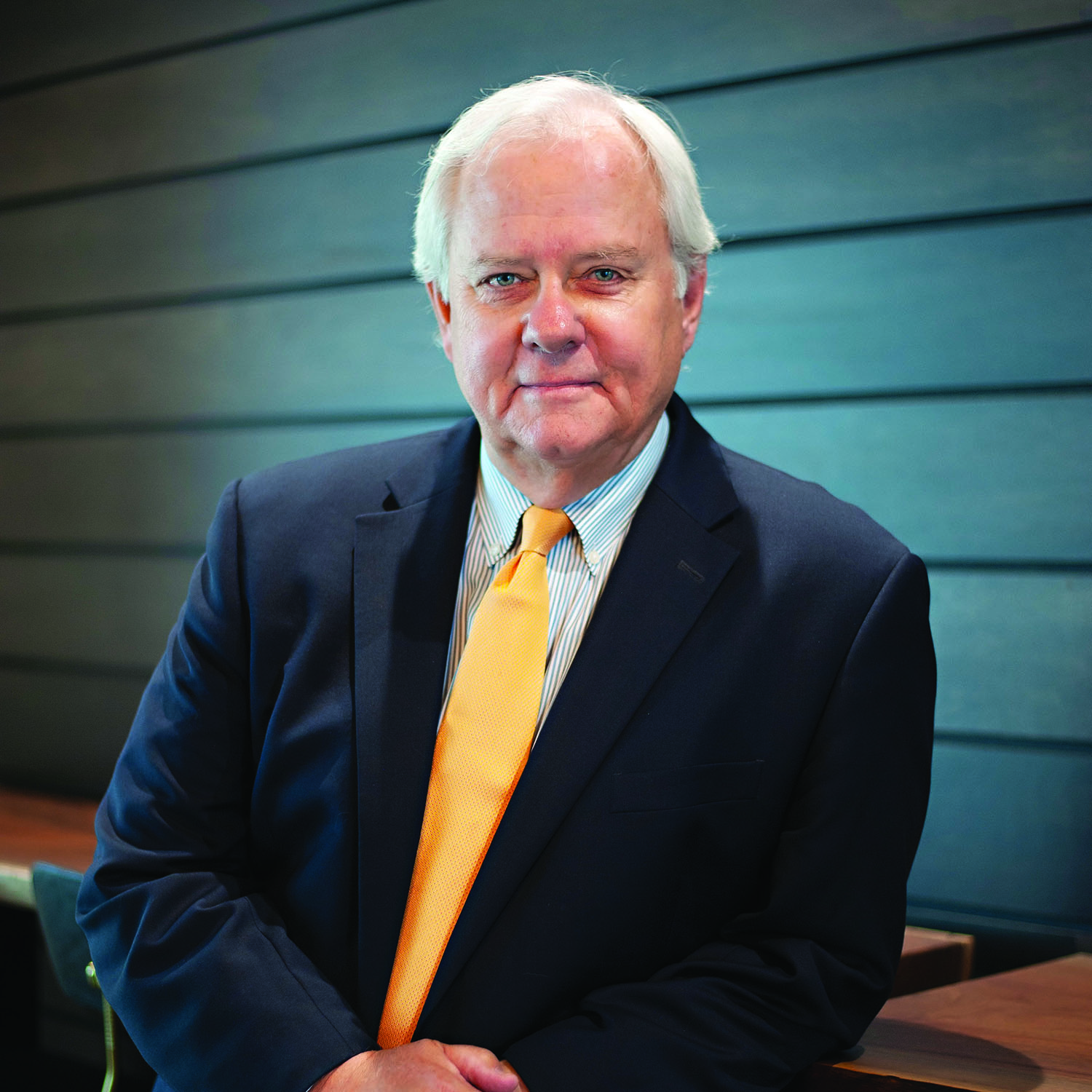
Jack Cochran
Dr. Jack Cochran practiced plastic surgery in Denver for ten years before moving to Kaiser Permanente Colorado to establish its plastic surgery program. He held leadership positions including hospital board membership and medical staff president at St. Joseph Hospital. At Kaiser Permanente, he served as a board member and physician president from 1999 to 2007, and in 2007 he became executive director and chief executive of the Permanente Federation, leading the organization nationally until 2015. During that period, Kaiser Permanente earned national recognition for excellence in clinical quality and completed the largest civilian deployment of a clinical information system, linking twenty thousand physicians and ten million members. He was repeatedly named to Modern Healthcare's list of the most influential physician executives.
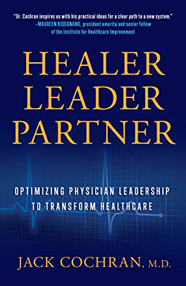
📚 Books by Jack Cochran
Transcript
[0:00:23] CH: What’s up everybody? It’s Charlie Hoehn, the host of Author Hour where I interview authors about their new books. Today’s episode is with Dr. Jack Cochran. He is the author of Healer, Leader, Partner. Dr. Cochran has been repeatedly named on Modern Healthcare’s list of influential physician executives and he worked extensively with national health policy development, including working with the White House and United States Congress. In this episode, we talk about the rapidly changing world of healthcare and the demands that it puts on physicians. Jack believes that physicians need to be healers, confidants and caregivers while developing skills as leaders while developing skills as leaders and partners. By the end of this episode, Dr. Cochran will lay out a roadmap for physicians to become more effective, compassionate and confident leaders and transform healthcare into what patients really want and deserve. Now, here’s our conversation with Dr. Jack Cochran.
[0:01:41] Jack Cochran: I started out, I want to be a pediatrician and a surgeon, pediatric surgeon and pediatric plastic surgery taking care of kids with deformities and those kinds of things, tremendously gratifying, tremendously challenging and yet, a great advance for kid’s self-esteem and their sense of wellbeing. A marvelous clinical career and as I was going along that pathway, I began to find this very kind of annoying reality which is my colleagues from the insurance companies would often write me back, well, that sounds like it’s purely cosmetic, you know? I would write them back and said, I know that this is not going to make their heart beat better or their lungs work better but there’s no more functional organ on a six year old than their face. If you talk about the development of their life, the development of their expectations, their dreams, their self-esteem, deformity of the face is a very significant obstacle. And if you don’t see it from what I’m saying because I’m not saying it clearly enough, spend an afternoon in my clinic and see the parents and the children that experience these things and then say to them, maybe to their face, this is cosmetic. As if that was some sort of a pejorative judgment on their motivation and my recommendation. That sort of occurred over time that got me interested in not only the clinical side of medicine but the more total approach to the patient and t heir care and really perked up my ears to the dilemma of the patient and as I often tell my physician colleagues, I call these the big contrasts. One big contrast in medicine is the reality of the patient versus the reality of the physician. Now, I say that because many physicians are becoming less happy and are more grumpy and more disillusioned with healthcare and I don’t discredit the reasons that they feel that way, there are reasons that have made it harder to be a doctor and made it more difficult to practice. But, physicians who are still respected, delivering tremendous professional care and experiences in caring for people in need, becoming progressively more unhappy, I contrast that with the patient because the role of patient is involuntary. I know there are patients who are hypochondriac. But the rule of patient is involuntary. Nobody wakes up in the morning and says, “It’s been a while since I had a real sickness or an injury. I’d like to take that, try that out again.” The role of patient is involuntary and often, instantaneous, you go from healthy to a car accident, you go from well to a cancer diagnosis. You go from feeling perfect to having a heart attack. The contrast between physicians becoming progressively more unsettled with their careers and patients who don’t have a choice, that’s one contrast and inside of that is the second contrast which is the career trajectory and life experience of a physician. We all, at some point in our teens, or sometimes, wow, is it possible that I could pursue the career as a physician? I don’t come from a family of doctors – [inaudible] what is the trajectory? Well, you have to start working pretty hard and taking some hard courses and so you get good grades in the sciences, you got to do this, got to take the medical college admissions test and then right before you finish your application process, you have to write a couple of paragraphs. And those couple of paragraphs are pretty interesting because you have to say, in a few sentences, why do you want to be a physician and if you look back 35, 40 years later and reread those paragraphs. I think they might shock you because you were just teeming with idealism and the mystical goal of being a healer and caring for people in need, the idealism and the hope and the positivity of becoming a healer were exuding from every sentence. Fast forward 30 years, the insurance world and other things have bumped you around, you’re a little unhappy and you’re becoming grumpy and what happened to the 21 year old idealist? Because, you're still taking care of people in need, you’re still respected as a profession, you’re still making a good living. That’s the other contrast. The third contrast is we live in an era, in a world and in a country where some of the most miraculous and wonderful care is being created, delivered and offered to patients every day with tremendous outcomes. And at the same time, we have great unevenness of healthcare in terms of access and affordability and even the quality of care. The irony of the miracles, breakthroughs and cures and healthcare is that healthcare is the number three cause, medical error is the number three cause of death in this country, right? Heart disease and cancer counts as medical error and when it comes to families realities and the American dream, medical bills is the number two cause of family bankruptcy in this country. Right after job loss, number two. I told you the one about the kids with their faces and that contrast. I’ll tell you another story that I find riveting my own sense of dedication to getting it better. Trying to get physicians to really understand we have a great opportunity. The second one is that the fact that patients have had more and more trouble affording basic healthcare, basic healthcare coverage and a premiums and that sort of thing. In order to avoid the high premiums, they belong to something called high deductibles or cost sharing and that’s actually making a bet. The bet is, I won’t have to pay more for premiums and I won’t get sick and have to pay it out of pocket. The bets are not always won and are often lost. Then what happens is, these are not street - homeless people, these are average families that we know or we are part of or we build them down in our family tree. The families are rationing healthcare at the kitchen table. The family sits down, they said, “Well, we have a thousand dollar MRI that Johnny needs to have his knee checked but the clutch has just gone out in grandpa’s truck and he needs it to get to work.” A thousand dollars this month has to go to the clutch or, “Sara needs her tonsils out this month but the refrigerator went out, that’s a thousand dollar refrigerator.” Patients deal these kinds of things every month, they are rationing out their kitchen table. That’s tough. Or what’s even worse, they put them all on credit cards and then they drive themselves even further and that’s why I say, away from the American dream, that’s why I say the Americana dream is being played out in healthcare cost conversations all around the country, that’s the other aha. The third rule within that was I was riding a taxi one day and this young man was driving the taxi, he was obviously very disturbed, very upset, he was talking about cellphone in front of his wife and he said, my daughter was at preschool and she put a bean in her ear and she’s in extreme pain and they’re in the emergency room, they’re trying to take it out and they can’t get it out and she’s really screaming. I said, my gosh, I said, that’s terrible, then he dropped me off and for whatever the reasons are, about six weeks later, I ended up in his cab again, God knows why that would happen but I did it and he didn’t recognize me but of course I recognize him because his story was so poignant. I said, “Hello, how are you, how’s your daughter?” He goes, “What do you mean?” I said, “Your daughter, she had a bean in her ear,” and he goes, “Well, we have decided we’re going to have it removed.”
[0:09:15] CH: Oh my gosh.
[0:09:16] Jack Cochran: Then I said, “Excuse me?” He says, “Yeah, we’ve tried drops, we’ve tried putting in oil, we tried all of these things, it’s not hurting her very much but we’ve decided that the $2,000 that it’s going to cost us, we would probably spend the rest of the year anyway, they were thinking about waiting until January or seeing what their deductible billed up to at what point. You know, one could say, well that’s not a good father, I guarantee you, he’s a good father and as a matter of fact, his partner in the taxi is his wife. He drives evenings and she drives days and at night they take care of their kids. Many of those stories that they are abundant that says, how do we get this system working better?
[0:09:55] CH: Yeah, I mean, gosh, everybody listening I’m sure can relate to something you said. I’ve related to pretty much all of it. It’s such a mess right now. I remember a buddy of mine, he got attacked by a gang, he went into a coma and woke up with I think over $500,000 in bills because he was uninsured and had to declare bankruptcy from this attack. There’s so many stories out there like it and it feels daunting. I’m curious for Healer, Leader, Partner, your book. What did you want to bring to the table?
[0:10:35] Jack Cochran: That’s the point isn’t it. I try to pose a few questions to my doctor colleagues and to try to frame how I think we might be stronger participants on the positive side of fixing healthcare and making it work better. I’ll just go over that briefly but basically, in spite of the fact that where we stand personally on the continuum of happy to unhappy, career satisfaction to career frustration. In spite of where we stand there, we still have disproportionate impact on healthcare. Disproportionate and empathic, because of these things. Number one, we have world class knowledge, we have great training, we’ve got the goods, we’ve got what it takes to be able to deliver great healthcare. We have disproportionate impact there. Secondly, we have disproportionate impact on the cost of healthcare because of the healthcare dollar, 83 cents is still spent 80 to 85 cents, is still spent on healthcare delivery. In other words, it’s not all about administration and other things. It’s healthcare delivery. That money is spent based on a trusted relationship and a trusting conversation between doctors and patients. You need a hip replacement, you need a cardiac cauterisation. You need medication, you need an MRI. That’s where the money is spent based on the trusting conversations between doctor and patients. The last position there, besides world-class knowledge and training and the central fulcrum of the important decisions is we have trust. Now, we are the most trusted healthcare profession for healthcare information. Interestingly, we are only second when it comes to overall trust. The most trusted healthcare professionals are nurses. We are not as trusted as nurses but when it comes to information, we are trusted and that’s important. Here’s this contrast. We have all this disproportion and impact and yet, up to 70% of us are disillusioned and unhappy and I’m not sure we would even be doctors. That data keeps coming up and so there is actually a renewed - may not even be renewed. There is an emerging understanding of this heal thyself, not being more than just a catchy phrase, we have got to understand what makes people and their professions including healthcare and doctors and nurses and pharmacists and all the people that care for these very complex conditions and complex patients. We need to understand what makes them tick and what makes them happy, what makes them unhappy. We actually have to apply some science to the career of our peers. That’s a new reality that we’re actually spending some time on that. This contrast of the best care in the world that the miracles, breakthroughs and cures but the issues of medical error and medical debt, that’s why the first question I ask people is what kind of ancestor will we be? What kind of ancestor will we be? What are we going to leave behind. The second question is that patients, that’s first of all. Second thing question, patients are not waiting for the perfect legislation, the perfect, insurance, all they want is affordable access to state care. Nothing else. They understand about the miracles, they hear about the errors, they’re a little bit vulnerable and so this cost sharing and insurance as an adaptive behavior as we talked about as the American dream, we mentioned at the kitchen table is creating wealth transfer into healthcare. For people, for businesses, and for governments, that’s what my cab driver comes in. I asked the second question, which is, “Is that good enough?” We’ve got the best care in the world, the best doctors in the world. Is it good enough, we’d be able to kind of afford and get access to it. The third question, I introduced my second book going in partner and the third question is what is the extent of our responsibility. Patients encounter the healthcare system, physically, socially, psychologically, emotionally, financially and for years, decades, eons, we have sat very comfortably in the chair of we’ll take of the clinical stuff, the rest, you’re on your own. Well, I think not. I think every time we opt out of an issue expecting patients, we miss an opportunity to fulfill our professional responsibility and our covenant of trust with them. We can have the best political quality on earth but they can’t afford it, are we doing our job? We’ll say, that’s too bad, that’s not my [inaudible]. So, being a healer-leader-partner, what does that mean? Well healer is the sacred covenant of the lead, work hard for, we try to get great results, we are very studious. We work hard, we take the fall, we probably get better and better, physician as healer understands that it is a very tough thing to be a patient and we take great care of them. Not only with our mind or devotion and our science but also our compassion. I mean our gentle way of dealing with people. That’s physician of healers. Physician as leader is a newish concept in this book amplifies it behind it. Position as leader says patience can count in all of these other ways. So what do we do about access, what do we do about affordability, what do we do about exact? What do we do about all the other things we’re learning? And you can say, well I’m in a physician, I’m going to leave that to other people. So physician as leader says actually that I’d better opt in on more issues for health care than just the connectedly examine my exam room because there is a lot of ways patients didn’t have health care go well or go poorly for them and so physician as leader is a different skillset. It starts to say I’m going to participate in patients wellbeing and opt in more complex areas such as quality improvement, learning about IT systems, performance management, scientific breakthroughs, those kinds of things. And then physician as partner recognizes and promotes the concept that health care is too complex for one brain to be the computer and the health care team which is the old brain that the family got and the patient in the exam room. And so physician as partner says, “I’ve got to learn to be more of a team player. I’ve got to work with nurses and pharmacists in much more collaborative ways because I can’t just do everything based on my own brute strength of my training and my intellect. And I’ve got to work with the physicians and now, oh my God, I’ve got to work with IT people? I’ve got to work with technology people, I’ve got work with mathematicians.” So physician as partner is another very important role and leader and partner both emanate from the sacred covenant of the high ground of healer. We say, “I’m going to be a good healer,” but it’s going to say, I am going to say to myself, “I also have to be involved in leadership and involved in partnership.” And so the old model of one doctor, one patient, one chart, one exam room and the computer was the physician’s brain has gone away and the reason is complexity. And the complexity and the knowledge and information we used to have one journal, two journals, 10 journals, a hundred random mass trials, a thousand random mass trials. The complexity of knowledge and information has gone exponentially and continues to grow at an exponential rate. The changes, development of technology book, diagnostic, therapeutic, information, computers, et cetera, the development of the understanding of big data, analytics, algorithms, machine learning, artificial intelligence, all of those things are so far from what we ever trained in medical school but they are central to what we understand as health care right now. Physician as by standard, position as victims doesn’t make these things work. And so physicians have to understand how to learn and we’re closing a couple of comments about that. So the first wave of complexity was information knowledge, technology, IT, big data et cetera. The second wave of technology was patience. We actually started to cure people from very serious illnesses like AIDS and cancer. So they’ve developed a chronic condition instead of a fatal illness and then they got another condition and then another. And so the second wave of complexity beyond the depth, the depth of knowledge around individual disease and conditions was the breath of the things that we are having the patience and so no longer did one doctor have one specialty become super talented and take care of it and this again brings in the need to partner and to be leaders. So what I am proposing in this book and I am going to close with the fourth question, the fourth question is where will position be when health care is transformed, okay? Eric Hoffer, the philosopher had a great quote. He said, “In times of crisis learners inherit the earth while the learned find themselves beautifully equipped to deal with the world that no longer exists.”
[0:19:13] CH: Beautifully said, what did Charles Darwin say? He said, “It is not the strongest or the most intelligent that survived but the ones who are most able to adapt.”
[0:19:23] Jack Cochran: You rascal, you read my notes. I’m going to get to that in pre-sense.
[0:19:27] CH: Oh I didn’t mean to steal your thunder.
[0:19:29] Jack Cochran: Eric Hoffer and then so medicine is academic and tradition rich and so is business. We you say, “Well maybe at the MBA, that will be leaders.” Nope, medicine isn’t a thing that is going to teach us leadership and neither is business. So this book, Healer, Leader, Partner will bring physicians the skill set and the capabilities necessary to make the transition from just being extremely competent in the practice of medicine or even the business and practice of medicine. To being true competent leaders, this book, Healer, Leader, Partner, will provide the reader with confidence and competence in the critical areas of leading people, leading change improving quality, performance management. It is an extremely practical book, it is written with absolute experience from all kinds of points of view and from both reading and learning a lot along the way and a couple of things, talking about my own learning. One of the things I wrote is called math is the new science of medicine which I think I eluded to which is medicine, it used to be all about anatomy, physiology, pathology, physiology I mean internal medicine, surgery, et cetera. But as we’ve learned more about power in the world of data and analytics. We’ve all of a sudden have the revelation and there is so much more to learn that can augment some of the classic sciences and so mathematics now has to be central to what we do. And let me just talk about my career first. So this is after mathematics as the new science of medicine. So how do we take these early to mid to late career physicians who vary from excited and happy and eager to move forward to grumpy and hanging on by their fingernails to be really capable and eager to lead into the new future? And that is why I say this book will provide confidence and competence but it is related to a Darwin quote. Which is, “It is not the strongest of the species that survives nor the most intelligent that survives, it is one that is the most adaptable to change.” And so that’s - whether you are a Darwinian or not, that is a very well-known quote that he says. This isn’t just about where you start. It is how you teach yourself to learn and improve. And so I will use my career as an alpha case here. I started out and I decided to become a surgeon. Well it took four years of medical school after college. Six years of surgical educational training including a fellowship. Extensive certification, monitoring, mentoring, a very in depth process to ensure that I have a level of confidence to be certifiable as the surgeon that I was. When I made the switch to go into leadership in the business of medicine, I made that switch rather quickly over several months as I was recruited into a position and my training for that was just the time and trial and error. I did not have an extensive formal training and so I learned as I went. That inexperience probably was the basis for me being able to compile a lot of the lot of this learning and put it into this book and so physicians don’t have to all of a sudden say, “Well I better get an MBA because then I will be competent,” that is not the answer either or “I’d better learn to write code, understand analytics, do algorithm analyses, understand AI.” No, you don’t have to do that either. Although some will, some can and some should as we live in the evolution of the profession but we do need we’re not going to write code to understand analytics, algorithms, AI, we better have the clear understanding that we have to embrace the need to both learn and or partner with people who do and physicians are not obsolete. We could become more absolute if we decided to stay on the sidelines, be rather crabby and watch change happen around us and to us but we do not have to be obsolete. What we have to do is to reinvent the 21 year old idealist, embrace the expanded role of healer, leader and partner. Opt in and lead the issues of healthcare and learn as we go and understand that it doesn’t have to be a brain drain for physicians to do other things besides full time clinical. We can get involved in business and in finance and in policy and actually it can be a brain gain. So our future is not implying that we have to be obsolete because of all the change that we are about to see. But it does mean we have a tremendous opportunity and a tremendous amount of control if we are willing to learn, adapt, grow and develop ourselves as healers, leaders and partners.
[0:24:05] CH: Jack, what is the best way for listeners to get in touch with you? I’d imagine you do some speaking on this topic as well, how can they connect with you or at the very least follow you on your journey?
[0:24:20] Jack Cochran: Great, thank you. Well first of all I really, really embrace reading this book. This book was a labor of great passion for me because I have been training physicians to be leaders and teaching for over 25 years and I continuously had the same message from them which was, “Hey Jack, we got your slides, we got the notes that we took but what is missing is those hundred hours of conversations over coffee and over a morning walk and over dinner. We need a book. We need those stories and those teaching points in a place that we can handle it.” So in response to them that says since I don’t carry this all around in a very quick, easily, replicable memory bank, I am going to render and write it down. So that was important for me to get it down and then I said actually, now I’ll go a little bit over the top. I think this book should be owned. I think this book should be owned by all people in health care, physicians or not and most of them should have two copies. And the reason it’s two copies is you’ll find it so practical that you should have one in your desk at all times where you have been very glued to it and probably have one in your briefcase or your den at home because the book is so practical that when you have a situation where you’re going to be facing a very difficult meeting or situation the next day with a department or an individual or customer, you can go back and re-read a couple of chapters because they were so useful and so practical.
[0:25:45] CH: So going back to the original question, do you do speaking on this topic? Do you want to be contacted by listeners potentially?
[0:25:54] Jack Cochran: Yes, I think the book has high utility. I also have a website and I am available for speaking engagements. I do a limited amount of coaching and I believe that in addition to the website and the speaking, I will continue to be doing some writing on various topics going forward. I say that because one of the things that has been most encouraging to me is once you’re out there as a physician leader and a physician leader who embraces learning and development there is a lot of people who are going, “You know that’s interesting, I never thought of myself as a leader. I always thought I was an orthopedic surgeon, or as an internist.” And the fact is like all profession including teaching and writing and many professions, we all have an element of leadership that comes with the territory based on the stature of our profession and the contributions we can make just in general. So it doesn’t lean necessarily to your core profession but I think the leadership is an important thing for physicians to grow their skills, develop, accept and embrace and if nothing else, they will feel a greater sense of participation and contribution to a future that is going to change with us or without us.
[0:27:12] CH: I got one more question for you Jack and that is could you give our listeners a challenge. What is something they can do from your book this week that will have a positive impact? We’ve got about 15 seconds for this answer, go.
[0:27:28] Jack Cochran: I would say find your problem. Find one problem besides, you are going to develop an understanding of that problem, study the solutions to that problem and solve that problem. Because there’s no starting point that says I’m going to be good enough to take on a bunch of issues. Find one, study it, learn about it, solve it and learn from it.
[0:27:47] CH: The book is Healer, Leader, Partner. Jack Cochran, thank you so much for being on the show.
[0:27:53] Jack Cochran: Thank you.
[0:27:54] CH: Many thanks again to Dr. Jack Cochran for being on the show. You can buy his book, Healer, Leader, Partner, on amazon.com. Thanks for tuning in on today’s show. If you liked what you heard, here is what I want you to do next. Open up the podcast app on your phone or iTunes on your computer and search for “Author Hour with Charlie Hoehn” and then click “ratings and reviews”. Take 10 seconds to rate this show or leave a review. It is a small favor but it’s really the best way to show your support and give me feedback and if you know someone else who’d love Author Hour, take another three seconds to text them a link to this episode. We’ll see you next time.
Want to Write Your Own Book?
Scribe has helped over 2,000 authors turn their expertise into published books.
Schedule a Free Consult