Anita Nielsen: Episode 314
Read the full transcript
Anita Nielsen
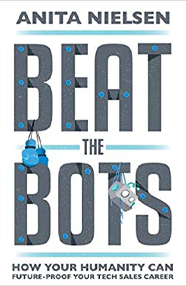
Anita Nielsen is a sales performance consultant, speaker, and the author of Beat the Bots: How Your Humanity Can Future-Proof Your Tech Sales Career. President of LDK Advisory Services, she has more than twenty-five years of experience in B2B sales and sales enablement. Through her book and her training programs, she shows salespeople how to lean into their humanity to stay indispensable in an increasingly automated world.
📚 Books by Anita Nielsen
Transcript
[0:00:17] RW: Hi, everyone. It’s Rae Williams, host of Author Hour, where I interview authors about their new books. Let’s talk about sales a bit. As a sales person, you need confidence and passion to win but as buyers and robots continue to gain power, it’s easy to feel beaten down in a world where customers no longer seem to need you. As deals fall through and commissions dwindle, you feel a desperation begin to sink in. Blow after blow, you wonder, am I going to lose the career I love to a robot? Our next guest is going to answer that for us. She is Anita Nielsen and she’s the author of beat the bots. She’ll talk to us about how to get up off the mat and come out swinging. Here’s our conversation with Anita.
[0:01:03] Anita Nielsen: A couple of things that happened. I’ll go with the one thing that actually was my aha, eureka moment that I absolutely decided that I had to write a book was a few years ago, a couple of years ago, I was working with a sales professional and his name, we’ll call him Neil, he’s also in the book. Basically, what happened was, we went and worked with a particularly difficult customer and we’re kind of frustrated when we went out to go have a drink afterward but we were just talking and as the conversation and the drinks started to flow, Neil shared with me some of the challenges that he was facing and he was really frustrated because there’s just so much competition and it was getting harder and harder for him to differentiate. Which I already knew that was happening with the sales reps and I always worked hard to try to help them differentiate themselves. But this was a little bit more personal. He started to go into the fact that for the longest time, he had commission checks rolling in, he always been so successful. But of late, it had become more and more difficult because there was more people making purchasing decisions, there’s more people involved, the relationships he had were not as powerful as they had been in the past. Add onto that, insult to injury, I guess is, he started talking about his wife and his wife was a school teacher. Well, his wife had not worked for many years and she enjoyed the privilege of being able to stay at home with her kids. What he was facing, what Neil was facing at that time was difficult conversations with his wife of, you know, you may have to go back to work if you want to maintain our standard of living. You know, in a lot of ways, that just broke my heart, right? Because now, it became, will the kids still be able to go to the school that they go to? Will we have to move? I joke about it an empathy sensor in my brain but it’s definitely there and it started to go haywire and my heart just kind of broke because you know, these are people that I really respect. I respect sales people tremendously in general just because I’ve been lucky enough to work with the ones that truly care about customers and want to help them. But this really killed me because I couldn’t believe that this is something that somebody who worked so hard was facing and that too, on top of all the negative energy and all the rejection that they face just being called sales people. That’s when I decided, you know what? I think that I’ve got some things that I know are working in the coaching that I do. Let me think about putting them in a book and maybe I can help the Neil’s of the world because it’s getting tougher and hopefully they trust the voice of somebody who has been in the trenches and so that’s where the book came from.
[0:03:13] RW: All right, awesome. Tell me a little bit about what you think is the crux of your book? The most important thing that people can take action on, within the book.
[0:03:25] Anita Nielsen: The purpose of this book is to help people realize that within them, is differentiated value and they just have to pull it out. The most powerful thing that I think is in the book that people could use right away is this concept of a rider and elephant. This is a metaphor and it’s a metaphor done by a gentleman called Jonathan Haidt from New York University he's a social psychologist. The metaphor goes like this; if you imagine a human rider sitting atop an elephant, that’s representative of the human mind. The human mind has twos systems. The first is a rational system, the second is the emotional system. The rational system is represented by the rider and the emotional system is represented by the elephant. The way the metaphor goes, basically, as a sales person, you take a look and you think okay, I have to appeal to the writer and the elephant in my customer’s mind. I have to appeal to the rational and the emotional within my customer. Here’s why. You can spend all day providing data and information and guidelines. All of those rational things to that rider sitting on top of that elephant but if you don’t spend the time to get that elephant to move, which means talk about risk, talk about fears and hopes, no one’s going to move at all because the writer, as much as he thinks he can control, he won’t be able to move that elephant. The elephant has a six-ton weight advantage. This metaphor that I’ve been using in training classes for the past couple of years has been incredible for sales people. I get countless emails and text that tell me hey, I use rider and elephant and guess what, it worked or dude, that totally worked. It’s something that I found is easily applicable. All I ask that folks do when they read this book is take a look at the questions that we come up with in the book for the rider and the elephant and just before you go into preps for a meeting, spend a couple of seconds and think to myself, okay, what is it that I need to say to engage the rider? What is it that I need to do to engage the elephant and ensure that you are working with both aspects of that human. For a long time, we’ve said, you know, people buy on emotion and then they rationalize. That’s a concept that’s kind of difficult to forget in your day to day. However, this rider and elephant because it’s such a powerful metaphor, it tends to stick with people and I found that people have had a lot of success just applying that.
[0:05:38] RW: All right, of course the title of your book is Beat the Bots. I mean, your subtitle is, How Your Humanity Can Future-Proof Your Sales Career but let’s talk a little bit kind of about the bots themselves. What is this fear that people have of bots kind of taking over their job and what aspects of it? What parts of this kind of, you know, I wouldn’t say a rumor but what parts of this fear is true or not true?
[0:06:05] Anita Nielsen: Good question. Basically, Beat the Bots is kind of an inflammatory statement because there’s so many different aspects of technologies, there’s artificial intelligence, there’s machine learning and there’s robots. The fear across the field and for me, particularly, B2B tech sales people is that these bots are going to take over their jobs. Pretty soon, robots are going to be able to interact with customers and create these big deals and these sales that salespeople are. Well, the reality though is that you know, if you focus on the things that are very human about you, you immediately differentiate yourself from a robot or artificial intelligence. We’re just not there yet, we’re not at a point where robots or AI and ML can make you have empathy or make you feel a real connection. Those are all very human things and that’s where the humanity comes from. I encourage sales professionals to not worry so much about the AI and the bots and recognize that at this point in time, if they leverage those things that are really human about them and create that very deep human connection. That is what will differentiate them from the bots. That fear can go away. At least not in a lifetime, I don’t see robots having the emotional capability to be able to engage human beings at the level that other human beings can and just that human experience. I think that because of all the inflammatory language out there about B2B sales people are dead. Because of that, there is a very valid fear. And the flip side of that is AI, if you look at it, a lot of the different tools and things that are going on out there, they can actually help sales people, they can help with automating the different tasks that they do on a day to day that are cumbersome that don’t require that real talent that salespeople have of engaging other human beings. That’s pretty much where the concept of beat the bots came is you know, you can beat the bots very simply by being more human.
[0:07:46] RW: All right, what are some of the things that happen when we don’t do this, when we’re not applying our humanity to sales and if we’re not actually approaching sales from the aspect of your elephant metaphor? What are some of the things you've seen happen?
[0:08:02] Anita Nielsen: yeah, one of the things that I immediately happens is that customers will keep you at arm’s length. If you’re engaging them on a very professional level where you're focusing more on data and pure information that you're sharing with them and you're not really connecting at a human level. They will treat you at that level, they will treat you as someone who is kind of an arm’s length, they will not go forward and have that connection with you. What we find though is that when you’re doing transactional type sales which is pretty straightforward sales of a piece of equipment or a product, that’s okay, right? You can go in and you don’t have to be extremely human. Robots actually could do that type of sale because it’s very straight forward. However, when you get into technology sales that are more complex and that require some thought around IT strategy and how to implement different technologies within a business to make a difference, that’s where this really matters. You’d have to be able to engage at that human level and get to where that customer’s objectives are, not just professionally but personally. Because if you don’t, then they are going to just treat you as someone who is arm’s length and then really, what’s the difference between you and a robot or a machine or a website. You're not creating that additional value and I found that the only value that even really differentiates now is that personalized value that who you are and what you stand for as a sales person and how you bring that together with who your customer is and what matters most to them to create something that is meaningful in that sales context.
[0:09:17] RW: All right, so give us some examples, especially through your coaching and teaching of some people who have experienced the transformation by using your methods.
[0:09:26] Anita Nielsen: Yeah, so I would say Neil is probably my favorite one. So we did a lot of rigorous coaching and I taught him the rider-elephant path and we had our every week, every other week conversations and there was a particular big deal that he was working on and he was stopped because the person that was making the decision, he was a tough cookie. He wasn’t wanting to give up more information. He wasn’t wanting to connect. And so but Neil kept adding and he kept on trying to understand that person and the human love line of course, the way you do that is by asking very thoughtful questions and doing a deep discovery, which is a big part of it in the book and over time, he was able to understand more of that emotional motivation of that person that he was working with. In this instance, for example, it was that the boss of that leader was very, very tough on him and he was having a tough time establishing himself in the world that he was in. He was relatively new and he wanted to make a difference and so as Neil started to tap into those things, he was able to come up with ways to help that individual and to go out of his way to really have that person’s back. And so I talk about this in the book but it is one of my favorite moments when I sat down with that customer of meals. I’d ask for permission and I asked. I said, “Hey what is it about Neil that that makes you want to go back to him?” And basically he said, “You know, Neil has my back. You know no matter what my problem is he is going to help me find a way to solve it and he always tries to make me look good.” And to me that is the heart of everything that I talk about in this book is it is not about the product. He didn’t mention the product even once in that conversation about why he signed a multimillion dollar deal. He talked about Neil and how much Neil meant to him in terms of his career. In term of helping him be successful, in terms of just picking up the phone when he had something that he wanted to talk about and needed just some brainstorming, Neil did that for this customer and that’s really what stuck. So I have to say probably that is one of my favorite examples and it is in the book so you can read more about it. But you know, it is such an amazing difference to me that when you talk about success in sales and when you look at customers who have bought from somebody, I hardly ever hear how valuable that product was. I rarely hear that, “Hey, well you know we love that product,” or, “That company is amazing, we love to buy from it.” The top performers, the high performers, when you talk to their customers it almost always comes back to who they are and what they stand for and how they made a difference to that individual customer.
[0:11:43] RW: All right, so actually getting into some of the expertise that you provide in the book; you talk a little bit in the book about establishing a brand identity and how as a high performing sales professional, you do need a strong personal brand identity. So how does that come into this and what does that do for you?
[0:12:00] Anita Nielsen: Yeah, so I think part of that is just being consistent. So making sure that as you are creating this human to human interaction that you are doing it all the time. You are not just being – trying to be 'strategic' and, “Oh I am going to talk to the elephant today and then forget about it.” It really becomes who you are and understanding that what matters most is who you are and what you stand for and consistently doing that. And what ends up happening inevitably is the people that you work with not only are they going to buy from you, those customers but they are going to refer you to their friends and they’re going to want to make sales for you because you have created such a connection with them and I think that is the most important piece. I will give you an example, one of my friends, Mike, he knows everybody. He’s got a guy for everything. So I call him for everything from plumbing to a life coach and he’ll always say, “Oh yeah, I got a person for that. Here’s a number.” And I always call the person that he tells me and there’s been only two times when I haven’t used the person that he gave to me because those were just not good fits. But other than that, I always trust his word because he is somebody that I know just goes out of his way to make sure that he works with good people. And so that is what I want for my sales people. I want them to become that guy, the person that their customers immediately think of when they see someone that is in peril within their business world and they want to apply technology in a way that is going to matter. And I think that is probably the most powerful way to look at it is that I want these sales people to become that guy, the person that they go to, those customers go to, whenever there is something that comes up that is a challenge for them or something that is frustrating them and for those peers around them and the people that they work with.
[0:13:31] RW: All right and then another aspect of the book that I would love for us to touch on is some of these persuasion principles that every sales person should know. Because of course, even if we are doing everything that we’ve been discussing, we still want to have these persuasion techniques in our back pocket, correct?
[0:13:47] Anita Nielsen: Yes, for sure. They are helpful, right? So the idea of persuasion and I will tell you the disclaimer first, this is a disclaimer I give at the end of my class when I have talked persuasion techniques is now, if you can’t find in your heart to have the good intent to want to go and help that customer be successful, do not use the persuasion principles because they will not work. If you are trying to be manipulative in using these, it won’t work. People can smell when someone is trying to sell them a mile away. So the idea of the persuasion principles as I present them in the book is these are some tools and some thought processes that you can use to help you kind of unstick a deal, right? So when you are in a situation where you can’t just figure out how to move forward, try the persuasion principles but do it in a very honest, meaningful and just really human way as opposed to being the slimy, sneaky, shady sales professional. Which unfortunately continues to be a negative perception that customers have out there. So principles of persuasion are super valuable as long as you’re applying them in a way that is basically to achieve success for your customer.
[0:14:46] RW: And what are some of the persuasion techniques or what is the best one that you think we should apply?
[0:14:51] Anita Nielsen: I think the one that I encourage sales professionals to use most often and it is pretty simple really is the principle of authority, which is basically telling – which tells you that when you have a situation where you’re working with a customer and you’ve been trying to talk to them about a certain solution for months and it is just not jiving with them, like they are just not understanding the value of that solution and what you are trying to do. They may trust you, they may think that you’re the best but that solution, they are getting stuck on that solution. So the principle of authority tells us in that scenario that if you bring in someone from your organization that is at a higher level of authority, the chances of that concept being accepted by your customer go up hugely. So basically, if I am a sales professional and I am talking to a customer and I have been trying to sell a particular product, now they’re just not getting it. I call my SVP of sales, for example, and now it’s that meeting with that SVP of sales going into to meet the customer with me and the SVP all of a sudden mentions the same thing that I have been saying for six months, yet here we are, lo and behold, the customer feels like its gospel and all of a sudden, they are listening. They are getting it and they are nodding their head and you just sit there as a sales professional thinking, “What the heck? I said that. I have been saying that.” That is the principle of authority, so people have a tendency to believe someone that they perceive to be more credible because of position of authority and in the sales scenario that’s probably the most powerful one is bringing in someone at a higher level in your company and it doesn’t have to be a sales [inaudible]. It could be your CFO, it could be your CEO, whomever you can find that it is considered at a higher level within the organization and it has more credibility as an authority figure. Bring them in and have them help you unstick the deal at that point or get the message across because human beings are more likely to listen to that person because of that presumed authority.
[0:16:36] RW: All right and so if you had to then issue a challenge of all the things that we have said, if you have to issue a challenge to the people who are going to read your book, sales people, our listeners, just about anybody, what would that challenge be?
[0:16:50] Anita Nielsen: So the challenge would be going back to that rider on elephant metaphor. Within the book, I have actually a list of rider on elephant questions that can be used. I’ve got a pre-call plan that people can use before they go into their sales meetings. But what I would say to do is if you can do none of this because you know let’s face it, as sales people we are not huge on filling out paperwork and doing a lot of detailed planning. So knowing my audience is like that, I encourage them and I challenge them actually in every class that I do that for the next month, every single meeting before you go into any customer meeting, sit in the car for five minutes and ask yourself, what do I have to do to engage the rider? What do I have to do to engage the elephant? And go into that meeting after you have gone through that thought process and you will see a major change in terms of how your meetings flow. And how much information you’re actually able to gather in those meetings and not just regular old generic information. Information that is going to help you create you powerful messaging that appeals to that human being, which is really what this is all about connecting on the human to human level. So yeah, before you go into any customer meeting, I get it. You don’t want to fill out a call plan, you don’t want to spend a whole lot of time preparing, fine. Sit in the car for five minutes and get your head on straight in terms of the rider in the elephant and then after that month, you will see a major change in your business. It is absolutely palpable, the difference in those conversations after you do that.
[0:18:10] RW: All right, awesome and then how can people contact you if they want to learn more?
[0:18:13] Anita Nielsen: Yeah, for sure. So you can always contact me via my email, which is anielsen@ldkadvisory.com and I am sure that will be in the podcast notes as well, right? anielsen@ldkadvisory.com.
[0:18:36] RW: All right, awesome. Thank you so much.
[0:18:38] Anita Nielsen: Thank you.
[0:18:41] RW: You can get Beat the Bots on amazon.com today and as you heard, Anita will give you all the keys. Join us next time for another episode of Author Hour.
Want to Write Your Own Book?
Scribe has helped over 2,000 authors turn their expertise into published books.
Schedule a Free Consult