Steve Lowisz: Episode 325
Read the full transcript
Steve Lowisz
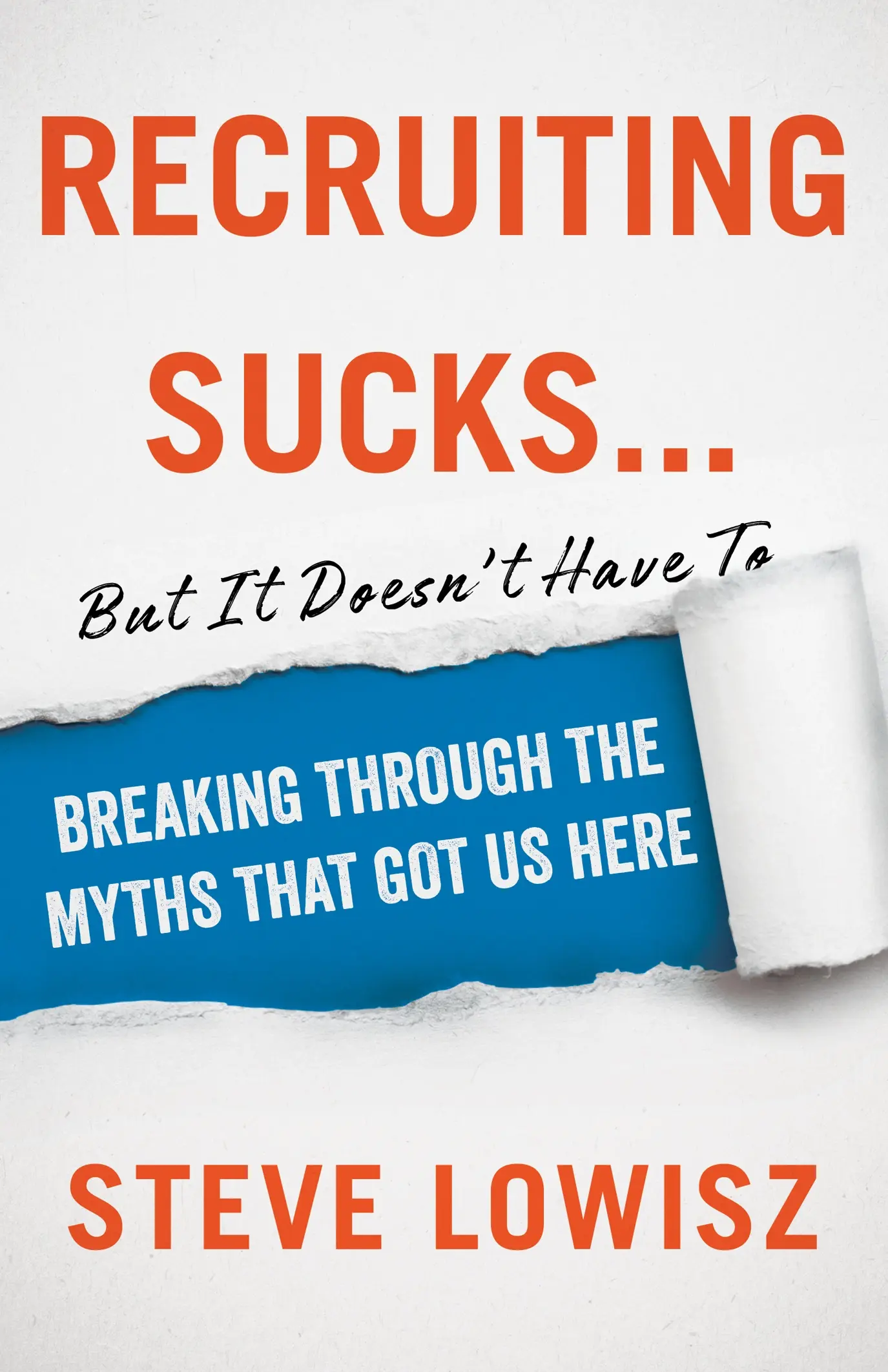
Steve Lowisz is an entrepreneur, author, TEDx and keynote speaker, educator, and coach on talent, personal development, and business leadership. He is the founder and CEO of the Qualigence Group of Companies, which includes the Recruitment Education Institute and the Lowisz Leadership Institute. A recruiting industry veteran with more than two decades of experience, he has helped hundreds of organizations find and unlock the performance of their teams, working with startups, equity-backed firms, and Fortune 500 companies including Starbucks, Coca-Cola, Cisco Systems, and Whirlpool. A six-time entrepreneur and investor, he is also a contributor to the Forbes Human Resources Council. He is the author of Recruiting Sucks...But It Doesn't Have To.
📚 Books by Steve Lowisz
Transcript
[0:00:26] RW: Hi, everyone. It’s Rae Williams, host of Author Hour, where I interview authors about their new books. People are a business’s most important asset. But when it comes to hiring, practices are wildly out of date, relying on some of the same wisdom that’s been used for over 50 years. It’s time to update how we recruit by focusing on people, not process. That’s what our next guest is here to talk to us about today. In his new book, Recruiting Sucks ... but it Doesn’t Have To. Human resources guru, Steve Lowisz, shares a groundbreaking approach to attracting, developing and retaining an accomplished and vibrant workforce. He’s going to go through some of those myths with us today and help us figure to how to build a peoplecentric team that will take you into the 21st century and beyond. Here’s our conversation with Steve Lowisz.
[0:01:23] Steve Lowisz: So, I’ve been in this space for 25 years give or take, right? I got into this space because I experienced how bad recruiting was from a customer perspective. And as I built my own business around providing services within the space, I realized, “oh, my gosh, everybody’s doing it the exact same way and expecting a different result.” The idea behind a book is, let’s blow up some of those myths that as recruiters and even as hiring leaders, we continue to buy and we keep thinking about how do we change things? But the reality of it is, we never changed it in the first place. Let’s do something completely different this time.
[0:02:01] RW: All right. Why does recruiting suck? I mean, it doesn’t have to as you say in your book but why at this point do people think that it sucks, people loathe it so much?
[0:02:11] Steve Lowisz: Think about the titles that we use in recruiting. Head hunter, the reality of it is, it’s more of a transaction, both recruiters and a lot of hiring leaders will think about, “I just need to put a butt in a seat.” So, if that’s the view, if that’s the context we do recruiting in, what’s going to happen? We’re going to do everything to support that, right? It’s all a transaction, it’s a numbers game, it’s really not about the quality of recruiting or the candidate. It’s really about the transaction and getting that butt in a seat. This is the way that recruiting has been done all the time. The things that we measure in recruiting drive volume. They don’t drive quality. So, let’s think about that, right? If we want to change the view of recruiting. I mean, let’s face it. Recruiting can either make or break your organization because as recruiters, if we bring in a bunch of crappy candidates and that’s all you have to pick from, you’re not to hit the goals within your organization, right? So, if we focus on driving something other than quantity and focusing on quality which is never really been done, it’s been talked about but never been done, it completely changes the game.
[0:03:17] RW: All right. And so, what is it that you think is the key message that people can take action on within the book, within recruiting?
[0:03:27] Steve Lowisz: There’s actually a couple of them but back to what I just talked about, right? Number one is, it’s not just about filling position, it truly is the success or failure of a business. You know, we whine about all the problems that we have in recruiting, we whine about wanting to change things, but the reality of it is, we don’t. The book is all about let’s look at these common myths that we operate under and let’s actually realize why they’re not true, why they’re affecting us negatively and let’s figure out a way to do something different than what we’ve done before. That’s what the book is all about.
[0:04:05] RW: And then, I want to kind of jump in to the book and take a look at some of the myths that are kind of surrounding recruiting right now that you know, you want to break through. But before we even get to that, why do you think some of these myths are even out there? How has this been perpetuated over the years, what is it that it happening in society that is just making this so miserable?
[0:04:27] Steve Lowisz: Well, can go back to kind of the beginning of recruiting, recruiting was all about, “let’s just fill the role that we have, that’s what we’re going to get measured against.” Our focus was all around exactly that. Just fill the role with anybody that we could potentially find. So, it became a very transactional thing. The way recruiters are measured both in agency and internally is usually about volume has nothing to do with quality. So, here’s what happens, we focus in recruiting and doing it as fast as we possibly can. You know, there’s a saying out there, you can have time, you can have pause, you can have speed, right? Which, pick two. We’ve always operated under this mantra, “that’s all I can do. Two of those three”. So, the reality of it is it can be all three but we have to change. One, the way we think about recruiting, it’s again, it’s nice to transaction our business. It’s about the success or failure of our business. Two, when we think about measuring recruiters, we’ve got to make sure that we’re measuring the right things. If we measure, if we continuously measure activity, we’ll get activity. If we continuously measure quality of the people they bring in, we’ll begin to get quality. But we don’t actually do that right now. If you look at some of the myths, you know, think about recruiters don’t have to be marketers. Well, think about today’s day and age in the world of digital, right? If a recruiter doesn’t know how to market, they’re not going to get to the right people in the first place, they’re not going to know how to actually put out that message about what they’re trying to do. That’s one of the myths that we talk about. To be an effective recruiter today, we have got to understand marketing 101 to communicate the message about our organization or about our clients in order to get there. That’s just one of the multiple bits in the book.
[0:06:11] RW: All right, that’s actually one of the ones that I was going to touch on because I found that to be very interesting, the idea of recruiters as marketers. But another one that I wanted to touch on is actually, the first myth that you have in there, which is that – skills are the most important thing. Because I do feel like that’s something that you know, people are kind of back and forth on there, you’re hiring on skill if you’re not hiring on skill, what are you hiring on? What are you recruiting on?
[0:06:35] Steve Lowisz: Well, let’s think about it, right? If you think about a whole human being, there’s really three pieces to every human. Head, heart and skill. Let’s look at it that way. Skill is the easiest to recruit for, it’s on a job description, I need somebody that knows how to program a job, I need somebody who knows finance and accounting, whatever that situation might be. It’s really easy to interview for a skill, but let’s look at what the real statistics show. 11% of the time when we let somebody go, it’s because they don’t have the skill. 89% of the time, it’s for something else. it’s either head, meaning, their behavior or heart, meaning, their drive and values. It seems like we’ve done a pretty good job in interviewing for skill but yet we’re still having huge turnover and as I said, the statistics show, 89% of the time, it’s something else. I am not advocating, let’s not look at skill. What I’m positioning are the context that I’m putting it in is just say, skill is one third of a human being. What we’ve got to look at is, skill yes, but we’ve tot o look at their behavioral cognitive ability, can they think about the job in the way you want them to think about the job? Will they behave the way you want them? Every time somebody says, “hey, I had to fire somebody.” Almost every time. I get a comment such as you know, I ask the question why. I’ll get a comment, “they just didn’t seem motivated; they just didn’t have the energy when they came to work.” That’s not actually a skill, that’s a behavior or a drive or a value. Let’s put those three in the context with each other and actually hire the full human being as supposed to one third. Would you buy a car off the lot if you only saw one third of it?
[0:08:21] RW: Definitely not.
[0:08:23] Steve Lowisz: Of course not. But yet we’re hiring candidates all day long that when we’ve only assessed one third of that individual and then we wonder why we have 70% turnover right now, statistically in the first 18 months of employment.
[0:08:36] RW: All right. So, moving into another myth because that’s a very interesting one. Moving into another myth, it’s that candidates are only interested in titles and money.
[0:08:48] Steve Lowisz: Yeah, love that one. Consumer products companies understand that it’s not just about title and money. Let me explain what I mean by that. As recruiters, as hiring leaders, we have a tendency to make recruiting about the practical instead of the emotional. We make it about money and title because we focus on money and title when we take candidates to the interview process. But here’s what we’ve got to understand about the human brain and the way, this is why consumer products companies have this so well. Let’s take Apple for a second. Apple charges what a thousand to $1,500 for an iPhone, right? Most of us or many of us have an iPhone. We’ll go out and shell that money. Is it really about the iPhone itself? Practically, is it the right decision to make? Well, some people argue yes, most people will say no. But emotionally, they realize that that’s the way consumers actually buy. So, the way they market a $1,500 iPhone is to say, we want to change the status quo. “We want to change everything there is about the technology industry and by the way, we make these great products that cost 1,500 bucks.” They know that as consumers, we buy emotionally, we justify rationally. The same thing goes through for recruiting. The problem is we have a tendency to start the conversation and to end the conversation with the rational. So, it becomes all about title and money. If that is what we make it as that is what the candidate is going to want? If we on the other hand start to focus on what drives the, what’s important to them? Now a certain percentage of the population it will be all about the money but it is becoming a smaller and smaller piece. Because if you pay them an additional $10,000 but it is the work that they don’t want to do, do you really think they are going to last? Do you really think they are going to produce? The answer is no. When we survey people and we talk about what is really important and they say money, what we have uncovered is the comments are really, “well they don’t pay me enough to put up with the crap that I have to deal with.” The real problem here is the crap, so let’s figure out what that is and drive that as oppose to just driving money. So, you know recently I had a candidate, it was actually a friend of mine that called up and said, “look I’ve got two competing offers here. One is more than what I make now, one is less than what I make now.” And he is making about $150,000. Ultimately, he wanted some counsel around how crazy is it to take a job that actually pays about $12,000 a year less, but it hit all of the other buttons on what he wanted to accomplish, what he wanted to learn and the person that he worked for. He ended up taking that lower paying job for those reasons. All I did is listen to the guy and he basically convinced himself because it was all about the other pieces not just about the dollars. But the number one push back I get from recruiters is, “my company or my client just doesn’t pay enough.” Every recruiter says that because we lead with comp, we need to stop leading with comp.
[0:11:55] RW: All right, awesome and then the last myth that I wanted to touch on and I think this is an interesting one especially to me, kind of in the other end of someone who would be not necessarily creating but applying for things as well is recruiters will be replaced by technology. Because I know in a lot of companies now, they are using these automatic systems that screen candidates before they even get there. So, on the recruiter side of things, you know, what is the truth there and what is the deal with the technology and recruiters?
[0:12:26] Steve Lowisz: So, let’s talk a couple of things when it comes to technology and recruiting. First of all, let me make a statement, if you have a really crappy process and you introduce technology, you have a crappier process. You just get to the end result, which is negative even faster, right? So, let’s first set the tone here, right? The technology is fantastic if you already have the right process and if you are trying to drive efficiencies. If you are already not responding to candidates, your technology is not generally not going to cause you to respond to candidates faster. It just cause more problems. So, we’ll set that off on the side here for a second. Some really great uses for technology, right? We’ve got when you go out and advertise a position and if you advertise it right and you get hundreds and hundreds and hundreds of applications and at some positions you do that, it is nearly impossible for a recruiter to go through every single application. I mean think about how much time you would spend looking at a resume and saying yay or nay like we did in the old days. One of the advantages to technology is that we can have artificial intelligence at least look at some of that information, keywords and so forth to pare down the list that me as a recruiter or I as a recruiter can now reach out and develop real relationship with those candidates. I can’t do it to 300, but I might be able to do it to 13. So, there is advantages to technology from a recruiter’s perspective. Unfortunately, what’s happening right now is it is also causing a bit of a black hole for candidates. You apply, it goes into never-never land, you never hear back from the system, you never hear back from the recruiter and it causes all kinds of discontentment with candidates. Again, a poor process from the beginning, it is just going to accelerate that poor process. Now, we see things like Google coming out with natural language processing, where they will actually in the future be potentially be able to call a candidate, engage in a conversation and then go to schedule an interview. The problem with that is how do you get the actual emotional drivers out of a candidate if all you are doing it through is technology and asking very prescriptive questions? That relationship piece that recruiters really, really know how to do well or should know how to do well, right now, I don’t see it. I don’t see the possibility today as technology changes that could potentially change where a system is going to understand the emotional drivers have empathy for a candidate, provide consulting on how they should walk through that interview process, not interview process. You know I just don’t see that happening. I think automation is awesome. I think efficiencies are great, but there’s too many recruiters that are just replacing their own work with a computer, with email, with messaging so on and so forth and it is really starting to drive a negative candidate experience as opposed to what it is supposed to do, which is help accelerate it and drive more positive candidate experience.
[0:15:36] RW: All right and so, I am just very curious what are some of the things that you have seen, I mean besides obviously you know, you just kind of put a butt in the seat and it is not the right fit for the position. What are some of the other things that you have seen happened when people are not – are buying into these recruiting myths and are not giving the due diligence in recruiting in the right way, what are some of the things that can happen?
[0:16:00] Steve Lowisz: There is a number of things. I mean go back to the initial conversation, first of all, turnover is going to increase, right? If we are not doing recruiting the right way and we are putting a butt in a seat, you end up losing people because think of misalignment. It could be the wrong person for the wrong role, it could be the wrong person for the wrong manager, it could be the wrong person for the wrong team, wrong person for the wrong company. There’s all kinds of situations. Now, it’s not just as simple as, “okay, the roll turns are red. I’ve got to go find somebody else.” It creates a moral issue. It creates increased expenses when we don’t do it right. It just leads to poor business performance, poor moral, negative ratings on Glassdoor. I mean the list goes on and one and on if it is not done correctly. When we think about recruiting, we should be thinking about people, performance profits. The right people getting the right performance driving the profits of the business. Unfortunately, we don’t do that. But let me flip that on you and kind of look at the opposite side if you do it right and this is an example that I write about in the book. A long-term friend of mine that I had probably done work with or worked for, for about 15 years. He has since retired in about six months after retirement, I mean he was the head of the global human resources and talent acquisition for a Fortune 500 company, a large organization and we are sitting down and having lunch. And he takes a piece of paper and he sticks in front of me on the table that we are sitting at and it’s basically tracking the stock of that organization over the previous four, five years and he had circled on that and said, “this is when we started to do recruiting the way you write about.” And I had written some previous articles and so forth that they’ll come out yet, “and this is where we are now.” And you could see the specific stock trend going up. Where over that period of time, where they applied some of these principles, they had almost a twofold, two-and-a-half-fold increase in the stock performance of the company. Now imagine that. If you could actually impact directly or indirectly the performance of an actual business by doing it right.
[0:18:12] RW: Yeah, awesome. So, what is it that we can do as recruiters to take that first step in the right direction? So, if you realized that your recruiting process is in fact playing into all of these myths or that you were just doing a poor job, you are just filling seats, how can you then begin to reform that? What is the first step?
[0:18:32] Steve Lowisz: So, I am going to say two things. One, first change your mindset, change the context, right? Instead of thinking about, “hey, I just got to fill the role.” Think about the impact of that on the actual business and when you are having conversations with your internal client or external client, let’s stop talking about the transaction of recruiting, “oh I need somebody with three years of experience.” Let us start talking about the business impact. What are the specific objectives of this role and how does it relate to the overall performance of your business? Start there, change the conversation, absolutely change the context of the discussion because once you start building the credibility internally, now you can start to dispel some of the other myths and go into actual functional and practical approaches that you need to lead everybody involved in the recruiting process too. If you don’t have that credibility from the beginning, all the other stuff I talk about in the book is no good.
[0:19:27] RW: All right and then if you had to issue a challenge to whether it’s recruiters or just the companies in general, people reading, people listening, what would your challenge to them be?
[0:19:40] Steve Lowisz: Shake off the myths as they’re up, get that outside of your head. Don’t keep following what everybody else is doing and I love Larry Winget book that I talked about earlier. Its stop whining and expecting a different result with the same process that you do. Start changing what you do. Take the ideas of the book, actually implement them tomorrow because they are very practical and in six months, let’s see where you’re at compared to where you are today.
[0:20:11] RW: All right and then how can we get in contact with you if we would like to learn more?
[0:20:16] Steve Lowisz: A couple of different ways. You can go to the website, stevelowisz.com. On Twitter, it’s @slowisz, on LinkedIn it’s Steve Lowisz or shoot me an email, it’s steve@stevelowisz.com.
[0:20:30] RW: All right, awesome. Thank you so much Steve. Check out Recruiting Sucks... but It Doesn’t Have To, on amazon.com right now and we’ll be back with another episode of Author Hour soon.
Want to Write Your Own Book?
Scribe has helped over 2,000 authors turn their expertise into published books.
Schedule a Free Consult