Stephen Franson: Episode 382
Read the full transcript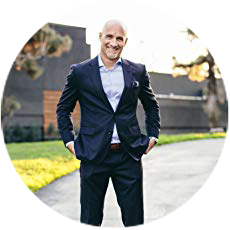
Stephen Franson
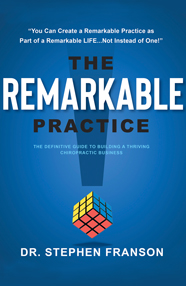
Dr. Stephen Franson is a chiropractor with more than twenty years of clinical experience and the founder of The Remarkable Practice, a coaching and consulting company that helps chiropractors build thriving practices as part of a remarkable life. He graduated from Life Chiropractic College in 1996 and opened Franson Family Chiropractic in 1997, which grew into one of the largest wellness clinics in the world. Named one of the Top 25 Most Influential Chiropractors in 2017, he is also co-founder of Chiro Match Makers. His book, The Remarkable Practice: The Definitive Guide to Building a Thriving Chiropractic Business, lays out his systems for the core functions of a chiropractic business: attraction, conversion, retention, and team building.
📚 Books by Stephen Franson
Transcript
[0:00:21] NVN: Dr. Stephen Franson’s new book, The Remarkable Practice is designed for healthcare providers who are feeling overwhelmed or fatigued from running a private practice. As Dr. Franson puts it, they may be starting to feel like their career has become a job and one that detracts from the passion that got them into the field in the first place. Dr. Franson understands this from the firsthand perspective of his experience with his own chiropractic practice, The Remarkable Practice. Through a series of systems that he outlines in this book, Dr. Franson demonstrates for private healthcare practitioners, how they can redefine success on their own terms, turn their practice into a scalable business, reignite their passion, reestablish their own wellbeing and find joy in the work once again. Dr. Franson, let’s start by telling me about your early experience as a chiropractor and how that ultimately led you to found Remarkable Practice?
[0:01:19] Stephen Franson: Love the question because it lets me go down memory lane with my favorite person in the world which is my beautiful, wonderful wife, Camila Franson who is actually Dr. Camila Franson. I met my wife in grad school, down in Atlanta when I was at Life University, studying to become a chiropractor. She and I went through school together. Four years of grad school together, and then did an internship together and did a residency if you will, an associateship down in Virginia, then opened our practice up in Boston Massachusetts. We’ve been together for 26 years and every minute of those 26 years, we’ve been passionate chiropractors working side by side. She and I started our business in Boston about 22 years ago, the original Remarkable Practice, and I would say that at that point, we were full of passion and big vision and ideas and plenty of energy. We knew we wanted to save the planet and we put a stake in the ground in little town of Beverly Massachusetts and just put our heads down and our bums up and started taking great care of patients and teaching them about chiropractic and teaching them the truth about their body and how their body really heals and how the body functions and their role in getting their health back and staying healthy. We just blew up. We just exploded. We started taking off. It turns out that people were really looking for a better way to better health for them and for their families and we provided that. Before you knew it, we were hopping and we were running a very ‘successful’ practice which at that point in time, our definition of success was, we were busy.
[0:02:53] NVN: Let’s dissect those quotes a little bit. You were busy, what else was happening for you at that time?
[0:03:02] Stephen Franson: Wellbeing a chiropractor in private practice and owning a practice is really, just like owning any other business. You know, what they say, people are people and business is business so you know, we were in the business of taking care of people. We’re doing it as a married couple. You know, take three very difficult dynamics and combine them all into one thing. I say ‘successful’ because yeah, we had really let somebody else define what success was for us which, you know, it meant, you’re really busy and you’re taking care of lots of people. It was sort of easy for us to fall into that space because we love the work, you know? We love taking care of patients. We love chiropractic. We were able to do it together. We hadn’t had children yet and she and I waited 12 years to have kids together. Now, we have a couple of beautiful kids. There was really no reason to leave the practice, you know? It made sense till - to stay till 8:30 at night and to show up on the weekends, you know, and do extra work and so we literally let the practice take over our lives. You know, everybody assumed we were so successful and we looked successful from the outside, you know, big practice, big house. Just a big life but at the same time, we were just smoked. We were just burning the candle at both ends and trying to snap it in the middle and light it there. Of course, you know, this would put a stress on us physically. We stopped working out the way we liked to. We started falling out of shape, you get exhausted. Of course it hits hard on the marriage and then you stop vacationing and next thing you know, it’s just still all the name of your ‘purpose’, right? So, your vision for what you're trying to do And then the rewards are there, you know, you’re getting financially rewarded. You’re getting all the accolades and the praise and the recognition, but at the end of the day, you find yourself trapped. I like to say, you know, you own a job instead of owning a business.
[0:04:46] NVN: You know, it’s interesting. I’ve heard a lot of doctors in all fields, talk about the irony of the fact that this is one of those professions where the goal here is to lead your patients toward a healthier lifestyle. But often, just because of the nature of the business, doctors themselves fall into a very unhealthy lifestyle, can you talk to me a little bit about that?
[0:05:10] Stephen Franson: Absolutely, I mean, you’re talking to the right guy about that. I’m a certified health nut and so is my wife. I mean, we were very much aware of the duplicity of, you know, teaching our patients one way to live and at the same time, the contradiction of us not sleeping the way we knew we should have been sleeping and rushing through our lunches and skipping workouts and, you know, just really was justifiable because there were patients in need, there was the – the business was growing, everything was booming. It’s easy to sort of procrastinate, the one-day happiness. It was just wildly incongruent, so we were out of alignment with what we were teaching our patients, you know? That of course leads to destruction.
[0:05:48] NVN: I’m curious if you had a moment where the two of you decided to redefine success in your own terms or if was sort of, more of an accumulation to understanding that something had to change?
[0:06:00] Stephen Franson: Yeah, absolutely. I mean, it’s a pivotal moment that I actually describe in the book. I can remember my pastor saying something once that really just struck me and that was, “Be very cautious how you define success because you’re going to spend a lifetime pursuing it.” I just sat there in that moment and that just really fell heavy on me and I just recognized that I had never stopped and really sat down with Camila, my wife, and say, you know, “What does success mean to us?” Really, have we ever said, “What does success look like to us, personally?” You know, as I began to study this and explore this concept like, what success means to you, what I found was, success should be the manifestation of your core values, right? Your core values are, what are the things that are most important to you? Your vision of success or what we call your vision story, should be the manifestation of your core values. And as my wife and I started to do the heavy lifting here and do the work, we recognized is –our vision for success, you know, we had adopted it. Somebody had yoked us with their vision of success aside of our own core values in the process.
[0:07:05] NVN: I love that definition of success. I don’t think I’ve ever heard it defined quite that way before.
[0:07:11] Stephen Franson: I mean, ultimately, success comes down to alignment of three things. Number one, it’s your core values which is what’s most important to you. That’s a very personal thing. This is an inside-out process. It’s an unearthing, right? Nobody can tell you what it is. You have to dig in and, if you share your life with somebody, if you’re married, you have a significant other, you got to do this together. It’s a good exercise to do it separately and then come together and have a complete drag out brawl to figure out exactly what the list is and in what order are the priorities – no, I’m just kidding. It’s a great thing to do with a glass of wine or three, you know? Come up with this list that says, “Okay, this is really what’s most important to us, really what’s most important to us. How do we invest our time, energy, focus and money,” that’s really a great way to kind of drill down and find out what your real core values are and make sure that it’s authentic. Then your vision story is – it’s a story. It’s like a manuscript of the movie called Your Success Story. You’ve got to be able to say shut your eyes. I want you to see what I see. Let me tell you what success looks like, and there has to be alignment between your core values and your vision story. The vision story has to be the expression of those core values and then the third piece is your behaviors. How you choose to invest, your time, energy, focus and money. Those three things have to be in alignment and that’s really the definition of success in our world.
[0:08:29] NVN: I’m curious, did you and your wife come up with your own markers of success separately and then come together? Or did you do it together?
[0:08:36] Stephen Franson: Well, we did the exercise together but separately if you will. You know, you go to that end of the table and I’ll go to this end of the table and, you know, I was toiling through mine and, you know, crumpling up papers and moving my list around and – you know, I came up with this list around achievements and significance and abundance, and, you know, just going through my list. This was on top of what we call the ‘Core Four’, right? The ‘Core Four’, I respectfully call the beauty pageant answers because these are the answers that everybody says if you ask them, “What are your core values,” and it’s faith, family, fun and fitness. For us, we agreed that that is our core four for our family. It’s our faith, it’s our fun, it’s our family and it’s our fitness, right? On top of that, I had another list going which was, you know, what I would consider the more achievement-oriented list which was true to my nature and she came back with a list that was essentially – read, “Peace of mind, peace of mind, peace of mind...” Those were her five. You know –
[0:09:36] NVN: That’s balance right there.
[0:09:37] Stephen Franson: Yeah, exactly, you know. I’m from Boston so sarcasm is my first language and I said, “So, piece of mind is important to you is what you're saying here?” What we did, we just sat down and what we recognized is, when I say, “freedom,” that to her, means, “peace of mind.” When I say, “abundance,” that to her translates to “peace of mind,” right? Everything that I was identifying as the pathway to peace of mind. We essentially wrestled it back and forth and we came down and landed with – our core values as a couple are freedom, peace of mind, abundance, significance and contribution.
[0:10:11] NVN: Once you two really defined that, how did things start to shift?
[0:10:16] Stephen Franson: It changed everything. Ultimately, you know, what we did was we scrutinized our practice and what we recognized was that we didn’t own a business, we owned a job. It was ironic because our motto was always, “We’re in the business of saving lives and when business is good, everybody wins.” The irony was is we didn’t own a business at all, we owned a job. The truth is, any entrepreneur or business owner will tell you, it’s actually the job owns you. The key to this is the difference between a job and a business is businesses are scalable, they’re durable and they’re transferrable.
[0:10:50] NVN: How did you make that shift then? How do you get your way back out of that?
[0:10:55] Stephen Franson: Well, I mean, you start looking around and you say, “Okay, I have a job and the job really has me which means that it’s not a business because businesses are scalable, right?” When you look around and you say, “Okay, is my practice scalable?” Scalability means that you can do more, give more, love more, serve more, add more value but it doesn’t have to all be done by you, right? You can leverage other people and systems, communication and technology, right? Instead of running your business on brute force, you can run your business on – using leverage. And then, durability means that you can give more, love more, serve more, do more, accomplish more and make a bigger impact and make a bigger income even in your absence, right? Even if you're not in the place of business, you’re going to continue to add value, which in the chiropractic space means that you bring on other professional chiropractors. You bring on other associate doctors on board. Even if you go home to be with your family for let’s say dinner time or take a day off or go on vacation or what have you, the practice doesn’t screech to a halt, right? You can continue to add value even in your absence. Then, transferability means that you’ve built it to sell it, right? You actually created a sellable asset. You’ve created something that another party could come in, a successor could come in, look around and say, “I see this place as a business. It has value. I’d be eager to buy it and I could take it over and build it.” Scalable durable and transferrable.
[0:12:16] NVN: Okay. So let’s expand our scope here a little bit and speak to some of the problems that are shared by chiropractors specifically and perhaps other private healthcare providers. How do I say that in the way that I should say it for this purposes?
[0:12:33] Stephen Franson: Yeah, I think you're spot on. You’re nailing it. Ultimately, anybody who owns a private practice, anybody who is really in the business of taking care of patients – we all experience the same joys and hardships for the same challenges, right? You know, ultimately, as I said, the busier you get, your reward is the busier you get. A lot of people say, “The harder I work, the more I have to work, the harder I have to work.” I’m sure a lot of people feel that way. We definitely feel that way when you own your own private practice and you know, that really does start to manifest and, you know, just creates a lot of problems for people. Like I said, they fall away, their health is at a fact or their marriage, or they don’t know their kids or they can’t go on vacation, et cetera. Really starts to manifest in ways that derail their life. Which of course competes with their ability to sustain a successful practice.
[0:13:24] NVN: It’s also – it strikes me as very sad just on a deeply human level when you’re passionate about what you’re doing and you believe in what you’re doing and the power of it and then you just sort of get worn down by the day-to-day practice of it.
[0:13:39] Stephen Franson: Yeah, I mean, you’re nailing it now because that’s literally what kept me up at night for years, once I figured it out, you know. So I’m like, “All right so now that we’ve nailed this, I got to share it, right?” I got to get it to other doctors. The premise of the work that we do is that it’s about having a remarkable practice, as part of a remarkable life, not instead of one. You know, so ultimately, there is two things that need to happen. You know, the doctor is going to look at their practice and they are going to turn that job into a business and they themselves have to go from being that owner-operator and turning themselves into a CEO.
[0:14:10] NVN: And in your experience, how difficult is that? What are some of the mindset shifts that you have to be able to make in making that transition?
[0:14:20] Stephen Franson: That’s the right question because you just combined two things there. The first part of it - taking a job and turning it into a business - that seems to be the easier part of this because most of us are like, “Give me a checklist. Give me a to-do list and I am going to knock that down.” I was like, “Okay, I got to do this and stop doing that and start doing that,” and, you know, that is the easier thing. It is almost like, “Give me more work to do.” It is a different type of work and we do get the work done. But it is the second part of that, which is making that identity shift from the owner-operator and shifting to the CEO, that’s really the tricky thing. You know, it is a slippery slope because you’ve experienced success as an owner-operator, right? So, it is the brute force model of like, “Just give it to me, I’ll do it.” You know? It’s like, by the time I train you to do it, I can do it myself and do it better, right? So the owner-operator operates just really on their own horse power. And of course that’s not scalable or not durable by definition. To mature or to make the ascension to a CEO they’ve really got to learn to take on the identity of a CEO and they’ve got to learn to look for leverage, and of course, leveraging other people and systems, processes and technology. You are always looking for leverage.
[0:15:28] NVN: Okay, so in the course of your own experience, you have identified four elements that should be present to create – it is what you call a remarkable system, in order to create a remarkable practice. Let us go ahead and share with listeners what those four things are and just a little bit of the logic behind them and why they’re important.
[0:15:50] Stephen Franson: Yeah, I think it is important to simplify everything, right? So always look at – any situation that is overwhelming, and just figure out a way to simplify it. So we have simplified the business of chiropractic and I am sure that this resonates with anybody in private practice, really in any business. Business comes down into four domains. It is attraction, conversion, retention and team building. So attraction is generating leads into your business. And conversion is of course sales. It is compelling people to take action and engage. And then retention, which is value delivery and creating greater value for your product or services so people staying consume it. And then team building. Team building is of course surrounding yourself with the world class team A players only and to be honest with you, the attraction, conversion, retention piece of it was my original content and for years, I was traveling the world teaching chiropractors about attraction, conversion, retention and the systems to run their practice. And that would get their interest initially but all of the side conversations ended up around their team. You know, I love what Topgrading says here is that 95% of our problems are people problems. That is definitely true in chiropractic and I am sure it is true in every other business, is ultimately, team building has become the most important work that we do. It is the most important domain out of the four in my opinion.
[0:17:09] NVN: So as you’ve begun to share this with other people in the field, have you run across any stories that really stand out to you about business owners who have been struggling and managed to turn things around and to create what does feel like a remarkable practice?
[0:17:25] Stephen Franson: Yeah, I mean I love to say that this is not theory. You know, we lived it out ourselves in our practice but you know, who cares what I think? What happens when you try to reproduce that somewhere else, right? And we have been teaching this to thousands of doctors now around the world and there is – daily we get the stories of the doctor who was just wildly overwhelmed and you know they have taken on the role of the owner. And even expanded their job into a business but they themselves have not made that big shift from owner-operator to CEO. So they find themselves in the middle of the lake I’d like to say. So they have left the shoreline, they swam in the middle of the lake and now they’re treading water trying to figure out what they do next. So you know our system, we call it the Rubrics Cube Transformation System. It really helps them get a handle on their business and their identity. And once you help them get on the other side of this, what we call the black box, but it is really a multicolored box if you’ve ever seen a rubrics cube. When they get on the other side of that, you know, and they have made that transition from job to business and from owner-operator to CEO, they can have that remarkable life.
[0:18:31] NVN: And how about you? How has you and your wife’s life changed since changing things around?
[0:18:36] Stephen Franson: We do truly live a remarkable life. We have a remarkable business now. We actually sold the original Remarkable Practice just last year, which was like giving up your first child for adoption, but our – after 21 years, it was just time because our consulting company had grown so much. But what was wonderful was we were able to sell our business, our practice, to one of our wonderful associate doctor couples and they took it over and just grew it, you know? So they have just been thriving with it and they are just the best people to take over our systems as they were trained up in our systems and shared our vision and core values and just kept the culture going and delivering excellent care. So now we are able to focus 100% on our next mission, which is to run The Remarkable Practice and now instead of caring for patients and helping them realize their potential, we work with chiropractors and help them realize theirs.
[0:19:29] NVN: You have successfully scaled and left a legacy in the process it sounds like.
[0:19:34] Stephen Franson: Absolutely.
[0:19:35] NVN: We love that. You know the thing that keeps running through my mind as you’re talking is obviously the focus here is on the practitioners but I have to think, as a patient myself, the patients somehow get a vibe from a place. So I am curious if you heard about the patient experience transforming in any way as you shifted from working a job to being the CEO of a business.
[0:20:05] Stephen Franson: Yeah there is no question about it and that is a great question. We use an expression, “Your practice is always a reflection of your energy.” You know, when your energy is up, your practice is up. When your energy is flat, your practice is flat. When your energy is down your practice is down. Everybody agrees with that and nobody can’t explain but they won’t deny it either. This is an energetic being. This is an energetic organism and I am sure that is true for all businesses. So, you know, energy really is everything and if you have a doctor or a business owner who is smoked, who is burnt out stressed out, resents the practice because when they are at the practice they are thinking about their family and when they’re with their family, they are thinking about their business. You know nobody wants to go to see that person, definitely not somebody to be their health coach or their chiropractor or their doctor. You know patients want to see somebody who’s successful and by successful, I am taking the air quotes off of that. I am saying somebody who is actually living out in alignment, their core values, their vision story and their behavior and they are enjoying great health, they are enjoying a remarkable life. They are healthy and happy and excited and passionate to be at the office doing their work. They’re not distracted, they’re present. They are not exhausted, they are excited and that is what happens when you create a remarkable practice.
[0:21:16] NVN: Amazing. I mean this is the true essence of the word transformation.
[0:21:22] Stephen Franson: We actually call it our transformation system.
[0:21:25] NVN: Okay, so for private practice owners who are listening to this right now and maybe still in that space where they feel a little bit overwhelmed, what is the one thing they can do immediately outside of picking up this book to start to take a step in the right direction?
[0:21:40] Stephen Franson: Yeah, I mean overwhelm seems to be like a chronic condition of any entrepreneur and definitely, you know, doctors and especially private practice owners, you know overwhelm – I like to say that chiropractors don’t starve, they drown. There is just so much particle movement and most of them are really in a survival mode every day and trying to survive every week and every month. Either they have the stress of lack or the stress of abundance but they’re still really chronically stressed. So one of the first things I recommend that they did is get their footing with their vision story and really take the time to define what success looks like to you and ask yourself like, “What Is that vision based on. Like why do I consider that success and really what does success look like to us?” Like I said if they are sharing their life with somebody to really do the heavy lifting to say, “What are our core values? What is most important to us and what does success look like to us based on those core values?” And sort of check yourself and say, “What is all the striving for?” Is the striving trying to achieve somebody else’s vision of success or is it truly something that is resonant with what’s most important to you, because once you do get in alignment and you get clarity around all of that, clarity is the greatest accelerator and you let go of the things that don’t serve you. You start saying yes to the right things and no to everything else and you will find that you have boundless energy because of the clarity of exactly what you’re trying to accomplish.
[0:23:05] NVN: You said earlier on this talk how you and your wife adopted your definition of success. I have never heard it put exactly that way before but that really struck me. I think a lot of us can do this without being even remotely aware of it.
[0:23:20] Stephen Franson: Yeah, I mean if nobody ever stops you and tells you that you actually have to sit down and do the heavy lifting of unearthing your core values and coming up with your own vision story of success, you know you are going to let media or Instagram or your best friends or your worst friends tell you what success looks like. I think George Carlin said something about that. It was like, “We work to make more money to buy stuff that we don’t want to impress people we don’t like.” It was something along those lines, sorry George if I butchered that for you. You are probably rolling on your grave right now but we all laughed when we said it because it is true, right? Great comedy is great comedy because it is the truth. You know, at the end of the day, it is such a blessing to really get clear about what is most important to you and those around you and just really stay focused on exactly what success looks like to you because even when you have that level of clarity, it’s going to be hard enough but at least you’re creating the remarkable life that you want.
[0:24:14] NVN: Excellent, well I, as we just discussed earlier on, certainly have nothing to do with the health care field but I feel there’s a lot to take away from what you have said for all of us. So thank you so much.
[0:24:26] Stephen Franson: People are people and business is business, right? So I am so glad we’re able to add some value and I am excited to get feedback. I’ve gotten so much great feedback from chiropractors reading this book, you know and outside of my circle of friends and family who are not chiropractors. I really look forward to hearing from the other business owners that read the book. I’d love to get the feedback.
[0:24:44] NVN: Absolutely and my last question for you, is there anything you haven’t touched on yet that you want to be sure listeners know?
[0:24:52] Stephen Franson: You know I think ultimately, to expand what you think is possible. Like have fun with it. We operate inside of these constructs that come with our definition of success and you know, I would encourage people – when it comes to creating your own vision story, have fun with it. Tap into some passion and just imagine that, as you write this vision story out or you journal it out, that you are creating the manuscript for the movie called Your Success Story and you get to be the hero in it. So the hero in that story is the next iteration of you. It is not you now, it is the next iteration of you. So the next iteration of you as a leader, as a business owner, as an entrepreneur, as a doctor. Maybe the next iteration of you as a husband or as a wife or as a mother or as a father. Start thinking about that next iteration of you and who you need to become to be the leader who could predictably attract and sustainably lead that vision story. That next iteration of your business and of your life. It is such a great exercise to ask yourself questions like what would the doctor I am trying to become, what would she say right now. Or even what would the husband I am trying to become, what would he do right now or what would the father I am trying to become, what would he say right now? And you know sort of slipping and checking yourself against your future best self as a leader is great because it creates this familiarity with this character out in front of you who has the attributes that you are trying to develop as a person and as a leader. And as you gain more familiarity with that person as a reference point, it is a gut check when you check yourself and your own behaviors, your own perspective or your own internal talk track and you say, “Is that how the leader then that I am trying to become - is that how he would behave right now?” Or, “Is that how the doctor I am trying to become - is that how she would behave right now?” So I hope that is a blessing to you guys because that’s been a tool that’s really helped just accelerate our success.
[0:26:41] NVN: I love that because it’s also a constant reminder of who you are truly accountable to, which is yourself at the end of the day.
[0:26:50] Stephen Franson: That’s right.
[0:26:50] NVN: Great. All right thank you so much for joining us today.
[0:26:55] Stephen Franson: Well it’s my pleasure. This has been fun.
[0:26:58] NVN: Thanks for joining us for this episode of Author Hour. You can find The Remarkable Practice, on Amazon. For more Author Hour, hit the subscribe button on your favorite podcast service. Thanks for joining us, we’ll see you next time. Same place, different author.
Want to Write Your Own Book?
Scribe has helped over 2,000 authors turn their expertise into published books.
Schedule a Free Consult