Grant Botma: Episode 383
Read the full transcript
Grant Botma
Grant Botma is a husband, father, and Arizona native who has worked in the personal finance industry since the age of fifteen. He took a stand against financial injustice by forming Stewardship, a group of companies serving his community with wisdom and love through home loans, insurance, and investments. Included twice on the Inc. 5000 list of America’s fastest growing companies, Stewardship’s success stems from Grant’s personal philosophy of harmonizing work and family life. He is a business owner, bestselling author, keynote speaker, and family man who is on a mission to “love others.”
📚 Books by Grant Botma
Transcript
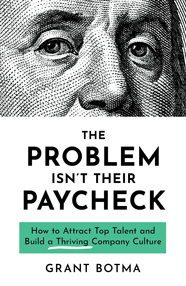
[0:00:28] NVN: In this episode of Author Hour, Grant Botma, the author of The Problem Isn’t Their Paycheck, explains how he learned the hard way that all of the things he learned about business management weren’t exactly true. It was only when he reached a crisis point in his company, Stewardship, that Grant decided to become what he calls a “behavioral scientist” and to write his business and its culture that way. It worked. Today, Grant employs a team of literally award-winning employees, some of whom have earned top 1% national performance ratings, and his business was ranked as an Inc. 5000 fastest growing business in America. But most of all, Grant has cultivated a culture in which his employees are happy and engaged. In this episode, Grant explains how he did that and shares not only what every business owner should know but also, what every job seeker should know to look for. Grant, thank you for joining us today.
[0:01:25] Grant Botma: Yeah, happy to be here, honored to be here, thank you for having me.
[0:01:28] NVN: Of course. How does it feel to be an author?
[0:01:32] Grant Botma: Man, if I’m honest with you, it’s a little bit weird, you know? I’m that kid who grew up on the farm kicking cow patties for fun, so I wasn’t the most intelligent guy around, you know? I just never thought I would put some of this stuff into words, it’s been a fun journey and I’m excited about the impact that this book can have.
[0:01:51] NVN: So, what got you here if you didn’t think of yourself as someone who would write a book? What changed that made you feel like this was the path for you?
[0:02:00] Grant Botma: You know, I think it was probably two things. The first is the start of my own business, right? I kind of got passionate about a particular need that I found in my community and that was, I felt like people weren’t equipped with their finances. I felt like people didn’t know exactly how to go about getting insurance or a mortgage or managing their investments on their own and most of the sales folks that were out there that were trying to help some of these people didn’t necessarily have the customer’s interest in mind. I said “Man, I want to start a place where that’s happening, all the time no matter what.” You know, not that I’m like a knight in shining armor on a white horse and the only company doing that, right? But I wanted there to be a place in my community that would do that and do that well. Sure enough, we were filling customer’s needs with just genuine service and love and as a result, our business did well, that was a start, right? I had a business and we were going well and going in the right direction. As part of that, the community decided that they wanted to work with us and a lot of people in our community wanted to work with us. I had to get a team and had to get people to do it with me in scale. There was a moment, some things that had happened but definitely a moment, when one of my best employees quit and it hurt. I depended on him for a lot, he was very good at what he did and it created this situation where we were already kind of at max capacity and probably couldn’t do a whole lot more business and then he left. I was like, “Man, now I’ve got to do even more,” and it was rough. I was sleeping at the office trying to do everything I could to keep up with everything and it made me evaluate like, “Man, I’ve got to do things different.” That was that kind of moment.
[0:03:45] NVN: Yeah, I mean, that has to be a crazy experience when it kind of feels like your own creation turns on you a little bit. No one wants to be sleeping at the office no matter how invested you are in your business. I would imagine, maybe there’s 1%.
[0:04:01] Grant Botma: Yeah, I mean, look, there are seasons where all of us in our business – you’re going to have busy times, right? There are times when you have to grind and that’s fine and sure, there are times when it’s maybe normal in a season to sleep at the office for some and that’s okay. But the reality is, all of us as business owners set out to make as big of an impact on our community as possible, to do as much business as possible. But then, when that happens, some of us aren’t really ready for it and I sure wasn’t. Especially after I realized that I wasn’t doing some things internally with my culture. I was doing things with the way I was managing and leading my team that made them not want to stick around, that made them not want to be a part of my company. Yeah, it was rough.
[0:04:43] NVN: I want to talk specifically about what those things were that you realized but what I’m also curious about is how did you realize these things? Did people finally start telling you or are you open-minded and had this dawn of awareness, how did you come to realize this?
[0:05:01] Grant Botma: Well, I think the first response that I had was kind of frustration and irritation because I went to a college, and I actually double majored, I majored in Christian ministries but also business administration. I had gotten all the classical management education about how to manage people and manage employees, I basically followed all the books to a T, whenever I had these employees. So, my first kind of reaction was irritation. I came to discover this new way of managing people by saying, “You know what? This didn’t work. This is terrible. I’m done, I’m not doing what these management books say. I want to figure out a different way.” I kind of did it with some arrogance and pride, thinking “Man, there’s got to be a better way of doing this and there’s enough information out there that I can figure it out.” I dove in headfirst both feet. Man, I just decided that I was going to become a behavioral scientist, I was going to become a social scientist. I was genuinely going to find out why people make some of the biggest decisions of their life, what really motivates people, and then I was going to take that science and then weave it into my culture and how I managed people.
[0:06:10] NVN: Wow, I love that. I sort of feel like when you’re doing something like that, the only way to go for it is just to dive in and really go for it. You can’t test out the waters necessarily.
[0:06:23] Grant Botma: Yeah, you know, when I say that, it could almost sound like “Wow, this guy is super arrogant,” but at the same time like remember, I had to come to this place because of the mistakes that I had made first, right? I got some growth in my business which was great but I made mistakes in the way that I was managing people and it didn’t work out and I had to discover and find a new way. I had to really humble myself and say “Grant, you messed up, you did it wrong, let’s figure out a better way.”
[0:06:47] NVN: Let’s talk about what some of those mistakes were because since you were trained in this, I’m assuming they are mistakes that a lot of people could be inadvertently making?
[0:06:57] Grant Botma: Yes, that is a great point and there are actually statistics out there that prove that. Deloit, who is one of the big four accounting firms, they do all kinds of different studies, they did an exhaustive study that kind of took into consideration a lot of different job titles and job descriptions, all the way from part time assistant stuff, to C-suite, you know, high end people. What they discovered was this unbelievably alarming statistic. That 88%, essentially 88%, 87.3% of employees are not giving their best at work. That’s like nine in 10 people aren’t giving their best at work. That was just like wow, you know? It let me know that man, not only maybe was I struggling with this, but so many other business owners, so many other managers and leaders are also struggling with this.
[0:07:52] NVN: Yeah, that’s a pretty dire statistic, right there.
[0:07:56] Grant Botma: Yeah, here’s my hope too, this is really the motivation behind writing the book. My hope is that the framework that I discovered, the framework that has worked for me, can be adopted by other people, and that statistic can be turned around, you know? I’m not naïve enough to think that the gap can be completely closed and 100% of employees will give their best at work but maybe we can make a dent in it, you know? Maybe people who read this book can one at a time create cultures that are thriving, rather than dying.
[0:08:24] NVN: That also strikes me is one of those things that’s self-perpetuating also, we spend so much time at work, these are some of our primary relationships, even if we don’t think of it that way. I think that as some people start to become happier at work, I would imagine there’s a trickle-down effect to that, that’s sort of contagious throughout the company.
[0:08:45] Grant Botma: Yes, for sure. That’s really kind of the main point of the book. The bottom line is this, that people want to do work that matters, right? People want to have a job that’s making a positive impact. But too often, business owners, managers and leaders, they are saying that the best way to motivate people is with money and that’s all that we focus on. “I need my team to meet a certain goal, well I’ll pay them a little bit more.” Or, “I want to attract the top talent, I’m going to make sure that my compensation package is the highest level.” Or, that “My team isn’t doing a thing that I want them to do, okay, then I’ll take away some of their pay,” or whatever that is. Money is what’s typically used as the primary motivation tool. Now, money’s important, right? That’s a big deal but what I’m trying to communicate in this book is that it’s not the number one thing. The number one thing that’s got to be there is a purpose. It’s not just a purpose, it’s a unified purpose. Like you said, there’s a trickledown effect, there’s something that can unify the team together, so that when they come into the office, they not only know that they’re doing work that matters but they’re doing it in community with other people. When that happens, extremely powerful stuff takes place.
[0:10:01] NVN: Let me ask you this. Since you did not build your business, at least overtly on purpose. How did you go about establishing that as an existing business? It seems to me like that would be an easier thing from the get-go than it would to infuse purpose after you’re already up and running? Is that accurate?
[0:10:22] Grant Botma: Yeah, that’s totally accurate. The reality is all business owners, they do have some purpose when they’re starting, and I sure did too. That was part of my frustration when that employee left. He left because he wanted to pursue a greater purpose somewhere else. He was getting paid really well, had a lot of freedom, was being affirmed as well, did good, I mean, he’s really good at his job but he decided to quit and pursue a purpose somewhere else and it basically a different country to fight this kind of bad thing that was happening in the society. It was a very fruitful and honorable endeavor that he decided to go do but the heart of that decision, to have to come down to, he felt like what he was doing didn’t matter. He felt like working in the financial sector didn’t have as big of an impact on the world. That frustrated me because I did believe that. Remember, I started the business to genuinely fill this need that I found in my community. The problem was, I was internalizing that purpose. I didn’t communicate it to the team. I didn’t permeate it throughout every part of the culture. I didn’t create goals around the purpose. I didn’t have accountability with the purpose. I didn’t make this purpose a unifying thing that was for everybody. It was just me internally.
[0:11:36] NVN: How did you begin to translate that purpose outward?
[0:11:39] Grant Botma: Yeah, the first thing was to identify what the purpose was for me, right? Then once I did that, I had to begin to make it simple. I think that a lot of times, you know, we might not even have people listening to this thinking like yeah, Grant, I already have a mission statement, yeah, you know? This is different than that, it’s not a mission statement or you and the rest of the owners or the management team, lock yourself in a cabin for a couple of days and you know, think about like this grandiose statement that’s going to have $30 words in it and sound really neat. That’s not what this is. This is something that has to be extremely simple, have an emotionally charged word that makes the world a better place, that requires a sacrifice, and that unifies people and for my company, that statement, creating that, making it simple, just came down to this: “We love people through finances.” That’s it. Now, that sounds really weird, and that sounds weird on purpose because love and finances typically don’t happen in the same sentence. There is some emotion that’s charged there and almost anyone can agree with that statement. But here’s the cool part, if you want to love someone well, you have to put their needs before your own, because that means it requires a sacrifice, and when you sacrifice together with other people on your team, it unifies, you know? It started with creating that statement, something simple, something clear, this is what I walk people through in the book, how to create one of these statements. It starts with creating that statement and then, you have to, like I said, permeate that through every area of the culture, it has to be repeated in anything and everything that you’re doing internally.
[0:13:14] NVN: The most intriguing part of all of this to me is this idea that the sacrifice part of it is inherent. Talk to me about the relationship between sacrifice and unification.
[0:13:28] Grant Botma: Yeah, all of us internally have a desire to want to make a positive impact on other people. Here’s the thing, there are times where money is important and is a motivator to somebody because they want to be able to provide for their family, right? Well that’s actually just a purpose, you know? Money is leading to the purpose, or money is important because they want to give to a particular philanthropic endeavor, right? Again, money is leading to that purpose. The sacrifice to actually even work to earn that money, to meet that purpose is something all of us are doing already anyways. The reality is, if we were selfish, we would never even show up to work. We would just sit around in our house on our own, but we show up because we know people are depending on us. Starting with our family, right? Starting with our spouse, or our children, or the other family members that we’re providing for, but also, and hopefully, this is what the book will help people do but the community is depending on you because your business is genuinely making an impact on somebody somewhere, right? If you have a purpose and you connect that to all your team members, they come into work knowing that they’re doing something that matters. That they’re making an impact on somebody else and the best way of doing that is putting their needs ahead of your own. Here’s the reality. You can’t have a business unless you’re genuinely going to serve other people. The heart of every business is finding a need and filling it. The best way to fill a need is to do it with service and sacrifice, bottom line.
[0:15:11] NVN: You know, the whole time you’ve been talking, I’ve been having this flashback. When I was working at my first real job, I was young, I was in my 20s and I remember being thrown into this existential crisis where it was almost like my mortality set in on me because of the job and I started realizing, “My god, I am in this cubicle under these fluorescent lights in this skyscraper and this is how I’m spending my life.” It really sent me into a tailspin and if I stop and connect the dots, with the benefit of hindsight, you’re exactly right, the crisis was rooted in a sense of purpose, or lacking purpose and just feeling like I was sort of existing in this trap where I was losing time.
[0:16:04] Grant Botma: Yeah, you know what, here’s the thing, this is kind of weird to probably, obviously we didn’t script this but I’m going to turn the interview around to you and start asking you some questions. When you were in that situation in that cubicle, and this is going to lead to two other things that I talk about in the book. Just to kind of backtrack here. Money’s important, right? But it’s only the fourth most motivating thing, statistically. To behavioral science and the social science studies, it’s the fourth most motivating thing. A unified purpose is one, but there are two other things that are even more important than money. Now again, when you are in that cubicle, right? When you are there, yes, not having that purpose and just kind of coming to that realization like, “My gosh, has life come to this, right? Is this what life is about?” that kind of purpose question that you were asking yourself. There are two other things that probably hurt or maybe even led to you asking that question. That had to do with freedom and affirmation. All of us as human beings are wired for autonomy. You probably felt like your autonomy and your freedom maybe was even taken from you in that job, am I right?
[0:17:14] NVN: I went freelance after that for 10 years. Yes, you are.
[0:17:17] Grant Botma: Yeah, there you go. All of us inherently are designed and created to have some autonomy, we desire it on some level, some way, shape, or form. Another way that we as business owners, managers, and leaders is at the very least, we have to create a sense of autonomy for our employees. If not genuinely give them freedom. I mean, when you’re at that cubicle, you have no way, shape or form to be able to take a personal call on your cellphone there. You are trapped, you feel enslaved, and slavery does not work at all in any way, shape, or form. You have to do certain things within your management or leadership structure to make people feel like there is some freedom there in some way. And then the other part like I said, affirmation, I don’t know how long you stayed in that cubicle job but my guess is, you probably would have stuck around a little bit longer if somebody was saying, “That a girl, you’re doing great” or “Hey, did you know that you are actually good at this job? You are becoming a master of this craft, here’s this award.” Or even more importantly told a loved one, a spouse, one of your kids, your nieces and nephews, one of your friends, “Hey, did you know Nikki is really good at her job?” You know? And having some sort of affirmation likely would have prolonged your employment or the retention at that place of employment.
[0:18:46] NVN: You know what’s really interesting, not to turn this into my own professional counseling session, but you are hitting the nail on the head and actually, interestingly, I received that affirmation about 12 years after the fact and it meant so much to me. So, I was in my 20’s at that point, I was in my 40’s when I heard that, and it landed really hard. It actually made me tear up a little bit not to be dramatic but, you’re right. It is almost on some level I had been waiting for that. I agree with you if it had come less – if it had come in the shorter term, that probably would have changed a lot of things.
[0:19:27] Grant Botma: Yeah and look, tearing up is okay. Having emotions are good, if you can get emotionally charged employees that is great. That is how you get people to actually work with passion. I think there is this lie on there that you have to find work that you are passionate about. Look, I am just going to be real, the company that I run is called Stewardship, right? We do home loans, insurance, and investments. I am not passionate about mortgages and I don’t really want to hang out with the guy that is, right? I am not passionate about that. That’s really boring and weird but I am passionate about helping other people and when you do a mortgage right, when you love somebody well through those finances, that makes an impact on them.
[0:20:05] NVN: Yeah.
[0:20:06] Grant Botma: And as I am saying that, if that doesn’t draw out some sort of emotion from you, it sure as heck draws emotion out of me and my team. That is why we come here every day with that purpose and that leads to the passion. It is not the job that you have to find that you get passionate about. It is the purpose that you find that you can connect with and then passion comes after.
[0:20:28] NVN: Yeah, I am with you. All of this stuff feels very resonant. I don’t think I could have articulated it like you just did but, obviously, I can apply that to my own life very easily and I think that my experience is certainly not uncommon.
[0:20:42] Grant Botma: Oh no, not at all and here is the truth especially for a lot of small business owners. Managers and leaders as a whole, what we really want is self-directed employees. We really want a team of people that are going to be able to handle the day to day stuff, that we can trust to handle the day to day stuff, and hopefully even execute it better than the manager or leader themselves, right? But the hard thing is, most employees are not giving our best at work because we are not providing for them a culture to thrive in. This book really teaches you some of the secrets to stop working in your business and actually start working on your business. That is what I had to do. My employee left and I was forced to dive in head-first, both feet, just jump into this and really learn about the motivational hierarchy that is wired innate within all of us and then I had to start applying it. So, this book walks people through that motivational hierarchy. Understanding that yes, your money is important but there is three other things, freedom, affirmation and the unified purpose are much more important and you start managing people in that way. You are going to get much different results.
[0:21:47] NVN: I am curious about this idea of freedom in the workplace. What does that look like in practice?
[0:21:53] Grant Botma: Yeah that is a really great question and, honestly, when I am speaking at conferences or whatever else, this is the number one question that I get, and the answer to that is, it depends upon your culture and it depends upon your business. For me and my business because so much of what we are doing is not like a retail location at a mall where we have open hours from nine to five or whatever and there is a cash register, we have so much freedom at this place of employment, that everyone on my team can basically come and go as they please, right? It starts with just their schedule, that they can literally come and go as they please as long as everyone in the team is pursuing the purpose well. Everybody on my team has these gigantic 50-inch monitors on their desks and that is so that we can be extremely productive but it is also something that allows them to do things like watch Netflix when they work or get on social media when they want. Everybody on my team has the ability to take personal calls on their cellphone and text people whenever they want, you know? Those are certain freedoms that they have but you know again that doesn’t work for everybody. I am not saying that is exactly what you have to do, but at the very least you have to create some sense of freedom for somebody. Give and create a teamwork mentality. Like let’s say it is a coffee shop, right? And you know you have to – most people would say, “Hey, these are when you are going to be taking your breaks and these are when you’re going to be taking your lunches.” Well, what happened if you actually trusted the employee and that employee was pursuing the purpose of the coffee shop of say, serving people well in the community with coffee, and they knew if they wanted to serve people well they had to be right there at that cash register, or right behind the espresso machine during the busy times. But then they also were self-directed enough to know when they can and can’t take breaks and you gave them the freedom to take breaks whenever they wanted. You know it is those types of little things that are super helpful and the rebuttal that most people have is like, “Well Grant, I can’t trust my team to do that.” Well, that’s a you problem. If you have hired people you can’t trust, you probably either one, you need to start trusting them because trust isn’t earned. It’s given. Or two, you need to hire people that you can trust and when you do hire people, create for them an opportunity to prove that they are trustworthy. Again, we want self-directed employees. I don’t want my team sitting around waiting for me to tell them exactly what to do, when to take a break, when to use the restroom, when to take a lunch, when to complete this task. I give them the purpose and then I create for them the tools and everything that they need to pursue that purpose and they become a master of that craft and I affirm them as they’re pursuing it.
[0:24:42] NVN: For business owners who maybe having these concerns, let us look at his anecdotally. So, your employees have these Netflix screens, what is your experience with being in an environment where employees can Netflix and chill for a little bit at work if they want or talk on their cellphones. What does that end up looking like?
[0:25:04] Grant Botma: Well there is two things, the first is we have to understand how the human brain works and the 40 hour work week was created by an individual who knew that his machinery worked best if it was being worked 40 hours a week. So, the 40-hour work week is not created with the human brain in mind, that is the first thing that we have to understand, right? And the second thing is this, when you give people freedom and a sense of freedom, they are productive. My team quite literally is the best in the country at what they do. We recently won an Inc. 5000 fastest growing company in America award. My team, some of my advisers that are on my team literally win awards like top 1% in the country, top 20. They win Elite Producer Awards, Pinnacle Producer Awards, like I have an award-winning team. They’re really, really good at what they do and a lot of that has to do with some of the freedom that they are provided.
[0:26:00] NVN: Yeah, I mean again it makes sense if I think about myself. I would just love knowing that I could do those things if I so chose. I can’t really imagine myself actually – sorry to get stuck on Netflix – but I never heard anyone say that before, which is why I am stuck on it but I can’t imagine myself actually deciding, “Oh I am just going to binge a little bit while I am here” but I would love knowing that I could.
[0:26:23] Grant Botma: Yeah. Look, I don’t know what my employees are going through emotionally every day. I am never going to know. I don’t know if they had an absolutely amazing weekend and they are already charged up on Monday to attack it and go like crazy. But I also don’t know if they had a terrible weekend, if one of their kids did something that is causing some internal strife and emotion that they’re struggling with, and they do need to disconnect a little bit better. I don’t know what they are going with, but everybody comes into the office every day with some sort of baggage and sometimes it is a bowling bowl and sometimes it is a feather, right? And the goal is you create a culture and a team of people that are willing to pursue this purpose together. So that when somebody is coming in with a bowling bowl, the other teammates that have the feather can step it up. Here’s the thing too, when it comes to freedom, you can’t just say, “Oh yeah I am going to give freedom and allow people to watch Netflix and that is going to cure my culture.” No, no, no, like none of this works without the unified purpose, all right? I mean, if you don’t have that unified purpose it doesn’t work and here is how. Again, that purpose, like I said at the beginning of this, that points to everything. So, when you keep people accountable, you keep them accountable with the unified purpose as well. If they start watching Netflix way too much and they aren’t loving people through finances, that is the unified purpose her at Stewardship, the conversations goes like this: “Hey, I have noticed that this person that person and the other person didn’t get loved well through finances, what is going on?” Right? That is the conversation. The conversation isn’t like, “Hey, you are watching too much Netflix.” It all has to do with the purpose everything is pointed to them.
[0:27:54] NVN: Okay, so with that in mind, a few minutes ago you are also talking about these discussions you have with people and hiring. I am curious, as you started to make the shift towards purpose, did you find that there was a natural rate of turnover for you because you had been looking for different things when you initially hired people and now there was this new focus on purpose.
[0:28:17] Grant Botma: Yeah, I was really fortunate, and when I was working with all of this stuff out the staff was extremely small. It was basically three, I think a total of four when you counted the part time people of us, and that is why it hurts so much when that one employee left because it was 25% of my workforce, right? Now we are at a place where we’re much larger than that but there was next to no turnover as a result because we were so small, and we are already so connected in some of the things that we are doing. But I can tell you this that because of the purpose that we have, because of the freedom that I give and because of the affirmation that I give and especially I do it publicly, on social media and everywhere else, there is two things that have happened that I didn’t necessarily expect. One is, my team is extremely prideful about the fact that they work at Stewardship. When people ask them, say at like a birthday party, or an outing, or a get together, or whatever. “Hey, what do you do for work?” they get some air in their chest, with chin in the air and nose in the air and say, “I work for Stewardship” and they say that with pride. But the second thing that happened that I didn’t really expect is that we are now known as a place in our community as an awesome place to work. Nikki, I literally have a list of over 100 people that would love to come work for me like they want to work here and many of these people, almost all of them, if they come to work here they’d be taking a pay cut. Everyone on my team Nikki, they get paid less than if they were going to do the exact same thing somewhere else and all of them know that. If they were to do the exact same thing somewhere else, they will get paid more. They know that. They know that they are underpaid here but they all stay because of the purpose that we are on. They all stay because of the freedom that they have. They all stay because of the affirmation and that speaks to how amazing these individuals on my team are and they are so many other people that want to be a part of that.
[0:30:17] NVN: Yeah, this is fascinating to me. So let’s talk about – you have already mentioned some of the things you’ve seen happen since then, beginning with the award-winning team members, top one percent, but from a more environmental standpoint, how has your business changed since you have made these changes and shifted direction?
[0:30:41] Grant Botma: Well I am not sleeping at the office anymore.
[0:30:45] NVN: Always good.
[0:30:46] Grant Botma: Yeah, so this year my assistant actually just recently counted it up. So, we are not fully through the year yet, but through 10 months of the year, I have been away from the office a total of 67 days, not counting weekends. So, weekends on top of that it would be more than 67 days, but I have been away from the office 67 days, yet this year is our most productive year we have ever had. So, the culture that we have here in the office is allowing me to bring value to the company where value is needed most. For me to work on my entrepreneurial spirit, the vision and these big picture ideas and I am stuck in the day to day tasks and things. I have a team of people who are not only trusted but they are masters at this craft, and they are awesome at it and they are pursuing it with the purpose, and they do it better than I ever did. So much so that a lot of managers or small business owners they don’t feel like they can leave the office because they’re tied to their cellphone. Or when they do, they are scared that their employees won’t perform as well. Man, this is kind of a funny story. I was in Hawaii on vacation and while I was there, my team broke records. I am out of the office and they’re literally breaking performance records when I am gone. So, I’m like, “Ah I guess I should go on vacation more,” you know? So practically speaking, from a business owner’s perspective, especially a small business owner, they feel that. They know exactly what I am talking about and they might be sitting back in their chair thinking about that story imagining themselves like, “Geez, I’d love to have that too.” It didn’t come without trying to learn it and figure it out. Remember I made a ton of mistakes in the beginning but yeah, that is some of the realities that you can live in when you have a healthy culture.
[0:32:26] NVN: And how long has it been since you have been doing business this way? When was your “sleeping in the office” episode, how long ago was that?
[0:32:33] Grant Botma: You know I think it’s been a process for sure. It’s been several years. I didn’t do a whole bunch of studying in one night and then the next day do it all, right? You know I studied, and I learned, exactly right? There was no Eureka. It took time and it took time for me to figure out how to implement, figure out mistakes that I was making as I was implementing, trying to make additional iterations and adjustments to it. I think the total journey has been over a decade of me doing this but where I really felt like I’ve gotten into a rhythm with it was over six years ago. So, it was definitely a three to four year period of really diving in and testing it and trying to do the best that I could with it but the big rhythm I think that we’ve hit was after really testing it for a period of three to four years. So, a total of six years with that, but definitely a decade worth of trying.
[0:33:26] NVN: Yeah, okay and then my last question for you. I find this interesting about the book, it is geared actually towards two audiences. So, to business owners who want to infuse this in their own culture and also for people who are seeking out great employment. Talk to me about that second sector and why you are also writing to them.
[0:33:47] Grant Botma: Yeah, I mean if you are listening to this podcast and you are not a business owner, I guarantee you’ve thought to yourself, “Man I love to work for somebody who is doing that,” right? And the reality is there is a lot of great businesses out there that are doing some of this stuff that I have talked about. I am not the first one like none of this is my new novel idea. Remember, I was doing research from everywhere else, right? I just put together a whole bunch of different studies and different things and put it into my business. So, there are other businesses that are doing stuff like this. So, if you want something like this, you can read my book to help you articulate what you would like in the next employment. Another statistic that is out there, over 50% of people are currently looking for a new job because they don’t feel fulfilled in their current job. So, one in two people are currently actively at least thinking about getting a new job and if they read this book, it will help them identify the opportunities that are out there if it is one that would be worth taking advantage of. Do they offer me freedom? What type of affirmation do they give to their team and do they have a purpose and is it something that is unified together with a bunch of people that as a community of people we can do well?
[0:35:06] NVN: That strikes me as a huge service because as I just learned in a course of this conversation with you, all of these qualities that you named were deeply resonant with me but I don’t know if I could have articulated them that plainly until you put words to that. Then it is like, “Oh yeah that is exactly what I was lacking and what I wanted.”
[0:35:29] Grant Botma: Yeah and I think that’s the beauty of things like books, right? You can read with them and you can resonate with them and it gives you the words to repeat back to yourself to try and act on, or to try to implement but also, it gives you the words to what you are seeking and what you are looking for in the future. Books are a beautiful thing.
[0:35:50] NVN: A perfect way to end. I never have people actually talk about books on this podcast. That just delighted me, thank you.
[0:35:57] Grant Botma: Yeah.
[0:36:00] NVN: Thanks for joining us for this episode of Author Hour. You can find The Problem isn’t Their Paycheck, on Amazon. For more Author Hour, hit the subscribe button on your favorite podcast service. Thanks for joining us, we’ll see you next time. Same place, different author.
Want to Write Your Own Book?
Scribe has helped over 2,000 authors turn their expertise into published books.
Schedule a Free Consult