Valerie Rein: Episode 388
Read the full transcript
Valerie Rein
Valerie Rein
Dr. Valerie Rein is a psychologist, women's mental health expert, and business consultant, helping people achieve the best ROI by achieving the best mental health--without therapy. Dr. Rein specializes in uncovering the hidden traumas that hold hostage people's best work, relationships, and well-being, and effectively heal them with a powerful mind-body methodology. She holds an EdM in Psychological Counseling from Columbia University and a PhD from the Institute of Transpersonal Psychology. Dr. Rein is a sought-after speaker at conferences and companies committed to diversity and inclusion, leadership development, and unlocking people's potential.📚 Books by Valerie Rein
Transcript
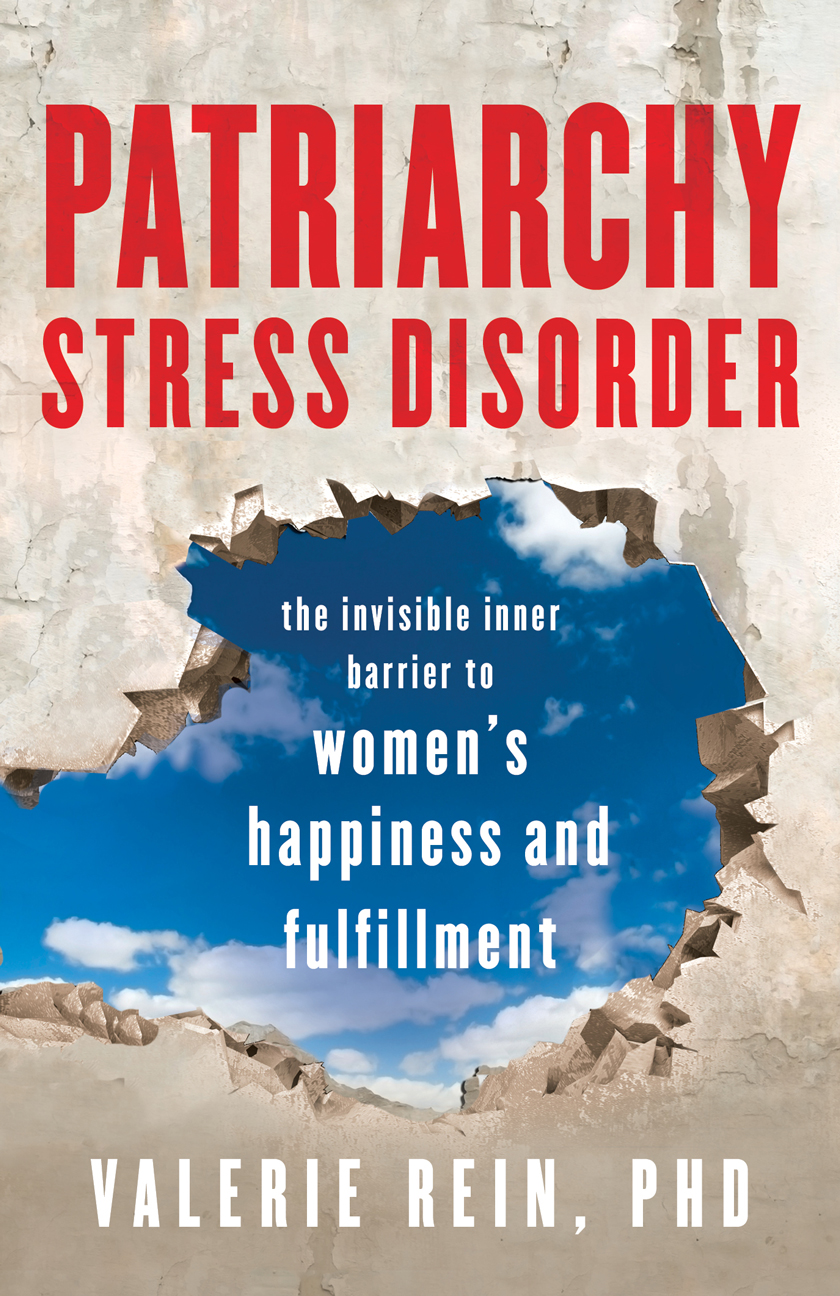
[0:00:19] NVN: In the course of her therapeutic practice, psychologist and women’s mental health expert, Dr. Valerie Rein, discovered that all of the women who are coming to see her share the same root issue – a sense of disconnection. Disconnection is a hallmark of trauma and as time went on and our understanding of epigenetics increased. Dr. Valerie came to realize that women today are suffering from a shared inherited trauma. In this episode of author hour, Dr. Valerie discusses the inherited trauma we all share, how it impacts us and a vision for how much better, happier and less stressful our lives can be when we use the mind/body tools included in her new book, Patriarchy Stress Disorder, to begin to heal. Dr. Valerie, let’s start by giving listeners an idea about your background?
[0:01:11] Valerie Rein: Sure, what would you like to know, Nikki?
[0:01:13] NVN: Let’s talk about your background as it led you to this book? I’m assuming that there were some personal experiences that sort of led you to the things you’ve come to write about in terms of patriarchy and women’s relationship to it?
[0:01:28] Valerie Rein: Year. Well, I was living my dream life. Until one day, I ended up in the emergency room with symptoms of a stroke. That experience sort of tore through the security blanket of perfection, of workaholism, of stress and that coincidentally was my diagnosis, it wasn’t a stroke thankfully, it was just stress. That diagnosis really puzzled me because I didn’t feel stressed. I had two graduate degrees in psychology, I had a thriving practice, I had a family and home II adored. I was living a really good life. But once that episode to work through that façade, what I started realizing and was really uncomfortable realizing that, that I wasn’t as happy and fulfilled as I would look on paper. That put me on the journey of finding out, well, “How come my clients were stepping into the fullness of their lives and I was feeling stuck?” I was feeling numb. I wasn’t feeling much of anything. I wasn’t feeling happy, I wasn’t feeling unhappy, I wasn’t even feeling stressed. I realized that with all of my clients, I was helping them heal trauma. I was using mind, body trauma healing tools, even if they didn’t recall any traumatic experiences. The reason I was doing that was because all of them were showing the telltale symptom of trauma which is disconnection from parts of themselves. That ER experience certainly brought my own disconnection for me and there was nowhere else to look but within. And so, I started to get really curious about, “What kind of trauma could we possibly all have without realizing it?” At the time, new research was coming out and it was showing that traumatic experiences are genetically transmitted. That was my lightbulb moment. For millennia, women have been oppressed. Oppression is traumatic. And I termed my discovery of this collective, inherited trauma, patriarchy stress disorder.
[0:03:57] NVN: Wow. There are so many stunning things about that. Beginning with the fact that I think happily were coming into an era where most of us understand how bad stress really is and the trickledown effect it can have on all aspects of our lives. But the fact that stress could in any way be confused with a stroke is, it’s just scary
[0:04:24] Valerie Rein: Yeah, even by very conservative statistics, 95% of all health conditions are stress related.
[0:04:32] NVN: Wow.
[0:04:32] Valerie Rein: They’re probably all stress related, right? If we’re completely clear. But that’s the official statistics and to know that women, this inherited trauma is a constant source of stress that’s running our nervous system’s hot, hot, hot, hot, hot. Because in essence, what this is, is that trauma makes us feel unsafe, trauma is any experience. Physical or emotional that made us feel unsafe and then it creates trauma adaptations to keep us safe. Stress is a trauma adaptation. For us to be going to massages and spas and vacations, that’s all nice. It’s really nice, I enjoy those very much but that doesn’t heal the core issue that is driving our stress levels through the roof. What we also know about women is that high achieving women, there’s a pandemic of burnout among high achieving women and it’s just so painful to see this statistic that women are diagnosed with specific stress related conditions at the rate at least twice that of men and some cases, 90%. With some autoimmune conditions that are stress related, of course.
[0:05:49] NVN: My friends and I, my women friends and I have this discussion a lot about how in many ways, we’re so lucky to be living in the era that we are because we have options that the women before us didn’t have and that’s amazing. However, I think as we’ve gotten older, we’ve come to realize that we were sort of raised to believe this was kind of the end of the road in a way. Like that was the battle that women could choose to go to work or stay at home, whatever the case may be. But more and more, it seems like what we’re actually in is a transition. Because what that seems to equate for most women in society today is you have to do it all. And this feeling, because you’re doing it all, you’re not doing anything right or well.
[0:06:37] Valerie Rein: Yeah, that’s a constant source of stress as well for women. There is so much, I totally agree with you Nikki, that this is this transitional period. Yes, we have this opportunity and we can play really big or we can – we stay at home with the kids and whatever choice we make, if this is an authentic choice for us, is the right choice and it’s wonderful to have choices. And what I uncovered in my work and keep uncovering as I dive in deeper into this inter-generational trauma of oppression is, that it plays out differently for every woman. Just to help out listeners understand a little bit of what the heck I’m talking about with the trauma of oppression and the intergenerational stuff. I guess, the simplest way to understand it is look at this historically, every time a woman reached for her desires, her authentic desires, they were either forbidden or unattainable and punishable. A woman’s power has always been a punishable offense. Women who reached for their desires were burned at the stake, they were drowned, they were locked up in asylums. We know from epigenetics that trauma, that story is written in our DNA and it’s transmitted down. We were born with these stories in our DNA that it either spelling out for women, “Okay, you got to hold back and not play big.” Or women were like, “Screw it, I’m going to play big!” And then the subconscious still carries that trauma and it keeps signaling, “Unsafe, unsafe, unsafe!” And driving our stress levels through the roof, causing anxiety causing trouble sleeping, difficulty even stopping and relaxing without a glass of wine or a pill.
[0:08:38] NVN: Wow. So, let’s talk a little bit about this sense of disconnection which you said you experienced and your clients did as well? To help women start to identify if they’re experiencing some of this, what might that disconnection look like in real world ways?
[0:09:05] Valerie Rein: Well, you may catch a glimpse of the disconnection in how you’re coping with that. Because disconnection is painful and disconnection is something that trauma creates to actually protect us, keep us safe. So, we leave parts of our selves behind our – some of our emotions, some of our desires because dangerous or unattainable, yeah? And then, you find yourself running in this hamster wheel, you find yourself going through the motions. If you’re anything like me, you may feel certain numbness. Like I didn’t feel unhappy. If you would ask me, I think it feels stressed. But what I was noticing and couldn’t really deny, well, I could for a while, how I was coping with that disconnection. Workaholism was my number one addiction. I would have some wine, I would have more food than I needed and the kinds of numbing food, shopping, online shopping was a big one for me. Netflix-ing. All sorts of ways that we escape and whenever we’re escaping, the present moment we’re escaping our life. There is some pain there, there is some disconnection there and that disconnection may be from your authentic desire and I hear that a lot from women. Most of my clients are at midlife and there’s this big awakening for women at midlife. Sometimes it happens earlier too but it’s usually at the time when a woman has accomplished a lot. She has already checked off the boxes of society I told her she needed to to feel happy and fulfilled. And then the big reveal is that she is not feeling happy and fulfilled, she begins to look within, only to find that she has lost herself along the way. She doesn’t feel connected with who she authentically is and this is one of the things that I hear from women again and again. “I just want to remember who I am. I want to remember. I want to come together again. I want to connect with what actually drives me authentically, not just fulfilling the programming that somebody put me on those rails of success and I just stayed on them.” Women want more and we deserve more and that in my experience involves healing, it involves uncovering those parts that have been left behind because they were either – felt either dangerous, unattainable based on that intergenerational trauma. And helping ourselves, our subconscious feel safe as we reach for our desires.
[0:11:48] NVN: What has always struck me about epigenetics and intergenerational trauma is this difficulty that being traumatized by something that is completely beyond your awareness. How do you begin to heal that when it’s something that did not necessarily even happen to you or that you’re cognitively aware of?
[0:12:12] Valerie Rein: That’s such a beautiful question, Nikki. The beauty and the answer is that it actually doesn’t matter so much with the story of the trauma is. The fact is that our body remembers and our body has all the answers to our quest of what needs to be healed. Our body will signal with certain numbness or certain sensation or certain tensions or certain health expressions. Anxiety among them. The body will signal that something is of and there are ways, I use mind, body tools to unwind that thread and get to the place that needs to heal. There may or may not be story attached to that, we may or may not consciously know what it’s even about. But there is a certain disconnection, there is a certain area of trauma that the body stores and the body never lies. Even if that’s inherited material, it’s still in there. It’s in the tissues. Because when we talk about subconscious, what the heck is that, right? Where is that? Is that in the cloud, is that in the ether? The subconscious is the body. Our subconscious is expressed through the body and that is a very direct route to uncovering what needs to heal and healing it directly.
[0:13:45] NVN: It’s amazing to me how much our body is constantly talking to us and also how good we can be at ignoring the chatter no matter how incessant –
[0:13:55] Valerie Rein: Separating the mind and the body. And elevating the mind and denigrating the body and the body has traditionally been associated with the feminine. It’s the dark matter. It’s the body is also the seat of desire and the seat of intuition and all of that has been either denigrated or prohibited or vilified, demonized throughout history. That reclamation is really revolutionary. And I see that each individual healing journey also heals our culture. Because ultimately, men are traumatized, women across – I mean, people across the gender spectrum we all carry that trauma. It’s just different and it shows up differently. But as a culture, as a collective, we need to heal, bring together the mind and the body and bring together all the pieces that had been left behind.
[0:14:52] NVN: Let’s turn our attention toward what this healing looks like. So, you’ve mentioned a few times now that you use mind body therapies and you do not use traditional talk therapy, correct?
[0:15:08] Valerie Rein: Correct. Although, I’m trained classically, if you will, I’m a psychologist, I have two graduate degrees in psychology and throughout my training, there has been no conversation about trauma or the body for that matter. The only time the body was even mentioned was when they were telling us that the precept of, “Thou shall not sleep with your clients.” That was in ethics. Everything else, the body is just seen as this thing that is used to carry the head around. It’s all talk therapy and talk really cannot get at the core of trauma. What I use in my work, I’ve been fortunate to study with the pioneers of mind, body integrative work over the years and it has healed me from my own anxiety and depression that talk therapy was absolutely helpless to result not for the lack of trying and what that looks like actually people can experience some tools, I describe them in the book of course and there are also materials, supplemental materials to the book on my website, drvalerie.com. There are some recorded practices that will help you just get a sense for how simple and elegant this work is. And how really native, to me it is like native human language, connecting with the body. The language that we have been forbidden to remember but now it is time to reclaim.
[0:16:55] NVN: Well yeah and I feel like the amount of stress and the trauma in today’s society makes so much sense but we are so much more disconnected from our bodies than we have ever been before in the history of human kind. I mean it makes sense to me. These are my words not yours but we are hitting a crisis point with all of this. Because it is easier not to notice it than it seems to me like I would have been in different times.
[0:17:25] Valerie Rein: Yeah, I agree with you, Nikki. The culture definitely is driving that disconnection further and further. And this work is very count to cultural and ultimately, we need to re-embody to take it further into how decisions are made in our culture and our politics, etcetera. There are some decisions that are just so out of touch and some directions that are so out of touch with humanity and that is only possible because of this divide: this disconnection of the mind and the body and fragmentation within because of trauma. And what is happening with planet earth, etcetera all of these decisions in my view that are driving off the cliff only possible because of our own disconnection. And as we heal individual, like every individual healing we’ll be asking for more in their lives because they will be experiencing more joy. They will be experiencing more connection. And ultimately, I see that reaching a tipping point where the policy and the way we are treating each other and the earth will be changing.
[0:18:44] NVN: I love it. So, let us shift our focus to healing and tell me what that looks like and feels like whether for you or for the women you’ve worked with, how have you seen these tools begin to shift people into a new place?
[0:19:00] Valerie Rein: When I work with women and men, I have worked with people across the gender spectrum and when they come into my work, I introduce them to the whole five step jailbreak system. I call it the jailbreak system because they refer to trauma as they’re invisible in the prison. And progressively, we work through the five steps from waking up in prison to realizing what is keeping us inside like all the prison guards, these are trauma adaptations that are keeping us safe by keeping us locked up. So, we use mind, body, tools to cultivate that safety, to heal the trauma so that those prison guards can become our body guards. And we ultimately dig the tunnel into deeper trauma healing and we emerge on the outside and we’d cultivate capacity to enjoy life more. To have deeper relationships because believe it or not that capacity has been compromised by trauma. And we can only digest and receive as much as we can handle. So that is also an aspect of healing the one that I am really excited about. When women begin to open up to their pleasure on a whole new level, their freedom, that is something that I hear a lot from clients that they experience freedom like they never experienced it before. They are feeling comfortable in their own skin for the first time. They feel like they truly belong. They feel truly safe and seen. And that again that is their baseline safety that is created in our subconscious. Our nervous system activation goes down so we are in no longer constantly in stress response. So, what else becomes possible when we are not in stress response? We are making better decisions. We are more productive. We are more creative. And for women stress is such a killer because women have a success hormone which is oxytocin. It is the hormone of connection and stress really doesn’t allow us like we can be fueled with oxytocin and cortisol, the stress hormone or adrenalin at the same time. And our culture just keeps on driving that stress, deep into driving that stress so when we undo that women can really be nourished by that success hormone and better relationships, a lot more intimacy. I also see women, when a woman gets into this work, she usually brings her partner along. Because now she wants more. And the partner is contrary to the things that we may believe about them, they actually want to do this when they want to show up for us on a whole new level. They just also need to feel safe in doing that. So amazing transformations happen in their personal lives and also in their careers and their businesses because when our subconscious feels safe, we don’t have to burn out. It is no longer the price we have to pay for success. We can just move forward and keep on expanding, keep on reaching for our desires, keep on asking for more. And have joy and pleasure on that journey. I call it shifting from the game of survival and the game of how much can I bear to the game of thriving, the game of how good can it get.
[0:22:40] NVN: It occurred to me as you were talking that since this type of trauma that you are talking about is in born that would mean that most of us if not all of us don’t even really understand how good it can actually get because it is just been this way since we were born.
[0:23:02] Valerie Rein: Oh gosh Nikki, yeah bulls eye. Absolutely. And what’s more is that the bar is set so low in the patriarchal culture for what passes for a good life. Like we are given this road map, go to school and then go to college, get a good job, get married, have kids. And people just, we are going through the motions. We are doing our best and the bar is set so low for what women actually, even desire or feel that they can even ask for, at work. And even when women run their own businesses they are also often set up by the patriarchal model of just like run-run-run-run-run and in relationships, the bar is set so, so, so low whereas really the sky is the limit and women feel like they cannot ask for more. Again, there is this patriarchal probation of when we ask, we feel like we are rocking the boat. Or we’re seen as a being who is just greedy and dissatisfied and we judge ourselves and we feel guilty for even wanting more when our lives is so good. But the truth is this is a mass hypnosis. This is this invisible inner prison. There are prison standards of a good life and then we are there decorating the prison cell but once you wake up you’re like, “Shit! This is not good enough. I am suffocating here! There is something more.” What’s that?
[0:24:51] NVN: I am in prison.
[0:24:53] Valerie Rein: Yeah and this can feel like just like a very subtle voice inside that, “There’s got to be more, this can’t be it.” And you start reaching for that light on the outside. The sky is truly the limit and what it feels like to set up your life designed by your desires. You are absolutely right Nikki. There are no role models for that. There are no role models, we are women doing this work. I call them jailbreakers. We are trail blazers and that’s why I feel community is absolutely, absolutely vital. Where we can do this together, we can mirror to each other our greatness, our brilliance, our desires. We can encourage each other to be really bold, really greedy with our desires in the best way possible and keep on raising that bar. Modeling it for each other and pushing the envelope every step of the way more and more and it is true for women. And it’s true for everyone because the bar is set very low for men too. There is a certain model of success in the patriarchy that really denies men’s authenticity and wholeness and that is really painful. So yeah, great question.
[0:26:21] NVN: Wow. You know what you are saying reminds me of this conversation I had the other day. I was getting very agitated about the “system.” And the person that I was talking to told me that doesn’t get you anywhere. The way the system changes is when people change one by one. That is how large change is affected and I was really struck by that comment. And what you are saying reminds me of that.
[0:26:53] Valerie Rein: Absolutely. I see that as well and one of the things I love seeing is that when a client of mine, a jailbreaker, goes back home. Like let’s say she returns from a retreat and she brings that light, she brings that freedom, she brings that pleasure. That recalibrates the environment at home, everybody benefits. The bar is rising. And at work same thing. She comes in, she has a different presence instead of being reactive and stressed and whatever stress causes us to do right? Stress makes us more prone to conflict and of course burn out, adrenal fatigue or all of those things. But when we are relaxed, when we are in our pleasure, then we are in our true power. So she comes into her workplace with this whole new stance. Her vision is very different and this is something that I also hear from women a lot that it is like a veil drops and she can see things more clearly, what can be improved, how she can communicate skillfully. And she is received differently. Yeah there is systemic issues of course there is systemic issues and the way I see it is that change needs to be happening on multiple levels. And when we can embody that change that creates a very gentle and yet very powerful and very disruptive ripple effect where everybody wins.
[0:28:30] NVN: Wow. I can’t wait to read this book. This sounds like really powerful stuff.
[0:28:37] Valerie Rein: Thank you, Nikki. And I did my best to outline the whole five step journey in the book there are stories about how people apply this work in their lives. They are mostly women stories but there are men stories as well and couple stories. And I hope that our listeners and readers will be inspired to go on the journey of how good can it get?
[0:29:04] NVN: Beautiful. So, the book is Patriarchy Stress Disorder. You mentioned your website, drvalerie.com. Is there anywhere else readers should go to find you or to get more information?
[0:29:18] Valerie Rein: The website is really where it’s happening. You can connect with me on social too. All the social links are on the website. Staying connected via newsletter is a great idea because we are constantly rolling out new opportunities for people to experience this work. And it is very exciting. We are planning a live event for our readers and those who desire to experience this work in a community live so that is super exciting. All the details are on the website. And supplemental materials for the book that I mentioned before such as exercises, practices. So drvalerie.com is the place to be and when you subscribe to the newsletter there you will be the first to know about all the exciting stuff that is happening. And by the way, there is a podcast that I host and it is there as well. Her Success Radio, Healing from Patriarchy. So, check it out.
[0:30:20] NVN: Perfect, thank you so much for joining us Dr. Valerie. It has been a pleasure to talk to you.
[0:30:25] Valerie Rein: Oh, the pleasure has been all mine. Thank you so much, Nikki.
[0:30:30] NVN: Thanks for joining us for this episode of Author Hour. You can find Patriarchy Stress Disorder, on Amazon. For more Author Hour, hit the subscribe button on your favorite podcast service. Thanks for joining us, we’ll see you next time. Same place, different author.
Want to Write Your Own Book?
Scribe has helped over 2,000 authors turn their expertise into published books.
Schedule a Free Consult