Jedidiah Collins: Episode 422
Read the full transcript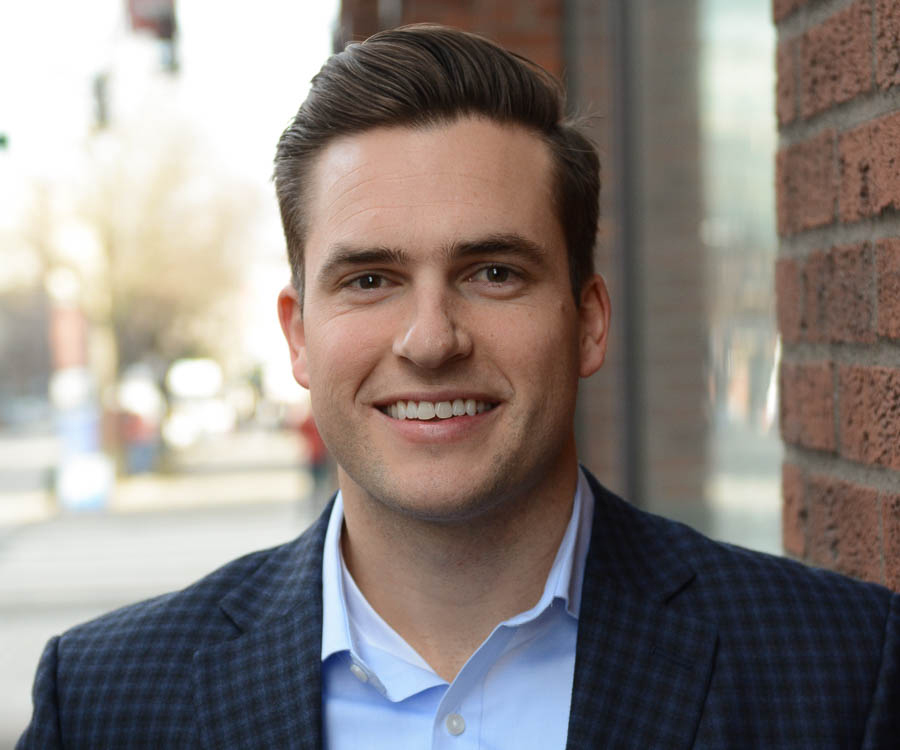
Jedidiah Collins
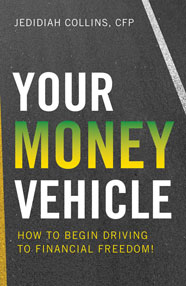
Jedidiah Collins is a former NFL fullback, a Certified Financial Planner, and the bestselling author of Your Money Vehicle. Cut twelve times before he became a starting fullback, including for the New Orleans Saints, he pursued his CFP certification while still playing after realizing how unprepared he was for the financial side of professional success. He is the founder of the financial education company Money Vehicle and an adjunct professor of personal finance, and he has taught financial literacy to more than a thousand athletes through the NFL Players Association and other organizations. His book makes financial literacy accessible to beginners.
📚 Books by Jedidiah Collins
Transcript
[0:00:26] NVN: Today, Jedidiah is here to discuss his new book, Your Money Vehicle. Which is the next step in his mission to empower young professionals, students and athletes, so that they understand the behaviors they need to incorporate, to eliminate the gap between the potential of their financial goals and the success they desire. This book is broken up into a series of ten questions which cover a wide range of financial issues. It’s designed to help readers create a personalized financial plan. Jedidiah has even established a system of accountability. As you’ll see in this interview, he has a truly refreshing take on cash management, which he views as a ticket to freedom and happiness and an entertaining way of educating people on this topic. Today, I’m joined by Jedidiah Collins who is the author of the new book, Your Money Vehicle, Jedidiah, thank you for joining me today.
[0:01:20] Jedidiah Collins: Well, it is a pleasure to be here. I’m excited to share out in Seattle, we’re getting sunshine. So I feel like everybody’s in a good mood and I am just honored to be a part of this, I loved our conversation when you defined me as an author. That was a first for me. This is a really neat venture.
[0:01:39] NVN: How does it feel?
[0:01:41] Jedidiah Collins: Like a very long vision coming to fruition. Something that I’ve never identified myself and that I truly hope this next chapter of my life, pun intended, I get to be identified and seen as an author.
[0:01:55] NVN: So, as you know, as I’m sure is very fresh in your mind right now, writing a book is a real labor of love, tell me what your motivation for extending all of that energy and attention was? Why is this book so important to you?
[0:02:12] Jedidiah Collins: It is absolutely a labor of love. This is something that I began writing actually commuting in and out of Seattle going to work. I took the bus, on the bus out start scribbling little thoughts and ideas and notes to myself and after a year or two, that kind of became enough of a manuscript to turn into a book. Also, I’ve come to realize, writing the book is only about a third of the way there. There’s a lot of other aspects to it which people like Scribe and just general people who helped me are empowering me to do but why I began writing this book was, as I left the national football league, began my career as a financial advisor, I would continually get asked questions. A lot of those questions obviously were, 'What was the NFL like? What was the difference? 'Tell me about Drew Brees.' But then, a lot of them came around about being about money and I loved addressing the money questions because it was a personal passion. I set out for really just hoping to not become another statistic of professional athletes walking away from the game being broke. Why this labor of love began was a mission to go out and help people, teach people this foreign language on this kind of taboo subject of money.
[0:03:31] NVN: Yeah, I mean, money is so fascinating that way because it does seem to land under this taboo subject category which is very bizarre. We send our kids into the world largely without any real idea about how to handle this very real and practical part of life.
[0:03:51] Jedidiah Collins: It continues to amaze me because one subject every student is going to have to address and deal with is the subject of money. Yet, high schools, universities, professions, corporations have never addressed or approached how to do this, how to truly use money and that is something I emphasize a lot is use money because very similar to money vehicle, it implies action and it implies that money is not the objective, money is the verb, or not the noun. Why people haven’t addressed it and why the financial industry had stayed so far away from it is I firmly believe a lot of people profit off of naivety, you know, throughout history, the more I can confuse you and make you feel overwhelmed by this subject, the more you would need to rely upon me. I will also say and this is partly of what I address in the book is why it has become such a vital survival skill today is because the game of money has changed and evolved over the last 20 years, going away from this system where pensions and social security were our dependency and we are living till age 80 or 90 and being able to carry it that way. Today, this journey has to become something we embark on, something we sit in the driver’s seat and are starting to control. Because those relied upon systems are gone. Now, if you don’t manage your money and not just the investments piece but taxes and estate and insurance and all these other pieces of the holistic wheel. If you’re not driving those, they are really going to be getting out of control and when 90 comes or a hundred or even next week and you haven’t controlled your financial plan, now there’s no one else to blame. And so my push and why I’m on this vision is that we do start requiring this curriculum in high schools, in universities, in companies. If you are starting to receive the paycheck, no different than a driver’s test, you should have to take some kind of money test.
[0:06:02] NVN: I love that. I have a couple of things to say here. One of which is, when you started talking about how the world is changing financially and what that means for our retirement with no social security, longer lifespans. Even though I know all of this and I consider myself financially responsible, if not, the most educated person. I felt my entire nervous system just prick up for a second when you said that. I wonder if that’s some of what’s happening here too is that people feel anxiety or a sense of overwhelm and can burry their head in the sand also.
[0:06:42] Jedidiah Collins: Absolutely, I will first in no disrespect. I love to correct, I don’t use the word retirement, I also don’t use the word budget, Those are both limiting and it’s semantics but I’m a big believer in the mental aspect of this idea around your relationship with money. The words I really like to use are cash management which is empowering because you control and freedom. We’re not going to retire anymore because that traditional sense of retirement is gone. We are now searching out this idea of freedom and that little subtle change in part of a routine and habit forming, identifies a different space and that I am not looking for a date in the future that I get to walk away and my company is going to take care of me. Now, I’m looking at how do I provide some sense of freedom and peace of mind today in this planet, in this journey. I’m not at my destination or at my goal yet but truly being able to see a daily process and a monthly and a yearly and say, I am controlling money. Money is not controlling me. That goes into that anxiety piece you were defining. I am no different, people are like, "Well, you’re the money guy, you’re a professional athlete, money doesn’t" – I stress and have anxiety about money that’s just as much as the next person. You can ask my wife, it’s just a reality of life, we all have relationships with money that have formed throughout our lives. We also have money scripts, ways we identify. One of those money scripts, you mentioned, putting your head in the sand, "I’m going to completely avoid the subject and hopefully it all turns out okay." I’m here to tell you that yeah, that’ snot a great plan. And while I don’t want people to be all consumed by money, I want people to start to see the many benefits money has if you make it to go to work for you and stop just simply working for it.
[0:08:34] NVN: First of all, I love the way you’re talking about this, my nervous system relaxed a little bit.
[0:08:38] Jedidiah Collins: We can talk through breathing exercise, would that help? My workshops, I always begin with, "All right everybody, my name is Jed, Let’s all take a breath here."
[0:08:49] NVN: I see why, after just dipping my toe into this. What strikes me that I find personally very appealing is you are talking about money as it sounds like a lifestyle habit, as supposed to this thing that’s out there in the future that we’re nebulously scraping away for and you know, creating a sense of scarcity in our life in the moment for this nebulous point out there in the future.
[0:09:17] Jedidiah Collins: Yes. So many of our – even the personal finance books that have been written which had been phenomenal focus so much on making money. "I want to make money, I want to make more because once I get to be a millionaire, I get to go into retirement and I get to just live and enjoy." And it’s like wait, why are we continually looking at age 65 as like, that’s when we get to start having fun or enjoying ourselves and our lives? I like to change that and stop looking at how to make money and really emphasize this idea of use money. When I say use money, it’s understand, strategize, and be efficient with money. With that, with a simple foundational education. I don’t need you to be as CFP, a certified financial planner, I don’t need you to be a financial advisor. But if you understand the concepts around how money works. You build out a strategy and a plan and then we find some of the efficiencies within that plan to even maximize. That will give you that peace of mind and that lifestyle. Is it going to be, "Hey, next week, I’m a millionaire?" No, but that’s part of setting a good understanding of goals. I call them rich goals, you can define goals however you want but is not no longer just aiming at that retirement goal, it’s, how do we reverse engineer and build in digestible chunks that we can start to obtain and that will lead us and allow us to enjoy the journey and the process along the way. That is the methodology in a script of life I got to adhere watching the best in the world as they prepared to go to let’s say the Super Bowl as their goal but they continued to build in different sets of goals each week, each month, each game that would reiterate exactly why and how they were on their path.
[0:11:08] NVN: That leads me to one of the main things that stands out to me about your book is that you’ve divided it into a series of 10 questions, for readers. Which reminds me of the sort of one goal at a time, breaking it down, element that you’re talking about. Talk to me about that strategy and what you hope to accomplish with that?
[0:11:32] Jedidiah Collins: I love that identification; I appreciate you pointing that out. It’s what I would deem after hosting hundreds of workshops and talking to a lot of people, young and old, around money. These were the first 10 questions people kept asking me and I would say, as the first 10 questions on building a plan and on going about your journey. Some people push back and are like, "Well, I don’t have a plan yet." I’m like, "Great, that’s where we’re going to start." The first question of the 10 is, "Why do you even care?" And we’re going to start talking about how money has evolved and how you need to set destinations. I would also love to point out because part of this transition to becoming an author is dipping into the creative side of me – the 10 chapters or the 10 questions also associate with 10 parts of your money vehicle. One chapter is around the engine, one’s around the airbag, one’s around the steering wheel, one’s around the GPS. I thought that was kind of fun and cute but –
[0:12:29] NVN: Love it.
[0:12:29] Jedidiah Collins: Right? We’ll play into that. But this identification of I was told over and over, education in and of itself will fail. My dream, my vision was to go out and educate people around money and that was really kind of depressing at first but then it challenged me to say, well, what would make it succeed? And people said, "You have to change behaviors, you have to create lasting impact through behavioral change." I got to smile and sit back and say, "Perfect." I also have and host a series of workshops called Rookie to Veteran which are all principles of success and behaviors that I was able to observe and absorb playing in the national football league. What I was simply able to do was take this education that I was passionate about and intertwined some of those short digestible actionable sequences and behaviors from my past and my experience and that is what I’m really proud of and excited is, if you don’t have a plan or if you really are just starting out, I want to help you and that’s what Your Money Vehicle this first level is all about. Together, we’re going to list out 10 action items, there’s other ones throughout the workbook, there’s other ones I’m going to give you but the major ones each chapter ends with now, go do this. Together, by the end of the workbook, you will have begun to create your personal plan and you will have actions to go and take. Again, looking at other books that I’ve continued to digest and read and I love. I really want people to have clarity on what to go do because having that big vision of impact, I need action. Part of what I’m going to do is certify people, after they’ve gone through this workbook, is a level one financially literate but you are not certified until you sent me one of the action items you took from the book. That action sequence is absolutely vital because I’ll repeat it one last time, education is a great first step but it fails without activity.
[0:14:37] NVN: Amazing. You know, it strikes me as there being an element of 'choose your own adventure' to this book too. Because it sounds like you are providing this baseline for readers and then with some guidance, allowing them to choose exactly how they go about setting up their own financial plan. Is that accurate?
[0:14:57] Jedidiah Collins: That’s very accurate, I have not defined it as that, though I loved those books, especially when we were doing book reports and it was like wait, I can go from chapter two to chapter 11?
[0:15:07] NVN: Totally.
[0:15:08] Jedidiah Collins: Yeah, that is my adventure. But that is absolutely, yeah, you have to be able to personalize this. If you can’t tell me why you began your journey, I’m not going to be able to help you get to step three or step seven or step 10. They are all intertwined and it’s all part of this mindset around it. You’re absolutely right, this is 'your money vehicle' and the emphasis is on yours, this is not mine, it’s not your parents, it’s not your coach, our teacher, your boss, whoever. This is the idea of you building out this plan and you truly choosing your adventure. If you’re saying, "Hey, I don’t need you to define how to make good habits for me and I don’t need you to talk about cash management." Well then you go to chapter five or, "I don’t need you to explain to me taxes," which believe me, most people don’t understand taxes but if you don’t need that, then you get to skip that section, if you want to understand how the progressive income tax code works and why it relates to ice cream scoops, that is what we’re going to be talking about in that chapter. You are right, this is about empowering the individual to say, "I want to understand these concepts, I want them to be given to me in short, storied formats and then I want those baby steps in a plan that is going to help me take me where I want to go."
[0:16:27] NVN: Beautiful. As I’m looking through these different questions, each which comprises a chapter. I’m curious, which one you feel like people tend to struggle with the most and let’s talk a little bit about that.
[0:16:44] Jedidiah Collins: Great question. I actually launched a financial literacy test about two weeks ago, it is up on my website, I would challenge anybody interested in this topic to go and take it. One, because it’s data and feedback as we go and try to get a million people to take this, I want to know which chapter people struggle with. I will say, I have a chapter on cybersecurity. It’s very entry-level but it is a definite interest for anybody who is looking at developing a financial plan, cybersecurity must become a part of it. That is oddly enough one of the chapters people answer the questions correctly the most. The number one question I’ve seen that has actually been incorrect was around that tax sequence. There’s a lot of questions people are misunderstanding but – to tell you the truth, in a beautifully terrible way, most people are failing my test, which means I’m headed in the right direction, I think. But the number one has been, "True or false. Your last dollar made this year will be taxed higher than your first dollar made." The vast majority of people are answering false, saying, I don’t think my last dollar is going to be taxed any different than my first dollar and that’s a misconception around the progressive tax code. I use ice cream scoops to go into the definition of how to usually see the difference in them but if people don’t understand that, hey, come December you are going to get a $5,000 bonus it is going to be taxed at a different rate than the previous dollars you’ve made all year and they are not going to be able to truly prepare and plan for what is coming on the horizon and so that is just one example. Again through different ideas around insurance or how to deal with the banker, obviously investments, the number one chapter I am most proud of is the 10th chapter, 'Your Best Advantage', we could talk about that but the misconception around taxes is something I want to really address because the first thing people think of is death and taxes and they think of it in a negative light. I try to flip that on instead too and say, “Taxes provide so much of our society and it is such a choice that you make to be a part of.” And then defining it even more saying, "My sister has special needs. Taxes help and support them do millions of things you’ll never be able to do on her own."
[0:19:11] NVN: I love that. I feel like topics like that are really getting lost right now just in the media and because taxes are tied to politics and there is so much strife and division there right now. You are right we have forgotten that basic idea about taxes is that they do provide us with so many of the privileges that we have.
[0:19:30] Jedidiah Collins: Oh yeah and I challenge people and this is and I don’t want this session to be all about taxes so we can change centers but one of my favorite questions is why, why do we pay taxes? I have a system called 'money buckets' where you have five choices with every dollar. One of those choices is society and I ask audiences. I have asked thousands of people 'Why do we pay taxes? Oddly enough some people say public schools, some people say the government. The number one response I am not getting, the number one response I’ve had every time I ask that question is roads. I don’t know why the general public thinks every tax dollar goes to the road you drive around, which is does, for the most part but it is just a very funny identification. Again, people don’t understand and appreciate, taxes go into that fireman or woman who just showed up at your house to help you. Taxes go into that military who is defending us and protecting us. Taxes go into bank for retirees and things. So there are a lot of different variations of why in the positives and that’s part of the education is our people to have their eyes opened to how all of these gain really works. Sure there are flaws, most of those happen when politicians get involved and the majority why our society run so functionally is because this is a great system. A capitalistic system is working, we just need to continue to understand the game and play the game better.
[0:20:59] NVN: I really like that point. Let’s talk a little bit about the chapter that you cited as being your favorite, which is the last one, 'What is My Best Advantage Today?'
[0:21:09] Jedidiah Collins: I love it. So this is one I’m really pointing to as the main action item for every reader of the book. Why? Because I am defining that most readers will be young professionals, and by young it is really under 40 and what is your advantage today, is going to be through which vehicle, your money vehicle, which vehicle you choose to take you to your goals and your freedom. So I go into — and again, I am a big storyteller and I talk about my dad and my brothers and I growing up and trimming trees and how we trimmed trees are actually how people get taxed but anyway, don’t worry about all of that. That gets told throughout this story but I really wanted to identify why a Roth account, what Roth means, what the difference between a Roth IRA and a Roth 401(k), why it is different than the traditional 401(k) and why having and owning a Roth account in your teens, in your 20s, in your 30s is going to be a major impact to your career in your future and in your freedom. That is what chapter 10 is and as people push back on me and said, “Hey, you need to change behaviors. You need to make impact, you need to make sure people know what to go do.” The one measurement and the one data I want to have and how people certify, one of the things is send me that you know how to use money and you opened a Roth account, 401(k) or IRA and that would show me that you use money. You understood what we are talking about. You built out that strategy and you see the efficiencies of the Roth vehicle. And so truly if your money vehicle does anything, my goal, my dream, my vision is a million Roth accounts and I am happy to say I have already begun that tally and that tool because I go out and I deliver workshops but this is going to be able to help me reach America and reach a large, large audience. Because I firmly believe if every 18 to 30 year old understood what a Roth vehicle was going to be and why it would impact them. For them paying less taxes today and them getting tax free growth for 50 years they would be using this vehicle. They just don’t understand what it is yet and that is my job.
[0:23:25] NVN: I have talked to a lot of authors and I have never heard an author set up a system of accountability directly with readers and obviously you have workshop attendees too, like you are talking about here. Tell me a little bit about your mindset with that?
[0:23:45] Jedidiah Collins: It goes back to being a professional. Going from a rookie to a veteran I realized everything is going to be accountable. One of the major changes from college to the professional level was I no longer had coaches or people looking for me and making sure I was showing up and I was turning things in. You know you are on your own. You had to hold yourself accountable and so what I’ve come to realize and understand is I don’t present. I facilitate a workshop. If I make this content, this book or anything about me, you are not going to get engage and actually go and functionally do it. I can educate a room but if they are not engaged and empowered, it is meaningless and it is just a waste of time. So this idea of really shifting the focus to this is a book, but it is more of a workbook, why? Because you’re interactive, you are going to fill out questions. You are going to go do activities. You are going to have exercises throughout, it is truly built out to be a ten week personal finance course. This is all about you. I firmly lower my expectations before I talk about the book or before I present a workshop. This is an idea that I want to change one thing. I cannot change the world because that is too many but I can change one person and make that lasting impact. So my accountability, my expectations for you to learn one thing and do one thing. And that is a goal that I can achieve. I really emphasize this idea that this is not Jed’s money vehicle. This is not Jed’s money journey. This is your money vehicle and you have to put your name on it. That is actually the opening of the book is write your name in this thing because that instills the fact that you took ownership of it. And that accountability piece that’s just going to be coming on the journey. I am all in to come with you and as I have released YouTube videos, they are going to correlate 10 chapters in the book. We have 35, 40 videos that are going to cut connect to each and every one of those topics and subjects because obviously not everybody loves reading more and more people are on video, different messaging. I want to get this message out and I want to empower the individual and that is all about holding them accountable and you achieving what we set out to do.
[0:26:10] NVN: Jedidiah, I am so curious I don’t think that I have ever heard anyone speak about cash management with quite – I mean this is a compliment with this amount of passion before. It’s truly inspiring. I mean I am ready to go through the 10 week program, in all honestly look at everything to create my own plan but what is it that sparks this in you?
[0:26:34] Jedidiah Collins: My first paycheck, I was an undrafted guy so I didn’t get the big sign in bonus and everything but my first paycheck landed and I looked in the mirror and I said, “Wow it’s here.” And before I opened that envelope I had already spent every dime of that paycheck and that shocked me. It woke me up to the reality. Full disclosure I bought an engagement ring. My wife and I are still very happily married, so it turned out to be a good choice and a good investment. But I will tell her to this day I was a very poor financial decision. I was a spender. I was never educated or taught anything different about how to go about using money. My father owned and ran a law firm. My brothers were getting a master’s in engineering in Berkeley and Harvard Law degree, very highly educated and when I got this paycheck, I went out the door I started to turn to them. “Hey guys, you were at the upper epsilon of education obviously you went to the class the big, dumb jock brother who didn’t go to, you should be able to tell me.” And they had less answers than I did. And all I had done was read Rich Dad Poor Dad so I at least knew there was something out there. So I really identified what type of or I was. I was a spendor. I needed to become a savor and I needed to eventually evolve into an investor to make money go work for me. But really my lightbulb went off when I look around the locker room knowing the backgrounds most of these guys had I knew for a fact that if I didn’t have any of these answers, they weren’t even asking the right questions. And beyond the locker room — because you know all professional athletes are going broke, there are millions and millions of high school students graduating and going into jobs without having any idea around the choices they have around their paycheck or young people going to college and going into debt, credit card debt, car loan debt, student loan debt and beginning their journey behind the eight ball and I started to look around even the subject of the national financial literacy test. I have googled that for 12 years and there’s never been one, so I created one and it is probably not that good. But it’s something. And so why the passion began was because I got energy from it. I get excited about it. I have had continually — so I left my corporate job a month and a half ago to start my business into really chasing this dream and I love the company I was working out. I love the career I had and truly the traditional sense of corporate success was right in front of me and I was taking it after I left the game in football. But I jumped and made this journey to where I am passionate and chasing a vision and a dream and I can’t tell you how many people in the last two months have come up to me and said, “Man, I am doing it. I am making money, I am successful but I wish I had a passion. I wish I was chasing a vision and a dream.” And I get to smile at them and say, “Listen, I preach about the golden rule of money and not spending more than you make, I am currently breaking that rule.” So that is not a good vision to start with. But it is something that I see in the next five, 10, 15, 20 years, my success and my worth is going to be measured on that impact. And I am not shy about saying about a million people. I want to go out and I want to change a million people and with today’s technology, social media platforms like this that you are allowing me to get on, I think I am going to be able to get that. Because why I’m doing this everybody agrees on is it’s needed. I am just fortunate that I kind of want to do this.
[0:30:16] NVN: Yeah absolutely. So you’re a father yourself, correct?
[0:30:21] Jedidiah Collins: Yes I am.
[0:30:21] NVN: Okay, so how many kids do you have and how old?
[0:30:25] Jedidiah Collins: Two little girls, five and three and I am one of five myself so I thought we are going to have a big family but we are stopping at the two and after number two I called my mom and I was just like, “You guys are crazy.” They had five in seven years. I literally just sent her a text now and I’m just like, "Thank you, you’re much more amazing woman than I expected."
[0:30:49] NVN: I know, you can’t get outnumbered that’s the trick, right?
[0:30:53] Jedidiah Collins: That should be like the title of a parenting book. Don’t get outnumbered.
[0:30:57] NVN: Exactly, so with your own kids have you started talking about money with them in any way or what is your plan there?
[0:31:05] Jedidiah Collins: Yes, so we have started to introduce the concept of money. I actually since my message and my focus has been getting out, I’ve been connecting with more and more people who are truly approaching money to that younger audience. I am not going for the five to 15 year old category so much. I’m aiming more towards the 15 to 30. But there are a lot of good people doing a lot of good things out there that are addressing how young people are introduced to money. And the science and everything is coming out saying the more you introduce to them at a younger age the better off they’re going to be. So what we have begun to discuss with my daughters is the idea that mommy and daddy work for money. Mommy and daddy are very happy to spend money on good things that provide smiles and value and worth to both of our girls and ourselves. Example, we went ice skating this weekend and my daughter did not look like she was having much fun. And I went up to her I said, “Hey listen, we are spending money on this and the only value I get out of it is seeing a smile. If I don’t see that smile it wasn’t worth the money to me.” And she started smiling and we had a great little time but just that concept of the purpose around money is to provide that peace of mind, provide happiness, provide experiences. That is the first lesson I want them to see is, daddy goes to work for a reason and that reason is you get to eat dinner. That is a good reason to go to work.
[0:32:37] NVN: Yeah that’s interesting and then my final question for you is if you could have listeners do one thing after finishing this podcast besides buying the book, what would that one thing be that you feel like could start them along the right path.
[0:32:59] Jedidiah Collins: I would say number one if you are looking for an action item, hey, I heard this guy he sounded like he wasn’t all interesting, I did launch my YouTube channel and I am going to be providing tons and tons of content out through that medium. I would say the number one and what we go through in chapter one is setting rich goals, reachable, individual, controllable and happy goals. If you leave today and you said, “I listened to this guy for 20 minutes.” I am going to set a one year goal, in one year what can I start today that is going to come to fruition in one year? If I look at one month, so March is right around the corner, side note April is financial literacy month. But this next month that’s coming, what is something I can stop doing this month that is a bad habit that I realized I need to start controlling more of? And then the last one would be a one week goal. My goal is to learn something each week. If this was the session that you learned something, check your box but that is how we begin to progress and have digestible action items to go and do is a one week, a one month and a one year goal that is what’s really going to bring you into this journey and throughout the book, throughout my videos, throughout my sessions I reference those rich goals, R-I-C-H, all the time because if you are looking for a reason of why to buy a book or why to begin a plan or why money is changed, those rich goals are personal and those are going to be your reason.
[0:34:33] NVN: Okay, again the book is Your Money Vehicle: How to Begin Driving to Financial Freedom. Jedidiah, in the course of this interview you’ve mentioned a couple of places where listeners can find you, which I want to be sure that we’re specific about. The first is your website with the financial literacy test and also your YouTube channel. So where are those at?
[0:34:54] Jedidiah Collins: So that’s going to be my full name, jedidiahcollins.com and YouTube, you can search for Jedidiah Collins as well. I was adamantly against titling everything under my name and then marketing and more people advised me and said, "Listen, yeah, you can call it money vehicle but right now people are going to be interested in the fact that you are a human being and that you have a story and a past. So you’re wrong and we are going to go under your name, so it's Jedidiah. Yeah that is a name I had to grow into, so jedidiahcollins.com, come and take the test or subscribe on YouTube.
[0:35:30] NVN: Great and is there anywhere else people should know about to find you?
[0:35:34] Jedidiah Collins: I am a big LinkedIn guy. I love that platform. I have been on there quite often and so that’s a new one. I actually just started TikTok. Again people are like, what are you doing? Why? My audience is out there, the funny thing about having a message, you got to go where people will hear you and they are there. I will be the first to say I am not dancing but I do have a purpose on there and my first series of videos is my money buckets. The five choices you have with every dollar, how do I visually show those. So I am enjoying a new challenge of how to adapt to different mediums but yes, TikTok, YouTube, LinkedIn, I am on Twitter, I am on Instagram @jedcollins45. Come check me out and truly I try to be very entertaining and then educational.
[0:36:22] NVN: Excellent, you certainly have been here. Jedidiah thank you so much for joining us today and best of luck to you with the book. Enjoy being an author.
[0:36:31] Jedidiah Collins: Oh, thank you. That still feels funny. Nikki, this has been a pleasure. I appreciate it, the platform, the audience and just all that’s Scribe has helped me do in promoting this so thank you, thank you, thank you and enjoy your day.
[0:36:45] NVN: You too. Thanks for joining us for this episode of Author Hour. You can find Your Money Vehicle, on Amazon. For more Author Hour, hit the subscribe button on your favorite podcast service. Thanks for joining us, we’ll see you next time. Same place, different author.
Want to Write Your Own Book?
Scribe has helped over 2,000 authors turn their expertise into published books.
Schedule a Free Consult