Mala Subramaniam: Episode 428
Read the full transcript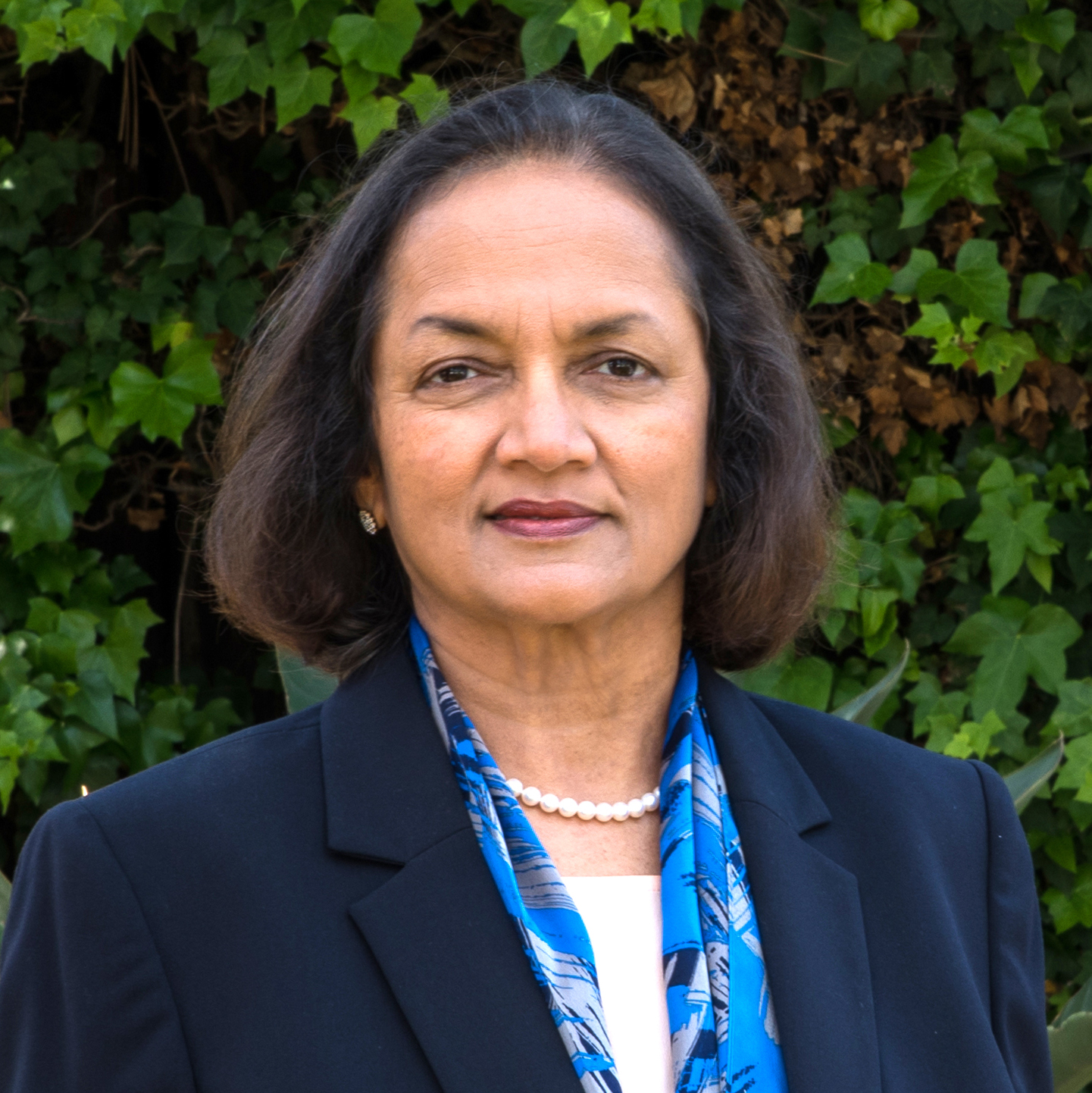
Mala Subramaniam
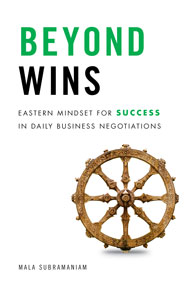
Mala Subramaniam is a corporate speaker, executive coach, and cross-cultural trainer who blends Eastern and Western philosophies in her approach to negotiation. She spent more than twenty years in marketing and strategy roles at global companies including IBM, GE Healthcare, and Dun and Bradstreet, and she has taught negotiation for a decade, coaching teams at organizations such as Cognizant and Meltwater. In Beyond Wins, she introduces her Chakra of Negotiation Principles, an eight-part framework for reaching agreements that work for everyone at the table.
📚 Books by Mala Subramaniam
Transcript
[0:00:27] NVN: In the eastern culture, time is notable only for its passage and people tend to think in terms 0of what’s best for the group as supposed to what’s best for the individual. In the western world, particularly when it comes to business, we’re far more interested in immediacy and winning. As author Mala Subramaniam explains it, the difference between applying an eastern or western mindset to negotiations, boils down to understanding the difference between success and wins. In her new book, Beyond Wins, Mala explains how an estate mindset can be brought to western negotiations in order to achieve success and to build relationships that last. Mala, thank you so much for joining us on Author hour to talk about your new book, Beyond Wins.
[0:01:15] Mala Subramaniam: Thank you.
[0:01:18] NVN: Mala, let’s start by giving listeners an idea about your own personal background?
[0:01:23] Mala Subramaniam: I’m from India and I was educated there, I came here, did my MBA in the United States and worked for about 25 years in corporate America in large companies like IBM, Blue Cross and Blue Shield, GE Healthcare and down in brad street. Doing marketing management and about 10 years ago, I decided to take all that knowledge and share it with other corporate professionals and that’s when I started market in sight leadership and cross cultural communications company. I have been doing webinars and also executive coaching since then. When one of the classes, someone said, Mala, you’re teaching this negotiation but you're giving it to different twist. Why don’t you write a book so that everybody can understand and read this before they go, for a training on negotiations. That’s why I am here.
[0:02:27] NVN: Here it is. Your book is interesting to me because I haven’t seen this topic come through before. You're writing about applying an eastern mindset for success in daily business negotiations. You seem from your background like the perfect person to write that book. I’m curious if there is anything being originally from India that has struck you t times as either strange or different. Anywhere along that spectrum about the way business is done in the western world or now negotiations specifically is done in the western world.
[0:03:06] Mala Subramaniam: Sure, I think western world, we’re kind of reactive and very focused on winning. Immediate self-gratification. The eastern world is more about being mindful and contemplative and focusing on long term benefits like the long term results and long term relationships. That is the primary difference. When I’m in a meeting, negotiating with my clients, they want immediate gratification and I am thinking, that is not in their best interest. How do I approach this and share my knowledge with them so that both of us will benefit and have a long term relationship and results. That is the primary difference I see in both western and eastern way of thinking.
[0:04:02] NVN: When you were working in corporate America, did you always bring this eastern mindset to the table in business or did you go through any periods where you sort of adapted to more of the western way of negotiating?
[0:04:15] Mala Subramaniam: You know, it’s almost like my business experience followed like the normal curve, it’s like initially I was very focused on long term relationships and long term business results. Weary of being a reactive or a focused on wins, then as I went into corporate America, deep in marketing leadership positions, I became totally westernized. I was also focused very much on wins, I lost a lot of relationships and basically, I think I aggravated a lot of vendors and business partners and then slowly, as I was tapering and I have reached a peak in my corporate career and I was leaving, I think became more contemplative and focused on long term relationship. My client where I started, I had that client relationship for over 10 years. That’s the pattern of my business career. One of the first things I tell people is you know, most of the people are plagued by fear. Fear of negotiating, fear of presenting, you know, fear is a very complicated thing. Fear, the way when I talk to people in my classes or you know, people who report to me or my colleagues, fear is thinking about, "What is going to happen to me?" It’s very focused on yourself. Courage is thinking about what is going to happen to other people, how can I help? When you are going through that fear, don’t look at yourself and say, "What is going to happen to me? How can I handle this? How can I make sure that I win and the other person loses? Instead, think of, "How can I make sure that I’m taking everybody along with me and that I’m helping other people?" That is the biggest thing in negotiation, that’s the first thing we talk about. What is fear and how do you get rid of it? Is looking at the other person and saying you know, "What can I do to help the other person?"
[0:06:35] NVN: That’s really interesting. I would think that that makes your book that much more effective that you’ve sort of lived through both ways of doing things so you can speak to each mindset from a position of understanding and experience.
[0:06:50] Mala Subramaniam: Absolutely. I think I sometimes feel like I have a split personality, you know when I’m dealing with the western world then I’m conscious of how they are responding to me and when I’m dealing with people from the eastern world, then I know and I’m comfortable with being contemplative and thinking about the long term relationship rather than the individual focused. Because the western world is about the time value of money and independent thinking. The eastern world is about group thinking and time is like just a passage of time, they don’t think of time as a specific point in the clock. They are thinking time as a passage, so I’m conscious of both.
[0:07:40] NVN: Obviously, this represents a pretty significant mindset shift for some people. As you were just talking about our concepts of time are very different. What would you say to those people who are so adapted to this way of negotiating that result in quick wins and sort of more transactional negotiations to sway them over to thinking about this in a different, more eastern way.
[0:08:09] Mala Subramaniam: I think what I would give them is some soundbites from the eastern philosophy and how eastern philosophy has succeeded. One of the best examples I give them is the yoga, you know? I’m sure your familiar with yoga. Yoga and the exercises that you do in the fitness center. Even the fitness centers now have started using yoga because yoga is blending the mind, body and breath. Whereas exercise is all about the body, you know, you could go on the treadmill and you’re just speeding it whereas the yoga is more about very methodical way of doing so that you are being a balance in your life. You cannot get that balance going on the treadmill. When I give that example in classes, they are able to connect with it. What I do in classes is, or talking to people is to basically give practical day to day personal examples. That is the way I’m able to change their mindset.
[0:09:17] NVN: I would love to hear one of those examples.
[0:09:20] Mala Subramaniam: One example is you know, the people who go for say, you know, let me give you a basic example. People going to a weight-watchers program. You know, just go in and the weight-watchers talks about all the tools and the techniques and the strategies whereas what you need is a change in your mindset. You know, your focus should not be on losing weight, it should be on your broader being healthy and happy. When we look at that so that is the shift in focus and the same thing, one example I can give you is I was working with this person and this is an example in the book. This person was all about achieving projects. She was so focused on winning that she exhausted everybody around her and people did not want to work with her so she had a major project and she tried to bring a group of people together to work on the project and most of the people basically said they could not do the project or they didn’t attend the meeting. The bosses before you know, basically said, they would help her when she try to escalate the matter but there was a new boss who came into the picture and he said, "Do you want to win or do you want to succeed?" She said, she’s so used to winning, she thought it was a strange question to ask in the corporate America. He explained to her, winning is short term. But here, you’re in the company you’re working and you have to work with all these people for a long time. If you are constantly draining them and focused on winning and in your projects because you want to advance and you want to make progress, then basically, you are not going to have a long term relationship, you are not going to be able to maintain this and that is a perfect example of what I’m talking in the book, the difference between winning and success. To me, success is actually taking everybody on your journey to accomplish the business goals. The more people there are to support you, to accomplish the business goals, the better. You know, I was talking about this woman who was so focused on accomplishing her goals that she forgot everybody else and basically, aggravated everyone. Instead, you have to think of, measure success by how many people you take on your journey to accomplish the business schools, how many people you take willingly. Not by how many people you leave beyond as failures. Because they could not keep pace with your arguments or with the way you are accomplishing goals.
[0:12:06] NVN: I love that delineation. In your book, you’re actually walking readers through what this looks like. Having explained this mindset shift now. Let’s talk to listeners about how acting from this more relational mindset and looking towards success rather than wins, changes some of the behaviors that they’ll exhibit when they’re negotiating.
[0:12:32] Mala Subramaniam: First thing they would do is follow my communication signal. You know, I define communications as a conversation that leads to a common understanding. A lot of times, 90% of the negotiations fail because they have not come to a shared understanding of the problem. They didn’t define the problem and they didn’t, you know, discuss and reach a consensus on what the problem is. Most of the time, eastern philosophy says that if you zero in on the problem, the solution is automatic. It stares you right in the face. That is the first thing that I walk anybody through is basically, define the problem and we have to go through the process of listening with an open mind. Trying to understand, discussing with people and then coming up with the problem on your own and then finally, discussing with others to come to a shared understanding. Then you follow the seven rules that I have, ground rules for success in business negotiation. First of all, be very clear about what your goal is and don’t base your goal on people wanting this or wanting that. It’s based on a business need and when there is a problem, don’t focus on who made the mistake, rather, focus on what is wrong and also, there to dream, dream big, this is how I’m going to walk out in this negotiation. These are some of the ground rules I teach and this is what makes the person, you know, when I do these classes, they walk away and the impressions that I’ve gotten from feedback is, we are able to understand what we learn from other books. Once we have been through this process.
[0:14:28] NVN: I’m curious if you’ve had this experience yourself or if you have heard about it from people you worked with about how it plays out when you have on one side of the negotiating table, someone who is acting from this eastern more relational standpoint and then someone on the other side who’s operating on the western quick win standpoint. How can those two mesh together and find common ground or is it possible to sway the western way over to the eastern?
[0:14:59] Mala Subramaniam: I think it is not something that happens overnight. It is something that you have to work with the individual but the key is the communication signal that is understanding that once you kind of are able to work with the other person to define the problem and once they define the problem and the solution they are able to understand what the solution is then it is a very easy transition and throughout my corporate career, in fact I was always called a catalyst for change. I don’t come in the room and say, “This is the way we do things,” I work with them so that they can come to a common understanding with me.
[0:15:43] NVN: Yeah, I think that that is how things truly change. I mean again, you are talking about the difference between success versus wins.
[0:15:51] Mala Subramaniam: Exactly. Yeah that is so true because if they see how they can maintain, see people generally adopt to the changes when they see that there is something in it for them and if they see that they can get long term results and relationship, build proper relationships with their clients or internal colleagues then they are willing to do it just like if you go to a weigh-watchers program and if you see that you are able to not only lose weight but maintain it because your attitude has change, they would be willing to do all the things that weight watchers tells them to do.
[0:16:31] NVN: Right. I mean it makes sense to me when you were talking about how if the foundations of this is really the communications part because I think it is very easy in negotiations in business and just throughout life in the western world to almost put your armor on when you go onto these situations because we have been trained to do that. You got to watch out for yourself, the other person is going to try and get you, you are going to get taken advantage of. So I can see how incredibly powerful it would be and how things would start to shift if you sat down on that table and felt like wow, this person is really listening to me and interested in where I am coming from not just to find their in road but to have an actual discourse about it.
[0:17:17] Mala Subramaniam: Exactly. I think the other critical difference in the eastern and the western is we are so focused on identifying ourselves with our roles here in the western world, you know the I-Me talk process, you know the separation between the you and me is so pronounced whereas in the eastern it’s more about we. It is about the group. So because that is the place that they are coming from so it is easier for a person from the eastern world to work with somebody who is so identified with the row. To bring them into the fold and talk about communications. You know sometimes I hear people say I communicated to that person and I always say there is no such thing as communicate into because that doesn’t work well together. You have communicated with, the very word commune means group taking. So I think it is easier for the eastern person to work with the western person because they understand the difference between the we and the you.
[0:18:30] NVN: Let’s talk a little bit about what is at stake here. So I am curious about this whether it is from your own business experience or through watching people you have worked with on webinars and in various outlets, what is at stake here? What things can we stand to gain? Outside of perhaps just negotiating better by beginning to apply this mindset to how you relate with people in a business environment?
[0:18:57] Mala Subramaniam: I think if you employ these principles that I am talking about they’re will be less stress and anxiety when you are working with people. You are not going to look at the other person as the opponent. You know I have seen books and training where they talk about the opposition and the opponent when there is no such thing as opponent. We are all working together and with the common understanding and I think it is the stress and anxiety that has caused whenever we enter in any business relationship. Instead if we kind of adopt the principles that I am talking about here, one of the principles that I talk about is silence. You know in negotiation or any kind of business interaction we are told to use silence to out with the other person or to make the other person nervous so that he or she would agree to your terms. Instead I am saying silence is your nature, resort to it so that you will not be reactive. You will be more responsible in the way you are interacting with the other person. So it is very kind of relationship driven and when you are interacting with that mindset, all relationships will be a great deal, less stress driven and anxious and this is why people have to take time off so that they need to get away from work. Instead you have to find pleasure, you are spending eight hours at work so you have to find some pleasure and stress relief and you can do that if you adopt these principles.
[0:20:44] NVN: And how great just as a human being to cultivate actual relationships while you are in these work situations?
[0:20:52] Mala Subramaniam: Absolutely, not to look at the other person as the other person you know rather look at the person as he and I have the same problem and how can we get together to solve it so that both of us will be more relaxed and friendly.
[0:21:10] NVN: It seems to me in the larger sense too like this is actually a much better business strategy because when you get in these scenarios where there is a winner that means there is also a loser presumably and so that’s not going to cultivate a relationship. So it seems like it is always going to be starting at ground zero and battling as oppose to just creating these relationships, which after a period of time you can just go back to it. It becomes easy, sustainable and consistent.
[0:21:41] Mala Subramaniam: Absolutely. I think you hit the nail on the head. It definitely when one wins the other loses and most of the time I look at all these situations and people use the phrase negotiation very loosely, it is actually bargaining because it is only bargaining one loses and the other wins. In negotiation both come to a common understanding the words such as win, win-win is all like you know, it is really not necessary. It’s more now I have built a relationship. Now I can work with this person on the next project. So I agree with you that this does not to be restricted only to negotiation. It is definitely expensive. You can use it for all kinds of relationship. One of the young interns who was working with me initially on the competitive analysis and everything and she read the manuscript and she said, “Mala, why do you say this is only for business people and why do you say this is only for negotiation. It is broader, it makes me a better person so that I can interact effectively with everybody that I meet with.
[0:22:56] NVN: That is interesting and it also makes sense because essentially what you are talking about here is a mindset shift.
[0:23:02] Mala Subramaniam: Yes, definitely and you know when you look at the sound bytes from the eastern philosophy that perception is not reality, you are listening to somebody and the word is called Maya, it is an illusion, you are listening to somebody and you are thinking this is the intention and this is what he or she wants and actually it is not a reality then you a"re saying okay, "I have to step back and really understand what the person is saying. And also when somebody says, "I want this, I want that," then you know that anything you do for them is very reactive. You’re going to take a stand that person wants — like I give a parent teenager example, the teenager says, “I am not going to be back by 9PM.” And the father says, “I want you home by 9PM.” It is more like when you use words like that the other person is going to take a stand and also making wise choices between short term gains and long term. So if you adopt these principles, it is kind of applicable anywhere. You know one of the examples I give is when you go for a job interview, you know you don’t prepare for the interview. You prepare so that you can function or you can respond well in any interview. The same thing with this negotiation that I am teaching here is you don’t prepare for a situation. You don’t prepare for a hostage negotiation or a labor negotiation or a sales negotiation. You prepare yourselves, build your personality so that you can function well and do well and achieve the goals that you want to achieve.
[0:24:50] NVN: So obviously, Mala, writing a book is a pretty stunning effort. It takes a lot of time, a lot of energy, a lot of resources. So I am always intrigued by what makes all of that work worth it to authors. Why is this so important to you and what is the one thing that in your ideal world readers would really take away from this?
[0:25:16] Mala Subramaniam: For me it is worth it because when somebody says, “Oh Mala I learned something from this that I put it to use that is the biggest win for me that immediately I feel like I have succeeded. You know to me people learning and practicing and basically functioning well and be relaxed I think that would be the biggest reward for me and I would love to see universities where you have books that are now very popular. You know I would love to see university students particularly MBA students business students, taking the knowledge from here and applying it when they go to work. So that would be the biggest reward when people use what I am saying because that is the purpose of writing the book. It is not about you know, selling a million copies or anything. It is more if I change the lives of 10 people as a result of this book I would say I have achieved.
[0:26:24] NVN: Well I got to tell you, I am rooting for you especially at the university and MBA level because I agree. If this kind of stuff was promoted and taught in the classroom I think everything would change because if we are functioning like this at work as we have already discussed there is a trickle down. This will start to apply everywhere and we could all use a little less anxiety and stress.
[0:26:45] Mala Subramaniam: I totally agree because when I went through my business school for my MBA, it was all about competition, winning, getting the job and scrambling and I basically said no. I don’t want to fall into that trap and I researched and found the job that would make me and the company happy and I started in market research while everybody was scrambling to become like a credit officer or something MBA students do. So that is what I am trying to tell people, think long term.
[0:27:24] NVN: Excellent. Mala, thank you so much for joining us today. The book is Beyond Wins: Eastern Mindset for Success in Daily Business Negotiations. Mala, outside of the book, where can listeners find you?
[0:27:37] Mala Subramaniam: They can find me in the website called beyondwins.com and I also have a website mktinsite.com that is my business and I think those are two places because you’ll be able to submit a form if you need to reach me and also my email, mala@mktinsite.com.
[0:28:11] NVN: Perfect. Thanks for joining us today Mala.
[0:28:13] Mala Subramaniam: Thank you.
[0:28:14] NVN: Okay, now it is time for the catch all question. Is there anything that we didn’t get to that you want to be sure to include?
[0:28:21] Mala Subramaniam: I think we covered everything.
[0:28:23] NVN: Awesome. Thanks for joining us for this episode of Author Hour. You can find Beyond Wins on Amazon. For more Author Hour, hit the subscribe button on your favorite podcast service. Thanks for joining us, we’ll see you next time. Same place, different author.
Want to Write Your Own Book?
Scribe has helped over 2,000 authors turn their expertise into published books.
Schedule a Free Consult