Jason Lazarus: The Art of Settlement
Read the full transcript
Jason Lazarus
Jason D. Lazarus is the Founder and Chief Executive Officer of Synergy Settlement Services. Synergy offers healthcare lien resolution, Medicare secondary payer compliance services, pooled trust services, settlement asset management services and structured settlements. He is also the managing partner and founder of the Special Needs Law Firm; a Florida law firm that provides legal services related to public benefit preservation, liens, and Medicare Secondary Payer compliance.
Prior to joining the Synergy team, Mr. Lazarus was the President of a National Settlement Planning firm. Before that, he spent 10 years assisting injury victims as a settlement planner. Prior to starting his settlement planning practice, Mr. Lazarus practiced as a Medical Malpractice and Workers' Compensation attorney in Orlando, Florida.
Jason received his B.A. from the University of Central Florida and his J.D. with high honors from Florida State University. He received his LL.M. in Elder Law with Distinction from Stetson University College of Law. Mr. Lazarus is a Medicare Set-Aside Consultant certified by the International Commission on Health Care Certification.
He has had his written work published by AAJ’s Trial Magazine, Florida Justice Association Journal, The Florida Bar Journal, NAELA Journal, ElderLaw Report, Exceptional Parent, The Employee Advocate, News and 440 Report and The Journal of Transnational Law & Policy. His first book, Art of Settlement (a guide for trial lawyers) was an Amazon best seller. He has presented on relevant topics for the American Association for Justice, Southern Trial Lawyers Association, Florida Justice Association, Florida Conference of Circuit Judges, Florida Workers Advocates, Workers’ Compensation Section of the Florida Bar, Mass Torts Made Perfect, Lorman Educational Seminars and countless local trial lawyer groups.
Jason’s written work has been cited, as authoritative on Medicare compliance, by the Florida Supreme Court in the landmark collateral sources Joerg opinion and by the United States Southern District Court. He has also been either a consulting or testifying expert on the issue of collateral sources in many cases.
He is a member of the Florida Bar, Florida Justice Association, American Association for Justice, National Academy of Elder Law Attorneys, Academy of Special Needs Planners, Society of Settlement Planners (Past President), American Association of Settlement Consultants (President-Elect) and the National Alliance of Medicare Set-Aside Professionals.
📚 Books by Jason Lazarus
Transcript
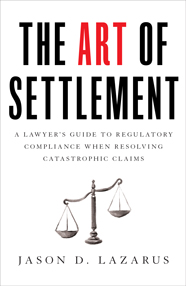
[0:00:30] DA: The regulatory landscape of the personal injury lawyer has become exceedingly complicated. It’s vital that a personal injury practice has a comprehensive plan for compliance, resolving cases if you want to protect yourself and protect your clients. In The Art of the Settlement. Jason Lazarus helps navigate the complexities at settlement for catastrophic claims and provides you with the best course of action for any potential issue. He shows you how to address important ethical issues, navigate settlement planning concerns, preserve government benefits and employ lean reduction strategies. This is a trial lawyer’s ultimate resource for the world of regulator compliance with catastrophic claims. A guidebook you’ll consult again and again. Hey listeners, my name is Drew Applebaum and I’m excited to be here today with Jason Lazarus, author of The Art of Settlement. Jason, I’m excited you're here, welcome to the Author Hour podcast.
[0:01:21] Jason Lazarus: Thanks so much, happy to join you, glad to talk about this.
[0:01:24] DA: First, tell us a bit about your background and on becoming a lawyer.
[0:01:29] Jason Lazarus: Well, that’s a long story. I guess the starting point is love of the law and you know, had this passion for helping people and going to law school was that first step in the journey and actually really loved the academic part of law school which included being on two of the law journals as writing and research editor and contributing author, I actually authored two pieces in law school as part of my membership on those law journals, one of which was published. Kind of got me started on the writing part because for me, the love of writing came out of my law school experience with as much writing as you wind up doing in law school. You get pretty good at it, you get a lot of practice at it for sure. It’s a different type of writing. More technical type of writing which is what the book really is, it’s more of a guide book and more technical.
[0:02:26] DA: Let’s dive right in to the book and what was your inspiration behind it? Let’s discuss your bike accident and what happened to you?
[0:02:35] Jason Lazarus: Yeah, you know, it’s one of those things that changes your life in an instant and you never see it coming and that was exactly it with what happened to me and learned firsthand what clients who I’ve worked with for the last 20 plus years go through. The accident itself and waking up in a hospital not knowing where you are and not knowing what happened and not being able to remember a week worth of things that had happened prior to the accident. Seeing your family around you. For me, it was you know, frightening I was not able to speak, my jaw had been wired shut, they had tubes down my throat and I was on a respirator and so you know, it’s one of those experiences that you just can’t erase from your memory and once you’ve learned it and walked that path, you have a much better understanding and empathy for people that have been through that and you know, then went through the rehab and recovery and also litigation to recover for the damages I had suffered. So I went through every aspect that clients I worked with on a daily basis to go through.
[0:03:48] DA: Yeah, you really have firsthand experience with this and on a side note, very happy that you came through and even survived your accident.
[0:03:57] Jason Lazarus: Yeah, you know, it’s funny, you know, you really start to appreciate the fragility of life when something like that happens and how close you got to not being around and I just really truly have a better appreciation for those moments I get to spend with my kids and you know, with love ones, you kind of take that for granted and in an instant, things can change and I know that from doing what I’ve done for the last 20 years and working with trial lawyers and seeing families tremendously impacted by accidents.
[0:04:32] DA: Who should read this book?
[0:04:35] Jason Lazarus: This is a guide book for trial lawyers, really, the reason for writing it is because most trial lawyers don’t know all the intricacies of the issues that I wrote about in my book because they’re technical aspects of issues that arise when a catastrophic claim is resolved. Again, a lot of questions on listers that I participate on and working with clients just about a lot of these issues so I thought, why not put together just a great guide for lawyers to have as a reference so that they understand and they can issues spot. It makes your ultimately, they’re protecting their client, protecting their law practices, you want to make sure that you’re doing the right thing for these people and ultimately, this book helps lawyers, maybe protecting in some blind spots when it comes to the technical issues that they face when they settle these cases for someone that’s catastrophically injured.
[0:05:40] DA: Let’s dive into the book and you begin with discussing ethical issues at settlement. Talk about a few of those issues including the impact of a personal injury recovery and public benefits which I found really interesting.
[0:05:51] Jason Lazarus: The ethical issues part of it is an important one for lawyers to understand, just that risk of making a mistake in terms of how they handle a personal injury settlement on behalf of the injured victim. That dives into kind of making sure that the client is properly educated and can make informed decisions which are part of the lawyer’s ethical responsibilities when representing a client and part of that is consulting with that client about their financial situation. And also about their government assistance because often times, where lawyers wind up having a malpractice action, it stems from failing to properly protect the injury victim’s government assistance and those government assistance programs are technical and easily confused and there’s different eligibility criteria and some of those programs such as assigned Medicaid, you can lose your eligibility simply by getting two grand, some of these larger settlements obviously are well in excess of the very small, minute limits for government assistance program and the challenge is, most cases are not resolved for enough money for a quiet to self-pay for the rest of their lives for their care. Catastrophic claims, you could have 50, 60 million dollars in future care. These people might get a million dollars or they might get a hundred thousand dollars. You have to have that Public Benefit program as a stop gap in case there’s a need for future medical and that’s where this planning that becomes so crucial is important and the lawyer’s ethical responsibility to make sure that the client is protected and understands the ramifications for not doing this type of planning when they settle their case.
[0:07:53] DA: Right, can you talk about the public benefits that require special planning to preserve and you know, the laws that will affect those settlements?
[0:08:01] Jason Lazarus: Yeah, the two primary ones are SSI and Medicaid, those are both income and asset sensitive, meaning, they’re needs base benefits for people that meet financial eligibility criteria and there’s federal law that allows for the creation of special trust called special needs trust that protect eligibility for those needs based programs and the government assistance programs that I was talking about being – having a very low bar from an asset standpoint, the $2,000 asset cap are SSI and Medicaid programs, typically will have that cap. Well, SSI definitely has it, Medicaid programs can vary state to state but generally, they will follow the SSI criteria for eligibility. It’s really important to have an understanding of the solutions and the federal law that allows for the protection of recovery. And then Medicare, while Medicare is not needs based, it is governed by the Medicare secondary pair act which I covered pretty sensibly in the book and that law basically just requires Medicare be secondary to all forms of insurance including liability insurance, so if somebody gets a settlement, they’re supposed to use t heir own settlement money instead of allocate it to future medical to pay for those expenses instead of billing Medicare.
[0:09:27] DA: Right, are those the financial considerations that are taken into account by the internal revenue code in terms of public assistance?
[0:09:35] Jason Lazarus: Well, actually, the entire revenue is what we talk about when we’re talking about settlements in the financial planning aspect of putting together a plan for an injury victim which is connected to and important in terms of public benefits but a little bit different. So the internal revenue code provisions provide for income exclusion for damages that are received on account of physical injuries, but there’s a connection so when we do this planning on the financial side, with structured settlements, that in turn has to be taken into account when you’re doing the planning overall to make sure someone keeps their government assistant because if you don’t take both of those into account, then you just done something that could disqualify someone for the rest of their lives. For example if you create an income stream using a structured settlement, whilst tax free, the income itself is countable unless it’s directed into a special needs trust. Again, you know, it sort of demonstrates that there’s a lot of issues here, a lot to complexity and these chapters kind of get into that nitty gritty detail of all of that stuff.
[0:10:50] DA: You just mentioned it but can you go into a little bit more depth about protecting a long term recovery and structured settlement?
[0:10:58] Jason Lazarus: Well, the structured settlement is a unique solution and it’s usually a corner stone of a pre-comprehensive settlement plan for someone that’s catastrophically injured. It’s a way to take a lump sum settlement and turn it into a stream of income which for most injury victims, they’ve lost the ability to work and they’re going to have ongoing future medical expenses and other needs that a stream of income will help offset so the structured settlement is a unique way only available to injury victims and actually, I set one of these up for myself when I settled my personal injury claim because it is a way of investing your settlement in an income tax free manner that’s only available to injury victims and because it’s got predator, protection and judgment protection. There’s some real good reasons why you do it even if you don’t need it for income replacement just as a pure investment vehicle for personal injury but for those that are catastrophically injured, it becomes even more important because that income stream can fund the Special Needs Trust or other trust can fund a Medicare Set Aside, which I talk about in the book. There’s lots of really good reasons why we use a structured settlement in the settlement of catastrophic personal injury claims.
[0:12:28] DA: Let’s go back into Medicaid and so for clients who are on Medicaid, they’re most likely going to have a Medicaid Lien when their case is settled. Talk to us about what a Medicaid Lien is and then how do you comply with Medicaid in those situations?
[0:12:42] Jason Lazarus: Medicaid Lien is just a claim by the state Medicaid agency again just sold on proceeds for moneys that were spent based on the injury suffered in the accident. When someone gets hurt, a lien is asserted against the Personal Injury Settlement to recover on behalf of whoever paid those moneys for healthcare, one of third party was liable. Medicaid is just one type of Lien that can arise, Medicaid Liens are a bit unique in that their creatures of state law because it varies state to state but there are some federal case law that’s developed that basically limits state agencies to recovery only against the past medical expenses and this is the United States Supreme Court case Ahlborn which is a case that most lawyers will know something about but it really is a pretty detailed area of the law and one that lawyers should have a general understanding when they begin to approach a settlement with a Medicaid beneficiary because they need to be able to negotiate and resolve those liens based on the underpinnings of Ahlborn, which developed a sort of formula, which takes into account the full measure of damages compared to what was actually recovered, to come up with a percentage that you can use to reduce those liens. So again, pretty technical stuff but there is some really good overview material in the book about the cases that are important to know, which is the Ahlborn case and then the Wos case. So it is a good chapter for lawyers to review when they are dealing with Medicaid liens.
[0:14:33] DA: Speaking of a lot of technical stuff, you dedicate a lot of the book to the Medicare Second Payer Act and you actually mentioned you could probably write a whole book on it, which we’d be happy to help you published but if you could talk is through some of the critical issues for trial lawyers to consider with Medicare Compliance?
[0:14:52] Jason Lazarus: Yeah, you know Medicare Compliance really is a whole topic onto itself and I summarized really the issues in the book versus getting into the kind of detail that really it does take to fully explore the Medicare Secondary Payer Act but really in a nutshell as I said, it is a law that makes Medicare secondary to all forms of insurance and under the Medicare Secondary Payer Act, Medicare has a claim against the settlement for any money they spent prior to the date of settlement, which are conditional payments, which I talk a great deal about and then any moneys that could be spent on future medical expenses after the fact, which is Medicare Set Asides, which again, I talk about in the book. So in the book there are several chapters dedicate Medicare conditional payments and the resolution of those that’s become an increasingly hot topic for lawyers because Medicare has begun to become very aggressive with the Department of Justice getting involved when lawyers don’t do what they are supposed to do. To make sure that they pay back Medicare and there has been several instances where law firms have had to settle with the government and pay the government when they have failed to do what they are supposed to do and or just not handle the process correctly and there is some information in the book about Medicare comprise and waiver processes, which are ways to resolve Medicare conditional payments that most lawyers don’t avail themselves of. So it is really good information to have an understanding of it to make sure that you identify situations where that can potentially apply. Then Medicare Set Aside is a whole other animal and really there is a lot of detail in the book about these but the bottom line of it is, is that’s an area where we currently don’t have legal guidance. We don’t have regulations or statutes. It is an area that’s developed based on Medicare’s interpretation of the Secondary Payer Act and most trial lawyers struggle with that area. So this part of the book really flushes out the issues for lawyers so they have a better understanding of it and then lastly, I do talk about Medicare Advantage plans and their Liens, which are different from Medicare itself because Medicare Advantage plans are privately administered plans that are funded with Medicare dollars and those type of plans have become very aggressive with their recovery rights when they have paid money prior to the date of settlement. So I talk in the book about those. They call them hidden Liens because often times lawyers don’t discover that there’s even been payments made by Medicare Advantage plan, which becomes a huge issue because lawyers have personal liability in that regard. So again, a lot of good information in the book about those sorts of issues and how to make sure that the lawyer protects themselves when they are resolving cases for someone that’s Medicare as well.
[0:18:10] DA: You also mentioned a new threat of Medicare denying future injury related care after the personal injury case is resolved. Do you see this happening and what is the future of Medicare compliance look like?
[0:18:21] Jason Lazarus: Well, it’s one of those things that we don’t know yet what we don’t know because when cases are resolved for Medicare beneficiaries there is a requirement that ensures that report that settlement. It includes a lot of data that has to be reported electronically including ICD codes, which allows Medicare to tag someone’s common working file so that they know when they’re getting treatment for something that is injury related. This is relatively new thing within the last several years. So we don’t know yet exactly how Medicare can use that data but they are collecting a lot of data about these settlements and so it raises the specter of potential denials of care, and really what that boils down to is some risk for the injury victim. If they don’t do anything then they potentially could have Medicare deny their care, and that’s really the future is really that potential coming to fruition. And we do think that ultimately that there is going to be that next step enforcement because of the data collection and because there is an expectation that ultimately that there will be regulation of this area. Medicare has announced that they are doing a proposed rule-making process right now. We were supposed to have something, sometime this month actually about it but we have not yet seen anything from Medicare yet. There is a lot to be concerned about in this area if you are personal injury lawyer. You just don’t want to be the one where Medicare denies your client’s care and the client comes back to you and says, “Hey, you didn’t explain this to me.”
[0:20:10] DA: Now besides this book of course, how can lawyers make sure they’re being totally Medicare compliant when they are assisting Medicare beneficiaries? What are some other resources out there for them?
[0:20:21] Jason Lazarus: I mean really it is about creating their own internal processes to make sure their identifying these clients and their practices and doing the due diligence to figure out under which plan they got benefits. Was it part A and part B, did they became part of a part C advantage plan? Are they getting part D drug expenses, and then making sure that when they settle those cases that they’re doing the things that they need to do ultimately to be compliant. And you know that is something that law firms are having to agree to as part of these settlements that are happening with the Department of Justice. So either lawyers need to develop their own processes or they can go to a company. I have a company that does that sort of thing where we work with law firms to make sure they have the right processes and programs in place. To make sure that they are closing cases in a compliant manner because you know for the lawyers, having a ton of exposure out there with thousands of claims they’ve sold on behalf of Medicare beneficiaries is just a risky proposition.
[0:21:29] DA: Now some individuals are dual eligible meaning they qualify for both Medicaid and Medicare, how do you preserve this eligibility and are there different techniques you use?
[0:21:39] Jason Lazarus: Yeah it is a little bit different and a little bit more complexity when we deal with someone that is dual eligible depending on what is going to be done. So it really is pretty fact specific and driven by what is going on in that particular case but the type of planning that is done is a hybrid of the planning that we do for someone that’s just on Medicaid and just for Medicare. So we are basically marrying the techniques to make sure that they don’t lose eligibility by paying for one government assistance program but not the others. So because you have basically got someone in a dual eligible that has nearly every cost paid for by the government because the way it works is Medicare becomes primary and then Medicaid supplements and Medicaid pays for all of the copays, deductibles, donut hole, things that are not covered by Medicare. So a client that is getting all of these benefits is really valuable and we want to do the type of planning that’s explained in the book to make sure that they keep their eligibility intact. So that they can remain getting all of the different government assistance programs that they become eligible for.
[0:22:51] DA: Now one of the often overlooked issues are the finances of the trial lawyer and hiring an expert is probably the best way to go about it but talk us through some of the frequently asked questions about deferring contingent legal fees.
[0:23:05] Jason Lazarus: You know I added this in because lawyers often overlook this unique technique that is available to them when they are settling cases because the trial lawyers typically have uneven streams of income. They’re settling a case and they get a spike in income because they get a large fee. So there is techniques out there that allow them to take that fee and invest it on a pre-tax and tax deferred basis using different tax deferral mechanisms. And I wanted to educate lawyers about this even though it is a little bit of field from what I talk about in the book. It really is something that there is so many lawyers don’t understand that this is a potential avenue that they can utilize whether they’re a member of a law firm with multiple different lawyers and the ability for just one lawyer to do it is one of the frequently asked questions that come up because it is just one lawyer and a firm can do it. They can do it with just a portion of their fee versus a 100% of their fee. So there is a lot of flexibility in terms of the types of arrangements that can be put into place for the lawyers when they are settling these cases and really helps them smooth out income and also defer income to yours in which they might be in a lower tax bracket or just using it as a purely a tax deferral mechanism and spreading at the income over a number of years in the future.
[0:24:37] DA: Well, writing a book is no joke so Jason, congratulations and I just have one more question. It seems that the landscape is daunting and there are tons of planning issues out there. If readers could takeaway one or two things from your book, what would it be?
[0:24:57] Jason Lazarus: Wow, that’s a tough question. One or two things, I mean really it’s all about understanding the issues and that is really why I wanted to write this book was so lawyers have that understanding of the issue. So having that education and being able to issue spot about government benefits I think is probably one of the key takeaways from the book and then secondarily is again understanding the differences and technicalities with different Lien types. Because Liens unto itself again, you know there are books out there that just tackle that subject alone. It is a complex area and lawyers wind up facing a lot of issues in trying to deal with these Liens when they are selling cases and it causes them to expend a lot of time and energy doing things that ultimately, while they benefit the client it is difficult for the law firm to deal with those issues effectively and so knowing how to issue spot and then get the right kind of experts involved to help lawyers assist with those Liens is probably the other key takeaway out of all of this.
[0:26:14] DA: Now Jason, you just told me that you are donating all of the proceeds from the book to a local charity in Orlando. Can you tell us which charity and what they do?
[0:26:23] Jason Lazarus: Yeah, absolutely. It is called The Faine House here in Orlando and they do basically mentoring and fostering kids that are aging out of the foster system and they do incredible work with young adults to help them transition and move onto successful careers. I got involved with this charity years ago and very passionate about their mission. It is part of our culture and in my company, the idea of being able to give back locally and nationally. And so I really wanted to do something to help them and this was just one small way and my hope is that we generate some funds through the sales of the book that helps them continue their programs and their mission.
[0:27:10] DA: Well Jason, thank you so much. This has been such a pleasure. I am excited for people to check out this book. Everyone, the book is called, The Art of Settlement, and you could find it on Amazon and besides checking out the book Jason, where can people find you?
[0:27:22] Jason Lazarus: So they can find me on the web. My company is Synergy Settlement Services and synergysettlements.com is the URL to get to our website.
[0:27:32] DA: Awesome, thank you so much. Thanks for coming on the podcast today.
[0:27:35] Jason Lazarus: Thank you.
[0:27:38] DA: Thanks for joining us for this episode of Author Hour. You can get Jason Lazarus’s book, The Art of Settlement, on Amazon. Also, you can also find a transcript of this episode and all of our other episodes on our website at authorhour.co. For more Author Hour, subscribe to this podcast on your favorite subscription service. Thank you for joining us, we’ll see you next time. Same place, different author.
Want to Write Your Own Book?
Scribe has helped over 2,000 authors turn their expertise into published books.
Schedule a Free Consult