Mike Bausch: Unsliced: How to Stay Whole in the Pizzeria Industry
Read the full transcript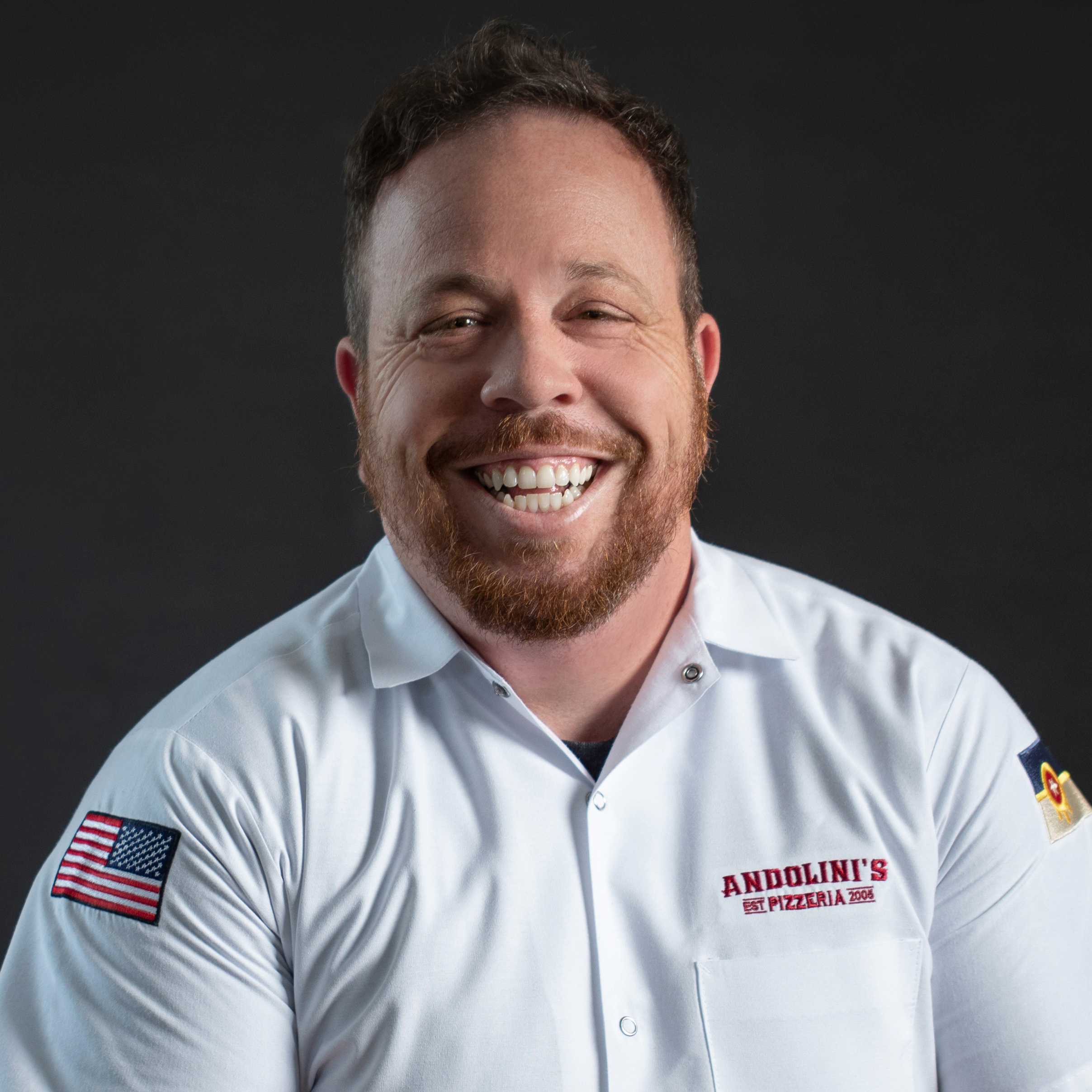
Mike Bausch
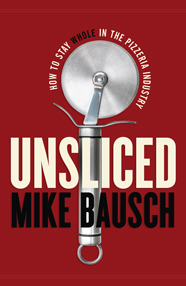
Mike Bausch is the entrepreneur and restaurateur behind Andolini's Worldwide, the parent of Andolini's Pizzeria in Tulsa, Oklahoma. He founded the business in 2005 and grew it into a group that includes several pizzerias, gelaterias, food hall concepts, a food truck, and a fine dining restaurant. A Certified Master Pizzaiolo and a former Tulsa Restaurateur of the Year, he is a two-time number one Amazon best-selling author. In Unsliced: How to Stay Whole in the Pizzeria Industry, he draws on his years running Andolini's to show independent operators how to build a distinctive, in-demand restaurant.
📚 Books by Mike Bausch
Transcript
[0:00:29] DA: If you own a pizzeria, you know something most people don’t, the pizza business is more cutthroat, stressful and multifaceted than Wall Street. Every day is a constant struggle to manage overhead, attract loyal customers and to keep your employees motivated. Mike Bausch’s new book, Unsliced, is the resource for elevating your pizzeria. From managing staff to mindset, marketing and everything in between. Mike explains how to make your restaurant unique and in demand, you’ll learn how to build systems that will help you boost your sales and keep your sanity. It’s not hard to get discouraged in the pizza business but with the right perspective, smart systems and hard work, your restaurant can thrive. Hey listeners, my name is Drew Applebaum and I’m excited to be here today with Mike Bausch, author of Unsliced: How to Stay Whole in the Pizzeria Industry. Mike, thank you for joining, welcome to the Author Hour podcast.
[0:01:18] Mike Bausch: Thank you for having me, this is awesome.
[0:01:21] DA: Mike, let’s kick this off, can you give us a rundown of your professional background?
[0:01:25] Mike Bausch: Sure, I am 15 years deep into owning Andolini’s Pizzeria. Before that, I graduated college, six months after graduating college, instead of going into law school, I showed up to Tulsa, Oklahoma from after living in San Francisco, growing up in New York, in New Jersey and I did on a whim where my brother got transferred to Tulsa with Alma Rental Cars as the vice president. He took the bonus and said, “Here, open a restaurant,” and I didn’t drive halfway across America to suck at something. I totally sucked at first and we sucked and I learned my lessons and really honed in on why did that suck and what’s got to change if you ever want to leave the business or have a day off or grow this thing so you’re not stuck into a single unit pizzeria for the rest of your life and those lessons guided us. Since then, I opened five total brick and mortar Andolini’s Pizzerias, I’m a world pizza champion, meaning that I travel the world to compete internationally at making pizza in contests, I write for Pizza Day Magazine, I do consulting for people that are just struggling with the restaurant industry, we have two gelatorias, two food hall concepts and a fine dining restaurant called Prasimo as well as catering and just a lot of stuff all over Tulsa.
[0:02:45] DA: Well, it’s safe to say you are a professional in the space of pizza for sure.
[0:02:50] Mike Bausch: I know how to put cheese on bread very, very professionally well.
[0:02:55] DA: Was there a main inspiration behind the book, did you have an ‘aha’ moment, why was now the time to write it?
[0:03:01] Mike Bausch: The ‘aha’ moment came, I’d been saying to people for a while, other people and other entrepreneurs that I knew, “I have a book, I don’t know how to get it out and I don’t know how to make it not suck,” and someone just offhandedly said, “Oh you got to do Book in a Box,” and I said, “Okay, is that a thing, that’s great, I’ve been looking for it.” I had searched it online and never found anything, found people that could help a little bit here or there but no one who was you know, “We’re going to make sure you give out your book,” and when I stumbled upon it, that was the epiphany of before that, wanting to write a book was I had written a manager training proprietary just for my 18 to 25 year old managers to get them to get it. And then, I had written so many articles for Pizza Today where it started on a whim, right? Said, “I have something I’d like to write,” and they said, “Sure, we’ll let you do one a year.” It became more popular and now I’m kind of the end cap of the magazine, I have a last tip in each magazine and like a wrap up of what’s going on and it’s not recipe specific or anything, it’s just some random tip that I’ve learned and I realized I had so many in me that were not in the book today just things that I’ve seen or learned and I thought I could really pull it all together and that’s when I said we should – this should be a book, we should do something with it.
[0:04:19] DA: Now, has writing the book changed your way of thinking at all? And were there any major learnings along the way?
[0:04:25] Mike Bausch: It developed my writing process a lot better. Now I’m a better writer for Pizza Today, I honed my thoughts a lot better, before they were just scattered and not defined. It just tightened up what I already knew and I’m very thankful for that. You sit in a room and there’s no one else to blame but you which I’ve always liked, I wrestled in high school because I loved it, even though it was a team sport, if you fail, it’s on you and writing a book, that comes right along with it, you just put yourself out there but it’s pure, it’s long form and everything about that I enjoy. Now, what can readers expect from this book? It’s pretty specific you talk about pizza parlors a lot but can other restaurateurs or industries find useful tips in here? Yeah, I specifically wrote it in a very evergreen fashion that there’s a lot of restaurant stuff in there, especially the management stuff, how to handle a talk with an employee that’s good that’s just messing up, to how to handle vendors appropriately and market in a way that’s going to generate real ROI, whether it’s 2020 or 2040, the principles are evergreen. And then, because I’m writing to restaurant people, I know a restaurant person is not going to wait or have the attention span for anything that’s not entertaining or worth their time. So I said, “How can I make this book fun?” And not like, “It’s fun,” but real fun that someone will want to read it. I write it exactly in my voice, there’s quite a lot of cursing, there’s quite a lot of being real with the reader and everything in it is geared towards the reader, it’s not the Mike Bausch happy hour, look at me, look how great I am, it’s really, “Here’s where we screwed up, here’s how you can avoid it,” just giving quality content to the reader throughout the whole time.
[0:06:10] DA: Pardon my pun, have you given away your secret sauce in this book?
[0:06:15] Mike Bausch: Yes and no. I think my ethos to a degree, here’s how I would say it, I defined gravity. Gravity existed before sir Isaac Newton said, here’s the law of gravity. Before that, people weren’t throwing apples and they were just drifting off. But then there was a law of gravity to find, I think in here, I define a lot of things that people might have inherently have an awareness of but they couldn’t put it to paper and now, whether it’s them learning it for themselves or talking with their managers or just especially a guy who is going into the industry saying, “Is this the right thing for me?” The first two chapters are about it might not be, be aware, straight up, so there’s that and then it gets into the nuts and bolts of a guy or a girl who has opened a pizzeria and they’re like, “I’m doing everything that these other guys do, why am I not successful?” Well, you’re not doing something that they haven’t done, that’s why, here’s how you can be you so you can actually make some money in this and feel proud of what you’ve done, not just be some carbon copy of what you think you’re supposed to be.
[0:07:12] DA: I have to ask this question and I want to start with the acknowledgement section of the book, you have some strong words for actor Lou Diamond Philips. Can you explain this to us?
[0:07:23] Mike Bausch: I think everyone already should know this, that Lou Diamond Phillips has generated and given nothing to society. I do that, multiple times, in the book, referencing the actor Lou Diamond Phillips that he has made in fact, absolutely no contribution to said book and I want the public to be aware of that as if they already weren’t but I want them to be distinctly aware that Lou Diamond Philips had no say over this book. Nor do I want him to read it, it’s really not for him, that’s what the readers should be aware of, out of the gate.
[0:07:56] DA: Yeah, if you’re listening Lou, please change the channel.
[0:07:58] Mike Bausch: Stop now, it’s America, you can keep listening to the podcast Lou Diamond Phillips but I’d be lying if I said I prefer that you didn’t.
[0:08:06] DA: I love this, I’ve never heard a hard stance on Lou Diamond Phillips, but I appreciate it and again, this is a little nugget of what a fun read your new book is. Now, you are a restaurant owner and five times plus over but March comes along and everything is forced to close. How did your 15 years of experience help you during the early days of COVID?
[0:08:30] Mike Bausch: I think we were so prepped for this better than we ever had been before. I could not have reacted the way I had to it or we as a team could not have reacted three years ago. Which really drove the point home for me writing this book because I had a different introduction, I wrote the introduction last and the introduction that I had was about just a crazy night from 2011. After COVID, I said, this is not only more timely but it’s more universal how we handle that first read. I journaled every single day, what was happening and how we were advantageously using the systems that I reference in the book to get past it because each one of the systems is put on front street, not in the course of 90 days to figure something out but in 90 minutes. So a very apropos introduction, trial by fire, but I then say, as crazy as that is, that would not have been possible without these systems. Now, that’s just the standard operating procedure day that I anticipate crazy because before, something just one little, you know, a rock in your shoe and a whole day is thrown off. Now I’m ready for boulders to lay on top of me at any minute. It’s a real self-evaluation that people need to take on. The assumption is, “I’ve eaten at a lot of nice restaurants so I understand the restaurant industry,” and nothing can be further from the truth. I don’t assume that because I’ve seen The Godfather that I could direct Godfather Four. But that’s an assumption a lot of people make, “That movie was crappy and I know why restaurants fail,” or they had their egos built up because someone says they’re great at cooking and I could, that’s great, you’re good at cooking, that doesn’t mean you could do this as a job because I really emphasize the point that cooking well is the price of entry. That’s just okay, great, now your foot’s in the door, all this other stuff is going to destroy you unless you’re really prepared for it. Countless marriages fall apart from this industry. People go in, expecting it to be a money generator day one, it’s not. Or they think that it’s just going to be easy enough. I mean, how hard could it be, you cook a little stuff up, you talk to the customer, they love you because everyone else has always loved you in the past. It’s not the same. Like a comedian, the guy who could tell a joke at parties and everyone’s having a great time and they’re the life of the party, well, they’re not paying him to be funny, there’s not a high expectation. The second a person walks on the stage, it doesn’t matter if they’re Jack Nicolson, after 90 seconds, it’s like make with funny buddy, you better be funny or else I’m going to get mad and the same thing is true with a restaurant.
[0:11:22] DA: Yeah, you mentioned loving pizza is simply not a good reason to open a pizzeria. Yeah, you make that comic, comedian metaphor but what else can folks expect when they open their first pizzeria, if they do go through with it?
[0:11:39] Mike Bausch: I think they can expect a lot of surprises, a lot of heartache a lot, anything that they think it’s going to cost, multiply it times three. Because generally, the new pizzeria operator or new restaurant operator has their mind set on the menu and the equipment needed to purchase it and maybe the rent, they’re not thinking about, “I’m going to need to get mats for the door and I’m going to need to move the door over here, I need a door guy, I need a key guy, I need a mat guy, I need a linen guy, I need an IT consultant, I need website, I need all these things, and they all need to be great,” you immediately become a jack of all trades when you become a restaurant owner. Whether it’s HR consultant, payroll, accounting or just life coach to a bunch of 16 to 25 year old’s. If you’re dealing with high school kids, they’re just emotional, if you're dealing with 25 to 30 year old’s, you’re dealing with people that life might not have worked out the way they planned it to so they have a whole other set of problems and this has nothing to do with food at this point but if you don’t really do it well, you collapse and everything else falls apart.
[0:12:46] DA: Now, first impressions tend to last especially in the food industry. What are some ways a new restaurant owner can create a good impression on their customers?
[0:12:57] Mike Bausch: The biggest thing I emphasize to any new restaurant owner is, to be the heightened version of themselves and to be unique. Do not seek to copy the guy down the street who is successful. Because you will inevitably look like the Acapulco heat to their Baywatch. It’s just what you’re going to come off as, you’re going to come off as a cheap carbon copy. No one wants to go to the second best restaurant in town, it’s usually the most convenient restaurant, i.e., “What can we get right now, I’m hungry, I don’t want to wait,” or the best. The best can be anyway it hits their brain, I’m not saying it has to be fine dining linen service, a dive can be the best if you love that dive ambiance but a dive ambiance is still ambiance, it’s still a cultivated look that gives you a yearning in your brain and that’s what you have to tap into, how are we going to create purchase pride, that’s a big thing I push on. Are you creating purchase pride from what you sell? In the restaurant industry now, it’s extremely hard to be the cheapest version of something, to have that be your unique selling point because you just don’t have the buying power when you’re an initial restaurant. You have to be the coolest, kitschiest, funnest, most endearing version, which is much more attainable, here’s the good news, it’s significantly more attainable to do that as a person who owns a restaurant in the town of other people who live in that town with you. You are way ahead of the game in that sense because people want to like you and want to have the place that they know the local person. If you can really hone in on that and not be soulless or acting corporate, you’re ahead of the game.
[0:14:37] DA: Now, your favorite food is someone else’s least favorite food. We’re all different. How do you deal with customer complaints, specifically even when you know you’re right and online reviews?
[0:14:51] Mike Bausch: Well, on online reviews, I didn’t know, I mean until Trip Advisor named us as one of the top reviewed pizzerias in America, that just happened kind of on a whim. I didn’t see it, it was a press release, it wasn’t like a letter in the mail or a call from Trip Advisor, it just really – so obviously, we were doing something right and the main thing I deal with the negative review is that the first response has to be assuming they’re right. They could be very well wrong, but I have to assume they’re right and investigate it, believing them first and even in the most egregious of reviews, there’s always a nugget of something that is truly wrong, they might go to negative town and just say 10 other things that have nothing to do with anything but something legit went wrong and it could be their perceptions and all that but people, a lot of restaurant owners have a lot of ego and they’re like, “Hey, this is BS, I didn’t do anything wrong, screw them.” Do you want to make money or do you want to be right? Because if you want to be right, it’s a very, very solemn existence but if you want to make money, you have to endear yourself and fix it with that person and if the customer is, are they always right? I don’t know, probably not, but do they always have money? Yes, so fix it.
[0:16:02] DA: Now many first time restaurateurs and pizza parlor owners specifically end up working 10, 12 hour days, six days a week minimum and they don’t see it coming and a lot of times the problem is staffing. How do you go about finding the right staff, keeping that staff and the most important part, finding trustworthy management?
[0:16:24] Mike Bausch: It’s extremely hard in the current landscape and it has been even before COVID to get dependable staff that want - I mean unemployment being low actually hurts restaurants. It is great for America and I am all for it. I mean I don’t want it to be the inverse nonetheless, low unemployment is hard on the restaurant industry because people can now apply by just clicking a button and they have their resume pre-loaded and apply to 30 restaurants. So it is a much different landscape than it was 15 years ago. So I seek to find with younger people type A personalities in the making, kids that want to be a part of something. We don’t pay high school football kids or cheerleaders or soccer guys and girls, these kids don’t get paid anything and look at the heart that they’ll bring to it because they believe they're a part of a team and they are growing as people. So if you are offering business life skills and you are working with them. And you are not a sleazy owner or doing surly stuff on the side, you can get great high school staff. Now when it comes to staff that is 20 to 30 their motivators change and it is, “Am I working somewhere where I am developing as a person?” Still a kid but now it kind of translates and transfers into acceptance. “Do I feel welcomed in here?” And that means you create an orientation and a five day training that really welcomes people in. And as much as I could boost Facebook ads for openings and things of that nature, word of mouth will always do best and when the other restaurants have lacklustre managers who don’t care, who don’t schedule well, who are burning out staff or not scheduling them because of one weird thing, just all sorts of mismanagement and ambiguity and lack of communication, that’s where we swoop in and say, “Hey, you want a home where we have structure but we’re not on your back all day? That’s where you can come.” And we have done very well. We have a staff and a lot of people in town can’t get employees, we have them.
[0:18:19] DA: I think a really cool part of your book is that you actually add a lot of resources. You show your documents for checklists for servers who open up including exact ways to make your food. Can you tell us about what documents and resources you provide and what they help to solve?
[0:18:37] Mike Bausch: Yeah, when writing a book, again, I want to bring as much value to the reader as possible and there are certain very simplistic concepts that we have taken on that I just haven’t seen anywhere else. Yeah, there’s recipe cards. Well, that is not a unique thing but here is an easy way to do it on Excel with an iPhone, a super easy way that’s also definable. A lot of recipes that I’ll see for random pizzerias will say 50 pepperonis but it doesn’t show, “Hey, here is where you place them. Here is how to do it so that that way it is the same way each time.” Or it will say, “A skosh of something,” instead of, “Know it is two tablespoons.” So these things make for growth because a lot of single unit stores have the owner so involved in everything that they treat everyone like children and then they act like children instead of, “Here’s the process, do you understand it? Great, now I expect that you could do it on a daily basis and I can work on growing the business instead of being just a glorified employee.” Which again, a lot of single store pizzerias turn into that and even though five units, the management is still spinning their wheels. So that’s an example of one, the checklist, this is a stupid ‘aha’moment I had but I realized that in hospitals where communication is key, it is the master. It is making sure lives are saved by having communication and it wasn’t done on a bunch of little sheets. They’re here and there but they have a master whiteboard. Just a whiteboard on the wall saying the patient's name, how they're feeling that day, what is going on with them and I also saw that in the Marine Corps. In my brief time in the Marine Corps, we would have the letter of the day and everything was written. We are going to do this at 0800, this at 1400, all of the stuff that was going to occur that day explained on a big post it note. One of those big, not legal pads, but the ones that you could just see that you would use in any group session. So I applied that to a whiteboard and boom, it just made the millions of differences to our restaurant, instead of our staff having to wonder what they were supposed to do or go find the iPad or go find the checkout sheet or is it yesterday’s sheet or is it today’s sheet. These problems were pervasive. I said, “It’s a stupid whiteboard. I figured it out, here you go Mr. Restaurant owner, do it like this and you’d be much better off.”
[0:20:55] DA: Can you tell us a little bit more about your transition from that first restaurant with these highs and lows to the position where you are now?
[0:21:04] Mike Bausch: Sure, I mean the first restaurant took six years. So the first year, every day, seven days a week, making dough, going home, some days not even going home. When people say, “Oh it is going to be long hours,” I’m like, “There is no longer hour than I haven’t left here in 48 hours. I slept on the floor for two hours,” and if you are not willing to give that much then it is not for you. It is going to fail, it is not going to do what you think it should do and you are going to feel defeated. So you have to give yourself to it. By year three, there were certain things that we were defining and they were doing well but again, the comedian allegory, we were finding our voice. We were doing things that I would never do now. We were selling frozen ravioli, we were selling pre-frozen fried stuff because okay that is what you do and they are buying it. We are making money, that’s what the vendors are saying a lot of people like and they must know more than me. And these thoughts that are like cats fighting in your brain, I hadn’t defined what we were yet. There’s a few things when we locked on something it was like keep running in that direction and then when people were, “Oh this pizza, the way you guys stretch your own fresh mozzarella cheese it’s amazing,” and well then let’s do that with as much stuff as possible and no one was raving about a frozen product. They might eat it but no one raved about it and I found that to be counterproductive. Because if it wasn’t all killer no filler, then it had filler and filler is forgettable and another restaurant could have that same item and then they’re just as forgettable as us and we are both forgettable restaurants just churning out slop. Another gas station that you buy chewing gum from, just another thing instead of this scenario it is frozen ravioli. So now it was, “Okay, that’s our brand. That’s our thing. What is our look?” Our look didn’t get defined until 2012, seven years in. Once we opened our new restaurant, it was so nice because we built it ourselves, like this would be cool we did it with wood, it would be cool if we did it with brick. It would be cool if we had tin ceilings and made it look like a bar in New York and just falling in love with what we could do since we got to build it from scratch and not be in a strip mall and then it was like, “Oh crap, we did this too nice. Our brand is going to have to shift,” and now our other stores look like that. My original suburban strip mall, we completely redid the interior to make it look like our second store. Again, you learn these things but there are certain things that you can try and get right day one and you just have to be aware that certain things are not going to be right on day one and fail as fast as possible to get over it but there are certain things that if you fail it’s complete calamity and that is not being unique, not having enough startup cash and just not endearing yourself because that’s the superpower that people don’t realize they have. Using your endearing quality as an independent business owner in America is your superpower and so many restaurant owners think that they can’t pull that card.
[0:23:53] DA: Now clearly you have a lot on your plate. So what is the next step in your journey? Are you staying put and maybe growing what you have or are you moving forward with more?
[0:24:03] Mike Bausch: We are always growing and I have other ideas and other things that we can do. We have grown our catering business significantly. I am looking at what a post-COVID world means and seeing what we could do with contactless business setups and there is a lot of opportunity for us in Tulsa. The beauty for us in Tulsa is that we’re known. We have other markets that would like us to go there and we can take these systems there but we’ve also built a network. So it is not going to be an easy option but we are completely prepared to if we make that decision and also with the book, when I wrote this book, I wrote it genuinely just to write it. So I was like, “Oh what’s the move? What’s the ploy? Are you trying to get rich on it?” I just have it in my head and I just want to share it like, I really just want to share it. I think it could help someone and it was pure and altruistic. Now that it is done, there’s a lot of people that are emailing and calling and saying, “Hey, could we come see your restaurant? Can we do that? This looks interesting.” And I think there is a market to come to Tulsa and see a pizzeria, a fine dining restaurant and right across the street, a quick service gelateria with our office above with a full classroom, we can get a lot done and the few people that we’ve had come by in the last few months, we have taken them from being completely unprepared for a business to having a pro forma, set books, a business plan, recipe basics, mapping out their restaurant and doing it in two to three days instead of going to them and being some $30,000 consultant they can come and watch what we do and learn it for a significantly less cost and be better off. So we’re looking to develop a management school that if you are out in Kentucky, come to Tulsa. We’re in the center of America, be here for three to five days depending on what you need to learn, send your nephew if you are not running the restaurant, which is a dumb move but nonetheless. My brother said, “Hey my little brother, how about he does this thing?” If you have someone who is willing to just die for the restaurant, it will be okay because I can take anyone who wants to learn and make them great. That is another fallacy. If you have no awareness of the industry that’s okay, as long as you are willing to give yourself up to it. There’s plenty of people who have been in 20 years deep who still don’t know anything about it because they just assume, “I turn out the food, I bring it to the table, I get my tip and then call it a day. I’ve been in the industry for 20 years, I know a lot.” You don’t know anything. You are half-assing, you will never be an owner. You have no awareness of what it takes to be an owner, you have half-assed for 20 years and you are great at that and that’s all you’ll ever be.
[0:26:33] DA: I want to end this, doing something for the first time here on Author Hour and I would love to introduce the hot seat where I am going to ask you some quick questions and I’d love some quick answers. Are you okay to be on the hot seat?
[0:26:45] Mike Bausch: I’m in the hot seat.
[0:26:46] DA: All right, here we go. Are you ready?
[0:26:48] Mike Bausch: Yes.
[0:26:48] DA: We’re going to start now. Are you sick of pizza?
[0:26:51] Mike Bausch: No. God no.
[0:26:53] DA: Can that actually happen?
[0:26:54] Mike Bausch: To someone who doesn’t love this business.
[0:26:56] DA: Are San Marzano tomatoes the best tomatoes?
[0:26:59] Mike Bausch: Yes and no. It is a very in depth question that I can get into but there’s a lot of liar tomatoes. There’s liar tomatoes in Italy that are not from Italy because there’s only so many bushels of San Marzanos. So if you go to Whole Foods that ain’t a San Marzano. You go to most stores, you’re getting liar tomatoes and you have to know the farm and also here is a random thing, DOP San Marzano tomatoes aren’t even DOP San Marzano tomatoes. The Mafia has gotten so far into the tomato game. I mean I can go an hour on this alone. There’s so many liar tomatoes but you compare that to a California sweet tomato, there’s no fresher tomato than coming from Stenos Las Foods tomato farm in California. There is no uniquely effervescent sweetness and unique sweetness but that of a pure San Marzano tomato of which I like Lauer Gina and Manzo Foods in Italy.
[0:27:51] DA: I feel like the hot seat, you just blew my mind with liar tomatoes but I am going to keep rolling through. Should you fold your pizza slice?
[0:28:01] Mike Bausch: Yes, if it is over 16 inches yes you should. If it’s less than 16 inches, it is not really necessarily foldable and if you use a fork and knife and it is not Chicago style then again, it’s America. We won the wars, all of them, you could do whatever the hell you want although you will do it with the disdain and disrespect of those around you who know the proper way.
[0:28:22] DA: Should every cuisine offer parmesan style on their food?
[0:28:25] Mike Bausch: That is an interesting one, deep fry it and put sauce and cheese on it. I don’t know, some Pad Thai deep fried with some sauce and cheese. I don’t know, it is worth the shot. Italian fusion has never really landscaped that strongly but I am interested to see and try out.
[0:28:39] DA: What tastes better, Domino’s Pizza or the Domino’s Pizza box itself?
[0:28:44] Mike Bausch: Domino’s came back. I mean Domino’s is Domino’s, they never lied and said, “We’re not Domino’s.” I get annoyed by the guy who sells gas station pizza and it says “Quattro Formaggio” on it. I’m like, “Okay, it’s four cheese.” Which four cheeses? Is Velveeta making an appearance? Is Giuseppe really in the back tossing dough? Everyone knows what Domino’s is and Domino’s is the first pizza company in the history of pizza to do a mea culpa as a marketing strategy, which they did like five years ago like, “Hey, we know we used to suck but we are trying to suck less,” that was gorgeous. That was gorgeous.
[0:29:18] DA: The final question, Biggie or Tupac?
[0:29:21] Mike Bausch: Oh, I am a Biggie fan personally, I think his rhymeflow is better. There’s so many errors of Tupac because people forget like ‘I get around’ before it was ‘California Love’. He was just the party rapper, people forget that and Biggie was always Biggie. You listen to Juicy, Juicy is just such a perfect song, perfect rap song that I don’t think that there is a Tupac’s song that is as perfect as Juicy.
[0:29:48] DA: Now Mike, thank you much for coming on the hot seat. Your book is such a fun read and I asked you these questions because you actually do an interesting thing where you give the reader musical selections as a palate cleanser in between your chapters, which is fun, it is a good way to break up reading the book and I just want to say, thank you for writing this and congratulations, especially for a book like this that’s going to help so many small business owners.
[0:30:13] Mike Bausch: Thank you. Thanks for having me. Thanks to everyone at Scribe and just I really dig the palate cleansers. It is another unique selling point or USP, which even in the book it’s kind of like - a coffee table book that turns into a coffee table. Well it is a book with USP’s about USP’s that has its own USP’s and that was something I wanted to bring so that the reader doesn’t get bored and also goes on a journey with me and that they are listening to me, not the encyclopedia of pizzeria management. So that they feel that they are with someone while they are reading this.
[0:30:46] DA: Mike, this has been a pleasure and I am so excited for people to check out the book. Everyone, the book is called, Unsliced, and you could find it on Amazon. Mike besides checking out the book, where can people find you?
[0:30:55] Mike Bausch: I am on – the easiest place is unslicedbook.com, made a new website. It’s got all my social links there. If you want me to work with you or go to our management school or just speak or just any random question at all, even the Spotify playlists so that you don’t want to find them yourself and just boom, there’s the songs, I got it all for you at unslicedbook.com.
[0:31:17] DA: Awesome Mike. Thank you so much for coming on the show today.
[0:31:19] Mike Bausch: Thank you so much.
[0:31:22] DA: Thanks for joining us for this episode of Author Hour. You can get Mike Bausch’s new book, Unsliced, on Amazon. Also, you can also find a transcript of this episode and all of our other episodes on our website at authorhour.co. For more Author Hour, subscribe to this podcast on your favorite subscription service. Thank you for joining us, we’ll see you next time. Same place, different author.
Want to Write Your Own Book?
Scribe has helped over 2,000 authors turn their expertise into published books.
Schedule a Free Consult