Randy-Garn: Episode 587
Read the full transcript
Randy-Garn
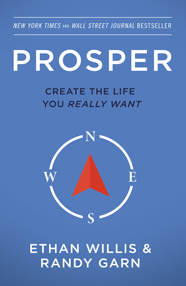
Randy Garn is an entrepreneur, high performance coach, and New York Times bestselling author. He is a founding partner of Prosper Inc., an education and mentorship company. He co-authored Prosper: Create the Life You Really Want with Ethan Willis.
📚 Books by Randy-Garn
Transcript
[0:00:24] EG: When we hear the word prosperity, most of us think of the money it takes to live a comfortable lifestyle but prosperity is so much more than that. It’s time spent with loved ones, experiencing a sense of flow in your work, physical and mental health, a sense of contributing to the world. In short, the definition of prosperity is unique to each individual who sits down to define it for themselves. Through their coaching practice, author’s Ethan Willis and Randy Garn have helped over 80,000 clients set their sights on their own personal vision of prosperity and in their new book, Prosper: Create the Life You Really Want. They coach readers on how to develop the habits to create and savor the life of their dreams. I’m sitting down today with Ethan Willis and Randy Garn, welcome to Author Hour to both of you.
[0:01:15] RG: Thank you for having us.
[0:01:15] EG: Absolutely. I’m really excited to talk about your book today, Prosper: Create the Life you Really Want, and let’s start by giving our listeners an idea of your personal background and what inspired you to start this book?
[0:01:31] RG: For me, one of the reasons why I wanted to write this book was, for myself personally, I wanted to really understand what prosperity really means in someone’s life. Ethan and I have had the privilege of working together for many years and we have been able to, I think Ethan and I have been able to really see every aspect of very successful people that are high net worth but are really miserable, we’ve seen people that are not doing well financially but very, very happy. At the end of the day, for me, it’s like how do you really live the life you really want to live, how do you create that life that you want to create? For me, it was writing this book so that I actually squeezed every drop out of my own life and that I created the life that I really wanted to live which was being in a state of prosperity that we’ll get into here a little bit. So for me, it was kind of a personal mission to put together some steps and create the life that I wanted to live.
[0:02:32] EG: I imagine there was some trial and error that went into that, what did that look like?
[0:02:38] RG: Yeah, it was actually honestly, because we’ve coached thousands and thousands of people, we’ve built companies and really, we’ve been in the training and education and coaching field for years and actually, what came out of it for me was our formula on prosperity, which is the balance between money, happiness and sustainability is true prosperity. For me, prosperity, it wasn’t just about the money but it wasn’t always just about the happiness, it’s the balance of how all of those work together.
[0:03:11] EG: Did you find that in your own life as you were working out this framework that you yourself were unbalanced on one of those ends?
[0:03:20] RG: 100%. Especially when you’re in your mid 20’s and 30s is when we started really working on this. Our company was exploding with growth and for me, it was really diving into what mattered most in my life and to ensure that my most valuable asset was my time and that I was actually allocating my time and resources accordingly. Because of writing this book, I’ve actually really been able to say “no” more and to spend time more with the people and my family and the ones that matter most. I think really specifically because of this book and that’s what I want others to really get to. Are you spending your maximum amount of time on the things that matter most in your life and really coming to your own conclusion on what true prosperity is for you individually?
[0:04:10] EG: Ethan, for you, were there ways that your definition of prosperity got clearer as you worked on this project?
[0:04:17] EW: Absolutely. One of the great benefits of writing a book is when you have to write something down and put it on paper, it forces you to crystallize your ideas and really even crystallize your beliefs about certain ideas and topics and so, I recommend to anyone as you’re thinking through your life and the principles in your life and what you want to be all about is when you write them down, they really become real. That was true to form in our experience of writing this book and one of the reasons that we wrote this book in the first place is, well first, Randy and I, Randy is my best friend in the world. I’ve known Randy for 25 years, our families are dear friends, we’ve worked together for so many years and have been all over the world together and we still hang out outside of work. We would rather hang outside of work as much as inside of work. It’s been just an awesome project to not only work on but to work on with someone who I really admire and love and when I think about someone who lives prosperity in their life, that balances their true values and what they really want to be about with their family and their – the character they want to live in and what they want to use their life force for, Randy has been a great example to me in that process. Writing it with him was something I learned a lot about myself but a lot about this topic through watching him and just being a friend with him and working together with him for so many years.
[0:05:54] EG: Was there any particular take away from learning about that through this process, learning from Randy?
[0:06:00] EW: I think two things that I would say. One is that when you have success early on in your life, so Randy and I started the company Prosper right when we were out of college and we did not even know what we were doing at that time, we were trying to figure it out as we went but we grew the organization from zero employees to 600 employees very quickly. As you do that, your priorities really get tested and one of the things I learned from Randy through process is it didn’t matter what was going on, how busy things were, he prioritized his family and especially a lot of little kids at that time and so for me, that’s something that I really learned and tried to model through this process.
[0:06:48] EG: Yeah, that’s incredible and so – this definition of prosperity is clearly so holistic like you said Randy earlier. It’s not just about money but also about how you manage your time and what you really want out of your life. Obviously, this book can be so useful to anyone seeking any degree of prosperity in their lives. Who is the ideal reader that you had in your mind?
[0:07:13] EW: I would say, here’s a core belief that I have is that everybody wants to write their own book of life and they want to be the author of their life and they want to create something that they have maybe a dreamed future or a vision of what they think their life will be like or could be like and part of this book is almost like putting a flag in the ground saying, “You know what? You can create the life you really want.” You really can do that and if you feel stuck right now in your life, it’s really this moment of deciding, this line of demarcation that you say, “You know what? I’m in charge and I have to remember that I’m in charge of my life and I can begin to create that life through a series of tools,” and so, that’s what we did is we took from – we’ve coached about, Randy and I or our employees, have coached over 80,000 students in 90 different countries and we took those lessons and we boiled them down to six practices and these six practices are what allow individuals and this is anyone, anyone who has a heartbeat, anyone that is upon this life that we all have an opportunity to create whatever we want in this life and so these six practices have been laid out to allow people to do just that in their lives, to prosper, and we believe that everyone can do that.
[0:08:48] EG: Let’s describe these six practices for readers and in particular, I’m curious as we hit on each one, how you came to each of these six as the keys for prosperity?
[0:08:59] RG: We actually did a ton of research and a lot of studies with our students and others; we did a lot of interviews with individuals like, what did prosperity mean to them? We’ve got a ton of data and statistics around how we came up with this formula and some of it really surprised us and really, an understanding and I look at, you know, you ask who is this book for? Our audience was all of the people we’re coaching and training because they wanted more, they wanted to do more, they wanted to be more, they wanted more out of life. I think the book is actually for that type of individual, whether you're high net worth or you know, just coming out of college. It really can help you to put together a prosperity path for yourself but that’s also for those people that may be really having a hard time and maybe stuck and need a plan to help get them in that prosperity path.
[0:09:55] EG: Yeah, that’s fantastic. Ethan, why don’t you take us through what those six steps are?
[0:10:01] EW: The six steps, the six prosperity practices is what we call them, first begins with what we call locating your Polaris Point, so your Polaris Point is the very place that you want to be, it’s your envisioned future and this is different, it’s not just a vision board, it’s not just a set of goals of a place you want to go and how you want to get there. Our Polaris Point is specifically the balance of money and the balance of happiness and how you see those interacting as you look down the road. Your Polaris Point is the way, the place that you want to end up, it’s your true north, it’s the envisioned future place that you want to be. If you know where you’re going, then you know, you have a sense of what it’s going to take to get you there and that’s the second part is to live in your prosperity zone. Your prosperity zone is the balance of what type of income do you need to earn to reach that envisioned future? The third one is, earn from your core, as we believe that people within themselves already have the innate alibies, talents and capabilities to create the income that they need and the fourth is to start where you already are. Instead of waiting, “One day when I get this skill,” or, “One day when this new job opens up,” or, “One day when the economy changes or the election gets over,” or you know, “My son turns 18,” or whatever it might be is to begin where you are. And then number five is to commit to your prosperity path. It’s one thing to talk about doing something but it’s, we talk about deciding to decide. And the steps that you can do to move forward, to mentally, emotionally, physically commit to that path and then the last one is, to take profound action.
[0:12:00] EG: What are some examples of clients that you’ve seen really put these six steps into place and really change what their lives look like?
[0:12:10] RG: Well, there’s been a lot of clients that we’ve worked with and that you know, we’re working with. One client that I can think of specifically really was running a very successful business and had grown that company from 600,000 a year to 30 million in about a 12 month period of time but with that, really had damaged the relationships with the individuals that he was working with because of the aggressive nature in which he was going about it. And that ended up being a miserable thing for him where you know, you think you’re growing your company that much, you’re going to totally enjoy it and love it. And in working with that client, we’re able to help structure in such a way where now, he’s got a really clear plan, he spends Saturdays now completely with just his family and shuts things down, he’s got great leadership in place and he’s been able to get his life back. Where before it was just all about the business and losing your friends and your family, to getting to it where the business is actually growing bigger than ever and putting on the right leadership team and enjoying what you're building and so, there are different ways in going about but if you – all you think about is the money, without a good plan for the joy and the happiness and sustainability that can come from that, because it wasn’t going to be sustainable for his life. It was helping him understand and see the balance that can happen and still achieve massive success.
[0:13:42] EG: Yeah, that’s incredible. Going back to that first step of locating your Polaris Point, what are some of the ways you see people struggle to identify that?
[0:13:53] EW: That’s a great question. One of the great quotes that I love is by Steve Jobs and he says, “I’m proud about what I’ve done but I’m more proud about what I haven’t done.” Many times, to accomplish our Polaris Point in life is we have to decide some of the things we need to stop doing, one of our previous coaches was a coach named Gregory McKeown. He talks about this principle of the “disciplined pursuit of less,” in his work, Essentialism and that’s a principle that we’ve had for a long time which is this idea that you need to stop doing some things so you can do other things better and many times, what we’ve noticed is, some of our students when they first come to us, they think by increasing the speed of life, they’re going to get to where they want to go faster but that’s not true. Many times, it’s not the amount of things you do but it’s the depth in which you do them that allows for your breakthrough. That starts with clearly defining what your Polaris Point is and we ask our students to write it down in about four sentences if possible and as they are able to write that down, really, what happens, Emily, is there’s a process of editing and they have to make choices between different options that are out there and so that’s one of the things that we try to help our students do is really focus in and define the place they want to, where they want to go that also includes deciding where you do not want to go.
[0:15:35] EG: Yeah, that’s so key. Have you seen any surprising responses to that? Like people realizing that they want to make a choice that’s very different from what they’ve been making?
[0:15:46] EW: Absolutely and a choice that they’ve been making and many times, it’s the choice that they haven’t even really owned that choice themselves. Sometimes they’re going about life and how they’re defining success based on the way that their parents had defined it or friends have defined it or people in their circumstance or their surroundings have defined it and one of the things we helped talked to our students about is number one, true freedom comes when we release the expectations of others and when we release the expectations of others that allows two things to happen. One is it allows us to really step into the place that from our very soul, we feel that we are called to go. And as we feel called to go into an area that brings us joy and now it allows us to earn from that area, that opens up all kinds of possibilities because now we are acting from our authentic innate selves and there is a power and energy that gets unlocked from that and sometimes it surprises them. We take them through a series of questions to be able to help them get there but as they go through that process, they are able to unlock some things. And then the second thing that happens with that is when you release the judgment of others is you yourself becomes less judgmental and we noticed that as they look into the future and try to release what other people are expecting of them, a life that’s expected of them they then stop expecting a certain expectation of others and it opens up a path and an energy for them to live into their Polaris Point.
[0:17:30] EG: Oh yeah, I know that resonates with me. I am sure it will resonate with many listeners and I am curious for each of you whether there were notable expectations that you had to release in order to find your own Polaris.
[0:17:45] RG: Yeah, I mean I think there were actually quite a few in writing this and I think you always have to, you know that Polaris Point is really like your true north, right? In writing this, you have to keep making sure you’re having course corrections and that’s why I like – I mean I love to journal but I love every quarter like, “Am I on track with, I am heading in the right direction?” And so I think in understanding your true north and what your calling is in life, it is one of the hardest things to do. And for me, it is like a constant. You have to ensure that you’re continuing steering that ship in the right direction and so continual course correction and that’s why reading this book over and over again or making sure that you’re on track is one of the things that really helped me understand it. It’s not like one decision but it is the daily decisions and daily habits ensuring that you are on your true north or your Polaris Point.
[0:18:44] EW: I noticed also early in my career, when you’re first just starting your career, when you’re first just starting your career there aren’t as many opportunities and options as they do, as there are later on in your career and so early on, it was almost like, “Okay, I’ve got to make this opportunity really work.” And so you would work at whatever that opportunity came your way and really dug in, put the time, the effort to be able to make it happen. And what I realized is the principle that if you don’t kick your Polaris Point then someone else will pick your Polaris Point for you one way or another. If you are not clear about your goals then you can be used for someone who is clear about their goals and as my career went on, I realized that there is a point in my life where I was treating every opportunity the same way I had treated it early on in my career and I wasn’t being selective. I was trying to work all of these different opportunities because I said, “Wow, I am grateful for so many of these opportunities. I need to work them all to their Nth degree,” and I realized that I got to a point where I just couldn’t do it and it started to really affect my ability to be present with those that I really love the most. What made it more difficult for me to go deep on the things that matter the most and I found out that like Zig Ziglar says, I became a wandering generality versus a meaningful specific. And I wanted to be specific and so I had to make a change to say, “No, I am going to do, I am going to really hone in and focus on the things that really matter.” And that is where for me that this concept of Polaris Point came. It is not just where you want to go but it is also where you want to go that is going to lead you to your greatest happiness but also how much money do you need to really get there.
[0:20:39] EG: And when we get into the middle steps of earning from your core and starting with what you already have, I am curious, how often does that happen that someone unexpectedly has the resources that they need and kind of finds their own capacity hiding in plain sight?
[0:20:57] EW: I think almost always, as someone goes forward and that’s why one of the points that we have in the book is, commit to your prosperity path, and that’s an important point because the truth is if you don’t want to do something, any excuse will do and it is not the opportunity that really matters, it’s that you weren’t committed to it. You weren’t committed to it but once someone totally commits to something, it is incredible, the opportunities that start opening out. You know if that boat is sitting in the harbor, it never goes anywhere and the captain is saying, “Oh this boat is never going anywhere. I have the same view all the time,” it’s because they haven’t taken the risk and the opportunity to push out to sea and as they push out to see then they have vistas and opportunities and sites that they wouldn’t have viewed before. So part of that is that they commit to it and then they realize, “Wait a second, there are capabilities that I have inside of myself or in my current network that I never thought were even possible.” And they are able to then say, “Okay, I can earn from what I already have.” And I will just give you a quick example of that is we had a student named Dan Gazway and he was working a nine to five job and he was doing okay but he felt caged in his life, kind of like, life is fine, you know going to work, driving there, getting there at nine, battling through the day, leaving work at five, being exhausted, going home, turn on the TV, eating a late night dinner and then falling asleep and doing it all over the next day. And when we start talking to him, we kind of went through this Polaris Point exercise and earning from your core and what he realized is he was an excellent baseball pitcher and he loved doing that and as he realized what he could do with it, he said, “I could teach kids how to pitch and I could do it digitally. I don’t have to do it in my backyard but I can actually create these videos.” And he created this really cool company called The Pitching Academy and he just lit up. He was a different man, he was a different person as he really earned from his core. He then, when he committed to that, other coaches started saying, “Oh that’s cool, how do I get involved with that? Oh, I got a kid that could use that.” But it was only him committing it, starting it, creating the website, creating the story around it that if he would have never pushed that ship out into the bay, he would have never been or earn from his core until he really committed to his path.
[0:23:48] EG: And that commitment can be so scary especially with something that sound so niched, teaching kids to pitch online is an incredible idea and also one that I think I would be really nervous to take advantage of to set that up and I think writing a book is similar. You know there is so much time and energy and effort that you put into that endeavor, sort of on faith and on your commitment to yourself that that’s going to work out. I am curious how was that commitment for you when it came to writing the book?
[0:24:23] RG: You know I think writing the book for Ethan and I it’s, you think it’s going to be easy and then all of a sudden you start to put the pen to paper and that’s when a lot of magic happens and we wrote the book while we are still running our company and doing everything and helping out a ton of other authors and thought leaders and so we had to commit to get it done and you have to commit to deadlines. You have to commit to really, and it is kind of that masterpiece, you want it to be right. But I think just committing to the book, we just had to set aside time to make it happen and so you know, if there are any other authors out there or things like that, you’ve got a structured time to make it happen. So we got a little – if you remember this Ethan, we got cabin up at Sundance.
[0:25:17] EW: I remember that, yeah.
[0:25:18] RG: And we love it up there, up in the mountains and we picked one out that just had a nice stream running by it and we were able to just let it flow and let it brainstorm and just chipped away at it a little bit at a time and we are able to put together an amazing book because of it but that commitment is you’ve got to commit to it or else you’ll be writing a book your whole life and it may never come so.
[0:25:44] EW: Yeah, I love the phrase that every expert was once a beginner and I think one of the reasons that we don’t start new things if I am really just honest about it and maybe a little frank is a lot of time it’s because of our pride. We don’t want to look foolish, we don’t want to put something out there and like, “Oh it got two likes, nobody likes my work,” or you know, “I’m kind of secure now a little bit in my career and this is something new and it might not go well and so what is everyone going to think and how is that going to happen?” And part of it kind of what we began with is really true freedom comes in detaching yourself from the opinions of others and saying, “If this is my work, if this is something I am feeling called to do.” I believe that whatever you believe, who or whatever you believe the caller is, I believe you are called to do something then that caller creates a path but it is up to us to begin that path and as we begin and move forward then all of a sudden we start seeing a confidence that comes into us because we have pushed past maybe the pride or the fear of embarrassment. The ego is trying to protect us but it is really not protecting us but it is really having humility to move forward towards the call that you feel passionate about.
[0:27:10] EG: That’s beautiful, thank you. Thank you so much and if you wanted people to take away one or two things from this book, what would they be?
[0:27:20] RG: For me, I think it would be that a real clear understanding of how they can create prosperity, wealth, happiness, joy and do it sustainable over long periods of time in their life, we really have a really good formula for that and a really good system for that. I truly believe that nobody can mentor and coach you to live the life you’re supposed to live. They can help guide you, they can help share with you some thoughts and ideas but at the end of the day, you’ve got to create that yourself. Nobody else can tell me how to live my life. They can tell me but if I am truly going to live in my core, if I am going to truly live in my – I know what my Polaris Point is now and I know at the end of the day when I leave this earth, what I’ve created, we’re got a really good formula and a framework for people to really build and create a life they personally want. It is not my idea, it is not Ethan’s idea, we’ve just created a framework and a model and a process for your ability to do that on your own.
[0:28:27] EW: The takeaway I hope people walk away with is one, is that where there’s no vision that people perish, like the old saying and that’s a vision of yourself, it’s a vision of what you can be and you can do and it’s my deep belief that you have greatness inside of you. You have something that you have been put on this earth to do and it is inside of you and it is allowing that to come out in your life through the work that you do, through the people that you lift and build. And there is always a saying that when the student is ready, the teacher will appear but I also believe that when the teacher is ready, the students will appear. So part of us, part of our job is to step forward and be that leader, that teacher, that business owner, that side hustle person, whatever it is you are trying to do but when you step forward that the people will show up and there is no magic pill. There is no get rich quick type of a deal. A matter of fact what it is, is more about saying, “How do I prioritize the thing that is going to really allow me to have life inside of me that I can savor this life experience?” And as we do those things that really light us up, the earning part will really take care of itself. You need a plan to do that but that it will take care of itself and that these six practices are important that we laid out. And the other thing I would say to someone that’s reading this book is it’s important to do the steps in order. It is kind of like playing on the piano. I am not sure if you have played piano or not but the order in which you play the keys, it creates a different melody in your life and so starting with the Polaris Pint, moving forward through the steps is that it will create the type of rhythm that we’ve learned from thousands and thousands of people that we have packaged up and provided for you to be able to live the best life and create the life you really want.
[0:30:44] EG: Beautiful. Well Randy and Ethan, thank you so much for coming to talk about your book and again, the book is called Prosper: Create the Life you Really Want. Besides checking out the book, where can people find you?
[0:30:58] RG: They can actually go to prosperbook.com and be able to go get a copy there as well and read more about some of the other stories about some of the students and so you can actually go to prosperbook.com and pick up a copy there as well.
[0:31:11] EG: Fantastic. Thank you both.
[0:31:14] RG: Emily, it’s been wonderful spending time with you today. Thanks for your time.
[0:31:17] EW: Thank you so much for being with us.
[0:31:19] EG: You too. Thanks for joining us again for this episode of Author Hour. You can find, Prosper: Create the Life you Really Want, on Amazon. A transcript of this episode as well as all of our other previous episodes is available at authorhour.co. For more Author Hour, subscribe to this podcast on your favorite subscription service. Thanks for listening. We’ll see you next time, same place, different author.
Want to Write Your Own Book?
Scribe has helped over 2,000 authors turn their expertise into published books.
Schedule a Free Consult