Stephanie Estima: Episode 617
Read the full transcript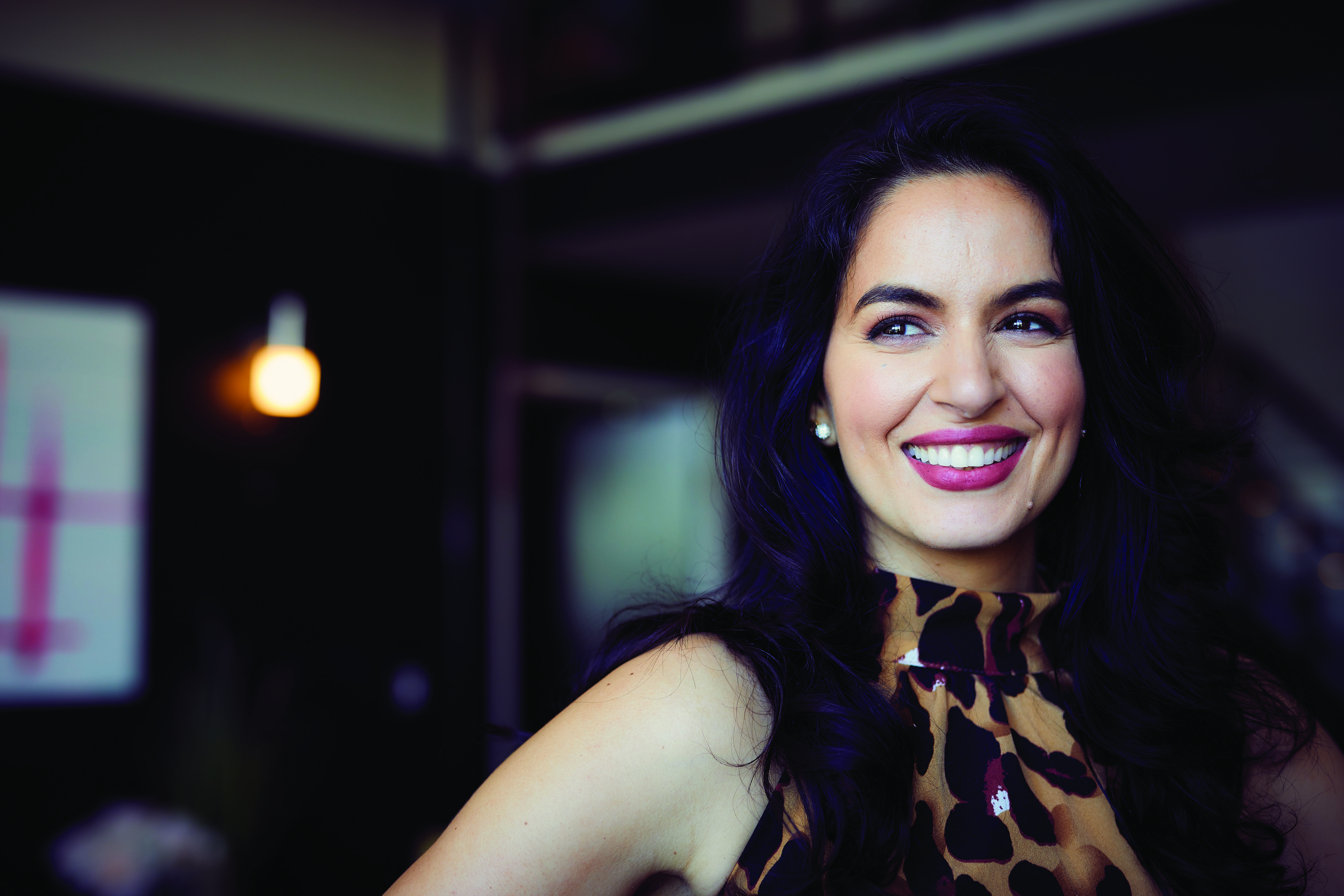
Stephanie Estima
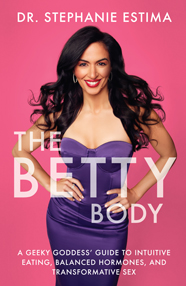
Dr. Stephanie Estima is a chiropractic doctor and women's health expert with a special interest in metabolism, body composition, functional neurology, and female physiology. She is the founder of Hello Betty, a community centered on female empowerment through health and business coaching, and the host of the podcast Better!. Her book, The Betty Body: A Geeky Goddess' Guide to Intuitive Eating, Balanced Hormones, and Transformative Sex, is a guide to menstrual cycle literacy, hormones, thyroid function, perimenopause, and menopause.
📚 Books by Stephanie Estima
Transcript
[0:00:30] MR: If you are a woman who wants to lose weight, balance your hormones or just stop hating your period, this episode is for you. Dr. Stephanie Estima is a doctor of chiropractic with a special interest in metabolism, body composition, functional neurology and female physiology. She’s been featured on Thrive Global and has over 3.5 million article reads on medium.com. After helping thousands of women lose weight, regulate hormones and get off medications with her signature program, Dr. Stephanie compiled all of her knowledge and put it into her new book, The Betty Body. Full of practical advice and modern research, you’ll learn how to go from hating your period to using it as a superpower, the different types of orgasms and why they’re so important to female health, how to build lean muscle based on your menstrual cycle and so much more. In today’s episode, Dr. Stephanie shares with us her journey from hating her period to celebrating it, how not all stress is bad and why it’s so important to be attuned to your body’s cycle, enjoy. Hey everyone, my name is Miles Rote and I’m excited to be here today with Dr. Stephanie Estima, author of The Betty Body: A Geeky Goddess’s Guide to Intuitive Eating, Balanced Hormones and Transformative Sex. Dr. Stephanie, I’m excited you’re here, welcome to the Author Hour Podcast.
[0:02:06] Stephanie Estima: I’m thrilled to be here, thank you so much for having me.
[0:02:09] MR: Yeah, of course. I’m so excited to jump in, there’s so much to talk about but before we do, tell us a little bit about your background and really what inspired you to write this book?
[0:02:20] Stephanie Estima: Good question. My background, my professional background, is that of a doctor of chiropractic and I have always had a special interest in brain health and metabolism and body composition and so I have, for the years that I was in private practice, I would always add those elements into my chiropractic practice. We had, you know, people that would go to a chiropractor for, call it neck pain or headaches or back pain or what have you. Then there would inevitably always be a conversation around, “Well, how can we also support some of the physical work that you’re doing in the clinic at home?” And we would use nutritional proxies, we would use rehab, we would use other brain tricks and tips that I can incorporate into helping people live better and the natural evolution of why this book came to be is I started noticing very distinct patterns in terms of healing between my male patients and my female patients. As I’m sure we’ll get into today, of course, understanding the differences in female cycles and you know, the cadence at which our hormonal landscape is ever changing, really led me to do not only a deep dive on my own cycles and my own experience as a woman but also, to help manipulate some of those variables to get some of the best outcomes for my female patients in the clinic too.
[0:03:53] MR: I love that, and it’s so refreshing, typically, I feel like when you go see, you know, whether it’s a doctor at a clinic or you go to a doctor at a chiropractic office, it’s usually focused on the ailment and not necessarily really getting to what’s causing it in the first place and it sounds like you’re really trying to figure out, “Hey, what’s really going on beneath the surface?”
[0:04:14] Stephanie Estima: Yeah, it’s always, you know, it’s a little bit of, there’s a lot of science but there’s also a bit of art to it as well and I think that the more we can begin to look at a person as a whole being, rather than, as you were saying, like their – patient number 642, the low back patient or patient number 643, the headache patient, when we can start looking at people as whole beings that are multi-layered and complex, I think it starts to take a little bit of the – perhaps some of the hubris out of what I think traditional allopathic models of care might involve and by that, I mean, you know, if you have a headache, they’ll give you, there’s like a pill for every ill, right? They’ll give you like, “Here’s the thing for your blood pressure, here’s the thing for your headache, there’s the thing for your joint issue, for your bone density decreasing.” When really, you can’t really – if you look at a spider web, you can’t really just remove one little string of the spider web and not affect the whole, right? We want to be thinking about people as whole beings, as “vitalistic” whole beings and then, develop your protocols to match.
[0:05:23] MR: Yeah, it’s so important and I feel like often overlooked and thank you for really putting this book out there. I must say that reading this book, I’ve really enjoyed the writing and you found a way to provide such practical advice based on modern research, you don’t shy away from getting geeky, which I really appreciate. But you make it fun and easy to digest so, who is this book for? Who did you write this for, who is your ideal reader?
[0:05:51] Stephanie Estima: Thank you for saying geeky. That’s one of my favorite words. Yeah, I would say that this is for all women and the men who love them, around helping a woman really understand who she is and how she works and then as you mentioned, some of the practical applications that a woman can employ to help her live her best life. This is written for a woman who is – you know, if you are within your reproductive years and you are having a menstrual cycle and it’s also written in the context of what happens as we move through perimenopause and then into menopause, how that cycle, how that cadence changes, what are some of the physiological parameters that a woman needs to be aware of as she moves into her mid-40s and in through and beyond her 50s. What are some of the changes that happen in her body and how she can appropriately respond and adapt to her cells, her internal environment and that of course, in turn is going to help her respond to her external environment. It’s really for, really,any woman who is interested in learning about herself. I sort of wanted to write like a manual on like, “How to be a woman” right? From any age. It’s for any woman who really wants to understand her ebbs and flows and her hormonal milieu a little bit better.
[0:07:17] MR: The Betty Body. This term “Betty”, who is “Betty” and why did you choose to use this term?
[0:07:27] Stephanie Estima: I thought so long and hard about this title, Miles. Of course, as you know, the writing of a book is, you know, you want to get the content right and you want to make sure that you’re curating the information in a way that’s easy to digest but I spent almost as much time working on the title. The title really comes from my podcast. I, like you, host a podcast, it’s called Better with Dr. Stephanie and we started informally calling the fans of the show our “Betties”. Better podcast, our “Betties”. The name was just so sticky. We had people, when they would review the podcast or give it a rating, they would say, “I’m so happy to be a Betty”, “I’m a Betty too,” “You’re the queen Betty and we’re your…,” it was just very organic in the way that it came about and I was thinking about, you know, it would have been very easy for me to say, well, “It’s the Stephanie body,” or the, you know, name it after me but I thought that first of all, that’s super boring and second of all, this is about a woman, it’s not a cookie cutter approach to health, right? Your goal might be, as a woman, maybe it’s weight loss, maybe it’s increased energy, maybe it’s reducing brain fog, maybe it’s just improving your body composition. It wasn’t necessarily about a size or you know, you have to be a size two or a size six or you know, and if you’re those sizes, you know, of course I love and honor you as well but I think so much of the messaging around female health and wellbeing is around looking a certain way. I chose this word “Betty”, first, for the podcast, it also feeds my vintage heart so I love you know, Betty Davis and Betty White and all the – you know, it’s sort of an older – it brings up images of, you know, sort of an older time in Hollywood with the red lips and the curly hair and all that. It feeds a couple of different meanings for me. The other thing, you know, when you – I write about this in the book is I looked up on the, in the urban dictionary what a “Betty” means and of course, the definition in the urban dictionary was just like the exact archetype of the woman I’m talking about. I’m paraphrasing but the urban dictionary defines a “Betty” as a triple threat, she’s quirky, she’s loving, she’s smart, she’s intelligent, she is the balance of her masculine energy and her feminine energy so she’s a doer, she’s productive but she also knows when to rest and how to attune to the rhythms of her body and when she knows that it’s time for maybe a recovery week or a recovery day or a cheat meal or what have you. It really fit into the archetype of the woman that I wanted to speak to, a woman who is driven towards learning, right? She always wants to be working towards creating a better version of herself. But it’s not done from this punitive, like, “You have to do this or else.” It’s done from a place of, “I’m worth it. I am worth investing my time and my energy and my focus and my money on because I inherently am worthy.”
[0:10:38] MR: Yeah, throughout the book, you really drive home a sense of empowerment, even as you’re giving advice on things that we can do. Another thing that urban dictionary defines a “Betty” as, is a modern-day queen, which I love. It does sound like you really did come up with the perfect title so well done. Let’s dive into some of this. You talk about so many different things and we won’t be able to get to all of them today in the podcast so I highly recommend people check the book out. But a theme that you talk about in the beginning is being at war with your body. It really resonated with me because I had chronic pain for about 20 years and I can definitely relate when the pain was healed, it changed the relationship to my body, which then I found actually changed my perspective of the world and even myself. Tell us a little bit about your journey and how you went from being at war with your body to loving and celebrating your body?
[0:11:35] Stephanie Estima: That’s a great question. I think that this is something that in many ways, many different women can relate to. My personal story, which I share in the book is, you know, I spent a lot of years really trying to run away from the fact that I was a woman. I would completely ignore my own signs and symptoms. In the context of my menstrual cycle, and we talked about this in the pre-chat so I know you're cool with me going here, but you know, talking about my menstrual cycle, it was very difficult for me. Every single month, it really felt like I was being punished for being a woman. I had unrelenting cramps, I had angry joints, I was tender, I had brain fog, I had sleep issues, I was moody, everything hurt, it felt like there was heat just coursing through my body and I would silence it. I would – instead of listening to my body’s cry for help, because that's what symptoms are, they’re your body’s way of talking to you, I would silence it with medications. I would take the Midol and the medication, the Anaprox and all the things that I would – anything I could get my hands on to try and silence my body’s way of talking to me and it seemed like, you know, I wrote this in the book, my body, for many years, felt like it was just a vehicle to bring my brain around where I wanted it to go. I was just like this vehicle for transportation. Every time I would sort of sink beneath my throat, the emotions and the pain and the angst that really lived, not only in my nervous system but in my muscles and in my joints, it just seemed too raw and so like any type-A, over achieving person, I silenced it with medication, set a goal that I could focus my attention on and continued to ignore my body. It wasn’t really until, and I talk about this in the book, I had gone on a vacation with my family to Italy and really just allowed myself to rest. There was lots of sleeping on the beach and lots of low grade activity through the day, we would walk to go get our morning cappuccino and then we’d walk to the little trattoria for pizza or whatever and my diet was horrible, it was just like cappuccinos, pizzas and pastas, right? As you do when you’re in Italy. The beautiful thing that I discovered on that trip was that – sort of towards the end of the trip, I got my period and normally, that would mean that the trip was ruined. I would be like hauled up in the hotel room, mask on, medicated and not enjoying anything but that didn’t happen. You know, my period was, it came, it was easy, it flowed, it did its thing and then it left. I originally was like, “Wow, it’s just because like everything is better in Italy. Life is just better there.” But I also couldn’t get this idea out of my mind that, “Okay, if my body was able to do this right one time, yes, maybe there’s some environmental factors that have helped that. But can I bring this back home and can I bring this way of living back home so that I can reproduce that?” That sort of led me on this sort of geeky magic carpet ride, both on myself and on my patients in the clinic at the time when I was running a private practice, on how I can begin to change a woman’s eating patterns, her exercise patterns, her low-level movements, what we call N.E.A.T. or non-exercise activity thermogenesis and what I mean by that is like walking or you know, doing some light gardening work. How can we do some of these light activities through the day that can help our brains which will help our hormones, which can help all of these things? That sort of led me into several years of experimentation and what you see now in the book is the results and the culmination of some of the protocols that I developed in terms of eating, metabolic healing and flexibility, resistance training, cardiovascular work, you know, postural rehabilitation, supplementation, all these things in the context of female cycles.
[0:16:08] MR: It’s incredible and you’ve not only not taken it from – for yourself as far as it being one of the worst things in your life as what you talk about in your book, to being something that you celebrate every month for having it. You went from that transition for yourself but then you take it even further and you’ve actually – since all of the research you’ve done, you’ve actually found ways to leverage your cycle and actually, based on the period that you’re in and what week you’re in, you discuss how you can leverage different aspects of what your body is geared up to do. How can women actually transform their menstrual cycle from being something that holds them back to something that they can leverage to get more of what they want out of life?
[0:16:53] Stephanie Estima: I love that. Yes, I think that every woman, you know, in some ways, I feel it’s a rite of passage for a woman to really honor her female biology and to start to understand some of the ebbs and flows. In the book, I talk about, you know, there are certain times of your cycle that are very well suited for macro nutrient restriction and macro nutrient is just like a fancy word for, like fats or proteins or carbohydrates. For example, in the first two weeks of your cycle, called the follicular phase which is named after the follicle that has the egg inside it. In this follicular phase, it’s a great time to play around with a ketogenic diet, where, typically in a ketogenic diet, we are restricting carbohydrates or we can engage in fasting during this time. Again, it’s a really great time for – I talk about – there’s a lot of different types of fasting and a lot of different ways that we can fast. But very generally in those first two weeks, very resilient, your body is very well adapted for fasting. In the second half of your cycle, called the luteal phase. This is usually after we’ve ovulated. Now, the follicle has released the egg and the egg is kind of hanging around waiting for sperm so that it can be fertilized, the hormonal landscape drastically changes. We see this sort of ebb and flow of certain hormones, like in the luteal phase for example, we have this prolonged and sustained elevation of estrogen. Of course, this is, you know, when we think about estrogen, she is a trophic or a growth hormone. She is going to help with, she’s going to bathe your brain in all of those beautiful growing, you know, in the way that she helps the brain grow. There are certain areas of the brain like our verbal articulation centers, where we speak, that are particularly susceptible to estrogen. In the second half of our cycle, this is a really great time to be on podcasts, to give presentations, to ask for a raise, you know, because we have our brain bathing in estrogen and we also have progesterone in the second half of our cycle. You know, some of the – we talk about this in the book, some of the metabolic effects the progesterone has is it slows down your bowel movements. It starts to stimulate your appetite, so if you are noticing that in those last two weeks of your cycle, particularly in the last week right before you get your period, right before your bleed week, if you are noticing that maybe you are a little bit more – your tummy is a little bit more distended or you are not having regular bowel movements as you typically do, it’s not because you’re broken. It’s not because there’s something wrong with you but this is actually what you are designed to do. If you have more cravings, if you are hungrier, it’s not because you don’t have enough willpower to stick to that one, you know, that you’re trying to white knuckle your way through that one diet. This is the natural flow of things to use a really corny pun. You know, it’s really nice to understand where you are so that you can appropriately adapt. I’ll give you just as an example to sort of solidify this. It was a couple of weeks ago, I had scheduled a weight training day. I have a little home gym that I work out of and it was like leg day. I was supposed to be doing like my hamstrings, my glutes, you know lots of squats, lots of lunges, all that stuff and for the life of me, I couldn’t. I had no energy. I was just flat-lined and I was like, “You know, I haven’t checked where I am in my cycle. Let me just go into my little app that tells me where I am.” Of course, I was like day 28, right? Or day 27 rather, it was the day right before my period and I was like, “Oh that’s why,” right? But if I didn’t have that information it would be like, “What’s wrong with you? Why can’t you just punch it out? Why can’t you just get through this thing?” So there is an element of just loving and forgiving and allowing for your body to go through these different permutations through the month that I think is incredibly empowering as a woman and it allows us to make better decisions for our health.
[0:21:05] MR: I think it’s so empowering as a woman. I mean, as a man obviously I can’t say what the experience is like but even knowing that you go through that, it is amazing to know that to be able to go through experiences, be able to understand your body such that you understand how your body is affecting your experiences and then have that change your perspective of yourself and you know, the world, because as a man, we don’t have that same ability or we don’t go through the same processes as a woman does. I think we are very disconnected and can’t understand that and even as women are going through it because we don’t go through it is harder for us to understand but giving that, all the information that you provide in the book where you really arm women to understand their bodies. It really provides a sense of empowerment that I think is so important.
[0:22:03] Stephanie Estima: Thank you and you know, that was kind of the secret. The underlying secret mission of the book. It was all about, like we give you all the geek and all the science and here is the references and here’s the protocols and here’s what worked and here’s what doesn’t work, but the underlying message there is also what I hope women will take away is to take back their power and to learn how to attune with their bodies because so often, women, we look, and I think this is true for men as well, but I can only speak to my experience as a woman in that, I see women, myself included, along with the women that I worked with, where we look to the external world for our own sense of worthiness and our own sense of justification rather than looking within. I think that when you start to get good in your own skin, when you start to just feel like yourself and you know yourself a little better and you have the tools to appropriately respond to both your internal and external environment, that is when I think that women can really begin to start taking back our power and not look for external validation but rather we can, it’s really more about a journey inward. It’s really about understanding and being good with ourselves because that’s, you know at the end of the end, we can talk about metabolism and body composition and how to live a long life but if you hate yourself, you know what’s the point to live like to a 120 or a 140 or whatever the goal might be if you’re not right in your mind and in your relationship with yourself? I hope that that also comes through in the book, that your relationship with yourself is by far the most important relationship you will ever have.
[0:23:50] MR: It absolutely does come through and in another section where you actually talk about something similar is one of my favorite chapters, you call “stressed spelled backwards is dessert”, which is incredible and it’s actually true, which, I looked. When people are thinking about stress, even women are thinking about stress, it can be one of things, if you understand the different forms of stress and why you’re experiencing it, you can then change your relationship to it. You actually talk about how we can have positive stress, use stress, so tell me a little bit about that?
[0:24:26] Stephanie Estima: Sure. I think when we think about stress, it's sort of this non-specific umbrella term. It sort of like pain, like is it sharp pain, is it shooting pain, is it deep pain, achy pain, you know? The same is true with stress like, what do you mean stress? Is it physical stress, chemical stress, emotional stress? When we start to really break down this word, you can break it down into two main categories. In the book, I talk about this idea of eustress, so e-u ahead of the word stress or distress. Eustress, another word that you’ll see that is used commonly today is hormetic stress. This is like short term pain for long term gain. An example of eustress might be your exercise regimen, so whatever that entails whether it’s weight lifting or it’s running outside or it’s high-intensity interval training, these are all going to, in the short term, like while you are weight lifting or doing your burst training or what have you, it is going to create actually quite a bit of inflammation, right? We see the sympathetic nervous system really ramped up here. We see heart rate increases, respiratory rate increases, blood pressure increases, we have inflammatory pathways that are activated. However, it is short lived and of course, the adaptation that your body makes to that short term stressor is the eustress, is that hormetic stress that is going to help you become much more resilient and develop something that I call cellular grit, which is just, you’re harder to kill, right?
[0:26:07] MR: I love that.
[0:26:08] Stephanie Estima: It’s just like your cells, yeah, like your cells are just much more resilient to many different types of stress, good or bad and another example of eustress might be fasting, which we talk about extensively in the book as well. Fasting or going without food or calorically restricting is a way for you to activate some of these survival mechanisms in the body that is going to confer some of these longevity benefits. Living a longer life is what I mean when I say longevity. For women, this is true for women and men, but particularly women, we want to be thinking about how we can manipulate some of these variables, some of these eustressors that are going to have a positive impact and benefit on our mental health, on our hormonal health and our hormonal landscape and how we can begin to change and manipulate some of these stressors through the cycle that are also going to confer the most benefits. An example, a specific example of that might be, you know, I talk about in the resistance training chapter about how we can alter the type of training that we are doing based on where we are in our cycle and in week two of our cycle for example, I talk about this idea of lifting really heavy because we have testosterone and estrogen in week two, like leading up to ovulation. These are both really big trophic growth hormones that are involved in, if you can time it right, in helping to increase your lean muscle mass and helping to increase, you know, muscle growth essentially. This is a really great week that you can amp up that eustress. You can amp up lifting really, really heavy because you have that testosterone there working to your advantage. There’s a lot of different ways that we can begin to change the stress that we impart onto our bodies so that we can make these adaptations and on the flip side, there is also time to bring your foot off the pedal, right? If we think about stressors as like putting your foot down on the gas pedal and like taking a break would be putting your foot on the brake, there are times during your cycle when it is a great time to think about recovery and I think that this is, you know, the more women that I talk to, the more that the idea of recovery can be really scary because it’s like, “Well, but I am not being productive,” you know? It’s like, well, relaxing and taking time away from the gym or taking time away from your diet, giving yourself both the physiological and the psychological break from your diet is some of the most productive things that you can do to help your body repair because that’s where all your gains come from is in your recovery time and it also helps you go back at it hard when you’re ready to go again.
[0:29:02] MR: Yeah, it is such an important point and I think hard for us to fully let ourselves explore and feel but you do such a good job of showing the benefits of what actually happens during that phase if you do rest and you are able to take time off and throughout the book, with all of your practical advice and all of the detailed research that you do, at the end of each chapter I just want to let everyone know, you provide a go-to sort of like, “What you should do this week to start making changes,” which you often don’t find and so, if anyone out there feels overwhelmed with any of this information or overwhelmed with any of the terms, keep in mind that it’s all communicated in such an easy approach manner that then provides practical advice on exactly what to do and I must say Stephanie, that’s my favorite part of your book. Now, writing a book is no joke and I know you’ve been on this journey for a while now, so congratulations and if readers could take just one or two things from your book, what might they be?
[0:30:07] Stephanie Estima: Well, I think that the big overall theme is that women are not little men and I think that the quicker that you can accept and embody that idea, I think the happier you’ll be and I have, you know, in some ways in the book I am sort of self-depreciating, like I am a quick study in some ways and in other ways, I am slow and this is a thing for me that took me the longest. I was like, “No, I can be just like Mark Sisson, I can be just like all these big guys.” You know, at the end of the day, my body was like, “Listen girl, you’re a woman, you know?” The faster that you can sort of come to that conclusion and surrender and embody that, I think the happier you’ll be. That sort of is a through line and I go through some of the main metabolic and body composition parameters in order to help you learn how to go along with these ebbs and flows of your hormonal landscape so that would be the number one sort of takeaway. The other takeaway and I speak about this a little later. I think it is in the last chapter of the book, is just something what you just said there like, what you can do this week, we often feel that when we embark on a new – whether it’s a new diet or a fitness regimen or some new health practice, we have to be all in a hundred percent of the time, pedal to the metal and it’s really, in my experience, the small persistent and consistent habits and the amalgamation and it’s the accumulation of those habits overtime that really do lead to the biggest results. So often, we rely on our motivation, it’s like, “Okay, I am motivated to change,” but you must also know that motivation will wane. There are going to be times when you don’t feel like working out, when you don’t feel like following the diet and I think that when you can adopt small, little habits that you can easily slip into your everyday life, that is when you’ll have the best prognosis, the best possible outcome because you’re adhering to things that are not overly taxing. You don’t have to completely change, you know, hundreds of micro-decisions all at once and you can begin to layer it like you would clothing. Like I often will give the analogy of like a layered look, you know, you have like the t-shirt and then the jacket and maybe the scarf and then the bracelet and the earrings. You don’t start off with all of those things. You put those things on one at a time and as you start mastering some of these foundational basics, then you can start adding on the jewelry and adding on the lipstick and the jacket and the scarf and all the things. But it’s really about getting these foundational basics right and not beating yourself up in the process, like if you do mess up one day or two days, like, we’ve all been beginners. It’s okay to be a beginner, allow yourself to suck, you know allow yourself. I talk about this idea of being the baby giraffe. If you have ever seen a baby giraffe just born they have like all of these legs that they don’t know what to do with and they fall all over the place and that we can absolutely be that baby giraffe. To just decide to continue to commit to progress and not perfection I think is what is going to give people the most long-lasting results, which is kind of what we’re after, right? It’s not just like, “I want to lose five pounds in the next two weeks,” it’s like, “I want to lose those five pounds and never see them again.”
[0:33:40] MR: Right. Yeah, it’s more about trajectory than anything else. It’s such great advice and often not preached enough in my opinion and the whole personal development sphere of this concept that you should just do it and everything is going to be okay and that’s not the case and you do a really great job of painting that picture. Dr. Stephanie, this has been such a pleasure and I am so excited for people to check the book out. We didn’t even get to some juicier parts like hormones, like sex, so I encourage everyone to check the book out. It’s called The Betty Body: A Geeky Goddess’s Guide to Intuitive Eating, Balanced Hormones and Transformative Sex and you can find it on Amazon. Dr. Stephanie besides checking the book out, where can people find you?
[0:34:23] Stephanie Estima: They can find me on Instagram, so @drstephanieestima and you can also check out our monthly membership. You can go to hellobetty.club and there, we have monthly memberships, so we have, you know, it’s really in a continuation of becoming a “Betty.” We talk about mindset, we talk about fitness, we talk about nutrition. We talk about nourishing your divine feminine and all the beautiful things that it is to be a woman.
[0:35:02] MR: Dr. Stephanie, thanks again and thank you for putting so much into this book. It is going to help a lot of women and the men and women that also love them, so thank you.
[0:35:13] Stephanie Estima: Thank you, it’s been a pleasure.
[0:35:16] MR: Thanks again for joining us for this episode of the Author Hour Podcast. You can get Dr. Stephanie Estima’s book, The Betty Body: A Geeky Goddess’s Guide to Intuitive Eating, Balanced Hormones and Transformative Sex, on Amazon. You can also find a transcript of this episode as well as our previous episodes on our website at authorhour.co. For more Author Hour, subscribe to this podcast and thanks again for joining us. We’ll see you next time, same place, different author.
Want to Write Your Own Book?
Scribe has helped over 2,000 authors turn their expertise into published books.
Schedule a Free Consult