Justin Smith: Episode 670
Read the full transcript
Justin Smith
Justin Smith is a sixteen-year veteran in commercial real estate brokerage with Lee & Associates. He holds an MBA, as well as a master’s of Real Estate Development from USC, and is a member of the global Society of Industrial and Office Realtors (SIOR), an association of top producers within the industry.
He has completed over 500 assignments across the US and has negotiated leases with some of the largest, most sophisticated landlords in the world, including Prologis, Blackstone, GLP, Rexford Industrial, and Brookfield. He has represented executives in e-commerce, logistics, food and beverage, cold storage, automotive, aerospace, life sciences, and many other industries. Learn more about Justin at smithcre.com.
📚 Books by Justin Smith
Transcript
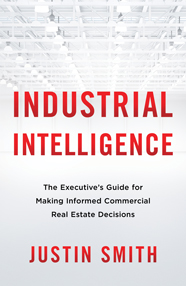
[0:00:33] DA: Are you an executive looking to physically expand your business? What you should be looking for, from your initial needs assessment through your ultimate property transition, is all inside Justin Smith’s new book, Industrial Intelligence, where he outlines the playbook he uses with his own clients. He speaks about strategic relocation planning, building programming, ideal project teams and timelines, negotiation tactics, tenant improvements, everything you need to know to avoid disruption delay and costly mistakes. Whether you’re relocating, expanding, buying or leasing, Industrial Intelligence will teach you how to find the right industrial building in the best location. Leveraging that commercial property as a strategic advantage in growing your business. Hey Listeners, my name is Drew Applebaum and I’m excited to be here today with Justin Smith, author of Industrial Intelligence: The Executive’s Guide for Making Informed Commercial Real Estate Decisions. Justin, thank you for joining, welcome to The Author Hour Podcast.
[0:01:27] Justin Smith: Thank you for having me, Drew.
[0:01:28] DA: Let’s kick this off, can you give us a rundown of your professional background?
[0:01:33] Justin Smith: Yeah, I’d be happy to. My background starts with commercial real estate brokerage, which is the industry I’m in now and I’m starting my 17th year in the business and this is the first job and career path I took right out of college. It’s great to be with the same company and the same office for all 17 years, it’s a sign that it’s working and it’s great to be able to learn and grow with all the same people and really grow within one organization. For me, I came out of UC Irvine, that’s where I went to undergrad and I started here not in the mailroom but as an assistant with a team for six months as kind of a trial fit to see if we are a good match for each other and I worked up from being only an assistant to what we call, like a “runnership” which is an apprenticeship and then from there, all the way up to vice-president and a partner and then for professional development and background, that’s when I reached partner and it was five years in, that’s when I realized that there’s more to this and to this career path than just the work itself and that led me to go back to grad school and grad school at night. I kept working as a commercial real estate broker, focused on industrial property from nine to five or what came to be nine to two and then I would make the trek from Orange County up to downtown Los Angeles to USC at night every night and so I would usually leave it two or three trying to beat traffic up there and it was with that grad school experience in both MBA and real estate development where I feel like my background and development, where I feel like my background and development really blossomed to take what experience I had and really start connecting with other people that are like-minded, that are in different roles within the industry. That was the pivotal point for me to start growing in different markets and in different areas and with different clients and that led me part to start to connect with strategic coach and a couple of other groups that aren’t education-based but that are more professional development that I still participate in today and those have all been helpful to lead me to book writing and to this book, Industrial Intelligence and where we are today.
[0:04:19] DA: Now, why was now the time to share these stories in the book? Was there something inspiring out there for you, did you have an “aha moment”, was it something as simple as you had a lot more time on your hands because of COVID lately?
[0:04:34] Justin Smith: Well, we all had a lot of time on our hands I would say or at least, time at our houses. The genesis for the book really came about with Strategic Coach and for those who don’t know Strategic Coach, it’s a business coaching program. It’s for entrepreneurs and it’s one I’m about 10 or 11 years into and I have found that it’s a great sounding board and it’s a great group where you get tools for thinking and so, these tools for helping you think through business ventures and business ideas, one of them led me down the path of book writing and thankfully, Strategic Coach in Dan Sullivan and Tucker Max in Scribe Media have worked together and they were the ones that introduced me to Scribe Media. I think that’s the, “how I got connected” and then your question is, why now or why? I think in our business, we have a lot of type-A personalities as brokers and then we deal with high powered executives and so I think it really takes a time to build up enough experience and enough confidence to know that what advice you have to give is really helpful and that it resonates and knowing what is valuable to those executives. I feel like I had reached a point in time where I had the experience and the confidence where I could assemble what was important and kind of judge what’s worth the time for an executive, what has the most positive impact and then my commitment to the book was before COVID but I think I began in January. That was 60 days before schools shut down and work from home. It happened to line up with the time when I needed to be writing and just spend some time at home and have some quiet time. This is a byproduct of having some of that time and very blessed that that time was – it was possible to use it to help create this that’s a manual for people and they can help others.
[0:06:45] DA: Now, when you decided, “Yes, I’m going to write this book” you probably had an idea of the book, you know, rattling around in your head and maybe even a little bit of an outline, but you’re in the writing process, just by digging deeper into some of the subjects, you come to some major breakthroughs or learnings. Did you have any of these major breakthroughs or learnings during your writing journey?
[0:07:04] Justin Smith: Yeah, it’s interesting when you think of what you brought to the table and what you uncovered while you were in the process. I couldn’t be happier with how Scribe and not as a plug for Scribe but you know, very happy with how you’re able to give us a framework and a structure to bring out our experience to help bring the nuggets of wisdom kind of to the surface. I felt like there are – it’s such an interdisciplinary business where being a broker, what is it to be a broker and what is your job for executives? There’s no real set defined role. What I had found through Strategic Coach initially and uncovering and devising a way to make your business more in the way that you help executives more process-oriented and then through the writing process, trying to think through how is this information, how does this help for executives best laid out and is it in chronological order or an a la carte? All of that came together cleanly just throughout the framing out of the book and fortunately, the process of locating a warehouse, designing it and assembling a team and bringing it all together, it is all chronologic in nature, right? It is project based. A lot of the nuggets, wisdom and goal that’s down were drawing upon past experience and going through that chronological process and in commercial real estate and in the industrial business, industrial real estate and helping executives with their warehouse property, there’s no shortage of pitfalls and there’s no shortage of learning along the way so I feel like there was so much that could be told and it was if anything, there’s so many lessons that it’s almost hard to think through which ones are book worthy or which ones are – can impart the most knowledge to executives when they’re going through the process on their own. I feel like a lot of the discovery was more of in the book process of categorizing all of the different experiences along the way for the different parts of the journey and then really thinking through what’s most impactful and what can really help connect the lesson in that part of the project to its importance and its impact.
[0:09:39] DA: Do you want to give a forewarning as to what’s not in this book?
[0:09:45] Justin Smith: Yeah, it’s only a small warning fortunately but I found real estate books, what do you usually think of when you think of real estate books and you think of buy houses, flipping houses, get rich investing in real estate and I am a believer in real estate, I own real estate and I love it, that’s just the industry I’ve been in for my whole career but there’s two sides of the table, right? There’s the landlord and investor and then there’s the tenant or the owner or the buyer or the person that’s using the property. The only warning here is that this is not a book about why you should invest in property and how to do it, it’s a book about using warehouse properties, how do you use them, how do you set them up, how do you know what it is that you need and how do you go about getting it. If you’re looking for a book in – purely based on investment, this isn’t that book. If you’re running a company, even if it’s a small company or running your Etsy business and you’re growing out of your house, you run your small service-based business that’s out of a small warehouse or you're running tens of millions or hundreds of millions of dollar business, it’s all about the person that’s running the business out of a warehouse. That would be the only warning that I would give for people to say, think real estate and what they typically see with books.
[0:11:13] DA: Are there any major trends happening in industrial real estate right now?
[0:11:17] Justin Smith: Yeah, when it comes to trends, there’s never been a more important time to be in the industrial real estate market or it’s never had such an impact on society that’s so mainstream. Pre-pandemic, I mean, we all have heard of Amazon and we’ve all heard of Tesla, we’ve all heard of Apple, right? Those are some of the name brands that all have warehouses but we’d all even heard of e-commerce, right? Buying things online but I feel like in the past four or five years, it’s really matured and then with the last year, the increase and being ubiquitous, it’s become a force that you can’t ignore or a force to be reckoned with. The main trends with e-commerce is the shift from buying products at the grocery store. You think just your typical grocery shopping or buying products like going to the Apple store, even as simple as buying shoes or pants or shirts and how people buy that online for consumers and for buyers, right? That’s a convenience, we’re used to it and that’s how people buy things now but when it comes to what happens behind the scenes, how does that change the real estate market? All those are huge impacts that most people are not aware of, you don’t see it and so where it’s going on behind the scenes is when you shift from retail sales to online sales, your use of retail space and it’s no longer something that’s absolutely necessary and then what makes it super clear is thinking through the flow that your goods go through or the path that they go from the manufacturer to the distributor and then instead of to the retail store, they’re distributed again to last mile locations into your house. In order for this shift from retail buying to online buying to happen, there’s countless different impacts and shifts that happen in the supply chain and then happen in the industrial world and so a lot of that is highlighted in the book and a lot of that comes from warehouse automation and robotics, that’s been a huge trend and so these trends shifting from retail to online, robotics and warehouse automation, it’s changed how industrial buildings are used themselves and then it’s changed how people who aren’t even in e-commerce whatsoever use their buildings. An example would be if you’re a service-based business or you’re running your own small warehouse or your own manufacturing outfit, and you have your own building and this is where you run your business and you have your team, your employees and your products and now that there are other e-commerce businesses out in the marketplace with you and they’re growing and the industrial real estate business becomes more institutionalized with more institutional investors, it creates a more competitive environment for what buildings are available. It makes the buildings that are available more expensive to lease and to purchase, it makes less of these warehouses available to be purchased and so even if you don’t participate in e-commerce and you are not running an e-commerce business or you don’t fulfill your products through online channels, just these trends of and the maturation of e-commerce, it affects all business owners that are in that space, all manufacturers, all retailers, all distributors just by changing the environment. I feel like e-commerce and Amazon being the hundred pound gorilla really is that’s the future direction and that’s the major market trend in industrial and then as a result, there are a few other kind of byproducts of that like cold storage and cold storage would be e-commerce times grocery shopping, right? Think of all the food that goes through Whole Foods or any grocery delivery, we all need temperature control, climate control, and that’s the next trend to see that’s kind of laagered in the e-commerce trend but something that will be coming up in the next couple of years in all markets.
[0:16:00] DA: Now, it’s not as easy as looking at a location online, signing on the dotted line and calling in the moving vans, right? What does it take to really put together the best possible lease economics to find that perfect property fit and to really make a seamless transition into your new space?
[0:16:19] Justin Smith: What a question, all right. There is –
[0:16:21] DA: It’s a loaded question, there’s a lot there.
[0:16:23] Justin Smith: Yeah and I think that the main point is that when you think of the example that everybody knows these days, which is Zillow and Redfin, when you want to know what’s going on in your neighborhood and you’re thinking about your family and your house, you can go there. You can find what’s available and you can get all of the details. That didn’t exist in commercial real estate for a long period of time and now it does to a limited degree. Inventory can be now more publicly available and I found it’s empowering. It’s great like this is a trend that it obviously was working and now it’s being applied more broadly and is another byproduct of e-commerce really but the new resource that we have now of having inventory being available, it is a path to self-help and self-education for executives and facility managers and operations people to become more knowledgeable about what is available but it is only just that. It can be a path through which to connect with folks like me but it doesn’t in no way help them with what happens next and so I have found oftentimes executives now they will be looking on their own. They will have their team looking on their own and it used to be something that was a sign of a client and they’re maybe being insecure with their relationship with you as a broker because they would feel the need to look on their own and now we founded beneficial and we almost appreciate when clients are looking at available product on their own just because that demonstrates their commitment and it demonstrates their willingness to continue to learn and it’s now a good sign. To answer your question, what happens next, I find that executives, they generally don’t find the property that they end up moving into, it’s more of just doing their homework. In this book, we go through 14 different chapters that all layout each step of the process so that when you’re running your business and you’re – I mean you can imagine the million things going through someone’s mind who is the CEO or the CFO between all the different departments. Think like technology and IT internal with employees and HR with general councils and with any legal issues that they’re working through or things that they’re sensitive to, to how they’re financing their business, how they’re operating it, like a real estate plays a role in all of that and so having someone as a broker to help be your guide and then whether you have me as a broker or your own broker walking through this process and thinking through how does the building you have today and how does the ideal one you need tomorrow fit with your vision for the company and for your vision within its growth in the industry and then how does it fit with your initiatives in your IT and with technology or with your people and their preferences for working and what work looks like today for them and then connecting that with your legal risk and exposure. Connecting that with your books and your financing, how you’re going to pay for the building is one thing but how it impact your financial statements holistically and thinking through that and then thinking through the operations and that’s the physical what machine goes, how should you layout your racking, where should all the offices be. There are so many things for executives to be thinking about as it relates from the business to the building and in the office and in the warehouse are two big component pieces. I have found that executives, they’re aware of this but they’re not really aware of the holistic picture of how each part of the building and the process relate to each part of their business. In this book, I make my best attempt with my experience and my knowledge to try and connect those and connect those in a way where not only can they be made aware of some of these connections and can have some tools for how to best work through moving from one building, conceiving of the idea and the path forward to executing but then they could also have a manual so that okay, they’ve become aware of a lot of the process and a lot of the inner connectedness but awareness is one thing, right? When you’re going into execution and then you run into an issue or an unknown having the manual that you can then look back on is the next thought for how this can be impactful for CEO’s because they do have questions and me as a guide, I’m used to fielding these questions but most people who are very smart and capable they like to have additional resources. They like to have places they can look and kind of do their own discovery and their own learning. If you think of having something like a Redfin or a Zillow or a LoopNet to be a guide for understanding what inventory is available. You can think of this book as having a guide for when you’re walking through the process what it is, how to do it and then some tips, tricks and some ways to think about pitfalls and turning them into opportunities along the way that not only executives can have but I found the bigger the team and the more successful the executive, the more they delegate parts of this project and the more they’re continually bringing on new team members. To have a primer that they can provide for their team members is also maybe the third best impact that this book can have so that as an executive who’s driving their company forward and driving through a project, they can make sure that other people in their company and that are on the team that may not have experience doing this or may have never done it before may not know all of the lingo and all of the jargon can get a good primer of, “Hey, what does this look like? How should I be thinking about this?” and that should give everybody the opportunity to elevate their game and to have a better understanding, which ultimately leads to better decisions, more positive impact to a shorter amount of time spent on the project and more time to enjoy the benefit of completed project.
[0:23:51] DA: Justin, I just want to say I know we just touched on the surface here but I want to say that just writing this book, which is really like you just mentioned, such a clear manual for companies who are looking for new industrial space is no small feat and it does take someone with years and years and years in this profession to write this book and you’re really going to help a lot of folks out there, so congratulations on the book being published.
[0:24:15] Justin Smith: Thank you Drew. I appreciate your help and I appreciate you having me on the show.
[0:24:19] DA: I do have one question left, you can’t get away that easily. It’s the hot seat question, if readers could take away only one thing from the book, what would you want it to be?
[0:24:29] Justin Smith: One thing from the book, the last chapter of the book is about investments. I’ll give you a warning, this isn’t about investing in real estate and the sole book is not about that but what I have found is a broker and my role here is that throughout this process, you learn the skills of bringing these deals together and working with executives and figuring out what properties work and what their value is and where there are challenges and how you can overcome those challenges. I have found many executives once they have built their company and they have built these skills for themselves, sometimes they have more fun and impact on the real estate part of their part of their business that they then go on and say, “For my future investment, for the future wealth building opportunities, for my family and my estate, now that I have learned these skills through running my company, I now have a thirst and a desire to continue building on those skills separately from the business as investment.” The purpose of this book and for executives isn’t to invest purely in property for investment’s sake but why I bring that up is many don’t think about that. They lose themselves in the weeds of growing the business and they forget that they are building a skill, so this skillset then you can continue to build with. I leave this last chapter as an eye-opener for people who are muddling through, struggling to grow who have been in the same space for a while, they’re struggling to make progress to help them realize that through running their business they have developed the skill and if they choose to pursue that skill, that is an additional way that they can support themselves, they can build investments and they can build an additional business. There may be a second book where we can open up that topic next year but that’s more focused for another audience where it’s not purely based on the business, so that would be my one takeaway is an eye-opener.
[0:27:07] DA: Justin, it’s been a pleasure and I am really excited for people to check out the book. Everyone, the book is called Industrial Intelligence and you could find it on Amazon. Justin, besides checking out the book, where can people connect with you?
[0:27:18] Justin Smith: Connecting with me, we brokers are very easy to find and connect with. We’re very high profile and usually pick up our phones when people call us. I would say the easiest place for people to reach me would be on LinkedIn under Justin Smith and Lee & Associates. If you’re looking for more information on the book, on my team, track record, ways we help people, smithcre.com is my website and you can find my email address there and connect with me with any questions. I’m more than happy to share information, help flush out ideas or provide any feedback to anybody that needs any help.
[0:28:00] DA: Awesome Justin, thank you so much for coming on the show today and best of luck with your new book.
[0:28:04] Justin Smith: Thank you Drew, take care.
[0:28:07] DA: Thanks for joining us for this episode of Author Hour. You can get Justin Smith’s new book, Industrial Intelligence, on Amazon. Also, you can also find a transcript of this episode and all of our other episodes on our website at authorhour.co. For more Author Hour, subscribe to this podcast on your favorite subscription service. Thank you for joining us, we’ll see you next time. Same place, different author.
Want to Write Your Own Book?
Scribe has helped over 2,000 authors turn their expertise into published books.
Schedule a Free Consult