Shannon Byrne Susko: Metronomics
Read the full transcript
Shannon Byrne Susko
Shannon Byrne Susko has spent over twenty-five years building, iterating, and innovating what we now know as Metronomics, a system utilized by hundreds of coaches and thousands of companies of all sizes around the world. After using the system as a CEO for decades, coaching the system to thousands of leaders, and training coaches how to coach it themselves, Shannon has spent the last two years writing this book, which for the first time makes Metronomics accessible to everyone looking for the “silver bullet” that will grow up their company. Shannon is also the author of two bestselling business books, 3HAG WAY (2018) and The Metronome Effect (2014), and she is the founder and CEO of Metronome United, a community of more than eighty coaches worldwide who use the system every day to create lasting impact for their clients, teams, and communities.
📚 Books by Shannon Byrne Susko

Transcript
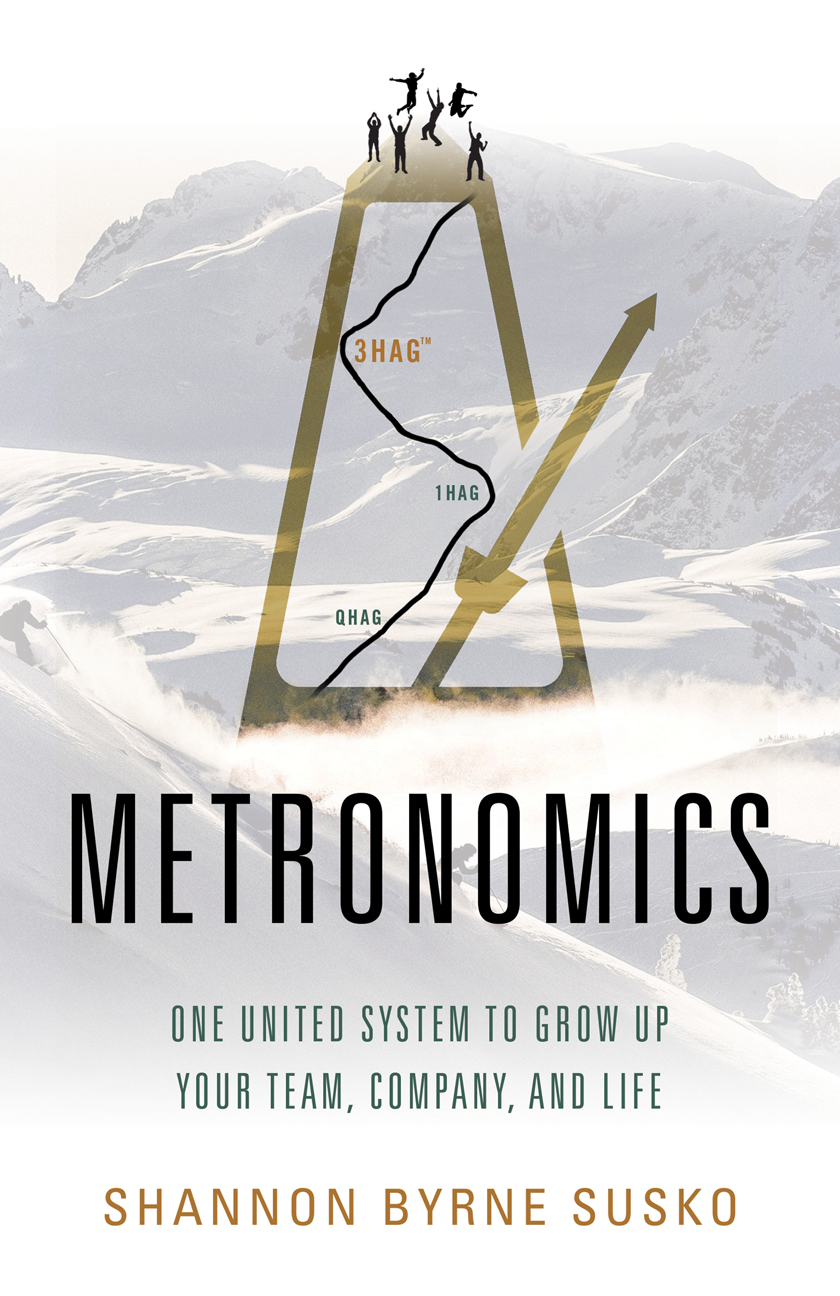
[0:00:41] DA: As a business leader, you’ve read dozens of books by top thought leaders, learning from their research, principles, and tools. Each book dives deep into a specific area of expertise, their strategy, execution, cash, people, culture, and leadership. All share a powerful concept on what to do to grow your business. But how do you efficiently unite these tools into a regimen that works for not just one specific area of your business but for the entire team company and your life? Shannon Byrne Susko’s new book, Metronomics, unites top business thought leadership with over 20 years of proven practical experience. In the book, you’ll learn how to build high-performing business teams that achieve superior results with ease, speed, and confidence in the practical progression that ensures your team is fiercely connected to your strategic execution system. No matter what level you and your team are at right now, Metronomics will meet you where you are and grow with you to the next level and beyond. Hey Listeners, my name is Drew Applebaum and I’m excited to be here today with Shannon Byrne Susko, author of Metronomics. Shannon, thank you for joining. Welcome to The Author Hour Podcast.
[0:01:55] SBS: Yeah, thanks for having me.
[0:01:57] DA: Let’s kick this off, can you give us a rundown of your professional background?
[0:02:02] SBS: Sure, I’m a serial entrepreneur, grown up two high growth companies, sold on less than six years apart, retired, and now I say “I’m reprired,” meaning, now everything I do today is to coach other serial entrepreneurs, high growth CEOs, and leaders, to actually achieve the goals and grow the companies they have always wanted.
[0:02:26] DA: Now, you have written books in the past. Why was now the time to share the stories in this book? Did you have an “Aha!” moment, was there something inspiring out there or are they just pieces of your story that you didn’t get to say in those previous books?
[0:02:39] SBS: Well, the interesting thing, the way this all came to be is, number one, I never thought I’d write any books, two, I never thought I would coach CEOs and leaders, CEO plus leadership teams, and three, I think the big reason why this third book is coming out is that maybe rightly or wrongly, I just, in a first book, The Metronome Effect, I put out and prescribed, prescriptively how we did execution on our – our execution on our cash system and put that out there for people to — For all to people to use, right? That’s why it’s out there. “Don’t call me, read the book, you’ll have great success,” that sounds weird but true. The second book was then, people who read that book loved it and they said, “But you do something more and you keep talking about this thing called the 3HAG” and the second book’s called 3HAG WAY and they go, “What’s this 3HAG?” A bunch of coaches I knew that are doing what I’m doing, they asked about it and they asked about it, and they said, “Do you mind if we use that framework, we see you use it all the time, you talk about it” and I said, “Sure” and so I gave it to them. They had the same success that I had as a CEO and with my leadership team as well as a coach with my clients. I was at a conference, one of the companies, not mine, one of the other coach’s companies were up on stage, they’re being interviewed about their success and they started out the conversation going, “Well, it was all about the 3HAG” and I almost fell out of my chair. I had no idea that they even used it. After that day, they said, “Let’s write that down, let’s write down the strategy system.” The Metronome Effect was basically execution and cash in a way that is practical and efficient and plays out for CEOs and leaders to utilize it. Then you get that going, and people wanted to know about strategy, how do you combine strategy and execution? And so we wrote that book and that attracted a lot of coaches from around the world and they said, “Hey Shannon, I really want to be certified in this methodology” and this is in 2018. I said, “No, no, no, read the book, it’s there, it’s laid out prescriptively like you’ll be good, you’ll be good with your clients” and over three months’ time, I talked to many coaches, they really wanted to leverage and learn more and be experts on a system. We said yes to doing that program. From 3HAG WAY, we created Metronome United, this great community of global experienced coaches and you know, it’s exceeded my expectations, it blows me away but this is what led me to the third book, Metronomics. They said, “That’s great Shannon, so we see the process for strategy, execution and cash, that’s on the business side of things, I got it, we’re working it but it seems like you’re doing something more?” And they said it again and I said, “Well yeah, I mean, you’ve got to work the cultural system, the cohesive system, the human system and, quite frankly, you know, I’m so lucky to work with a coach.” In my time, I was growing up high growth companies that we’ve got to grow into coaches ourselves as leaders and we’ve got to grow our clients into coaches and there’s a four system called the coach cascade system. This is all about team and people. We have one side of strategy, execution and cash and Metronomics brings that together, plus the team systems and really marries up the human side of how you grow up the company you’ve always wanted.
[0:06:33] DA: Now, when you said, “Okay, we’re going to build this method, we’re going to put this method down on paper” and you started writing, a lot of times, during the writing process, authors will be digging deeper just on the subject and come to some major breakthroughs and learnings. Did you have any of these major breakthroughs or learnings during your writing journey on this book?
[0:06:52] SBS: Well, I think the tough thing, when I look at these three books and I – Metronomics should have been the first book I wrote, walked out, said look, we did this four times over 25 years ago, we did it consistently, I was either an executive or a CEO, we leveraged this and quite frankly, I would not have been able to write that book due to exactly what you said. The process in getting it out of my head, not only for my clients, not only for training the coaches, the great coaches we have around the world, but for the process of writing it down, the big things that really, not that we didn’t know - and I say ‘we’ as in the community of coaches -and that we were experiencing. The big breakthroughs that we had was really lining this up to looking at, at the end of the day, how do you win at anything when it’s a team environment? You have a high performing team. In this case, we had a high performing business team. We can have a high performing soccer team, you can have a high performing football team but we’ve got a high performing business team. The biggest thing that is not that we didn’t lay out system by system, quarter by quarter, a prescriptive, progressive way to do it, to do this, we did. That was a really hard piece to it but the work that it enabled me, just by writing that down, it enabled me to ask, why does it work? It goes back to the fundamentals of people and teams. All the things that we know about a high performing business team is highly cohesive and there’s so many thought leaders out there that have so many great things and highly cohesive and how we do that. How do you do that while growing a company? Then, if we think of a culturally strong team, well, there’s so many great thought leaders out there about that too, but how do you layer that in to a building a high growth business? How do you do that too? Of course, if we think of clarity of your role and expectations and accountability, how do you do that as well? There’s some really good work that I saw from the team put together to really show the fundamentals of this, not only on the business side, the strategy, execution and cash, but on the team side, which is your cohesiveness, your culture, your clarity of role and expectations and really founded upon research that is you know, 60 years old, 70 years old. It’s fundamental to how we interact with people and so, this system at the end of the day, Metronomics is very human, it’s human at the end of the day and I really like what we’ve put together, what we’ve worked with on the team. The biggest thing is that, as we’ve socialized this over the last six months, as we’ve worked up to the launch and beyond is, we’re getting lots of confirmation that this matters and it makes sense.
[0:10:07] DA: Now, when you were writing the book, I know you deal with a lot of CEOs, a lot of leaders, were you writing the book for them specifically or can people not in leadership roles or perhaps other industries have takeaways as well?
[0:10:20] SBS: It’s definitely for a business team. I won’t even say leadership team because anyone who might want to grow into leadership or they’ve got their goals out there or you’re a leader already and you want to look at how to actually efficiently and practically grow the team you want, grow the company you want. It’s absolutely in the business domain. Are there things that others would take away from this around the team development and the plan development? These are fundamental and they would apply to really any specific expert domain, whether it’s a sports team, whether it’s professional sports team and nonprofessional, a team that you have created for some other activity. The fundamentals apply to all.
[0:11:14] DA: Now, is there anything that readers should do before they start to maybe prepare themselves to start the book? Were there any tips you could suggest to let readers get the most out of the book and just be ready on page one?
[0:11:28] SBS: Well, I think the biggest thing is, we talk about this all the time and when I decided that to become a coach, I mean, that wasn’t a planned thing but I ended up being a coach, the one thing that is so important for anyone who wants to be coached is to have the willingness and desire to evolve. If you have the willingness and desire to evolve, meaning, open mind, learning mind, willingness to think of things, maybe, in an untraditional way, that’s how I would say that any reader looking at this book - This is not your traditional business system. This actually incorporates both sides of how we grow a high performing business team, which takes into the thoughtfulness around what we need to do to create a team aspect of it, that highly cohesive, culturally strong team and put it together with what we learned in business school. I went to business school as most people have around all the specific technical, but to bring it together and to open up our mind of trusting the system. In order to do it, you’ve just sort of got to let go of what you know, just open up and be willing to actually take in what will be presented because I think we laid it out in a progressive way, the way humans – the way we evolve is progressively, we have version one and version two and version three of ourselves and so, that’s the way this book is presented. It’s a little bit – and then we turn the dial a little bit more and a little bit more and we don’t want to overwhelm the reader. There’s a lot there, there’s a lot in there, we just want to make sure that the system and the framework that’s presented will meet the reader where they currently are, what their current frame of mind is. It’s good to start out with just thinking that we may get presented with some different ways of doing things than what we would traditionally expect.
[0:13:43] DA: I’d love to hear your early story and I ask that because you kick off the book talking about that you were actually a ‘desperate CEO’, as you call it. What was it like for you as a young CEO and why was it and was it always desperate?
[0:13:59] SBS: Yeah, a lot of people put me in the startup, early-stage CEO bucket. Now, I definitely have founded and grown up two companies and yes, in that early days, I put it into a four-year period. I don’t think I was always a desperate CEO but how we became desperate was, what we wanted to have happened, the company we wanted to grow continued to elude us. I say, ‘us,’ the team. We have this great opportunity, we are able to sell the picture and the return on investment, we are venture backed. It was the late 90s, I’m in my late 20s, I’ve never been a CEO before but willing to take it on and so that’s why I said, I didn’t start out as a ‘desperate CEO’ but as the time started and as we progressed, we found that we still had this great opportunity but the time was going to run out on it. We raised a lot of money, patience of investors who was going to run out to you and was running out and we were desperate for something to pull this all together. To not lose that great view of what we always wanted to achieve. When I think about it, I started reading myself, I got all my readers reading with me. In the beginning, I was reading four books a week, four business books a week for two years in this timeframe looking for the silver bullet, looking for the system. I couldn’t be the only one looking for this and someone must have written it down that was progressive, that was human, that was efficient, that was practical, that would meet us where we were. Frankly, we didn’t find it. What we found was so many great thought leaders. The Jim Collins of the world, the Peter Drucker, the Michael Porter. All the icons and then, as we continued to progress, we’re didn’t stop reading books. That desperation came out of that company that we always wanted was absolutely just out of reach. We weren’t getting there and we couldn’t figure out what is it that we need to do to connect the plan that we had to the team that we have. We have this cohesive team, we had a great plan and it turned out to be really good but we have to find a way to connect with two to make it into a repeatable process where that we would work as a team to the team goal, team results all the way through. Yeah, so I always, I don’t know if I would even describe myself as a ‘desperate CEO’ at that time but when I think of it, I go desperate CEO with no system, no repeatable system and the leaders of mine, I had an incredible leadership team that came in from around the world to work together on this great opportunity, which was Paradata Systems, my first company in Whistler, British Columbia and why wouldn’t we leverage those thought leaders on our team like our own thought leaders to figure out how to do this together and so that’s what we did and that’s where this all comes from.
[0:17:16] DA: Now, I would love to also talk again about your personal journey and how you went from ‘desperate CEO' to successful CEO and then you transitioned, as you mentioned earlier, to become a coach. What did that transition look like and what was the first opportunity and first time that you said, “Hey, maybe this is the next path for me?”
[0:17:36] SBS: I definitely went from desperate CEO to repeatable successful CEO and that - you know, I say that with such confidence, but I can tell you when we were rolling that over it wasn’t confident - but the system, now that I can step back and look back, that one united approach, that one system, that one connected system and then it became one connected repeatable system no matter, as a CEO, didn’t matter what team I surrounded myself with, we were able to achieve and apply this system to whatever opportunity was in front of us. We did it four times, twice for me as a CEO and twice in my companies where I got acquired into another company and I was an executive on the team but not the CEO. The CEO is willing and wanted to use the system to grow the company they wanted and so it worked four times and when I sold my second company and we sold it on our three year highly to our goal on our 3HAG, we sold it for an exponential valuation and exponentially bigger than my first one. Even taking on at growing that second company, I say it with confidence yeah, we nailed it. It was validating this system that we now know as metronomics and we truly validated it, knowing that after I sold the company to a large public US company, you know they adopted that system as well and I went over on a contract as you would at such a young company getting bought into such a big company but once I stepped out, I’ve subservient in that whole opportunity I retired and there’s no doubt about that. I retired, I’ve gone pretty hard for the last 15 years and I thought, “You know what? I’m going to retire” I had young kids. You know, I’m married, I live in one of the most beautiful places in the world, Whistler, British Columbia and I am going to enjoy some times and quite honestly, how I ended up doing what I do today that I am so grateful for and thankful for all that coaches and entrepreneurs and CEOs I get to work with is that that journey brought me to a CEO out of Vancouver calling me and said, “You know, just calling to check in to see how you’re doing.” You know, it’s a colleague and they said, “Look, we just watched you grow up and sell two companies less than six years apart very successfully. I’m still slugging along, I still have aspirations of growing the company I want but I don’t see a path to get there. Would you coach us?” I was like, “You know, I don’t think so.” I didn’t plan on being a coach at all even though I benefited greatly from my own coaches. I just didn’t have that on my radar at that time. I think it was too new and so I said, “Well, what kind of coach are you looking for?” because there are different kinds of coaches out there. There’s life coaches, executive coaches, CEO-only coaches and lo and behold, this CEO said, “Well, I’m looking for a coach for myself but plus my leadership team.” So I am going to coach him while coach the leadership team, me with the leaders together and so that’s interesting because that is the kind of coach that I had. I had a CEO plus the leadership team coach and so that intrigued me and I said, “Well, again why are you calling?” and they said, “Well, we just watched you do this” but they said, one more I think they said, “We believe you must have a system. You have a system because we’ve not seen anyone do that” and it’s always high risk and we laughed about it doing the second one after you had success in the first one and they said, “No, no you jumped right in and off you went and you did it again” and I said, “Okay” and he said, “So we want to learn the system” and I said, “Well, I don’t know if you can learn the system. I don’t know if it’s going to work for you. I don’t know if it’s going to work for you because I’ve been involved in every one of these companies.” I don’t know, it has a little bit of me plus the system involved. I said, “If you’re willing, I’m willing” and they said, “No, no we’re willing, let’s do it” right? That’s their version of ‘desperate’ and so, you know, they’re willing to take a coach who has been there and done that, play this role and I put the system in place, so the rest is really history. That was 10 years ago. I retired, I’m repriored, and I started coaching and the coaching, you know, I said, “Look, I don’t want to coach full-time. I just want enough to make an impact, and have some fun with the clients and get them from being that desperate CEO and leadership team to this growing the company they always wanted, being the best version of themselves and not only that, you know enabling their team to do so as well.” Of course, the Holy Grail is to give back to the community so like lots of great impact there, but I realized I can only take on six clients. That’s all I wanted, that was enough. I thought, you know, that’s good but we could only impact so many one-on-one so that’s where the books came into play and that’s why I wrote the books is that one-to-many just to share the system that was now validated over quite a few years by the time I wrote those books to validate the execution system, the cash system, the strategy system and now, metronomics brings the whole thing together and it was probably one of the hardest things to do to get that out of my head and write it down. As you said when we talked earlier, learning as we went. That’s the thing that I loved the most about being a coach is continuing on my own learning journey with six companies, 80-plus coaches around the world and it helps evolve me every day and so that brings you up to present time, I’m still a learner. I am still out there looking for how do we do it more efficiently, more impactfully, how can we help ‘desperate CEOs’ and I say that in quotes like me and like my first client and like many others, you know see it at the other side that they can grow the company they’ve always wanted.
[0:23:59] DA: Now, let’s say there is a reader of the book and they say either in their leadership position and they say, “I’m buying into this system wholeheartedly.” What do the next steps or the first steps look like once somebody’s read the book and wants to implement the metronomic system?
[0:24:18] SBS: Yeah, there is a couple of steps we organized for teams that are at all different levels and, you know, I said it earlier, it’s we want the system to meet the team where they are, where they currently are. It can be a really large company of 10,000 people, this works. They’re going to be at a different place than a brand new company that’s two or four people, and then everything in between. So, how we set it up, because this whole opportunity and this whole journey has been about giving back and assuring that leaders who want to have the willingness to step in there, raise their hand and going, “What’s my first step?” we’ve offered a few steps. One is they can join, we offer monthly what we call a bootcamp. A CEO plus leadership bootcamp and it’s sort of cliché but why we did it is, is that each team can join and you can be a large company or a small company. It has nothing to do with that, it is really about getting the CEO and leadership team in a virtual room with a coach. Every company who comes and joins us, one of the Metronome United coaches will jump on and work with that coach for the duration of the bootcamp. The other thing we did, and we did it on purpose and we got lots of feedback on this, is that we set-up bootcamp to be the whole team comes for the price of one attendee and if the CEO wants to come, if anybody wants to come by themselves, we discourage it by tripling the price. We don’t want CEOs come by themselves. It is really about the CEO and leadership team coming and learning together, right? The next step if people already go, “Yeah, I’m in. I’m really in” there’s two next steps and we usually say just if you’re committed, you see yourself in the book, you see yourself really progressing with the system we say, “Look, there’s one of two options. One is you can join what we call a CEO plus leadership team roundtable, which is a roundtable that there’s 10 CEOs, 10 companies in this roundtable with 10 leadership teams and it’s one day a month and they get to – the CEO plus leadership team learns with a coach in the morning session every month. We’re progressing through the system, all of us together and we do this virtually and then in the afternoon, it’s CEOs only and that’s where we get a common language to talk about the goals that we have, create the camaraderie we need. Of course, there’s a lot of competitiveness because it’s 10 CEOs plus myself moderating that and other coaches moderate these sessions and we’re seeing great success out of that. That tripling of their topline gross revenue and doubling of cash flow. I just talk about a company the other day that was part of one of the roundtables just recently sold their company, they doubled their gross and tripled their cash flow. Those are the things that we want to see as great outcomes because they really frees up the leaders to grow their business, grow the value of their business but also grow the value of life. It sounds a bit cliché about life. The third option is to work directly with a Metronome United coach. We have coaches across the world now, many languages, continents, I’m so proud of this group and they’re not new coaches. They’re 20-plus year experienced coaches, 10-plus years experienced coaches. I’m probably on the lower end and I’m just so proud of this group because what’s that done for us as a community and what the clients and leaders are benefiting from is that group of one collaborative coaching community brain that we leverage amongst ourselves. We’re learning each and every month and clients who want to learn more, engage a coach directly. Work with them on a quarterly or monthly basis to grow their company in the timeframe they always wanted. I had a client say the other day to me, and they were sort of chuckling about their success and you know, I’ve been working with them for many years and they said, “Before I started working with you, I read all the books. I read the what, I’ve read the research and all the pieces. Then you know, I thought to myself, Yeah, you know, my learning, my workshops, all of that, yeah I’m going to get there at some point but now I know that I can get there faster with working directly with a coach who understands the system and time is scarce.” That’s the other thing they said to me that time is scarce. He said, “It’s so ridiculous” you know, he’s a 20-plus year old CEO owner of a company. He goes, “I don’t know why I didn’t clue in faster of course with my athletic background, a coach will get us there faster.” That’s what we’re there to do was unlock, remove the blind spots, be the expert in the progressiveness of the systems. So, those are the three ways that we see companies coming to work with us and to get the team and you know, we see lots of CEOs say, “I’ve got it and we’re going to do this” right? But the whole team has got to be on board, that’s why we have the progression, bootcamp, roundtable, coach but I would say predominantly between the commitment of the team really drives which way they interact with Metronome United.
[0:30:02] DA: Well Shannon, you know we just touched on the surface of the book here but I just want to say that writing a book, which gives such a great system in it and you’re just going to allow companies to build strategies and teams that are going to help them succeed that’s no small feat, so congratulations on having yet another book published.
[0:30:18] SBS: Thank you. Thank you so much, it’s been an incredible process and I sort of feel like I’ve definitely benefit heavily from this process, and I am very grateful for the opportunity.
[0:30:30] DA: I do have one question left, it is the hot seat question. If readers could take away only one thing from the book, what would you want it to be?
[0:30:39] SBS: The one thing I want them to take away from the book is I want them to understand and implement their widget and you got to read the book to understand what the widget is, and how you can own it and what you’re going to do to create and grow the company you’ve always wanted.
[0:31:04] DA: Shannon, this has been a pleasure and I’m excited for people to check out the book. Everyone, the book is called Metronomics and you could find it on Amazon. Shannon, besides checking out the book, where can people connect with you?
[0:31:15] SBS: People can connect with me obviously on all the social channels. You know, Shannon Bryne Susko, we definitely have that but to really get involved in our community, please come to metronomeunited.com.
[0:31:28] DA: Well Shannon, thank you so much for spending some of your time with us today and best of luck with your new book.
[0:31:33] SBS: Thanks so much. It’s been a pleasure.
[0:31:38] DA: Thanks for joining us for this episode of Author Hour. You can get Shannon Bryne Susko’s new book, Metronomics, on Amazon. Also, you can also find a transcript of this episode and all of our other episodes on our website at authorhour.co. For more Author Hour, subscribe to this podcast on your favorite subscription service. Thank you for joining us, we’ll see you next time: same place, different author.
Want to Write Your Own Book?
Scribe has helped over 2,000 authors turn their expertise into published books.
Schedule a Free Consult