Christos Kalogirou: Wild Dogs: An Adventure in Adolescence
Read the full transcript
Christos Kalogirou
One of the most notorious graduates of the Athol Murray College of Notre Dame, author, entrepreneur, and philanthropist Christos Kalogirou’s story is one of a classic comeback. A former alumni board member and the recipient of the 2014 National Alumnus of the Year, Christos dedicates his time to his various businesses and raises valuable resources for nonprofits, including the Mandi Schwartz Foundation and Hockey Gives Blood.
📚 Books by Christos Kalogirou
Transcript
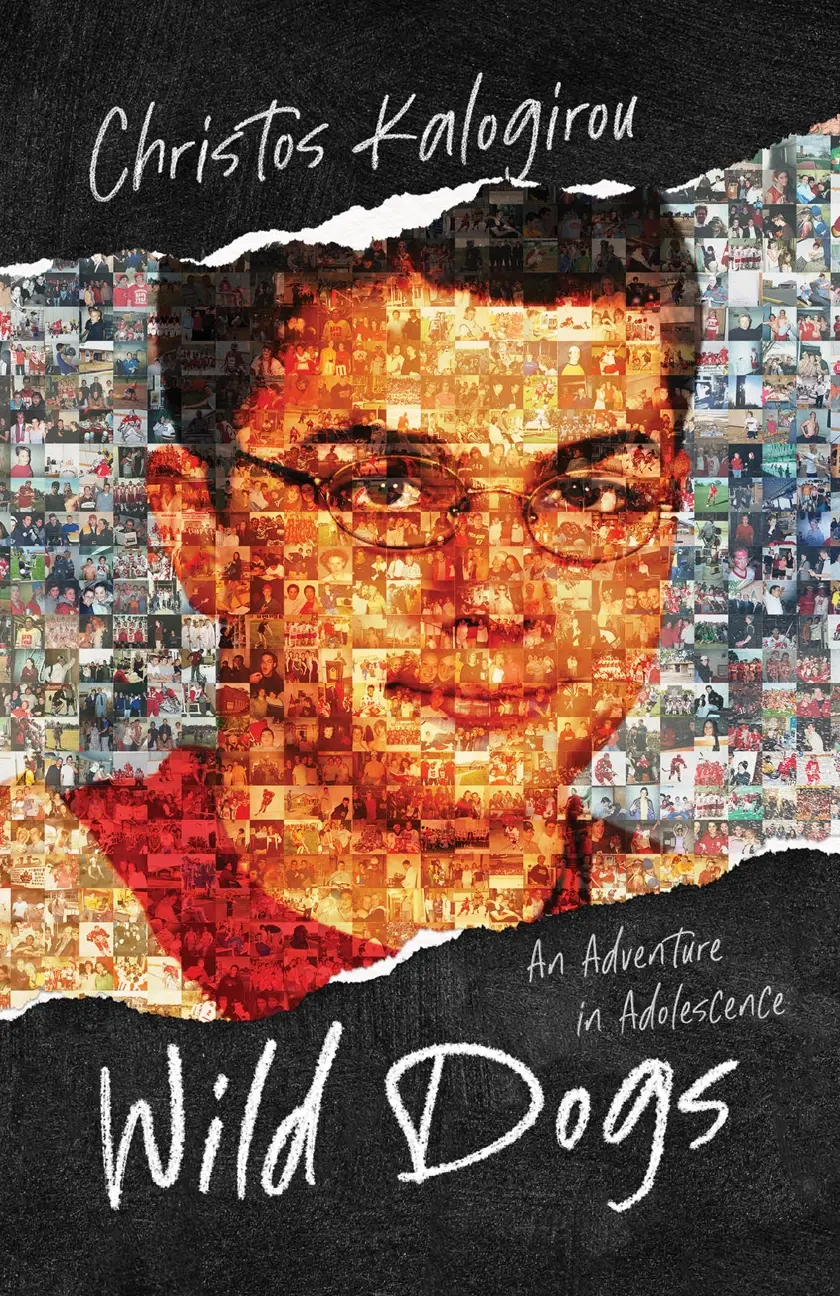
[0:00:27] DA: A desire for power and respect can make you do crazy things, especially in high school. After all, there’s no greater reward than the attention of your peers. Christos Kalogirou was 15 when his parents enrolled him in a prestigious coed boarding school tucked away in Saskatchewan. For Christos, high school was harder than real life and by 16, he had turned a desperate need to stand out into a business venture, reaping all the rewards he craved until the rewards almost cost him everything. In his new book, Wild Dogs, Christos shares the personal story that became urban legend. Relatable and inspiring, the chronicle contains lessons for everyone who has made a mistake and wants to write the wrongs in their life. Whether you’re a current student or you’ve graduated your teenage years, the book will teach you the power of redemption, the importance of friendships and the value of working with the system instead of against it. The book will provide you with perspective you didn’t know you needed and show you that life is a journey you can’t take too seriously. Hey, listeners. My name is Drew Applebaum and I’m excited to be here today with Christos Kalogirou, author of Wild Dogs: An Adventure in Adolescence. Christos, thank you for joining, welcome to The Author Hour Podcast.
[0:01:34] Christos Kalogirou: Thanks for having me, Drew, I appreciate it.
[0:01:36] DA: Let’s kick this off, can you give us a rundown of your background. Forget the book for a moment, just tell us a little bit about yourself?
[0:01:43] Christos Kalogirou: I was born ‘86, May 3rd and it’s been a disaster ever since.
[0:01:49] DA: Short and sweet. This book is a collection of stories from your younger days and clearly, this was a long time ago. Why was now the time to share the stories in the book?
[0:02:01] Christos Kalogirou: I started writing the book in 2006, which was a year after I graduated from Notre Dame in Saskatchewan and I had shelved it for quite some time, didn’t have the proper direction, you know, this was before Scribe came into my life and about a year, I want to say 2011, I went back to the school, kind of very unorganized, kind of get permission, thinking that I needed that at the time from the school and saw that the school had some financial issues that I wanted to help out with and we kind of shelved that and worked on a charity event and then many events happened and it took quite some time so I’d actually started working at a year after I graduated in here. Now it’s what, it’s going to be 15 years so it’s wild how long something can take.
[0:02:42] DA: Now, when you had the idea for what you were actually going to write in the book, sometimes during the writing process, you dig deeper, some of these subjects and you come to some major breakthroughs and learnings. Thinking about your past and your stories, did you have any major breakthroughs and learnings along your writing journey?
[0:02:59] Christos Kalogirou: Well, even in my writing, the early stages of my writing was a lot more vulgar, it was more Tucker Max, fratire and as I got older, I realized you could get the point across without going down too far down that road. That was really important for me to make something that could be appropriate for really, any age to read, there’s still good stories in there, it gets the point across but without being too vulgar which is very important to me.
[0:03:21] DA: Also, when you were writing the book, in your mind, who were you writing this for? Are you writing for people who are looking for redemption story, people like you, in the early days, was this, were you writing this book for yourself?
[0:03:35] Christos Kalogirou: I don’t feel I wrote it for myself. I thought that I might state in my book this is my book with everyone’s stories. Anyone can relate to being an adolescent and being mischievous. I mean, mine are a little bit more intense than most. I think anybody who has been through anything that they thought they couldn’t come back from would relate to my story for sure.
[0:03:55] DA: Now, let’s dig into the book itself and though the book, the events of the book occurred while you're in high school, you wrote the book in the present tense, did the experience of writing the book actually kind of take you back into those formative years and if so, what was that experience like for you?
[0:04:09] Christos Kalogirou: Challenging. I certainly – It was the “Me Now” writing about the “Me Then” which is difficult as I’m a completely different person on a maturity scale. To have to put myself back in those situations, I know several times I would go back to the school and kind of just walk around campus and relive it and that really didn’t help, which was very strange to me and a lot of the reasons why it took quite some time is I wrote about 80 percent of the book on my phone in my notes and I would just email it to myself and piece it back together over time and certain things would come to me so being very descriptive, specific, accurate on a lot of things took a lot of phone calls, a lot of people I went to school with and in the end, I hope we have something that it shows that.
[0:04:52] DA: Now, when you went to a boarding school, I think it was really great that you thank your parents immensely for sending you there, knowing that they really couldn’t afford it. Then when you get there, you start to turn yourself into a bit of a prankster. Before we get into what those were, I want to know, where do you think that impulsive behavior came from and why the need to stand out to be the center of attention?
[0:05:17] Christos Kalogirou: When I was younger, one thing I remember, you know, prior to high school, we weren’t really allowed to have sleepovers, it just was something that my parents were comfortable with. That’s fine, it didn’t really affect my childhood but then all of a sudden, you go to a boarding school, your parents aren’t there and you're having a sleepover with 60 of your friends every night. Everything just comes out of a cage and you’re rambunctious and you’re still young and you’re getting other perspectives on things from other people your age so naturally, a lot of the reasons why I went away to Notre Dame was because I was not paying attention to studies or class clown or what have you. It had a reverse effect on me when I went to Notre Dame that my parents weren’t there to kind of keep me in line, right?
[0:05:58] DA: Was there anything that maybe earlier in life that taught you that this was a good way to get attention, any pranks?
[0:06:05] Christos Kalogirou: I always liked to laugh at a young age. I thought that that was just great, it was just something that I was magnetized to and when you’re doing those things yourself, you don’t really think you’re being malicious or it’s hurting anybody. As long as you’re having a laugh, which is I had somebody tell me one time that actually, educated me that when you’re that age, you think that the sun rises and sets around you and that really didn’t resonate with me ‘till several years later to know what that means so that kind of helps to answer that question.
[0:06:31] DA: Let’s dive into the pranks themselves. You have a bunch in the book. Why don’t you just give us an overview of a few and maybe how you came up with them but maybe do like one deeper dive into one of them.
[0:06:46] Christos Kalogirou: In my grade nine year, it was a lot more about fitting in. Some of the stories and the food fights we had or whatnot and then when I got a little bit older, it was the selling alcohol and it wasn’t so much a prank as a business venture that I got in over my head. A lot of these things that we did, we call them one of the more famous ones is a leaner, where you take a set amount of water and you lean it up against a door that’s closed, someone’s inside, you knock on the door, they open the door, water goes everywhere. Very simple, I could watch it a hundred times and laugh my ass off. That was something that I would have loved to say I was clever enough to create but I didn’t and that was – had been done in the ‘50s and the ‘60s and all the way back. Part of a boarding school is that culture which doesn’t really exist now, for good reason. I mean, these were things that I enjoyed doing, everybody did, they were part of the fabric of my experience there, however, it was definitely not productive in trying to get you to excel in sports and education and going to get a scholarship, which many individuals that I went to school with did, so I just didn’t, obviously. That came back to kick me in the ass.
[0:07:50] DA: When you were doing pranks or selling alcohol, I think in the moment, it tends to feel good but were there moments where you had some alone time and maybe for a second, you were able to – even at a young age, just reflect on the day and who or what might have been affected by it.
[0:08:05] Christos Kalogirou: The day I was expelled, I felt everything had caught up to me and that’s something that I remember clearly like it did happen yesterday. I couldn’t charm my way out of it and it was hard nosed decision that the school had to make because it was affecting everyone else that I was going to school with at the time. That’s something that really sticks out to me Drew, for sure, it caught up to me.
[0:08:24] DA: Let’s lead up to that, what exactly led to your expulsion and what was the final straw for the school?
[0:08:31] Christos Kalogirou: Well, there’s a myth that I was caught selling the alcohol but it’s actually not true. I was in a board meeting and I don’t want to give too much away obviously because I want people to go out and purchase the book and support the charities and I had an opportunity to do what I thought I was going to do and try to use someone as blackmail so they wouldn’t kick me out or I didn’t, at the point, at that time think I was going to get kicked out just to get punished and I had somebody look across and ask me, “I’m going to ask you one time, were you selling alcohol?” and I just said yes. It was a relief. I had turned into somebody that I wasn’t and I was very good at it for quite some time but it had caught up to me.
[0:09:05] DA: Did you have any business endeavors that resulted from your time and just the general shenanigans that you were pulling at school?
[0:09:13] Christos Kalogirou: The alcohol, you know, prior to me selling alcohol and spearheading that venture on my own, there were kids above me and I was drinking quite heavily in grade 10, I was drinking every weekend. At that time, I think my allowance, my parents were giving me like $20 a week. Now, I try to weasel a little bit more with some bullshit I would tell them and get a little bit more money. They’re in Alberta, I’m in Saskatchewan but you’d use it for hotdogs and drinks in the arena and whatnot. When I hooked up with these older guys, they were like, “You know, if you get us 10 or 15 sales, we’ll give you a free – a mickey” so it was like a 350 milliliter flask bottle. I was hustling starting on Thursday to get those sales so I could drink for free and I was drinking for free both Friday and Saturday, so it worked out marvelously.
[0:09:55] DA: I think it was really interesting is that you talk about the importance of friendship in your book. What role did your friends play both before and after your time at Notre Dame?
[0:10:09] Christos Kalogirou: I had a couple key friends that were completely opposite to me but we had a good relationship on our loyalty and that’s something that you know, it’s not on the brochure when you go to Notre Dame but you’ll meet people that you’ll be friends with for the rest of your life and yeah, I was drinking heavily and I wasn’t good in school I think quite bad. We had something called study hall, if you’re failing in class you had to do an extra hour every day. I had double study halls I think my entire time there, so I was not the ideal student.
[0:10:38] DA: Now that you have written this book, it’s taken you 15 years, have you sat down, read it and just really thought about what happened back then and is there regret there or are you a little bit more compassionate with yourself these days?
[0:10:55] Christos Kalogirou: I don’t have regret. I certainly feel that I am who I am because of what I went through and the people that came in and out of my life at respective times. There were certainly things I did that I look back and I say, “You know, what were you thinking?” but you weren’t thinking. You’re 14 and 15-years-old, that’s just kind of how that goes. I think it’s really important that people don’t beat themselves up on their past and just do what they can to make it right.
[0:11:18] DA: Talk about where Christos is at now? I think we’re diving into the book a lot, we’re hearing a lot of – we understand what we’re about to read this time in the book, what’s happened since?
[0:11:28] Christos Kalogirou: Shortly after I graduated, I was washing dishes at my family’s restaurant and it really hit me how I pissed my education away. Overtime, years later, my family, we had created more businesses, gas stations and I was actually put in a liquor store and operated for my family, which was kind of comical. I did that for about eight years and this has been a full-time job. The book has been a full-time job for the last nine months. It’s consumed a majority of my life, which I’m certainly not complaining about with what I’ve learned. It’s just been a wild journey.
[0:12:01] DA: I think it was actually really nice how you started the book and talk about how you’re donating all of the proceeds from the book to the Mandi Schwartz Foundation. Can you tell us why this organization important to you and maybe a little bit about you and Mandi?
[0:12:15] Christos Kalogirou: Mandi was a year below me and certainly not somebody that I was friends with but we didn’t have a bad relationship. There is only 300 kids that went to school there at a given time, maybe a little bit more, maybe a little bit less but Mandi did everything that Notre Dame offered. She excelled in sports and academics and went on and got a scholarship to Yale University and a year, her second season in, she started getting fatigue and they didn’t really know why and her coach thought that she had anemia, which is a common disorder and they found out that she had leukemia. It really affected me because I saw somebody on TV and in the articles with our school that fully valued their time there when I didn’t and her life was unfortunately cut short, so that just really hit me that when I started writing the book even before everything with Mandi, it was never about money to me. It was never about profiting, I just thought we sought – there is all these great stories and no one has really told them in a very, very long time. When this all came about, I was blessed when her family who I had a great relationship with was like absolutely, “You know, you can give the profits to the foundation” so that’s where that all it comes in. She went to the same school as me, a year below me, yeah that’s the gist of that.
[0:13:28] DA: Now, what impacts do you hope the book will have on the reader and do you hope or wish they take any steps in their life after reading your book?
[0:13:38] Christos Kalogirou: I feel the very first page in the book that talks about the story of how to get involved with swabbing your cheek and getting in the one-match registry or for hockey, blood is very important, you can go up to somebody and say, “Hey, you know Pando, give me 20 bucks for this charity” and people are getting hit up all day for that and we know what that’s like. People want to help but they only have so much money to go around. I hope that people can get value for their donation and get a laugh at my expense and learn from it. I feel that there is a lot of families out there with young kids that they feel might be troubled like I was categorized as but that doesn’t mean that it will always be that way. Even though I didn’t value that time in Notre Dame when I was there, I certainly got the lessons far after I left and I carry with me to this day and to the day I die.
[0:14:21] DA: I’d love to just step back in one more time because you sort of mentioned it earlier that you’ve been back to the campus since you were expelled. Let’s revisit those feelings briefly, what does that feel like, what does that look like, are you just replaying the incidents of your time there in your head or can you walk around and feel good and confident on the grounds of the great person you’ve become?
[0:14:43] Christos Kalogirou: Besides some minor upgrades, the school itself has changed very little, in a lot of ways, it’s so unique because it’s like stepping back in time and you know, in all honesty, any time things get tough in my life or there’s a lot going on, I do revisit, sometimes unannounced, which they don’t appreciate but I have a great relationship with the school, I had worked on the board for some years, the alumni board and have such a good relationship with these people at the time that ultimately expelled me and I’m a little bit older and you have a little bit more insights. It’s a safe haven in a lot of ways and I’m so thankful for that.
[0:15:16] DA: Now, if there was Christos two at that school right now and you're walking around campus and you ran into him, would you say “Go do your thing” or would you try to say “Hey, there’s another way.”
[0:15:30] Christos Kalogirou: If I ran into myself, I’d probably give myself a good beating, not that that be the best route but it’s incredible how people change over time and the paths that you take in life put you on a certain path and then leave you back on to another one and that’s something that even though I was – I felt that I was out of control when I went to school there, I never had an educator give up on me, I never had a staff or student like, “Just get this kid out of here.” Until it got to the point where they couldn’t keep me because they had to set an example. I’m so thankful for all of the coaches and the teachers, not even coaches that coach me or teachers that taught me was just really trying everything they could to keep you on track.
[0:16:09] DA: Well, Christos, we just touched on the surface of the book here but I just want to say that writing a book where you’re super vulnerable about your life and you talk about your whole story but you also talk about have folks live their best life as well and that’s no small feat, so congratulations on finally having your book published.
[0:16:30] Christos Kalogirou: Thank you so much, Drew.
[0:16:32] DA: One question left. If readers could take away only one thing from the book, what would you want it to be?
[0:16:38] Christos Kalogirou: It’s never over. If you're going to get knocked down or put yourself in a position that you don’t think you can come back from, you can. Nothing is ever as bad as it seems.
[0:16:45] DA: Christos, this has been a pleasure and I’m excited for people to check out the book. Everyone, the book is called Wild Dogs and you can find it on Amazon. Christos, besides checking out the book, where can people connect with you?
[0:16:56] Christos Kalogirou: Through Amazon right now, LinkedIn is probably the best, we’re working on some of that stuff as we go. I mean, this has all been moving pretty quick but they’re going to have to learn about me through the book for now. I appreciate everybody in advance that picks it up.
[0:17:09] DA: Christos, any shoutouts to any of your friends, maybe from Notre Dame that might be listening?
[0:17:13] Christos Kalogirou: Way too many to thank, to all of Notre Dame, to the institution itself, anybody that’s come before me when I was there or will attend after. It is an experience I think everybody can relate to that they won’t and don’t regret.
[0:17:24] DA: Well Christos, thank you so much for giving us some time today to talk about your new book and best of luck with it.
[0:17:30] Christos Kalogirou: Thanks so much Drew, I appreciate you having me.
[0:17:33] DA: Thanks for joining us for this episode of Author Hour. You can get Christos Kalogirou’s new book, Wild Dogs, on Amazon. Also, you can also find a transcript of this episode and all of our other episodes on our website at authorhour.co. For more Author Hour, subscribe to this podcast on your favorite subscription service. Thank you for joining us, we’ll see you next time. Same place, different author.
Want to Write Your Own Book?
Scribe has helped over 2,000 authors turn their expertise into published books.
Schedule a Free Consult