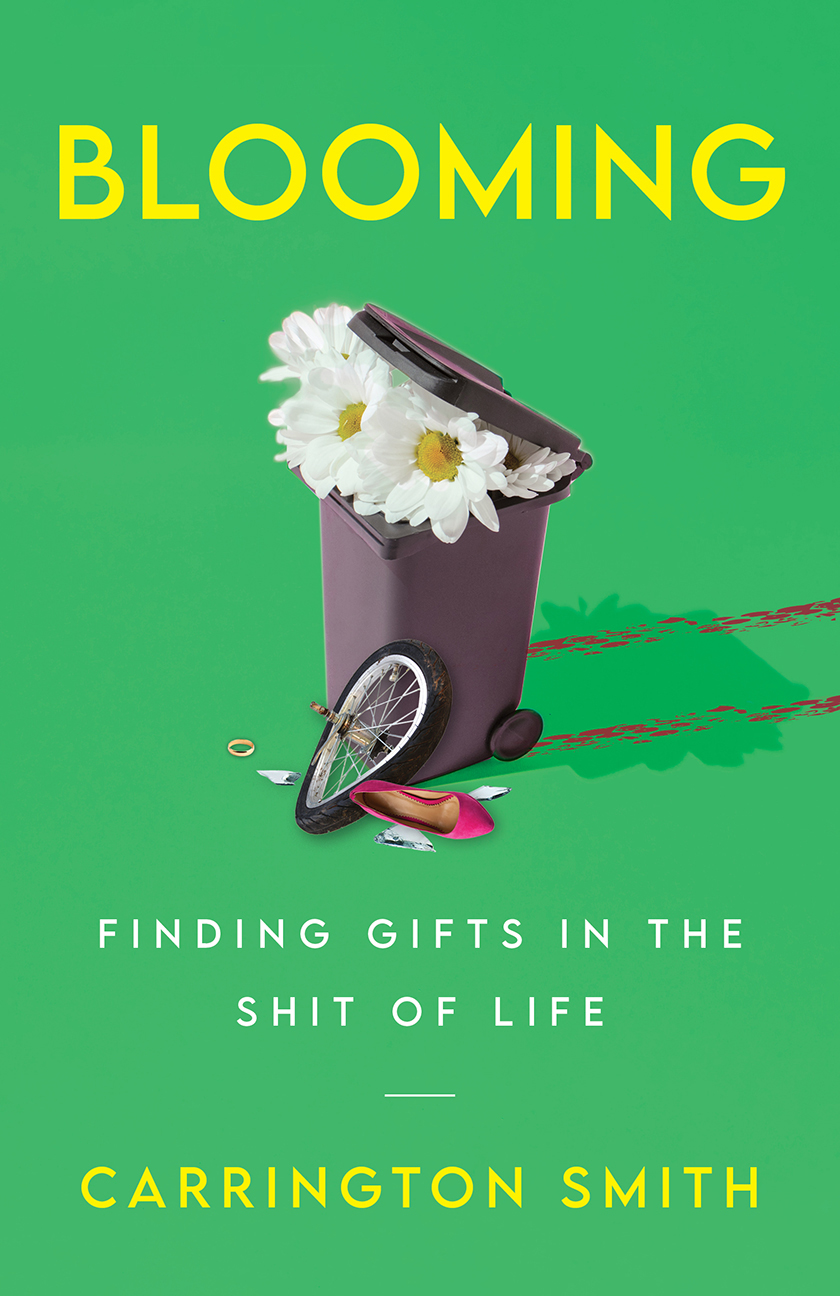
Carrington Smith: Blooming: Finding Gifts in the Shit of Life
Read the full transcript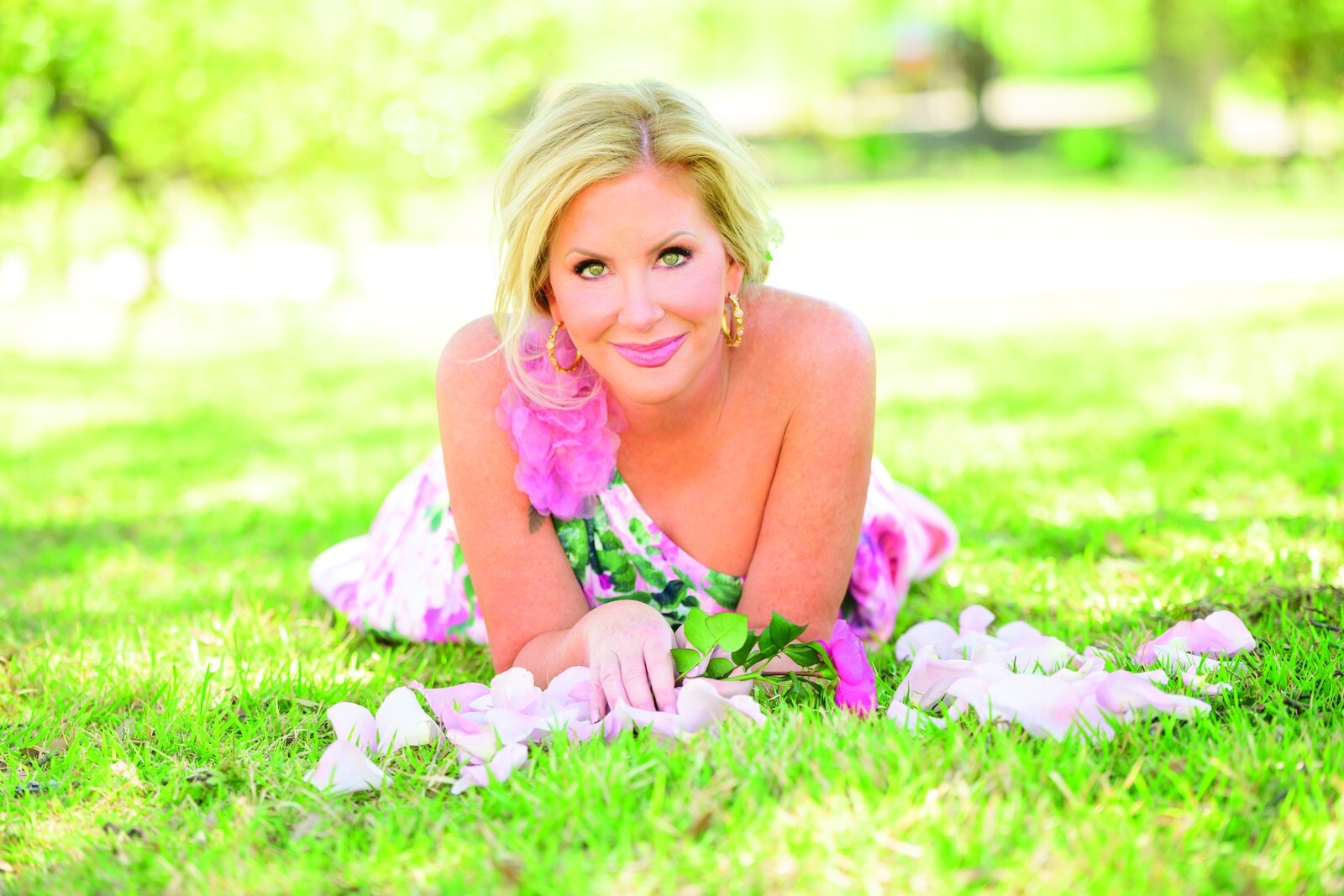
Carrington Smith
Carrington Smith is a single mom, attorney, business owner, and executive search professional. Despite being born with a silver spoon in her mouth, life gave her a hard kick in the tail. She has survived sexual assault, two divorces, piles of debt, abuse, religious mind games, the death of loved ones, and the loss of close friends.
In her debut memoir, Carrington combines wit and wisdom to share her journey through the shit, with a positive attitude and a shift of mindset, into a life bursting with joy, opportunity, and purpose. A graduate of UT Austin and Tulane Law School, Carrington resides in Austin, Texas, with her two teenage boys.
📚 Books by Carrington Smith
Transcript
[0:00:25] DA: Carrington Smith spent a lifetime trying to be someone else, to fit in, to be loved, to keep the peace and to make others happy until, finally, she discovered that her own path to happiness wasn’t based on fitting in, but on standing out and celebrating her uniqueness and owning her past. From trauma to triumph, through the depths of sexual assault, family rejection, physical scarring and death, Carrington managed to turn that all into happiness, forgiveness, empathy, purpose, belonging and joy. In her new book, Blooming, you’ll find a treasure hunt to discover the gifts in, well, the shit that happens in your life. That shit is quite literally fertilizer, it’s the messes, the failures, trauma, and the difficulties of life. And in that, we discover what we really need to bloom into our greatness. Hey Listeners, my name is Drew Appelbaum and I’m excited to be here today with Carrington Smith, author of Blooming: Finding Gifts in the Shit of Life. Carrington, thank you for joining, welcome to The Author Hour Podcast.
[0:01:37] Carrington Smith: Thank you, Drew.
[0:01:38] DA: You know how we kick these off, can you give us just a brief rundown of your professional background?
[0:01:44] Carrington Smith: Sure. I started out practicing law, I was a trial attorney for seven years and then I had that moment, which about half the lawyers out there have, which was deciding that I didn’t really want to practice law and I decided I wanted to get into executive search and so I’ve been doing that for about 20 years now.
[0:02:05] DA: Wow. Now, this is a memoir, so you’ve been living your life obviously since day one. Why was now the time to share these stories? Did you have time on your hands because of COVID, was there some inspiration out there, was there a big life moment for you?
[0:02:22] Carrington Smith: Well, I’ve been writing short stories for a number of years, and I never really knew what to do with them because I just felt like, I’m just an ordinary person, I am not a celebrity or a business titan or a recovering addict or any of the typical things that draw you to a memoir that makes it exciting. I realized with the pandemic, this was such a universal experience that it made me kind of take another look at my life and I realized that all the things that I had gone through: getting married, getting divorced, having friends die from cancer, losing my mother to dementia, sadly being raped and being sexually harassed, I knew these things were actually universal experiences and it was my very ordinariness that made my message compelling. One of the reasons that I felt compelled to write it right now is because I really had a heart for everybody that’s struggling and was just really getting depressed about the pandemic, and I realized that my life experiences had led me to a situation where I knew 100% that I was going to get through this. I wanted to share why that was to my audience.
[0:03:38] DA: When you said, “Okay, I’m going to write this book about my life, about these experiences.” A lot of authors will have the idea of this book in your head, you say, “Okay, I want this message to come along”, but sometimes writing takes a long time. You do a lot of research; you do a lot of looking inwards and things tend to pivot and there’s learnings that happen along the way. Would you have any of these major breakthroughs or learnings on your writing journey?
[0:04:03] Carrington Smith: I did. I had written about the story of being raped in college for the first time about six years after it happened. It really was a cathartic experience where I, for the first time, faced it head on and started to grieve and eventually go into therapy. As I wrote that story again, what I realize is what people really wanted to know, was how I was able to take that experience and turn it into something that, as opposed to being something that was done to me, was something that serves me now and how I use this horrible experience as a superpower that now helps to propel me through life. The story, the actual point of view on the story changed.
[0:04:46] DA: Now, when you said, “Okay, I’m going to write this”, did you have anyone in mind that you were writing this book for or was it for yourself?
[0:04:56] Carrington Smith: I did have some people in mind, I had one person in particular in mind to start with, and then as I was talking to people about what I was thinking about discussing in the book, I began to understand that it was relevant to more than my initial, sort of, target audience. But the first person was a woman that I had been working with on a search and just as the pandemic hit, at the time, she was a vice president of a Fortune 50 company and at the pinnacle of her career. She was interviewing for a step up on a job search that I was working on. What happened was, because of the pandemic, that company had to tighten its purse strings and suddenly, she had been laid off and then literally, the next week, her dog died. A dog that had been with her for almost 20 years. She had these two experiences happen at the same time and I just really wanted to pick her up and lift her up and show her, as we talked about, I said, “a path to joy” and to send her some joy. So, I always had her in mind when I was writing this book.
[0:05:59] DA: Did you have any reservations about telling your story, about being extremely vulnerable about your life?
[0:06:08] Carrington Smith: Of course, I did. One of the reasons that I had kept my stories stories, because I cover so many different topics. The reasons I kept them a secret is because I’m of the age, and I’m 54 now, we were brought up to have two different personas, a professional persona and a personal one. One of the things that happened with the pandemic, as I’m sure you well know, we all ended up on Zoom together and we saw children crying, screaming, I had one call where the woman was trying to potty train her three-year-old at the same time. We saw a lot of things maybe we didn’t want to see, really. What happened was, there was a merging of the personal and the professional personas. We really started to see people more holistically, we started talking about depression and anxiety and mental health a lot more and so suddenly I felt, “Okay, I have permission”. It’s kind of sad that I felt like I needed permission, the younger generation is like, totally non-pulsed about these personas. But for our generation, really talking about things like rape and depression. A lot of the hardships that I went through, these were things that nobody knew about, because I kept my personal and professional separate.
[0:07:32] DA: Well, let’s dig into your early days, you talk a lot about your childhood in the book. Set the stage for us. What was young Carrington like and what did your family life look like growing up?
[0:07:48] Carrington Smith: Wow, well, this is one place in my background where I am very different than a lot of people. I grew up in a family that had epic success three generations ago. That was like a hangover for the rest of the generations. My great-great grandfather was the founder of International Paper Company. That was on one side of the family, and then on the other side of the family, my grandfather founded a bank, actually a brokerage firm, and had a seat on the New York stock exchange for about 30 years. When you have that kind of success in your family and the wealth and high society activities that go with that, the younger generations expect to be able to partake and participate in those activities and that lifestyle and by the time you got to my parents and really, finally to me, there was some money left for my parents but I was the third child and so I was suddenly living in a family where we had Tiffany and Company china and silver and things like that all around – baccarat crystal, we went to the finest clubs, but I didn’t have a proper winter coat and there were times when I went hungry and it was so nonsensical. A big reason for that is because, my father in particular, but both my parents got deeply involved in religion and decided that, first of all, my brother, because he was the first born and the oldest, would get preference for any of the wealth or opportunities that were given, and then my sister who is the middle child, but she was the first-born female, then everything else would go to her. So, I was in this really weird situation of having a family that expected me to live up to these crazy high standards but not having any the support, really, whether economic or relational from anyone in the family.
[0:09:59] DA: Let’s talk about your dad a little bit because as you mentioned, you have this lineage of success, and your dad went to two of the best medical schools in the country, but it seems like he caused a lot of toxic dynamics within the family itself. How did he affect things in your home?
[0:10:20] Carrington Smith: Again, I think a lot of it starts out with the great expectation that was put on him. Obviously, he is a brilliant man, he’s still alive. He excelled, he was the chief resident in one of those locations, at one of those institutions. But he really had personality issues and, as I discuss in the book, I had an ongoing discussion with my therapist and, while she didn’t diagnose him because he wasn’t her patient, we reached the conclusion together that he was a malignant narcissist. When you have someone who is that toxic in your family, it can just suck the life blood out. The way that happens in a family is a malignant narcissist expects everyone from the wife to the children to give up their very identity and subsume it to his. We literally had to eat what he ate, we had to think what he thought, we had to participate in the activities that he liked, and we were not allowed to have our own opinions, even about what we liked as far as food, in comparison to him. It really was a very oppressive environment. He also was really a master at manipulating scriptures so that we felt just like we never could be enough or be good enough and we’re never doing anything right. We had to abide by his wishes, or we were going to hell.
[0:11:56] DA: You end up doing well throughout school and you end up going to college and then, you briefly touched on it earlier, but you know, you had a pretty major and traumatic experience happen to you there. Can you talk about how that moment changed you immediately, what the lasting effects were and then just especially for this case, how you use that to strengthen yourself even today?
[0:12:26] Carrington Smith: Yeah, well, initially, when it happened, it was like, my life was chugging along, and it was like the screech across a record where it just came to – my whole life just went sideways. A big reason for that is because I wasn’t able to talk about it. I was raped by a fraternity member and a couple of years before this had happened, there was another girl in my sorority who had been gang raped and she ended up being kicked out of the sorority and vilified. Such were the times, the woman got blamed. I was cautioned, the one person I did share my story with cautioned me and said, “Remember what happened to her” and encouraged me to say nothing. Which led to a huge spiral into a deep, deep depression. I was calling home, threatening to kill myself, my parents – first they didn’t know what had happened, but they were like, “Well, you’re just going to have to wait, we just got to have to tough it out”. That’s kind of how my parents were. Somehow, I made it home. I shared the story with my mother and she at the time was the executive director of the Crisis Pregnancy Center in our city. Her response to me was, “We had hoped that you would remain a virgin and you’re never to speak of this ever again and you’re never to tell your father”. Once again, I was not able to speak about this trauma, and so I honored my mother’s wish. I didn’t talk about it. I did, however, transfer schools and everybody would ask me, “Well, why did you transfer to Texas?” and I was like, “Oh, good school, warm climate.” I would never give a truthful answer. It took me a number of years to work through the rape. A lot of therapy, a lot of self-help, and eventually I came to realize after I mean, decades – This isn’t something that’s happened overnight. It was a lot of work, but I came to realize, I didn’t want the rape to define me or own me and by not talking about it, it was. So that was one real important thing that I learned. But then I learned that, by taking control of this memory and looking at it from a different viewpoint I was able to recognize that there were some good things that came from it. I mean, for instance, it changed the course of my life. It sent me to Texas, which is a great thing. But it also taught me that I was a really strong person and I’m really emotionally resilient and that trait or characteristic is something that has served me and has, in fact, bred a quiet confidence. And that helped me as far as being a trial lawyer. I think that looking back on memories like that one in particular, if we can shift our mindset and look for the opportunity in the adversity that it really helps us process those memories and turn them from trash into treasure. I understand now that that path led me to where I am today, and it all ends up being good in the end.
[0:15:59] DA: Besides your professional career, obviously your family history and this college trauma, it has to affect you in the world of dating and looking to start a family. How much were you able to overcome those early events and were there some trips-up along the way, and what happened when you eventually found your way?
[0:16:25] Carrington Smith: Well, it’s sad to say, and I learned after reading about rape and how we process that trauma, but I became promiscuous after the rape and that is actually pretty standard. The rapist had sent me the message that I wasn’t worthy of a normal relationship, and I was only worthy of being used for sex, and so I kept repeating that trauma and reliving it. It wasn’t until law school when I was friends with a guy and then we started sleeping together that I recognized that, here was somebody who valued me for more than sex. That’s when I first sat down and wrote the story of the rape and I shared it with him. That was a pivotal moment for me because he offered me compassion and support, something I hadn’t had yet about that trauma, and that he encouraged me to go into therapy, which I did. Even then though, because I didn’t really do intensive therapy till later, I was very poor from law school, I didn’t have a boyfriend. I mean, I would go into a couple of dates, I never had a boyfriend. In law school – and I wouldn’t even call the guy from law school a boyfriend. He was a friend that – friend with benefits, that’s what we’ll call him. But in law school, I met someone who – I joke, and it’s a great story, you got to read the book, I won’t give it all away. But I ended up marrying a bar manager from Urban Street. It’s a great story, so I’ll leave it at that, but he really got to me through my stomach. I was hungry. I didn’t have much money. I wasn’t eating properly, and he would feed me. I was at a point in my life where I felt like really no one gave a shit about me at all. My family had totally abandoned me and left me harnessed with debt and they were just not there for me at all, so I ended up marrying this guy. It wasn’t even a normal marriage. So, that lasted for about two and a half years before I met – and then we divorced. I was single for probably six months before I met the guy that’s the father of my children. He was a really good guy, and I was really lucky to have met him, but I believe that we are attracted to what we know, and I grew up in a family where my father was a mystery. He never talked about his childhood, he was emotionally unavailable, and he would cut us down at every chance. So, I married a guy who, while he’s a good human being, was very sarcastic. While he would do it in a sarcastic way, he would poke fun at me and it really – after not having any support or validation as a child, that really ate at me and there was no emotional intimacy because I had married someone who was the child of an alcoholic and he was very similar. We’ve had a long journey together. He’s a great father to my children now, but that marriage didn’t last. Again, that is another really good story. That’s in the book. I’ve been single since that divorce, which was 2009. I’ve really focused on figuring out why I had landed in the relationships I had, and I was determined to not repeat those mistakes and I am happy to say, I am finally in a place where I really feel like I’m ready to be in a “normal relationship” with somebody who loves and supports me and lifts me up and is a partner. That’s been a long journey getting there.
[0:20:13] DA: That is really great to hear, and I do want to pivot because the book is about mindset changes and how things turn around and you do talk about your midlife redirection and of course, as the title is, the “blooming”, as you call it. We’ve talked about some of the early traumas of life and let’s go right in now and talk about how you broke through, what life looks like to this very day, and I guess the last question, do you ever fully get over what happens earlier in your life?
[0:20:50] Carrington Smith: I don’t know that you ever fully get over things. I think you – as I talk about in the book, you can change it from something that happened to you to something that was given to you and use it. Whether that’s as something artistic, make a movie, right, write a story, paint a painting about your trauma, or somehow using it to propel you into maybe philanthropy or helping others who’ve had similar circumstances and there’s lots of different ways that can happen. But yes, I do believe that those things kind of they’re always there. It’s just what you do with it. I know as I keep talking about these traumas, I mean, the pain hasn’t gone completely away and one of the hard things about writing this book was reliving a lot of it. So, there were really two things that were most pivotal for me. The first one was, after my mother passed away and then my best friend passed away within seven months after, I was at an all-time low and I made a decision then that I was done dealing with my father. I asked myself - I think this is such an important question for all of us to ask ourselves - if someone is causing you pain, someone or something, do you continue to interact with it? The answer is no. If you look at a relationship from that analysis, then the decision to cut off contact becomes really easy. The only reason I’d maintained contact was really twofold. One, my mother was in assisted living so he would tell me about her status, but the other was just guilt and the societal pressure to maintain a relationship with your father. But for me, every time I heard his voice it was like fingernails on a chalkboard. You know, my friends and family would tell me that if I spoke to him on the phone, they saw an actual change in my behavior literally right after, which was completely negative. So, it became really important to me to sever that relationship, and I have to say, when I did that, that is really when I started to completely heal. Because you can’t keep picking a scab off and heal. You have to completely pull away and let it heal. That was when I really started to heal and that was about 2013. Then in 2016, I was really badly burned by what they call an IPL laser and I ended up with second and third degree burns on my face, neck, décolleté and shoulders. The damage that was done to me was so extensive that I looked like a monster, and I am not saying that just to be glib, I really did. I didn’t leave my house. I ended up with a systemic yeast infection, which – it’s not that kind. It’s a situation where you have so much yeast growing inside your body, in your gut and whatnot that I literally had this pink fuzz growing on my skin and I ended up with brain fog. I was basically catatonic. But as I went through that journey to healing, when you are stripped basically of your identity, your beauty, I mean, your livelihood, I couldn’t interact with clients. It was financially devastating. I really was down to what really matters like, “Why am I here, what’s really important?” and when all of those things are stripped away, I realized it was me, who I was on the inside, my values, my essence that was who I really was and what I was about, and I spent a lot of time figuring that out. I actually say today that those burns were the best thing that ever happened to me, because it fundamentally changed my life and my perspective on life. I wouldn’t change a thing because I wouldn’t have written this book if that hadn’t have happened, so it turned out to be a blessing in disguise.
[0:25:01] DA: At the end of the day, a reader takes this book, and they go through it, which lessons do you hope that they’ll take away and is there any immediate steps that you hope someone will take in their life after finishing?
[0:25:15] Carrington Smith: Well, a couple of things. I mean first of all, I told it as stories as opposed to like writing a self-help book because I really believe that we learn through people’s stories and I don’t like it when somebody points a finger at me, so I didn’t ever want to be in a position of saying, “Well, you should do this, you should do that”. Instead, I hope that people will just take a walk with me on my journey hand in hand. Feel what I feel, experience what I went through and experience how I got to a place of healing and joy, and I talk about purpose and all of those different things in the book. I hope that people go in that journey with me and that they reach an understanding where they can reframe the trauma and the bad shit in their lives and see it for the fertilizer that it is. That, if you look in the traumatic, horrible failures, that is where you discover the really good stuff, which is what helps you to bloom into your greatness. The thing is, I think a lot of us just kind of stuff it down and I mean, I didn’t talk about my rape for six years, but it wasn’t until I really rumbled with it and what it had done to me and how it made me feel and how my behavior had changed, and really did the work. That’s when I discovered, “Wow, there’s good here and this is something that I can use to serve me now”. And I really hope that people can go on that journey with me and reach that same destination.
[0:26:46] DA: Well Carrington, as you mentioned earlier and I’d like to mention as well, there is so much in this book, and we just touched on the surface, and you are so incredibly vulnerable and speak your truth in there. I just want to say congratulations on taking the time, going through it, looking deep within yourself and having this book published.
[0:27:09] Carrington Smith: Thank you Drew.
[0:27:10] DA: This has been a pleasure and I’m excited for people to check out the book. Everyone, the book is called Blooming, and you could find it on Amazon. Carrington, besides checking out the book, where else can people connect with you?
[0:27:22] Carrington Smith: They can go to my website, which is carrington-smith.com. They can preorder the book and, because we’re also doing an audio book, which I’m not sure when that’s going to come out, but there are photos for the book and some of the other things that are related to the book that are available on the website as well.
[0:27:42] DA: Great. Well Carrington, thank you so much for giving us some of your time today and congratulations on having your book published.
[0:27:50] Carrington Smith: Thank you Drew, have a good day.
[0:27:55] DA: Thanks for joining us for this episode of Author Hour. You can get Carrington Smith’s new book, Blooming, on Amazon. Also, you can also find a transcript of this episode and all our other episodes on our website at authorhour.co. For more Author Hour, subscribe to this podcast on your favorite subscription service. Thank you for joining us, we’ll see you next time. Same place, different author.
Want to Write Your Own Book?
Scribe has helped over 2,000 authors turn their expertise into published books.
Schedule a Free Consult