Cameron Herold: Vivid Vision

Cameron Herold
Cameron Herold is a top business consultant, best-selling author, and speaker. He’s the mastermind behind hundreds of companies’ exponential growth and he’s touched thousands of businesses indirectly through his work.
At age 21, he had 14 employees. By 35, he’d helped build his first two 100 Million Dollar companies. By the age of 42, Cameron had engineered 1-800-GOT-JUNK?’s spectacular growth from $2
Million to $106 Million in revenue in just six years.
His companies landed over 5,200 media placements in those same six years, including coverage on Oprah.
Not simply a theory guy, Cameron teaches what he knows from experience and is passionate about sharing his expertise with
today’s most dynamic business leaders.
★ Scribe Case Study
Cameron Herold’s Books Changed How Workplaces Operate Worldwide
Cameron Herold used his books to share his superpower with the world: building world-class cultures. Read how he did it on Scribe.
📚 Books by Cameron Herold
Transcript
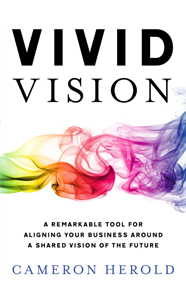
[0:00:33] Charlie Hoehn: You’re listening to Author Hour, enlightening conversations about books with the authors who wrote them. I’m Charlie Hoehn. Today’s episode is with Cameron Herold, author of Vivid Vision. Cameron is known as the ‘CEO Whisperer’. Because he’s helped hundreds of companies achieve exponential growth by doubling their profits in just three years or less. Cameron has an impressive background as a serial entrepreneur. By the time he was 35, he’d helped build his first two 100 million dollar companies. He went on to engineer 1-800 Got Junks growth. From two million to 106 million in revenue. And 3,100 employees and he did it in just six years. In this episode, we talk about the most powerful exercise that Cameron teaches CEOs which is how to build your vivid vision. This is hugely important for entrepreneurs who constantly feel like they’re just hitting their heads against the wall, wondering why running a successful business is so hard. By the end of this episode, you’ll know how to create a crystal clear roadmap for you and your team and you’ll have a proven process for turning your dreams into reality. Now, here is our conversation with Cameron Herold.
[0:02:22] Cameron Herold: I was at a lunch around 20 years ago with an Olympic coach and he was talking to a group of entrepreneurs and he was talking about how high performance athletes, visualized their event and he said, “If they could close their eyes and visualize themselves over and over in their event, they could act completely on instinct,” and he said, “Imagine if you could do the same thing in the business world.” Imagine if all of your employees could close their eyes and they could see what you could see.
[0:02:48] Charlie Hoehn: He was talking about guys like Michael Phelps and everything. Michael Phelps used to listen to a tape and constantly visualize. I don’t necessarily know, how does that translate over to the business world, how did you make that connection?
[0:03:02] Cameron Herold: Yeah, that was really the tough part for us, the first part was just understanding how high performance athletes do it and why they do it and their point is that the more that they can see the future, the more that they can visualize themselves, the more that they put themselves into that future state, the more that they can feel themselves actually performing in the event. Well then, at the time that they’re performing, they’re acting completely on instinct, it just feels so natural to them. In the business world, he tried to give us that same idea, that same analogy and what we looked for was a business that used visualization every day and what we found were home builders. And any contractor or home builder that does a renovation or builds a home, uses the process of visualization. What they do is they get the homeowner to describe the finished state of the home. The home owner usually grabs sketches and drawings and pictures, hands all of these to the homeowner, they have a discussion around what the home looks like and how the family will use the home and how they’ll operate. They really get a good understanding of what the finished house looks like. The contractor then goes away for a couple of weeks and comes back with blueprints or plans to make the vision come true. That’s where the analogy started to make sense for us was the entrepreneur was like the homeowner and then the leadership team was like the contractor that would do the plans and then the employees would work off of the plans.
[0:04:22] Charlie Hoehn: Interesting. Okay, describe kind of how you did this with your company in the first time, what did that look like?
[0:04:29] Cameron Herold: The very first time, there were actually three of us sitting in a board room together and we were all working on the process of visualization together so I was building a company at the time called youbarter.com which was a private currency company. It’s funny enough, similar to what bitcoin is today, 30,000 companies using our currency including Starwood hotels and Avis rent a car. Yeah, it’s a huge company. Now called I Techs, publicly traded and it’s a private currency. Back when nothing other than people’s acceptance of the currency. I was using post it notes and I was writing down every possible idea I could come up with on a post it note and just thinking about marketing the business and sales and operations and where we would get the major clients and how they would spend the currency and how we would control the economy. I just literally kept writing down frantically, idea after idea of what the company would look like in three years and then I organized all of those ideas into sections and built it out almost like a chart essentially, kind of started at the top and then all of these post it notes are flushed out. Nowadays that would be the real rough draft, that would be the mind map that I would use but I worked from that and with my team, we just started pecking off each of the post it notes as they came true and that was really the first version of what is now called the vivid vision.
[0:05:53] Charlie Hoehn: Wow, okay. You start with this shared vision then?
[0:05:59] Cameron Herold: No, this was my vision as the president.
[0:06:02] Charlie Hoehn: Okay.
[0:06:03] Cameron Herold: Once I had it clear then I share it with the employees. That’s the important part you know? You don’t, as a home owner, you don’t go to all of your neighbors and ask them what your home should look like. You don’t put all the workers who are going to build your home and ask them what it should look like. You still, as the homeowner come up with the vision and then you make sure that it fits within your budget and timeline and then you find people that can do it for you. The entrepreneur space, it’s the entrepreneur who crafts the vision and then they find the team that can make their vision come true.
[0:06:38] Charlie Hoehn: You’re open to others improving upon the vision or is it just “No, this one person is in charge of the vision and everybody else is in support, just we need to all be on the same page.”
[0:06:50] Cameron Herold: Yeah, you’re open to it obviously because if your team comes to you and says, you know, “You’re completely off the mark or there’s absolutely no way it can happen,” or there’s going to be a mass revolt, then there might be a problem with that. At the end of the day, the entrepreneur is their company and they’re building what they want to build. Yeah, you typically going to buy osmosis, pull some of their ideas together but you really don’t want it to be a Kumbaya group hug. You’re not trying to get – because it gets too watered down.
[0:07:20] Charlie Hoehn: Yeah.
[0:07:21] Cameron Herold: If it works for everyone. I actually ran this system for my clients around 10 years ago, taught them this process and he drafted the vivid vision for his company and handed it out to all of his employees. They all read it and after reading it out, he said to them, “You know, about 15% of you hate what you just heard.” He said, “That’s o kay, today’s probably the right time for you to quit. Because 85% of you love what the future looks like and this is absolutely what we’re going to build together.”
[0:07:49] Charlie Hoehn: Wow.
[0:07:50] Cameron Herold: That’s the key is that when you’re so clear as the entrepreneur, you know that you’re going to get the buy in of the most important people and the ones who don’t buy in, you either need to get them to buy in or you need to move them on.
[0:08:03] Charlie Hoehn: How intensely do you need to stick to the vision? I mean, does this get adjusted frequently over time or is this, we’re sticking to this for the next year, five years, how far into the future are you looking it?
[0:08:18] Cameron Herold: You’re looking only three years out and in fact, if you go out past three years, you’re going to end up causing a problem because it gets too far out there for people to wrap their head around.
[0:08:27] Charlie Hoehn: Got it.
[0:08:29] Cameron Herold: Tends to be enough time that you really push the envelope but that you stay close enough to reality that people can make it come true.
[0:08:36] Charlie Hoehn: Okay, cool. I’m an entrepreneur and I’m getting prepared to write my vivid vision, what do I need to do and what mistakes do I need to avoid?
[0:08:48] Cameron Herold: Yeah, the first thing you need to do is get out of your office. I really suggest that you go somewhere where you’re inspired, somewhere around nature. Even if it’s sitting in your backyard in a hammock. Go somewhere where you’re just around nature, no laptop, no iPad, no technology. Take a notebook and a pen and start by just kind of closing your eyes and thinking about what your company looks like three years from now. Almost as if you were walking around your company, if you were walking through the office or if you’re thinking about each functional business area, even if you are a virtual company and you were describing marketing. You’re going to write down three bullet points or four bullet points about each functional area of your company. You write down three or four about marketing, three or four about IT and three or four about operations, three or four with engineering, et cetera. You know, write down a few bullet points about what the customers are saying about you. You’ll write down what the employees are saying about you, you’ll write down about what your suppliers say about you, you’ll talk about your banking relationships and your legal relationships, you’ll write down what the media is writing about you and you describe it as if it’s all come true. Almost like you kind of got into a time machine and you traveled out December 31st three years from now to look at what the future holds. You don’t know how it happens, you don’t worry about how it comes true, you just describe the finished state. That’s the key part is not saying how everything is going to happen but just describing it as if it’s come true. You’ll end up with a bunch of bullet points that then you can come back in and organize them up and write together, organized, each of the sections into almost paragraphs and you’ll end up with a three or four page rough draft of your vivid vision. That’s as far as the entrepreneur usually needs to take it is the rough draft and then you hand it to a copywriter and they can really polish it and make it pop off the page.
[0:10:38] Charlie Hoehn: Cameron, what do you say to people who might be a little skeptical of this who are like, “Hey I’m not into the metaphysical woo-woo stuff.” Personally, I’m not skeptical of it because I’ve seen it with so many people I know applying this type of thing and then it pans out. But apart from okay, athletes use this technique kind of – what do you tell them?
[0:11:03] Cameron Herold: Well, I can tell them now that after 10 years of teaching CEO’s in 28 countries, that it is starting to work. I’ve also coached companies that now rank in the top companies to work for in their country. Multiple, multiple, multiple clients that I’ve coached and the reason that they get there as the best place to work is the alignment that their employees have. The problem with what we have today of a vision statement or a mission statement, if that’s all you have to align your employees that one sentence statement. You know, typically you got all your employees into a room and you put your favorite words up on the white board and you voted on a bunch of your favorite words and you mashed up the words into one sentence and that was your mission statement. Go team. That doesn’t align anybody, that really doesn’t move the people all in one direction. Every day you’re herding cats. That’s really the issue that this is the missing piece that no one had ever codified before. We’ve always been scrambling at trying to pull it together but when everyone can see what the CEO can see, you no longer having to hold people accountable or manage people because they’re holding themselves accountable and they’re excited about what they’re building because they all understand the point of every project. They know that what they’re working on is making one of the sentences come true.
[0:12:19] Charlie Hoehn: You’ve been doing this for 10 years. Just curious, how much has the process changed since you first did it? How much of you refined it.
[0:12:28] Cameron Herold: I’ve refined it a bit in terms of adding a lot more graphic design elements to it so that it could be really given out more to the outside world, used as a recruiting document, used as a banking document, a little more on the design element side but outside of that, really try to keep it to around four or five pages in its finished state as a PDF file. Not much has changed. The whole idea of yeah, it’s just codifying the vision that the entrepreneur sees so there’s not a lot to change.
[0:13:01] Charlie Hoehn: Yeah, a lot of the times, I mean, you’re an author so you know with early drafts of something you show it to people first before you roll it out to a wider audience because you want to make sure things are air tight, they’re not confusing, they don’t sound ridiculous, that sort of thing. Do you do that with the vivid vision before you roll it out to the team?
[0:13:23] Cameron Herold: Absolutely, yeah, the first thing you're going to do is sit down with your leadership team or a few of your trusted advisors and show them that rough draft. The first draft back from the copywriter though. Not your draft but the first draft after the copywriter’s taken a pass on it. You ask them to read it and circle the sentences that most inspire them and most excite them? After they’ve all read it and circled the sentences, you get them to read out what the excites them and inspires them and then you ask them where we may be missing a point. “What else should we add to, what else have we not included. Are there any areas that we’re too light on?” You’re not really asking them if it’s correct because if it feels correct to you, it probably is.
[0:14:05] Charlie Hoehn: Okay, you got the approval of your –
[0:14:09] Cameron Herold: It goes back to the whole, I guess, idea of a company that an entrepreneur starts. It’s their company. If it feels right? It’s kind of like when Steve Jobs says he’s rolling out – I was actually sitting in Austin Texas, a little Mexican restaurant and this guy beside me pulled out the iPhone, he gotten it that day, it was the day they came out and he started tapping on the keyboard and it was clicking and I was like excited because there was no keyboard and I wanted to see it and he let me try it. I got it right away. I remember the day before that thinking like, Steve Jobs is an idiot for releasing a phone with no keyboard. He knew what it was going to be like and he basically said who is with me? You have to be kind of crazy enough to roll with him on that one but he was right. Now, if he changed it enough that he didn’t really believe in it but everyone else did, all of a sudden, no one was really believing in him as a leader anymore because he wasn’t even believing on where they were going. It’s so critical that from the top down, everyone is vibrating in the same way.
[0:15:11] Charlie Hoehn: Yeah. A couple of questions, one, do you think Steve Jobs used a process every similar to this? Or no?
[0:15:20] Cameron Herold: Yeah, I think he was a creative genius that way that he absolutely was able to describe the vision of his products to people. In fact, in the early days of the mac, he had a wooden prototype with a mac that he showed potential employees and he said, if he didn’t see the twinkle on their eyes, he didn’t bring them in to see if they had the skills. They needed to be excited just looking at the wooden prototype.
[0:15:43] Charlie Hoehn: All right. We’ve got the vivid vision, the draft’s been approved. How do we roll this out to the team in a way that you know, doesn’t deflate the sales at all and gets everybody on board?
[0:15:58] Cameron Herold: Yeah, the key is to first off, explain the concept of the vivid vision and what it is and also to explain to them that we know when you read this for the first time, it’s probably going to feel a little bit bizarre because you’re so closely tied to today. This document is describing the company three years from now and some of it won’t come true until three years from now. Some of it won’t come true until two years from now, some of it won’t happen until 12 months from now. Each sentence of this vivid vision is something we’re going to work towards creating and turning from black into green. Just remember that this is the future state, much like building a house. On day one, when you show up, the house isn’t built, you don’t get upset and three months in when they’re still working on the foundation, you don’t get upset. It’s going to build like building a house for build, it will happen, this is what it will look like but it’s going to take time. Then you explain it that way that the employees.
[0:16:56] Charlie Hoehn: Set the expectation first.
[0:16:58] Cameron Herold: Correct. Then have them read it, hand it out as a hard copy and have them circle again any of the sentences that most inspire them that they’d be excited to work on, that they’d be excited to see happen. Because it’s going to be different parts of it that resonate with different people and all you’re looking for is two or three sentences that excited employees. Because the third side of what they’re going, their work starts to have more meaning.
[0:17:23] Charlie Hoehn: Right.
[0:17:24] Cameron Herold: Otherwise they’re just going from project to project without understanding why and what we’re building and where we’re going.
[0:17:29] Charlie Hoehn: See, that’s the biggest appeal, the most enticing aspect of this to me is, I found, especially younger people, really need to see the roadmap, they need to know the destination, otherwise they’re like, “What is the point? Why am I doing this?” Yeah.
[0:17:47] Cameron Herold: The old stories of the three guys sitting out on the dirt and they’re making bricks, and they asked the first guy, “What are you doing?” He said, “I’m making bricks.” They said to the second guy, “What are you doing?” He said, “I’m making a wall and I’m making bricks to make a wall.” Then they asked the third guy, “What are you doing?” He said, “I’m building a cathedral and I’m building the bricks that will make the wall of the left side of the cathedral.” Who do you think shows up in the morning most inspired about doing his work? That’s the guy who’s building the cathedral, not the guy who’s just making bricks.
[0:18:19] Charlie Hoehn: Yeah. You’re sort of imparting a heroic journey on to your team.
[0:18:27] Cameron Herold: Well, they just see the bigger picture and see, that’s why the entrepreneurs are usually excited in this three year journey is they see all aspects of it but if the employee just sees getting my project done today, that doesn’t inspire them. But if they see that getting their project done helps get a couple of sentences to come true, and then they can take on a couple of other projects that help a couple of sentences come true. All of a sudden they see meaning in their work. Then they also understand why everyone is doing what they’re doing because they see that another person’s projects are making other sentences come true, they start to see the team effort and every quarter, you can highlight the document as a Word document, you can just highlight every sentence that’s come true in green and you can start seeing the document become more and more real.
[0:19:10] Charlie Hoehn: Wow. The first time you went through this, how much of it came true?
[0:19:18] Cameron Herold: Gosh, a lot. We actually used the same concept back when I was the chief operating officer at 1-800 Got Junk. I came into the company then as the 14th employee and the CEO, Brian, had learned the same concept as I had at the same event and he handed me his concept. At the time, he called it a painted picture. He handed me his document and I read it and I said “Okay, I know how to make this come true.” I came on as his chief operating officer but I was so clear on what Brian wanted to build that for the next three years I just built it and then in 2003, he handed me the 2006 vivid vision and we made that come true. It was just, the process has always worked.
[0:20:00] Charlie Hoehn: You said that you coach other companies on how to do this. Is there a typical size of a company that really does well with this and conversely, is there a company that may be too big to do this effectively?
[0:20:17] Cameron Herold: Yeah, this concept works really well for the companies that are in kind of the two million to 200 million dollar range. Probably doesn’t work as well for the major, major, major corporate, like the fortune 100’s.
[0:20:32] Charlie Hoehn: Why is that?
[0:20:33] Cameron Herold: Well, I think they’re already so entrenched in what they’re doing that people understand what they’re doing, they understand where the company’s going, it’s already a machine.
[0:20:42] Charlie Hoehn: Yeah.
[0:20:42] Cameron Herold: It’s already pretty clear what we’re building with Apple, right?
[0:20:47] Charlie Hoehn: Yeah, that makes sense. There’s a section in your book called external roll out, what does that describe?
[0:20:54] Cameron Herold: Yeah, the vivid vision is actually to be shared with the world. You want to give it to all of your employees and you want all of your employees to reread it every three months, you want to reread your vivid vision at every planning meeting and every strategy meeting and every board meeting before you start the meetings, everyone’s reading it. With the external world, you want to give it to your lawyers and your suppliers, your customers. Every three to six months, emailing it out to your customers and letting you know where you’re going and your suppliers so that everyone sees the future and they can help you make it come true. Then I also use it as a recruiting tool so every potential job candidate gets a copy of the vivid vision and ask them to read it and if it sounds like something they want to help build to reply while bringing them for a group interview. But we have them read the vivid vision before they even come in for their first interview.
[0:21:47] Charlie Hoehn: Author Hour is sponsored by Book in a Box. For anyone who has a great idea for a book but doesn’t have the time or patience to sit down and type it out, Book in a Box has created a new way to help you painlessly publish your book. Instead of sitting at a computer and typing for a year, hoping everything works out, Book in a Box takes you through a structured interview process that gets your ideas out of your head and into a book in just a few months. To learn more, head over to Bookinabox.com and fill out the form at the bottom of the page. Don’t let another year go by where you put off writing your book. So I’m curious as to what kind of responses you’ve seen from putting it out there into the world that have surprised you or have been particularly beneficial because whenever I’ve done something like this, where I have put an idea out into the world or a vision and invited people in, and just being an insider, I’m always stunned with the results. So can you share some of the things that happened, some of the people that have reached out to you because they saw your vivid vision even though they didn’t work for you?
[0:23:12] Cameron Herold: Yeah, so the way that I’ve really seen it work well in surprising ways, this was years ago when I was first teaching companies how to do it, well the first one was a company who took the copy of their vivid vision to the bank and they were looking to raise money from the bank and the banker sat in front of them and read it and looked up and said, “I finally understand your company and where you’re going. Of course we’ll take this.” But they didn’t understand the business planning. They never understood the financial models but they were able to read the vivid vision of the company three years out, they got it. So that was huge.
[0:23:46] Charlie Hoehn: And that was a banker.
[0:23:47] Cameron Herold: It was a banker.
[0:23:48] Charlie Hoehn: And even a banker, of course, is human and responds more to the visual and the emotional elements than pure numbers.
[0:23:58] Cameron Herold: This is why this thing and this is why the constant of the vivid vision is taken off worldwide is it will replace mission statements worldwide because mission statements have never worked but we didn’t have another tool. No one had actually codified anything until now that actually shows us where we are going. So the second case that worked really well was a client who landed a multimillion dollar account from a customer. And the customer’s direct quote was, “I’m excited to join you now even though I know this isn’t your company today. I’m excited to be a part of you in the future so that’s why I am giving you my business.”
[0:24:31] Charlie Hoehn: Very awesome.
[0:24:32] Cameron Herold: So when you can go and land the company because of where you are going versus where you are and look, that’s how the Silicon Valley raises money is they get people excited in the vision. It’s how great advertising agencies sell a TV add is they sell you on the creative brief. You get excited and then they create the ad. So any great sale is around selling the vision but we’ve never had a tool to sell the vision of our company until now and this is the way that you sell the vision of your company to all of the internal and external stake holders is by getting them to see what you can see.
[0:25:06] Charlie Hoehn: Right, so you said vivid vision will someday replace mission statements and I think that would be a huge improvement. Have you seen vivid visions falling prey to the same problems that mission statements have where it’s just puffery, it’s just nonsense basically?
[0:25:28] Cameron Herold: Of course and you know Thomas Edison said it best that, “Vision without execution is hallucination.” And you can’t just draft the vivid vision and then expect it to come true. I mean you’ve got to actually put some people and some systems and some process behind it and you’ve got to read it and work at it but it does happen when you keep reading it and I think that’s the key right now is to make sure that we have the systems in place to roll this out externally. The systems in place to roll it internally but if an entrepreneur simply writes the vivid vision, emails it to employees and hopes it’s going to happen they’re crazy.
[0:26:03] Charlie Hoehn: What kind of systems are you referring to? Is it just regular check-ins, is it accountability?
[0:26:10] Cameron Herold: Well similar if we go back to the home building analogy, it would be similar to the home owner handing sketches and drawings and describing to the contractor what they want the house to look like and then leave it. If the contractor doesn’t create the blueprints and the elevation drawings and the plans to make the vision come true it won’t happen. The contractor will be the only one who knows it. So you need to create the plan, right? You need to create the list of projects to start framing up your want. So you need to create the projects to make the core values stay throughout the company. You need to create the projects to make all of the recruiting and interviewing and hiring decisions properly. You need to create the systems to allow communication to flow. With everything that you are describing in the vivid vision, you need to figure out how to make each sentence come true and then what’s the most logical order is to make those come true.
[0:27:00] Charlie Hoehn: Is that the main point of failure? When people do the vivid vision but it doesn’t get executed properly, is it the failure of not having systems?
[0:27:10] Cameron Herold: Yeah, that’s really why I wrote my very first book. It’s called Double-Double and that’s where I quotified all of the systems to truly grow a fast growing company. This book, Vivid Vision, is all around creating the vivid vision concept which starts the process with Double-Double that explains how to make it all unfold.
[0:27:26] Charlie Hoehn: And I’m guessing, I’ve read Double-Double, it’s a great book, I’m guessing that you wrote Vivid Vision because that chapter was the most popular and had the most questions, am I right?
[0:27:38] Cameron Herold: It was the one that actually could be expanded into a lot more detail. It also could be people could understand how to use the vivid vision in their personal lives and in their relationships and marriages. So yeah, there is a lot more detail that could be expanded into for sure.
[0:27:53] Charlie Hoehn: Yeah, let’s talk about that. So you conclude the book with a vision for your family which I love that you did this. That is not just purely meant for the business. Talk to me about having a vivid vision for your family.
[0:28:08] Cameron Herold: Yeah, so the idea is that let’s say a husband and wife or a couple who are married and planning a future together, are they ever really on the same page or does one person have a different vision of what the family is going to look like than the second. So let’s go with the husband and wife example. Imagine if he went off sight for half a day and just described what the family would look like three years from now. Describe their financial situation, describe where they live, describe their vacations, describe their free time, describe their mornings and their midday and their evenings and their weekends. Describe their family’s values and describe their family’s customs and cultures and events that they would have and then imagine if the wife went off and did the same thing and describe all of the same areas and then imagine if the two of them came back together as husband and wife and went through all of their bullet points and agreed on them and deleted a few and agreed on a few more and debated a couple, until they ended up with a shared list of these bullet points that they could write up into their own family vivid vision. And then imagine re-reading that as a family every month and just being excited about what you are building. It just changes the whole dynamic of where we are going. Right now what tends to happen is each person has their own vision in their mind but they are not sharing it with their spouse and that’s where a lot of the conflict and frustration comes from. The way I came up with this concept of the family vivid vision was working with so many co-CEO’s where we had two co-founders. You know you think of the example of Book in a Box where you’ve got Zach and Tucker, they really had visions for what the company was going to look like but it was critical for both of them to get a shared vision together. So that then Jay T and now Britney and the team can actually build that out and make it come true. But if we didn’t get Zach and Tucker on the same page literary they could have been driving in completely different directions and that concept with co-CEO’s is where the family vivid vision came from.
[0:30:09] Charlie Hoehn: I love that and I’d imagine, I’m just thinking about while doing the vivid vision, it’s got to be really tempting to get into the weeds and start thinking about, “Well how is this going to happen?” Right? And that’s something you want to do.
[0:30:25] Cameron Herold: Right, you don’t want to do that because at this point of the process, you’re really not so much worried about how as you are worried about where. The team will figure out how to get there. Your job is to describe it so that they can figure out how. Again, the homeowner’s job isn’t to figure out how to do the electrical and the plumbing and put up the walls and build the foundation. That’s the contractor and the worker’s job. But the contractor needs to know what the house is going to look like, right? So if you’re describing, if I’m so worried about how are they going to put the walls up, I am missing the point. What I need to do is to make sure I hire the right people who can put up walls and then I need to make sure that they know the home that they are building and what it looks and feels like so they understand how to make my vision come true.
[0:31:10] Charlie Hoehn: How has this changed your relationship with your family?
[0:31:16] Cameron Herold: Well it’s changed, it’s first I’ve changed my relationship with myself. I am more focused on how I need to show up and where I need to be contributing more and understanding what my wife wants of me as a spouse and just a lot more clarity around that. We are actually a blended family in a way because I had two boys from my first marriage. My wife has two girls from her first marriage then our kids live in different cities but we’re co-parenting and co-raising and co-creating this future together. It’s just important for us to all be on the same page.
[0:31:50] Charlie Hoehn: Can you tell me about maybe a story of somebody who’s used the vivid vision for their family and I’m sure you’ve heard stories at this point?
[0:32:00] Cameron Herold: The one that’s coming to mind, I don’t want to share just because it’s extraordinarily powerful. I will give a rough point around it but I don’t want to get too descriptive but it was someone who ended up in a divorce situation and he wanted to have the relationship with his ex-wife to be very, very strong and he described his future with his ex-wife and at the time that she read it, she thought he was crazy but it absolutely came true and he has a spectacular relationship now with his ex-wife and their families. It was because he was so strong on what he was building in terms of his future and his personal life and where he was going that it just started to unfold that way. You know, when you are so clear on where you’re going, you just start making decisions with that clarity. It’s like having your own set of core values or your north star or your own guiding light. It’s having that direction that you’re always pointed in but too often I think people are drifting and they are not really pointed in any direction. So they just end up going somewhere. It’s like the Cheshire Cat said, “If you don’t know where you’re going anywhere will take you there.”
[0:33:06] Charlie Hoehn: Amen and I don’t think there’s a more powerful testament than somebody who went through a divorce, shared the vivid vision with their ex-wife and managed to repair the relationship to the point that they want it, that’s really powerful.
[0:33:22] Cameron Herold: Yeah, I mean in a lot of ways I did it with my ex as well. I mean my ex and I had a rough divorce and it ended up working out okay but now seven years later, we have a really good relationship together where we communicate great about the kids and we’re happy when we see each other and if I have to shift custody around, she’s completely accommodating about it. I sent her a note last night saying, “Hey I might be able to take the kids skiing on the weekend.” She goes, “Well it’s not even your day” and I said, “No but I’m still going to be in town. I could do it.” She goes, “Oh that sounds great. They’d be excited” you know the kids are happy and we’re happy and there’s no stress and why does it not have to? Why can’t it be that way? Just because television gave us the vision of what divorce was supposed to look like, maybe that’s not true and I think that’s really the part of this is that if we don’t create our own vision we are often just being busy. Whether we don’t have our own vision for our business or we don’t have our own vision for our family, we don’t have our own vision for our personal life, we just wake up being busy like I have a vision for who I want to be as a man showing up in the world whether as me on my own or me as a spouse or me as a leader and that’s now the healthy body and the healthy mind and a healthy body and so this morning when I woke up, I had time to myself. I finished my shower as a cold shower and then I did this smudge where I smudge my body to just cleanse my thoughts and then I did a rowing machine and –
[0:34:47] Charlie Hoehn: Smudge?
[0:34:48] Cameron Herold: Yeah, it’s this ancient Indian thing that it’s kind of a woo-woo thing but like sage. I use Polo Santo or Sage and it’s like incense when you just kind of wave it around your body as it’s burning and it just slows my mind down and it gets me to calm down first thing in the morning when normally I would be rushing and checking my email. I did my rowing machine and then I had my lemon water and I have my daily rituals now that has become part of me that allow me to feel good about myself. And just even those daily rituals about feeling good about myself that allowed me to show up in a positive way in my relationships but that’s all part of a vision, right? The vision that I write down that’s describing me as a husband and a dad and a person, I can feel them and when I share them with friends and I have shared my vivid vision with friends of mine, they call me on it. You know one of my friends the other day said, “Hey, I notice that you are not doing as much yoga anymore, what’s going on?” I said, “Yeah, I was out of sorts for the last couple of weeks,” and he goes, “Get your ass together, it’s good for you” I’m like, “Yeah, you’re right,” because –
[0:35:54] Charlie Hoehn: He’s a good friend.
[0:35:55] Cameron Herold: Yeah because he knows where I am supposed to be going, right? And he saw me over the last couple of weeks over Christmas and the holidays moving away from it. I was traveling and I was making excuses. So back into yoga again.
[0:36:05] Charlie Hoehn: How did you share your vision with your friends?
[0:36:08] Cameron Herold: It’s written down. It is a four page personal PDF that –
[0:36:13] Charlie Hoehn: They found it online or you went out and gave it to them?
[0:36:17] Cameron Herold: I will email you mine when I’ve done my call. I will email it to you personally and you can take a look at it.
[0:36:23] Charlie Hoehn: Cool and then I can hit you up and say, “Get your ass back into yoga.”
[0:36:27] Cameron Herold: Yeah, exactly.
[0:36:30] Charlie Hoehn: So share your vision for this book, what are you hoping will happen with Vivid Vision itself?
[0:36:36] Cameron Herold: Well I liken this to, you know when you have seen a fly trying to get out of the window and the fly is banging its head on the window and it keeps banging its head on the window and you know the fly is going to die there and you know that if the fly would turn 90 degrees and go out the door that is ten feet away that is wide open the fly would be free. That’s the way I feel about entrepreneurs, is I see them banging their head against the wall all the time and really trying hard, trying hard, trying hard, but business is extraordinarily simple when people are aligned. So what I want to happen is I want entrepreneurs worldwide to write their vivid vision, get into a writer to have it polish off a page to make it pop, to make it read and be exciting, get a graphic designer to make it really look amazing and feel like your brand and none of that costs a lot of money and I want them to roll this thing out. I want them to try it and work at it because a business shouldn’t be so difficult. So what I am hoping to do is to save all these entrepreneurs from years of trying to herd cats and hold people accountable and manage and all of these stuff that doesn’t need to be done when people already know where they are going.
[0:37:41] Charlie Hoehn: That’s fantastic and I’ll tell you, more than once felt like that fly so I am going to be doing this vivid vision exercise myself and I’m going to see if I can get my wife on board. She will for sure love doing something like this.
[0:37:59] Cameron Herold: It’s a great vacation exercise for a couple that you go away on vacation together and you literally leave vacation, you could literally email your rough draft to a writer while you are on vacation and by the time you finish the one week vacation and have this sucker polished up and looking and feeling like you and then what you do with the personal vivid vision, once you do it together as a couple then you come home and do your vision board, right?
[0:38:22] Charlie Hoehn: Okay, yeah I was going to ask you about this actually. So you have a vision board to compliment the vivid vision?
[0:38:29] Cameron Herold: Correct but to compliment it not instead of and here’s the reason for that, we’ve all heard the saying that a picture says a thousand words. Well a vision board is a series of maybe 30 pictures. So really, that vision board is like 30,000 potential words. So example, if I showed you a picture of my office that I am sitting in right now, you might see the desk or the chair and you might zone in on that whereas what I see is some pictures up on the wall that inspire me and allow me to dream. So in fact, I have a picture in front of me of the Cheshire Cat from Alice in Wonderland. You might not have noticed that. You might have noticed the photos of my grandfather behind me with his war medals. So you don’t know what that picture means to me and I don’t know what you mean from the picture. So the reason that the vision board is only to be used by an individual is that each individual, when I look at the picture of champagne glasses sitting on a dinner table, I know that it is just the champagne glasses that I am thinking about. Which to me doesn’t mean champagne, it means celebrate finer things in life. So that’s why the vivid vision is important because everyone can read it and the word mean exactly the same thing and then you do the vision board as your own visual example to keep in front of you over your desk or in your bedroom or in your bathroom, living room wherever you want your vision boards for yourself, is those become the inspiring pictures to keep driving you.
[0:39:53] Charlie Hoehn: Yeah, this makes so much more sense. I mean based on a recommendation of a friend many years ago, I tried doing a vision board and the whole time that I was doing it I was like, “This feels so dumb,” like this feels just like a kid circling toys they want in a Toys R Us catalog of like these are the things but with the vivid vision underlying it as the foundation, I can totally see how it works.
[0:40:21] Cameron Herold: Well I will tell you the first time I did my first personal vivid vision was 2010. So in 2007, I wrote my 2010 vivid vision and in it I said, that I would own a family chalet or ski cabin in Wissler and I wrote that as one sentence. It was included in a bunch of my other vacations and how I did my time etcetera, etcetera. December of 2010, a friend of mine sent me an email and he goes, “Oh my gosh you actually just made the whole cabin or Wissler chalet come true!” I’m like, “What are you talking about?” he goes, “In your vivid vision you talked about owning a chalet in Wissler,” I’m like, “No I didn’t” he goes, “Dude go back and re-read it” I went back and re-read it and forgot. I had forgotten that I put it in there and I had just bought it December 16th and I could show you the mortgage documents, December 16th 2010 I bought that chalet in Wissler and it was because I had internalized this is a goal because I could feel it, I was able to forget that it was even in the document because I had been working towards it and thinking about it and instead of browsing The Onion, I would be browsing on real estate sites and all of a sudden it just happened and because I knew. Anyway, this stuff is real and it works and in the absence of that, you just keep banging your head against the wall working harder, working harder, working harder. I mean look, I’ve built so many companies and coached so many entrepreneurs globally on this stuff. I know what works and I know what doesn’t and the way to align all of your employees and to make life easier as a leadership team is just to let everybody see what you can see.
[0:41:57] Charlie Hoehn: Awesome, now just to kind of wrap things up what do you recommend people do this week? They do the vivid vision, they go out into nature?
[0:42:06] Cameron Herold: Yeah, go somewhere where you are inspired. Now if you are in a warm market, that’s easier right? you go somewhere by a lake or by the mountains or by the ocean, you go sit in your backyard and you just let your mind go and do your mind map and start doing a mind map of all these different areas. If you are in a cold market like you’re in the northeast and you’re in the middle of winter, I feel bad for you, but go somewhere.
[0:42:27] Charlie Hoehn: Just leave it at that.
[0:42:29] Cameron Herold: Yeah, go sit in a ski chalet or sit by a fireplace or I’ve even done vision work sitting in a lobby of a – there is a beautiful hotel in Vancouver on the ocean and they’ve got this gorgeous fireplace and I’d be done and just sit by the fire and I order a coffee and I just sit there and I do my work there by this big huge crackling fire. So go somewhere where you can be inspired but no laptop, no iPad, no technology and just start describing what the future of your business or your family or your personal life looks like and then you write down the notes. By the way, on your family one you think or on your personal one, you are looking at friends, family fitness, finance, spirituality, your health, just describe it. Think about what you are going to be like in the future. It gets pretty exciting when all of a sudden you know where you are going as well.
[0:43:13] Charlie Hoehn: Fantastic, so how can our listeners follow you and potentially connect with you and let you know how their vivid vision turned out?
[0:43:22] Cameron Herold: I share a lot of my content on my blogs at cameronherold.com and then also at the cooalliance.com and then also all four of my books, Vivid Vision, Meeting Stock, Double-Double and The Miracle Morning for Entrepreneurs are all available on Amazon, Audible and iTunes.
[0:43:37] Charlie Hoehn: Excellent, thank you so much Cameron. This was fantastic.
[0:43:41] Cameron Herold: Yeah, you’re welcome. Thanks for having me, I appreciate it.
[0:43:45] Charlie Hoehn: Many thanks to Cameron Herold for being on the show. You can buy his book, Vivid Vision on amazon.com. Thanks again for listening to Author Hour, enlightening conversations about book with the authors who wrote them. We’ll see you next time.
Want to Write Your Own Book?
Scribe has helped over 2,000 authors turn their expertise into published books.
Schedule a Free Consult