gen online: Lisa Ann on Life Before the Internet and the Rise of the Manosphere
✨ Episode Summary
Lisa Ann has published three books with Scribe Media: The Life, The Life Back, and now gen online, out November 10, 2026. The new book draws on decades inside the adult entertainment business to show how the internet changed it, how platforms built on one-on-one connection prey on loneliness, and how the manosphere pulls in young men.
In this episode of Author Hour, Lisa tells host Lex Statzer how an editor’s challenge to read a book a week turned into 63 books in a year, why she now reads every chapter out loud before it ships, how her editor moved chapter four to chapter one, and why her friends talked her into writing gen online before finishing the third volume of The Life. She also makes the case for real age gates online.
“I realized that if I wrote my story, I would have the final say on the story that I wanted to tell.”
⭐ Top Moments
- Why she writes her own story. “I realized that if I wrote my story, I would have the final say on the story that I wanted to tell.”
- The editor’s challenge. Asked to read a book a week for a year after her first book: “I did 63 books that year. I fell in love with reading. And when I went to write my second book, it was easier.”
- Why she keeps publishing with Scribe. “And I think Scribe provides that service to allow us to do what we do best and you [Scribe] to handle the rest.”

Lisa Ann
Lisa Ann is a retired adult film star, talent agent, director, producer, and radio host. Over a twenty-year career, she appeared in more than 500 adult movies and produced and directed countless others. A celebrity in the adult entertainment industry, she rose to mainstream fame during the 2008 presidential election with her adult film parody of former Alaska governor Sarah Palin. A lifelong sports fan, she retired from the adult film industry in December 2014 and began a new career talking fantasy sports and sports betting.
★ Scribe Case Study
Lisa Ann Wrote Three Books With Scribe Media So She Would Have the Final Say on Her Story
Lisa Ann has written three books with Scribe Media. An editor's challenge made her a better writer, and her third book, gen online, takes on the internet and the manosphe…
📚 Books by Lisa Ann


Transcript
Lex Statzer: Welcome to Author Hour. Today I am here with Scribe author Lisa Ann, who is publishing her third book with Scribe, Gin Online, What's Next? From Earning to Learning and the Rise of the Manosphere. She also published The Life and the Life Back with Scribe. Gin Online is coming out November 10th. Lisa Ann, welcome to Author Hour. Thanks for having me. It's great to be here. So I'm actually going to begin with the early days. So you grew up in Easton with a father who thought women didn't need an education. What was that like? How did that upbringing shape who you are?
Lisa Ann: That upbringing really shaped me in so many ways. My mom and dad got divorced very young. My dad refused to give child support because he believed she was the one that didn't want to be with him. Old school Italian mentality. I grew up in my grandparents' basement that they built into a small two-bedroom apartment for my brother, myself, and my mom. And that really shaped the way I viewed life in general. My dad didn't believe that women should vote, women should drive, and women should be able to make their own choices. As you can imagine, as a young girl growing up in the 70s, women were just eligible to have their own credit. Things were really changing for women. This was the beginning of what feminism really was to now how people view it as something so much more extreme, but it was really simplicity of equality. Women would be able to get the same jobs as men, having as many opportunities, not only in college, but in the workspace. And so I was watching my father live in a massive three-bedroom home, four-bedroom home on a huge piece of land while we were living in this tiny basement. And my mom told me years later, and I wrote about this in The Life, and I actually shared a photo of that apartment because we were moving my grandparents' belongings out as they were both put in nursing home. And we were staying in this kitchen, and my mom said to me, when you were eight years old, you looked at me and you said that you were never having children. And you said, if I have to move back into my parents' basement because I had children, that's like the worst life experience. And that was shocking for her. She really didn't know how to respond to that. So I kind of harbored this lack of understanding until I was 12 years old. And my mom had her Erin Brockovich moment where she took a very low-paying job at domestic relations so she could find out how she could tap into my dad's bank account from the under-the-table work he was doing. He actually left his job because his wages were going to get garnished, and he refused. He just did not want to pay child support. And so there's some resentment there of that money wasn't for my mom. That money was for us. And not only was it wasn't for my mom, but it was for her to be able to spend more time with us. She was working two to three jobs. My grandparents were such great people, and I was so fortunate to have their home to grow up in and take the bus home to and have them present. So we weren't like alone latchkey kids up until my mom was able to get a chunk of money and purchase her first home, and we were able to have our own space. But that really shaped me as an understanding of what I didn't want. I could be around men who shared these conversations, and I knew that like, oh, these are not my people. I want to try and find more open-minded people, and I want to be in a place where these thoughts are just a distant thing of the past, and we're starting to see them resurface as I write about in Gen Online with the Manosphere.
Lex Statzer: Figuring out what you don't want is absolutely just as formative as finding out what you do want. Absolutely. So fast forward a little bit. You make it to L.A., and then Sarah Palin makes you a household name overnight. How did that land at the time?
Lisa Ann: The great thing about Sarah Palin coming into my life at that time, I was already 35 years old. I already had been in the industry for so many years. I entered in the early 90s, I started dancing early 90s. So being of that age and looking at this like, oh, this could be a generational run for me financially at a place where I already understand money, all bad habits are out of my place, and I'm going to ride this wave until it absolutely ends. I can remember telling my dance agent at the time, I would like to be on the road 50 weekends a year. I will take two weekends off. Remember, I also got an opportunity to play Sarah Palin in an Eminem video for the song, We Made You. With all of that coming into one place, I knew I was going to be more well-known than ever, and I knew this was an opportunity. If I could really harness this for four to five years and sacrifice my life and my social life by being on the road that much, it would be worth it. It sure was. I'm glad that opportunity didn't present itself until I was older, because I think young fame can be easily discarded. You're too young to really know what to do with it, and you're still operating in a bit of ego, and you're still doing these things. No, I looked at it as this is my opportunity to make money that could change the rest of my life, and that's really how I rode that wave. Wow.
Lex Statzer: What drive that must have took. 50 weekends a year. That's insane. In 2014, at the top of it, you walk away. Walk me through that. Why then? What happened there?
Lisa Ann: Well, two things happened in 2013. I'll talk about the one that's amazing first. In 2013, I got my first contract with SiriusXM to do fantasy sports radio on their channel, SiriusXM Fantasy Sports Radio. My contract was for a year, and I had a friend say to me, you have to be so good that they don't fire you and they renew your contract. I said to that friend, if they renew my contract, this is going to be my exit from the industry. At the same time in 2013, the industry was shut down five or six times, so about six months, meaning no one can shoot. When the industry is shut down for a health scare, all production has to stop until everyone is retested and there becomes this timeframe. For myself, having such a backup of feature dancing and club appearances and things like that, when the industry would shut down for 30 days, I wouldn't go back to work for 60 or 90 days. Imagine knowing that six months of the year is shut down for you, and then you're going to take another buffer of four to six months. That left me very little time to shoot. We had positive HIV. We knew that there was a celebrity who was HIV positive, who was having parties, and we knew, and I was able to pinpoint down, okay, I think this is where this is coming from. We had a performer who had syphilis and was faking his test, and we know that that is something that is treatable but not curable. That year really scared me. While I had this beautiful pacifier of doing fantasy sports radio with the hope that I would get my extension and be able to stay, and I was riding the wave from the 2008 election where I was still playing Sarah Palin, I knew it was a pivotal time for me. My health took center stage, and my mental wellness also took center stage. I was getting that. It's funny. When I was working with SiriusXM, it's a job that I took that paid me the least of anything that I did, but it was the one thing I was the most proud of, that I worked the hardest on, and I felt the greatest about. I was just listening to myself. I was saying, you are so excited to go into studio on Monday nights. You've been this excited. The time is here. The writing is on the wall. It's no longer about the money. It's about the rest of your life and your health. I got my contract renewed with SiriusXM, and at that point, I was like, it's time to phase out of the industry. That's what I did in 2014.
Lex Statzer: That does really speak to that maturity you were talking about. Fame really found you at the right time, so you were able to make those choices that were best for you, which would have been so much harder if you were young and just trying to climb your way up and do whatever it took, right? A year after retiring, you sit down and write The Life. What made you put it all out on the paper?
Lisa Ann: I had been wanting to write a book for my entire life. It started when I was in fifth grade, and I won a creative writing contest. The local newspaper actually came in and shot a photo of me at my desk in school, and that was on the cover of the Eastern Express. This was a newfound fame in fifth grade. All my aunts and uncles had this newspaper out forever. I had a photo of it. I actually put a photo of it in my first book, The Life. I loved to write. From doing interviews as a young performer, I realized that some of the best things that I said, if they weren't live interviews, were edited out. I realized that if I wrote my story, I would have the final say on the story that I wanted to tell. It was a wild ride getting to play Sarah Palin. I had to travel globally. I went to Finland, and I was wrapped all over buses in Finland. It was just crazy. This is like rock star life again as an adult, getting to really soak in and enjoy all of these travels and see things while I was in town. I knew that writing my story would be a way to give my fans and my following one more piece of me that they hadn't really had yet. I overwrote that first book. I wasn't a good writer when I wrote that first book. I remember when I was finished, the editor at the time, this was Book in the Box, the first company here. I remember the editor said to me, if you want to be a better writer, you have to be a better reader. Now that you're finished with this project, I challenge you to read a book a week for a year. You can do it. You do two chapters in the morning, you do two chapters at night. I did 63 books that year. I fell in love with reading. And when I went to write my second book, it was easier. I also had radio training. I learned how to tell a story in a more concise manner. I learned about what books I breezed through on a cross-country flight. Tina Fey's book, I read that from New York to LA one sitting. I was like, oh, this was such a great book. She left you thinking if she writes another book, I'll read it right away. I kept a stack of the books that really resonated with me. And it was so helpful. And it wasn't until the pandemic that I recorded my audio book for the life. I don't know, I was busy. I was still doing other things and I just didn't do it. And so during the pandemic, I reached out to all the creators that I worked with, the editors that I worked with. I said, hey, let's find some work we can do remotely so you can still earn an income because independent contractors weren't able to get anything during that time. I had a lot of cameos that I was shooting. I was selling a ton of books. I had streams of income that were still keeping me afloat. So it took me a month to record because I did it in my bedroom closet in my New York City apartment and the wall backed up to the elevators. There were a lot of times that I had to stop because you could hear the elevator going up and down. And a lot of times I record a whole chapter and I upload it to my editor and the sound was off or something. But when I was reading that audio book after it was done, I said this book was awful. It was so hard to read the flow. And what I learned from that was in the future books that I was going to write, I would read them out loud to myself one chapter at a time because you're kind of training yourself for the audio book. And if something doesn't flow as you're saying it out loud, it's not going to flow with your reader. So that really that weird experience in my closet with my iPad on Velcro on the wall, sitting with clothes around me. So there'd be no like close sound. I put all the egg crate up on the walls. I had blankets on the ceiling, like a floor. It was like such a makeshift situation, but it worked.
Lex Statzer: Wow. Amazing. That's that's such good advice. Speak it out loud. Hear how it sounds to your ears. That's how it's going to land with the reader. Absolutely. So a few years later, you write The Life Back. And The Life Back goes somewhere much darker. It actually starts with a call threatening your life from inside your own house. What made you write that second book? And what was that second book writing like?
Lisa Ann: The second book writing for The Life Back was so much more fun. And it was actually, again, same editor with you that when I had handed over the finished product said, no, we're making chapter four, chapter one. I had buried the story about getting the death threat in my home in the book, like, no, you have to open with this. I'm like, but it's out of order. And he said, yes, but it's riveting. It'll make people really open it. And I think The Life Back gave people the understanding of maybe the darkness that I was facing. I was also no longer on the road. My life was not as busy. And it was the first time in my adult life that I was forced to be still. I had a nasty court case that was going on. I had things that were happening that were just very tumultuous. And that time of being still really helped me. First of all, I didn't drink. I didn't drink any alcohol. I didn't do anything that would make me depressed. I would watch TV like I watched every episode of Flip or Flop like I watched every documentary. I just said, I need to get through this time. And it opened my mind to minimalism. And I will tell you, I was still doing my show for Sirius XM, which I did for 10 years. And that was my life support. That was every Monday. I had my games to watch Thursday, Sunday and Monday. And that kept me happy. And it kept me in a community of people in my leagues where I'd be in the chat and I'd be talking to people. But I was very afraid of social media. There was a lot of bad stuff going on. There were a lot of people jumping on this bandwagon because getting out of the business is an interesting process. It's almost like leaving a gang. So you have the industry that doesn't want you to leave because you've made them so much money. And now you, the meal ticket has walked away on their peaks. Now you have these people turning against you. And then you have people that are still in the industry that have the assumption that you think you're better than them because you've chosen to leave. And it was really not either. And so I was this innocent bystander in this completely horror flick. Like I just wanted it over and I knew I had to wait it out. Learning minimalism, watching the minimalist, the documentary, reading their books, getting to know them personally by reaching out to them, finding my peace in writing and reading. And so that was when I realized like, look, you can produce something right now. You can put this together when it gets that arc where I start to understand the beauty of being still and I start to take inventory and what remains. That was when I really found my peace in life. And I felt like I truly got to know myself as Lisa, as opposed to Lisa and the entertainer that I've been in the world for so many years. And so it was a great time for me. And writing that book, it's half the size of the life because again, I became a better writer and it was right away. I did the audio book because I was excited to read it out loud because I'd already read it out loud so many times. But it was the truth being told. And there were some truths that I left out of my first book because it wasn't ready yet. And in the life, you get a little touch in on some stories. But in the life back, I tell the truth about some things from my childhood, things when I left the industry and things I was really discovering about myself.
Lex Statzer: I bet that was really cathartic.
Lisa Ann: It was.
Lex Statzer: It was. So that brings us to book three, Gen Online. And this book points outward instead of at you and your personal life. So why Gen Online and why now?
Lisa Ann: So this is a funny story, but I was actually writing the life version three, which I have about 60% of it complete. And I was telling my friends about all of this stuff of the online culture, incels, the manosphere, the creator culture, how this is beneficial and how this is kind of detrimental. I was also talking a lot to my friends who have young children about the lack of guardrails and age gates to protect their children from adult content, from predators on the from being sextorted, you know, from all of these things. And as I was having these conversations, which is just something I enjoy to do, every one of my friends said to me, could you please stop writing the life, the third version? And can you please write a book about this first? Because I think it's more topical. I think it's more important. And I think it's time you get out of think piece because you give us all these go home and think conversations, but you're not sharing these go home and think conversations of the world. You're just showing up with us. Like, what are you doing? And so it was my friends that said to me, this is what you have to share with the world right now. You have 30 plus years experience. You have. We started shooting on film. This was way before the Internet. And you've seen how the culture has changed and how the industry has changed. You know, the Internet turned the industry into this like McDonald's factory where in the beginning, companies were like, we need to shoot 50 scenes a month. We need to get all these people. Whereas when I started as a as a star in the industry, you didn't shoot more than one movie a month. It was three days of dialogue and two days of everything else. And that was it. You had a diversity. It was like you're going to go on the road and feature dance one weekend a month. You're going to do adult bookstores. You're going to take one full week off and then you're going to do your movie. And it was a smaller business. And I'm so glad I got in it in the 90s because everyone cared about us. You know, you could ask a question like, do I ever have to work with somebody or do something I don't want to do? And every single director, every company owner would be like, of course not. You never do anything you don't want to do. You are. This is completely your choice. They were so afraid we were going to leave because there was only like 20 of us that were very, you know, contract girls. And it was very different. And so I got this care and concern about my longevity, my life, my friendships, my time off. You know, they wouldn't want you working every week. That was just like, no. And so sharing these stories with my friends was a true inspiration on shifting gears and getting Jen online out at, I think, the best time for everyone right now.
Lex Statzer: It's extremely timely, very, very timely. Explain to us what is Jen online? What do you mean by that?
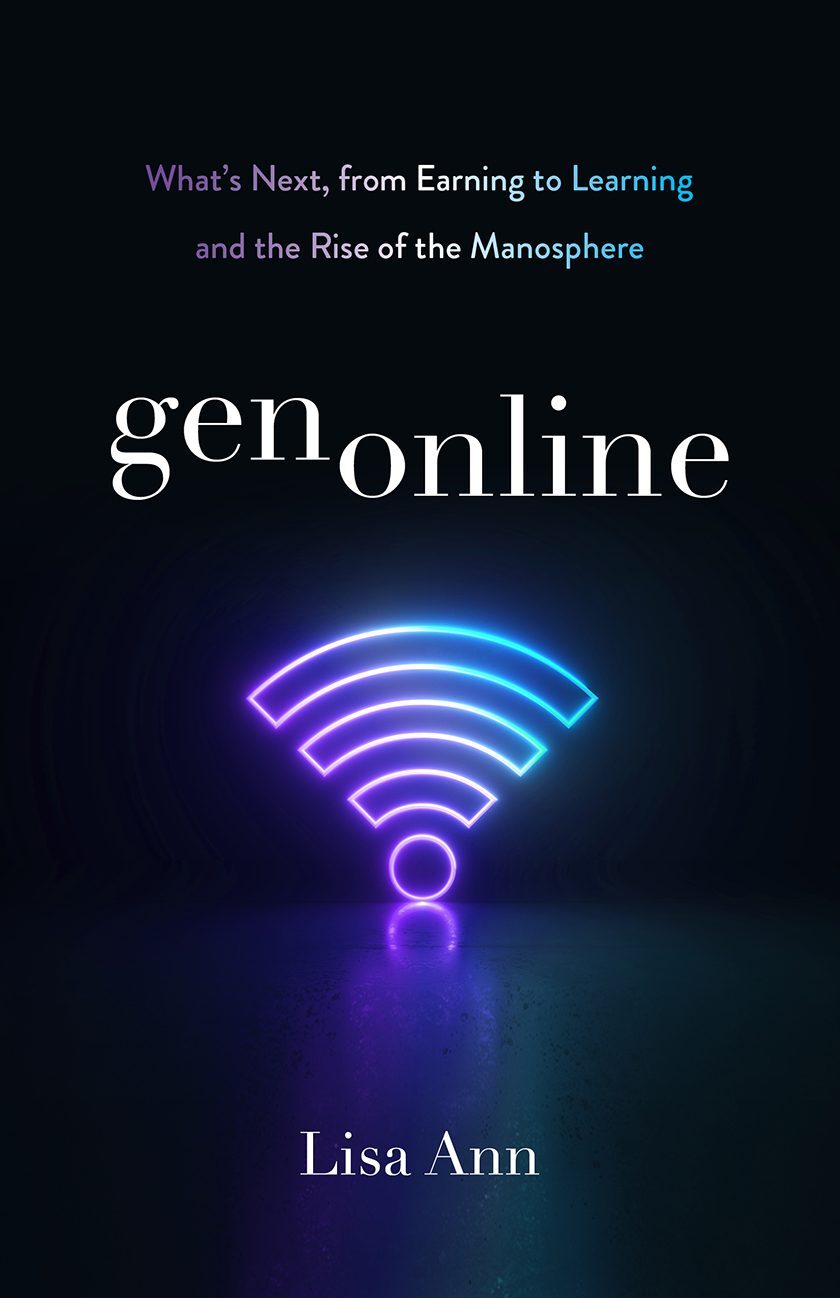
Lisa Ann: Jen online, when you see the cover, you're going to understand I did a couple of dedications to this generation. First of all, they really don't like punctuation or proper grammar. So they write everything with all lowercase letters. So that's why Jen online is all lowercase. I really wanted to pay homage to that. It's very special, right? That's funny.
Lex Statzer: I'm guilty of that. I'm very guilty of that myself.
Lisa Ann: And also, like, if I don't know when this sentence ends and if it's an exclamation point, are you asking me a question? I get tweets. I'm reading things on X and I'm like, I write back to people and I'm like, can you please just sign up for Grammarly and add it into your X and just check your things before you post them? And I read an article during the pandemic about Jen, I guess it's Gen Z or Gen Z, and they thought people who use proper punctuation were psychotic. And so I realized this is a real thing. And then also the Wi-Fi signal right here, like that's the first thing everyone's searching for. They get off a flight, they're on their phone, where's the Wi-Fi? They go to a restaurant, where's the Wi-Fi? These are the things, I did capitalize other things. But Gen Online is really reminding everybody what life was like before the Internet and how quickly we've adapted to what we can consider some really bad habits. If you're sitting at a restaurant and you look over at a table and there's a mother, father, three kids and the mother, father are on their phones, three kids are on their iPads or phones, it's a lost opportunity to connect. And it's also a lost opportunity to teach, to share conversation. And kids aren't as guilty as the parents, because if a kid sees their parents texting while they're driving, they think it's okay. And so when they start driving, they're going to text while they're driving. All of these little things, there's a huge culture right now propping up all of these online platforms, which can be great. They really are a process that really can create empowerment. There are some good things. But then the greed steps in and now there's management companies and agencies that are running these people's pages. And it's very manipulative because a fan signs up for a paid platform to connect with the creator. And a fan is smart enough to know that the creator is not online 24 hours a day. So if these messages are getting answered 24 hours a day, that's a problem. On the creator side, we have a huge population of 18 to 20, 18 year olds signing up for these platforms the day they turn 18. And what we're seeing is they're grabbing onto those clickbait articles of this girl makes a hundred million, this girl made 20 million, this girl. And it's like thinking every high school quarterback is not only going to make it to the NFL, but he's going to go to the Superbowl and he's going to win the game, right? These are unrealistic expectations. So I really wanted kind of like a myth buster. I really wanted to share like, Hey, maybe that isn't so realistic. And there's a permanence with the industry and there's a permanent with the internet. And that's another thing I wanted to discuss. If you don't have a business plan and if you're just getting into this because you think you're going to get rich, well, what if you don't, how will this affect your other career opportunities? How will this affect your family? How will this affect your safety? People get obsessed and you can easily have somebody showing up at your door, finding your phone number, what have you. So Jenna online is really just my perspective, chapter by chapter, starting with the opening, where I tell her a story about the thing you had to do before you took your first test many, many years ago. And you had to watch this fairly horrific video. That was, I think on projection and that's how old I am. Right. But it was an educational video about everything from drugs and alcohol to the potential of debanking and discrimination to STDs. It talked about the eighties, how the industry was fairly wiped out due to the HIV crisis, all of the things, loss of life due to suicide. Like it talked about all of the things. And if you could make it through that video and you had a very good understanding of, okay, these are all the worst case scenarios. Many people didn't make it through that. And I talk about that in my opening story. Right now, all you have to do is have ID, internet and an iPhone. And to me, that's not enough. There needs to be somebody saying, Hey, let me just play devil's advocate and say, what if this doesn't work out for you? This is going to be on the internet forever. Are you willing for that? You know, not every boyfriend wants to be a part of that. Not every family member wants to be a part of that. And will it be limiting? If it's going to enrich your life, I'm thrilled for you. But if you're not sure and you're just doing it on a whim because you think it's easy because the news said it was, then I want you to be educated and be aware that maybe there's more to this than you've seen.
Lex Statzer: Something I find really interesting that you say in the book is that these platforms that you're talking about, they're really not selling sex. They're selling loneliness. There's actually a fan in Miami who really brings that claim to life. So what do you mean by this loneliness claim and what happened with that fan to really make that stick for you?
Lisa Ann: So when I entered the industry, we were selling a fantasy and that fantasy was a once in a while somebody gets decadent, they go to an adult bookstore, they walk in with their identification, they rent a VHS, they have to return it. It's a whole process. And I think part of that was part of the fun of the process. Remember, some of you may remember going to Blockbuster and how fun it was to decide what movie you were going to rent. It was, I don't know, more exciting than just going through it out. So I was selling a fantasy. Now, in order to really thrive in the creator culture, you have to sell a reality. You're building relationships with people. You're having intimate moments. I've never been a sexter. And sexting is a big part of this. Well, you're sexting with a stranger, that person, you might be the only woman that he's having this type of interaction with. So he's going to become attached to you. You might be his only form of intimacy. There's also one-on-one webcam, which is something I also never did because to me that was too personal. I mean, I danced for, it wasn't until Pale In that I actually gave in and did lap dances. But when I dance for 20 some years, I wouldn't do lap dances because it was one-on-one and I was an entertainer of the masses. I'm not good one-on-one to me. It's a little manipulative and it just made me feel uncomfortable. And once I did Pale In, they were like, well, you can let your security sit in the room and you can tell the guys they have to sit on their hands. So that's what I did. Nobody bought a second, trust me. But I got to sell that one and done from everybody. So that loneliness and prying in on that loneliness, not keeping it realistic and not letting that person know, Hey, this is a product you can enjoy when it becomes a loneliness being attracted to this 24 seven machine is I can feel that need. I can, I can fill that need that they are all also not going out of the house. They're not trying to meet new people. They're not engaging with friends and going to friends events to try and meet new people. Now it's just so instant. I can just log on. Somebody is going to be live and I'm just going have a one-on-one with this girl, this creator, and my needs are going to be met. That can form a very unhealthy connection. It's more than parasocial. It's personal. It's intimate. And we turn intimacy into a product and we are selling that product. That to me is more than what the business should be. You know, my DMS are more, I'm either counseling people who I think need to get out of the house. I'm talking sports, TV or movies. I'm motivating people to travel. I mean, I just got one of my followers to get a passport. He's 30 years old. He does have a passport. And I'm like, bro, for the one thing you do for me this year, you got to get a passport. Now, when it came to the guy in Miami, this was one of those people that is a member of all of my platforms and, and also follows me on X and follows me on Instagram and follows me on Facebook. And I do lives every week on Instagram and Facebook. I think lives are very important. They let your people know this is actually what you look like. You get to engage, you get to know people, you get to know them by their avatar. You get to say hello. And this person was building an unhealthy relationship with me by watching too many hours of my content. And when it came to an in-person event, when someone's approaching you that has that connection with you, you can feel it. It's a very off energy. Normally there's a hard time. They have a hard time making eye contact. They're usually sweating. I mean, I can sometimes hear their heart beating as they get close to me. And that's when my security and I, we actually have baseball signs. So we, he knows like, stay close. We have these little signs. We do like stay close. Cause I think I'm afraid of this person. And this person came up to tell me how much he loved me to tell me that we should be together, that we like all of the same things. And so I usually try and play it off in a fun way. First. I say, look, many people here would love it if I went home with them, but if I went home with them, I wouldn't be here with everybody else. Like, you know, I try to make it fun. Then he got obsessive with me. And then he started crying, like at my booth, just like crying. Why won't you be with me? So we had to get security involved. We had to have him removed. And then he gets home and he goes on another platform and he puts, had I known you weren't going to leave with me, I would have brought a gun with you with me and made you go home with me. Now, at that point, somebody managing that platform of the company that sees these messages and they have keywords that somebody will reach out and say it was, it wasn't an adult platform. It was a platform where you order messages, video, cause you know, like a birthday messages and they reach out and they're like, okay, what do you want to do here? And I said, look, most important, you have his credit card information, which would give us who he actually is and his address. So you, I know, legally can't give that to me, but I want you to hold onto that and make a note of that. And we need to block him. And I told him that I was okay. Cause of course they were worried, like, are you concerned at this event? I'm like, no, usually people that say they're going to do things like that. Don't do it. It's the ones that don't say it. You got to be afraid of. And I've managed through many very frightening experiences to have a place where I can mentally say, well, you're still alive and this is not the first, this will not be the last, but that's unhealthy consumption. Not unhealthy consumption is something else that I talk about in Jen online, because I think a lot of this has to do with improper age gates. Clicking a box that says you were 18 is not enough. We don't let 10 year olds walk into a bar and tell the bartender, Hey, I'm 21. We don't do it for sports betting. We don't do it for smoking cigarettes. So at the same, why are we allowing this? People will say, Oh, it's free speech. It's first amendment. It is not free speech. We are protecting young minds because what happens is when young men start watching too young, it forms a totally different vision of women of intimacy on what their expectations are. And they end up being so isolated and so alone that they're virgins much later in life. The term incel means involuntarily celibate. And in the nineties, the first beginnings of the incel community were groups of men that were cheering each other on and trying to help each other, you know, meet people. And it was this lovely community. And then it became this more toxic community because younger people started watching content. If you're giving your kid a phone at eight years old, you have to know that they're going to find something and be obsessed with watching it. And that is really scary because what it does to the gray matter, I'm currently reading a book called, this is your brain on porn. And I'm fascinated by how it affects young people before 17, 18, which proves the scientific studies on why the legal age was 18 and how your brain is still developing compassion, empathy. You're building friendships. You're in sports now, 11% less young people are playing sports in school. They're glued to the internet instead. And that 11% statistic is really harmful because those kids have more opportunity to go to college. Maybe they'll get a scholarship. They're also better in the workplace because they've been a part of a team and they know how to work as a team. What they're missing out on is so much more than people realize. And so the parasocial relationships, the improper age gates, it's unreal. But Tim Tebow's foundation has these commercials that come on during NFL games. And I asked some people this week, are you, are you taking note of this? Cause I've been talking about this for a long time. One out of five teenagers in the U S have been sextorted before they turned 15. That means somebody that wasn't their age on Snapchat, usually it's Snapchat cause they're dissolving photos or any platform reaches out and says, I'm your friend. What they did was they went on their Facebook or on their Instagram. They said, I know your girlfriend, Michelle, I knows send me nudes. They send nudes. And then a day later they come back and say, okay, I have all of your friends and family on Facebook and I'm either going to send them these photos or you're going to send me $500. And that is horrifying. That is so horrifying to think about the trust that is broken for a young person. And so conversations that I've been having with my friends before I started writing this book, we're like, Hey, please talk to your kids about not sending photos, you know, not doing that because you don't know if the kid they're going to break up and he's going to show them to other friends and then somebody is going to be embarrassed. Like these are conversations that parents have to realize they have to have as icky as they are. You just got to have them. And I hope that by reading this book, more people have these conversations.
Lex Statzer: Yes, yes. I'm so excited for this book. I genuinely cannot wait because everything you're saying right now is so prevalent. I don't know anyone who would hear what you're saying and be like, I'm not familiar with any of this. Like we all live in this society right now and know exactly what you're saying. It is too accessible. It's way too easy. And it's it's so impactful, especially for the for the young minds. That's it's terrifying. It's genuinely terrifying. And one of the things that we're kind of circling here that you talk a lot about in the book is this idea of the manosphere. You describe it as a house with a loud front door and a quiet back room. Walk me through that house.
Lisa Ann: I also like to say the in cell, the manosphere is like an in cell glow up, right? The manosphere attracts in cells who are either maybe having interactions sexually with somebody, maybe not. But the manosphere is louder than the groups of in cells. And the manosphere is anti-feminism, anti-women's rights, anti-all of the adult platforms, all the online platforms. And the most interesting thing here is that the largest groups of the manosphere, the largest leaders all run management companies that run these platforms. So what they're doing is they're hosting these incredible live streams on kick and twitch. Most of them have been banned from YouTube. They're hosting these streams. They have data scrapers that are scraping the data. And then as soon as they're off the streams, they're setting specials join this girl's page for $2.99 for the first month because they have the database. So they are just melting their minds. They're just using them on every way, shape or form. And men, young men, that this red pill societies, red pill mindset, they then become very angered because they don't look at themselves and think I should be trying to date someone my age, maybe in my league. No, because they become obsessed with women on the internet and they think every girl should have a BBL and they think every girl should do the things that the girls do in the movies. And they have this impression of their expectations. And because their expectations have always been met when they've logged on. And now their expectations cannot be met in real time. They're angry and they revolt and they revolt against women, even though women had very little to do with how this all started. Again, I feel most of it has to do with age gates. I feel most of it has to do with a lack of understanding of what young people are seeing online, but the manosphere, there's a podcast called fresh and fit. And I did not know how this operated until I watched the manosphere documentary on Netflix. And I had been wondering for a long time, like I know when I get invited on a podcast, I'm a listener six to 10 hours before I say yes. And if you're weird with people on your podcast, I'm just going to pass. Right. And these people, these men are so abusive to these women that go on. And I was like, how is this happening? Well, I found out this humiliation ritual is signed on by, by these women, because then what they call the simps, the men that love them and will do anything for them, they actually make more money because the men feel bad for them. So they'll go on to this podcast. They'll allow these men to just be so horrific to them. I mean, if a clip comes up, I have to hit not interested because it breaks my heart, but learning the behind the scenes from that doc, you see her documentary, let me know like, oh, the, are they are willing participants. So that makes me feel a little bit better that they're not shocked by this is happening. They want to be abused this way because then they get to cash in on the other end from men who feel bad for them. That is nuts. That is such a poor way to attract an audience, but here we are in a rage bait society. And then the fan feels like, I must say he's some sort of captain Sabaho because he's going to message her and say, here's a tip. I feel so bad for you. You were humiliated. And yet she was willingly humiliated. And the women are the ones that are keeping this podcast happening. If no one showed up, they would have nothing. And so it's really strange to see women accepting being played into this women being told to their face. No one's ever going to want you. You're useless because you're an online creator and you sell this sexy, spicy content and no one's ever going to want you and your parents must be humiliated about like, and the women just sit there and take it. And then they cash it on the other end. That blows my mind because we all, as women have to stand up for each other and say, no, don't go on that podcast. And I remember the first time about three years ago, somebody asked me if I would go on that podcast. I had never heard of it. And I only had to watch one episode to say no. But I said to that person, how little do you think of me that you asked me if I would want to go on that podcast? Now this makes me judge you. And the fact that you support this podcast makes me no longer want to communicate with you. Like this is a problem. So the manosphere really takes them down. This weird place allows them to think that it's okay to be completely disrespectful to women. And you know, when I do live streams at about the 15 minute in, there's a Reddit group of incels in the manosphere that of course do not like me because I speak about this. And so somebody will put alert in Reddit and the comments that start flooding in are, and I have all my keywords in with meta. I, I check them every time I do a stream, but it is horrific times. I block them. Sometimes I just let them fly and I let other people read what's going on. Sometimes I do a betting told her an under over how many people am I going to block today? But I now know where it comes from because I have a friend who found thread for me on Reddit and I realized like, Oh, they're just trying to break my spirit. I got to let them know they're not going to break my spirit, but it's vile. And as a 54 year old woman who's already lived a full life, I'm not concerned about me. I'm concerned about young creators that don't know. You know, there's all these internet marketing classes now in colleges, their social media influencers programs. There's all this stuff. Is anyone giving them a class of the verbal abuse that they're going to have to take to be successful with a large following? Because otherwise you're going to be really shocked that you have to read a thousand mean comments about you a day. And so that's a lot driven by the manosphere. They don't want women to succeed. They're anti-feminist and feminism. And when they see someone like myself who was able to have a successful career in the business and then able to do sports radio and write books, the vile towards me is much more extreme than other people because they're just like, no, we can't have a success story. No, we can't let people know this woman is okay. No, this is unacceptable. So this is really something that I'm educating friends about because I didn't want their young men to start talking to them about like alpha male red pill. You know, I had a friend who came to me and he said, you know, my 13 year old just loves the Tate brothers. And I'm like, okay, there's some good information there, but there's some bad information there. We know the Tate brothers are currently in prison, though. I think they're political prisoners. They didn't do anything in the U S and I don't agree with them being in jail in Miami for this extended period of time with no end result and know that if they get extradited, they're probably going to pass away in prison. But the reality is governments want to silence them because they are sending a toxic message and because they are leaders of this crew. And then there's been this umbrella of all these other young men that follow in their steps. And I said, well, I told my friend, you need to watch a bunch of episodes of their podcast, and then you need to start watching it with your son. And you need to start having an open dialogue because you can't tell him not to watch it because he's going to watch it behind your back. But you have to ask him why he's drawn to it. And that was a really defining moment for him as a father. And so it's been very helpful. And now his son's over it, doesn't even like him anymore.
Lex Statzer: I think it's really easy to hear all of this and just feel so much despair and hopelessness of what direction are we going? It's so nasty. The internet is so full of terror, really. And what would you say is, if there's any, where the hope is here?
Lisa Ann: The hope really lies on what other countries are doing before us. We know Australia started it to be 16 and up for social media. Australia does ID and biometrics to log into adult sites. We know that now Europe has banded on with that same mindset. Having identification attached to social media will change the game. And for everyone that's like, I don't want to give my biometrics. Look, your biometrics are at the airport or at the grocery store your phone has. I'm like, get over it. But it's not about you. It's about protecting everyone else, and especially young people. So I think what we're seeing with meta being sued state by state by parents, these class action suits that the product was addicting, now there's going to be guardrails put on that. And then the next step is going to be, how do we verify this? Because there's stalkers, there's harassers, there's people who can set up a thousand profiles just to harass somebody. That will all be refined in time. We're just living through the blip of it. It's kind of like cigarette smoking. If you went back and you watched Mad Men, which I hadn't seen it till the pandemic and I binged it. So I did like four episodes a day. I was so nauseated by how much they all smoked. They smoked in elevators. They smoked in planes. They smoked when they were pregnant. They smoked, they smoked, they smoked. And then over time, what happened? People started learning how bad that was. Okay, we're not going to, we're going to have smoking sections at a restaurant. Okay, now we're not going to smoke indoors anymore. We are right here with social media, with online platforms, with the internet, where regulations will come into play. You know, police departments, local enforcement, everyone has to catch up to speed. All of these things take a lot of time. And we'll get there just like we got there with really being able to educate the world that like, hey, maybe smoking isn't good for you. And maybe we shouldn't be exposing nonsmokers to smoking because they work at a restaurant. So I do believe that we'll look at just like we look at smoking in about, yeah, maybe 10, 20 years. Yeah, we just got to get there.
Lex Statzer: We just got to get there first. So on that positive note, where can people find Gen Online and what's next for you?
Lisa Ann: Gen Online will be available. You can do pre-orders on Amazon. It will be available on November 10th. I'm very excited about this and I'm very excited to hear everyone's thoughts. I'll be recording the audio version early 2027, hosting a live shopping event on whatnot as well on November 3rd. So I'm excited about that. People will get to see me autograph. I'll be taking it to personal appearances and doing bookstore events. But what's next is getting out part three of the life, finishing up that story because I've got some secrets to share that I've never shared and really getting out there and speaking. I was fortunate to speak. I was in a debate with Dr. Ruth in 2019 at the Oxford Union and it was so powerful. It was when there was a time England was considering using adult content for education and I was opposed to that. And I worked with the students to have a really lively debate and say, no, this is not acceptable. The content is not, it's not consensual enough. It's not good. There's, there's a lot we could be learning not from that. So I hope to be able to have this conversation on grand scales where I can speak in front of people of the importance of the proper age gates, where I can talk, whether it's speaking engagements at universities, speaking engagements at schools, where I can help everybody better understand that the internet and your phone, it's going to be there for you for the rest of your life. But when you're young, you never get those days back. You're always going to, you look back and say, did I spend enough time with my friends? Was I active enough in school? Did I do these are the memories, these are your friendships you're going to have forever. So I just would love to see young people really understanding what a gift it is to have no responsibility and be young and then also educate adults to know how they could set up stronger guardrails on how they can get off their phones and enjoy common conversation. Be face to face with people, put your phone down, live in the moment and get back to how we kind of grew up in the 90s. Yeah, yeah.
Lex Statzer: Well, I speak for all of Scribe and so, so many readers out there when I say that I cannot wait for Gin Online to hit shelves. Thank you so much for joining me, Lisa-Ann.
Lisa Ann: Thank you for all you do. And I have to say, as an author, being a part of Scribe is so incredible. You want to be able to save your creative juices. You also want to be able to be promoting and doing all the things, that back end work, all the tedious details, the graphics, all of the ideas with the layout. These are all things that just would weigh an author down and I think dim that creativity and that ability to properly promote your book. And I think Scribe provides that service to allow us to do what we do best and you to handle the rest.
Want to Write Your Own Book?
Scribe has helped over 2,000 authors turn their expertise into published books.
Schedule a Free Consult