Harris Nydick on How Writing a 401(k) Book Became His Firm's Best Business Card
✨ Episode Summary
Harris Nydick was part of the first wave of financial planners in the early 1980s and has spent decades building a New Jersey advisory firm serving the 401(k) and 403(b) plan sponsors most advisors actively avoid. His Scribe-published Common Financial Sense sat in his head for ten years before he wrote a word. He printed his manuscript-in-process, gave it to four college kids with four orange Sharpies, and asked them to circle any word they did not understand. The book that emerged became, in his words, the best business card his firm has ever had.
⭐ Top Moments
- The Orange-Sharpie Plain-English Test. "I went out and I bought four orange Sharpies. I printed the manuscript as it was in process and I gave it out to four college kids. And I said, circle any word you don't like or understand. I wanted people who were specifically not in tune with any of the jargon or language of our industry. So that was a very, very educational process for me." A real anecdote about the rigor required to write a financial-services book that non-specialists can actually use.
- 10 Years in His Head Before a Word Got Written. Harris's book is unusual because the idea was incubated for an entire decade. The audience, the message, and the standard of plain language were all settled before he typed page one. That patience is part of why the book became his firm's best business card.
- A Niche Most Advisors Actively Avoid. Harris built his career on 401(k) and 403(b) plan sponsors — a market most advisors stay away from because the service model is different. The book is his thesis on why that work matters and why retirement-plan participants deserve plain-English guidance.

Harris Nydick
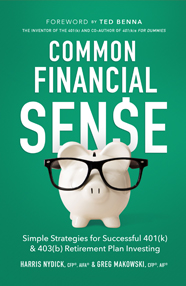
Harris Nydick is a founding partner and managing member of CFS Investment Advisory Services, LLC, where he has advised institutions, retirement plans, and high net worth individuals and families for more than 36 years. He has been recognized by Barron's, the Financial Times, and Forbes Best-In-State as one of the top wealth advisors in the country. He is the co-author of Common Financial Sense, a former number one Amazon bestseller on simple strategies for successful 401(k) and 403(b) retirement plan investing.
★ Scribe Case Study
Harris Nydick's Common Financial Sense Sat in His Head for a Decade — Then Became His Firm's Best Business Card
Harris Nydick was part of the first wave of financial planners in the early 1980s and has spent decades building a New Jersey advisory firm serving the 401(k) and 403(b) …
📚 Books by Harris Nydick
Transcript
Harris Nydick: I went out and I bought four orange Sharpies. I printed the manuscript as it was in process and I gave it out to four college kids. And I said, circle any word you don't like or understand, any word, not just financial, any word you don't like or understand, circle it. And I'm going to change it. I wanted people who were specifically not in tune with any of the jargon or language of our industry. And so that was a very, very educational process for me. So now I have to speak in plain English. And I thought I had, and I see all those orange marks all over my manuscript. I've got to start changing all this.
Eric Jorgenson: Harris, I appreciate you being here with us today. Thanks so much for having me. I'm excited because you are uniquely experienced in terms of having a book out for a really long period of time. But before we get into the book and what it's done for you and for your business, will you give us a little bit of a background on you and the career that sort of led you into writing a book in the first place?
Harris Nydick: Sure, so I was part of a very early, early wave, that first wave of people who went into financial planning back in the early 80s. When I was looking at career options, if I wanted to work in the investment arena, everything was highly siloed. If you wanted to be in bonds, you were in bonds. If you wanted to be in stocks, you were in stocks. If you wanted to be insurance, you were in insurance. And you bought those products from different people. I was brought in as one of the first financial planning training classes of a large financial institution in Manhattan where we were being it was and they didn't really know how to treat us in the sense that back then if you wanted to work for a stock brokerage firm or one that we would refer to as a wire house now they would give you the manhattan phone book and say go get them slugger and and it was just cold call away because then you could cold call the laws were very different than about how you could approach a potential prospect but
Eric Jorgenson: This firm took it very differently.
Harris Nydick: They treat it almost like a medical residency in where when you're preparing to become a doctor, you spend eight weeks on orthopedics, then you spend eight weeks on brain, then you spend eight weeks on spleen or kidney or whatever. So we spent eight weeks. just on different topics, and because of their connections in the industry, when we were doing municipal bonds, we were taught by Fred Labenthal. When we were doing international, Mary Babeli came down. Fred Alger came in to talk about small companies. It was just amazing, the parade of experts. I don't think we even appreciated at that time, because they were all mid-career. They weren't the legends that they then became at that time. Otherwise, they probably wouldn't have bothered coming to see us. But they spent a lot of time and they really trained us and I was actually paid a salary for two years, three years to learn the business. So I was under no pressure to sell anything. So I was really brought into this in a very nice way, which allowed me to really absorb the information and really think about what's best for the client.
Eric Jorgenson: Incredible. And so that kicked off your career in advisory management. Did you eventually go off on your own? Did you stay at the big, big houses?
Harris Nydick: Great question. So after I worked in the city for about six years, and then when our first child was born, it was taking me an hour and a half each way to get to New York City and then another hour and a half to get back. And so I felt for three hours a day, wow, if I could move my business closer to home, that would be an hour for me perhaps to work out more, just be more physically fit, an hour for my family, an hour more for my clients. It just made sense. So that became my first career goal was to move my business to New Jersey. Of course, there was an optics issue there because the internet had not really come out yet. If you were working in finance and you were within a 90 mile radius of New York City, you better be working in Wall Street or in Midtown at the worst. So just at the advent of the computer and just at the advent of the internet is when I moved to New Jersey. And at that point, it didn't matter where you were.
Eric Jorgenson: Interesting. Good timing. So one of the things you've said about your book that struck me is that it lived in your head for 10 years before you wrote a single word. What was that very first spark? What kicked off that 10-year clock for you?
Harris Nydick: That's a great question. Well, the thing is, is that Most people in our industry then and now don't really do a lot of work in the 401k or 403b arena. The average advisor has three or four of these plans on their so-called book of business or in terms of their clientele, but really wish they had none because the service model that's required to handle a high net worth or aspiring wealth business of personal wealth or family wealth is a very different skill set needed for handling 401k clients. Because although the markets have been on quite a rip for the last couple of years, when the markets start to go south on you, the average advisor is going to come in and want to only take care of their most valuable clients, which are their high net worth clients. But by 10, 11 o'clock, the mayor of whatever company you have a plan with has now held court. Now you're getting calls from a bunch of people that have very, very small balances. You better be prepared emotionally and logically, and you better have the people power in your organization to treat them with the respect that they deserve and answer all their questions. So that was always the big conundrum. We specialized early in 401ks and 403b. So that had been an early subspecialty. So that's one of the things that was rattling around in my brain. And what we kept hearing from all of our clients, whether they were corporate clients or personal clients, was that, hey, you guys tell really good stories. You really need to write them down. So that was the initial spark. And at that time, both my business partner and co-author Greg McCasky and I had young, we each had two young kids. That's four young kids. And we started thinking, wow, something ever happened to us. Shouldn't we at least write down what's in our heads so that they at least know how to invest when they get older, if we're not around to teach them. So it started as something as basic as that.
Eric Jorgenson: I love that for a few reasons. I think so many people focused on leaving a financial legacy or setting their family up for success in that way. And they don't think at all about the intangible intellectual legacy, like actually teaching their kids everything that they know. And the experience that you've had is not Not contagious. It's not transferable just because you had it. You know, you tend to think that your kids will pick it up somehow. But if you don't deliberately instruct and model, then you know that a lot of that gets lost.
Harris Nydick: That's a good point. I can still remember sitting in my kitchen in August of 2008. I want to say sitting down with my brand new IBM, uh, like 25, like, I mean, it couldn't even run a basic program today. It was, and I bought the black and white version. Cause I saved a thousand dollars for not getting the color screen, but what that allowed me to do then was it allowed me to start typing out. a framework of what I'd want to write. If I were to write this down, what would it look like? So I actually had almost a table of contents written. And then September of 2008, the markets fell apart. The Great Recession occurred. My kids started growing up and the whole thing just at some point I did save that at the time. I don't probably do a CD, a writeable CD or I was able to get it ultimately so that when 10 years later came, I sat down and look at it. I was able to find that file. And really, life is what happened to me in between. And of course, we got 10 more years of education with what the markets have done because the market never really repeats itself, but it rhymes all the time.
Eric Jorgenson: How was your first idea for this book? How different was it from the book that you eventually published through all the like creative changes?
Harris Nydick: Oh, a lot. It really, it has to more, it has to metamorphose because whatever it is in your brain, first of all, if it's too specific, you got to either widen it out. If it's too wide, you got to bring it in. So the first thing I did when I really got serious about this and at some point, if I can tell you about the actual, I know the moment this got serious for me, I walked in. Well, what happened was, is a friend of mine who wrote his own He ghost written, he had ghost written his own autobiography. I'm in the book because we're friends. I'm actually one of the stories and one of the chapters. And he had a little book signing party. It was very lovely. And he signed my book and I went home and I read it and it was a pretty good first cut. And I was very happy for him, but I was mad at myself. I was very, I had this book in my head that was now becoming more fully formed. And what good is it inside my head? What good is it? It's no good. So I, I immediately, I, I told my, my, my wife that, Hey, listen, every Saturday and Sunday from 12 o'clock to five o'clock in the afternoon, I'm going to sit down and I'm going to, I'm going to really start to really see if I have something here. Let's see what happens. So that was the exact moment. But before I could do that, the first thing I said, okay, how do I want to tailor this? Because just because I had an idea in my head doesn't mean this is what the world is waiting here or read. So I went to a couple of the local big cane bookstores where they have every possible finance book out there. And I looked through them and I noticed there's a lot of books about investing. There were a lot of books about retirement. There are a lot of books about investing for retirement. But they were more for people who were maybe on the precipice. Maybe they were 10 or 15 years out. If you think about writing about the topic we ended up using as a niche, forget it. It's much wider than that. So I said, wait a minute, let's take our expertise in 401k and 403 B plans. 403 B plans are the nonprofit version, nonprofit organization versions of 401k plans. And there's a lot of smart people out there. that have to deal with this and they just don't want to. They're smart, they just don't care to be smart about this. So we said why don't we take all of our stories and all of our thing, everything we wanna do and teach our kids how to invest but do it through the lens of somebody who is at their first job or their, back then you were throwing an envelope, now you're just giving a link and they say go get them slugger and you gotta go out there and figure out what your financial future's gonna be because that's the 401K is. the retirement plan that's used in modern industry today as rigor pensions have really gone by the wayside outside of government. So we decided to really hone in on that because we felt there were a lot of people who were pretty smart. They just didn't care to be smart about this. And that was that's a much bigger addressable audience. It's everybody who works in an organization that has a retirement plan. All of a sudden, oh, that's interesting, especially if I can write it in a way that would become interesting to someone who has no interest in the subject.
Eric Jorgenson: Yeah, it's one of those niches that it sounds arcane until you realize that almost every person working in the private sector has or should have a 401k. It's unbelievably common. And the fact that you happen to specialize in it really early in your career, and then of course, you know, plant your flag in this growing segment by writing a book about it, you know, almost 10 years ago now probably seems seems fortuitous.
Harris Nydick: It almost seems like it was all lined up for me. It was just, it was just for me to see it. It was all there in front of me. I just wasn't seeing it.
Eric Jorgenson: Do you give yourself much credit for seeing that or were you just kind of making the best decision you could in the moment?
Harris Nydick: I felt more of the latter that we were making the best decision we could in the moment was the best way for us to tell our stories, for us to educate people. And it also created, it also set me up for our biggest challenge in writing the book. The biggest challenge in writing the book, specifically writing it, was that this is an audience. So how do you write a finance book with no financial terminology? How do you do a financial book with no equations? How do you do a financial book with no math? Because people are very math challenged and they're certainly not going to pick up a book for leisure and specifically want to get into the jargon of our industry or the equations of our industry. Nobody cares what a price earnings multiple or ratio is and they don't ever want to know that. That's what other people take care of for them. So how do you write this book? and not talk down to, you know, you want to talk up to your audience, respectful to them. You don't want to have, you know, this is not a, you know, see dick and shake kind of book. We got to talk respectfully to our audience and we have to do so in plain English because the book is called Common Financial Sense that ties into our company name, which is CFS, which stands for Common Financial Sense. Why? Because we've always told people if somebody can't explain in plain English to you what they're trying to do for you number one a they don't understand it well enough themselves and b they're probably lying to you and we've been saying that for 35 years which is 20 years before bernie made off couldn't have written it on the back of a napkin
Eric Jorgenson: Yeah, it's a very interesting needle to try to thread that plain English explaining something that most people glaze over at or find boring, finding the right threshold where you're giving them all the information, not holding anything back, but it's clear and simple enough for them to understand. And you had a really good trick for accomplishing that. And I hope many authors will hear this story and hear this trick and take it up for themselves.
Harris Nydick: Yeah, absolutely. And in fact, it's also so common-sensical. I went out and I bought four orange Sharpies. I printed the manuscript as it was in process. And I gave it out to four college kids who are on break. And I said, circle any word you don't like or understand. Any word, not just financial. Any word you don't like or understand, circle it. and I'm going to change it. And I made sure these were kids that did not have finance majors. I went to an English major, a history major, a science major. I wanted people who were specifically not in tune with any of the jargon or language of our industry. And so that was a very, very educational process for me. So now I have to speak in plain English. And I thought I had, and I see all those orange marks all over my manuscript. I got it. I got it. I got to start changing all this. So that's it was as easy as that.
Eric Jorgenson: I love it. That's such a perfect, beautiful common sense. Anybody can do it, but so few people bother to try. And that is a huge bridge. People really, I think authors really underestimate how much some of those those words add friction or slow people down or make them feel stupid or make them feel confused. And it's just so easy to put a book down. It's so easy to put a book down and feel turned off and simple tests like that that sort of pull those rough edges out.
Harris Nydick: Well, I think it's important is to care supremely about your reader. And their experience and are they benefiting from this they're investing their time and attention the two most valuable commodities we have and they're spending their time and attention with you and you got to make it worth their while. So you got to have something to say and you got better say it in a way that's receptive for them to read it.
Eric Jorgenson: Yeah, serve the reader and make it legible. What were your hopes or expectations going into writing a book? You know, you thought about this for so long. You worked on it on weekends. What was motivating you? What did you picture as success?
Harris Nydick: Well, we picked, I thought was a pretty high bar. I mean, at the time there were far fewer titles coming into the marketplace every, every year, the way they were then, or the way they are now, I should say. And there were fewer then. And then, and then, so, so I'd read a, a factoid somewhere. that if you look at all the number of books that get released in a year, the average sales across all of them, the ones that sell two copies against a Harry Potter book, but the average, I was told at the time, was 3,000 copies. So I said, if we could get to 3,000 copies, we're at the halfway mark, and that would be a success. So if we could sell 3,000 books, but I have to make it clear, we weren't writing the book to sell the book. We were writing the book really as a combination business card for potential new clients. We were writing it to reestablish ourselves with our existing clients. And we were already recognized within the industry as experts because both Greg and I had spoken across the country at different industry conferences, but that was to our industry. We weren't recognized as experts outside of the industry. So my mantra then is what I tell any aspiring author right now, and that is you can't spell authority without the word author. Corny, but boy, that's my mantra.
Eric Jorgenson: And it seems to have worked out well for you.
Harris Nydick: I mean, we think so because we, we accomplished all those goals and we sold far more than that. As it turns out, we also try w we, we had another, we had another goal with the book. Obviously we're, we're capitalists where we're in the, in the financial industry, but we believe you can have capitalism with altruism. They're not mutually exclusive. So for every book or two that we sell, we knew that we could give away a book. Our goal was not to profit from the book per se. So we've been able to now pass that book on. We've spoken at different colleges. We've spoken at different professional societies, different universities, different medical schools, because when you're a medical student, you know, You barely have time to cover all the bones in the body and all the organs in the body. What are you going to do with the money when it comes in? And we try to give those away. We try to give those books away. or at least that cost. So that's worked out really well for us because we're not trying to make money per se from the sale of the book. But let's face it, I don't know how many of the clients that became clients because I handed them the book wouldn't have become clients if I didn't hand the book. Maybe it's the same, but I got to tell you, it made the whole process a lot easier in terms of Any competitions like the old joke, you don't know it. We wrote it. Yeah. So, and of course we do a very nice financial education presentation to all the employees of a 401k play as they're, as they're being handed out their, their, their book. I want to make another comment that a lot of authors miss on. I want to encourage every author to autograph their book in the beginning. Even if it's not personalized, I will tell you that a friend of mine who's written six books generally can't be bothered with signing his books. Well, he sees his books on sale for resale all the time for five and six dollars when he's trying to get $37.95 for his book. It's a hard cover. Ours is a soft cover. We charge, I think, $17.99, not a big price, but we sign every book. And you know what? Our books are rarely on eBay. They're rarely on other shows. It's something about a signed book. It's the dumbest thing. Maybe this guy will become something. I don't know. I can't explain it. Very few of them are actually personalized, but I'm going to a company and I'm speaking to a hundred people. Greg and I signed a hundred books. So they don't get resold as often. So they get kept. I hope they get read. I mean, they make a very nice coaster for a vase of flowers, but I hope they're actually getting read.
Eric Jorgenson: Yeah. It's there's something about having the physical object in the house too. Like even if there are many instances, I think where the existence of the book has a plenty of impact, even though few people read it. I always say like, you know, you might, you might sell 10,000 copies of those 10,000 copies, maybe a thousand people read it cover to cover, but a hundred thousand people are aware of your book, even if only 10,000 people bought it at any time.
Harris Nydick: And it's no different than I stood in the driveway as I was shaking my head, leaving that guy's house that day. He did it.
Eric Jorgenson: Yeah.
Harris Nydick: So this is something we did. I would also encourage an author to the extent that they're able to write a book that's largely evergreen. the reason why our book has staying power is because by and large it was evergreen we we could have come out with it at the end of 2017 but a huge tax bill was about to be passed and we thought it would pass it did pass so we had to go back and and retrofit for the latest the newest and greatest so it came out in the spring of 18 but then that that lasted all through covid it was only It was only a couple of years ago we came out with about that last, we must've printed three different editions or four different editions, the printings of the same edition. And then we went back to the, to the, to the drawing board and actually wrote an additional chapter that we added to the book. We updated all the numbers and did the best we could to make sure that would remain evergreen.
Eric Jorgenson: Yeah, there's an amazing tactic hidden in there also, which is like a big legislative shift is a really good time to publish a new book because everything else suddenly becomes outdated and you get to kind of plant your flag in the new era. What is the best unexpected good thing that came from this book being out in the world? the best unexpected thing didn't plan for it, but you know, something just a door appeared, a relationship got created, a client came through or something like that.
Harris Nydick: Some of the, some of the fee it's really, it's all about the feedback. You know, you, you, you do it and you set sail to it. You don't know how it's going to be received. Right? So the feedback from most people, the people who knew me well, they said it's better. I read it. It's better than I thought it was going to be. I don't know if that was a compliment or not, but I take it as a compliment and I wished I'd read this 20 or 30 years ago. They wish they had had that information earlier. That is a high compliment. And then a book, some book festival named us the best how-to book in the country in 2020 in the midst of COVID, maybe because there weren't a lot of entrants because it was COVID. I don't know, but actually the entries went out before COVID hit. It was in January, 2020. We submitted all that stuff. But yeah, so that was very nice. And just, it's just a general reception of the book. And of course it really did. It's, it w there was a noticeable boost in our new client acquisition after that.
Eric Jorgenson: That's fantastic.
Harris Nydick: Specifically our 401k corporate plans and our 403b nonprofit plan.
Eric Jorgenson: So how did you, let's unpack that. Cause how did you use the book in your business? Like do you, where, where does it fit in your workflows? How does it relate to, you know, some of the other client marketing you might do?
Harris Nydick: So if it's an existing client, I say, look, we want to come in and we want to, here's the book. I give it, obviously I give it to the key people. There's the C-suite people read the book. We'd like to come in and educate your group. And initially we charged for that and now we don't because we've amortized all those costs. So now we just, we want to educate your group. And so that all accrues to the C-suite folks who brought us in because we're being brought in because they asked us to come in to talk to you about this. We have no agenda except to educate. It's because your boss cares about you and cares about your financial future and wants you to be educated this way. There should have been a course in our last half of senior year of high school and then again college where we were taught. Now it sounds quaint how to balance a checkbook. What's a checkbook? A Venmo, right? But there are credit ratings, right? And you should know what your credit rating is. You should know how to transfer money and how that works. And you should know how to deal with a 401k. And none of this stuff is taught. There's very little financial education out there. And when you're completely disinterested in anything school is teaching you for school's sake, here's a real life skill set that you're going to need the second you leave this place. People would pay attention. So it really isn't out there. So we try to fill that gap as best we can, because we think financial education is part of our social contract with our community. So that's with existing clients with new clients. We said, Hey, if you hire us, we're going to do what we just did with all of our existing clients. And then as we meet somebody new, who's thinking about kicking the tires on our personal side, Hey, this is geared towards 401k and 403 D, but it has a lot of our firm's philosophies in here. So I want you to read the book and if the philosophies make sense to you, we should continue talking together. If the philosophies don't make sense to you, let's still be friends. Let's decide not to work together. So it really is a very good icebreaker, actually.
Eric Jorgenson: Yeah. I mean, for these, it's such a high trust transaction, right? Like if you're, if they're going to bring you in and put you in front of hundreds of their employees and entrust that education, like you got to know what's going to come out of your mouth. You know, you want a preview of that and how do you build that at scale? You can't spend 10 hours previewing, you know, all the material with everybody. This is an incredible way to kind of have that conversation, that deep conversation with hundreds, thousands of prospects over many years at the same time.
Harris Nydick: That that's true. In fact, whereas pre COVID, you wouldn't dream of doing it online or on zoom post COVID. It makes a lot of sense to do on zoom. Why it's easier to record us. It's easier to track which one of your employees has seen or hasn't seen it as you onboard new employees. You, you can say, Hey, watch this on co, you know, it helps if you say, watch it on company time. They're not going to watch it when it's not on company time.
Eric Jorgenson: And you've got people, you know, so many more companies are remote, so you can do it for a bunch of different locations all at the same time. Yeah.
Harris Nydick: Correct.
Eric Jorgenson: Yeah.
Harris Nydick: So it actually translates even better post-COVID, which of course, none of us had the, none of us had the imagination to figure COVID out in 2018.
Eric Jorgenson: Did you, do you see people discovering you through the book or is it primarily for sort of deepening the relationships that already exist?
Harris Nydick: Both, but I'm always pleasantly surprised when I meet somebody new and I said, I'd like to give you a copy of my book. I bought your book. I read your book. Like as a precursor to even walking in the door. Yeah. That was part of their due diligence on us. So I'm impressed that they care that much. I'm impressed that they read everything. Obviously our strategy, not our strategy, but our philosophies. I don't really discuss strategy specifically, but I do discuss philosophy, our philosophy about investing in the book. And so, you know, they agree with it. So obviously they want, you know, at that point, they're almost ready to proceed.
Eric Jorgenson: I heard about the seminar that you gave. Was this a big, a big pivotal piece for you, or is this, you're talking about the presentations that you're given in these companies?
Harris Nydick: Well, I don't know that it was pivotal, but one of the, one of the big early things that were really terrific for me, it was kind of not intended initially to be this way, but we're very fortunate. There's a local community bookstore in our community and, and, and he is a big supporter of local authors. He's a big supporter of, of, uh, and the community really. we all try to buy our books. You know, we go to Amazon, we go anywhere, get them cheaper, go to eBay, buy them used, but we all try to use this bookstore. It's important. It's a real gem of the community. And he was kind enough to allow us to have sort of like a book opening, book signing event. So by the time we got around to that, it was the end of June, and we packed the place. It was great. It was I think about 150 people in this very small room, and they were very, you know, and they were surprised. I was surprised that that many people came because some people we knew were coming, but a bunch of people we didn't. But as we're being interviewed in the front of the room, in the back of the room, if you can imagine, is my mother and father. And I'm just watching them kind of preside over the whole thing and I could see the pride that they had. And this became really, really important because about a week later I left on my summer vacation and unfortunately while I was away on my summer vacation, a distracted driver killed my father. So my last memory of my dad really is him looking over. and presiding and being proud. And see, he got to see this. So he got to see that. And that, that really, that's a core memory for me now. And that never would have, you know, it's a funny thing. You can't have a book, a book opening if you don't write the book.
Eric Jorgenson: What an incredible moment. Yeah, it's, it's funny. Even the authors that I know who have astonishingly big numbers, you know, when you yourself sold thousands of books and probably earned huge sums from downstream of this book and still. You know, the most impactful moments and memories are often with your loved ones or in one relatively small room. You know, it's a launch party. It's a retirement party. It's a talk. It's a book club. It's it ends up being something very intimate.
Harris Nydick: Yeah, I mean, it was very heady times. I mean, my book came out at the same time that Jesse Cole's book came out as the Savannah bananas were taken off. It came out at the same time as David Goggins' first book came out. It came out at the same time one of Tim Ferriss' books that went, you know, just meteoric. So that wasn't in the cards for us, but we never aspired to that either. But it was just a thrill that we were a part of that energy that year.
Eric Jorgenson: Yeah, this is, it's incredible. You did a very good job. I think of identifying your, your audience, your target and just running the playbook against that. You know, you knew, you knew the book you'd written, you knew who you wanted to reach and to your point, it's an evergreen perennial topic and new people graduate into this need every single day. And so you're, you're going to be able to use this book for many, many years and it'll keep paying dividends for, for a long time.
Harris Nydick: I hope so. I think the most important thing for someone writing a book is to have a really clear vision. The bit, the forest, not the trees, but the forest, you guys help figure out what trees to plant, but the forest at the big picture and realize that you think you've written your manuscript and you're done. Well, no, you're not done. You got to get it edited. Then you get it editor. And then you got to figure out how you're going to, what's the, what do you want it all to look like? And then you got to block it and then you go, okay, so now it's printed. Now it's ready to go. How are you going to market it? It's just the there is no there there the goalposts just keep moving So you've got to have a game plan for every step along the way I don't know how you do it on your own quite frankly I mean the guys who started the company they were brilliant. They wrote a book saying here's how to do your own book You read that book you all I can't do this But but but I did steal a page I did I did steal a page I wanted to have blurbs in the beginning of my book Hmm and and they told you how here's how you go get blurbs And, and I wrote, I wrote emails to anybody who I could get ahold of an email address that I thought their eyeballs would go on it and say hey I've got a crazy ask for you. But remember, some high school kid last year asked Taylor Swift to go to the prom and she said yes. This isn't half as crazy as that. And then I went on with my ask, and not everybody said yes, but I had some very interesting interactions with some of the real legends of our industry. And again, who's the best person to write? I also want to have an introduction. Well, who's the best person to write the introduction to our book that's about 401ks? Well, it would have to be the guy who invented the 401k. Well, it turns out he's a very homebody, quiet kind of person, lives in the middle of nowhere out in Pennsylvania. And I cold called him and said, we're writing a book and you have to be a part of it. And he agreed to meet with me. And I remember driving out to see him for five hours, planning in my head everything I wanted to say to him to get him to say yes. And he sat down at the lunch table and says, all right, why are we here? I had to flush. everything I had planned in my own little home movie of what I was going to say. And he put me on the spot and I'm nervous as hell. And I said, well, and I reversed the engineer. We're writing a book. Here's why we're writing the book, because there's too many people who don't know what to do about 401ks. And so we're going to do this, this, this, this and this. And at the beginning of the book, we need an introduction. And that's why we need you. So I started with the end and worked my way backwards to him. He said, I won't promise you anything. This is on a Thursday. He says, give me till Tuesday to read it. And the next morning I woke up to my inbox. I read it. The first draft of my introduction is in close. Wow. He was just, you know, just a great, great guy. His name is Ted Benna. He is the father of the 401k. And I think that added up. These are all things that I read in that book about how to get your, so how do you do this? You ask your, if you're an author and you're, Oh, I'm not going to bother this person. They're too busy or they're too, this or they're too, that, you know, ask yourself this, what would you do if you weren't afraid? What would you do? If the voice in your head wasn't telling you, don't bother. You don't get a hundred percent of what you don't ask for. Did everybody answer yes to me? Absolutely not. But more people said yes because I asked a lot of people and we got great bulbs. We got a great introduction. All this is it's all part of the finished product. I still I still am very proud of what's inside. You have to be proud of what's inside because your name is on the outside. But before I would allow anyone to write an introduction or give me a blurb who is an industry icon, I would have to put something inside that they would be proud putting their name on too. So I was very proud of what I did. I told them who the audience was and enough people said, yes, that we were able to get a gorgeous set of blurbs, a gorgeous back cover with a subset of those blurbs and a great introduction from the absolute legend of our industry.
Eric Jorgenson: That's an incredible story. And I think it shows one of the most important ideas, which is you got to work hard enough on your book to be proud of it. Because if you're not proud of this book, nobody else is going to believe it's worth their time. You've got to just, you got to absolutely whole asset. And if you're not proud to put it in front of the most important person in your network that you're like a little intimidated by and really want to show up well in front of, then you didn't, they didn't reach a sufficient bar of excellence. And so you just keep working on it until you do.
Harris Nydick: until you feel that way. And frankly, that's where Scribe comes in, because there were some parts of the process that I felt highly confident in, and other parts of the process I had no confidence in, and I didn't even know what to do. But I knew by hiring Scribe, I knew I'd get a proper ISBN number on the book, so it didn't look homemade. I know that I wouldn't spell acknowledgements, which half of the homegrown books are spelled. The word acknowledgements is spelled wrong. I mean, right off the bat on page II2, right? So I just knew all the rookie mistakes, the first time out mistakes wouldn't happen because it wasn't your first rodeo. So you still need somebody to really put the ball on it, wrap it nice, and then to help you market it for that next year. Because otherwise you're doing this in addition to your full-time job, not instead of your full-time job. So you need somebody else. So it does take a team. And that's really where you guys come in.
Eric Jorgenson: Yeah. Well, we were honored to play a part in getting this book out of your head and out into the world. It's incredible to see what it's done for you. And I appreciate you so much for taking the time to share all this. My two closing questions are let's go back to, or let's speak to someone who's where you were 10 years ago, just really teetering on the edge of committing to this kind of that, that, that moment that you had and what advice do you have for someone who's at that spot on the road?
Harris Nydick: The first thing is start. Sit down in front of a blank computer. I would tell you that I would, that's Saturday and Sunday, that's Saturday, that was the first day I would sit down. That Saturday at noon, I would sit down to a blank screen. I would stare at that screen for 45 minutes thinking about what do I wanna say? Not how do I wanna say it, what? And then I would just sort of word vomit the whole thing onto the screen, all the ideas. And I didn't even use punctuation. I would just, when an idea was finished, I'd skip a space and I had all these different ideas. And then, then we should've got something to then start molding around. If you've got nothing, you don't, you have no plate, you're in the dark. So you got to like one match. It's incredible. One match gives so much light and direction. So all you got to do is just start, just write something. Even if it's garbage, it doesn't matter. Believe me, the final product had nothing to do with what the early drafts look like. And so, and so I would say just starting. is a big part of it, because from there, the excitement and the momentum will build.
Eric Jorgenson: Love it. And finally, where should people go to follow you, read the book, see how you use it, learn more about your business?
Harris Nydick: Look, we're at CFSIAS.com. The book is available on Amazon. Anybody can ping me on LinkedIn at Harris-Nidic CFP AIFA, and I'll be happy to DM me. I'll be happy to give any advice. I can offer any direction I could offer. We learned a lot. in these eight years about about how to write, publish and market a book and all the things that are attendant to it. And if I can help somebody in any way, get them started, that would be a great thing. The last thing I'd leave you with is that if it's a book that's a how to book and not really we're not really telling a coherent story where chapter chapter, it's just the room changes or the city changes. We wrote the book with the idea that it would be not not not read all at once. The idea was read a chapter, put it down, think about it for a day or two, pick it up, read a chapter, think about it for a day or two. So it also depends on what kind of book you're writing, but be thinking about your reader at all times.
Eric Jorgenson: Do you have any ballpark on what the ROI of this book has been to you and your business?
Harris Nydick: Oh, it's been huge because our revenue, if we're doing our job, once we earn the business of a client or a 401k plan, it renews every year. So in some instances, it's kept relationships that we had before warm. And it's, and it's brought in a lot of other things. It's, it's been huge. I have no regret at, I mean, the upfront expense seemed formidable at the time, but I have to tell you, I wouldn't, I wouldn't hesitate about doing it again. If, if, if I was that first time author or if I felt I had an idea that was marketable and actionable and pivotable for my business again, I wouldn't, I wouldn't hesitate twice.
Eric Jorgenson: I love it. This has all been so helpful for me and I'm sure for many, many other authors listening. Thank you so much, Harris. Thanks for having me.
Harris Nydick: Have a great day.
Eric Jorgenson: You too.
Want to Write Your Own Book?
Scribe has helped over 2,000 authors turn their expertise into published books.
Schedule a Free Consult