How to Market Without Marketing: Scott A. Martin's Groundswell Playbook
✨ Episode Summary
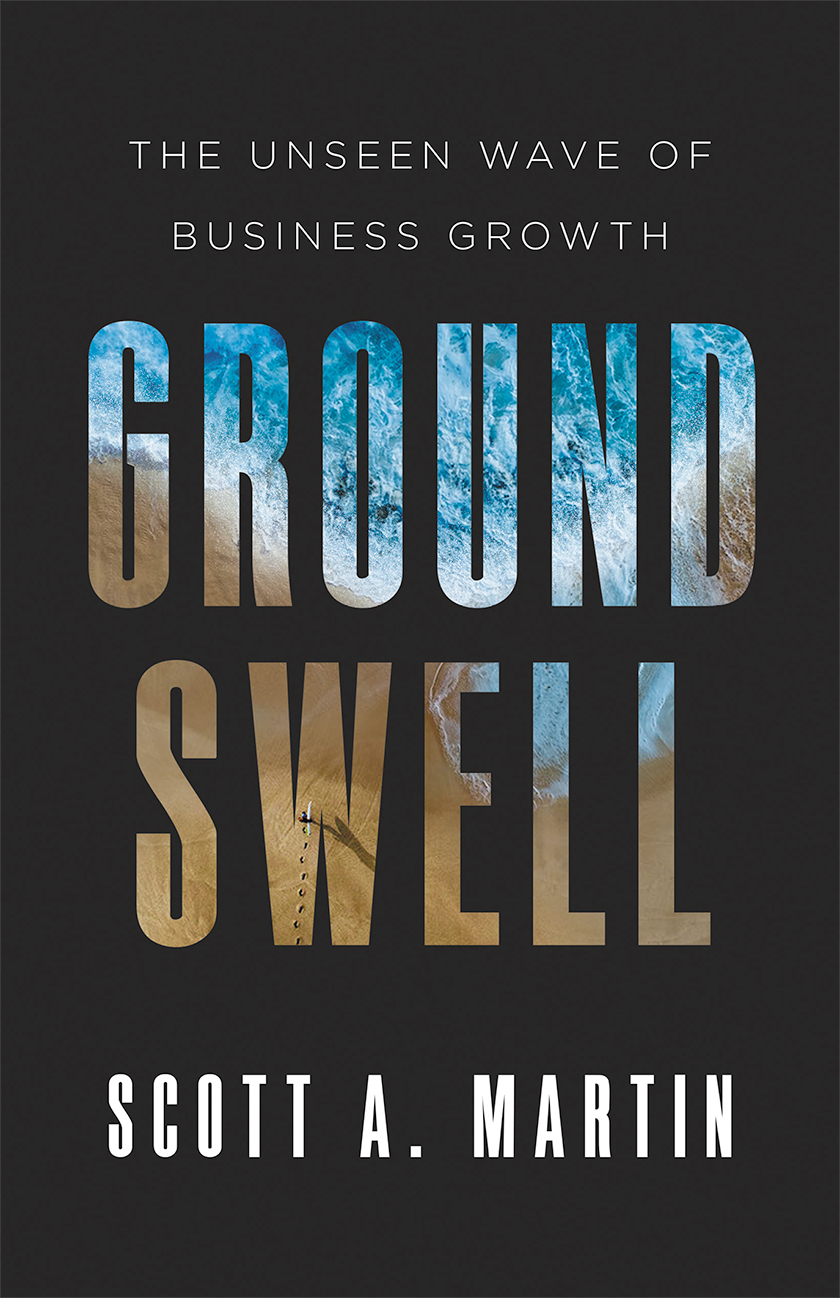
Scott A. Martin has spent more than 30 years in marketing, advertising and strategy. He worked with Scribe on Groundswell, a book built on one premise: “what if you can market without marketing?” It took almost three years to publish, and he says the process did more than produce a book: “my outcome of scribe wasn’t just, I got a book. I got a formula of formulas that I actually built my whole business on” The book, the podcast and the company all carry the same name, so the book became, in his words, “almost like a lighthouse for my whole brand”.
The rest of the conversation is a marketing playbook for authors. Scott turned case studies into a free companion community that mirrors the chapters, sells signed copies directly with a free 30 minute meeting attached, and used the book to open a TEDx stage: “people don’t buy from you until they buy into you. She bought into me through the book and through the podcast.” Asked what keeps authors going through the doubt, he pointed away from sales: “Don’t try to reach more people resonate with more people.”
⭐ Top Moments
- A TEDx invitation that came because of the book and the podcast. A reader of Groundswell found Scott's podcast, then reached out. She ran a TEDx event and wanted him to speak. He missed the sign-up deadline, and she offered him the last open spot anyway. Scott's read on why: “She bought into me through the book and through the podcast. That’s what happened.” He is direct about the role the book plays in his consulting: “this book is a doorway for me getting new. It’s my business card, right?”
- A living book, so the case studies never go stale. Another author told Scott not to put case studies in a book meant to last. So he built the proof outside it. “I wrote the book and I said, anyone that buys the book, you can join my community for free to have a free area. And in there, I basically replicate the chapters of my book.” It also solves a problem every Amazon author has: “if you don’t have direct access to your readers, like we all sell our books on Amazon, this is a trick to be able to do it.” He adds signed copies, bookmarks and stickers when readers buy direct, and offers a free 30 minute meeting to anyone who mentions their receipt number.
- He did not just get a book, he learned to write one. Scott did not want a ghostwriter, and Scribe's thought partner model fit. “I feel like I didn’t just write a book.” Seeing the structure take shape changed how he works: “I didn’t just get a book. I learned how to write a book and that was a real cool benefit of the process” He also makes the point that the voice stayed his own: “I ask one question. Does it sound like me?”

Scott A. Martin
Scott A. Martin has spent twenty-five years working in all types of marketing as both an agency owner and strategist to national brands and entrepreneurs. He’s built a reputation for striking a balance between leading-edge marketing innovation and traditional approaches to deliver sensible, informed, and forward-thinking decisions. As the host of The Groundswell Podcast, Scott interviews the industry’s top minds to learn how entrepreneurs and marketers can build sustainable programs that positively impact the world. As a community builder, Scott also develops content and followings around his passions: surfing, surf art, and heliskiing. To connect with Scott, visit ScottAdamMartin.com and GroundswellOrigins.com.
★ Scribe Case Study
How to Market Without Marketing: Scott A. Martin’s Groundswell Became His Whole Brand
Scott A. Martin wrote Groundswell to market without marketing. It became the bedrock of his business, his business card for consulting, and a TEDx talk with ~500K views.
📚 Books by Scott A. Martin
Transcript
Travis Stoliker: I'm honored to be joined by Scott A. Martin, the author of Groundswell. Can you introduce yourself and tell us a little bit about your book?
Scott Martin: Yeah, I'm Scott Martin. I've been working in marketing, advertising, and strategy for over 30 years. And you know, over those years, I felt compelled to create my own framework that I've been building and it's actually off of my mentor's framework, which was Get Grow Keep Don Peppers. He's the author of One-to-One Marketing. And I used that formula Get Grow Keep for, you know, half my career. And I found that for myself, I had, there was some missing pieces that sort of changed for me. So I created and worked with Scribe on a new book, which is called Groundswell. And I can describe, talk about the chapters and stuff, but what I first say is the premise of the book was to solve an unsolvable problem. What it was, was based on a keynote that I heard, I was part of Tony Robbins group, it's called Platinum Partnerships. He had Peter DeMantis on the stage and he stood on stage and he goes, if you want to make, put a dent in the universe, solve an unsolvable problem. And I'm like, I'm in marketing and advertising, like, what's that, you know? And what I thought is, well, what if you can market without marketing? And so that led me down this rabbit trail of searching for these brands and there's a pattern. And ironically, it intersects a little bit with Don Peppers Get Grow Keep. Those are the structures of building a business. And I'm going, oh, there's actually these brands that grow. It's called a growth loop brands that I call Groundswell growth, which is they grow on themselves. So I broke down the formula, which is build, give, grow, transform. And so it took me a long time, took me almost three years to publish my book. But one of the benefits was working with a Scribe coach was getting the formula. Believe it or not, that was like one of the hardest things was like having a thought partner is probably the first thing I'd say is like when I wrote this book. I already knew the name. I knew the general premise and I understood the body of work because I've been applying this by just to have words around. I'm structuring it. And so for me, it felt like a nebulous. I'm sure a lot of authors like to go have all these ideas. They know they're there. But someone she didn't create it for me. She just facilitated organize. I'm like, of course, that's I just know how to verbalize it. So that was the first thing that formula, though, has led to absolutely the bedrock of all the growth in my business, because I use that formula in my business. I teach it. I teach other brands, try to do it. And now in growth marketing, it's a category which is growth or groundswell marketing. So the idea of the book is basically the name of it is based on the idea of the wave. I happen to my background is surfing. So what I think about the way I want to write my book is I want it to be authentically me. I wanted to be able to make it my personal brand in every way possible. And, you know, you think if I'm in marketing, you would I would come, you know, could be really clever with different names and so forth. I'm ambitiously lazy. The way I would brand myself is I'm trying to do the least get the most effort so I can do it the easiest way. Right. Like, that's my path. So my my podcast is called Groundswell. My book is called Groundswell. My company's called Groundswell. That way, my book became almost like a lighthouse for my whole brand, if you will. Right. And the premise is, is that I'm into surfing. I grew up surfing, living in Hawaii, was 18. And I love studying biomimicry. And waves just seem like a perfect metaphor for what I'm creating, which is a ground. So it's like an uprising. It's like things that kind of grow on itself. But if you think of it from a groundswell from a surfing standpoint, it's not like most surface waves that you see that are just sort of like they're on the surface and they seem strong. But groundswells are these huge storms that are way out in the Pacific or the middle of the ocean, and they don't turn to groundswell because, you know, I think of a movie like Castaway. It's really like it's crazy. So that's like people's ideas. Right. So this is like me working scribe. I had all these ideas in my head. But then as soon as I pick the direction, that's when wind picks a direction in the ocean. What happens is you get compounded effect of the waves actually hitting this ocean floor and these beautiful lines going towards the coast. These are these emanates like it's like a groundswell of energy that's going out there. And then it transforms. It changes when it hits the bottom of the reef and it transforms into a wave and breaks into what's called a breaking wave. And that's part of my form, which is move, change, transform. So we're going to scribe is the same thing. It's like that's actually the process that I went through was first had these crazy ideas and I got some alignment of where I was going and it started to change when I started actually really kind of breaking down the sections. And it transformed in my book when that was able to get the exact wording. But it came for me. It didn't come from wasn't like they like A.I. Or we never either. Or they wrote it for me. It came from me. And so it feels like when people read it, I ask one question. Does it sound like me? And that's when the one thing that scribe did really well that I think other authors miss is getting your voice.
Travis Stoliker: Oh, man, that is great. I love that you said ambitiously lazy. That's fantastic. So you've had a ton of different ideas about growing communities. One that we were just talking about before we started recording was the idea of case studies and how they're a bit perishable. Can you tell us about how you kind of flip that case study perishability on its head and how you use that to grow a community?
Scott Martin: Yeah. So, you know, one of the ideas I'd have for anybody is go talk to other authors and ask this question that I asked, which was, what's the one thing you wish you did when you're writing your book? And one of the authors gave me this one. I think it's Joe Paluzzi. And he goes, I wouldn't put case studies in it. And I'm like, well, why? Because I mean, that's kind of one of the things that that's find somewhat valuable. Like when you go, you want to see the proof, right? The proof he goes, well, it depends if like if you're going to and if this was I remember he did explain this little detail, which I didn't share with you, which is if you're going to create something that's really trendy and that really supports the book heavily, then, of course, use it. But if you want it to be timeless, you want it to want to have a longer shelf life, that's different. And I said, yeah, my goal is to make it a foundational, timeless book. I don't want it to be out of date. So that's what I did was I thought, well, what am I going to do? Because I think there's so many cool case studies. I'm like, what if I made a living book? So my idea was I wrote the book and I said, anyone that buys the book, you can join my community for free to have a free area. And in there, I basically replicate the chapters of my book. And so when you when you when you open the book, you'll see the chapters in the same order. And inside of there are not just case studies, but also expanded ideas. So meaning I had more to say, like so a lot of times, like there's one chapter called community. Ironically, it's one page. And I'm like, I, I remember editing down and I remember the chopping was there. This is my one regret is I didn't push back on community. But at the time, I was so focused on the narrowings. I wrote such a verbose book, whatever. But there's one area. But now I have no regrets because I can just fill it up and put it inside this thing. So I think that they say that your book is never done. It's just when you finally decide to. So I'm like, this relieves me of also that issue where I'm scratching the itch when it needs to get better because it took me three years already. So now my other advice would be you can also create an extension and this builds community. So you have all that energy. People go to my book, they read it, they're compelled, they're being invited, and they got value by going into my community. So it's a great way to migrate readers. And if you don't have direct access to your readers, like we all sell our books on Amazon, this is a trick to be able to do it. I mean, sure, you got to click on the link stuff, but if they wanted to, but getting them into your community because it's a part of the book is a value add. So it's a great way to kind of expand what you could do with your book. And you could now I'm putting workbooks in there.
Travis Stoliker: That's amazing. And then you have them link from the book to this community. You keep that updated. You have the living case studies on there, and then that gets them connected with you as well, right?
Scott Martin: Yeah. And then from there, it's like I have like another course they could buy. It's called building your mighty groundswell, which is how to actually use my groundswell methodology and build a virtual community of mighty networks, which happens to be a perfect community. And I did a bunch of podcasts with them and stuff like that. So, yeah. So it's like to me, it's like I created a multidimensional way of how do I create reach? But really, the first most important thing you want to map is the reader journey. I would map out a reader journey going. It's not just at the end of the book, and they're compelled to do it is what are you doing throughout the book to maybe make it so that it's shareable? And I think I mentioned to you one of the ideas I did was I worked with a sketch artist and almost every chapter has a sketch. So this is put your you got to put the eye to get the ROI or an ROI. Right. So that's the chapter. But then I see what is people take photos of this when they're when I read when I'm signing books. Sometimes they open the page that they like. Sometimes there's a photo on Instagram or something. And I actually market when I want to excite people about the book. But the last thing is going back to the community is I put these images in there as well. And so it kind of makes it more lively and interesting when they're reading the different sections. So there's a section about how to get the ROI. But I also make a little stickers. I just put them in the book when people buy it directly. So now I create a differentiation. If you want to buy my book in Amazon or if you buy it for me, I add bookmarks and add these little extra things. Now I have even more of a relationship with the customer. So I think the direct to customer is a real how do you actually differentiate? Why would I go to Amazon when I go to you? So I think you need to create compelling reasons to make it so that they can do that. And then lastly, insert this thing. They buy the book or I use this thing when I'm at a bookstore or it's right at a book writing and I run out of books, they can still get my book. And then I offer if they buy the book and mention that they what they bought at the receipt number, then I'll give them a free 30 minute meeting with me. Imagine meet the author. You just bought the book. You get to meet the author. I mean, that to me is it's an it's like a scaly, unscalable thing is what I do in branding, right? Like most people think, how do I automate everything? People don't want that. So if you're an author, you want to build relationship, try to find a way to be accessible. People think of Gary. Gary Vee is the most successful, successful, accessible guy in the world. And that guy has no, he's like, he could use automation all day long and he doesn't.
Travis Stoliker: So, oh man, that's amazing. How do you, if you're don't mind, could we get into some of the tactics and like the specifics? Like, you know, of course, if there's, if we're touching on something that's, you know, a secret sauce that you don't want to give away, I totally understand. But like, how do you manage the sending out your own books, right? How do you manage the, the website and the community?
Scott Martin: It's not like, it's not like I've got like a, it's not like I've got thousands of orders. I mean, I don't know what anyone's book sales are. It's, it's, there's not enough for me to, to, to be concerned about. And I do them in batches, you know, quite honestly, most of those books, like people that buy from me directly, there are people that know me. It's like, they've had, they've met with me and I'm like, and I go, if you want the, you know, this, I'll send this to you and stuff. And what I'm really finding is, is it's actually even more than that. What I'm doing is I consult. So this book is a doorway for me getting new. It's my business card, right? And I use this formula when I go and I'm actually working with the clients. So a lot of times if I'm, we're shopping with the whole team, what I do as a value ad is I bundle books. I either send the owner books or I sell them and where I tell them, I go as a value ad, I'm going to give each of your employees a signed copy that in there. So that way now I've sold more books, but I'm delivering it with hand. You can't do that on Amazon that, that I know of anyways, that way they get this. And the feeling that they get as a company of getting like each of their members getting a signed copy and they're leaning in this formula, it really creates a different vibration. And it's how I kind of do marketing, which is visual, visual, verbal, and visceral. Three different things. That's my next book I'm writing actually is called brand coherence. And that's one of my first formulas. And you think of visual, we all think of visual design, like the book cover. Well, my book cover, I also, you know, so let's talk about this real quick. My book cover, most people put a book cover and they aren't intentional about necessarily the color. They just go, I like a color or it's, it's based on trying to sell. For me, I have a backstory of the color. I have a backstory of the photo here at the same time. So the photo here is actually a licensed image from Morgan Mason's world famous surf photographer. And I wanted to get one that, that was not a typical wave. You can see a little guy going out and he's going to paddle out. It's got a lot of storytelling in this one image, but I didn't just get a stock image. I got it from Morgan Mason. I did a podcast with them about this, about this photography of the cover and the photography of my marketing. Why? So I could market my book because it adds a little layer of interest outside of just mentioned. I made a whole podcast, a whole articles about him. They gave me an excuse to market my book in a different way than just talking about the book. I talked about the intentionality that the, what I do, I haven't marketed, but I'll tell you guys sort of like one of the first people I've told outside of my inner circle is this color is, was intentionally designed because when I was marketing as a direct marketing company, we got an opportunity as the hail Mary agency to pitch the Detroit Pistons. And we, the guy knew us and he's, I goes, he goes, you're small, you're scruffy. If you want a shot at it, because we were begging for a shot and he goes, but I'll be honest with you. All these large agencies have their place. And I said, a hundred percent. Great. I only want one thing. I want to be last. He's like, sure. No one asked for it. I'm surprised. Surprised. No one did. I think it's one of my, the biggest moves for you guys pitching your books, but I think we'll last. But anyways, so, and why one glass and when we see everything else, because we knew that we were going to do something different. And I don't know if you guys have seen madmen when they used to do this ads and they had those blackboards with the sketches. Well, this was for the new ticketing system for palace sports entertainment. And this is that the height of.com. And we knew that we knew how to actually, most of our pitches were beautiful designed schemas. It was all gonna be digital because it's a digital pitch. And we thought, how do we become an watermelon when everyone else is an apple or trying to be an orange? We need to be a cat. We need to be outside of this. So we, so we took tech, it's a technology pitch. We do technology it, and we made it into sketches, the same style sketches I do in my book. Now it's another origin story of my sketches. Right. And we sketched the idea because we wanted to sell. You don't want a website. You want a ticketing system that does sales. That's how simple we made it. And a lot of times authors, we try to like, you know, we try to when thing, dangle things, make it really simple. So anyway, so that pitch worked, we won the business and we ended up using that tech, that approach for the blackboards. And we're in the, we're in like direct response. Everything has got internet attached to it. Right. We went so much business with that concept that it became like this. Now my backgrounds and all my presentations are that exact same flat black. I also bought my Porsche 911. I got a customized flat black that matches that too. So it's like, now I can take a picture with my Porsche because I love it. You know, and I can, you know, I can, I can make connective tissue. Right. So it's like really being intentional with even the color design and telling the story. It's about being meaningful. And in my mind, it's like, don't matter. Don't market more matter more. Right. That's Jay Kunzo's quote, right? Like it's, if you create meaning, people remember it. The more meaning you give when you design your cover, the stories, this gives you different ways to uniquely market your book and tie in branding. It's called brand coherence, right? So that's why I'm calling it. My next book is how can it be coherent? Does it look coherent to you? Like my surf background waves, ocean, the stickers, the sketches, those sketches, by the way, they're so Instagrammable like to me, it's like, how do you get your book shared without asking people to like, just show the cover of your book? You got to really think innovatively and how you might want to consider doing that.
Travis Stoliker: And you've got the coherence thing down. I mean, even to your hat, right? Your hat matches the book, which matches every single piece of your whole, your whole thing is cohesive.
Scott Martin: Totally. If you see me at a live event, so I was just in Germany and I was at a Tony Robbins event. I wore these glasses, this hat and this shirt, or I wear the black shirts. I either it's a crop top or this, or like a T-shirt or this, right? And you know why? Because anyone that's that recognize me, they'll go, oh, that's Scott. Or, hey, look for the guy in glasses. So I make myself really easy when I'm showing up on, on these podcasts and stuff. But there's another, there's another hidden benefit is I can cut and paste stuff and in between like photos or, or interviews and stuff. And it kind of, and not wearing all these different outfits and it doesn't work. I can actually do like cut throughs and stuff like that, which is another way of just coming up with a way to market myself differently.
Travis Stoliker: Wow. That's, that's brilliant too. Cause yeah, you can use that content in a lot of different ways.
Scott Martin: Absolutely. And you know, it's like, I don't know where you want to go next with this, but you know, for me, like if you're an author looking at building your brand, you know, it's like, I would say, think it like a branding exercise, you know, where you're really looking at, you know, the, the visual, verbal and visceral. Those are the three things that, that are my new, in my new book I'm writing and verbal is how do you say, how do you just, how do you pitch your book? Right. And I just go how to, I tell people that I don't try to make a copy. I go, it's kind of, it's called a growth loop. It's how to market without marketing. Oh, tell me more. I try and make it really simple, right? Like it's, it's, it's about marketing more, mattering more. It's about being remarkable brands. So you can just keep, become remarketable. You know, I kind of have a little catch. I call them isms. So I have some isms that are really easy to understand. It's called the category pitch. If you ever technically want to look that up, that's a really smart way to get people to know what your book premise is. What is the premise of your book? Why does this matter? And I think that if you start with your premise before you write, that'll help guide, be a guiding light for, you know, to how you, the direction of your book.
Travis Stoliker: Man, you have obviously just a brilliant marketing mind and you know how to market these things. What are some things that authors get wrong about how they market their book?
Scott Martin: You know, I think that one of the things that, that I see is, let's start with the cover. Or even the title is they, they kind of mail it in where they're, they're more focused on attention versus branding it or, or making it original or, and there's a safe place about being the sale. Like, you need to see many books have the similar titles or mixes of it, almost the exact same title. And what I would say is you got to live with this, this book and this book name, like, don't be afraid of, of being a category, like creating a new name and a category that doesn't always have to make sense. So one of the biggest mistakes is everyone says, we'll be make it. So it's like, it's, it's like, just says what it is, right? Like better sales tips, not bad advice. There's two paths. So this is my advice is some people take this path and they shouldn't take that and vice versa. Neither is right. Neither is wrong. That one there is easier to understand and you can get more attention. But if you come up with a branded one, distinct one, now you've separated yourself from all the other books findable and you are now, you know, there's a couple other groundswell books. So I had no way around it, but I was committed to the name. So why I would say that is we're the, the way marketing is happening. It's completely changed. This is part of my new book, which is we are leaving the age of attention, more likes, more follows, you know, more, more of everything. It's like, we just get it. We're going to, we're going to probably create more content, right? You know, we've got this massive, people are just creating content like crazy with AI. Problem is our attention is also going like this. We're at this conversions, right? So there's this age of attention right now. We're in this age of mistrust. Why? Panda's going down slides. We think we're watching a panda and it turns into a pizza commercial, right? Like you're like, what? And then now you don't trust your eyes. If that, you know, so people use AI for their book covers. So I'm not banging on AI. I think it's a really useful tool, but I'm just going understand the psychology. We don't trust what we see. We don't trust how people are selling the book. This is the greatest marketing book of all time. We don't trust or believe that. And then we're going to move in this age of trust, which is we're going to buy from individuals based on recommendations, circles of trust. Like now with more books coming on than ever, you're no longer going to trust the algorithm or top 10 book listings. You want to get yourself into, you know, we'll call them a micro influencers or groups or, or I like doing offline people like going to offline events with my books and having that become my word of mouth engine versus trying to do marketing or online ads for my book. So that's one thing. Why? It used to be no like trust. If they know you as an author and they see you pointing a lot of content out there, then they might like me and then they're going to trust me enough to buy my book. It's the other way around. It's trust. Like, no, now they're not even going to pay attention. So how, what are you doing as an author to build trust, creating content that helps people? It could be, you know, what you're doing. You have to create an ability where people, they want to trust you first. So how do you do that? You remove risk. So that's the challenge is a lot of times we, we want to always put, you know, like these barriers, you know, I think in front of people, because we're trying to manage this automation, thinking that if we just do volume, but I think if you scale the unscalable things, like I'm telling you, which is can write your thing, that's trust. I'm building trust there. I'm like, I'm not trying to mail it in. It's like, what can you do to embed your, embed your book with some level of trust? Once they trust you, they're going to like you only when you deliver what you promised. Having a really good brand promise. But the only way to get known now as an author is those people recommending you. We're moving back to the word of mouth days. That is the ultimate way to grow. Your book is word of mouth. So I try to make my books, word of mouth, shareable, aka the sketches, the stickers, the, the me going in person, me tagging, like I have all these different ways. And what I'm trying to do is I'm trying to grease the wheels of this, this new model and own word of mouth. Everybody's trying to do automation. So that's my, I'm probably counterintuitive to most author marketing, do those things. But I believe scale the unscalable things. And in fact, that's how you create a growth loop. It's actually in my book about connecting honestly with people. If you think of scaling unscalable things, it becomes memorable. How many books out there? How many people meet authors and concepts? What are you doing to be memorable? You can't get attention anymore by attention being, this is a way of getting attention. But the fact that it fits together is coherence. Coherence is trust. When somebody is coherent, what you said and what you showed up is all kind of fits together. That's coherence, that's trust. So my last lesson on this trust issue is if you have one book that's yellow and your branding is brown, that feels incoherent. But if there's a, it's called a thin thread in there or it's tied in with something or has meaning or you connect the thoughts when you're writing two or three, four books. I've already mapped out my four books. First one is groundswell, then it's title shift, then it's wavelengths and it's tsunami. I've already made sure I've ordered the covers are all matching my four colors. And that's me being uber intentional because I'm a nerd on branding. But I would really go, if you're authoring one book and you think you can do four, go ahead and title them because what you do is you orphan your one book and it doesn't connect and try to create a series. That's not going to help you. It's harder to market. You don't have the energy to market. Most authors do not have the money or the energy to market in the way that I do. And I still do it. Why? Because I'm ambitiously lazy.
Travis Stoliker: I love how you think of it and actually plan out the entire series so that they're all connected in that thread. That's that's really, really smart. How do you again, our listeners tend to really love tactics and you have so many to share. So like, how do you do these in-person events? How do you manage those? How do you get those? Like, what are some tips and tricks for other authors?
Scott Martin: So it starts with trust again. I'm going to use the same. So it's sort of familiar, but it's. I would go and focus on who can I serve? Not where can it, how can I get visibility? Let's start with that. Start with the intention of what you're trying to do. So how I've gotten the gigs that I've gotten is. There's this one author or person, I'm sorry, this is winning. She was an author, but she had this idea and she came to me. She goes, you know, I want to do something, you know, meaningful, you know, to kind of like work with authors. And I'm like, cool. I go like. So I started working with her and helping kosher this idea of authors of impact, little self-serving because my book is for impact, you know, for founders that want to make an impact on the world and realize that if you make an impact on the world and you're really good to people and you're human, you're going to make more money. It's got a growth loop. But I'm like, I kind of kosher to going. What if you called it this? Because it ties in with me and I helped her with it. I didn't even ask her. She asked me if I would speak. But what I did was I came to serve. I kind of just like focused on people that are either creating events. You can go. How can I help you with whatever skill you have? So for me, the skill I had was branding strategy and creating marketing direction. So I kind of got some big levers. But I'm sure all of you have one. And you can think of your community or the people or think of the communities that you would serve. So say, and by the way, we're the better. Yeah, we're better destroyed. OK, when people go, but my community is really like narrow. OK, what if I told you that something like heavy metal over here and somebody like knitting over here, would you agree? They're not the same audience. They're totally in opposite worlds, correct? Right. Well, there's a community called heavy metal knitters. This has 30,000 members. In Europe, like they like to listen to metal and knit like it's that's so bizarre. It should eliminate any author that's going. I have such a fragmented, you know, community. But those people have rituals. They go, they have live events. They, you know, their music events. How do you insert yourself in that community? It's my point. So for me, the community I'm trying to reach our founders that are impacted. So she was talking. So I went all in because I knew the people that she was trying to show up and connect to are my people. That's the first thing is. Don't just get on stage to get on a stage. Go. Who are your people would be my ideal prioritization. But you may not be able to identify that. So sometimes there's two people that one author is going. I only want to be on podcasts and stages if they're this caliber. But have they really created demand? See, or they think that they're holding a standard. Or you could go on the smaller ones and learn to create like you get a real, you always get visibility and they might not be a perfect audience. But it got you ready to be ready to go after your perfect, your ideal audience, if you will. Right. There's there is, you know, there's some given tape on like, I don't always go on the smallest ones. But, you know, for me, I'm more focused on my guests having a high caliber. And I'm open. If someone wants to give me a stage, then I'll love to give them. I'd love to help them. I don't view that as being. I only market the ones necessarily. I share all of them. This is another little tip. I'm even with tactics. I share all of them. So here's what I do do. If you go look at every podcast I've been on because they have me on for my book, my author. So I'll give you one example. Todd Hartley. He's the king of video. He's got a video channel on YouTube. You know what? The number one downloaded video watch video on his YouTube channel. Me. Why? This is the biggest missive of authors. When they show up to these podcasts or shows talking about their book and they don't market it. You should be marketing. That's more. That is the more if you want to do ads. So I ran ads to him. I'm marketing me. So they're content. So I just boosted content. That's me. That's like an ad. Do you understand? Like that? That's the cheapest one to do the least amount of effort. And I'm marking himself. That's the one of the very few times I like doing. I believe marketing and advertising is tax. You pay for being unremarkable, but sometimes it's not remarkable. Sometimes just pay the tax because it's going to get people. So what is the double benefit? I get people there. I'm actually marketing. It sounds weird. I'm marking someone else's site. Not my author podcast or my got to love you too. Well, do you think I get invited back? And when I want to go pitch my book to other authors, I just go look at all the channels. I make sure I'm the number one for every single one I possibly can. And I've probably got five of that of maybe 20 that I've been on that. I was able to be the number one video. I still am so I can screen grab that. Put it in my author pitch book going. I'd love to pitch your book because if you have me on, I feel like I actually can draw in an audience and I can pretty much guarantee it, you know, because I do. And then what's compounding on that is then I go market in my community. I met a market that they see the views. It's called priming the pump. They go, oh, my gosh. Like, so what I'm doing is I'm sort of manufacturing a run. I'm creating momentum for, you know, for my content about my book.
Travis Stoliker: And how does that work in your consulting practice, too? Because that's got to almost be like a self-selection for the people that want to work with you. Now they can get the book. They know who you are. They know your methods. And then, of course, they're just naturally going to self-select to work with you if they align and that it'll also push away the people that just, you know, all they want to do is spend on advertising and they know that that's not your style. So it kind of acts like a lighthouse for you to attract the clients that you're looking for.
Scott Martin: It does. But I'm going to take it in a completely different spin. You may not have. Awesome. OK, so I again, I'm so intentional. And this is probably I'd say most authors as you go in and I try to understand. I asked you before, what's our angle? So I already I already picked out what elements of my book I'm going to repeat. So I'm edifying my book, but I didn't try to if I haven't told you my book premise in much detail other than the story of Groundswell and then, you know, build, give, go transform. I'm not trying to describe my book in detail. What I do is I go, what area of my book would be the most interesting to them? When I roll in, that's my my my number one focus and why that I want that to be that way is because when I want to go market my book, I go, oh, you want to hear about invite, delight, reward. You need to go to Todd Hartley's. We go and do a deep dive in that chapter. So we I have a deep dive of chapters and all the different podcasts. And then I use that and I use that to sell a client. So a client will go, you know, like we're we're having trouble getting momentum. I'm going to watch Todd's podcast. He is a video marketer. And I talked about this formula called invite, delight, reward. It's about how you get momentum. This is what we'll do for you when we kind of go through that formula process when I'm working with you. So that allows me to almost like and I have the short end because I know which ones I did. So, again, it's like if you it sounds like some people go, oh, my God, how do you keep this on your head? It's like all you have to do is just go, what is my outcome right now with this podcast? You know, what is my outcome that I'm trying to create? How can I this outcome stack on the other things I'm doing? And three, how can it be memorable? And I can remember it. So I just try to make it really simple for myself. So I'm not over engineering and I don't have a scheme of charts or anything like that in my head. I go, I just kind of feel it. I kind of go. I think this one, this will resonate. And I also kind of intuitively know I've got clients. They need to hear this because I keep feeling this comes up and I want to I want to get them to read my book. Watch it. What am I doing? I'm edifying my book. It's not about the video I'm trying to get. And if they don't have the book, now I'm going creating reasons, hooks for why they should buy. That sounds good because I don't in the book. I can't explain invite delight reward at the same way that I have a 50 minute conversation of that process in a podcast with another expert that's going to do this if I'm good idea. Well, they're edifying my book content, right? You can't edify yourself. So many authors, another miss is we're focused on trying to edify the book or the ideas in it. It doesn't work. It doesn't land. What you need to do is show how the book shows up for whoever the audience it is. This book tells people, you know, understand how to be self-sufficient, then use those examples in the conversation. You can just like I'm doing now. I'm using branding, marketing and strategy coherently in the way that I'm explaining my book. So I'm hoping everyone goes, I need to read this book because this guy's got marketing a book down to a frickin science. Fair to say I may have sold some books.
Travis Stoliker: That's amazing. My favorite question that we ask is, what is the coolest, unexpected result that you got from your book? The one that we had, not that there's any pressure, Scott, but the last one was it ended up his book ended up saving a family member's life. And he got an email from somebody saying this book, literally some of the tips that you mentioned about wellness actually saved one of my family members life. No pressure.
Scott Martin: That's a pretty big one.
Travis Stoliker: What's your, what's your favorite?
Scott Martin: Oh, I know. I know exactly which one it is. I do. So many of you are probably thinking, you know, you want to get on one of the biggest stages and one of the biggest stages and hardest stages to get on is TEDx, right? TED stage. And I do public speaking and I too wanted that. But it's funny because I got a call from someone who read my book and from the book, they went to my podcast. They listened to me and they reached me and they said, I'm a big fan of yours. I run TEDx in, oh, I can't remember the Ocala and Ocala. There's going to be invites to speak. I'd like to make sure you, you sign up for speaking. And I'm like, oh yeah, never thought. But I was like, I don't know if I'm ready. I was a little nervous. Like, I didn't think I was like, I know, I know how picky it is. Right. And I got busy with things and I didn't sign up. And I remember I missed the deadline. Like, ah, shoot. Well, I'll do it next time. Like, like some of us sort of don't challenge ourselves. And anyway, so I'm actually at a Tony Robbins event. It's called RPM, which is about how you create your outcomes. And we're on a break. And she had called me and she goes, hey, you didn't sign up for the, for the thing. And I go, yeah, I kind of missed somebody. She goes, listen, there is, there's like, it's full, but one spot. And there's about 30 people that want that spot. I'm the organizer. I can get you into that spot. And I'm like, and this is the, the old Scott. So I'm embarrassed to say what I'm about to share right now. This is not something I'm proud of, but I was like, can I think about it? What it was, I was like, oh my God, I mean, she's handing it to me on a platter and I'll tell you a little more backstory, how hard it is to get these things. But, and I'm like, and I wanted to think about it. So what I do is I just like, she was calling me by Monday. That's how patient she was. I'd like, bless her heart. Right. Like, so, so I go in and this is a true story. I actually went in, sat down and at the Tony Robbins event and it just started and then Tony started and I'm with one of my best friends and I just told him the story, literally just told him. And then Tony walks up on his mic and he walks right in front of me and he goes, and if you're not going after, you know, opportunities that come your way, you don't step through that thing. You're totally just like whatever. And I'm like, he's like, literally like, he's like read my mind or listened to that somehow told me. And he's like, you know, baptizing me with this spit on this, this sermon on the mound about how we need to like go through the eye of the needle when you get opportunities or whatever until he walked away. And then I went to the back room and I said, I'll go, you know? And so that's my story of like that book. See, I, most people, you need the book to pitch to 10 X, but that brought me the opportunity in 10 X in a way that they were so compelled by the book that they actually like, like you have to be really committed to, to go say no to it. Like when there's people like, she's like literally going, are you an idiot? You know? And I'm like, she was already sold. So think of this one quote, people don't buy from you until they buy into you. She bought into me through the book and through the podcast. That's what happened. And that's why that occurred. And it created a unique situation because I have a lot of my friends who are still trying to get TEDx talks and it's not easy and you have to have a book. I mean, I really feel like that. If you don't have your author book, that's going to be the thing of it. And then, so I'll lead to the next thing about the TED talk marketing. Do you want me to go to that a little bit?
Travis Stoliker: Yes, please do. As you know, most of our authors want to do a TEDx talk.
Scott Martin: So one of the things that you'll, you'll hear is you need to be really careful. You can't product or product pitch or market what you're doing. You want to make it, it's of service. So I'm going, how can I explain this book in a different way? So I told the stories of my surfing days. I told this, you have to go watch the text. If you go, if you, if you're listening to this, this podcast or whatever, you can just go to remarkabletedx.com. And what it is, is I went, oh, these brands are remarkable because people talk about them. Remark about that eventually eventually become remarkable. So my headline is ideas that ideas that are remarkable, I think is what the title is. And so it doesn't say groundswell. I could have gone in the wave direction, but I wanted to be really, really make it feel like if I did that, I feel like it would have been too close and people would have seen that this was like a, like a marketing piece, not a real genuine, I'm trying to put an idea out there. So since it's about ideas that, I mean, I think TEDx, their title is something like ideas that, you know, like the world or something is worth spreading. We're spreading. Well, that's my whole premise was I wanted to make it so that TEDx weren't the market because it was about ideas were spreading, become remarkable, remarkable ideas become remarkable. So I kind of tell the story, but I use my groundswell inner, you know, like ideas, but on the slides behind me, they're, they want to make sure that you don't, you can't have a lot of commercial, it has to have value. Like they're pretty picky about it. But what did I do? I had blue backgrounds because it's my next book. And I put sketches that aren't these sketches from the book. I made once the same artist, but I made sketches specific for my TED talk that matched it in the back. So now when you see the screen grabs of the photos of me talking, I literally can insert it in any of my marketing and it stands out. It looks like TEDx and it looks like it's in my market. Like I literally was, I got to market a TEDx without having to do it. So that's my, so it's like people market the brands on things, right? It's called secondary branding is when you, you can put patterns instead. So like there's, if you notice that some brands you'll go, I know it's that brand, but the logo wasn't on it because they use patterns, the colors and everything's right. So think of the same thing when you're marketing your book is what are the layers of ways that your book can show up? And that was a way of my book showing up at a TEDx and my branding at the same time, right? And my concept of my book. So I hope that makes sense, but that's, that's what I did at the TEDx and, and it has a half a million views. That's a, that's incredible. Has that brought you business? You know, has, as a lead come from the, a book? Yes. Directly. Someone reading it that definitely, but usually it doesn't start with the book. It's that someone read the book and then they confirmed it. They were already in a buying process. I don't believe, but that's one example of the book actually brought something to me. Right out of the blue, so to speak, but you know, it can happen. But I find like with the TEDx and stuff like that, it's a plays a supporting role. Meaning they're, they're confirming that they, I like, I like how you think I'm buying into you. That's why I'm going to buy from you. So I do six figure branding strategies. I have a community for 44 bucks a month. You can join my community and be coached by me in a group setting once a week, or you can get coached by me. Whether you're a brand strategist or you're a founder and you want me to help you with your branding direction, you know, with your team or whatever. Right. So what I do is I use this book to be able to inspire people to pick one of these three sort of channels, if you will. Right. And, and I try to make it, you know, it matches my book. So my, you know, so my book, the sketch, that's a sketch from paddling the three different options, you know, I got a scan code and what my offerings are. So it kind of in this, these actually fit also oversized. They fit inside a book. Right. So I try to think about Mojave, like a modular way of like how I can do a little bit of overlap with my marketing, my book. So that's how I connected. I don't make it. I try to insert these when I got the books, like if I'm giving away, like sometimes conference will sell a book. You can ask him, go and look. If you can buy, if you can buy, you can buy for five bucks. There's really cheap to buy the bulk books, right. From indigo. Right. Do you know what I'm talking about? Like we buy in bulk.
Travis Stoliker: Yeah.
Scott Martin: Right. So I think a lot of authors, they try to make money from their books. My, my, my, my big idea that I would say for you is go. I can, I can get you five bucks a book. They're 20, 30 bucks on Amazon. I will buy them. If you buy a hundred of them for your audience and I'll hat tip them with all this extra value in there. Now you're marketing, you're connecting the book to directly to you. It costs you five bucks per person of a controlled audience. How much would it cost you to get those people? Now you've got people that maybe 10% are going to read it. And 10% of those people are going to get totally bought in. I guarantee you that math is cheaper than a lot of marketing. You're probably spending money on.
Travis Stoliker: Ooh, absolutely. Do you happen to remember what brought you to scribe back? Boy, this is probably four or five years ago now.
Scott Martin: Yeah. And you know, so I did an interview with the founder of scribe with what was the name? Tucker. Yeah. Tucker. Yeah. And he hadn't done an interview in years. I kind of got him out of, out of like hiding to do a podcast. So yeah, I remember when it was book in a box. And the reason I found a book in the box is one of our staff members had this book was something from hell or whatever. I was a book that Tucker wrote was one of his original books. Oh, I hope they serve beer now. Yeah. And that's how, that's how it began. So I first learned about scribe as a business model way back when that, when, when it was book in a box, but I didn't do anything with it. Then actually somebody else told me that they had published a book and this whole thing of, of doing self-publishing, they had a different model. And then they mentioned it was word of mouth camera, who it was, but they said, because I was not like, I didn't want to ghostwriter. Cause I was like, I want to write it myself, but I know how to write a book. And they said, no, they get a thought partner and they basically interview you and they get the book out of you and help structure it. And so I did an interview with your, one of your team members and done. I was like, I was all in it. It was now I know how to write a book. So I feel like I didn't just write a book. I think a lot of ghostwriter stuff, they, they kind of what a scribe did and the process was, is it helped me understand the steps of the book so that I became more familiar with, actually, I feel like I'm, I know how, I know how now how to write a book. I'd like, if I think if I just, if they did it for me and I didn't see the process, they were more transparent in the, in the back and forth with my, my writing partner that allowed me to go, Oh, I see how we're structuring this. Oh, I see how we're like, we need to chunk it down this way. So it really, my next time I write, I'm probably don't need a writing coach editor like that. I probably need just the thought partner, you know, or maybe I just need someone to finish it for me and do the editing. So that I think was a value add that I wasn't expecting was I didn't just get a book. I learned how to write a book and that was a real cool benefit of the process that you guys had.
Travis Stoliker: The author journey can be, you know, big highs, big lows. How do you keep going through it? You know, you've got a few more books in you too. Like, do you experience those highs and lows? And do you have any advice for an author how to get through those times where it's, you know, the question is anybody going to buy this? You know, am I, I'm including this story from the past? Are people going to be upset by that? Like any of any tips or tricks for overcoming those fears?
Scott Martin: So there's probably a number of fears, right? And the deepest fear is, will this book be loved? Because we all know we put our heart on the plate out there and you're kind of like, oh, here it goes, you know, and you know, am I good enough? You know, and you know, that's a deeper, you know, that's a deeper change of story, change your life kind of, kind of scenario where it's like, what's the story you're telling yourself? You know, I'd be looking at these, some of these, these ups and downs is going, well, why is no one buying my book? Well, I would, I would just go, well, why would they care? Like, I think a lot of people are so focused on, on, you know, the attention side of it, not going like, who is this serving? Whose life's going to change because of this? How am I showing up to serve? Change the, the, the, the position of going, I look at my book as being, this is a beacon to help people. I'm going, it's my mission to get people this book because I know it's going to help them succeed and create sustainable growth. I treat this like I'm a Jehovah's Witness going, if I can actually spend money on my own book and give it to people, why wouldn't I? So if people aren't buying it, give it away, but don't go, you know, here's my book come for free. I think you've got to really be judicious about how you do these things. So to me, it's like, what is the context? What is the strategy? What's the journey? Who are you giving to? Who are you targeting to creating meaningful, like slowing down and scale? Imagine, you know, I'm, I'm following somebody that's your ideal customer on LinkedIn and he makes a really cool comment. You're like, Ooh, my book could solve that. I wish he would read my book or he talked to me. What if you actually go, Hey, you know what? I love this comment. I'm going to send something for you. Can we talk in the DMs? Go in the DMs. What's your address? I want someone to mail you. Contact, contact. He's not, and you can say, go, I'm going to give you something. Or if he doesn't, if he's, you know, sheepish, you go, I'm an author. I just read your comment. I want to send you a free copy of my book. If you have to go there. Depends how big the person is. You know? So, but to me, what is starting give is the new get. It's, it's one of the principles of my book, right? You want to create momentum. You need to give. That's the first energy you want to think of. So I would go to the authors that are having downs. When you're focused on yourself, you're going to be down. But when you start focusing on who you need to help, think of your parents. If you're a parent, if anyone's a parent that's listening to this goes, you'll do more for your kids than you'll do for yourself. Well, what if your audience is the kids that you need to focus on? Focus on, on how you can help them. I think you'll get book sales when you start changing that whole perspective on, on who this needs to see this. Like if you really should be, if you believe in your book, you go, these people really need this book like that. If you should feel that way. And if you don't feel that way, then maybe there's a reason why your book isn't doing so well. I don't know. I hate to be that tough on you, but that's my thoughts. It's true. That's the truth.
Travis Stoliker: No, that's absolutely. It makes total sense. If you're not doing it for the audience, it, everybody notices that everybody can see it.
Scott Martin: But here's another little, little twist on that. If I go, yeah, I've got this book and you know, it's both groundswell and I hope people like it. It's a little different than going, this is the fucking book. That's going to change. Like if you people are, the more value, so that's why I put the intentionality of the photos, the more you hear about how much energy I put in this book. If I have, think of this, I go to a restaurant and I deliver goat cheese salad or this person goes, we got goat cheese salad. This goat cheese came from Mongolia. This salad came from South America. It was hand delivered. It was tossed lightly in this perfect. All like, which one has more value? Like you're, you have to really like the ingredients matter. When you think about your books, ingredients are the chapters in the insights and the premise of it. Get excited about it. If you're not excited about it, how do you expect anyone to get excited about your level of excitement has to be so far beyond people go, well, I don't want to be over sales. You're excited. If you're not excited about your own work, then who's, how do you expect anyone else to be? You got to be so flat out stoked about your book going, this book will change your life. And if you don't have that energy, it ain't going to work because now you are competing against pandas, going down slides, AI spinning everything, and people pumping out the perfect sentences to sell their book. And you, what you have as your advantage is you. The authenticity of your voice, the energy you expel and how coherent it all is. When you do that, people go, I want to, this is human. This connects with me. Think of it. Don't try to reach more people resonate with more people.
Travis Stoliker: How has, you're obviously very successful and have just a brilliant mind around marketing. How has the book shaped that? How, how has that fit into your whole, you're so deliberate about all of your steps through it, including even having the path for all four books. How has the book fit into your strategy for your business and your brand and all of your growth?
Scott Martin: Well, like genuinely, like, because it's a formula book and it's a foundational book, it's at the center of my entire beginning of my whole business. It's called groundswell. My business is groundswell. Like, so for me, it's probably unlike some people, like maybe they're, they're in, you know, consulting and this happens to be like a piece of their consult or something. But for me, but that was by design because it was my first book, because I wanted this book to be something that I can keep building on like an asset and re reusing and building on. So the next book can kind of go there instead of just being a book on its own. So I needed it to be that for me. And in fact, I needed that anyways, to really set my whole brand and what I do uniquely apart. So the book actually helped me scope my unique way of going in marketing the world. So the process that scribe created for me actually brought that process out. That is the central formula build, give, grow, transform that I built everything on. So that my outcome of scribe wasn't just, I got a book. I got a formula of formulas that I actually built my whole business on, even though I was doing it. I just didn't say it that way. And when you put stuff like that into chapters and sections, that book process actually organizes your mind and it actually organizes the process that I'm communicating my book. And so, you know, if you get someone to overwrite your book, I've had authors that want to come to my podcast and they clearly use AI. They don't know their content is a little different than somebody that actually toiled and intentionally with the words and worked through a thought partner, like what scribe author to get to that point. And then you both agree, this makes sense. And they'll push back on you enough to go to make sure, because for me, I can get verbose and kind of, I remember I would always, they basically told me in my first round was like, this is like a textbook for experts. Do you want to meet founders? They need it simple. And that was harder to do because all of us are, we want to go have all this knowledge and we want to just put it out there. And what I realized was, it's not what I want to say. It's what they need to hear. And that's the lesson I learned by taking a little longer is that's harder for us authors because we have all this knowledge. We want to just give it all to them. And I realized if I want this book to be received better, I need to just maybe put that in my workbook, you know, in my digital version or when I consult.
Travis Stoliker: Scott, you have given a playbook for any author to use to how to market their book. Thank you so much. I'm sure that we're going to be creating a newsletter and some blogs out of this too, because the tactics and the tips that you use are just perfect. I love how you connect all of the pieces together, how everything matches. There's coherence, everything that you're saying about building trust before you're asking for anything. I mean, you had so many just little sound bites in here that are just perfect.
Scott Martin: They're all for my book.
Travis Stoliker: Great meta. Invite, delight, reward. It's just perfect. Just perfect. Thank you so much for this. Is there anything that you want to share in closing?
Scott Martin: You know, I've just shared that, you know, if you're an author and you want to just go to groundswellinnercircle.com and join, there's a free area of the community, so you can kind of get a look around and there's a $44 a month where you can actually meet me on Zoom every Monday at 10 Eastern and I'll coach you through any marketing your book that you want. So really makes me accessible to do that. And I've got a bunch of free courses and stuff. So, you know, that's just more of an extension of how to get access to me. Then it's really the pitch of anything else. I don't have anybody go to my TEDx and just write a comment on it. You know, I don't have anything else to add to that. Then just I'm really grateful to have the opportunity to chat with you guys. And I hope this helps a lot of authors.
Travis Stoliker: It definitely will. And thank you so much, Scott. I look forward to talking to you when your next book comes out.
Scott Martin: Thanks, man.
Want to Write Your Own Book?
Scribe has helped over 2,000 authors turn their expertise into published books.
Schedule a Free Consult